We may earn a small commission through links on this page, at no extra cost to you. As an Amazon Associate, we earn from qualifying purchases. Ratings reflect our own editorial evaluation.
What Do Goats Eat? The Short Answer
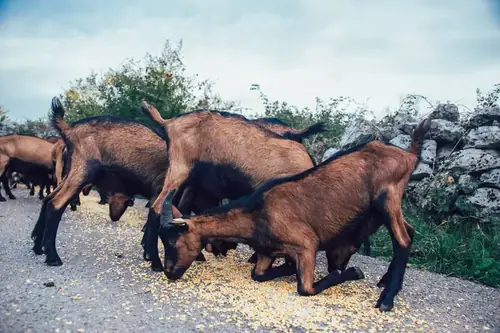
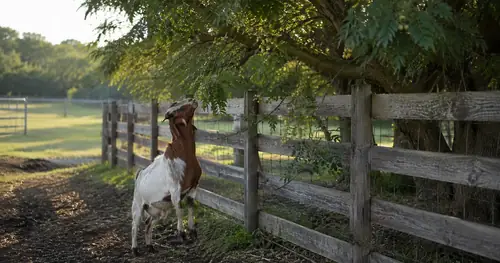
Goats eat hay, forage, browse, loose minerals, and fresh water daily. They are browsers, not grazers.
They prefer leaves, bark, weeds, shrubs, and woody plants over grass.
A balanced goat diet breaks down roughly like this: 75-80% hay and forage, 0-20% grain (depending on life stage), and free-choice loose minerals plus fresh water at all times.
Our Top Goat Mineral Picks
Goats consume about 2-4% of their body weight in dry matter each day. A 100-pound goat needs 2-4 pounds of hay daily, and more in cold weather when burning extra calories to stay warm.
This works because goats are ruminants with a four-chamber stomach (rumen, reticulum, omasum, abomasum) designed to ferment tough plant fiber. The rumen alone holds 4-6 gallons and contains billions of microbes that break down cellulose humans can't digest.
The biggest myth in goat care is that goats eat everything. They don't.
Goats explore with their mouths the way dogs explore with their noses, but they're surprisingly selective about what they actually swallow.
Your goats will refuse soiled hay, food that's been stepped on, and anything that smells off. That famous image of a goat eating a tin can? It was going after the paper label glue, not the metal.
Hay and Forage: The Foundation of Every Goat's Diet
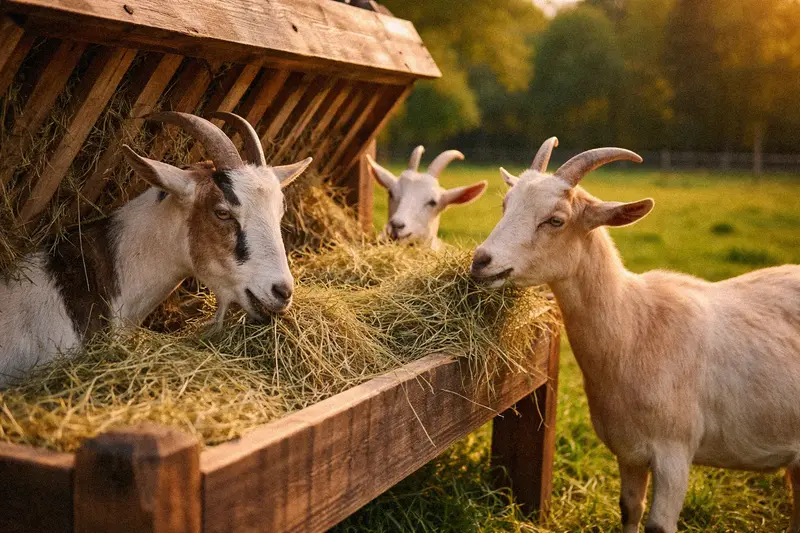
Hay is the single most important food in a goat's diet. Keep it available free-choice at all times because the rumen needs a steady supply of long-stem fiber to function, and without it your goats will run into digestive problems fast.
Timothy hay is a solid all-around choice at 7-11% protein. Orchard grass works well for picky eaters, and bermuda grass suits southern climates.
Alfalfa hay packs 15-20% protein along with extra calcium, making it ideal for pregnant does, lactating does, and growing kids. Watch out though.
Too much alfalfa in bucks or wethers throws off the calcium-to-phosphorus ratio and can cause urinary calculi.
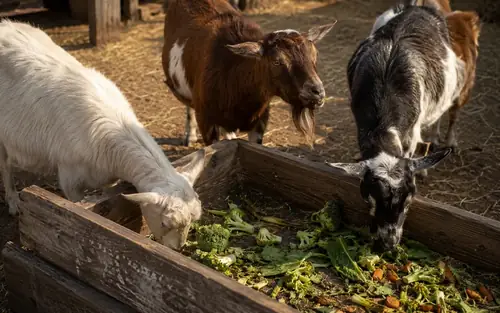
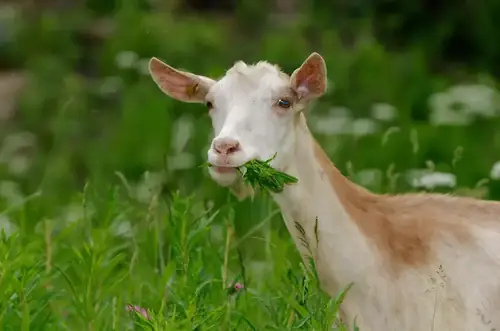
Beyond hay, goats do best with access to natural browse: leaves, twigs, bark, brambles, and weeds. They'll strip honeysuckle vines, devour blackberry brambles thorns and all, and happily clear brushy overgrowth.
Plenty of goat owners use their herds specifically for land clearing. Goats will tackle multiflora rose, privet, kudzu, and invasive species that other animals won't touch.
Straw can supplement roughage but it has almost zero nutritional value. Don't let it replace quality hay.
One rule that isn't flexible: never feed moldy hay. Mold can cause listeriosis, a deadly brain infection that kills goats fast.
If a bale smells musty or shows white, blue, or black mold, throw it out.
Pro Tip Smell hay before buying. Good hay smells fresh and sweet.
If it smells musty or off, pass on it.
| Hay Type | Protein % | Best For |
|---|
| Timothy | 7-11% | Adult wethers and bucks |
| Orchard Grass | 10-12% | All goats, picky eaters |
| Bermuda Grass | 8-10% | Southern climates |
| Alfalfa | 15-20% | Pregnant/lactating does, growing kids |
When Goats Need Grain (and When They Don't)
Most adult goats on good pasture with quality hay don't need grain at all. Grain is only necessary during late pregnancy, lactation, and growth.
Overfeeding it is the number one feeding mistake in goat keeping.
Wethers and dry does in good body condition do just fine on hay, browse, and minerals. Piling on grain when it isn't needed leads to obesity, bloat, enterotoxemia, and urinary calculi.
So when does grain actually matter? Three life stages: late pregnancy, lactation, and growth.
Pregnant does in their last 6 weeks need 1/2 to 1 pound of grain per day as the growing kids compress rumen space.
Lactating does burn the most calories of any goat on the farm. A heavy milker may need 1 pound of grain for every 3 pounds of milk she produces daily.
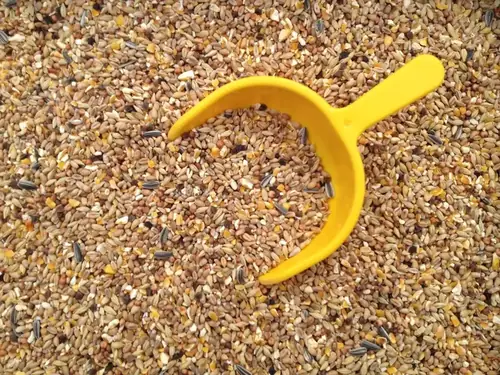
Oats are the safest grain pick because they're lower in starch than corn and less likely to trigger rumen acidosis if you accidentally overfeed. Whole oats beat rolled oats because they slow consumption down.
Corn is great for cold weather or putting weight on thin goats, but too much causes problems. Many owners go with a commercial goat feed that blends grains with vitamins and minerals into a balanced ration.
One thing you should never do: feed chicken feed to goats. It often contains monensin, which is fatal to goats even in tiny doses.
Cattle feed can be risky too because of medications goats can't handle.
And always introduce new grains gradually over 7-10 days. Switching too fast can cause deadly bloat or enterotoxemia within hours.
Pro Tip For bucks and wethers, add ammonium chloride to the grain ration to prevent urinary calculi. This is especially important if feeding alfalfa or high-calcium diets.
Safe Fruits and Vegetables for Goats
Yes, goats can eat most common fruits and vegetables as treats. However, treats should never exceed 10% of a goat's daily intake because too much sugar disrupts rumen pH.
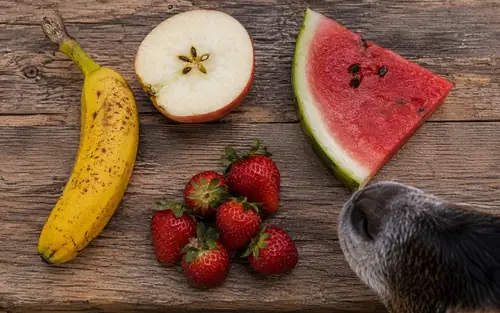
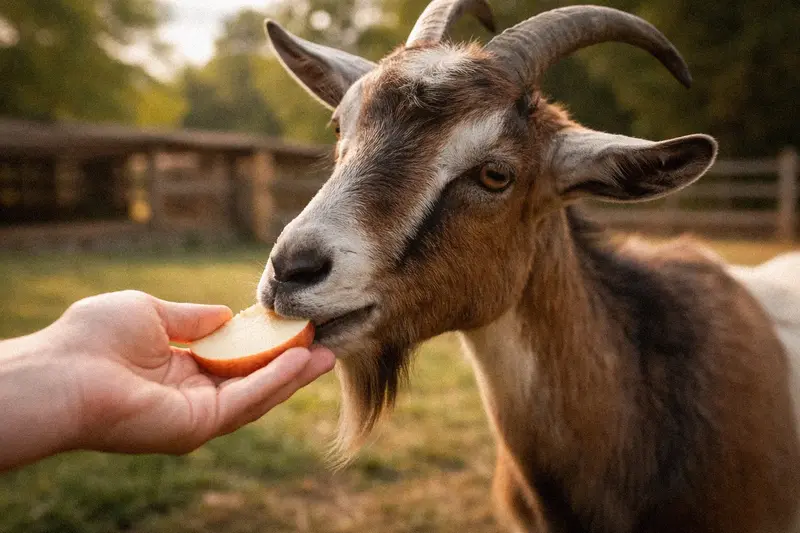
Apples are the most popular goat treat. Cut them into quarters to reduce choking risk.
Bananas (peel and all), watermelon, and pumpkin are all safe and loved by most goats.
Pumpkin seeds contain cucurbitacin, a compound that may help with intestinal parasites. Many goat owners feed pumpkins heavily in the fall when they're cheap.
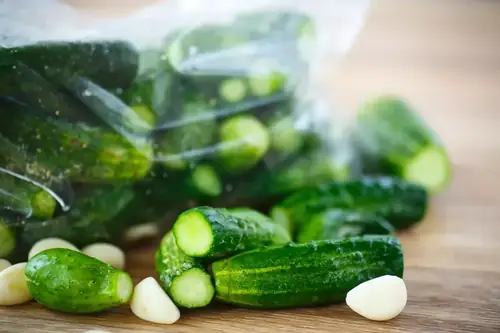
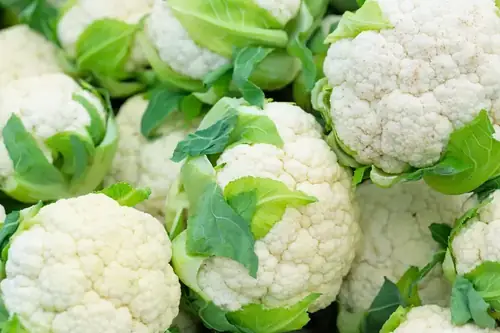
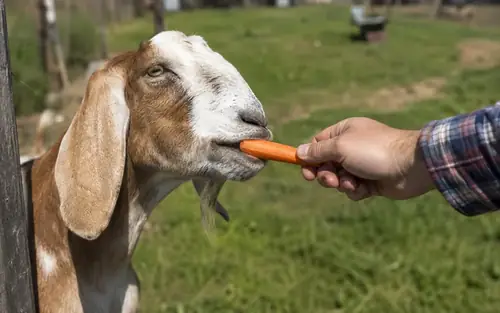
Carrots, squash, sweet potatoes, cucumbers, radishes, asparagus, and bell peppers are all safe vegetables, and a handful of leafy spring mix makes a fine occasional green. Brassicas like broccoli, cauliflower, cabbage, and brussels sprouts are fine in moderation but can cause gas in large amounts.
One fruit to absolutely avoid: avocado. The skin, pit, and leaves contain persin, which can cause heart failure and death in goats.
| Food | Safe? | Notes |
|---|
| Apples | Yes | Cut into quarters, seeds OK in small amounts |
| Bananas | Yes | Peel is safe too |
| Watermelon | Yes | Rind, flesh, and seeds all safe |
| Pumpkin | Yes | Seeds may help with parasites |
| Carrots | Yes | High in beta-carotene |
| Potatoes (green) | NO | Green spots contain toxic solanine |
| Avocado | NO | Persin is toxic and can be fatal |
Toxic Plants and Foods That Can Kill Goats
The most dangerous plants for goats include poison hemlock, rhododendron, azalea, yew, and wilted cherry leaves. All of these can kill a goat within hours.
Dozens of common plants, trees, and household foods are deadly, and you need to know them.
Poison hemlock is one of the most dangerous. All parts are toxic, and ingestion causes respiratory failure within hours.
Rhododendron and azalea contain grayanotoxins that cause vomiting, weakness, and cardiac failure. Yew is so toxic that even a small amount can stop a goat's heart.
Wilted cherry leaves are a sneaky killer. Fresh leaves are generally safe, but after a storm breaks branches, the wilting leaves concentrate cyanide and can kill a goat fast.
On the food side, chocolate contains theobromine (toxic like in dogs), onions can cause hemolytic anemia, and mushrooms in pastures are impossible to identify safely.
Walk your fence line at least twice a year, in spring and fall, to identify and remove toxic plants before your goats find them.
| Toxic Plant/Food | Toxic Part | What Happens |
|---|
| Poison Hemlock | All parts | Respiratory failure, death within hours |
| Rhododendron/Azalea | All parts | Vomiting, cardiac failure |
| Yew | All parts | Sudden cardiac arrest |
| Cherry (wilted leaves) | Wilted leaves | Cyanide poisoning, rapid death |
| Avocado | Skin, pit, leaves | Heart failure, fluid buildup |
| Chocolate | All | Theobromine toxicity |
Minerals, Supplements, and Water
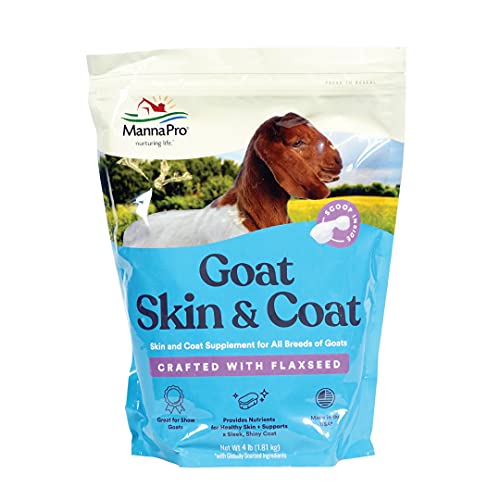
Goats need free-choice loose minerals formulated specifically for goats, not sheep and not cattle. Mineral deficiency is behind a surprising number of goat health problems, from faded coats to reproductive failure and weak kids.
Always use loose goat minerals in a covered feeder, not mineral blocks. Goats have soft tongues and can't lick enough from a block to meet their daily requirements.
The mineral mix must be formulated specifically for goats, not sheep or cattle. This distinction is critical and getting it wrong can kill animals.
Goat minerals contain copper levels that are toxic to sheep. Sheep minerals lack the copper goats need.
If you keep both species, use separate mineral feeders.
Copper and selenium are the two most commonly deficient minerals in goats across the United States. Signs of copper deficiency include a rough, faded coat (black goats turning reddish-brown is the classic indicator), fish tail, and poor immune function.
Selenium deficiency is common in the eastern US, Pacific Northwest, and Great Lakes regions. It causes white muscle disease in kids and weak newborns.
Maintain a 2:1 calcium-to-phosphorus ratio in the overall diet. This ratio is essential for preventing urinary calculi in bucks and wethers.
Alfalfa hay is high in calcium, while grain is high in phosphorus, so the balance shifts with your feeding program.
Baking soda is a controversial supplement. Some owners offer it free-choice to help goats self-regulate rumen pH.
Others argue it masks dietary problems that should be fixed at the source.
Fresh, clean water is non-negotiable. Goats drink 1-3 gallons per day, and lactating does can need 3-5 gallons.
They'll refuse dirty water faster than almost any other livestock animal.
Pro Tip If your black goats turn reddish-brown, that's copper deficiency. Give a COWP bolus and check your mineral mix immediately.
How Much to Feed Goats by Life Stage
Goats need 2-4% of their body weight in dry matter daily, but the exact amount and composition depends on life stage. A 150-pound doe eats 3-6 pounds of feed per day, while a growing kid needs higher-protein rations.
Getting feeding amounts right prevents both overfeeding (which causes bloat and obesity) and underfeeding (which leads to poor production and weak kids).
Pregnant does in late gestation need increasing grain because the growing kids take up rumen space, reducing hay intake. Lactating does have the highest nutritional demands of any goat on your farm.
Growing kids need 14-16% protein through a combination of alfalfa hay and kid grain. Most kids are weaned between 8-12 weeks and should weigh at least 2-2.5 times their birth weight before weaning.
| Life Stage | Hay (daily) | Grain (daily) | Notes |
|---|
| Kids (post-weaning) | 1-2 lbs | 0.25-0.5 lbs (16-18% protein) | Free-choice quality hay, kid-specific grain |
| Dry Does | 2-4 lbs | None needed | Good hay and minerals are sufficient |
| Pregnant Does (last 6 wks) | 2-3 lbs | 0.5-1 lb | Increase grain gradually as kidding nears |
| Lactating Does | 3-5 lbs | 1-3 lbs | 1 lb grain per 3 lbs milk produced |
| Bucks (maintenance) | 2-4 lbs | None or minimal | Add ammonium chloride if feeding grain |
| Wethers | 2-4 lbs | None | Grain increases urinary calculi risk |
What Do Baby Goats Eat?
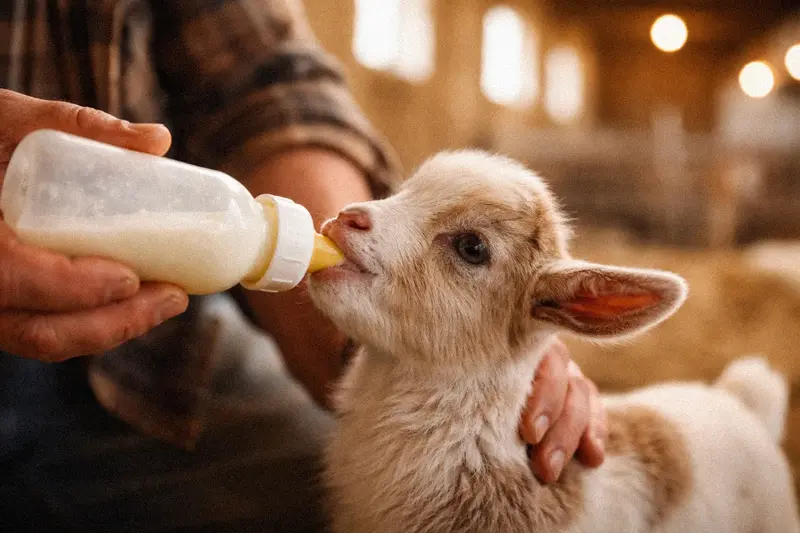
Baby goats (kids) drink colostrum first, then milk, then gradually transition to hay and grain by 8-12 weeks. The first meal is the most critical.
Colostrum, the thick yellow first milk, contains antibodies that provide passive immunity until the kid's immune system matures.
Kids must receive colostrum within the first 1-2 hours of birth. Their ability to absorb antibodies drops rapidly and is essentially gone by 24 hours.
Dam-raised kids handle their own feeding schedule. Bottle-fed kids need 2-4 ounces of milk every 2-4 hours for the first few days, gradually increasing to 8-12 ounces 3-4 times per day by 2 weeks.
Goat milk is ideal, but commercial goat milk replacer works when fresh milk isn't available. Kids can start nibbling hay and grain as early as 1-2 weeks old.
Offer small amounts of high-protein kid grain (16-18%) and soft leafy hay in their area. Early exposure helps the rumen develop.
Most kids wean between 8-12 weeks of age.
Seasonal Feeding Tips for Goats
Goats need more food in winter and less in summer, with parasite management peaking in spring. Smart seasonal adjustments keep your herd healthy while controlling feed costs.
Spring brings fresh browse and reduced hay needs, but also a surge in intestinal parasites. Watch body condition closely even with abundant forage.
Summer heat cuts appetite. Feed during cooler hours, and offer hydrating treats like watermelon and cucumbers.
Fall is harvest season. Pumpkins, fallen apples, and garden scraps make great supplements.
Build bucks up before breeding season because they often lose weight during rut.
Winter is the most demanding season. Goats may need 25-50% more calories in freezing temperatures.
Increase hay and consider adding grain even for goats that don't normally get it.
Provide warm water in winter. Goats drink less ice-cold water, which leads to dehydration and reduced feed intake.
Frequently Asked Questions
What is a goat's favorite food?
Most goats go crazy for apples, bananas, and pumpkin. For everyday preferences, goats love browsing on honeysuckle, blackberry brambles, and dandelions more than any commercial feed.
Every goat has individual tastes, but sweet crunchy fruits are the universal crowd-pleaser.
What should goats eat on a daily basis?
A goat's daily diet should be 75-80% hay or forage, supplemented with free-choice loose goat minerals and unlimited fresh water. Grain is only necessary for pregnant does, lactating does, and growing kids.
Treats should make up no more than 10% of daily intake.
How often should you feed goats?
Hay should be available free-choice at all times so goats can eat whenever they need to. If you supplement with grain, feed it once or twice daily on a consistent schedule.
Goats thrive on routine and will let you know loudly if you're late.
Can goats survive on grass alone?
Goats can survive on grass, but they won't thrive. They're browsers that need variety: hay, browse, weeds, and minerals.
Grass alone lacks the fiber diversity their rumen needs and doesn't provide adequate mineral nutrition. Goats on grass-only diets often develop deficiencies over time.
What should you never feed a goat?
Never feed goats avocado (contains toxic persin), chocolate (theobromine), chicken feed (often contains fatal monensin), or moldy hay (causes listeriosis). Keep goats away from poison hemlock, rhododendron, azalea, yew, and wilted cherry leaves.
All of these can kill a goat.
What foods are poisonous to goats?
The most dangerous plants include poison hemlock, rhododendron, azalea, yew, wilted cherry leaves, and nightshade. Toxic foods include chocolate, avocado, onions in large amounts, and moldy feed.
Chicken feed containing monensin is also fatal to goats.
How much grain should I feed my goat?
Most adult goats don't need grain at all. Pregnant does in their last 6 weeks get 1/2 to 1 pound per day.
Lactating does need about 1 pound per 3 pounds of milk produced. Overfeeding grain causes bloat, enterotoxemia, and urinary calculi.
What minerals do goats need?
Goats need free-choice loose minerals formulated specifically for goats. Copper and selenium are the most commonly deficient.
Never use sheep minerals for goats because they lack adequate copper. Use loose minerals, not blocks, as goats can't lick blocks effectively enough to meet their needs.
Can goats really eat anything?
No. Goats investigate objects with their mouths out of curiosity, which creates the myth.
They're actually selective browsers that prefer variety and will refuse soiled or contaminated food. They can't digest metal, plastic, or non-food items, and many common plants are toxic to them.
Do goats need different food in winter?
Yes. Goats need 25-50% more calories in cold weather.
Increase hay rations and consider adding grain for goats that don't normally get it. Provide warm water because goats drink less when water is ice-cold, which leads to dehydration and reduced feed intake.
Is hay or grain better for goats?
Hay is better and more important. It should make up 75-80% of a goat's diet because it provides the long-stem fiber the rumen needs to function.
Grain is a supplement, not a staple, and most adult goats on good pasture don't need grain at all. Only pregnant, lactating, or growing goats require grain supplementation.
How much water do goats drink per day?
Adult goats drink 1-3 gallons of water per day under normal conditions. Lactating does can drink 3-5 gallons daily because milk production requires significant hydration.
Always provide clean, fresh water. Goats will refuse to drink dirty or contaminated water, which can lead to dehydration.
Can goats eat table scraps and leftovers?
Some kitchen scraps are safe for goats, including vegetable peels, fruit trimmings, and stale bread in small amounts. However, never feed goats onions, chocolate, avocado, or processed foods with added salt and sugar.
Sort through scraps carefully and only offer items you've confirmed are safe.
All Diet Articles (116)




 guide
guide