| # | Product | Our Rating | ||
|---|---|---|---|---|
| 1 |  | Best OverallLoose Goat Mineral Supplement | ★★★★★ | Check Price |
| 2 | 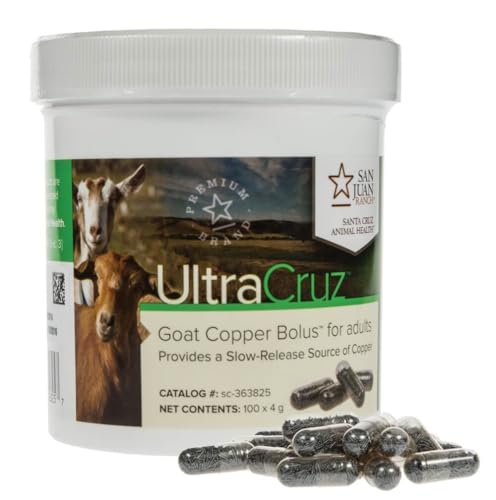 | UltraCruz Goat Copper Bolus | ★★★★☆ | Check Price |
| 3 |  | Kaeco Selenium & Vitamin E Gel | ★★★★☆ | Check Price |
Minerals are the part of goat nutrition that new owners overlook and experienced owners obsess over. Goats can eat the best hay in the world and still fall apart without the right trace minerals.
The single most important thing to know is simple: goats need loose, goat-specific minerals with copper, available free-choice at all times. Get that right and you have solved most of the puzzle.
This guide covers which minerals goats actually need, why loose beats blocks, the critical sheep-mineral warning, and exactly how to feed minerals the right way.
Do Goats Need Mineral Supplements?
Yes, goats need a mineral supplement, full stop. Forage and hay simply do not provide enough of the trace minerals goats require, and the levels in your soil vary enormously by region.
A goat short on minerals does not look dramatically sick at first. Instead you see a slow slide: a dull or faded coat, poor growth, low fertility, weak kids, and a generally run-down herd.
Some deficient goats also develop pica and start gnawing on bones, dirt, or rocks in a bid to replace the minerals they are missing.
Because the symptoms are vague and gradual, mineral deficiency is one of the most common and most missed problems in goats. Providing free-choice minerals is cheap insurance against all of it.
Think of minerals as the foundation that lets everything else in the diet work. Good hay and forage supply the bulk of nutrition, but minerals are what let the goat actually use it.
The Key Minerals Goats Need
Goats need a range of minerals, but a few trace minerals do the heavy lifting and cause the most trouble when they are short.
Copper is the big one. Goats have a high copper requirement, and copper deficiency is widespread, causing faded or rusty coats, a fish-tail look to the tail, poor growth, and anemia.
Iron-rich well water locks up copper, so copper deficiency can strike even goats on a good mineral.
Selenium works alongside vitamin E and is lacking in the soil across much of North America. Selenium deficiency causes white muscle disease in kids, weak newborns, and retained placentas in does.
Iodine matters too, because goitrogenic plants block it at the thyroid gland and leave the gland swollen. That is why cauliflower and other brassicas stay safe only when iodized loose minerals are available.
Zinc, manganese, and others round out the trace minerals, supporting skin, hooves, immune function, and reproduction. Alongside these, goats need salt (sodium) and the major minerals calcium and phosphorus in the right ratio, which a good loose mineral and proper feeding handle together. Calcium-rich forages such as alfalfa help hold that calcium-to-phosphorus ratio in the safe zone.
A quality loose goat mineral is formulated to supply all of these in balance, which is why choosing the right product matters more than chasing any single nutrient. Feeds built for other species skew that balance, which is one reason calf starter pellets set the wrong copper and calcium-to-phosphorus levels for goats.
Loose Minerals vs Mineral Blocks
This is the question that trips up the most owners, and the answer is clear: loose minerals are far better than hard mineral blocks for goats.
The reason is physical. Mineral blocks were designed for cattle, which have rough tongues that can rasp minerals off hard surfaces. A goat’s tongue is soft, so it simply cannot lick enough off a hard block to meet its needs.
Goats on a block alone often end up deficient even though the block looks like it is being used. Loose minerals let a goat eat as much as its body is asking for in a single mouthful.
Use a loose goat mineral as the primary source every time. A block is fine as a backup or as a salt source, but it should never be the only mineral you offer.
Never Feed Goats Sheep Minerals
This warning deserves its own section because the mistake is so common and the consequences so serious. Goats and sheep have opposite copper needs.
Sheep are extremely sensitive to copper and can die of copper toxicity, so sheep minerals and many all-stock minerals are made with little or no added copper. That is correct for sheep and dangerous for goats.
Feed a goat a copper-free sheep mineral and you slowly starve it of the copper it depends on. Over weeks and months this produces classic copper deficiency: a faded coat, poor growth, anemia, and reproductive failure.
Cattle rations create the opposite problem, stacking copper higher than a goat’s liver can clear over time.
Always read the tag and use a mineral formulated for goats, or for goats and cattle together. If the label says it is safe for sheep, it is the wrong mineral for your goats.
How to Feed Goat Minerals
Feeding minerals correctly is easy once you know the rules. The whole system is built around free choice, which means the goats decide how much to eat.
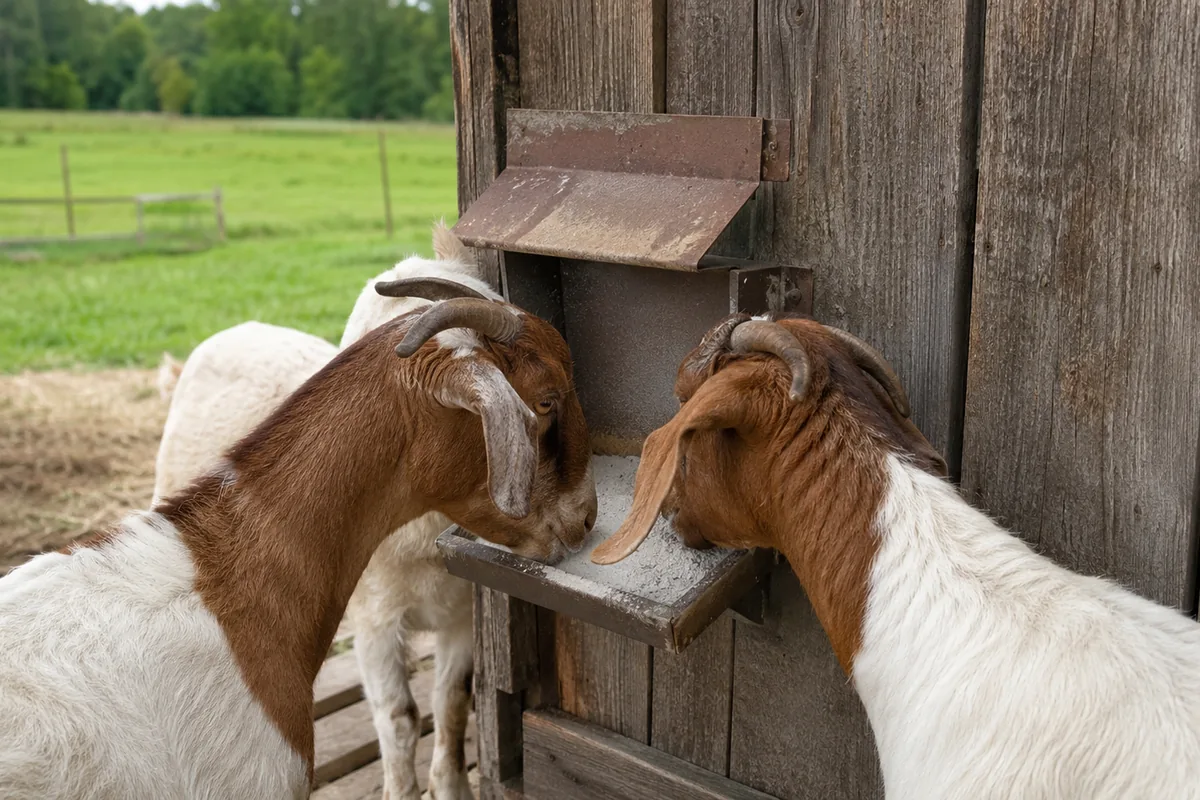
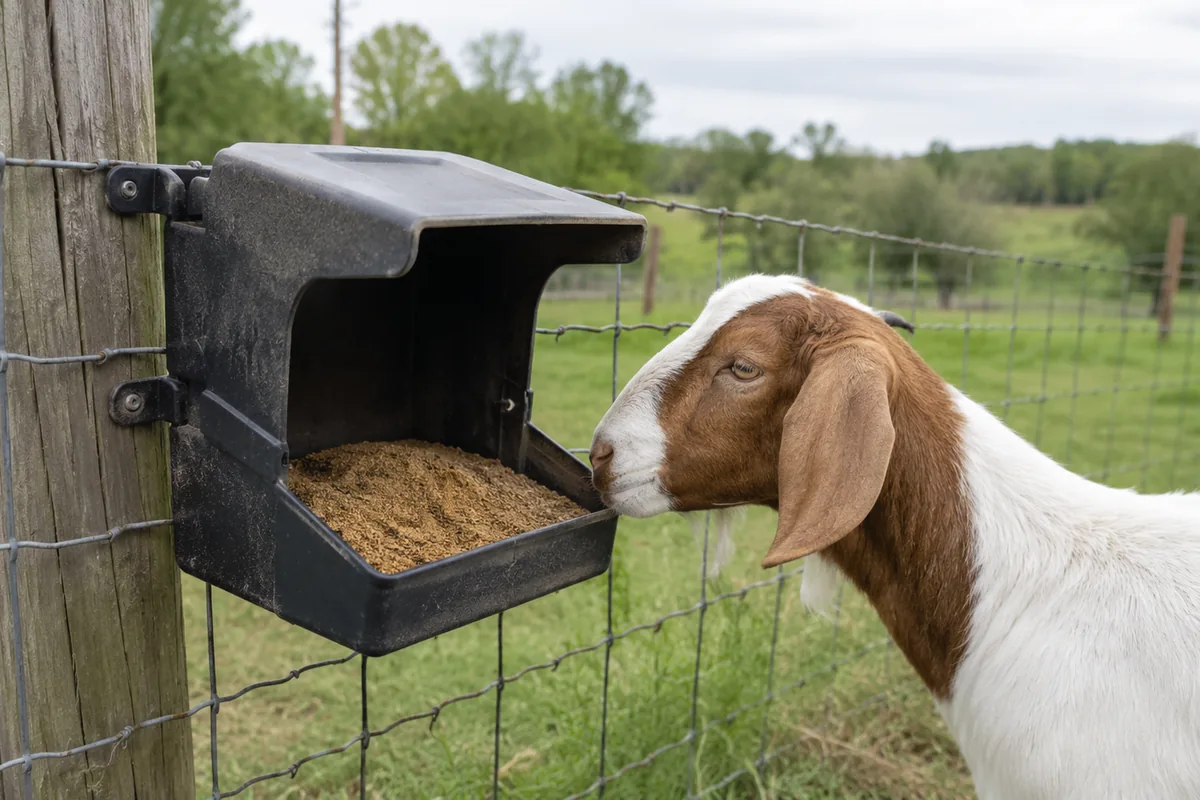
Put loose goat minerals in a dedicated mineral feeder, separate from feed and water, and keep it available at all times. Goats self-regulate, eating more when they need it and less when they do not, so never ration minerals or mix them into grain.
Mount the feeder off the ground in a dry, covered spot. Minerals that get rained on clump and spoil, and goats will not touch fouled or wet minerals, so a covered feeder protects both the product and your investment.
For copper and selenium, many owners go a step further in deficient regions. A copper bolus given every few months delivers a slow-release dose that free-choice minerals alone may not cover, and selenium and vitamin E gels or injections help in low-selenium areas. Talk to your vet or extension agent about what your specific region needs, since both copper and selenium can be overdone.
Sources and Further Reading
Compiled and cross-checked against established livestock and extension references:
- University extension publications (Penn State, Oklahoma State, Maryland) on goat mineral nutrition
- Langston University, Meat Goat Production Handbook, nutrition and minerals
- American Dairy Goat Association (ADGA) management resources
- Merck Veterinary Manual, copper and selenium nutrition in small ruminants
Mineral needs vary by soil and region, so use this as a framework and confirm copper and selenium specifics locally. Offer loose goat minerals free-choice, avoid sheep minerals, and you will prevent the most common deficiencies before they ever start.
Frequently Asked Questions
The best minerals for goats are loose, goat-specific mineral mixes that contain copper, because copper is the nutrient goats most often lack and sheep minerals deliberately omit. Look for a complete loose goat mineral with copper, selenium, zinc, and manganese listed on the tag. Brands formulated for goats or for goats and cattle are safe, while anything labeled for sheep or for all-stock without copper is not a good choice for goats.
Offer loose goat minerals free-choice, meaning always available in a separate covered feeder that the goats can eat from whenever they want. Do not mix the minerals into their grain or measure out a daily amount, because goats self-regulate their intake based on need. Mount the feeder off the ground in a dry, sheltered spot so the minerals do not get rained on or fouled with manure, and refill it as it empties.
Loose minerals should be available to goats all the time, not on a schedule, since free-choice access lets each goat take what it needs. Keep the feeder topped up so it never runs empty. Copper boluses are different and are usually given every three to six months depending on your area, and injectable or oral selenium is given as needed in selenium-deficient regions, ideally on your vet's advice.
Loose minerals are strongly preferred over hard mineral blocks for goats. A goat's soft tongue cannot rasp enough mineral off a hard block to meet its daily needs, so goats on blocks alone often end up deficient. Blocks are fine as a backup or for salt, but a loose goat mineral should be the primary source. If you only offer one, make it loose.
No, goats should not be fed sheep minerals long term. Sheep are extremely sensitive to copper toxicity, so sheep and sheep-safe all-stock minerals are made with little or no added copper. Goats need that copper, and feeding them a copper-free sheep mineral leads to copper deficiency over time, causing faded coats, poor growth, anemia, and reproductive problems. Always use a mineral formulated for goats.