| # | Product | Our Rating | ||
|---|---|---|---|---|
| 1 |  | Best OverallLamb & Goat Bottle with Pritchard Teat | ★★★★★ | Check Price |
| 2 |  | Manna Pro Goat Kid Milk Replacer (4 lb) | ★★★★☆ | Check Price |
| 3 |  | Pritchard Teat Nipples (12 Pack) | ★★★★☆ | Check Price |
Every goat owner runs into a milk emergency eventually. A doe rejects her kid, dries up early, or dies during birth, and suddenly you’ve got a hungry newborn and nothing natural to feed it.
That jug of cow milk in the fridge looks promising. The good news is it has raised generations of healthy goats, as long as you use the right kind and follow a few rules.
Can Baby Goats Drink Cow Milk?
Baby goats can drink cow milk, and the whole version is the best readily available substitute when fresh goat milk runs short. Homesteaders reach for it far more than powdered replacers.
The key word is whole, since the butterfat fuels a kid’s fast early growth. Skip the 2 percent, 1 percent, and skim, which leave a kid thin and short on reserves.
Store-bought whole milk is perfect, and pasteurization even removes any risk of passing diseases like CAE or Johne’s from an outside animal.
Colostrum Always Comes First
Before cow milk enters the picture, a newborn needs colostrum. This thick, yellow first milk carries the protective antibodies that build a kid’s immune system, and the window to absorb it is short.
Kids need it within the first 12 to 24 hours of birth. After that, the gut stops absorbing those antibodies, leaving the kid wide open to infection.
Goat colostrum from the dam is ideal, but a powdered replacer works when none is available. Give it before switching to plain cow milk, since skipping this step is the top reason hand-raised kids fail to thrive.
Cow Milk vs Goat Milk: How They Compare
Nutritionally, cow milk and goat milk are close cousins, which is exactly why the swap works so well. Goat milk runs slightly higher in butterfat and forms a softer curd, while cow milk sits a little lower in fat and sets firmer.
| Component | Whole Cow Milk | Goat Milk |
|---|---|---|
| Butterfat | About 3.25% | About 3.8 to 4.1% |
| Protein | About 3.3% | About 3.5% |
| Curd tension | Firm curd | Soft curd |
| Fat globule size | Larger | Smaller |
| Availability | Any grocery store | Farm or specialty source |
Because it runs a touch leaner, some owners stir buttermilk or half-and-half into each gallon to match a doe’s richer output, though plenty of kids thrive on the plain version.
How to Prepare Cow Milk for a Bottle Kid
Safe prep comes down to three habits: the right temperature, no microwave, and clean equipment.
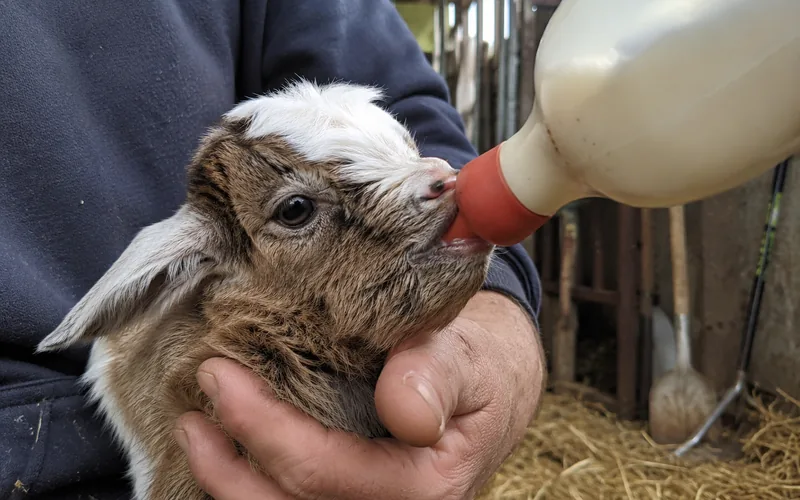
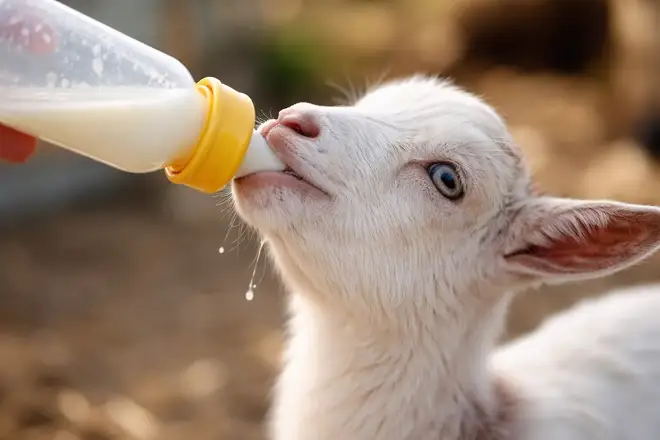
Always warm it to body temperature, around 101 to 103 degrees Fahrenheit, since cold milk chills a newborn and invites refusal.
Never microwave it, as hot spots scald a kid’s mouth and break down nutrients; use a bowl of hot water instead. Keep bottles and nipples clean, since residue breeds the bacteria behind scours.
If a kid was on goat milk or replacer, switch over gradually so the gut can adjust.
Bottle-Feeding Schedule and Amounts
In short, a newborn takes 4 to 5 small feedings a day, tapering to 2 larger ones by weaning.
Getting the amount right matters as much as the milk. Overfeeding is a top cause of bloat and scours, so steady, measured portions beat big, irregular meals.
The chart below is a roadmap for a standard-size kid. Nigerian Dwarf and pygmy kids need less, so scale the volumes down.
| Age | Feedings per Day | Amount per Feeding |
|---|---|---|
| Days 1 to 3 | 4 to 5 | Colostrum, 2 to 3 oz |
| Week 1 | 4 | 4 to 6 oz |
| Weeks 2 to 3 | 3 to 4 | 6 to 8 oz |
| Weeks 4 to 8 | 3 | 8 to 12 oz |
| Weeks 8 to 12 | 2 | 12 to 16 oz, begin weaning |
From about two weeks on, offer water, hay, and a bit of grain so the rumen develops. Weaning usually lands between 8 and 12 weeks, and knowing whether goats need grain helps with amounts and timing.
Can Adult Goats Drink Cow Milk?
Adult goats don’t need milk of any kind, and there’s no reason to give it to a mature goat. Everything they need comes from forage, browse, hay, grain, and clean water.
A grown goat is a functioning ruminant, so its four-chambered stomach ferments plant matter rather than milk. Pour milk in and you upset the rumen microbes, which brings bloating and loose stool, so the right kind of hay and good pasture are what it actually needs.
The same limit applies to dairy foods made from milk, since cheese carries the same lactose an adult goat has lost the enzyme to break down.
Warning Signs to Watch For
The main warning signs are scours, bloat, and a kid that refuses its bottle or turns lethargic.
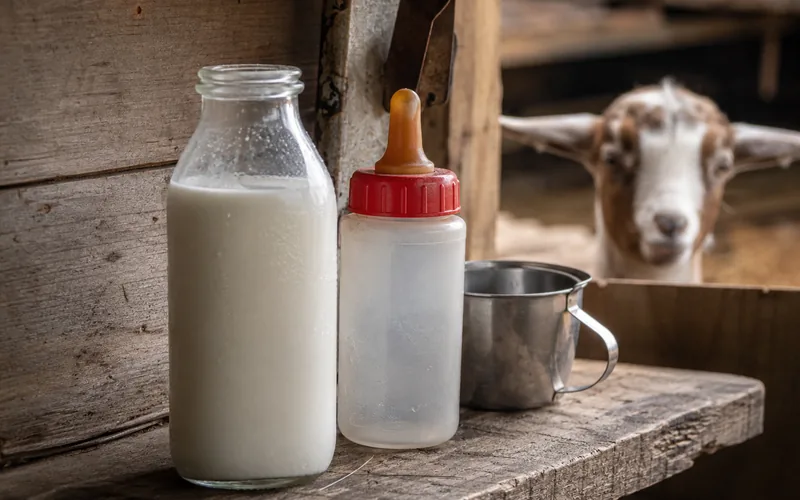
Cow milk is safe for kids, but any milk-fed newborn can still run into trouble. Catching them early lets you act before a small issue turns serious.
Scours, or watery diarrhea, is the most common red flag, and it usually traces back to overfeeding, cold milk, or dirty equipment. Bloat is more urgent, showing as a tight, swollen belly from too much milk too fast.
A kid that refuses the bottle, stands hunched, or goes lethargic needs a vet.
When to Choose Milk Replacer Instead
Whole cow milk is usually the better pick, but a quality goat-specific milk replacer earns its place when you can’t source enough fresh milk.
Buy one made for goat kids, not a multi-species blend, since those powders often trigger scours and blockages. Owners sometimes stretch pricey replacer by cutting it with cow milk, and the same care applies to cattle feed made for cows, which carries copper levels goats handle differently.
Whichever route you pick, stay consistent: one approach, slow switches between milks, and the same daily schedule.
Frequently Asked Questions
Yes, plain whole cow milk from the grocery store works well for bottle kids. Choose the red-cap whole milk rather than 2 percent, 1 percent, or skim, because growing kids need the full fat content. Pasteurized store milk is fine and carries no risk of transmitting goat diseases like CAE.
No. Only give plain, unflavored whole cow milk. Chocolate milk contains sugar, cocoa, and additives that can trigger diarrhea and digestive upset in kids, and the theobromine in cocoa is not safe for goats.
Both work. Raw milk from a trusted, healthy cow retains more natural enzymes, while pasteurized store milk is more consistent and removes any pathogen risk. If you use raw milk from an unknown source, pasteurize it at home by heating to 165 degrees Fahrenheit for 30 seconds.
Bottle kids can drink cow milk from a few days old right through weaning at 8 to 12 weeks. There is no need to keep any goat on milk after weaning, since adult goats get everything they need from forage, hay, and grain.