| # | Product | Our Rating | ||
|---|---|---|---|---|
| 1 |  | Best OverallREDMOND Goat Mineral Supplement (5 lb) | ★★★★★ | Check Price |
| 2 |  | Wholesome Harvest 16% Goat Feed (10 lb) | ★★★★☆ | Check Price |
| 3 |  | Manna Pro Goat Treats | ★★★★☆ | Check Price |
Most goat owners find this question the hard way. You run out of goat feed on a Sunday.
There’s a half-full bag of cattle feed in the barn, and the feed store is closed until Monday.
The honest answer depends on what’s printed on the tag. Two bags can sit side by side on the same pallet.
One is harmless. The other can kill a goat inside a week.
Can goats eat cattle feed?
Goats can eat plain cattle feed, but only when the tag lists no ionophores and no urea.
Cattle and goats are both ruminants, so their digestive systems work in similar ways. Both chew cud and ferment fiber in a large forestomach.
So the bagged feed feels interchangeable. It isn’t.
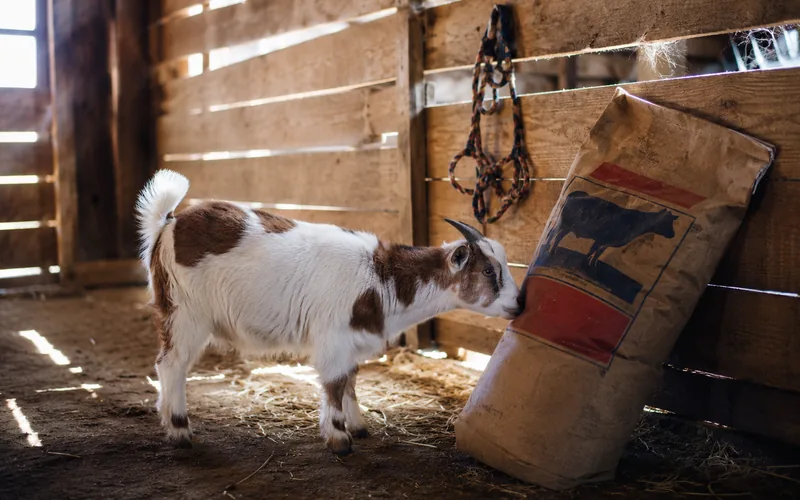
The grain part of the ration is where the two split apart, because that’s where the additives are.
What actually goes into cattle feed
A typical bag of cattle feed starts with a grain base. Corn, barley, oats, wheat middlings, and soybean meal make up the bulk of most formulas.
None of that base is dangerous to goats. The trouble begins with everything added after it.
Cattle feed is built for an animal weighing 1,200 pounds, usually pushed for weight gain or milk output.
To hit those targets cheaply, feed mills add three things that change the picture for goats. Nonprotein nitrogen replaces some real protein, ionophores improve feed efficiency, and the mineral pack is calibrated for bovine requirements.
The categories you will run into
Complete pelleted feeds are the highest risk group. These often contain both urea and an ionophore, because they are designed as a full ration.
Range cubes and protein blocks lean heavily on urea as a cheap protein source for animals on poor winter pasture.
Plain grain mixes and sweet feeds with no medication are the safest group. Many are simply corn, oats, and molasses with a basic vitamin pack.
Calf starter deserves its own warning. Nearly all of it is medicated, and the monensin risk in calf starter pellets applies to any medicated cattle ration.
Ionophores: the additive that kills fastest
Ionophores are feed additives that cattle tolerate at labeled doses and goats do not. Monensin is the one most likely to kill a goat.
It is sold under the trade name Rumensin. Lasalocid and salinomycin belong to the same drug family.
They work by changing how ions move across the cell membranes of certain rumen bacteria, which shifts fermentation toward more efficient energy use.
Goats do not have the same margin of safety. The gap between a working dose and a harmful dose is much narrower in small ruminants than it is in cattle.
Here’s the deal: the damage hits heart and skeletal muscle, and it isn’t reversible. A goat that survives the initial poisoning can be left with a permanently weakened heart.
Signs include going off feed, weakness in the hind end, laboured breathing, and a reluctance to stand. They often show up a day or more after the feed was eaten, which makes the connection easy to miss.
There is no antidote. Treatment is supportive care only, and a vet needs to be involved immediately.
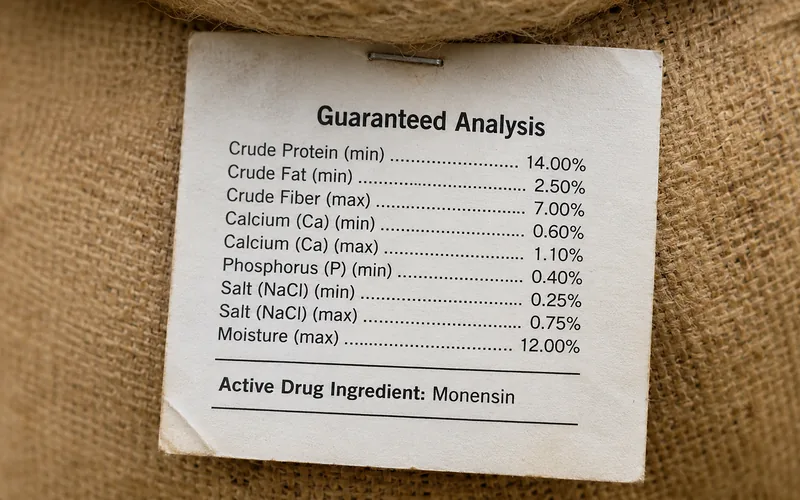
The ionophores in chicken feed create the same problem from a different bag, so storage rules need to cover every species you keep.
Urea and nonprotein nitrogen
Urea is safe for goats only when they have been brought onto it slowly. An unadapted goat can be poisoned by a single feeding.
It shows up on tags as urea or as nonprotein nitrogen.
Feed mills use it because it is cheap. Rumen microbes convert nitrogen into microbial protein, so urea substitutes for some of the soybean meal.
But that same conversion harms goats. An enzyme called urease breaks urea down inside the rumen and releases ammonia.
An adapted animal absorbs that ammonia at a manageable rate. An unadapted animal cannot keep up, and the ammonia floods into the bloodstream.
The Merck Veterinary Manual sets the threshold for unacclimated ruminants at 0.3 to 0.5 g/kg of urea.
Doses of 1 to 1.5 g/kg are usually lethal.
Run that against a real goat. A 70-pound doe weighs about 32 kg, so near 10 grams of urea starts causing problems and roughly 32 grams can kill her.
Poisoning moves fast. Merck notes that death follows within about two hours in cattle and four hours in sheep.
Early signs include muscle tremors around the face and ears, drooling, and stumbling.
The adaptation trap
Adaptation is real, and a goat brought onto urea slowly can handle a modest amount. That is where the false confidence comes from.
But there’s a catch. Merck warns that adaptation is lost within one to three days once the nitrogen source leaves the diet.
So a goat who ate the feed all winter is no longer protected after a long weekend off it. Restarting at the old amount can poison an animal that handled the same scoop a week earlier.
Merck also sets a working ceiling for safe use. Urea shouldn’t exceed 2 to 3 percent of the grain portion of a ruminant ration.
It should also stay at or below 1 percent of the total diet.
Copper and the mineral mismatch
Cattle feed copper rarely poisons a goat outright. The mismatch is that every trace mineral in the bag is dosed for a far larger animal.
Goat owners often get copper advice backwards, because most of it is written for sheep. Goats need more copper than sheep do.
Sheep are the species that dies from copper. A goat fed a sheep mineral long enough develops a deficiency instead, showing a rough coat, faded color, and poor parasite resistance.
The Merck Veterinary Manual advises using feeds formulated specifically for the species because other livestock feeds often contain enough copper to cause problems.
Here’s why: the whole mineral pack is built around a different animal. Selenium, zinc, and copper are all dosed against the daily intake of a cow.
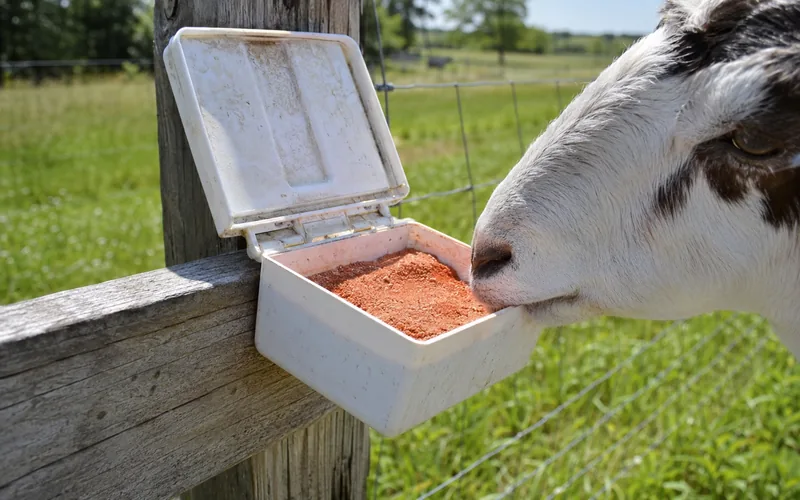
A cow eats 20 pounds of feed a day. A goat eats one or two.
Feed the goat the cow’s ration at goat-sized portions and every trace mineral arrives at a fraction of the intended level.
The goat doesn’t get poisoned. It just quietly runs short.
Calcium, phosphorus, and urinary stones
Grain-heavy feed raises the urinary stone risk in bucks and wethers. Cattle feed also leaves out the ammonium chloride that goat feeds add to prevent stones.
Male goats have a long, narrow urethra with a tight bend near the end. A stone that a doe would pass without noticing can block a wether completely.
The stones form when the calcium-to-phosphorus ratio goes wrong. Grain is high in phosphorus, and a grain-heavy diet pushes the ratio out of balance.
That imbalance produces struvite crystals, the same kidney stone disease other species get. A blocked male goat can die within a couple of days.
The University of Tennessee College of Veterinary Medicine warns that excessive grain puts wethers at increased risk of urinary stones.
Goat feeds add ammonium chloride to acidify urine and stop stones forming.
Watch for a buck or wether straining to urinate, dribbling, or crying out. Those signs need a vet the same day.
The same balance question comes up with alfalfa for male goats.
Grain overload and rumen acidosis
Too much grain of any kind can trigger acidosis in a goat. This risk comes from the amount eaten, not from any additive on the label.
The rumen runs on microbes that ferment fiber, and they need a narrow pH range to survive.
Dump a large amount of grain into that system and starch ferments quickly into lactic acid. The pH crashes, fiber-digesting microbes die off, and the goat goes into acidosis.
A goat that breaks into a feed bin is at risk either way, cattle feed or goat feed.
Signs come on within hours. The goat stops chewing cud, the belly looks bloated and tight, and it may grind its teeth or refuse to get up.
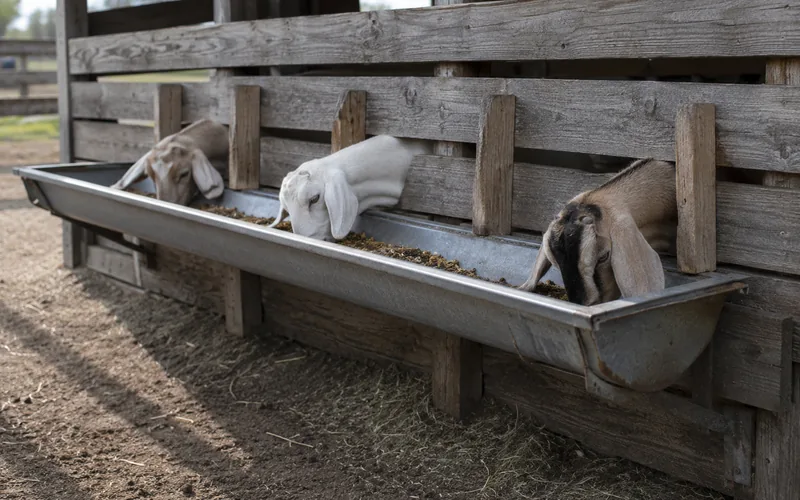
The University of Tennessee recommends feeding concentrate in smaller, more frequent meals to protect rumen health. It also advises keeping free-choice baking soda available whenever grain is fed.
Baking soda buffers the rumen and lets a goat self-correct a mild upset.
How to read a cattle feed tag
Every bag of commercial feed carries a legally required tag. Checking it takes fifteen seconds once you know what to look for.
Start with the word Medicated. If it appears near the product name, there is a drug in the bag and a purpose statement listing it.
Then scan for these words:
- Monensin or Rumensin: an ionophore, do not feed to goats
- Lasalocid or Bovatec: an ionophore, do not feed to goats
- Salinomycin: an ionophore, do not feed to goats
- Urea: nonprotein nitrogen, dangerous to unadapted goats
- Nonprotein nitrogen or NPN: the same concern as urea
- Biuret: another nonprotein nitrogen source, treat with the same caution
- Ammonium sulfate or ammonium phosphate: more NPN sources
The short version: there’s a second clue on the tag that catches urea when the ingredient list is vague. Look at the crude protein line for a footnote reading something like “not more than 3% of the crude protein is from nonprotein nitrogen.”
That footnote is a legal requirement wherever NPN is included. If it is there, urea is in the bag even if you did not spot it in the ingredients.
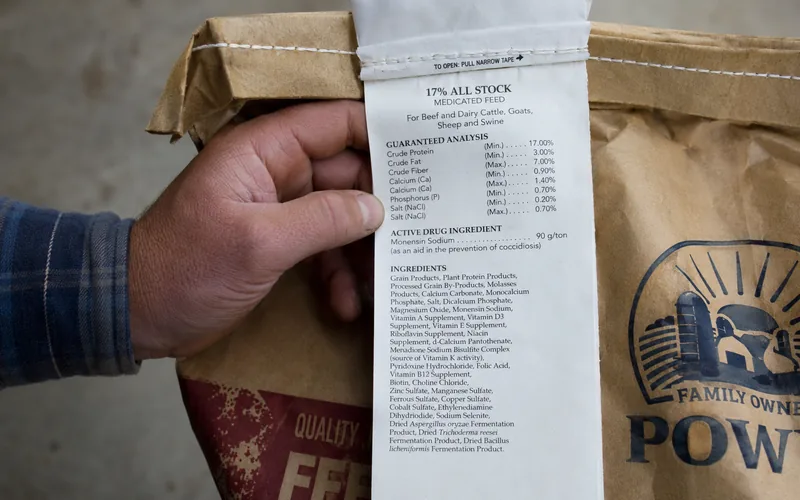
A bag with no medication statement, no ionophore, no urea, and a plain grain ingredient list is reasonably safe in normal amounts. That is the only version of cattle feed worth putting in front of your herd.
Buying plain whole grains avoids the tag problem entirely. Straight oats or whole corn carry no additives, though they still need portion control and a goat mineral alongside.
My goat got into the cattle feed
What you do next depends on what the tag says. Ionophores and urea need a vet straight away, while plain grain usually just needs close watching.
First, find the bag and read the tag. Everything after this depends on whether an ionophore or urea is listed.
Second, estimate how much is gone. A few mouthfuls is a different situation from an empty bin, and the vet will ask.
Third, remove the rest and move the goat somewhere you can watch it closely.
If the feed contains an ionophore, call a vet now. Do not wait for symptoms, because visible signs mean heart damage has already happened.
If the feed contains urea, this is an emergency too. Poisoning can progress within an hour or two, and treatment is a veterinary procedure.
If the feed is plain grain, the concern shifts to acidosis. Offer free-choice baking soda, good hay, and water, then watch for bloating or a goat that stops chewing cud.
Then keep watching for a full 48 hours. Ionophore and acidosis signs both appear well after the meal.

What this means for you: short-term substitution is usually fine. Say you’re out of goat feed and the tag is clean.
Feeding cattle feed for a few days while you restock is reasonable. Just add a goat loose mineral on the side during that stretch.
Can goats eat horse feed or pig feed?
Neither is a good option, and pig feed is the riskier of the two. Horse feed rarely contains ionophores, but it carries no goat mineral balance.
Pig feed includes copper levels and medications meant for a single-stomach animal, plus antibiotics a goat’s rumen cannot handle.
Pet food sits in the same category, and dog food adds animal protein that rumen microbes have no way to ferment.
Feeding goats and cattle on one farm
Running both species is workable. Keeping the two herds fed separately just needs structure.
Store every bag in a closed container with a latching lid. Goats are clever and will walk straight into an unlocked feed room.
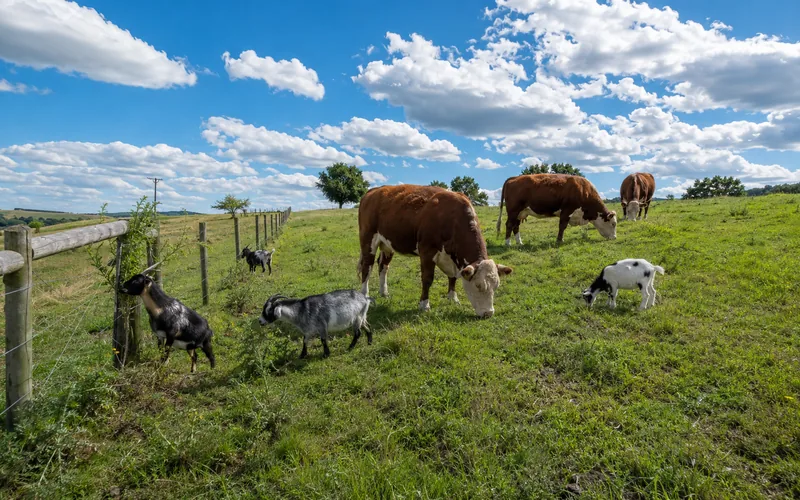
Use separate feeding areas rather than separate times in the same space, because trough residue matters when it contains monensin. Label your bins clearly if anyone else does chores.
What to feed goats instead
The foundation of goat nutrition isn’t grain at all. Forage feeds most of the animal.
Goats are browsers rather than grazers. The University of Tennessee describes goats as selectively eating the leafy and woody portions of plants that other ruminants leave behind.
Good grass hay fills the gap when browse is not available. Getting the right type of hay into the feeder matters more than any grain decision.
Forage sold in cattle formats needs the same scrutiny as cattle grain does. A hay cube pressed for cattle is safe forage nutritionally, but it has to be broken up or soaked before a goat can handle it without choking.
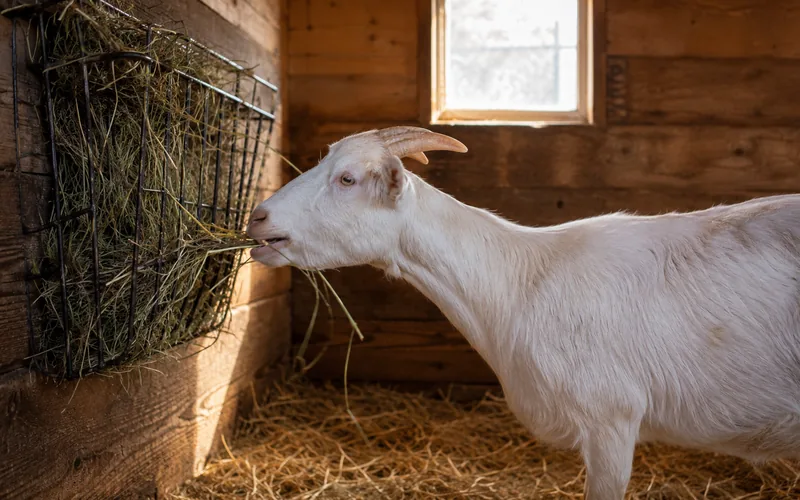
Grain is a supplement, not a staple. It belongs in the diet of goats with higher energy demands: growing kids, pregnant does, and does in milk.
For those animals, the University of Tennessee suggests 0.5 to 1 lb of grain per day of a 14 to 16 percent protein goat concentrate. A handful of cooked lentils mixed in can give a pregnant or milking doe a little extra protein.
Dry does, wethers, and non-breeding bucks need no grain at all. A small handful as a treat is fine, and more than that raises the urinary stone risk without any benefit.
Round it out with a loose goat mineral offered free-choice, clean water at all times, and baking soda available wherever grain is fed.
The Bottom Line
Cattle feed is not one product, and the answer changes with the tag. Plain, unmedicated grain with no urea is fine for a goat in sensible amounts.
Medicated feed containing monensin or another ionophore is a different matter. Store those bags where no goat can reach them, because the heart damage cannot be undone.
Urea sits in the middle and deserves more respect than it usually gets.
For daily feeding, a goat-formulated concentrate remains the better choice. It carries the right mineral levels and includes ammonium chloride for the males.
Frequently Asked Questions
Keep goats away from feed containing ionophores such as monensin, lasalocid, or salinomycin, and away from urea unless they are adapted to it. Also avoid moldy feed, chocolate, onions, garlic, and large amounts of any grain introduced suddenly.
Internal parasites, especially the barber pole worm, kill more goats than anything else. Feed-related deaths rank high too, mostly from rumen acidosis after grain overload, enterotoxemia, and urinary blockages in bucks and wethers.
Sometimes, but not reliably. Both are ruminants and share forages like hay and pasture, but cattle feed often contains urea or ionophores that cattle tolerate and goats do not. A plain grain mix with no additives is the main overlap.
Only if the feed contains no ionophores and no urea, and even then it is a poor daily choice. Cattle feed is balanced for a cow's body weight and mineral needs, so goats miss out on the copper and selenium levels they need.