| # | Product | Our Rating | ||
|---|---|---|---|---|
| 1 |  | Best OverallREDMOND Goat Mineral Supplement (5 lb) | ★★★★★ | Check Price |
| 2 |  | Wholesome Harvest 16% Goat Feed (10 lb) | ★★★★☆ | Check Price |
| 3 |  | Manna Pro Goat Treats | ★★★★☆ | Check Price |
Yes, peanut butter is safe for goats as an occasional treat. Most goats go absolutely nuts for the stuff, and it has a couple of practical uses on the farm beyond just being a snack.
But it’s high in fat and calories, so you need to keep the portions small.
Here’s what you need to know before you crack open that jar.
Can goats eat peanut butter?
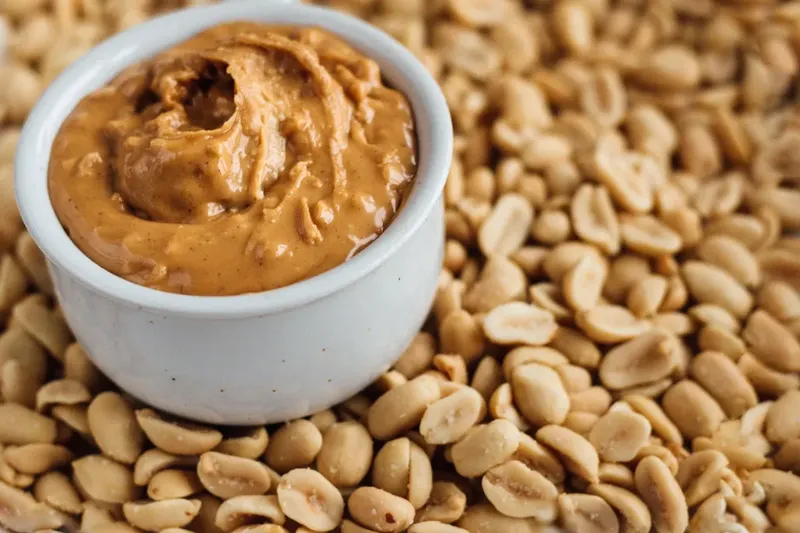
Peanut butter isn’t toxic to goats, and a small amount won’t cause any harm. Smooth or crunchy both work fine.
Goats tend to love the taste, which is exactly why it’s useful in certain situations.
What matters most is quantity. Peanut butter is calorie-dense and high in fat, which goats don’t need much of in their regular diet when they already get fats from treats like peanuts.
A tablespoon here and there’s fine, but making it a daily habit will lead to weight gain. Other nuts are just as rich, so keep raw almonds to a small handful too.
One thing to watch for is large globs sticking to the roof of the goat’s mouth. Smear it thin on a cracker or mix a small amount into grain rather than giving a big spoonful straight from the jar.
Using peanut butter to hide medication
This is where peanut butter really earns its place on the farm. Goats are notoriously hard to pill, and a thin smear can mask the taste of deworming tablets and vitamin supplements.
Wrap the pill in a small amount of peanut butter and place it on the back of the goat’s tongue. Most goats swallow it without a fight because the peanut butter flavor overwhelms the medicine taste.
This trick saves a lot of wrestling and frustration at dosing time, similar to using bread as a pill wrapper. Just keep the amount of peanut butter tiny so you’re not adding unnecessary fat to their diet every time you give medication.
Watch out for xylitol
This is the one real danger with peanut butter that every goat owner needs to know about. Some peanut butter brands contain xylitol, an artificial sweetener that’s toxic to many animals.
Always read the ingredient label before giving any peanut butter to your goats. If xylitol is listed, don’t feed it.
Stick to brands that contain nothing but peanuts, salt, and maybe a little oil.
Natural peanut butter with no added sugar is the safest choice. It also has less sugar than the processed varieties, which is better for your goats’ overall health.
How much peanut butter is safe
A tablespoon per goat is plenty for a treat or medication delivery. Don’t exceed two tablespoons per day, and don’t make it a daily habit.
Baby goats under six months should skip peanut butter entirely. Their digestive systems are still developing, and the high fat content can cause upset stomachs and loose droppings.
If you’re offering peanut butter for the first time, start with a pea-sized amount and watch your goat for a few hours. Allergic reactions are rare, but swelling around the mouth, excessive drooling, or hives mean you should stop immediately and call your vet.
Better treat alternatives
Compared to peanut butter, fresh fruits and vegetables are almost always the better choice for regular treats. Apple slices, carrot chunks, and banana pieces are lower in calories and easier to portion out for a whole herd.
Black oil sunflower seeds offer a similar protein and fat boost without the sticky mess. They’re cheaper per serving and goats love them just as much.
Dairy is the clearer thing to skip, because cheese offers no nutrition a goat can actually use and adds lactose on top of the fat.
Save the peanut butter for those times when you actually need it, like hiding a pill or coaxing a stubborn goat into a pen. For everyday treats, stick to produce and seeds.
Final Thoughts
Peanut butter is safe for goats in small amounts and shines as a medication delivery tool. Avoid brands with xylitol, keep portions to a tablespoon or less, and don’t give it to kids under six months.
For regular treating, fruits like watermelon and a handful of grapes, vegetables, and sunflower seeds are better options. But when you need to get a pill down a stubborn goat’s throat, peanut butter is hard to beat.
Frequently Asked Questions
Yes, peanut butter is safe for goats in small amounts. It's especially useful for hiding medication. Always check labels and avoid brands containing xylitol, which is toxic to many animals.
A pregnant goat can have a small amount of peanut butter as an occasional treat, but it shouldn't be a regular part of her diet due to the high fat content.
A lactating goat can have a small amount of peanut butter occasionally. It won't inhibit milk production in tiny quantities, but stick to a tablespoon or less and don't make it a habit.
Baby goats under six months should skip peanut butter entirely. Their digestive systems are still developing, and the high fat content can cause upset stomachs and loose droppings.