| # | Product | Our Rating | ||
|---|---|---|---|---|
| 1 |  | Best OverallREDMOND Goat Mineral Supplement (5 lb) | ★★★★★ | Check Price |
| 2 |  | Wholesome Harvest 16% Goat Feed (10 lb) | ★★★★☆ | Check Price |
| 3 |  | Manna Pro Goat Treats | ★★★★☆ | Check Price |
Corn is a starchy cereal grain harvested from the maize plant, and it fills more feed bags than any other crop in American agriculture. For goats it works as an energy supplement rather than a main feed, and a quarter cup a day is a normal adult portion.
That small number is the source of most of the confusion around corn. The grain is cheap, goats love it, and the gap between a helpful portion and a harmful one is narrower than most new owners expect.
This guide walks through every part of the corn plant a goat might reach, from kernels and cobs to husks, silk, and dried stalks. It also covers portions by age and sex, plus the digestive trouble that shows up once the grain moves past treat size.
Corn won’t replace good hay or pasture, and it was never meant to. Fed in measured amounts, it remains one of the cheapest ways to add energy during cold weather, late pregnancy, or heavy milk production.
Can Goats Eat Corn?
Goats can eat corn, and most bagged goat feeds already contain some. What matters is the portion, because it is a concentrate rather than a forage.
A goat is a ruminant with a four-chambered stomach built for slow fiber fermentation. The rumen, reticulum, omasum, and abomasum work together to break down browse, hay, and grass over many hours.
Corn doesn’t fit that design. It is a high-starch, low-fiber energy grain, so the rumen ferments it fast and produces acid faster than the system can buffer.
That mismatch is why corn belongs on the side of the ration and never at the center. A goat fed mostly grain will develop digestive problems no matter how good the grain is.
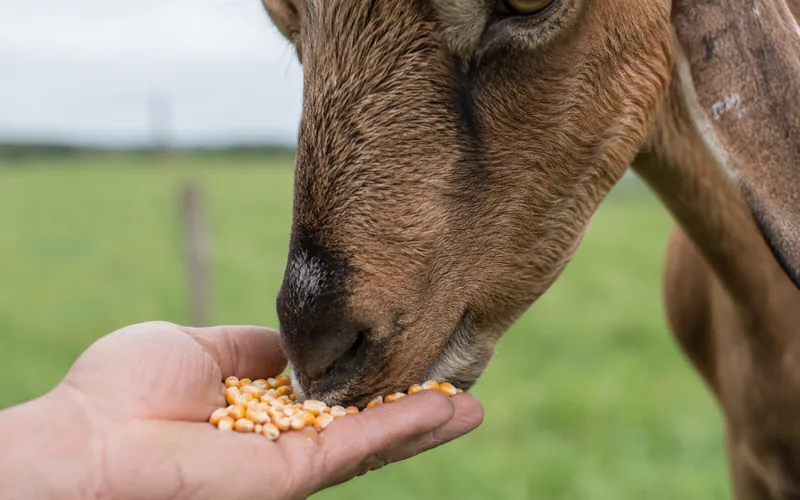
The practical rule most goat owners follow is simple. Corn and other grains together should stay under 10% of what a goat eats in a day, with forage making up the rest.
Small amounts genuinely help, though. A measured scoop adds calories for a doe in late pregnancy, a buck rebuilding condition after breeding season, or a herd facing a cold night.
What Is Actually Inside a Corn Kernel
A corn kernel is mostly starch, with modest protein and very little fiber. That mix makes it an energy feed and a poor source of almost everything else.
Energy, Starch, and Protein
About 70% of corn is starch by weight, which is what makes it such an efficient energy feed. That starch converts to glucose quickly, giving goats a fast source of calories.
Crude protein in corn kernels sits around 8 to 9%. Compare that to alfalfa hay at 15 to 20% and the gap becomes obvious right away.
That number matters for anyone feeding growing kids or milking does. Corn adds calories but does little for muscle growth, udder health, or milk protein.
Energy still matters on its own. According to the Merck Veterinary Manual, energy is the most important dietary requirement for goats after water, supporting maintenance, growth, reproduction, and milk production.
What Corn Is Missing
There isn’t much fiber in corn, and fiber is what keeps a rumen working properly. Effective fiber from hay stimulates chewing, and chewing produces the saliva that buffers rumen acid.
The mineral profile is the bigger problem. Corn carries far more phosphorus than calcium, which pushes the whole ration in a direction that causes trouble for male goats.
Vitamin content is also limited. Yellow corn supplies some vitamin A precursors, but goats still need loose minerals for zinc, copper, and selenium.
Amino acid quality falls short too. Corn is low in lysine, so a ration leaning on it leaves growing kids short on what they need to build muscle.
Why Dairy Goats Handle Grain Differently
A doe in peak milk burns energy faster than most new owners expect. Merck reports that dairy goats need high-energy diets that can lead to ruminal acidosis.
That pairing is awkward. The animals with the highest energy demand are also the ones with the least room for error on grain.
Meat breeds sit in a different spot. A Boer wether growing out for market needs calories, but he is not draining a milk supply.
Angora goats put energy into mohair, and a sudden feed change can show up as a thin band in the fleece months later.
A dry Pygmy pet and a Saanen giving a gallon a day should not eat off the same recipe.
The Micromineral Gap Corn Leaves
Corn supplies energy and very little else on the mineral side. Merck lists the key microminerals for goat nutrition as cobalt, copper, iodine, iron, manganese, selenium, and zinc.
Not one of those comes from corn in a useful amount. That is the argument for a loose mineral feeder in the barn year-round.
Copper deserves its own note. Goats tolerate more copper than sheep do, and Merck warns they may become copper deficient if fed mineral products formulated for sheep.
Vitamins follow the same pattern. Of the fat-soluble vitamins, only A, D, and E have established dietary requirements for goats, and yellow corn contributes only to the first.
A copper-deficient goat shows it in the coat. Look for a rusty cast on a black goat, a rough coat, or a fish-tail end to the tail.
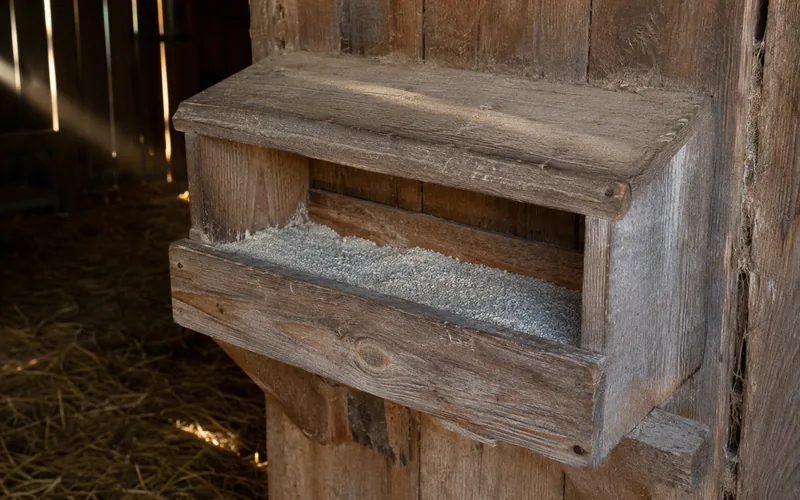
None of this makes corn a bad feed. It just means the grain covers energy and leaves protein, fiber, and minerals to hay, browse, and a good loose mix.
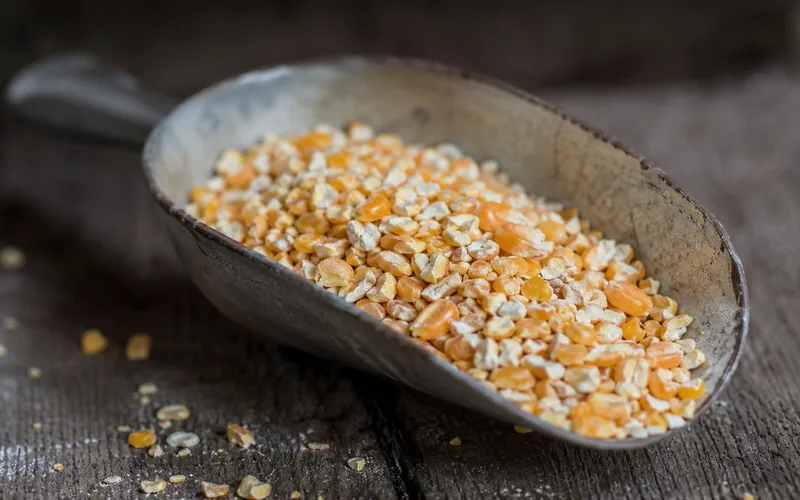
Here is a quick nutrition comparison of common goat feeds by protein and fiber content:
| Feed | Crude Protein | Crude Fiber | Best Use |
|---|---|---|---|
| Corn (cracked) | 8–9% | 2–3% | Energy supplement |
| Oats | 11–13% | 11–12% | Safer grain option |
| Barley | 11–12% | 5–6% | Energy with more fiber |
| Alfalfa hay | 15–20% | 25–30% | Protein and calcium |
| Grass hay | 7–10% | 30–35% | Daily forage base |
| Corn stalks | 5–6% | 30–35% | Filler and bedding |
Which Parts of the Corn Plant Can Goats Eat?
Goats can safely eat the kernels, husks, silk, and dried stalks. The cob is the one part to keep away from them.
- Kernels: safe in measured portions, best cracked or rolled
- Husks and silk: safe, good bulk fiber and enrichment
- Stalks: safe once fully dried and free of mold
- Cobs: avoid, they cause choke and impaction
Kernels
Kernels are the part everyone means when they ask about feeding corn. They pack the most energy and carry the most risk, which makes portion control non-negotiable.
Raw kernels are safe. There’s no need to cook, soak, or sprout them before feeding.
Form matters here, not freshness. Cracked corn is more digestible than the whole kernel because breaking the hull gives rumen microbes direct access to the starch inside.
Whole kernels frequently pass straight through a goat. Owners who feed it whole often find intact kernels in the manure, which is money spent on nothing.
Cobs
The cob is the one part to keep away from your herd. That woody core is dense lignin, and goats cannot break it down the way they break down grass or leaves.
A goat that swallows a chunk of cob risks choke in the esophagus or an impaction further down. Both situations turn into emergency vet calls.
But there’s a catch. Cooking a cob softens it slightly, and that softening tricks people into thinking a boiled cob is now safe.
It isn’t. A cooked cob is still indigestible, and the extra softness only makes goats more willing to swallow large pieces.
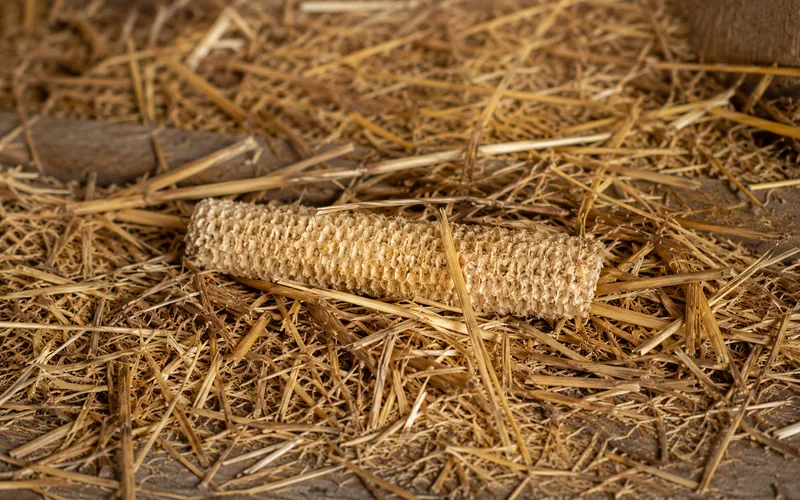
Compost is the right destination for cobs. They break down into good garden material within about six months, and chickens scratching through that pile handle them far better than goats ever will.
Husks and Silk
Husks are the outer leaves that wrap an ear, and goats love them. Corn husks provide bulk fiber and enrichment without loading the rumen with starch.
The silk is safe too. Those fine threads come off with the husks, and goats eat both together without any special preparation.
Nutritionally, husks sit close to a mediocre grass hay. They won’t fatten a goat, but they add chew time and a little moisture during hot weather.
Other seed casings do the same job, and edamame shells deliver that bulk fiber without any of the starch a kernel carries.
Wash store-bought husks before feeding, since grocery produce may carry pesticide residue that homegrown sweet corn husks would not.
Introduce husks gradually, the same way you would any new green material. A goat that eats a huge pile of fresh husks in one sitting often ends up with loose stool for a day.
Garden leftovers work the same way. Overripe tomatoes, cucumbers, and melon rinds are all fine in small amounts, and any scraps your goats ignore usually get finished by the chickens.
Ripeness is the thing to check on a tomato. Green fruit and tomato vines contain solanine, so only soft red fruit should go over the fence.
Husks stay useful well past sweet corn season, too. Dried husks pulled off field corn hold their bulk fiber, though goats find the fresh green ones much more appealing.
Stalks
Dried stalks left standing after harvest make decent roughage and excellent entertainment. They test out around 5 to 6% crude protein, which puts corn stalks close to poor-quality straw.
Stalks are filler, not feed. A goat living on stalks alone will lose condition, so free-choice hay and loose minerals need to stay available.
Dryness is the safety requirement. Green or damp stalks ferment in the rumen and can cause bloat, so wait until the field has fully cured and browned.
Inspect for mold before turning goats loose. Dark patches, dust clouds, or a slimy feel all mean that section should be fenced off.
Grazing a harvested field for a week or two after the combine passes is a reasonable use of the residue. The goats clean up spilled grain and leaves, and their manure goes back into the soil.
Watch the spilled grain load in the first few days, though. A field that was combined poorly can leave enough loose kernels on the ground to cause acidosis in a goat that finds a pile.
Portable electric netting makes this manageable. Moving the herd across the field in strips limits how much residue any goat reaches at one time.
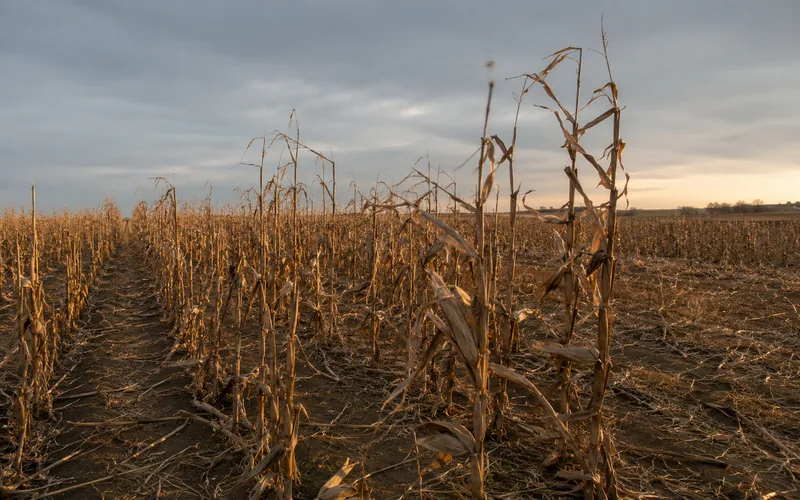
One field condition changes the advice completely. Corn grown through a drought can hold high nitrate in the lower stalk, and that nitrate does not break down as the plant dries.
If the crop was drought stressed, the bottom third of the stalk is the risky part, and a forage test is worth the cost.
Screenings and Spilled Grain
Corn screenings are the small broken pieces and dust left after cleaning. They cost less per bag, and that low price hides a real problem.
Screenings concentrate the problems. Broken kernels, weed seeds, and mold spores all collect in the same fraction.
Fines also ferment fast because the particle size is tiny. A scoop of screenings delivers a faster starch load than the same weight of whole kernels.
Buy screenings only if you can see them. A clean, bright sample with no musty smell can work as part of a mix, and anything dusty should be passed over.
Whole Corn, Cracked Corn, or Crimped Corn?
Cracked or rolled corn is the better buy for goats. Whole kernels often pass through undigested, especially in older goats with worn teeth.
Whole Corn
Whole corn keeps its hard outer pericarp intact. That shell resists both chewing and microbial attack, so a meaningful share of the kernels pass through undigested.
Older goats struggle most with whole corn, because worn molars cannot crack the hull and the animal swallows them whole.
Whole corn isn’t dangerous, just inefficient. If it’s what you have, feed it in a smaller portion and mix it into something else.
Cracked Corn
Cracked corn is run through a mill that breaks each kernel into a few coarse pieces. That exposure lets rumen microbes reach the starch, so digestibility jumps.
The trade for that efficiency is speed. Cracked corn ferments faster than the whole kernel, which raises acidosis risk if the portion is too large.
It also goes stale faster. Once the hull is broken, the exposed surfaces oxidize and attract mold, so buy it in amounts you will use within a month or two.
Crimped and Rolled
Crimped and rolled corn get flattened between rollers rather than shattered. The result is a flake that digests nearly as well as the cracked form while producing less fine dust.
Less dust helps more than you would expect. Fine particles can irritate airways in a closed barn and tend to settle at the bottom of the feeder, uneaten.
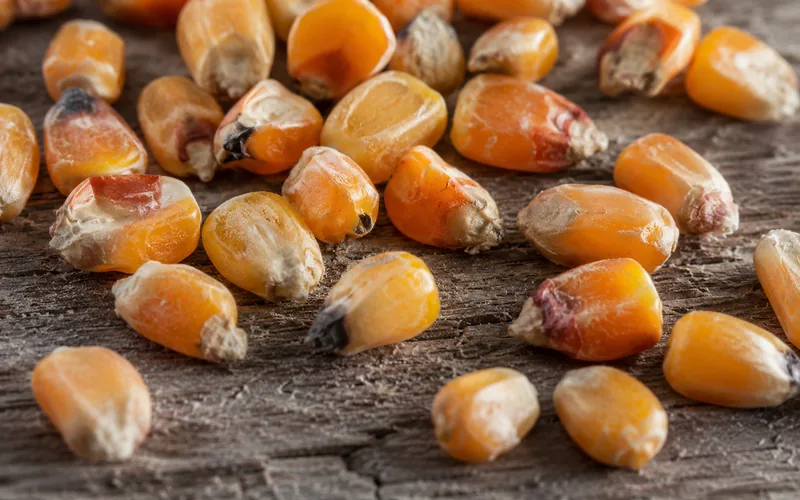
Rolled corn costs a bit more per bag in most feed stores. For goats with worn teeth or a history of digestive upset, that premium is usually worth paying.
How Much Corn Can a Goat Eat?
A quarter cup a day suits most adult goats, and all grain together should stay under 10% of daily intake.
Portion size depends on body weight, life stage, and sex. A Nigerian Dwarf and a full-grown Boer buck should not receive the same scoop.
The overall ceiling holds across every category. Corn and other grains combined should stay under 10% of daily dry matter intake.
Goats have real capacity for that dry matter. Merck notes that goats can consume up to 6.5% of their body weight as dry matter each day.
That fast intake comes with a downside. The same rapid rate of passage limits how well a goat digests lower-quality forage, which is why hay quality matters so much.
The short version: measure the corn, do not pour it.
Working Out the Portion by Body Weight
The 10% rule is easy to apply once you know roughly what a goat eats daily. A goat eating about 3% of body weight in dry matter gives you a workable starting figure.
Take a 150-pound Nubian doe as the example. Three percent of her body weight is about 4.5 pounds of feed a day, so grain should stay under half a pound.
Half a pound of cracked corn is close to a cup and a half. That is the ceiling for all grain combined, so mixing it half and half with oats would put the corn itself at roughly half a cup.
Scale the same math down for smaller breeds. A 60-pound Nigerian Dwarf eats around 1.8 pounds of dry matter, which caps total grain near three ounces.
Weigh your scoop once and write the number on the lid. Volume measures vary between feeds, and a cup of rolled corn weighs less than a cup of whole kernels.
This calculation is a starting point, not a prescription. Body condition scoring tells you more about a goat’s real nutrition needs than any formula does.
Run your hands over the ribs and spine every couple of weeks. Adjust the scoop based on what you feel there, not on what the math predicted.
Body condition scoring uses a 1 to 5 scale on goats. A score of 1 is emaciated with sharp bones, 3 is ideal, and 5 is obese with fat covering the ribs.
Score at the loin, behind the last rib. Press with your fingertips and judge how easily you feel the bones under the muscle.
Coats hide a lot, especially on Angora and Cashmere goats. Your hands tell you more than your eyes in winter.
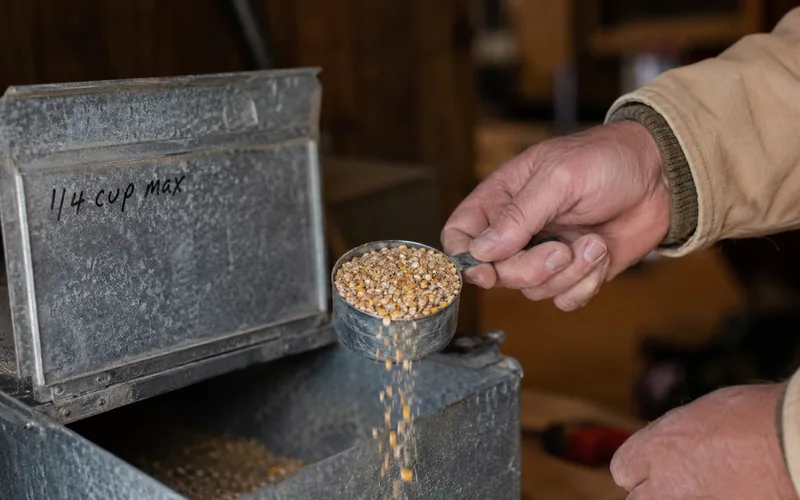
Most herds should sit near a 3. Does are best bred at a 3 and should not drop below 2.5 through lactation.
Breed Size Changes the Scoop
Breed matters more than most feeding charts admit. A Nigerian Dwarf at 60 pounds and a Boer buck at 250 pounds differ by more than four times in body weight.
Nigerian Dwarf, Pygmy, and mini crosses do fine on two or three tablespoons, and they gain fat quickly when overfed.
Alpine, Saanen, LaMancha, Nubian, and Toggenburg does in milk carry the highest energy demand of any group on most farms.
Boer, Kiko, and Spanish goats handle grain better, putting calories into frame and muscle rather than a milk supply.
Angora and Cashmere goats are the exception. Fiber growth is steady rather than seasonal, so their ration should change slowly.
Senior Goats and Worn Teeth
A goat past eight years old often cannot chew what it used to. Molars wear flat, and whole kernels start passing through untouched.
Switch older goats to rolled or ground feed before they lose condition. Soaked beet pulp and soft leafy hay carry weight better than any grain at that age.
Check the mouth twice a year. Missing molars, loose teeth, or feed packed in the cheek all point to a ration that needs reworking.
Watch how fast a senior eats. A goat that drops half-chewed wads of feed, called quidding, has a teeth problem rather than an appetite problem.
Water Belongs With Every Grain Ration
Grain raises water demand right away. Merck states that daily water intake for goats at maintenance should be 2 to 3 times dry matter intake.
Dehydrated goats are the ones that develop urinary stones and impactions on a grain ration.
Cold water suppresses drinking in winter. A heated bucket costs little and prevents more blockages than any supplement.
Watch intake after any ration change. A goat that stops drinking within a day of new feed needs attention before it stops eating too.
Adult Wethers and Dry Does
A healthy adult on decent pasture needs no corn at all. Forage plus loose minerals covers maintenance for a goat that is not pregnant, milking, or growing.
If you feed corn as a training treat or a way to call the herd in, a quarter cup per head per day is plenty. Wethers in particular should get the smallest portion of any group.
Bucks
Bucks handle small corn portions fine outside of breeding season, but the concern is not the calories so much as the mineral balance it creates.
Keep bucks at a quarter cup or less, and always pair grain with ammonium chloride in the mineral mix. Offer it free-choice every day, not just during rut.
Pregnant and Milking Does
Late pregnancy and peak lactation are the two windows where corn genuinely earns its place. Energy demand climbs sharply, and forage alone often falls short.
Increase grain gradually across the last six weeks before kidding. A doe in milk may take a half cup to a full cup of grain mix daily, with corn as only part of that mix.
Watch body condition rather than the calendar, as a doe carrying triplets needs more than a doe carrying a single kid.
Kids
Young kids can start sampling grain around three to four weeks old as the rumen develops. Offer a creep feed rather than plain corn, since kids need protein far more than they need starch.
A balanced starter beats corn every time at this age. On its own the grain slows frame growth while adding fat, which is the opposite of what a growing kid needs.
Creep feeding solves the access problem. A creep gate lets kids reach their own feeder while keeping the adults out, so the little ones eat without being pushed off.
Build the opening about eight inches wide, which passes a kid and stops a full-grown doe.
Coccidiosis is the reason most starters are medicated. Kids pick up coccidia from the ground around weaning, and a coccidiostat in the creep feed keeps that pressure down.
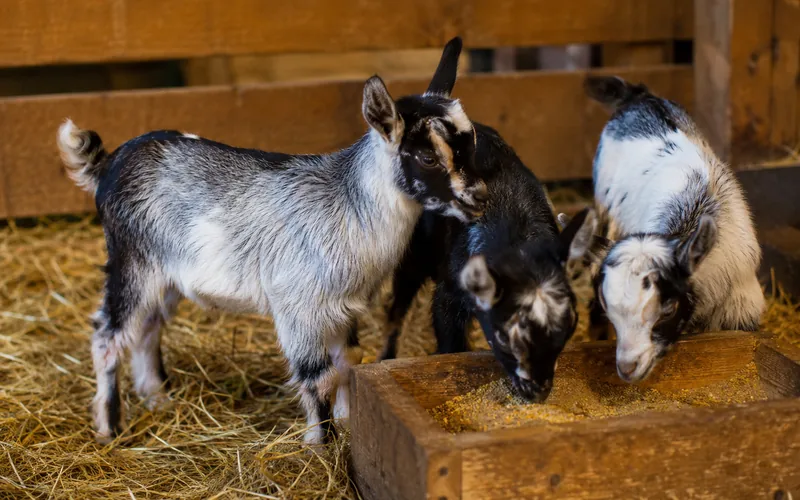
Weaning is where grain matters most. A kid pulled off milk still has a developing rumen, and grain carries it through the weeks before forage alone is enough.
Wean by weight rather than by date. Most kids are ready near two and a half to three times their birth weight, which lands around eight to twelve weeks for standard breeds.
Cut milk gradually over about two weeks. Dropping a feeding at a time causes far less of a growth check than stopping all at once.
| Goat Type | Daily Corn Portion | Notes |
|---|---|---|
| Dry doe or wether | 0 to ¼ cup | Often needs none at all |
| Buck (non-breeding) | ¼ cup max | Pair with ammonium chloride |
| Pregnant doe (last 6 weeks) | ¼ to ½ cup | Increase gradually |
| Milking doe | ½ to 1 cup grain mix | Corn is only part of the mix |
| Kid (3+ weeks) | Creep feed, not plain corn | Protein matters more than starch |
What Happens When a Goat Eats Too Much Corn
Too much corn can cause acidosis, bloat, urinary calculi, enterotoxemia, laminitis, and goat polio. How fast trouble arrives depends on how much was eaten at once.
Rumen Acidosis
Acidosis is the most common corn-related emergency. When a large slug of starch hits the rumen, bacteria produce lactic acid faster than the goat can buffer it.
Rumen pH drops, the microbial population crashes, and the goat goes off feed. Signs include a hunched stance, teeth grinding, diarrhea, and a rumen that has gone quiet.
Mild cases respond to baking soda offered free-choice, since sodium bicarbonate neutralizes rumen acid directly. Serious cases need a vet, not a home remedy.
Keeping it available at all times costs little and prevents a lot. Most goats will self-dose when their rumen feels sour.
Merck reports that ruminants eating enough concentrate to be seriously affected develop clinical signs within 6 to 8 hours.
A goat found at breakfast that raided the bin overnight is already deep into the problem.
Treatment scales with severity. Merck describes alkalinizing agents given orally plus palatable grass hay for moderate cases, while severe cases need rumen lavage or surgery and IV fluids.
None of that is a barn job. Once a goat is down, staggering, or cold to the touch, call a vet.
Bloat
Bloat happens when gas builds up in the rumen faster than the goat can belch it out. Grain-based bloat is usually the frothy type, where gas gets trapped in a stable foam.
A bloated goat looks visibly swollen on the left side. The animal will stand with a stiff posture, breathe hard, and refuse to eat.
Frothy bloat moves fast and can kill within a few hours. Any goat with a distended left flank and labored breathing needs a vet call the same day.
Urinary Calculi in Bucks and Wethers
This is the risk most closely tied to grain, and it affects male goats almost exclusively. Urinary calculi are mineral stones that form in the bladder and lodge in the narrow urethra.
You might be wondering: why does corn matter here at all? The answer sits in the calcium-to-phosphorus ratio.
Corn runs high in phosphorus and low in calcium, and that imbalance drives stone formation. Merck reports that high-grain and legume diets are associated with phosphatic and calcium carbonate stone types in ruminants.
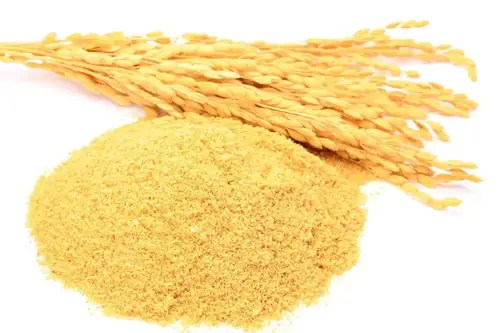
Adding rice bran to a corn ration tips the balance further, since both feeds run heavy in phosphorus.
The fix is a target ratio, not a guess. The Merck Veterinary Manual states that the calcium-to-phosphorus ratio should be held at 2 to 2.5 to 1 across the total ration.
Holding that ratio limits how much phosphorus is available to form phosphatic stones. Adding alfalfa, which is high in calcium, is the usual way small farms shift the balance back.
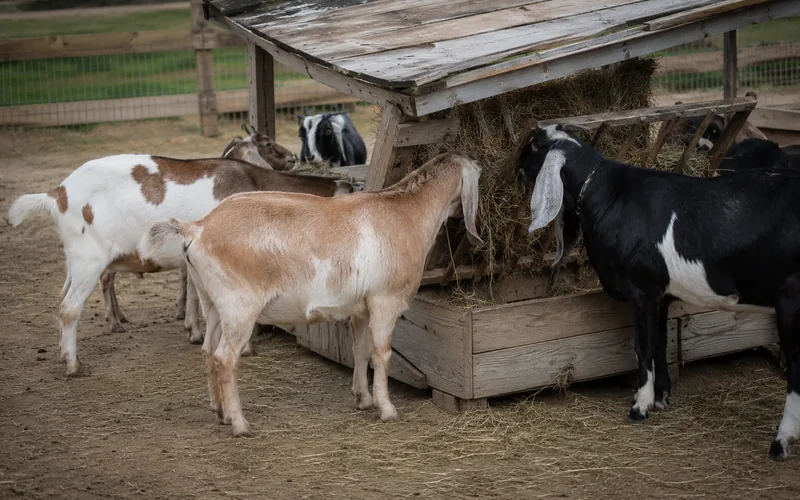
Wethers face the highest risk of all. Early castration leaves a narrow urethra, so even small calculi can block it completely.
Ammonium chloride in the mineral mix acidifies urine and reduces stone formation, though plenty of clean water helps as much as any supplement.
Enterotoxemia and Grain Overload
Enterotoxemia, sometimes called overeating disease, follows a sudden grain binge. Clostridium bacteria multiply in the gut and release toxins that can kill a goat before symptoms are obvious.
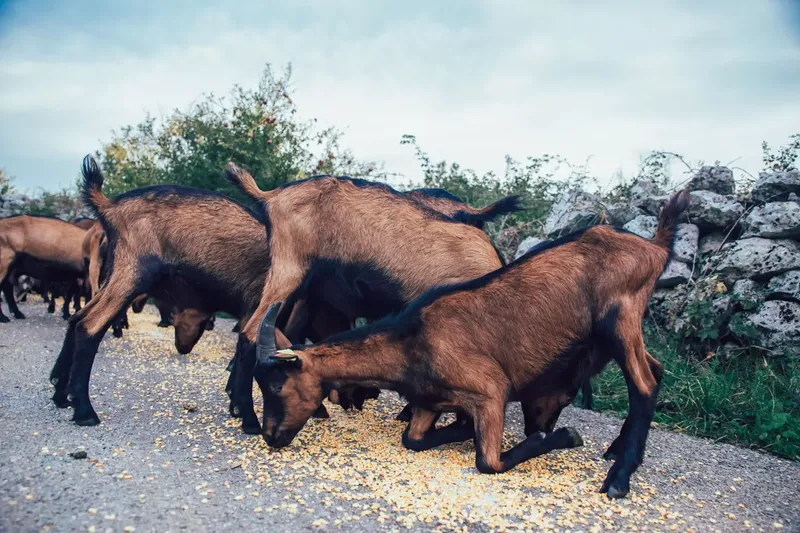
This is the scenario where a goat breaks into the feed room. A full belly of corn eaten at once is far more dangerous than the same amount spread over a week.
The CDT vaccine protects against enterotoxemia and tetanus, and it belongs on every herd’s calendar. Locked feed storage does the other half of the job.
Simple Indigestion, the Mild Version
Not every grain mistake becomes an emergency. A small overfeed often causes simple indigestion, which is a short slump in appetite and rumen activity rather than a crisis.
Merck notes that affected animals stay bright and alert and usually begin to eat within 24 hours, with recovery in 24 to 48 hours.
A goat that is off feed but standing, alert, and passing normal manure is in a different situation than one that is staggering.
Pull the grain and keep water and good hay in front of the animal.
Then watch for the signs that mean it is turning into something worse.
Goat Polio From a High-Grain Ration
The name sounds like a virus, but it is not. Polioencephalomalacia has nothing to do with polio, and Merck describes it as a disease of thiamine deficiency or sulfur toxicosis.
Grain is the link. Merck notes that animals on high-concentrate diets carry higher risk, because the bacteria that break down thiamine multiply when grain intake is high.
The signs are neurological, not digestive. Watch for stargazing, head pressing against a wall, an unsteady walk, and blindness where the goat still has a pupil response to light.
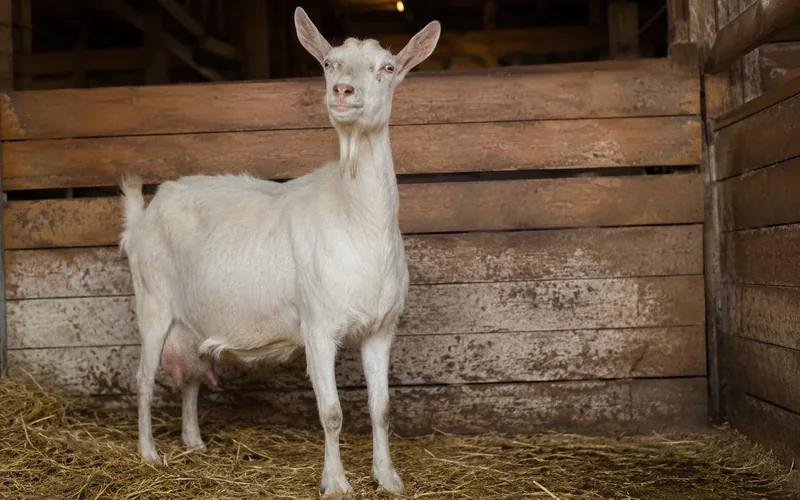
Speed matters more here than with most conditions. Merck states that thiamine treatment usually shows benefit within 24 hours.
If there is no early improvement, treatment should continue at least three days.
Younger goats are affected more often than adults. A weanling on a heavy creep ration is the classic case.
Laminitis and Founder
Grain overload can settle in the feet. The inflammation that follows a starch load reaches the sensitive tissue inside the hoof wall.
A foundered goat walks like the ground hurts. Look for a stiff, short stride, reluctance to stand, or an animal that kneels to eat.
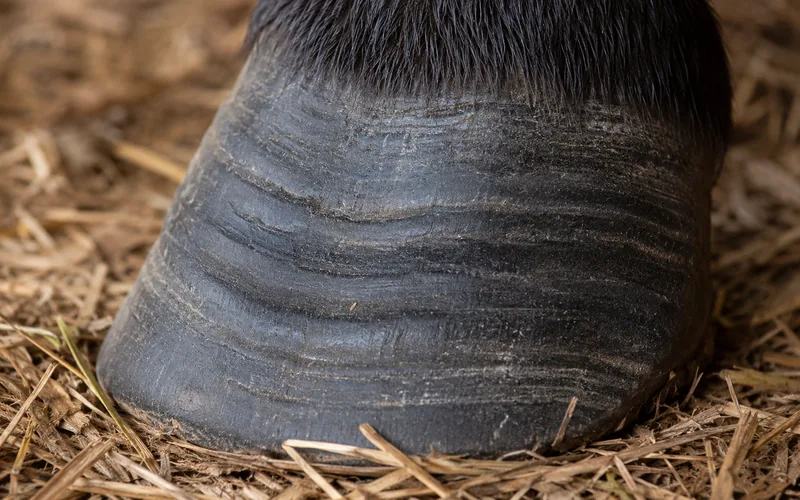
Damage from a bad episode can be permanent. Hoof walls grow back with ridges, and the goat may never move soundly again.
Trim and monitor any goat that has foundered once. Those animals stay more sensitive to grain afterward.
What to Do If Your Goat Gets Into the Corn Bin
Move the goat off the feed, leave water available, and offer free-choice baking soda. Then watch closely, because serious signs show up within hours.
A goat that finds an open feed bin will eat until it physically cannot continue. That single event is more dangerous than months of small daily portions.
The First Hour
Remove the goat from the feed source and note roughly how much is gone. An estimate of the amount eaten is the first thing a vet will ask for.
Do not withhold water. A goat working through a starch load needs water to dilute rumen contents and keep things moving.
Offer free-choice baking soda right away. Most goats that feel a sour rumen will eat sodium bicarbonate on their own, and it starts buffering acid within minutes.
Pull all other grain out of reach. Hay should stay available, since long-stem fiber slows fermentation and encourages the chewing that produces buffering saliva.
Signs That Need a Vet Today
Watch the animal closely for the next twelve hours. Staggering, a swollen left flank, labored breathing, or a goat that will not stand are all emergency signs.
Teeth grinding signals real pain and should never be dismissed as a quirk. Diarrhea that smells sharply sour points to acidosis already underway.
A quiet rumen is the sign owners miss most often. Press your fist into the left flank and listen, because a healthy rumen gurgles every minute or so.
Recovery and Prevention
Goats that pull through a grain overload often need weeks to rebuild rumen function. Probiotic pastes and good hay do more during that stretch than any grain will.
A good latch prevents more grain overload than any supplement does. Store corn in a closed room with a door goats cannot lift, since a goat that opens a bin once will keep trying forever.
Watch the Whole Herd, Not Just the Obvious One
Goats hide illness well, and the one you caught at the bin may not be the only one that got in. Merck advises that when even one animal is ill, all should be monitored closely for 48 hours.
Two days is the honest watch period. Count heads, watch who comes to the feeder, and note anyone hanging back from the group.
Take temperatures if you can. A goat below the normal range of about 101.5 to 103.5 degrees Fahrenheit is in worse shape than one running a fever.
Feeding Corn in Winter vs. Summer
Feed corn in winter and pull back in summer. Digesting grain produces body heat, which helps on a cold night and works against a goat in July.
Why Corn Helps in Cold Weather
Digesting any feed produces metabolic heat, and grain digestion adds a quick burst of it. That extra warmth helps goats hold body temperature through a cold night.
Winter is the season where a small corn ration makes the most sense. A quarter cup fed in the late afternoon gives the rumen something to work on overnight.
Hay still supplies most of that warmth, though. Fiber fermentation produces far more sustained heat than starch does, so never cut hay to make room for grain.
The difference is duration. Starch burns through the rumen in a few hours, while a good grass hay keeps fermenting and generating warmth most of the night.
That’s why a cold stretch calls for more hay first. Corn is the small addition on top, useful for goats in thin condition or does carrying kids through January.
So what does that look like day to day? Feed hay free-choice all winter, then add the small grain portion in the evening rather than the morning.
Why to Pull Back in Summer
The same heat that helps in January works against a goat in July. Grain digestion raises body temperature at exactly the wrong time.
Heat-stressed goats already eat less and pant more. Adding corn on a 95-degree afternoon makes the animal work harder to shed it.
Cut or drop the corn ration during hot stretches. Shade, clean water, and access to pasture in the cooler hours do more for a summer herd than any grain will.
Kidding Season Changes the Math
Late winter kidding is where the seasonal advice gets specific. A doe in her last six weeks is growing kids fastest at the coldest point of the year.
Those two demands stack. She needs energy for the kids and energy to stay warm, and her rumen has less room as the kids take up space.
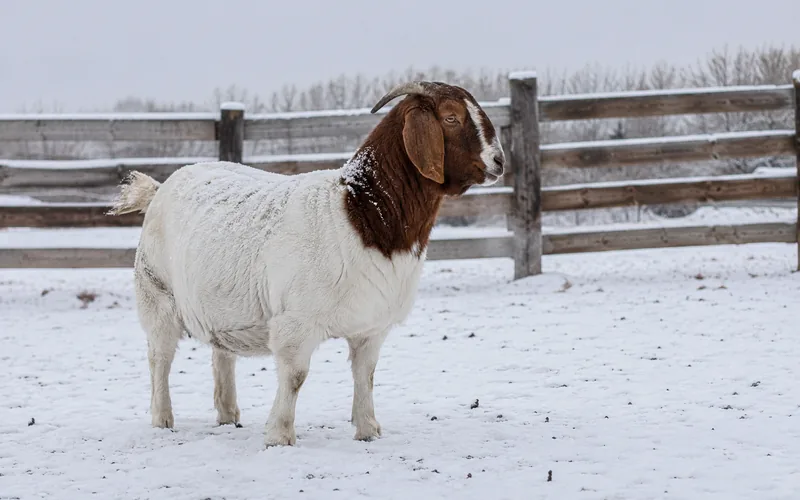
Split the ration into two smaller feedings instead of one large one. Two half-cup portions are easier on the rumen than a single cup.
Stop increasing grain once she kids, then build back up as milk comes in. Pushing grain hard right at kidding raises the risk of oversized kids and a difficult delivery.
Can Goats Eat Deer Corn?
Goats can eat clean, dry, untreated deer corn, but it carries more risk than feed-grade grain. Storage conditions and added attractants are the reasons.
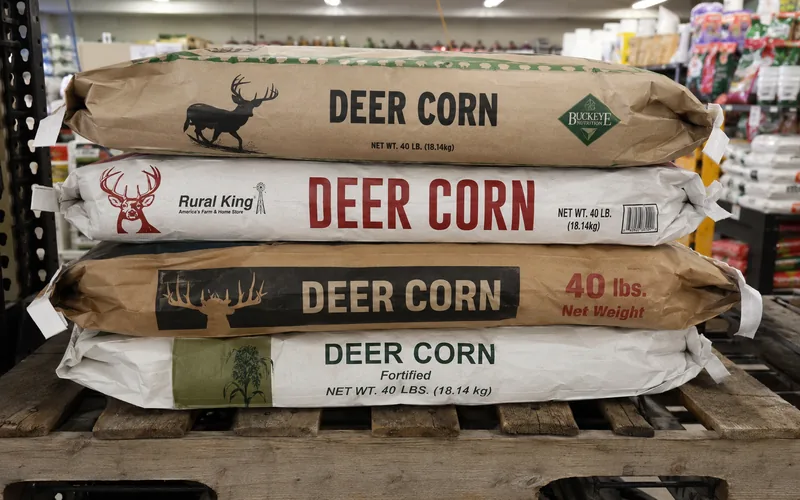
Deer corn is the cheap shelled grain sold in 40 or 50 pound bags at farm and hardware stores. It is the same species as feed corn, but the handling behind it is different.
Why Deer Corn Carries Extra Risk
Deer corn is not produced under livestock feed standards. It often sits outdoors on pallets, gets rained on, and ends up stored in conditions that encourage mold.
Mold is the real concern, not the grain itself. Aflatoxin and fumonisin from Aspergillus and Fusarium molds can damage a goat’s liver even at low doses.
Some deer corn also comes treated with scent attractants, molasses coatings, or added minerals meant for wildlife. Those additives are not formulated for a ruminant on a controlled ration.
When Deer Corn Is Acceptable
Clean, dry, untreated deer corn from a fresh bag is chemically the same as feed grade. If the bag smells sweet and grainy with no dust or clumping, small amounts are fine.
Check the label for additives before buying. A plain bag of shelled corn with no listed treatments is the only version worth feeding.
Whole kernels remain whole kernels, though. Deer corn is almost always sold whole, so the digestibility problem applies here too.
How you store it afterward matters more than the price. Move deer corn into a sealed container the day you buy it rather than leaving the paper sack on a barn floor.
Price is what draws people to deer corn. The savings over bagged goat feed disappear quickly if one moldy batch costs you a vet visit.
Bait Piles and Fence Lines
The bigger deer corn risk is not the bag at all. It is the bait pile a neighbor keeps just past your fence.
Goats that reach a bait pile eat without any limit. That is a grain overload waiting to happen, and it usually gets discovered too late.
Walk your fence line in hunting season. Move goats off any paddock that borders a feeder or a pile.
Wildlife traffic brings a second problem. Deer and goats share several parasites, and a bait pile concentrates droppings in one spot your herd can reach.
Cornmeal, Corn Flour, and Processed Corn
Ground corn is safe in small amounts but ferments faster than cracked corn. The finer the grind, the smaller the safe portion.
Cornmeal and Corn Flour
Cornmeal and corn flour are ground fine enough to ferment almost immediately in the rumen. That speed makes acidosis easier to trigger at a smaller portion.
Neither one is toxic. A tablespoon mixed into feed as a carrier for medication or minerals causes no harm.
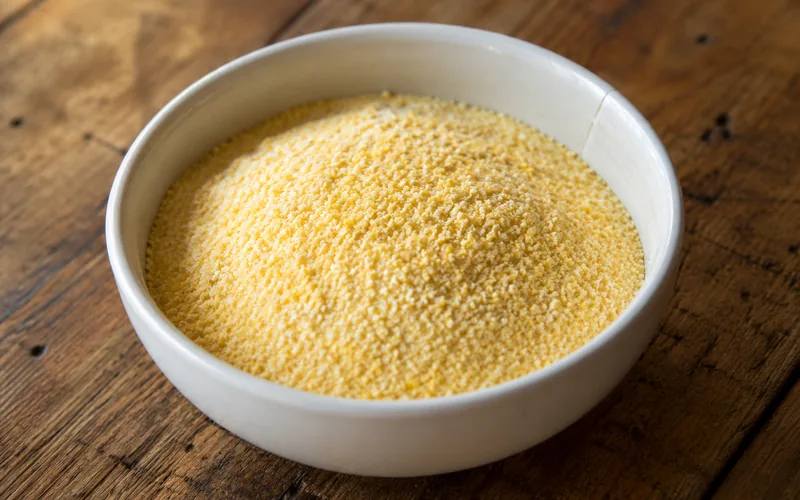
Fine flour also cakes when wet and can irritate airways as dust. Cracked or rolled corn is the better everyday choice for any goat.
Corn flour is finer still than cornmeal. Treat it as a binder for minerals or medication, never as a feed in its own right.
Wet either one and you get paste. A goat that swallows a wad of wet flour can choke, so mix these into dry feed rather than a mash.
Sprouted Corn and Fodder Systems
Sprouting changes corn more than cooking does. Soaking and sprouting kernels for about a week raises moisture and makes some nutrients easier to absorb.
Fodder mats are popular with small herds in winter, giving green material when grazing is gone.
Mold is the whole challenge with fodder. Trays sit warm and wet for days, which is exactly what Aspergillus and Fusarium need.
Rinse trays daily and throw out any mat that smells sour. If keeping it clean feels like too much work, good hay is safer.
Does GMO or Organic Corn Matter?
There is no evidence that goats digest genetically modified corn differently than conventional corn.
Organic corn matters for a different reason. If you sell milk, meat, or soap under an organic label, your feed has to meet that standard to keep the certification.
Pesticide residue is the practical concern for everyone else. Buying feed-grade corn rather than seed corn matters far more, since seed grain is treated with fungicides and is never safe for livestock.
Treated seed corn is usually dyed bright pink or blue. Any brightly colored kernel should be treated as poison and kept away from every animal on the farm.
Popcorn, Tortillas, and Corn Bread
Plain air-popped popcorn is a safe occasional treat, since popping breaks the kernel open and the volume is mostly air. Butter, salt, and caramel coatings are the parts to avoid.
Corn tortillas and corn bread are baked products with added salt, fat, and often sugar. A torn piece now and then does nothing, but they are closer to junk food than feed.
The same logic applies to corn on the cob left over from dinner. Let the goats strip the kernels and husks, then pull the bare cob out of the pen.
Silage and Byproducts
Corn silage is chopped whole-plant maize fermented in a bunker or bag. Properly fermented, mold-free silage works well for goats, but few small herds can use a batch before it spoils.
Corn gluten meal and distillers grains are byproducts with higher protein than the whole kernel. Both can substitute for part of a grain mix, but distillers grains carry high phosphorus and are a poor fit for bucks and wethers.
How to Add Corn to Your Goat’s Diet Safely
Introduce corn over about two weeks, starting with a tablespoon or two per goat. Increase slowly and watch the manure at every step.
The rumen microbes have to shift to handle starch, and that takes about two weeks.
Start Small and Go Slow
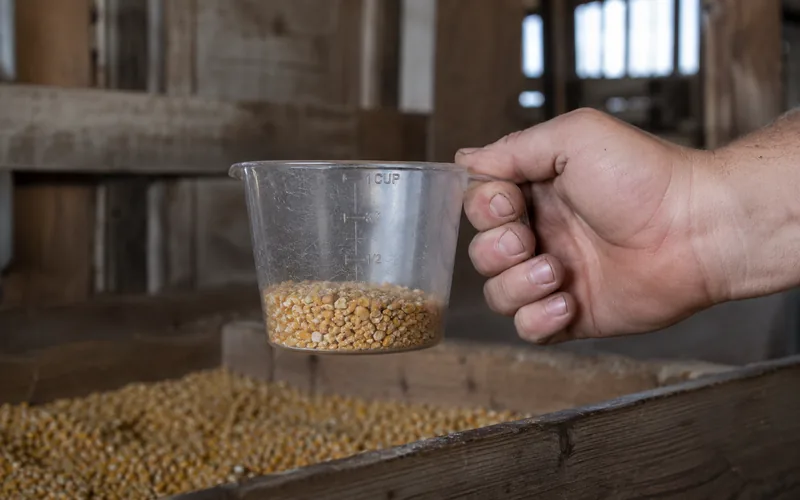
Begin with a tablespoon or two per goat for the first few days. Increase by small amounts every three to four days until you reach the target portion.
Watch manure through the whole transition. Firm pellets mean the rumen is coping, while loose or clumped manure means you moved too fast.
Balance It With Other Grains
Feeding corn by itself is the worst approach. Mixing it with oats, barley, wheat bran, or beet pulp slows fermentation and adds the fiber it lacks.
A common farm mix runs one part corn to two parts oats. That ratio keeps the energy while cutting the starch load significantly.
Avoid feeding goats chicken feed as a corn substitute, since the calcium and additive profile is built for laying hens. Bagged cattle feed is worse still, because copper levels formulated for cattle can be dangerous for a goat.
Keep the Forage Base Intact
Grain never replaces hay or pasture. A goat needs long-stem fiber available at all times, and grain is only an addition to it.
What this means for your herd: if adding corn causes hay consumption to drop noticeably, the portion is too large.
Free-choice loose minerals and baking soda round out the setup. Both let goats correct small imbalances on their own before those imbalances become problems.
Watch for bloat any time the ration changes, whether the new item is corn or alfalfa pellets. Sudden feed changes cause more digestive upsets than any single ingredient does.
Storing Corn So It Stays Safe
Keep corn in a sealed metal container, off the floor, and use it within about six weeks.
Corn that starts clean can turn dangerous in storage. Moisture and warmth are all mold needs to grow in a feed bin.
How to Spot Corn That Has Gone Bad
Good corn smells faintly sweet and grainy. A batch that smells musty, sour, or like old basement should go straight to the trash.
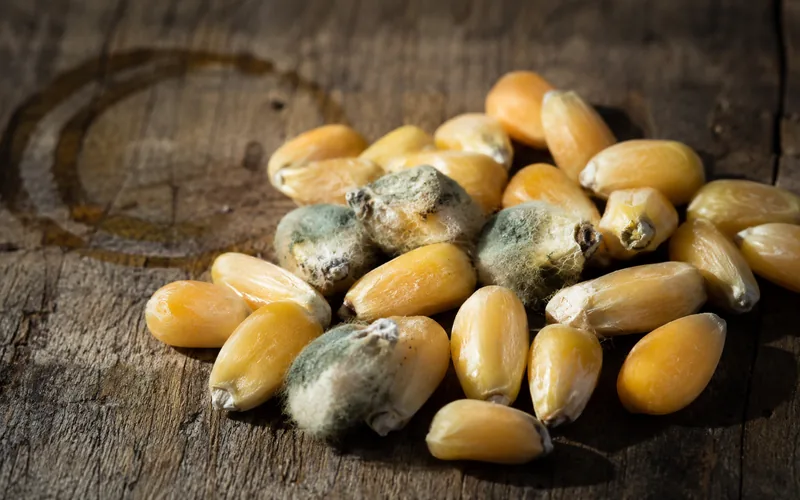
Look for clumping, visible fuzz, or a gray and green dust when you scoop. Dark discoloration on individual kernels is another warning sign.
Mycotoxins don’t cook off or air out, so once a batch is moldy there’s no way to salvage it for livestock.
Storing It the Right Way
Keep corn in a sealed metal container rather than the paper bag it came in. Metal keeps rodents out, and a tight lid keeps humidity down.
Store the container off the concrete floor on a pallet or shelf. Concrete wicks moisture upward and is a common source of spoiled feed on small farms.
Buy in amounts you will finish within about six weeks, since it loses quality quickly once the hull is broken.
Rotate stock so the oldest bag gets used first. Write the date on each sack the day it arrives.
Rodents are the other storage problem. Mouse and rat droppings carry salmonella, and a chewed bag lets in the moisture that starts mold.
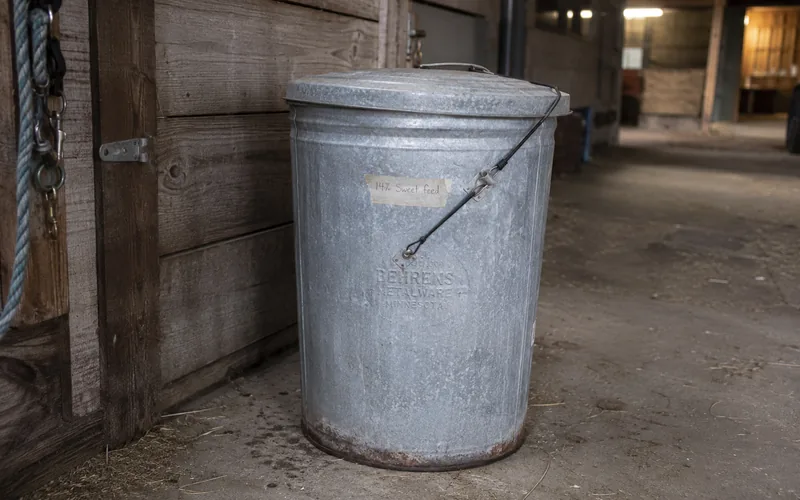
Metal cans with latching lids solve both issues. A galvanized trash can with a bungee across the lid is the standard low-cost answer.
Mold, Mycotoxins, and When to Throw a Batch Out
Throw out any batch that clumps, smells musty, or feels warm inside the bag. Mycotoxins remain after the mold itself dies.
Moldy grain is the risk owners underrate most. The mold you can see is a warning sign, but the toxins it leaves behind are invisible and they stay after the mold dies.
Aflatoxin and Why Adults Are Not Safe
Aflatoxin comes from Aspergillus molds that grow on grain in hot, dry seasons and in warm storage. It damages the liver, and the damage builds quietly.
Adult goats look tougher than they are. Merck notes that adult cattle, sheep, and goats are relatively resistant to the acute form.
They stay susceptible, though, when toxic diets are fed over long periods.
A goat can eat mildly contaminated grain for months and show nothing until liver damage is already done.
Milking does are a separate case entirely. Merck states that feedstuffs containing aflatoxins should not be fed to dairy cows, goats, or sheep, because the toxin passes into milk.
If you drink or sell the milk, there is no acceptable amount. Suspect grain goes in the trash rather than the feeder.
Fumonisin and the Other Storage Molds
Fumonisin comes from Fusarium molds and shows up in corn more than in most grains. Horses are the species it harms most, so a shared feed room matters.
Grain held above roughly 14% moisture is where these molds get started.
Commercial binders exist for herds that cannot avoid marginal grain. Merck notes that hydrated sodium calcium aluminosilicates can bind aflatoxin in feed and reduce residue in milk.
Binders help, but clean grain remains the only reliable answer for a small herd.
The Discard Test
Look for clumping and fuzz, then smell for musty or sour notes, then feel for warmth or dampness deep in the bag.
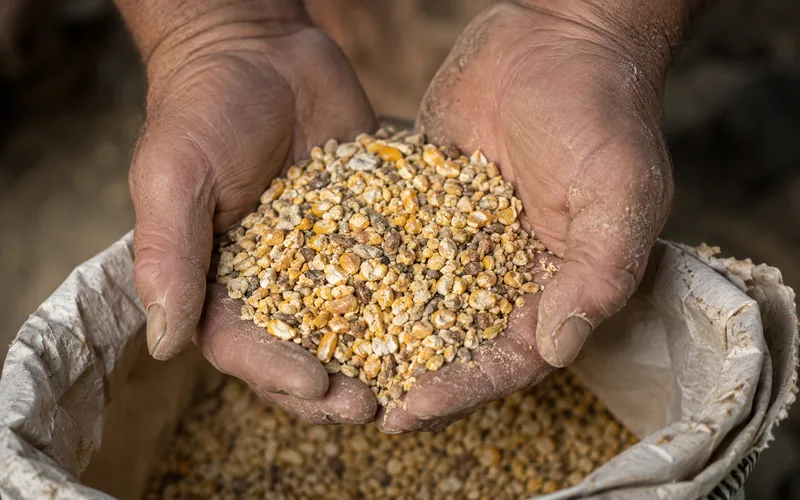
Warmth is the sign people miss. Grain that feels warm in the middle of a sack is spoiling right now.
Throw out the whole batch, since toxins spread well beyond the visible mold.
Never compost spoiled grain where goats can reach it. Fence the pile or bag it for the trash.
How to Read a Feed Tag Before You Buy
The tag on a feed sack answers most of the questions owners ask online. Learning to read four lines on it makes every buying decision faster.
Crude Protein and What the Number Means
Crude protein is a calculation, not a direct measurement. Merck explains that the term is defined as feed nitrogen content multiplied by 6.25.
That matters because the number does not describe protein quality. A 16% tag tells you the quantity and nothing about the amino acids behind it.
Rumen microbes fill part of that gap themselves. Merck notes those microbes are roughly 50 to 60% crude protein and serve as a protein source for the goat.
For most herds, 16% is the working target for growing kids and milking does. Dry adults do fine on less.
The Calcium to Phosphorus Line
Find calcium and phosphorus on the tag and compare them. You want the first at roughly twice the second, which matches the ratio discussed earlier for stone prevention.
A tag showing more phosphorus than calcium is a problem for males. Either pass on that feed or balance it with alfalfa.
Ammonium Chloride and Medicated Feeds
Check the ingredient list for ammonium chloride if you keep bucks or wethers. Many goat feeds include it, and many all-stock feeds do not.
Medicated feeds need a closer look. Some contain coccidiostats that are fine for goats, while others carry additives labeled for a different species.
Never assume an all-stock bag is safe. A single sack shared across horses, cattle, and goats will be wrong for at least one of them.
The Copper Warning Hidden in Sheep Feed
Sheep feed is the trap on a mixed farm. Merck notes that goats tolerate more copper than sheep and may become copper deficient on sheep mineral products.
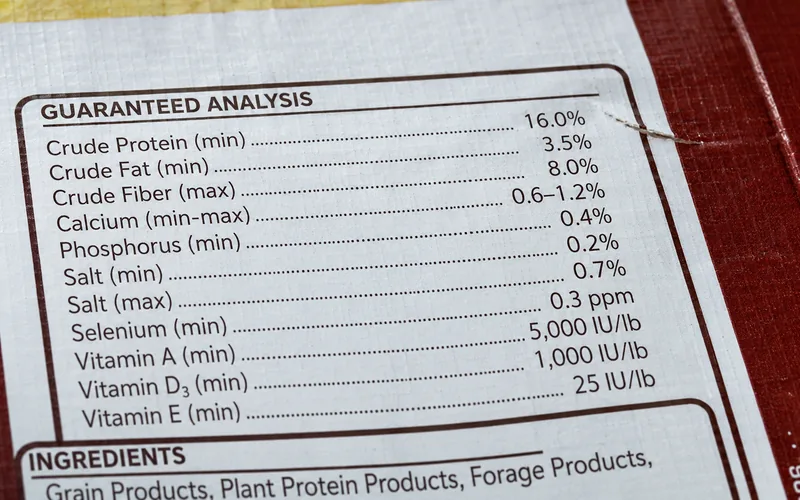
Read the species line before the price. A bag marked for sheep will slowly shortchange your goats even though nothing looks wrong at first.
Better Grain Alternatives to Corn
Oats, barley, field peas, sorghum, and beet pulp all carry less acidosis risk than corn. Oats are the safest everyday swap.
Oats
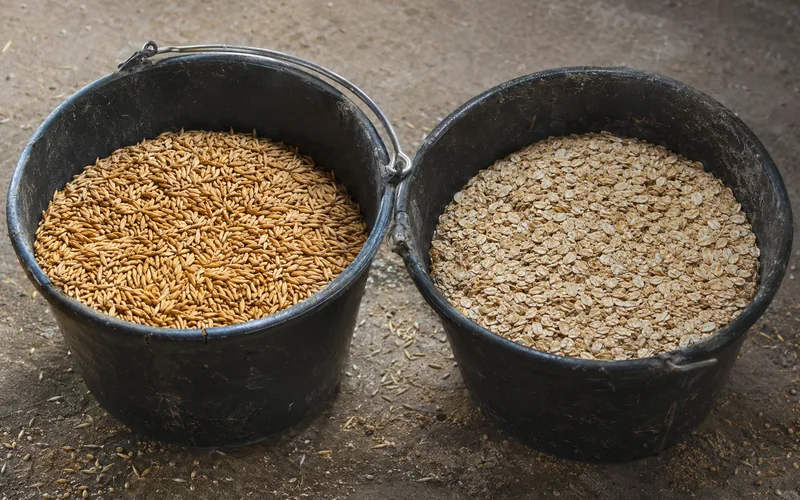
Oats are the safest grain you can hand a goat. The hull adds 11 to 12% crude fiber, which slows fermentation and lowers the acidosis risk dramatically.
Protein runs around 11 to 13%, noticeably better than corn. Whole oats also digest well without milling, so there is no need to buy them cracked.
The trade is energy density. Oats supply fewer calories per pound than corn, so a goat needing serious condition may need a slightly larger scoop.
Barley and Wheat
Barley sits between corn and oats on both energy and fiber. Rolled barley is a common base for homemade goat rations across much of the country.
Wheat is higher in protein than corn at roughly 12 to 14%. The problem with it is how fast it ferments, so it should never exceed a third of a grain mix.
Wheat bran is the safer way to use the crop. Bran adds phosphorus and bulk, and it is a traditional addition for does after kidding.
Beet Pulp and Alfalfa Pellets
Beet pulp isn’t a grain at all, which is exactly why it works so well. It delivers digestible fiber with roughly the energy of oats and almost none of the starch.
Soak beet pulp before feeding to reduce choke risk, and shredded pulp takes about twenty minutes in warm water to expand fully.
Alfalfa pellets bring calcium and protein rather than energy. For bucks and wethers on any grain, alfalfa is the single most useful addition to the ration.
Field Peas
Field peas answer a question a lot of owners ask, and the answer is yes. Goats can eat dried field peas, and they run roughly 20 to 25% crude protein, far above any cereal grain.
That makes peas a partner to corn rather than a replacement. A mix of peas and corn covers protein and energy without leaning hard on either.
Keep peas under about a quarter of the grain mix. Too many at once cause loose manure while the rumen adjusts.
Cooked lentils make a similar protein partner, at about one part lentils to four parts grain.
Fresh garden peas and pods are fine as treats too. Feed them in small handfuls like any fresh green material.
Sorghum and Milo
Sorghum, sold as milo in much of the country, sits close to corn on energy with slightly more protein. The kernel is harder, so it should be rolled or cracked.
Tannins are the one caution. Bird-resistant sorghum varieties carry more tannin, which cuts protein digestion when they make up too much of the ration.
Sorghum is often cheaper where it grows well, and a fair swap for part of the corn.
Can Other Animals Eat Corn?
Sheep, chickens, cattle, horses, and pigs can all eat corn, but the safe amount differs sharply. Copper in goat feed is the main danger to sheep.
Sheep
Sheep can eat corn, and the acidosis rules are much the same as they are for goats. Rams and wethers face the same urinary calculi risk from a phosphorus-heavy grain.
Copper is where the two species differ. Sheep are far more sensitive to copper than goats, so goat feed containing added copper must never go into a sheep feeder.
Chickens
Chickens handle corn better than any ruminant does, since a gizzard grinds whole kernels mechanically. The cracked form is a standard winter scratch feed for backyard flocks.
Even so, corn is a treat rather than a complete feed for poultry. Laying hens need calcium and protein that the grain cannot supply.
Cattle, Horses, and Pigs
Cattle handle larger grain portions than goats because of sheer rumen volume. Even so, feedlot cattle develop the same acidosis when starch climbs too fast.
Horses digest starch in the small intestine rather than a rumen, and large grain meals can trigger laminitis. Pigs are the one species that genuinely thrives on corn as a dietary staple.
Feeding a Mixed Herd Safely
Shared pens are where most cross-species mistakes happen. A feeder that any animal can reach will eventually be eaten from by every animal on the place.
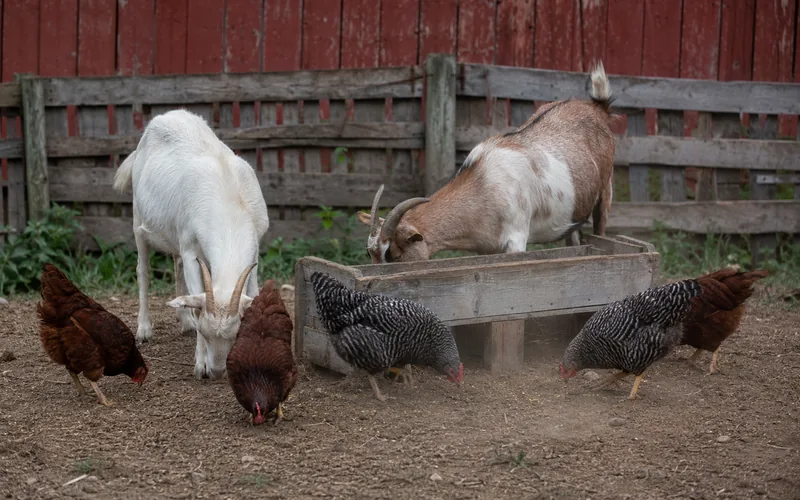
Separate at feeding time rather than trusting the animals to sort it out. Ten minutes of separation prevents the copper and additive problems entirely.
Store bags apart and label them. A sheep sack and a goat sack look identical at five in the morning.
Watch the water source too. Animals crowding one trough means the smallest goats drink last and least.
What Food Do Goats Love the Most?
Goats will pick sweet feed, corn, and fresh fruit over almost anything else. That preference is exactly why corn needs a measured scoop instead of free access.
Bananas and their peels rank near the top for most herds. Apples, carrots, raisins, pumpkin, and watermelon rind follow close behind.
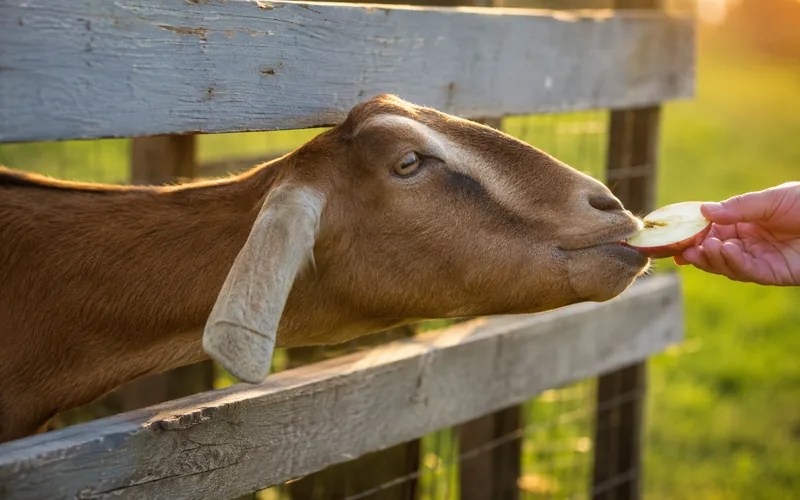
Browse beats all of it for a goat given the choice. Blackberry canes, honeysuckle, and young tree leaves are what a goat picks first in a mixed pasture.
The foods goats love are rarely the foods they need. Treats of any kind belong under 10% of daily intake, with hay and browse carrying the rest.
What Else Belongs on the Do Not Feed List
Keep goats away from azalea, rhododendron, yew, wilted cherry leaves, moldy feed, and rations built for dogs, cats, or poultry.
Plants and Foods That Are Never Safe
Some plants are dangerous in any amount. Azalea, rhododendron, yew, oleander, and mountain laurel top that list, and small quantities can kill an adult goat.
Wilted cherry and plum leaves are a seasonal hazard. A branch that comes down in a storm becomes toxic as the leaves wilt, which is when goats find it most appealing.
Kitchen items cause their own problems. Chocolate, avocado, onions, and anything moldy all belong away from the pen.
Nightshade family scraps need judgment. Ripe tomato fruit is fine in small amounts, while green fruit, vines, and potato peels with green skin are not.
Feeds Built for Other Species
The feed room causes more harm than the field on most farms. Dog and cat food carry protein and copper levels that a ruminant cannot handle.
Poultry feed is the one owners reach for by accident. Layer rations run very high in calcium for eggshells, and that works against a male goat’s urinary tract.
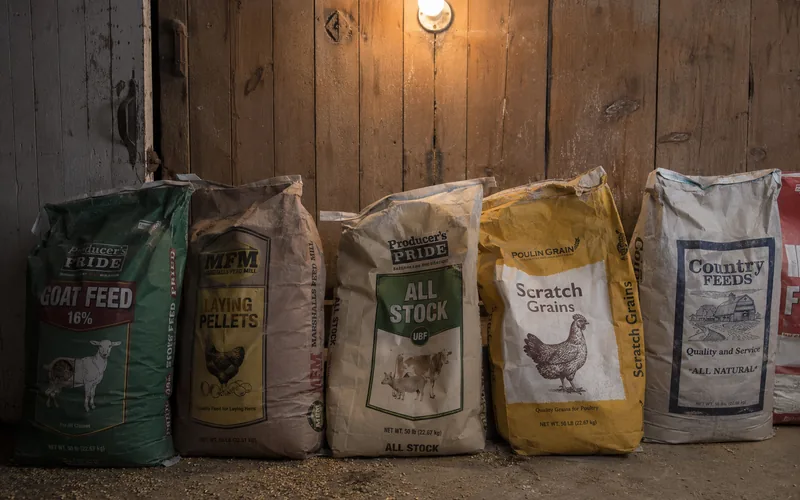
Horse feed is a similar mismatch. Some contain additives that are safe for horses and wrong for goats, so read the species line every time.
Bread and baked goods are a gray area worth naming. A slice now and then is harmless, and a daily habit displaces the forage a rumen needs.
What Actually Kills Most Goats
Feed mistakes get the attention, but they are not the leading cause of death on most farms. Internal parasites are, and the barber pole worm does most of that damage.
That worm feeds on blood in the stomach lining. An infected goat goes pale in the eyelid and gums, loses condition, and can die while still eating normally.
Nutrition and parasites are connected more than people expect. A goat carrying a heavy worm load cannot use its feed properly, so grain gets added when a dewormer was the actual need.
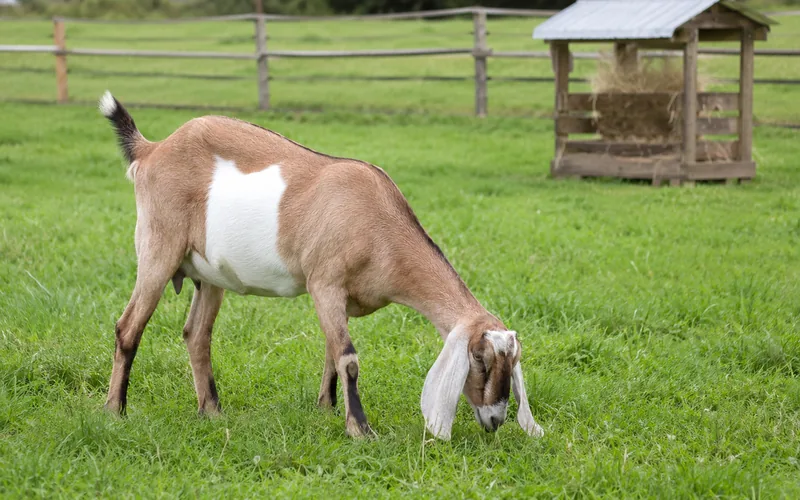
Check eyelid color rather than guessing. The FAMACHA scoring system compares the inner lower eyelid against a color card, and pale pink or white means act now.
Enterotoxemia is the feed-related killer that comes second. Corn is the usual trigger, and the CDT vaccine plus a locked feed bin covers most of that risk.
Run fecal egg counts a few times a year. Deworming on a calendar breeds resistance, while testing tells you which animals actually need treatment.
Common Corn Feeding Mistakes
Most corn problems trace back to a handful of habits rather than the grain itself. These are the ones that send goats to the vet.
Feeding by Eye Instead of by Measure
A coffee can scoop holds far more than a quarter cup, and portions creep upward when nobody is measuring. Keep a marked measuring cup in the feed bin and use it every time.
Herd feeding hides the problem further. Dominant goats push others aside and eat two or three shares, so a trough that looks correct overall can still overload one animal.
Using Corn to Fix a Thin Goat
An underweight goat rarely needs more grain. Parasites, bad teeth, or poor hay quality cause most condition loss, and corn covers the symptom while the real cause continues.
Run a fecal test before reaching for the feed bag. Barber pole worm is the most common reason a goat drops weight on good pasture.
Skipping the Mineral Feeder
Corn shifts a ration’s mineral balance, and free-choice loose minerals are what corrects it. A hard block isn’t a substitute, since goats can’t lick enough off a hard block to meet their needs.
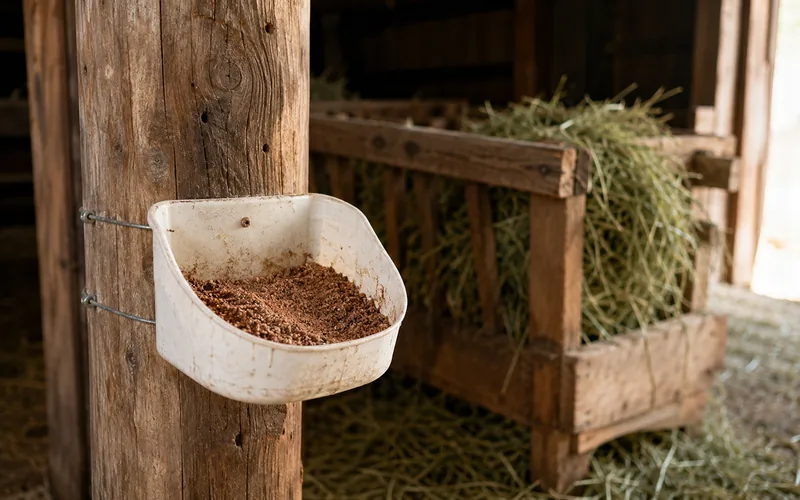
Check the feeder weekly and keep it dry. Wet minerals cake solid, and goats will walk past a crusted feeder without touching it.
Feeding Wethers Without Ammonium Chloride
Wethers carry the highest urinary calculi risk of any goat on the farm. Any wether receiving grain should have ammonium chloride in the mineral mix year-round.
Water intake matters just as much. A heated bucket in winter keeps wethers drinking, and steady water intake is one of the best defenses against stones.
Feeding Grain on the Ground
Grain thrown on the dirt picks up worm larvae along with it. Barber pole worm eggs hatch in manure, and the larvae climb the very ground a goat is nosing through.
Ground feeding also wastes what you paid for. Kernels get trampled into mud and mixed with manure before anyone eats them.
Use a trough, a rubber pan, or a raised feeder. Raising feed even a foot off the ground cuts parasite pickup noticeably.
Switching Feeds With No Transition
A new brand of feed is a ration change even when the protein number matches. Grain sources, byproducts, and mineral packages all differ between mills.
Blend the old feed and the new one over about a week. Start at three parts old to one part new, then shift the ratio every couple of days.
Buy the replacement before the old bag runs out. Running empty forces the abrupt switch that causes trouble.
Final Thoughts
Corn is safe for goats, useful in the right season, and genuinely risky once the portion creeps up. The 10% ceiling on grain is the single number worth memorizing.
Cracked corn beats the whole kernel for digestibility, husks and silk are fine, and cobs belong in the compost. Deer corn works only when it is clean, dry, and untreated.
Male goats deserve the most caution because of the calcium and phosphorus imbalance that corn creates. Ammonium chloride, loose minerals, and constant clean water reduce that urinary calculi risk substantially.
Everything else comes back to forage. Give a herd good hay, open pasture, free-choice minerals, and baking soda, and a small scoop of corn causes no trouble at all.
Frequently Asked Questions
You can, but cracked corn is the better choice. Whole kernels have a hard outer shell that often passes through a goat undigested, so you pay for energy the animal never absorbs. Whole corn is also hard on the teeth of older goats, who struggle to grind it down. If whole corn is all you can get, keep the portion small and mix it with oats or wheat bran.
Internal parasites, especially the barber pole worm, kill more goats than anything else in most of the United States. Enterotoxemia runs a close second, and it is the one tied directly to grain. A goat that breaks into a corn bin can develop enterotoxemia within hours, which is why the CDT vaccine and locked feed storage matter so much.
Skip anything moldy, along with raw corn cobs, azalea, rhododendron, yew, cherry leaves, chocolate, avocado, and onions. Large amounts of any grain also belong on that list, since corn, wheat, and barley all cause acidosis when a goat eats too much at once. Dog food and cat food are unsafe too, because the copper and protein levels are wrong for a ruminant.
Most goats will pick sweet feed, corn, and fresh fruit over anything else, which is exactly why corn needs a measured scoop rather than free access. Banana peels, apples, carrots, raisins, and pumpkin are also favorites. The foods goats love the most are rarely the foods they need the most, so treats should stay under 10% of the daily ration. 
Husks and silk are safe and make good enrichment, since they add bulk fiber and a bit of moisture without much starch. Cobs are the part to avoid, because the woody core is hard to break down and can cause an impaction or choke. Toss raw cobs in the compost pile and let your goats have the husks instead.
Cracked corn is the best everyday form for goats, because breaking the hull lets rumen microbes reach the starch instead of passing it through whole. It still needs a portion limit, since cracking also makes it ferment faster than whole kernels. Keep it under a quarter cup a day for an adult and mix it with oats or wheat bran to slow digestion.
Goats can eat a small amount of corn flour, but it is the riskiest form of corn because the fine grind ferments almost immediately in the rumen. A tablespoon used to carry minerals or medication is fine. Never feed it as a meal, and never mix it into a wet mash, since a wad of wet flour is a choking hazard.
Winter is the best season for a small corn ration, since digesting grain produces body heat that helps goats hold temperature overnight. Feed it in the late afternoon so the rumen works on it through the coldest hours. Hay still does most of the warming, so never cut hay to make room for grain.
Sheep can eat corn under the same acidosis and urinary calculi rules that apply to goats. The critical difference is copper, because sheep are far more sensitive to it than goats. Goat feed with added copper must never go into a sheep feeder, so keep the two rations separate on a mixed farm.
Goats can eat dried field peas and fresh garden peas, and dried field peas run about 20 to 25% crude protein. That makes them a useful partner to corn rather than a replacement, since peas cover protein while corn covers energy. Keep peas under about a quarter of the grain mix to avoid loose manure.