| # | Product | Our Rating | ||
|---|---|---|---|---|
| 1 |  | Best OverallREDMOND Goat Mineral Supplement (5 lb) | ★★★★★ | Check Price |
| 2 |  | Wholesome Harvest 16% Goat Feed (10 lb) | ★★★★☆ | Check Price |
| 3 |  | Manna Pro Goat Treats | ★★★★☆ | Check Price |
Chinaberry is a fast-growing ornamental tree, imported to North America, that now grows wild across much of the southern United States. Every part of it is poisonous to livestock, and goats meet it more often than most animals do.
That’s why the question keeps coming up in goat groups. An owner spots the tree along a fence line, watches a goat peel strips off the trunk, and has no idea how worried to be.
The honest answer depends on two things: which part the goat swallowed, and how much.
Can Goats Eat Chinaberry Trees?
No. Chinaberry trees are toxic to goats, and no part of the tree is safe to offer on purpose.
The botanical name is Melia azedarach, and plant lists also file it under Persian lilac and white cedar. That white cedar nickname confuses people, because the true cedar trees goat owners ask about, like eastern red cedar and other juniper species, are a different plant.
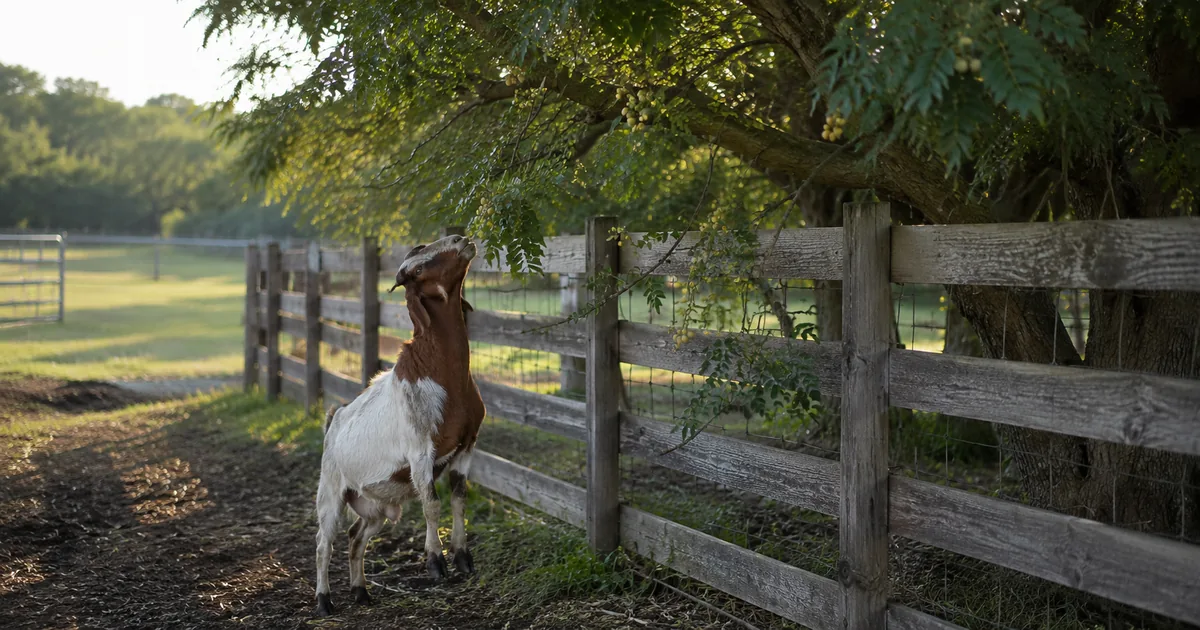
Goats are browsers rather than grazers. They reach up for leaves and woody stems, and that habit puts them in reach of a chinaberry at the pasture edge.
A goat that grabs two or three leaves in passing will usually be fine. Trouble starts when one develops a taste for the bark, or finds a heap of fallen berries.
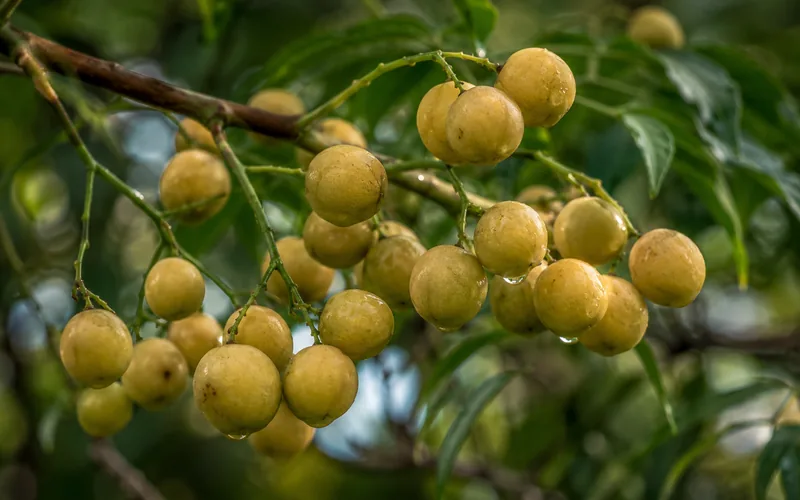
This exotic species is most common across Texas, the Gulf states, and inland California. Owners there meet it far more often.
What Makes Chinaberry Toxic to Goats
The poison is a group of compounds called meliatoxins, part of a chemical family known as tetranortriterpenes. Those compounds sit in every part of the tree, and the ripe fruit holds the most.
Meliatoxins damage two systems at once, irritating the digestive tract and disrupting the nervous system. That’s why a poisoned goat often shows a sick gut and a stumbling walk together.
A goat is a ruminant, so its rumen breaks down rough browse well, but it doesn’t neutralize these toxins. So they pass into the bloodstream instead, then reach nerve and muscle tissue.
Here’s the thing: the risk is not limited to livestock. The ASPCA lists chinaberry as toxic to dogs, cats, and horses, naming vomiting, diarrhea, weakness, and seizures among the signs.
Which Parts of the Tree Are Most Dangerous
All of it is poisonous, but the parts are not equal.
| Plant part | Risk level | Why it matters |
|---|---|---|
| Ripe berries | Highest | Most poisoning cases trace back here |
| Bark | High | Goats strip it, feeding a steady dose |
| Leaves | Moderate | Casually browsed; risky in volume |
| Flowers | Moderate | Lilac clusters that open in spring |
Berries are the main hazard because they last. Long after the leaves drop, clusters hang on bare branches and fall in piles a goat clears in minutes.
But there’s a catch. Bark peeling is slow damage that owners rarely notice until a sapling has been stripped bare.
Chinaberry isn’t the only tree that surprises goat owners. Wilted cherry leaves are the classic case, because a cherry branch that snaps in a storm turns dry and releases hydrogen cyanide.
Black cherry and cherry laurel, both Prunus species, carry that same risk.
Signs of Chinaberry Poisoning in Goats
Signs usually appear within two to four hours of a meaningful dose. The gut reacts first, and the nervous system follows.
So what does that mean? The signs arrive in a rough order:
- Early signs: drooling, a sudden refusal to eat, retching, and diarrhea that may carry blood
- As the meliatoxins spread: trembling, weakness, and a wobbling walk
- Severe cases: convulsions, collapse, and labored breathing
A goat showing two of those at once, off feed and bloated, needs attention right away.
The Texas Invasive Species Institute lists vomiting, diarrhea, breathing difficulty or paralysis as the symptoms that follow.
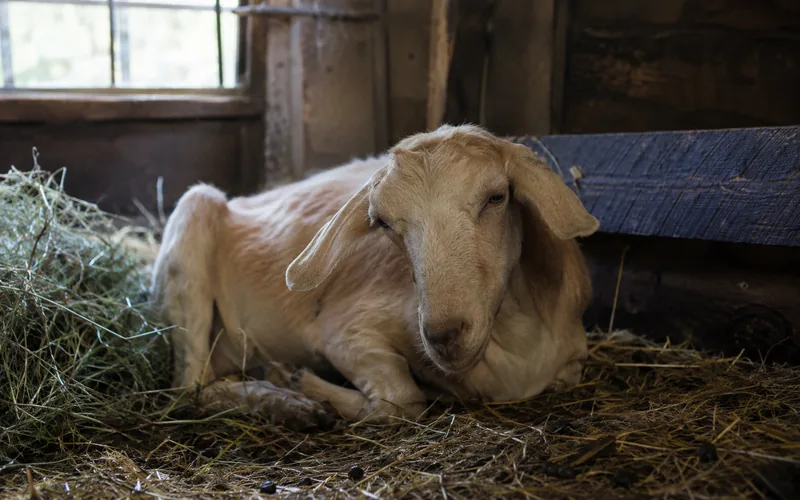
Liver damage and jaundice can turn up later in goats that swallowed a lot. That’s why a goat that seems recovered still needs watching for a full day.
Why Some Goats Eat Chinaberry and Show No Signs
The short answer is dose. Those goats never ate enough to cross the poisoning threshold.
Goat forums are full of owners insisting their herd browses chinaberry every year. Those accounts are usually honest, and still misleading.
The short version: those goats never ate enough at one sitting. A healthy adult picking a few leaves takes in far less than one gorging on fallen berries.
Goats also avoid bitter plants like milkweed and other weeds when better forage is available. So poisoning cases cluster around drought, overgrazing, starvation, and boredom.
No symptoms is not the same as safe. One mouthful of laurel leaves may cause nothing while a full serving sends a goat into a crisis. Mountain laurel behaves the same way.
Is Chinaberry Worse for Goats Than for Cattle?
Chemically, no. The toxin treats a goat no differently than a cow, but goats get exposed far more often.
Species tolerance varies, though. The Texas Invasive Species Institute notes that cattle and some birds can eat the berries without harm.
Here’s why: goats aren’t protected that way. As browsers they sample shrubs and woody stems that cattle ignore, which puts a goat’s mouth on a chinaberry far more often.
A picky palate helps on a full pasture. That protection disappears under drought or a fresh drop of berries, the same conditions that push goats toward toxic plants.
What to Do if Your Goat Eats Chinaberry
Work out roughly how much the goat ate and which part. A mouthful of berries is far more urgent than a few stripped leaves.
Pull the goat away, clear remaining plant material out of reach, then call your veterinarian.
Before you call, gather the goat’s rough weight, the time it ate, the part of the tree involved, and any signs so far.
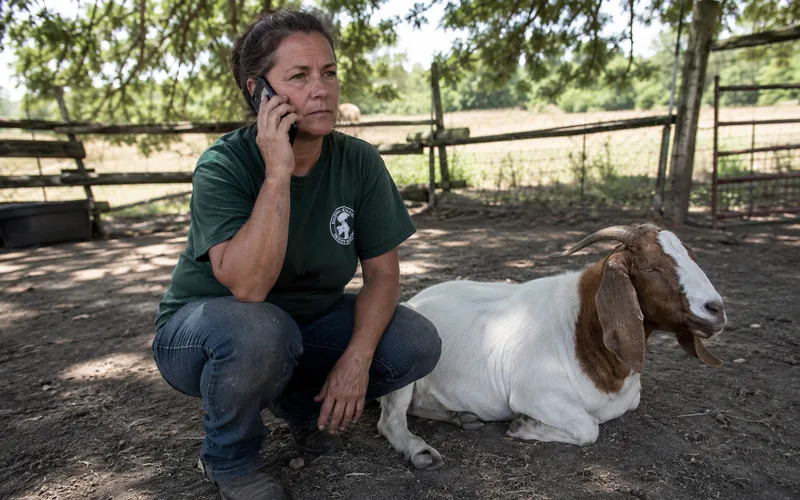
There’s no antidote for meliatoxin poisoning, so treatment is supportive. A vet may give activated charcoal to limit absorption, along with intravenous fluids and anti-seizure medication.
While you wait, keep the goat quiet in a shaded spot with clean water. Skip home remedies entirely.
Clearing Chinaberry From a Goat Pasture
Identifying the tree comes first. Chinaberry reaches around 50 feet, with a rounded crown and feathery leaves up to 15 inches long, much like tree of heaven.
The flowers confirm the identification, since lilac-purple clusters open in spring. By autumn those become hard yellow berries about half an inch across that cling to bare branches into winter.
Pink pom-pom flowers usually mean a mimosa tree instead, and its feathery leaves are safe for goats.
Removal takes persistence. The Texas Invasive Species Institute describes how the tree spreads by seed and root sprouts into dense thickets.
That’s why cut stumps regrow unless you grub the roots out. Treating the stump right after felling works better than sawing alone.
Where you can’t remove a tree yet, fence goats clear of it and rake up fallen berries. Trimmed branches go to disposal, never over the fence as browse.
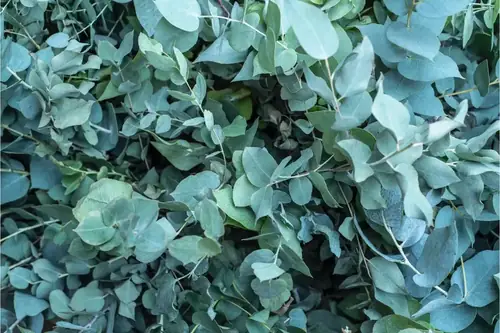
That rule protects against more than chinaberry. Wilting concentrates the compounds in several species, and tossed eucalyptus prunings are one of the two ways goats overdose.
Good forage prevents most of this, since goats with plenty of hay rarely test a toxic tree. Even so, fallen acorns and their tannin load can drop into a clean pen overnight.
What This Means for Your Herd
Treat chinaberry as off-limits for the whole herd, year round. Berries carry the most poison, though the trunk and leaves cause trouble too.
Fence goats away from any tree you cannot remove yet. Then call a vet the moment one starts drooling or staggering.
Frequently Asked Questions
Chinaberry is one of the worst, and several others are just as risky. Wild cherry is the best known, because wilted cherry leaves release cyanide as they dry. Black walnut, red maple, oak, yew, and cherry laurel all cause problems too. Yew acts the fastest of the group.
The Texas Invasive Species Institute reports that cattle and some birds can eat the berries without harm, while the fruit poisons many other species. That does not make the tree safe around cattle, and it says nothing about goats. Goats should still be kept away from it.
Poison hemlock, water hemlock, yew, azalea, rhododendron, and oleander act the fastest. Wilted cherry leaves and nightshade are almost as dangerous. Chinaberry belongs on that list too, since its berries can poison a goat in small amounts.
No. Handling the bark, leaves, or berries will not poison you or your goats. The danger comes from swallowing plant material, so pruning or pulling chinaberry is safe as long as the cuttings go to disposal instead of over the fence.