| # | Product | Our Rating | ||
|---|---|---|---|---|
| 1 |  | Best OverallREDMOND Goat Mineral Supplement (5 lb) | ★★★★★ | Check Price |
| 2 |  | Wholesome Harvest 16% Goat Feed (10 lb) | ★★★★☆ | Check Price |
| 3 |  | Manna Pro Goat Treats | ★★★★☆ | Check Price |
If you grow onions in your garden and keep goats on the same property, you need to know about this one. Onions aren’t a safe food for goats, and regular feeding can cause real health problems.
A single nibble probably won’t hurt them, but that doesn’t mean onions belong in their diet. Here’s why you should keep your goats away from the onion patch.
Can goats eat onions?
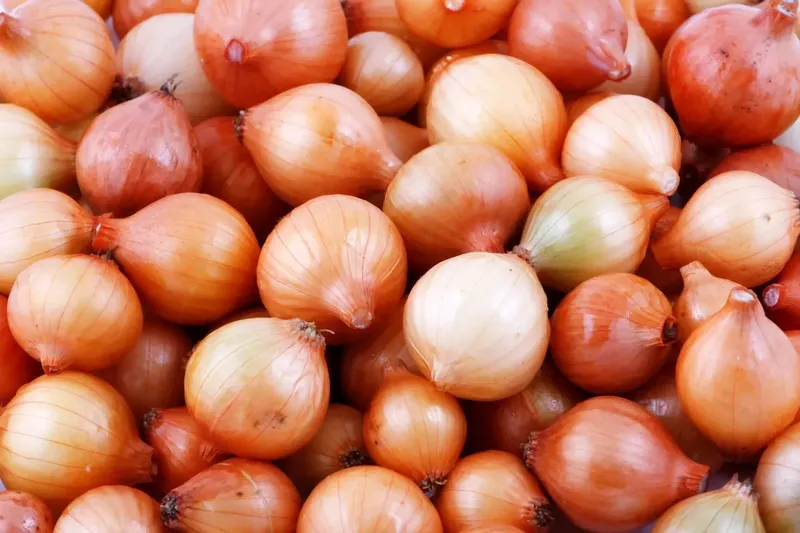
Onions aren’t recommended for goats. While a goat that grabs a bite of onion from the garden isn’t going to drop dead on the spot, onions contain compounds that are genuinely harmful to goats over time.
The risk isn’t from one small taste. The problem comes when goats eat onions regularly or consume a large amount at once.
This is among those foods where “they can eat it” and “they should eat it” are two very different things.
Why onions are dangerous for goats
Onions contain a compound called N-propyl disulfide that destroys red blood cells in goats. When enough red blood cells are damaged, the goat develops hemolytic anemia, which means its blood can no longer carry oxygen properly.
This damage is cumulative. A goat that eats a small amount of onion every day for a week can develop anemia just as easily as one that eats a large amount in one sitting.
The red blood cells break down faster than the body can replace them.
All parts of the onion carry this risk, including the bulb, skin, roots, and green tops. Raw onions are the most concentrated, but cooked onions still contain enough of the compound to cause problems with repeated exposure.
Symptoms of onion toxicity
The first sign you’ll notice is pale or yellowish gums. Pull back your goat’s lip and check the color of the gum tissue above the teeth.
Healthy gums should be bright pink, so anything lighter is cause for concern.
Dark-colored urine is another red flag. The hemoglobin from destroyed red blood cells passes through the kidneys and turns the urine brown or reddish.
Lethargy and rapid breathing usually follow within one to four days after the goat eats plenty of onion. The goat’s body isn’t getting enough oxygen because its red blood cell count has dropped.
If you see these signs, call your vet immediately.
What about garlic and other alliums?
Garlic belongs to the same plant family as onions and contains the same type of compounds. The concentrations are lower in garlic, which is why some goat owners use small amounts as a natural fly repellent in feed.
Any allium in large quantities poses a risk. Leeks, chives, and shallots all carry the same compounds and shouldn’t be fed to goats as a regular part of their diet.
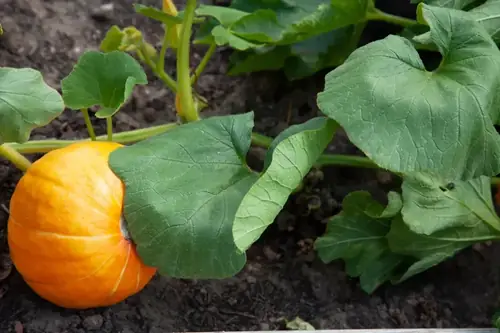
If you want to add flavor or variety to your goat’s feed, skip the allium family entirely. Safe treats like carrots, apples, and pumpkin are much better choices that goats enjoy just as much.
Squash, cucumbers, and most leafy greens are safe too, so there’s no shortage of garden vegetables to share.
Keeping goats away from onions
Fence off your garden if you grow onions, garlic, or any other alliums. This is just as important as keeping goats away from poison hemlock or the persin found in avocado.
Goats are curious and will sample just about anything they can reach, so a physical barrier is the most reliable prevention.
Don’t toss onion scraps or peels into areas where goats can get to them. Unlike leftover vegetables that are often safe to share, allium scraps are always a risk.
Compost bins near goat pens are a common way goats end up eating things they shouldn’t.
If you suspect your goat has eaten onions, remove the source right away and watch for symptoms over the next few days. Recovery from mild onion toxicity takes about two weeks once the onion is removed from the diet, but the goat needs plenty of fresh water and good-quality hay during that time.
Final Thoughts
Onions are one of those foods that you should simply keep away from your goats. The risk of hemolytic anemia is real, and the damage builds up over time even with small amounts.
A stray nibble from the garden isn’t an emergency, but don’t make a habit of feeding onions to your herd. There are plenty of safer treats like peppers, celery, and bananas that won’t put your goats’ health at risk.
Frequently Asked Questions
Goats shouldn't eat raw onions. Onions contain a substance known as thiosulfate, which can be toxic to goats. Eating too much onion can cause red blood cells to break down, leading to anemia. It can also cause difficulty breathing, stomach pain, and digestive upset, . Raw onions should be avoided, and cooked onions should be given in moderation.
Goats shouldn't eat onion skins. Onion skins contain a substance known as quercetin, which can be toxic to goats. Quercetin is an antioxidant that can help to protect plants from pests and diseases. However, it can also cause gastrointestinal irritation when consumed in large quantities. For this reason, onion skins should be avoided.
All parts of the onion carry the risk of hemolytic anemia, including the green tops. The damage from N-propyl disulfide is cumulative, so even small amounts over time can cause problems.
Goats shouldn't eat onion roots. Onion roots contain a substance known as thiosulfate, which can be toxic to goats. Eating too much onion root can cause red blood cells to break down, leading to anemia. It can also cause difficulty breathing, stomach pain, and digestive upset, . Onion roots should be avoided, and cooked onions should be given in moderation.