| # | Product | Our Rating | ||
|---|---|---|---|---|
| 1 |  | Best OverallREDMOND Goat Mineral Supplement (5 lb) | ★★★★★ | Check Price |
| 2 |  | Wholesome Harvest 16% Goat Feed (10 lb) | ★★★★☆ | Check Price |
| 3 |  | Manna Pro Goat Treats | ★★★★☆ | Check Price |
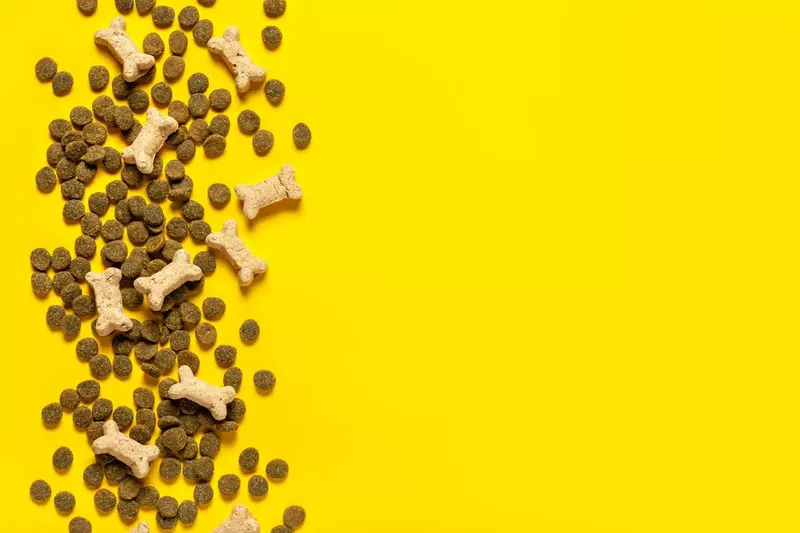
Dog food is a pet food built around animal protein and formulated for dogs. Goats digest a meal in a completely different way, and that one difference explains the answer.
The dog bowl is empty, a goat is standing over it looking pleased, and you want to know how worried to be.
Can Goats Eat Dog Food?
No, goats should not eat dog food. It’s made for a dog’s simple stomach, and theirs works nothing like it.
Goats are herbivores. Plants are the entire diet, and meat never belongs in it in any form.
Dogs are omnivores, so a bag of dog food combines animal protein, fat, and grain in one meal.
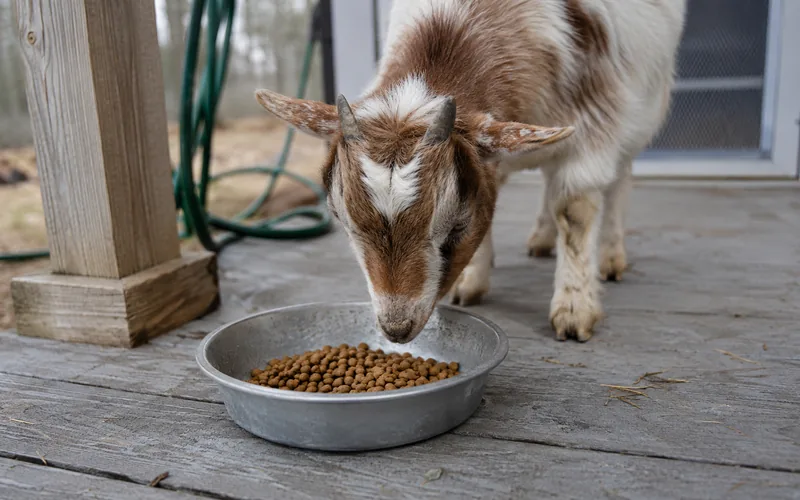
PetMD, whose goat nutrition guide is reviewed by a veterinarian, lists meat among the foods goats cannot eat. Nearly every dog food leads with some form of it.
Why a Goat’s Rumen Can’t Handle Dog Food
In simple terms, a goat’s rumen is built for plants alone. Here is how that works.
A goat is a ruminant. Its first stomach chamber, the rumen, holds billions of microbes that ferment plant fiber into energy.
Those microbes are specialists. They break cellulose out of hay, browse, and pasture, with no use for protein or fat.
Here’s what actually happens:
The protein and fat move through mostly undigested. The starch ferments fast, dropping rumen pH enough to trigger bloat or acidosis.
Copper is the second problem. Those levels are set for dogs, and a goat’s liver stores it instead of clearing it.
Then there’s the fat. Dry dog food holds more than a goat’s nutrition calls for, and the excess slows the microbes down.
PetMD puts the maintenance target at 7% to 9% crude protein from forage, a level ordinary grass hay already meets.
Will Dog Food Kill a Goat?
Almost never from one mouthful. The amount eaten separates a non-event from a vet visit.
One Accidental Mouthful
A goat that grabs a few pieces of dog food is in no danger. The rumen holds several gallons, so a handful is far too little to matter.
Goats cannot vomit the way dogs can, so you can’t clear it out.
Regular Access to the Dog Bowl
Repeat access is where harm starts. A goat visiting that bowl daily takes in animal protein, fat, and copper.
But there’s a catch. The damage builds slowly, so nothing looks wrong for weeks, then a goat goes off feed.
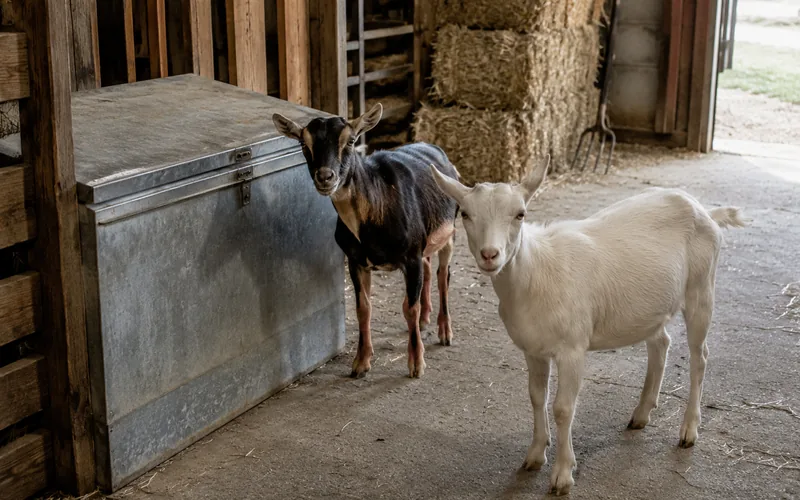
AAFCO requires pet food makers to list ingredients by weight from most to least. So when meat sits first, it is the bulk of every bowl your goat raids.
Dry, Wet, Organic, and Dog Treats
Some types are gentler, though none belong in a goat’s diet.
The short version: dry is bad, wet is worse, and treats are no better.
Dry Dog Food
Dry dog food is the mildest of the group. More grain and plant matter makes it easier on a rumen.
Wet Dog Food
Wet food is the worst in the bowl. It is concentrated protein, fat, and gelling agents, with almost none of the fiber a rumen expects.
Raw Dog Food
Raw dog food is frozen or freeze-dried tissue, organ, and ground bone. A rumen has no path for it.
Organic Dog Food
Organic certification changes how ingredients were grown, not what they are. Organic chicken is still meat.
The FDA regulates pet food to be safe to eat and truthfully labeled. Safe for the pet on the bag is not the same as safe for the animal that stole it.
Dog Treats and Rawhide
Dog treats are the same dog food in a different shape. Rawhide is worse, since a swallowed strip can cause a blockage.
To reward a goat, reach for goat-safe treats like apple slices or carrot pieces instead.
Can Goats Eat Cat Food?
No, and cat food is the worse of the two. Cats are obligate carnivores, so their food packs even more animal protein and fat.
Warning Signs After a Goat Eats Dog Food
Most goats show nothing after a small amount of dog food. Symptoms usually turn up within a day.
Here is what to watch for:
- A swollen left side, which points to bloat
- Loose or watery droppings
- Standing apart from the herd or lying down more
- No interest in hay or grain
- Teeth grinding, a common sign of pain
- Pale or yellow gums, which can signal copper trouble
When to Call Your Vet
Call if the swelling has not gone down within a few hours, or if your goat refuses food and water.
Bring the bag, since the guaranteed analysis gives the vet the fat and copper numbers.
What to Feed Your Goats Instead
Hay first, then a little grain and loose minerals. That removes most of the reason a goat looks elsewhere.
Forage should be most of what they eat. Grass hay or pasture browse makes up the bulk of a healthy diet.
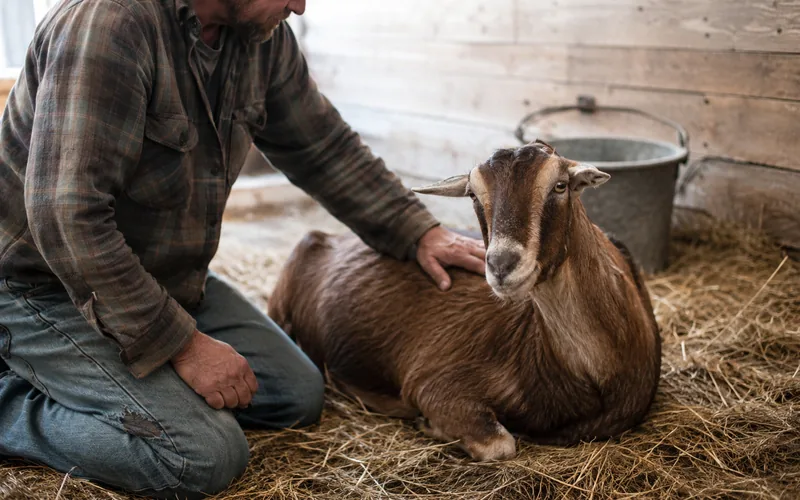
So how much does a goat actually need?
PetMD puts daily intake at 1% to 3% of body weight in dry matter. For a 120-pound goat, that is roughly 1.2 to 3.6 pounds a day.
Grain covers those with higher energy needs. Lactating does, growing kids, and pregnant goats benefit, and most healthy adults get by without grain.
A loose mineral supplement made for goats rounds out copper, selenium, and zinc. Vegetable trimmings are fine in small amounts, though many kitchen leftovers are a poor choice for ruminant nutrition.
What Should You Not Feed Goats?
Put simply, anything with animal protein is off the list, along with chocolate, onions, garlic, and citrus. Toxic plants matter too, especially azalea, rhododendron, and mountain laurel.
Add bitter almonds to that list, though plain sweet almonds from the store are fine in small amounts.
How to Keep Goats Out of the Dog Bowl
A well-fed goat still raids a dog bowl out of curiosity, so physical separation is the only fix.
Feed your dog where the goats cannot reach, and pick the bowl up afterward.
That same curiosity is why goats have a reputation for eating literally anything, even though they refuse far more than they ever swallow.
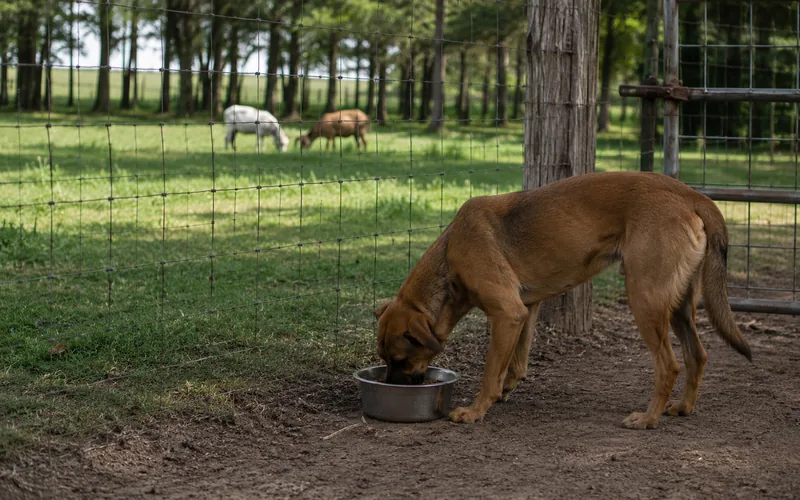
Store the bag in a sealed bin. Goats tear open paper in seconds.
The same habit keeps chickens and rabbits out of the bowl, and a rabbit is a strict herbivore too.
Goats will raid a poultry feeder given the chance, and chicken feed brings its own risks to a rumen.
Frequently Asked Questions
Goats should not eat meat, dog food, cat food, chocolate, onions, garlic, citrus fruit, or fruit with a pit in it. Several common plants are toxic as well, including azalea, rhododendron, mountain laurel, hemlock, and sago palm. Moldy hay and fresh lawn clippings cause problems too.
Grass hay is the safest fallback, and most goats do fine on hay alone for several days. Browse from safe shrubs and tree leaves works well too. Skip bread, kitchen scraps, and other livestock feeds, since those cause more upset than a short gap in grain ever will.
No. Daily dog food gives a goat a steady load of animal protein, fat, and copper, and a rumen cannot process any of the three. Over several weeks this shows up as poor body condition, digestive upset, and copper stored in the liver.
Cat food is worse for goats than dog food. Cats are obligate carnivores, so their food carries even more animal protein and fat, with almost no plant matter in it at all.