| # | Product | Our Rating | ||
|---|---|---|---|---|
| 1 |  | Best OverallREDMOND Goat Mineral Supplement (5 lb) | ★★★★★ | Check Price |
| 2 |  | Wholesome Harvest 16% Goat Feed (10 lb) | ★★★★☆ | Check Price |
| 3 |  | Manna Pro Goat Treats | ★★★★☆ | Check Price |
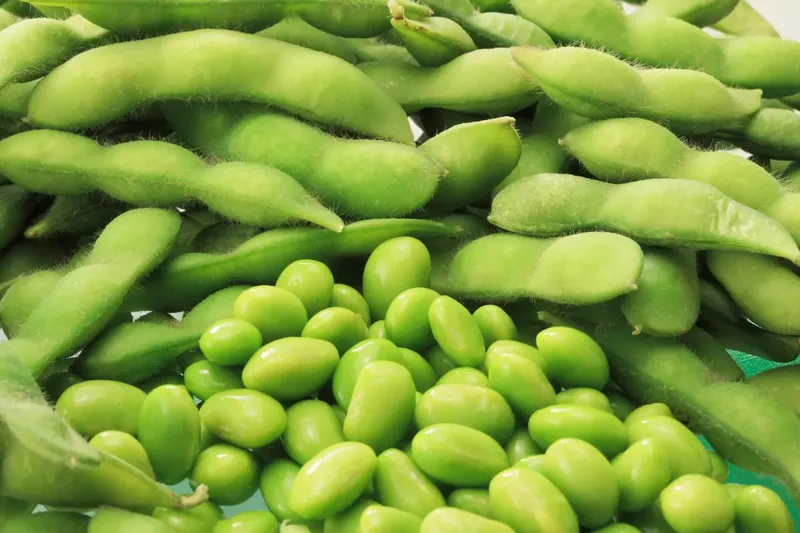
Edamame is the name for soybeans picked young, while the pods are still green and soft. The shell is that pod, and it is the part most people set aside on the plate.
Goats treat the pod differently. A goat will chew the shell as readily as the bean, because fibrous plant material is exactly what its gut evolved to process.
So the answer is yes, with one condition attached. Below is what the pod is worth nutritionally, and why the salted version is the one to avoid.
You will also find how raw, cooked, and frozen edamame shells compare. After that comes the right portion size, plus what to do with the soybean plant itself.
Can goats eat edamame shells?
Yes, goats can eat edamame shells. The pod is a legume casing, and goats browse legume pods and stems in a pasture without anyone giving it a second thought.
Goats are browsing herbivores rather than grazers. Their natural diet is leaves, twigs, bark from trees, and seed pods, so a tough green shell is ordinary food and not a novelty.
The rumen is what makes that possible. It is the first of a goat’s four stomach compartments, and it is packed with bacteria.
Those microbes break down fiber that a single-stomach animal would pass straight through. The same process is what lets a goat live on hay, browse, and coarse plant matter.
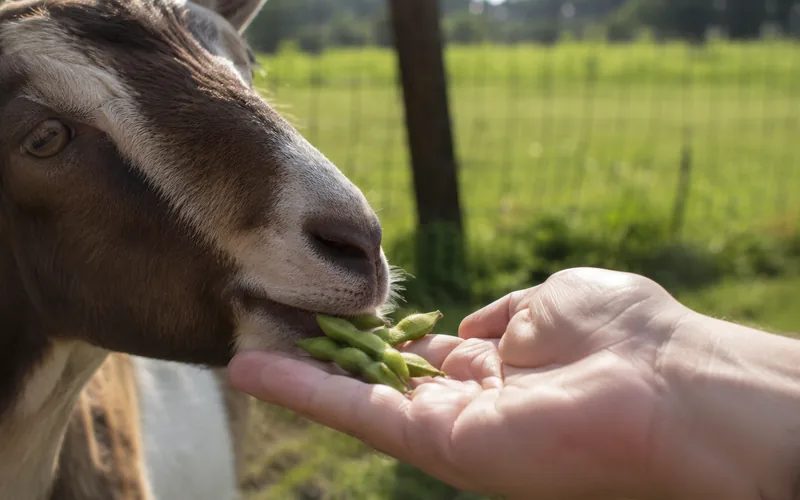
Here’s the deal: the shell is not a lesser food than the bean. Wikipedia’s soybean entry notes that soybean hulls can be fed to livestock, and a hull is the same outer casing in a drier form.
Goats handle peanut shells and corn husks the same way. Edamame pods belong in that same group.
Shells, pods, and beans are not the same thing
Put simply: shell and pod mean the same thing, the green casing holding two or three beans. The bean is the seed inside, and goats eat all of it.
Three different words get used for one vegetable, and the mix-up matters when you are deciding what to hand a goat.
In Japan, edamame is a common bar snack, and the same soybean crop also becomes tofu and soymilk.
Whole edamame is both parts together, so there is no need to split the casing or pop the beans out first. Snap peas and black-eyed peas work the same way, pod and all.
Even so, emptied edamame shells are the version most keepers actually have. Leftover pods from dinner work fine, as long as nothing was added to them.
The bean carries most of the protein, while the shell carries most of the fiber. Feeding both together is more balanced than either part alone.
Why do you not eat the shell of edamame?
People skip the shell because it is tough plant fiber, not because it is toxic. A human stomach cannot break that fiber down.
A goat’s rumen can. So the pod a person leaves behind is real food for a goat.
Why salted edamame is dangerous
Salt is the one real hazard here, and almost every packaged edamame carries it. Restaurant edamame gets finished with coarse salt, and many frozen bags are salted during processing.
Goats do need sodium, but on their own schedule. They self-regulate by visiting a mineral station when the body asks for it.
Left alone, they’ll balance it themselves, which is why free-choice loose minerals beat salt buried inside food. A goat takes what it needs and walks away.
A pod coated in salt takes that choice away. Wikipedia’s entry on salt poisoning describes sodium ion toxicosis in ruminants, with excessive thirst, staggering, and neurological signs, and the condition can be fatal.
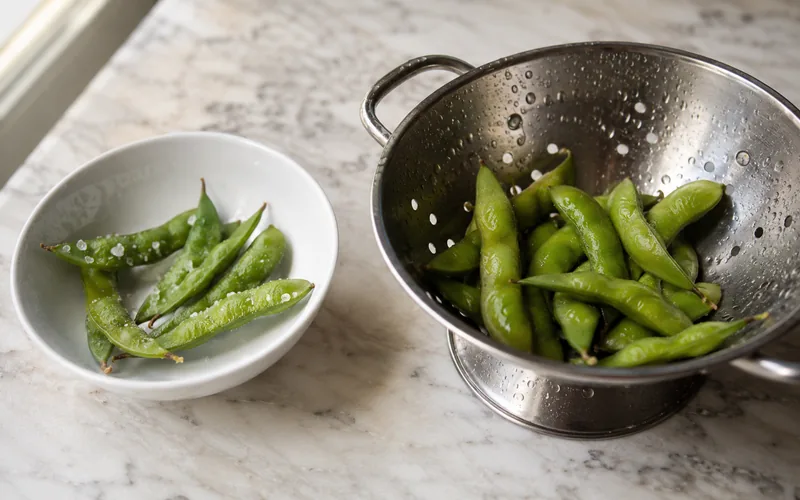
What this means for you: rinse store-bought pods under running water for a few seconds, and most of the surface salt washes away.
Seasonings are worse than salt, because none of them rinse off. Skip these versions of edamame entirely:
- Salted or sea-salted pods
- Garlic or chili oil edamame
- Soy-glazed and teriyaki edamame
- Anything labeled seasoned or flavored
Crackers and French fries fail the same test. Salted human snacks are salted for people, not for goats.
The same rule covers buttered corn on the cob, so only plain ears should go over the fence.
Raw, cooked, or frozen?
All three are safe, provided the pods are plain. Raw edamame straight off the plant is the cleanest option, since nothing has been added to it at any stage.
Cooked pods are softer and a little easier to chew, which helps with older goats and young kids. Cooking also pulls off some surface salt if the edamame was seasoned before you got it.
Frozen edamame needs one extra step. Let the pods thaw to room temperature first, because a mouthful of frozen food chills the rumen and slows digestion down.
The short version: check the ingredient list. Plain frozen edamame should list soybeans and nothing else.
Water content is another reason these pods are easy to swallow. Frozen prepared edamame is about 73% water in USDA figures, so the shell stays soft instead of dry and scratchy.
What edamame shells actually give a goat
Protein is the main reason to bother. USDA data published on Wikipedia lists frozen prepared edamame at 11.9 grams of protein per 100 grams, which is high for a green vegetable.
The same figures show 5.2 grams of dietary fiber, 8.9 grams of carbohydrates, and only 2.2 grams of sugars per 100 grams. Low sugars matter, because sudden sugar loads are what upset a goat’s rumen.
Those carbohydrates are gentler than what’s in most fruit treats. A pod releases its energy slowly instead of dumping sugar into the gut all at once.
That fiber does the real work. Dietary fiber keeps rumen microbes fed and gut movement normal, which is the same job timothy or orchard grass hay performs every single day.
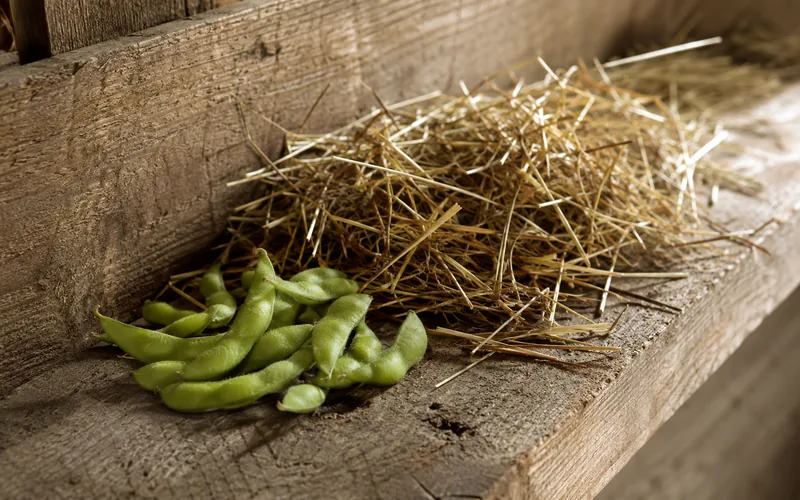
The mineral side is modest but real. Edamame carries iron, manganese, potassium, and B vitamins such as folate.
The iron sits at roughly 13% of a human daily value per 100 grams. The calcium and phosphorus in a few pods are far too small to shift a goat’s ration either way.
None of that makes edamame a substitute for forage or cereal grain. Soybeans as a class run 38 to 45% crude protein, a concentration no goat needs in bulk.
So soybean meal feeds most livestock as a measured supplement, not a whole ration. Protein helps in small doses and causes trouble in large ones.
A doe producing goat milk needs far more protein than a dry one, and a few pods will not close that gap. Feeding alfalfa is the better answer for milk production, since it is a legume you can offer by the flake.
Treat edamame as a supplement to that base, not a source of milk protein. A snack-sized portion adds variety and very little else.
How much, and how often
A quarter cup of edamame shells per adult goat is a sensible limit for one sitting. Two or three times a week is plenty.
Edamame is a snack, never a staple. The daily base of a goat’s diet stays hay, browse, and grass pasture, with a snack making up a small share on top.
So what does that mean? A steady soy load shifts rumen fermentation, and goats eating too much of any one treat start ignoring their hay.
Which is also why “every day” is the wrong frequency. A goat fed pods daily gets a steady load of concentrated protein and carbohydrates its forage diet was never built around.
Signs you overdid it
Watch the herd closely on that first serving. Loose stool, gas, or a swollen flank after a new food means you cut the portion back or drop it entirely.
A goat that skips its hay after a snack is telling you the same thing. No treat should ever displace the staple forage.
Free-choice baking soda in the barn gives a gassy goat a way to settle its own rumen.
Feeding kids and older goats
Kids need smaller pieces. Tear pods into short lengths for goats under six months, since a whole pod is easy to swallow without chewing.
Older goats with worn teeth do better with cooked pods. The nutrition stays the same either way.
Can goats eat edamame shells in the winter?
Yes, and in cold weather frozen pods are often the only kind available. Thaw them first, since cold food slows rumen fermentation.
Winter forage runs lower in protein, so a small snack helps. Keep the portion the same, because hay still has to be the base.
Can goats eat the edamame plant too?
Yes, and it’s worth knowing if you grow soybeans in the garden. The leaves, stems, flowers, and vines are all edible for goats.
Goats often prefer those leaves to the pods themselves. Green soybean plants are palatable forage, and the whole plant gets cut for silage on some farms.
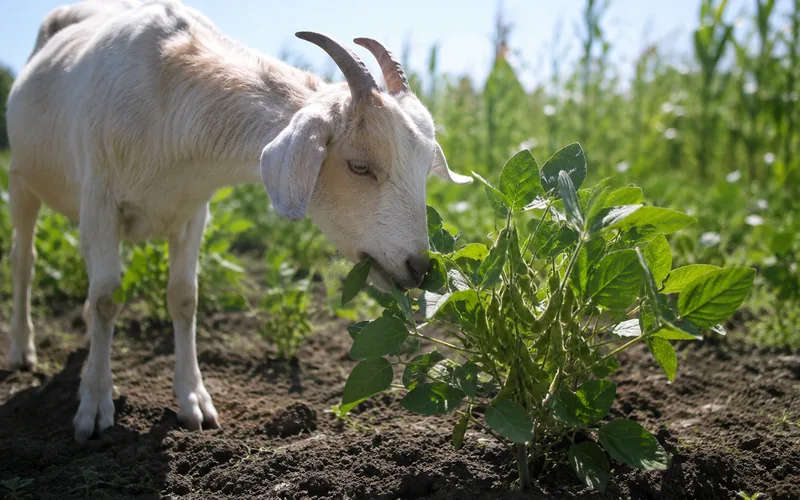
But there’s a catch. Any plant sprayed with pesticide or herbicide needs a full rinse and a waiting period before goats get near it.
Free access is the other problem. A goat left alone with a soybean plant will strip the leaves and stems long before you notice.
So never turn goats loose in a stand of soybeans, clover, or vetch unsupervised. A rumen packed with fresh green plant material can bloat.
Lupin is the one legume to skip outright, since its seeds carry alkaloids a goat cannot handle.
The bottom line
Edamame shells are safe for goats, and the pod is as usable as the bean inside it. The whole question comes down to what was added at the factory or the restaurant.
Plain pods, rinsed if they came from a store, in small amounts a few times a week. That’s the entire rule, and everything else here is just detail.
Other kitchen scraps follow the same logic. Cabbage leaves and vegetable trimmings are fine plain, and a problem once someone seasons them.
Carrots and squash rinds land in that same category.
Frequently Asked Questions
Goats and other ruminants can eat edamame shells, because the rumen breaks down fibrous pods that other animals cannot handle. Dogs are the opposite case, since a tough pod can choke a small dog or block its gut. Feed the pods to goats plain and unsalted.
Skip anything salted, oiled, or seasoned, along with moldy food, meat, dairy, and bread in quantity. Avoid onion, garlic, chocolate, avocado skin and pit, and raw potato peels with green on them. Plain vegetable trimmings are the safest kitchen scraps for a goat.
People skip the shell because it is fibrous and tough to chew, not because it is poisonous. Human stomachs cannot break that fiber down. A goat can, so the pod a person discards is usable food for a goat.
Common toxic foods include azalea, rhododendron, yew, oleander, wilted cherry and plum leaves, and nightshade plants. Salt in large amounts causes sodium ion toxicosis, and copper meant for cattle builds up in a goat's liver. Any feed medicated with an ionophore such as monensin is also fatal to goats.