| # | Product | Our Rating | ||
|---|---|---|---|---|
| 1 |  | Best OverallREDMOND Goat Mineral Supplement (5 lb) | ★★★★★ | Check Price |
| 2 |  | Wholesome Harvest 16% Goat Feed (10 lb) | ★★★★☆ | Check Price |
| 3 |  | Manna Pro Goat Treats | ★★★★☆ | Check Price |
Harvest a big basil plant and you will usually end up with more leaves than any kitchen can use. If your goats are watching you trim it back, sharing the trimmings is a fair question worth getting right.
Can Goats Eat Basil?
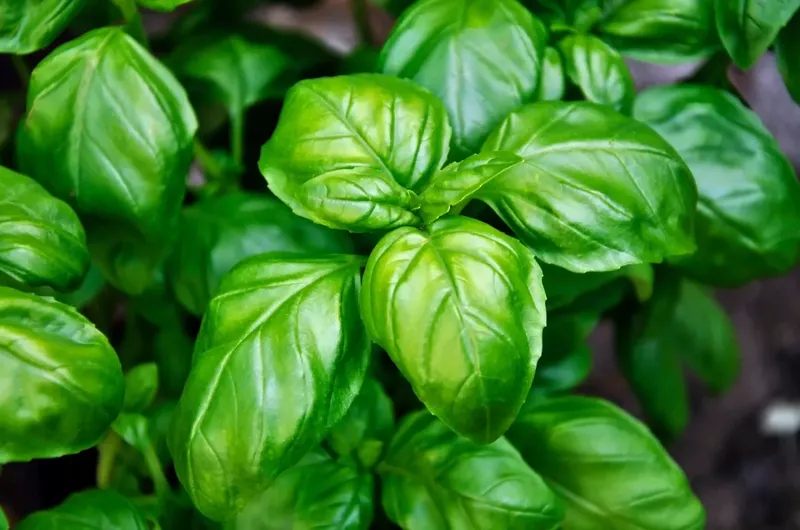
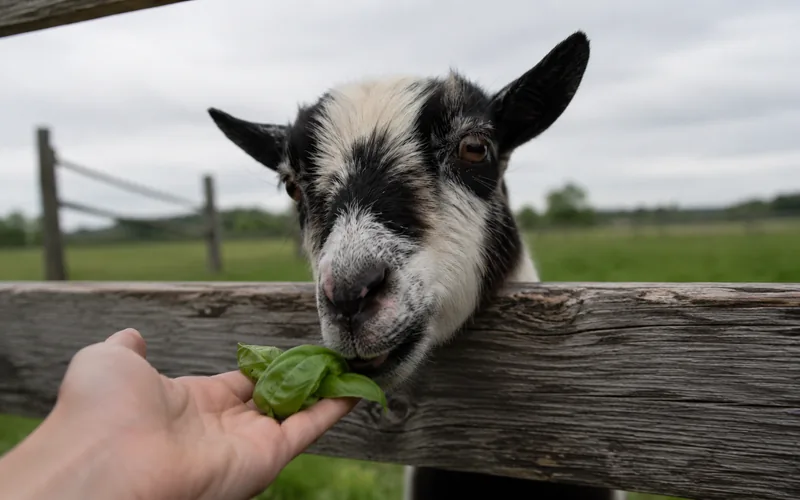
Yes, goats can eat basil, and it counts as a safe herb rather than a risky one. Basil is a non-toxic plant, and the ASPCA lists sweet basil as safe for dogs, cats, and horses, which fits what goat keepers see in practice.
Goats are browsers by nature, built to sample a little of many different plants rather than graze one crop. That instinct is exactly why an aromatic herb like basil suits them as an occasional treat.
Most goats are suckers for a strong scent, and basil’s sweet, peppery smell tends to grab their attention fast. That enthusiasm is handy for feeding variety, but it’s also why portion control matters the moment a whole plant comes within reach.
The catch is quantity, not safety. Basil should stay a treat, with herbs and extras making up no more than 10% of a goat’s daily diet while hay and pasture do the real work.
Nutritional Benefits of Basil for Goats
Put simply, basil hands goats vitamin K, calcium, manganese, and antioxidants in a low-calorie package.
Basil is light on calories but packs a surprising amount of micronutrients, which is what makes it worth offering at all. Its flavonoids and polyphenols work as antioxidants, helping the body manage oxidative stress in a goat’s tissues.
The herb is also a strong source of vitamin K, which supports normal blood clotting and bone health in ruminants. Add small amounts of calcium and manganese, and a handful of leaves becomes a genuine micronutrient boost rather than empty filler.
You will also see basil described as a natural dewormer in homesteading circles. That reputation leans more on tradition than on solid veterinary evidence, so treat it as a nice bonus and never as a replacement for a real parasite management plan.
| Nutrient (per 100g fresh basil) | Amount | Why it matters for goats |
|---|---|---|
| Moisture | 92 g | Hydrating, but too much can dilute rumen function |
| Energy | 23 kcal | Minimal calories, so it won’t cause weight gain |
| Protein | 3.2 g | A minor protein contribution |
| Vitamin K | 415 µg | Supports blood clotting and bone strength |
| Calcium | 177 mg | Helps maintain mineral balance |
| Manganese | 1.1 mg | Feeds antioxidant enzyme activity |
Nutrient values per USDA FoodData Central.
The takeaway is simple: basil complements a diet, it doesn’t anchor one. The nutrients are real, but its moisture and thin fiber mean a big serving crowds out the forage a goat actually needs.
Why Basil’s Essential Oils Matter
Here’s what matters: basil’s essential oils are harmless in small servings but can irritate a goat’s digestion when fed in bulk.
The same aroma that makes basil appealing also carries a warning. Basil belongs to the mint family, and North Carolina State Extension notes its key volatile compounds are linalool and eugenol, the essential oils responsible for its scent and flavor.
In small doses those oils are harmless and even pleasant to goats. In large amounts they can irritate the gastrointestinal tract and throw off digestion.
The deeper issue sits in the rumen. A goat’s rumen relies on a delicate population of microbes to break down plant matter, and the Merck Veterinary Manual stresses that any new food should be introduced gradually so those microbes are not disrupted.
Dump a whole bowl of a strongly scented herb on a goat that’s never had it, and you risk bloat or a sluggish rumen. Introduce basil slowly, and the microbes adjust fine.
How Much Basil Can Goats Eat?
A sensible serving is a small handful of fresh leaves, offered once or twice a week. That’s enough to hand over the nutritional perks without letting the essential oils tip into problem territory.
Portion size should scale with the animal, since a Nigerian Dwarf and a full-size Boer are not the same. The table below gives a practical starting point.
| Goat type | Approximate weight | Basil per serving | Frequency |
|---|---|---|---|
| Weaned kid | Under 30 lb | A few leaves | Once a week |
| Dwarf breed (adult) | 50–80 lb | Small handful | 1–2 times a week |
| Standard breed (adult) | 100–200 lb | Larger handful | 1–2 times a week |
Always introduce basil in tiny amounts the first time, then build up. If you notice loose stool or a goat going off its feed, scale back and give the rumen time to settle.
Signs a Goat Has Eaten Too Much Basil
The short answer: the first signs of too much basil are loose stool, a bloated belly, and a goat that goes off its feed.
Most goats self-regulate and wander off once they have had their fill of basil. Trouble tends to show up only when a goat gets into a large stash, like a whole harvested plant left within reach of the pen.
The first warning sign is loose or watery stool, which points to a rumen struggling with the sudden load of essential oils. A tight, bloated belly is more serious and means the fermentation balance has been thrown off.
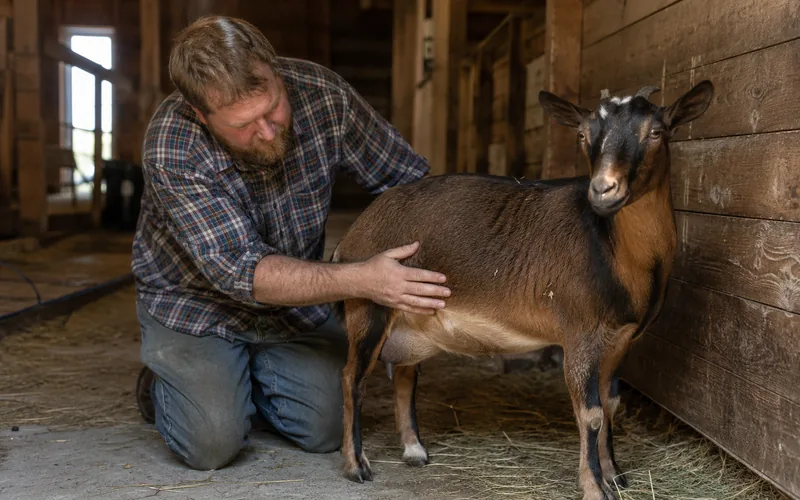
Watch too for a goat that stands hunched or seems unusually quiet. Pull all basil right away, offer plenty of fresh water and grass hay, and give the rumen time to reset.
If the bloat does not ease within a few hours, or the goat stops chewing its cud, call your vet. A stalled rumen is an emergency rather than something to wait out overnight.
Is Holy Basil Safe for Goats?
In short, holy basil (tulsi) is safe for goats but richer in essential oils than sweet basil, so offer even less of it.
Not all basil is created equal, and the variety you pick changes how careful you need to be. Sweet basil is the common garden type, and it’s the safest choice for goats.
Holy basil, also called tulsi, is a separate species (Ocimum tenuiflorum) with a stronger, more medicinal profile. It packs a higher concentration of essential oils than sweet basil, so the same amount carries more of a digestive punch.
Holy basil is not poisonous, and research on tulsi even points to real bioactivity. A review in the Journal of Ayurveda and Integrative Medicine documents its broad antimicrobial and stress-reducing properties, which is why it is prized medicinally.
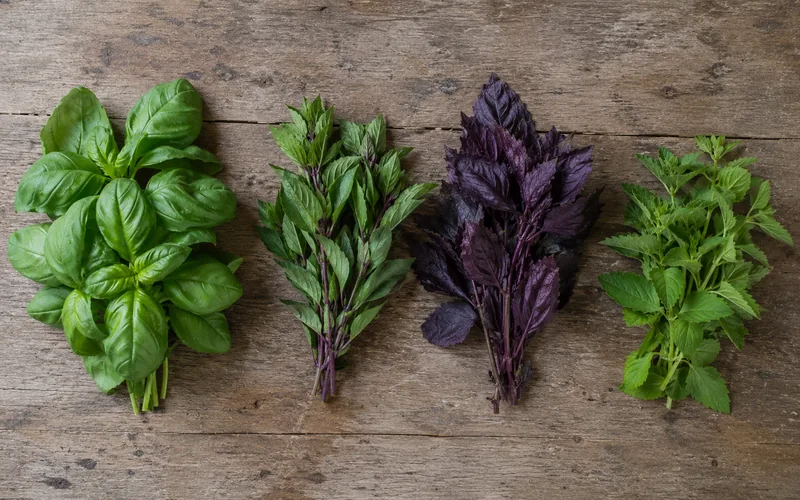
For everyday treats, stick with plain sweet basil and keep tulsi to a leaf or two at most. Thai basil and purple basil sit between the two and are fine in the same small amounts as sweet basil.
Can Goats Eat Basil Stems and Seeds?
Goats can eat basil stems right along with the leaves, and most will happily chomp the whole sprig. Young, tender stems are soft and easy to digest, so there’s no need to strip the leaves off first.
Older, woody stems are the only exception worth a second thought. Chop thick stalks into shorter pieces to avoid any choking risk, especially with smaller breeds.
Basil seeds are also safe, though they behave differently from the leaves. The seeds are more concentrated and swell when wet, so offer only a light sprinkle rather than a scoop, and treat them as an occasional novelty instead of a regular feed.
If your basil has bolted and gone to flower, goats can browse the flowering tops too. The flowers are harmless, though the plant turns woodier once it seeds, so most goats lose interest anyway.
Fresh vs Dried Basil for Goats
Both fresh and dried basil are safe, and which one you reach for really comes down to the season. Fresh basil brings the higher moisture and stronger aroma that most goats find irresistible straight from the garden.
Dried basil is far more concentrated by weight, which cuts both ways. The nutrients and the essential oils are both denser, so a pinch of dried basil goes much further than the same volume of fresh leaves.
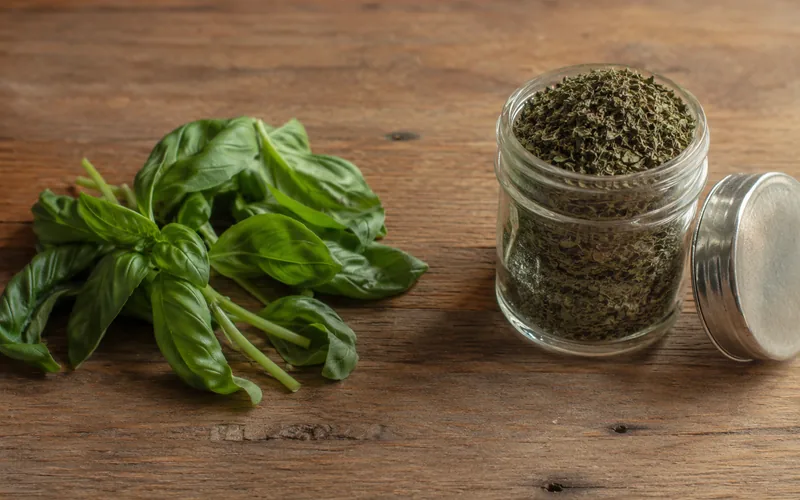
Dried basil shines in winter when fresh herbs are scarce, mixed lightly into grain or feed. Just check that any store-bought dried basil is plain, with no added salt, garlic, or seasoning blends that could upset a goat.
Basil for Pregnant and Nursing Goats
For does, the rule is simple: a little basil is fine, but it should stay an occasional treat through pregnancy and lactation.
Pregnant and nursing does deserve extra caution with any strongly aromatic herb. Basil in the small treat amounts described here is generally fine, but it should never crowd out the higher-quality forage a pregnant doe needs.
The concern is concentration, not the plant itself. Herbs with potent essential oils are best kept to modest portions during pregnancy and lactation, and holy basil in particular is worth holding back on for does.
When in doubt, keep treats simple and lean on hay, pasture, and a balanced mineral. A quick word with your vet is wise before adding any new herb to a pregnant doe’s routine.
Growing Basil for Your Goats
Basil is easy to grow, which makes it a cheap and renewable treat for a small herd. A few plants along a fence line give you kitchen herbs and goat snacks from the same bed.
It thrives in full sun and warm weather but dies back with the first frost, so it is very much a summer crop. That seasonality is why many keepers dry a batch in late summer to stretch basil into the colder months.
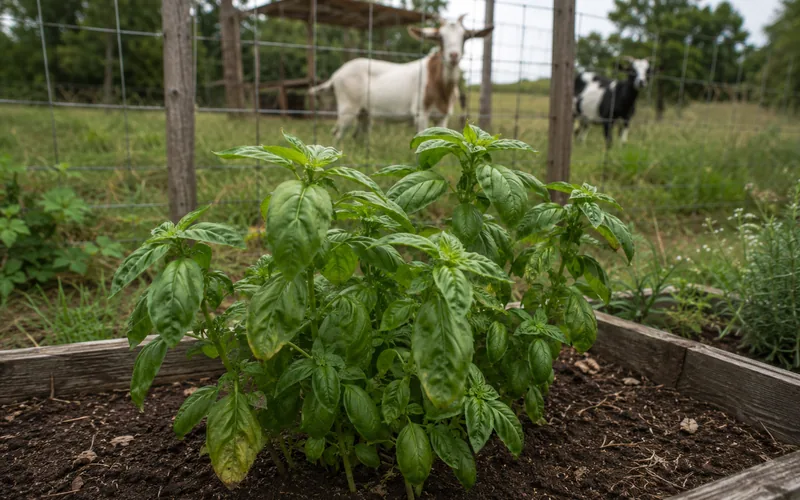
Grow basil where goats can’t strip the whole plant in one pass, or it won’t survive their enthusiasm. A raised bed or a patch just outside the fence, trimmed and handed over in controlled amounts, works far better than planting inside the pen.
Quick-growing radishes suit that bed too, and goats can eat both the roots and the leafy tops.
Skip pesticides and herbicides entirely, since residues that are fine on a washed kitchen herb are a different matter when a goat eats the whole leaf. Rinse any harvest to clear off dust and debris.
Herbs and Plants Goats Should Never Eat
Here’s the key list to memorize: goats should never eat nightshades, comfrey, or wormwood.
Because basil is so safe, it’s tempting to assume every garden herb gets a green light. That’s a dangerous leap, because several common plants are genuinely toxic and belong nowhere near a goat.
The nightshade family, or Solanaceae, is the big one to memorize. Tomato vines, potato foliage, and other nightshades contain compounds that can poison a goat, so keep that greenery well out of reach even though the fruit debate is separate.
Comfrey and wormwood are two more herbs to avoid feeding, and lookalikes matter as much as the plants themselves. Some safe herbs resemble deadly ones, which is why goats should be kept away from anything in the poison hemlock family until you have identified it with certainty.
Other Herbs Goats Can Safely Eat
Basil is just one of several herbs that slot nicely into a goat’s rotation. Mixing things up keeps mealtime interesting and spreads the nutrients across different plants.
Cilantro is another safe pick that most goats take to, offering vitamins A, C, and K. Mint is popular too, and a handful of peppermint as an occasional treat can help settle a mild upset stomach.
Rosemary, thyme, and oregano are all safe in the same small treat amounts as basil, though their strong oils mean the same moderation rules apply. For a natural browse patch, pairing herbs with plants like dandelions gives goats plenty to nibble between their main servings of good-quality hay.
Frequently Asked Questions
Fresh basil is good for goats in small amounts. It offers vitamin K, calcium, and antioxidants, and most goats enjoy the aroma. Keep servings to a few leaves a couple of times a week so the essential oils don't upset their digestion.
Basil plants are not toxic to common livestock. The ASPCA lists sweet basil as non-toxic to dogs, cats, and horses, and it is safe for goats too. Problems only arise from overfeeding, not from the plant itself.
Goats should avoid comfrey, wormwood, and any herb in the nightshade family, such as tomato and potato foliage. These contain compounds that can harm a goat even in small amounts, so verify every new plant before offering it.
Baby goats can eat basil once they are weaned and eating solid food, usually around eight to twelve weeks. Offer only a leaf or two at first and watch for loose stool before making it a regular treat.