| # | Product | Our Rating | ||
|---|---|---|---|---|
| 1 |  | Best OverallREDMOND Goat Mineral Supplement (5 lb) | ★★★★★ | Check Price |
| 2 |  | Wholesome Harvest 16% Goat Feed (10 lb) | ★★★★☆ | Check Price |
| 3 |  | Manna Pro Goat Treats | ★★★★☆ | Check Price |
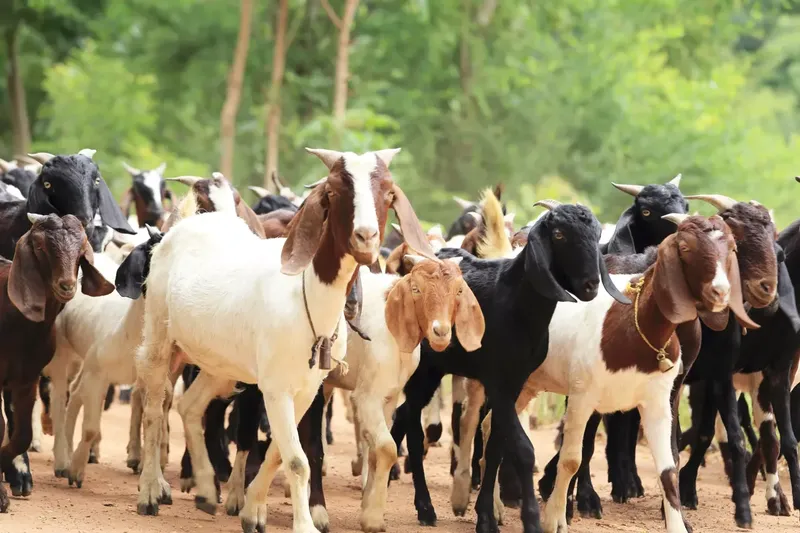
No, goats don’t eat meat. They’re herbivores with a four-chamber ruminant digestive system built specifically to break down plant fiber.
They can’t properly digest animal protein, and you should never intentionally feed meat to goats.
There are occasional reports of goats nibbling on odd things, including meat. Let’s sort out what’s actually going on.
Do goats eat meat?
Goats are ruminants, which puts them in the same digestive category as cattle, sheep, and deer. Their entire system is designed to ferment cellulose from leaves, bark, grasses, and browse.
Meat has no place in that process.
A goat might mouth a piece of meat out of curiosity because goats investigate everything with their lips. But mouthing something and eating it as part of their diet are two completely different things.
Don’t intentionally feed meat to goats. It disrupts the microbial balance in the rumen and can cause serious digestive upset.
That includes meaty table scraps, so keep the treats you share strictly plant-based.
Why goats can’t properly digest meat
The rumen is the largest of a goat’s four stomach compartments, and it holds billions of microorganisms that specialize in breaking down plant material. These microbes ferment cellulose and extract nutrients from forage that most animals can’t use.
Animal protein doesn’t ferment the same way in the rumen. The bacteria living in there aren’t equipped to handle it efficiently.
Feeding meat throws off the microbial population and can lead to acidosis, bloat, and other digestive problems.
A goat that accidentally eats a small amount of meat will usually pass it through without major issues. But repeated or large servings cause real problems because the system simply wasn’t built for it.
Commercial pet food follows the same pattern, since a mouthful of dog food rarely hurts a goat while daily access to the bowl does.
What those odd reports of goats eating animals actually mean
You’ll occasionally see stories of a goat eating a baby chick, a mouse, or some other small animal. These incidents are real, but they’re opportunistic behavior, not dietary preference.
Goats are curious animals that explore the world with their mouths, which is also why people think goats eat everything. If a chick wanders into the feed trough and a goat scoops it up, that’s not predatory behavior.
It’s more like a toddler putting random objects in their mouth.
These events are rare and don’t change the fact that goats are herbivores. No goat actively hunts for animal protein, and these isolated incidents shouldn’t be taken as evidence that meat belongs in their diet.
Bone chewing signals a mineral deficiency
If you catch your goat chewing on a bone left behind by the farm dog, pay attention. This behavior is called pica, and it usually signals a mineral deficiency, most commonly phosphorus or calcium.
The goat is instinctively seeking out minerals that are missing from its regular diet. It’s not trying to eat meat.
It’s trying to correct a nutritional imbalance.
Check your mineral feeder and make sure it’s stocked with a quality goat-specific loose mineral mix. Similarly, goats that chew on metal objects are also signaling a deficiency, not a preference.
If the bone chewing continues, ask your vet to run a blood panel to identify exactly which minerals are running low.
Safe protein sources for goats that need them
If your goat needs extra protein, there are options that actually work with their digestive system. Alfalfa hay is one of the best natural protein sources for goats and is completely compatible with rumen function.
Understanding what kind of hay goats eat helps you choose the right forage for your herd’s needs.
Soybean meal mixed into a grain ration is another common way to boost protein for growing kids or lactating does. It’s digestible, available at most feed stores, and goats take to it without issues.
Black oil sunflower seeds provide both protein and fat in a form goats enjoy. A quarter cup per day per adult goat is a reasonable supplement, and goats can consume these easily since they have no upper front teeth to interfere with the shells.
These options keep protein intake up without any of the risks that come with feeding animal products.
Final Thoughts
Goats are herbivores, and meat has no place in their diet. Their ruminant digestive system is built to ferment plant fiber, not process animal protein.
Occasional reports of goats eating small animals are opportunistic curiosity, not dietary need.
If your goat is chewing on bones, it’s telling you it needs better minerals, not meat. Provide quality loose minerals, and choose alfalfa, soybean meal, or sunflower seeds for any additional protein needs.
Frequently Asked Questions
No, goats are herbivores and shouldn't eat meat. Their ruminant digestive system is built to ferment plant fiber, not process animal protein. Feeding meat disrupts the microbial balance in the rumen and can cause serious digestive upset.
Some goats are herbivores, meaning that they only eat plants.
No, you shouldn't feed meat to a pregnant goat or any goat. Goats are strict herbivores whose ruminant digestive system can't properly handle animal protein. If your goat needs extra protein, use alfalfa hay, soybean meal, or black oil sunflower seeds instead.
You shouldn't feed meat to a sick goat. Goats are herbivores, so their stomachs aren't designed to digest meat. If you try to feed sick goat meat, it's likely that the goat will vomit or have diarrhea.