| # | Product | Our Rating | ||
|---|---|---|---|---|
| 1 |  | Best OverallREDMOND Goat Mineral Supplement (5 lb) | ★★★★★ | Check Price |
| 2 |  | Wholesome Harvest 16% Goat Feed (10 lb) | ★★★★☆ | Check Price |
| 3 |  | Manna Pro Goat Treats | ★★★★☆ | Check Price |
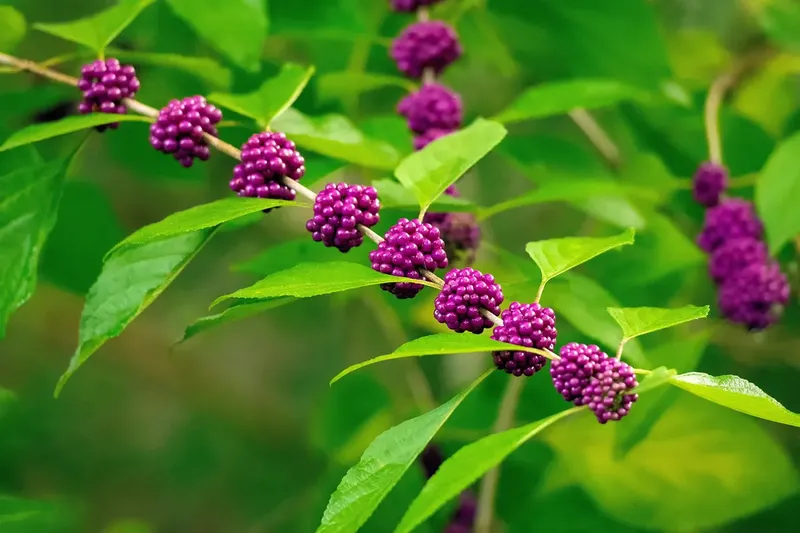
If you keep goats in the southeastern United States, you’ve almost certainly seen beautyberry along a fence line or field edge. The clusters of vivid purple berries stand out so sharply that many owners assume anything that flashy has to be off-limits.
That instinct is understandable, but it doesn’t match how goats actually treat the shrub. Their browsing biology, and the way related wildlife feed on the very same plant, tells a far more reassuring story.
Is beautyberry safe for goats?
Beautyberry is safe for goats, and American beautyberry (Callicarpa americana) does not appear on any recognized list of plants that are toxic to goats or livestock. Both the leaves and the berries can be browsed without risk.
The clearest evidence comes from the wildlife that shares the plant’s range. According to the Georgia Department of Natural Resources, beautyberry is an important deer food in parts of the South, with whitetails eating the stems, leaves, and fruit, especially when preferred foods run short.
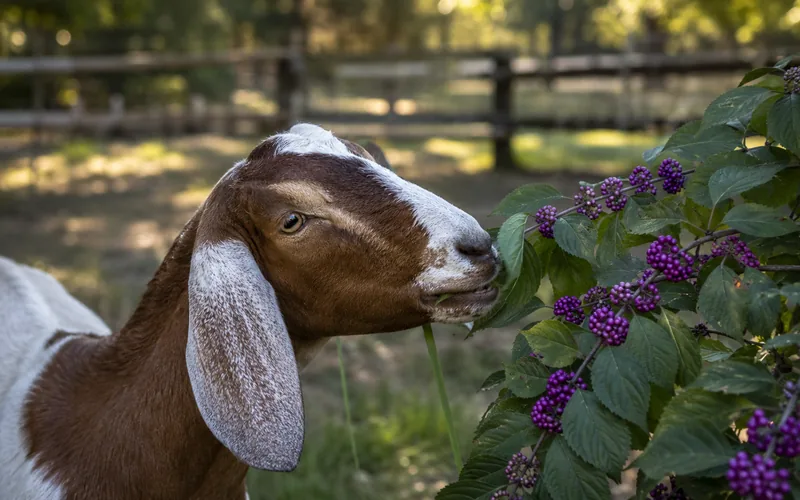
That matters because goats and deer are both browsing ruminants with similar digestive systems. Goats are natural browsers, selecting shrubs and woody plants over grass, so a plant that deer handle comfortably is a safe bet for a goat.
Beautyberry belongs to the genus Callicarpa and is a member of the mint family, Lamiaceae. NC State Extension notes it is native to the central and southeastern United States, which is exactly the region where most owners encounter it growing wild in their pastures.
Which parts of beautyberry can goats eat?
The short answer is yes to all of it, since goats can safely eat beautyberry’s leaves, stems, berries, and seeds.
Most sources skip right past a fair question: is every part of the plant equally safe? For beautyberry, the answer’s simple, and leaves, stems, and berries are all fine for goats to eat.
Leaves are the part goats browse most often. They are available from spring through fall and make up the bulk of what a goat actually consumes from the shrub.
Berries are the showy purple clusters that appear in late summer. They are edible for people, birds, and mammals alike, so there is nothing in them that threatens a goat.
Seeds sit inside those berries and pass through the same way they do for the many birds that spread the shrub. There is no separate seed toxicity to worry about, which answers a common question from owners searching specifically about the seeds.
Stems and young shoots get nibbled too, especially when a goat is stripping a branch. The shrub produces its fruit on new wood, so light browsing rarely does lasting harm to an established plant.
The insect-repellent bonus
Here’s what matters: beautyberry isn’t just safe for goats, its leaves double as a natural insect deterrent.
This shrub offers something almost no other pasture plant does. Its leaves contain a natural compound (callicarpenal) that, according to NC State Extension, repels mosquitoes, ticks, and fire ants when crushed.
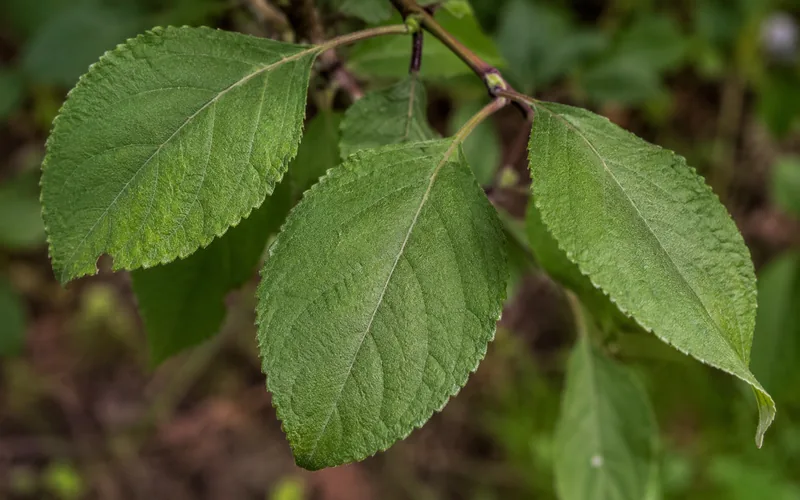
For a goat keeper, that’s more than a fun fact. Ticks and biting flies are a real burden on a herd, so a repellent shrub growing right in the paddock is a genuine, low-effort win.
Some owners crush a handful of beautyberry leaves and rub the juice onto their goats’ coats before turning them out in summer. It’s a folk remedy, not a certified product, but it matches the leaves’ documented chemistry.
Planting a few bushes along fence lines or near the barn can also knock back the local insect population. That perk sits right on top of the shrub’s value as browse.
Where beautyberry fits in a goat’s diet
Beautyberry is a supplement, not a staple. It adds variety and fiber to a goat’s day, but it lacks the concentrated energy and protein a productive animal needs from its core ration.
The foundation of the diet should still be quality forage. The shrub works best as one option among many in a mixed browse, sitting alongside plants like blackberry canes and other broadleaf shrubs.
Its main dietary contribution is fiber, not calories. Leafy browse of this kind keeps the rumen active and supports steady digestion, but it does not carry the protein a growing kid or a milking doe depends on.
Variety is really the point. Goats that range across diverse browse tend to balance their own intake and lean less on any single plant, which is exactly how this shrub should sit in the mix.
Think of it the way you would treat honeysuckle or similar hedge plants. It is welcome, useful, and safe, but it is never the thing keeping weight on your animals.
How much beautyberry is safe?
There’s no strict limit that turns the plant harmful, since it’s non-toxic. In practice, moderation still matters, because any sudden load of a single new browse can loosen a goat’s stool.
A sensible approach is to keep it to a modest share of the day’s intake rather than the bulk of it. As a rough guide, treat it like any new browse, a supplement of maybe a tenth or less of what the goat eats until the animal adjusts.
For a mature goat with free access to a bush, that balance usually sorts itself out.
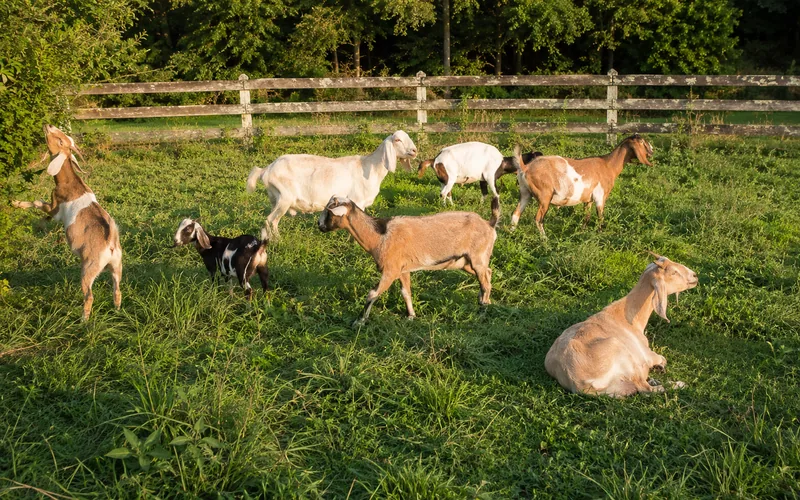
Palatability does most of the regulating for you. Goat owners consistently note that animals nibble the shrub, then move on, often leaving established bushes standing for years.
It comes down to taste. The berries are noticeably bitter straight off the plant, so goats with better options rarely gorge, which is why beautyberry so often survives right inside an active paddock.
If you want tighter control, prune branches before the berries ripen and offer the clippings in measured amounts. This lets you fold it into the diet on your terms rather than the goat’s.
When beautyberry is available to browse
Put simply, beautyberry offers leafy browse from spring through fall, with its purple berries peaking from late summer into early winter.
Timing shapes how much of the plant your goats actually touch. The leaves are there for browsing from spring through fall, and they’re the part goats eat most consistently all season.
The berries follow a tighter window. NC State Extension notes that clusters of purple berries develop from August through October and encircle the stem, and they often persist on the shrub into early winter.
That late-season persistence is unusual and useful. Long after many plants have dropped their fruit, the bush still carries berries, which is one reason more than 40 species of birds rely on it, per the Georgia Department of Natural Resources.
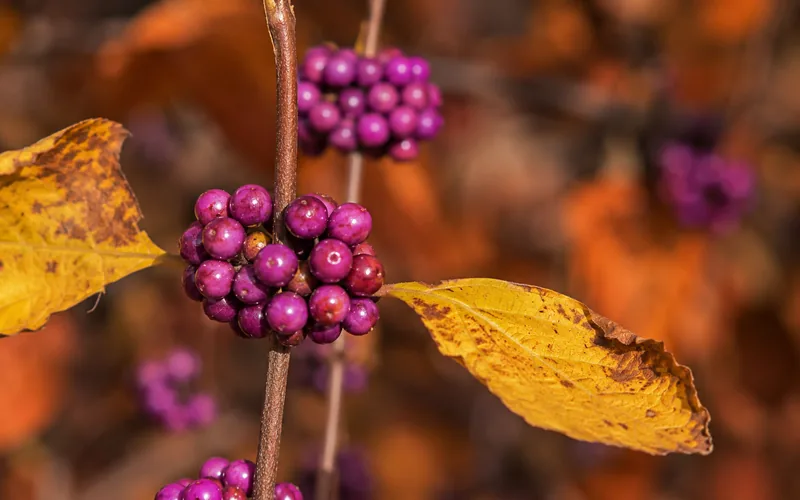
For goats, this means the shrub is most eye-catching in late summer and fall. In Texas and across the Southeast, where beautyberry is native and common, that fall window is when you will most often see the herd sampling the fruit.
Through winter dormancy the bush turns plain and goats largely ignore it. During those months your animals will gravitate toward other seasonal browse, such as fallen acorns from nearby oaks.
Beautyberry vs. plants that are actually dangerous
In simple terms, beautyberry is harmless, while cherry, yew, azalea, and nightshade are the plants that truly endanger goats.
It helps to see where this shrub sits relative to plants that genuinely threaten goats. Its bright berries make it look suspicious, but its safety profile is nothing like the truly toxic species.
Bright fruit is a poor guide to risk on its own. The red haws on a thorny hawthorn are safe too, while pale cherry laurel leaves harm a goat in small amounts.
The table below puts the harmless native shrub next to the plants that deserve real caution in a goat pasture.
| Plant | Risk to goats | Key concern |
|---|---|---|
| American beautyberry | Safe | None; browsed like deer forage |
| Cherry / Prunus leaves | High | Wilted leaves release cyanide |
| Rhododendron / azalea | High | Grayanotoxins, often fatal |
| Yew | Severe | Cardiotoxic; very small dose kills |
| Nightshade weeds | Moderate–high | Solanine and related alkaloids |
So the bottom line: beautyberry is a safe native shrub, not a toxic weed, even if its looks invite doubt. The plants that actually kill goats are a very different, well-documented group.
If anything, the bigger day-to-day threat to a herd is not a shrub at all. Thorny tangles and unfamiliar brush cause more worry than beautyberry, which is why owners often research whether goats can safely clear sticker bushes and similar rough growth.
Frequently Asked Questions
The most dangerous plants for goats include rhododendron, azalea, mountain laurel, yew, wilted cherry and other stone-fruit leaves, oleander, and nightshade. These contain compounds like grayanotoxins, cyanide, or cardiac glycosides that can be fatal in small amounts. Beautyberry is not among them and appears on no recognized toxic plant list for goats.
Cherry, plum, peach, apricot, and other Prunus species are the main concern. Their wilting leaves release cyanide and can kill a goat quickly. Avocado is also toxic. Beautyberry is a shrub, not a fruit tree, and its purple berries are safe for goats to browse.
Avoid letting goats eat bracken fern, pokeweed in quantity, poison hemlock, milkweed, lantana, and nightshade family weeds. Beautyberry is often mistaken for a risky weed because of its bright purple berries, but it is a safe native shrub rather than a toxic weed.
Internal parasites, especially the barber pole worm, are the leading cause of death in goats, not poisonous plants. Good parasite management and access to varied browse matter far more than fear of shrubs like beautyberry, which goats handle without trouble.