| # | Product | Our Rating | ||
|---|---|---|---|---|
| 1 |  | Best OverallREDMOND Goat Mineral Supplement (5 lb) | ★★★★★ | Check Price |
| 2 |  | Wholesome Harvest 16% Goat Feed (10 lb) | ★★★★☆ | Check Price |
| 3 |  | Manna Pro Goat Treats | ★★★★☆ | Check Price |
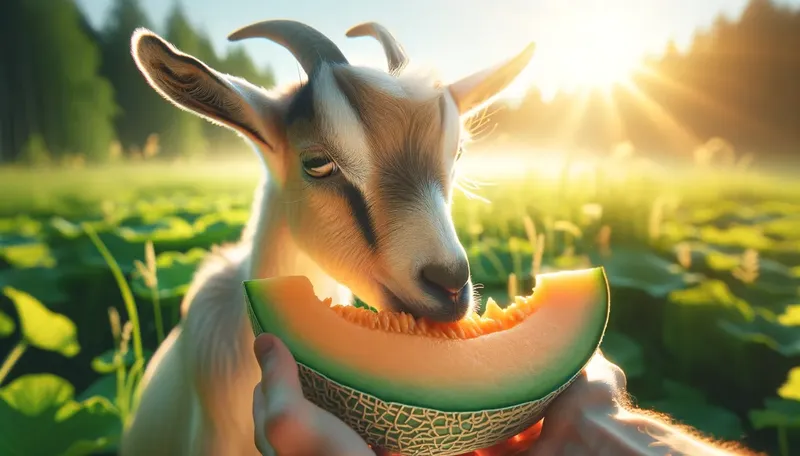
Half a cantaloupe sits in the fridge after a weekend cookout, and the herd is already crowding the fence. The question isn’t really whether they can have it, because they can.
The useful question is which parts are worth feeding, how much is too much, and why this melon earns a spot in the rotation when most fruit treats are just sugar.
What Cantaloupe Actually Delivers
In short, this melon brings real vitamins to the trough rather than just sugar and water.
Most fruit you hand a goat is water and sugar with little else behind it. Cantaloupe is one of the few carrying a genuine nutrient load.
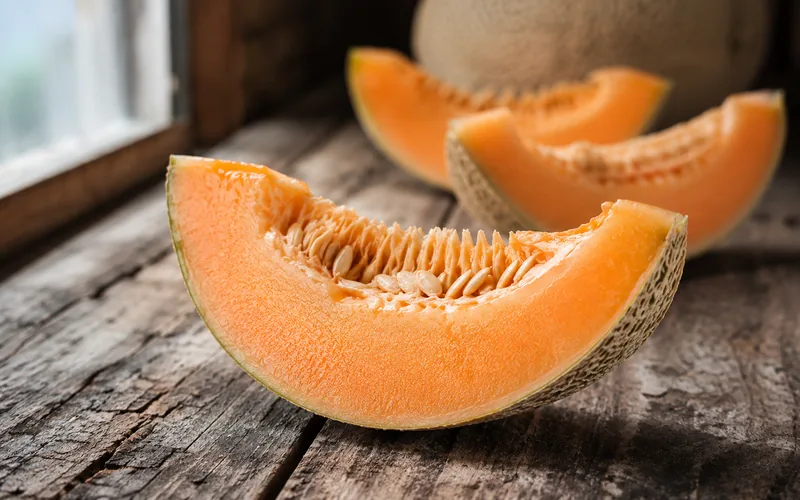
The orange flesh gets its color from beta-carotene, a vitamin A precursor that supports vision, skin, and immune function. The NIH Office of Dietary Supplements puts a cup of raw cantaloupe at 135 mcg RAE of vitamin A, roughly 15 percent of a daily value, which is a strong showing for a summer fruit.
Potassium comes along with it. The NIH describes potassium as the most abundant intracellular cation, the mineral behind fluid balance and muscle contraction in any animal that eats it.
There’s vitamin C in there too. Goats make their own, so it’s a bonus rather than something they need.
The Rind Beats the Flesh
The short answer is that the rind is the better half of the melon, not the part to bin.
Here is where common feeding advice has it backwards. For a goat, the peel carries the real value.
That rough netted peel packs more fiber and a lot less sugar than the sweet center. Fiber is what a ruminant gut is built to handle, while concentrated fruit sugar is what causes trouble in volume.
Goats have no trouble chewing through it. The texture that puts us off is much closer to the browse they’d pick on their own.
If you’re eating the melon anyway, saving the rinds costs nothing. Plenty of keepers do the same with watermelon rinds.
Seeds Need No Prep at All
No prep needed here. The seeds are safe, and scooping them out only wastes your time.
The seeds carry protein and fiber, and a goat crunches through them without noticing. The stringy pulp around them goes down just as easily.
Unlike stone fruit pits, they’re soft, small, and no choking risk to an adult goat.
Vines, Leaves, and Garden Cleanup
Yes, the whole plant is fair game. Vines and leaves are safe browse for goats.
The plant being edible is a genuine advantage over most fruit treats. That comes in handy at the end of the growing season.
Turning the herd into a spent melon patch clears the residue and feeds them at once, the same logic behind offering pumpkin vines and leaves after harvest.
Check for mold and rot before you open the gate. Collapsed fruit in wet soil is the part worth pulling first.
Portions That Won’t Upset the Rumen
Here is what matters: about a cup of chunks per adult goat, once or twice a week.
Miniature breeds like Nigerian Dwarfs should get roughly half that. Treats of all kinds, fruit included, should stay near 10 percent of daily intake.
Overdo it and the result is predictable. Too much fruit sugar shows up as loose stool within a day, and repeated overfeeding invites worse.
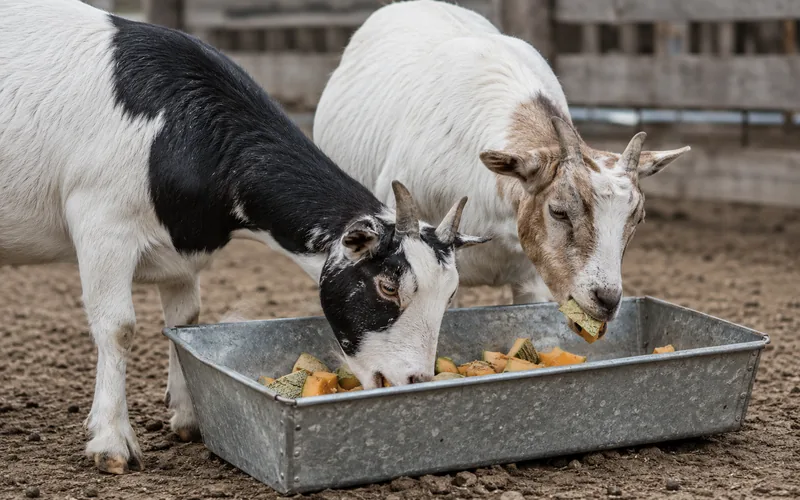
Herd dynamics mess with the math. A pushy doe will put away three goats’ worth, so spread portions across separate spots.
Watch what you’re stacking. A cup of melon on top of grain, banana peels, and commercial treats adds up fast. A serving of cauliflower florets counts the same way, so tally every treat before topping up.
Feeding Cantaloupe in Hot Weather
This fruit helps goats stay hydrated in heat, but it never stands in for drinking water.
The melon is roughly 90 percent water, which is why it works so well in July. It supplements the trough and never replaces it.
That distinction matters more than it sounds. The MSD Veterinary Manual notes that goats can die from a loss of just 10 percent of their body water, and that clean water needs to be available without limit.
Frozen chunks stretch the treat out on hot afternoons. They also slow the fast eaters down.
Cutting and Serving It Safely
Three steps cover it. Wash the outside, cut into chunks, and leave the rind attached.
Washing matters because that netted surface traps soil and pesticide residue, and the knife drags it into the flesh.
Cut into chunks around two to three inches. Big curved rind sections are awkward to grip and tempt a goat to bolt more than it can chew.
Serve in a trough or on clean ground. Skip anything moldy or fermenting, since spoiled fruit carries risks fresh melon doesn’t.
Kids and First-Time Feeders
Kids can eat cantaloupe in small amounts once they’re reliably on solid food.
Cut smaller than you would for an adult and offer only a few bites. Their rumen is still developing, and fruit sugar throws it off easily.
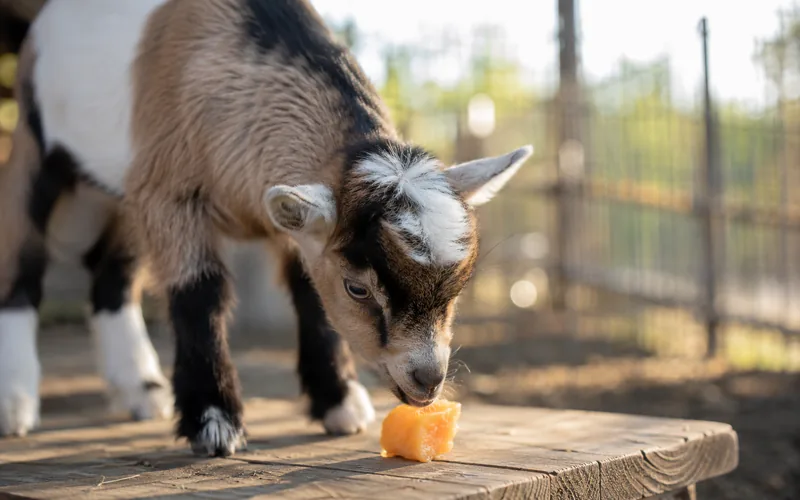
Milk, then hay and appropriate feed, should carry the nutritional load. It’s a treat, not a meal.
Go slow with any goat that hasn’t had it before. A few pieces, then a day of watching manure, tells you what you need.
Where Cantaloupe Sits Among Other Melons
Every common melon is safe for goats. Cantaloupe, sold in some regions as muskmelon, just leads on beta-carotene.
Honeydew and watermelon are equally safe, rinds included, so rotating between them is fine.
Rotation is the point. The MSD Veterinary Manual describes goats as intermediate browsers that naturally select varied plant material rather than eating one thing all day.
Outside the melon family, crisp summer cucumbers fill a similar hydrating role with even less sugar. The one fruit to keep off the list entirely is avocado in any form, where persin makes it a real hazard rather than a moderation question.
Can Goats Eat Honeydew Melon Rind?
Yes, honeydew rind is safe for goats, the same as cantaloupe rind. The smooth skin is tougher to chew than netted peel, so cut it into smaller pieces.
Can Sheep Eat Cantaloupe?
Sheep can eat cantaloupe too, rind and seeds included. They’re grazers rather than browsers, so they often take longer than goats to accept an unfamiliar treat.
So the short version is that nothing on a cantaloupe needs removing. Wash it, chunk it, cap it at a cup per adult goat, and keep the water trough full alongside.
Frequently Asked Questions
Avocado is the clearest one to avoid because of persin. Beyond that, remove cherry and stone fruit pits, skip anything moldy, and go light on citrus since the acid load can disrupt rumen function faster than sweeter fruit does.
Melon and apple tend to win in most herds, and cantaloupe rind in particular disappears fast. Preference is individual though. Some goats ignore the sweet flesh entirely and go straight for the peel.
About one cup of chunks for a standard-size adult goat, or half that for a miniature breed. Fruit and other treats together should stay near 10 percent of daily intake, with hay and browse making up the rest.