| # | Product | Our Rating | ||
|---|---|---|---|---|
| 1 |  | Best OverallREDMOND Goat Mineral Supplement (5 lb) | ★★★★★ | Check Price |
| 2 |  | Wholesome Harvest 16% Goat Feed (10 lb) | ★★★★☆ | Check Price |
| 3 |  | Manna Pro Goat Treats | ★★★★☆ | Check Price |
Wave a banana near most goats and the reaction is instant, with the whole fruit disappearing before you can decide whether that was a good idea. Owners rarely doubt that goats want bananas, but they do want to know where the sensible line sits.
That line is easy to hold once you understand a few specifics about portion, ripeness, and the peel. This guide walks through all three, plus the parts of the banana plant your herd can browse and the warning signs of too much fruit.
The short version is reassuring for anyone who has already tossed a banana over the fence. Bananas are a genuinely good treat, and the only real skill is knowing how much is too much.
Can Goats Eat Bananas?
Goats can eat bananas, and they rank among the friendliest fruits you can hand across a fence. The soft flesh needs almost no chewing and moves through digestion without the choking risk that harder produce carries.
A goat is a ruminant, so its four-part stomach is built to break plant material down through fermentation rather than simple chewing. Bananas suit that system well, since microbes in the rumen turn the soft flesh and natural sugars into usable energy quickly.
That same efficiency is why bananas belong in the treat column, not the daily ration. Fast-fermenting sugar is welcome in small amounts and disruptive in large ones, which shapes every feeding rule below.
That quick hit is also why goats take to bananas so eagerly. The energy registers fast, which is exactly what makes the fruit such a handy training and bonding reward.
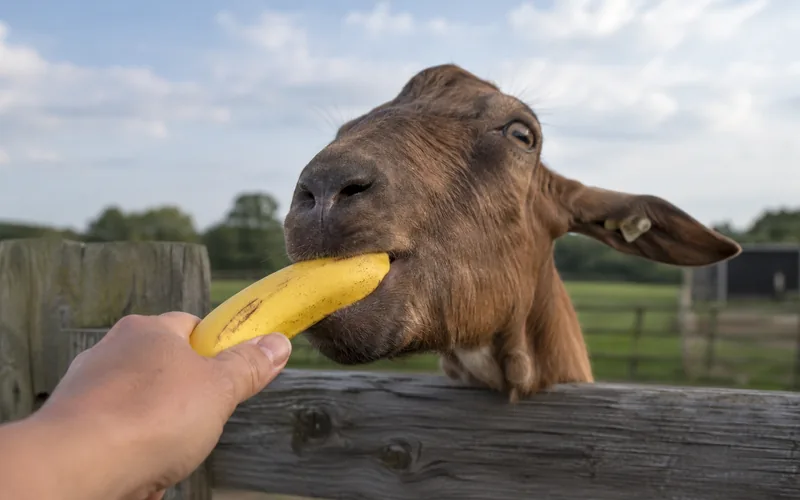
Like most livestock raised on forage, goats stay healthiest when rich extras stay occasional. A banana fills that occasional-reward role neatly, adding flavor and a nutrient boost without ever displacing hay or browse.
Why Bananas Work as a Goat Treat
Bananas earn their spot by delivering real nutrients, not just sugar: potassium, vitamin B6, vitamin C, and fiber the rumen handles with ease.
Bananas are more than empty sugar, which is what separates them from junk-food treats like bread or crackers. The fruit carries a genuinely useful mix of minerals, vitamins, and fiber that supports a working goat’s body.
Potassium leads the list. According to the NIH Office of Dietary Supplements, a medium banana delivers about 422 milligrams of potassium, roughly 9 percent of the daily value, which places it among the better everyday sources of the mineral.
That potassium supports muscle contraction, nerve signaling, and steady heart rhythm, all of which matter for an active grazing animal. It is the same reason bananas are prized in human diets, and the benefit carries over to your herd in small doses.
Vitamin B6 is the second standout. The NIH Office of Dietary Supplements notes that one medium banana provides 0.4 milligrams of vitamin B6, about 25 percent of the daily value, on par with a serving of chicken breast.
Bananas round the profile out with a modest dose of vitamin C for immune support and a little vitamin A for skin and coat condition. They also carry dietary fiber, which feeds the rumen’s microbe population and keeps motility steady rather than sluggish.
That fiber is easy to overlook, but it’s part of why a banana sits better with a goat than a spoonful of plain sugar would. The roughage gives the rumen something to push against, which tempers how fast the fruit’s sugars ferment.
None of this makes a banana a meal, and it should never replace a goat’s core diet of forage. Think of the fruit as a vitamin-rich bonus layered on top of hay, pasture, and a proper mineral supplement, not a substitute for any of them.
A few goats do warrant extra restraint. Overweight animals, wethers prone to urinary stones, and does managing any metabolic issue should get sugary fruit only sparingly, since the extra sugar adds up faster in a body that is already under strain.
Can Goats Eat Banana Peels?
Goats can eat the banana peel, and many prefer it to the sweet flesh inside. The peel is chewier, higher in fiber, and carries its own share of potassium, so there is no need to strip it off before feeding.
Whole bananas, peel and all, are fair game for a healthy adult goat. The peel actually slows the treat down, giving the rumen more roughage to work against alongside the quick sugar of the flesh.
There is one real caveat, and it comes down to how the fruit was grown. Conventionally farmed bananas often carry pesticide residue concentrated on the skin, and a quick rinse under the tap does not fully remove it.
Organic bananas sidestep that concern entirely, or you can peel conventional fruit and feed only the flesh when you’re unsure of the source. Either way, the residue question stays off the table.
One habit is worth building regardless of how the banana was grown. Peel off any produce stickers first, since those adhesive labels are indigestible and can lodge in a goat’s throat or gut.
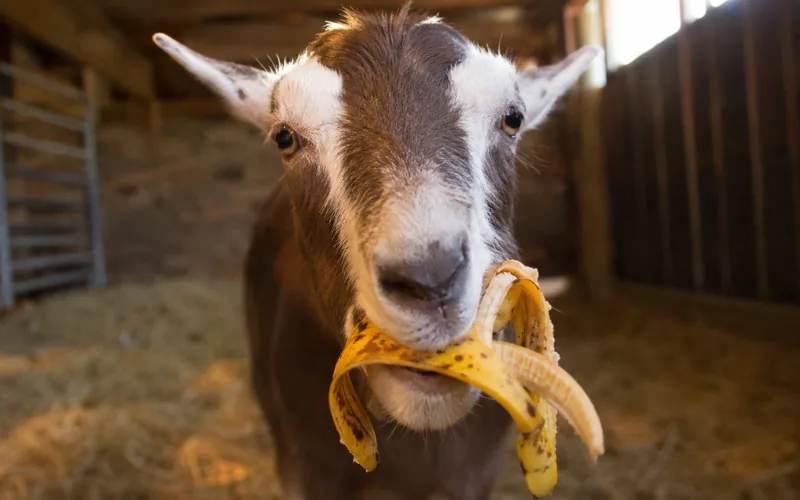
For kids and miniature breeds, it also helps to tear the peel into shorter strips rather than handing over a long, whole skin. Smaller goats sometimes try to gulp a full peel, and a shorter piece is far easier to chew down safely.
Do Ripe and Unripe Bananas Differ?
Yes, and it comes down to sugar. A firm green banana ferments slower than a soft, sugary one, so ripeness sets the safe serving size.
Ripeness matters more than most owners expect, and it changes the portion math. A green banana and a blackened one are almost different foods once you look at their sugar load.
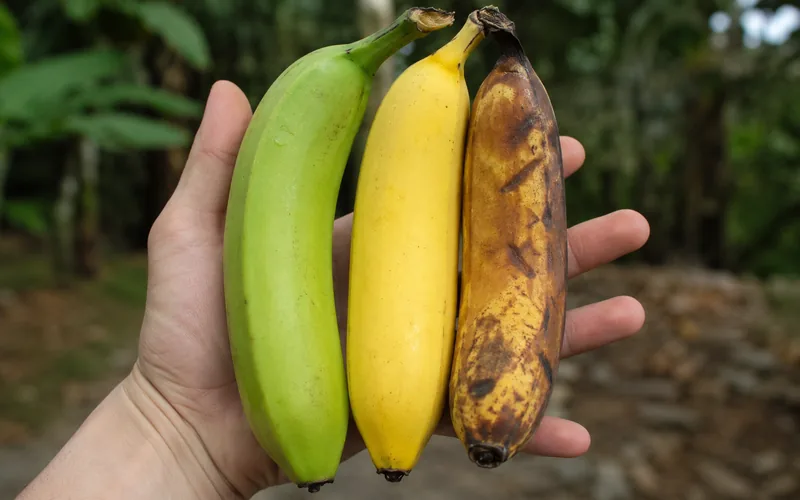
An unripe, firm banana holds more resistant starch and less free sugar. That starch ferments more slowly in the rumen, which makes a green banana the gentler option when you want to hand out a larger piece.
As a banana ripens, that starch steadily converts into sugar, so bright-yellow and speckled fruit tastes sweeter and ferments faster. Overripe, mushy bananas sit at the sugary extreme, and goats tend to love them most of all.
None of the stages is off-limits, but the sweeter the banana, the smaller the serving should be. Treat a soft brown banana as more of an indulgence and a firm green one as the safer everyday choice.
This is also a handy way to use up your own fruit bowl. Those over-speckled bananas nobody wants to eat make a fine goat treat, as long as you shrink the portion to account for the extra sugar they now carry.
How Often Can Goats Eat Bananas?
Bananas should be an occasional treat, not a daily habit. A few times a week is the sweet spot for an adult goat, giving variety without letting sugar creep into the routine.
Feeding bananas every single day is where trouble tends to creep in. Daily sugar nudges the rumen’s microbe balance in the wrong direction and slowly crowds out the forage that should make up the bulk of the ration.
The simplest rule to hold in your head is the ten percent guideline. All treats combined, bananas included, should stay under roughly 10 percent of what a goat eats in a day, with hay, pasture, and browse covering the rest.
Spacing the treats out also keeps them effective as a training reward. A banana that shows up every day loses its novelty, while one that appears a couple of times a week still brings your herd running.
Use the same caution with pregnant and lactating does, even though it is tempting to spoil them. Their energy demands are real, but that energy should come from quality forage and feed rather than a daily sugar spike that can unsettle the rumen.
How Much Banana Is Safe by Goat Size?
Here is the quick version: a standard adult can have one to two bananas a few times a week, a miniature breed half that, and a kid a few slices.
Portion leans heavily on the size of the goat, since a Nigerian Dwarf and a full-grown Boer aren’t eating the same amount of anything. The table below gives realistic per-goat guidance for an occasional banana treat.
Match the serving to the animal in front of you, and always cut the fruit into manageable pieces for smaller mouths. When in doubt, err toward the smaller portion, because too little banana never hurt a goat while too much can.
| Goat type | Approx. weight | Safe banana portion | Frequency |
|---|---|---|---|
| Kid (weaned) | Under 40 lb | A few small slices | Once or twice a week |
| Miniature breed (Nigerian Dwarf, Pygmy) | 40–80 lb | Half a banana | 2–3 times a week |
| Standard adult (Nubian, Alpine) | 100–160 lb | One banana | 2–3 times a week |
| Large adult (Boer, Saanen) | 150–250 lb | One to two bananas | 2–3 times a week |
These figures assume the banana is a stand-alone treat and not stacked on top of other sugary snacks that day. If your goats already had grapes or apple slices, trim the banana portion to keep the daily treat total in check.
Weigh the whole picture rather than any single fruit. A goat on lush spring pasture has less room for sugary extras than one on a plain hay diet in winter.
How to Feed Bananas to Goats Safely
Put simply, a little prep keeps bananas safe: remove stickers, check for mold, chop to size, introduce slowly, and hand-feed so portions stay fair.
A little prep turns a banana from a messy free-for-all into a controlled treat. The steps are quick and worth doing every time, especially in a mixed-age herd.
Start by pulling off any produce stickers and checking the fruit over for mold or slimy rot. Then decide on ripeness, since a firmer banana lets you offer a slightly larger piece than an overripe one.
Chop the banana into bite-sized pieces for kids and miniature breeds so nothing gets bolted down whole. Larger standard goats can usually manage a banana in halves, peel included.
Introduce bananas slowly the first time, the same way you would any new food. A gradual start lets you spot a goat that struggles to digest the fruit before a small treat turns into a stomach upset.
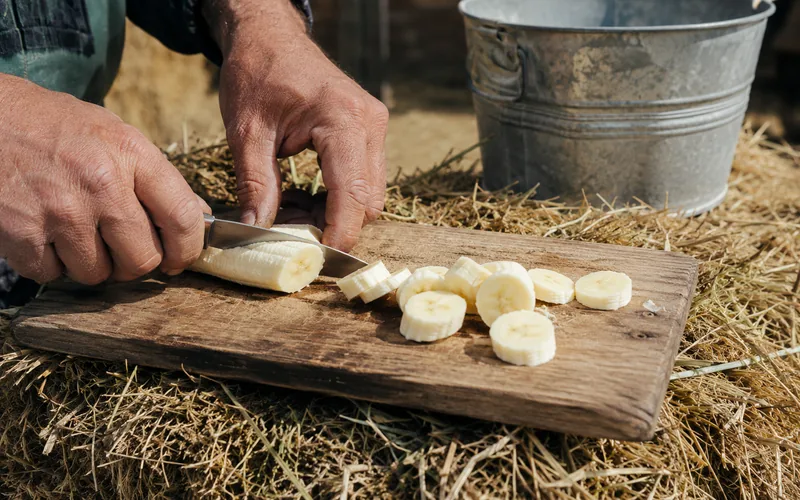
Hand-feeding also keeps things calm and fair across the group. Tossing bananas into a crowd invites shoving, and a dominant goat can wolf down three while a timid one gets none.
Finally, fold the banana into that day’s treat budget rather than adding it on top. If the herd already had a scoop of grain or a handful of another fruit, skip the banana or halve it so the sugar total stays in check.
Can Baby Goats Eat Bananas?
Baby goats can eat small amounts of banana once they are actively eating solid food, usually around three to four weeks old. Before that, a kid’s rumen is still developing and runs mostly on milk, so fruit has no place in the diet yet.
For a weaned kid, mashed or thinly sliced banana is the safest form. Their smaller throats make choking a real risk with big chunks, and their smaller rumens are quicker to tip out of balance from sugar.
Start with just a slice or two and watch how the kid handles it over the next day. Loose droppings or a lack of interest in hay are your cue to pull back and wait until the youngster is older.
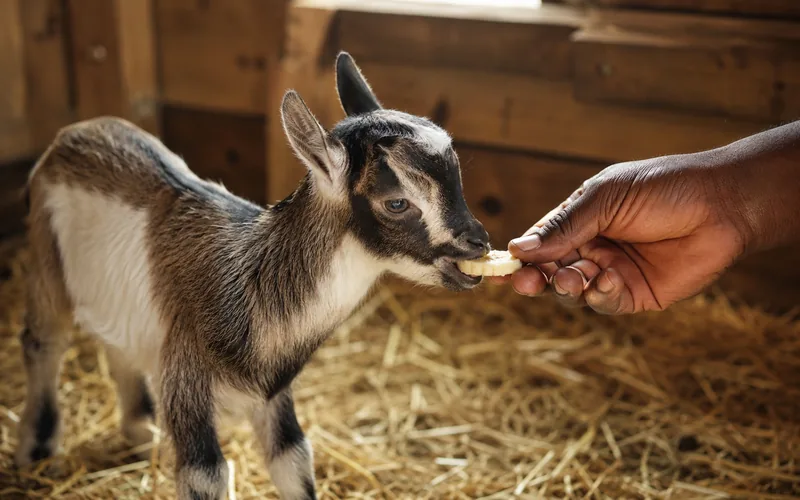
Honestly, there’s no rush to introduce fruit at all. A kid’s growth leans on milk, quality forage, and minerals, and banana adds nothing those staples don’t already cover better.
Can Goats Eat Banana Trees and Leaves?
The banana plant is safe well beyond its fruit, which is useful to know if you live somewhere warm enough to grow one. Goats can browse banana leaves and even strip the soft trunk without any toxicity concern.
Banana leaves are non-toxic and serve as a respectable fiber source, which is why goats in tropical regions graze them as routine fodder. The broad leaves and fibrous stem give the rumen exactly the kind of roughage it thrives on.
The one thing to confirm is that the plants haven’t been sprayed. Herbicides on ornamental banana plants pose a far greater risk than anything in the plant itself.
If you have a spent banana plant after harvest, offering the leaves and chopped trunk is a practical way to reduce waste. Your herd will treat it as browse rather than a sugary treat, so it does not count against the ten percent limit the way the fruit does.
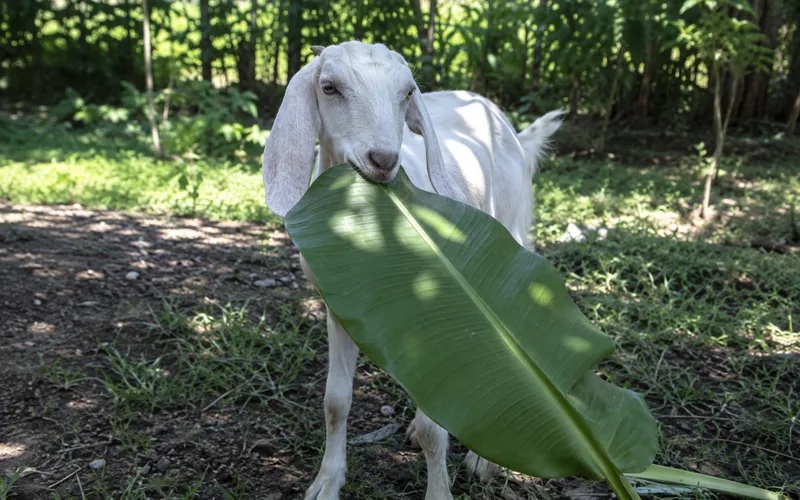
Cold-climate keepers rarely have this option, and that’s perfectly fine. The leaves and stem are a regional bonus, not something your goats miss out on when good hay and pasture already cover their roughage.
What About Dried or Cooked Banana?
Dried banana chips are edible for goats but deserve extra caution. Drying concentrates the sugar, so a small handful of chips carries far more sugar than the same volume of fresh fruit, and many commercial chips are fried in oil or coated in added sweeteners.
If you feed banana chips at all, choose plain dehydrated ones with no added sugar or oil, and keep the portion tiny. A few chips as a training reward is reasonable, while a whole scoop is not.
Cooked or baked banana is best skipped altogether. It offers nothing a goat needs, and baked goods usually bring along butter, sugar, and other ingredients that do a ruminant no favors.
Fresh, raw banana in its natural form is always the better choice. There’s simply no benefit to processing a fruit that goats already handle easily through normal digestion.
The same logic rules out frozen banana treats blended with yogurt or grain that circulate online. They look fun, but the added dairy and starch turn a simple fruit into a sugar-and-carb load the rumen was never built to handle in one sitting.
Signs a Goat Ate Too Much Banana
The warning signs are easy to spot. Loose droppings, a swollen left side, lethargy, teeth grinding, and a dropped appetite all flag too much fruit.
Most banana problems trace back to one thing: too much sugar hitting the rumen at once. The first signs usually show up in the droppings, which turn loose or clumpy as the digestive balance tips.
More sugar than the rumen can handle can trigger acidosis, a drop in rumen pH that harms the microbes doing the digesting. The Merck Veterinary Manual describes how a flood of rapidly fermentable carbohydrate can push rumen pH to 5 or below within two to six hours, destroying the protozoa and fiber-digesting organisms the goat depends on.
Bloat is the other risk to watch for. The same source’s overview of bloat in ruminants explains that gas can build in the rumen fast, and in grazing cattle, death rates from severe bloat can reach 20 percent, a sobering reminder of how serious a swollen left flank can become.
Watch for a distended left side, lethargy, teeth grinding, loss of appetite, or a goat that stops chewing its cud. Any of these after a fruit binge is a reason to withhold treats and call a vet if the animal does not settle quickly.
If you catch a mild case early, pull all treats, keep clean water and grass hay in front of the goat, and give the rumen time to rebalance. Gentle movement can help a bloated goat pass gas, but anything beyond mild swelling or a goat in obvious distress is a same-day call to your vet.
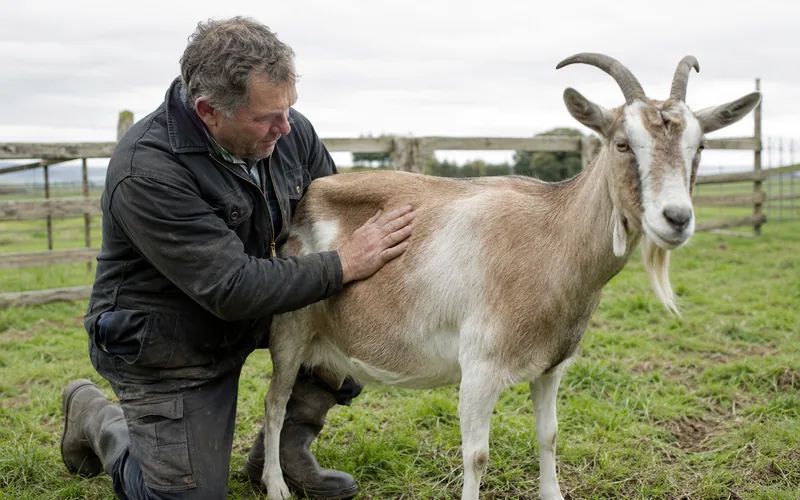
The good news is that these outcomes come from excess, not from bananas themselves. Stick to sensible portions and a swollen, sugar-sick goat is a scenario you will almost never meet.
Fruits and Foods Goats Should Never Eat
Keep avocado, cherry and stone-fruit pits, rhubarb leaves, chocolate, onions, and garlic away from goats entirely.
Bananas are firmly in the safe column, but plenty of foods are not, and knowing the difference protects your herd. Some fruits carry compounds that are genuinely dangerous to a ruminant.
Avocado tops the list. The ASPCA identifies persin in avocado as toxic to livestock, with clinical signs that include respiratory distress, heart failure, and edema, so it should never reach a goat.
Stone-fruit pits are the other classic hazard. Cherry, peach, apricot, and plum pits, along with wilted wild cherry leaves, release cyanide when crushed and digested, a mechanism bananas lack since they contain no cyanogenic compounds.
Beyond fruit, keep goats away from chocolate, onions, garlic, rhubarb leaves, and anything moldy or heavily processed. Grains and bread should stay minimal too, since starchy overloads cause the same rumen trouble that excess sugar does.
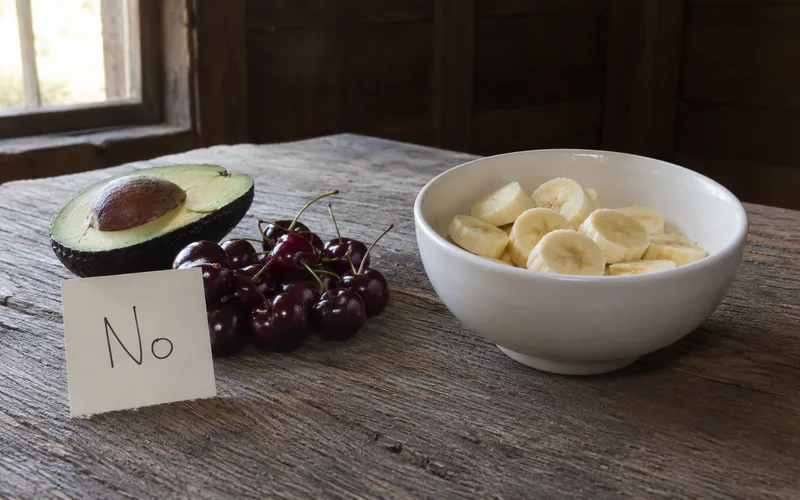
The common thread is worth keeping in mind as you hand out treats. Goats are curious, willing eaters, and they’ll happily sample things that harm them, so the safe list matters just as much as knowing bananas are fine.
How Bananas Compare to Other Goat Fruits
Bananas sit comfortably alongside the other sweet treats goats enjoy, and they follow the same core rule of moderation. Seeing where they land against familiar fruit helps you rotate treats without overthinking a balanced, healthy diet.
Compared with crunchy apple slices, bananas are softer and easier for older or dental-worn goats to manage, though both demand the same portion discipline. Apples add the step of removing seeds, while bananas need no prep beyond peeling off stickers.
Sugary grapes and raisins run higher in concentrated sugar than fresh banana, so bananas are often the gentler pick for frequent rewards. Watery options like chilled watermelon bring hydration in summer but far less potassium than a banana does.
Acidic citrus is the opposite kind of treat. Tangy fruit such as oranges and other citrus belongs in only tiny amounts, since the acidity can irritate the rumen in a way soft, mild banana never will.
Tropical pineapple brings some of that same acidity, so a few small chunks is plenty.
For variety, rotate bananas with fresh strawberries, a handful of blueberries, and other soft fruit so no single sugar source dominates. A mixed treat routine keeps your goats interested while spreading the sugar load thin enough that no one fruit tips the balance.
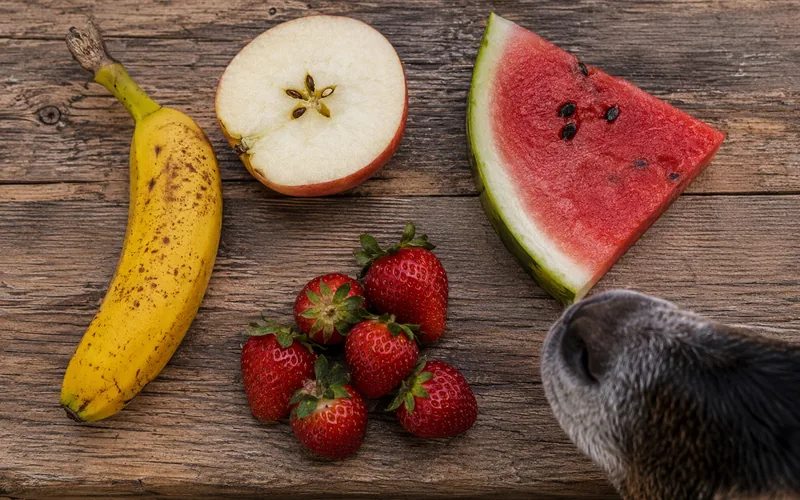
Where bananas earn their spot is convenience and nutrition per bite. They store easily, need almost no preparation, and pack more potassium than most fruit a goat is likely to see, which makes them a reliable staple in any treat rotation.
Frequently Asked Questions
Yes, you can feed bananas to goats, including the peel. Offer one or two per adult goat no more than a few times a week, and cut the fruit into pieces for kids and smaller breeds to prevent choking.
It is better not to. Daily bananas push too much sugar into the rumen and crowd out forage. A few times a week keeps the treat safely under 10 percent of the diet while still giving your goats variety.
Avocado is the main fruit to avoid, as it contains persin, which the ASPCA links to heart failure and edema in livestock. Cherry and stone-fruit pits, plus wilted wild cherry leaves, release cyanide. Bananas, apples, and most common fruits are safe in moderation.
Digestive upset from overeating rich or sugary food is among the leading killers of goats. Too much grain or fruit can trigger rumen acidosis or bloat, which is why treats like bananas should stay under 10 percent of the daily diet.