| # | Product | Our Rating | ||
|---|---|---|---|---|
| 1 |  | Best OverallREDMOND Goat Mineral Supplement (5 lb) | ★★★★★ | Check Price |
| 2 |  | Wholesome Harvest 16% Goat Feed (10 lb) | ★★★★☆ | Check Price |
| 3 |  | Manna Pro Goat Treats | ★★★★☆ | Check Price |
Sticker bushes rank among the most dreaded plants on any property. They puncture tires, ruin boots, embed themselves in pet fur, and turn barefoot walks into a painful obstacle course.
Goats, though, see something else entirely when they walk up to a patch of thorny brush. Where humans see hazards, goats see a meal worth diving into headfirst.
Ranchers, homesteaders, and municipal land managers have relied on goats to clear sticker-infested property for decades. It’s a practice that keeps gaining momentum — no chemicals, no heavy machinery, no backbreaking manual labor.
This guide covers which sticker species goats target, the biology behind painless thorny browsing, and how to set up a managed grazing rotation that wipes out sticker populations.
Which Sticker Bushes Do Goats Actually Eat?
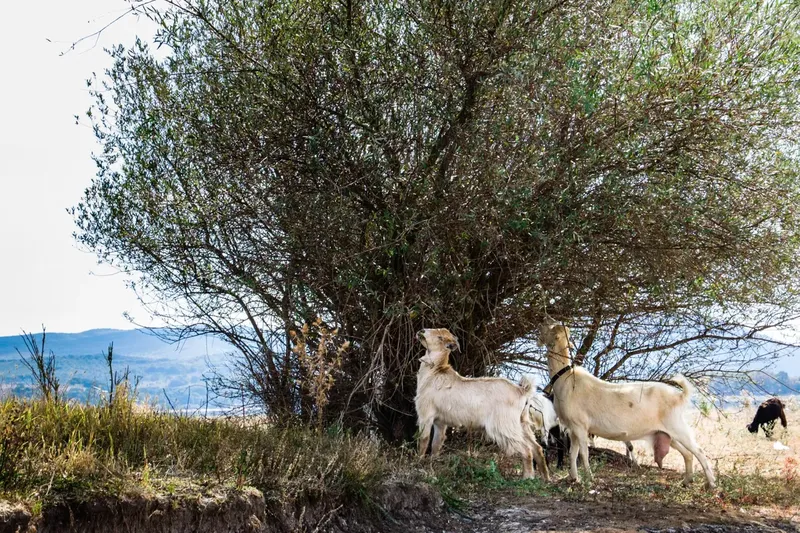
Goats readily eat seven common sticker species: goat head weed, sand burrs, grass burrs, cockleburs, burdock, thistles, and blackberry.
Not all sticker plants are the same, and goats don’t treat every species equally. Some get devoured top to bottom, while others get stripped selectively depending on the growth stage.
Knowing which species your land harbors helps you predict how quickly goats will clear it. Here are the most common sticker plants across North America and how goats deal with each one.
Goat Head Weed (Tribulus terrestris)
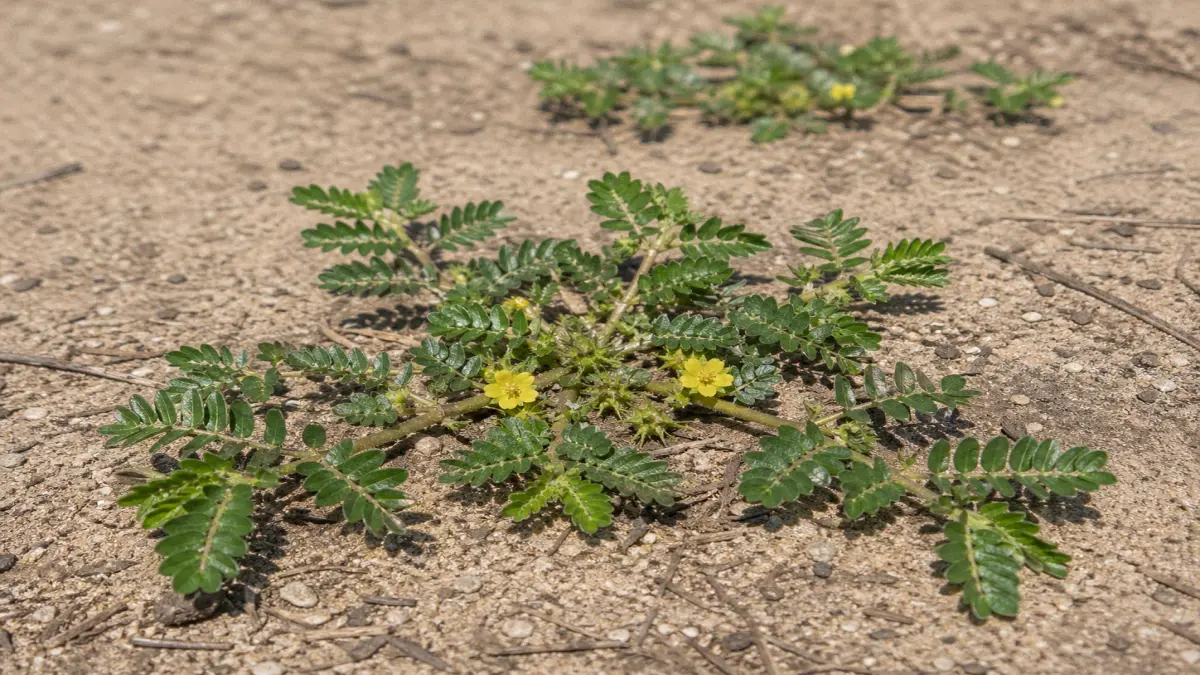
Goat head weed produces the small, spiky seed pods famous for puncturing bicycle tires. The plant is a low-growing annual vine with small yellow flowers and compound leaves that spread flat against the ground.
They’ll consume the entire above-ground portion — leaves, stems, flowers, and immature seed pods. The plant gets hit hardest during active growth, when the foliage is still tender and loaded with moisture.
A single goat head plant can produce more than 200 seed pods in one growing season. Letting goats graze these plants before the seeds mature is one of the most effective control methods, since each pod contains seeds capable of remaining viable in soil for up to five years.
Sand Burrs and Grass Burrs
Sand burrs (Cenchrus species) produce sharp, spiny seed casings that cling to clothing, shoes, and animal fur. These warm-season grasses thrive in sandy, disturbed soils across the southern and western United States.
Your goats will graze sand burr plants without issue during the leafy growth phase, before the burrs harden. Getting them in early produces much better results than waiting until the seed casings turn rigid.
In severely infested areas, consistent goat pressure over two to three growing seasons reduces the soil seed bank substantially. Regular browsing prevents the plants from completing their reproductive cycle.
Cockleburs and Burdock
Cockleburs (Xanthium strumarium) and burdock (Arctium species) produce large, hooked burrs that tangle in wool, hair, and livestock coats. Both colonize disturbed soil, ditches, and fence lines aggressively.
Both species get eaten without a second thought — goats go right for the broad leaves and thick stems. Burdock is especially palatable thanks to its fleshy taproot, which goats will dig at and partially uproot when the soil is soft.
One important caution with cockleburs: the two-leaf seedling stage contains a concentrated toxin called carboxyatractyloside. Mature cocklebur plants are perfectly safe for goats, but dense patches of freshly sprouted seedlings can cause liver damage when consumed in large quantities.
Thistles, Blackberry, and Multiflora Rose
Bull thistle, Canada thistle, star thistle, and musk thistle are all firm goat favorites. Goats eat the rosettes, stems, flower heads, and even the heavily spined leaf margins without flinching.
The high protein content of thistle leaves during the vegetative stage makes them genuinely nutritious browse. Goats seek out thistles the same way they pursue other tough, fibrous vegetation like bamboo.
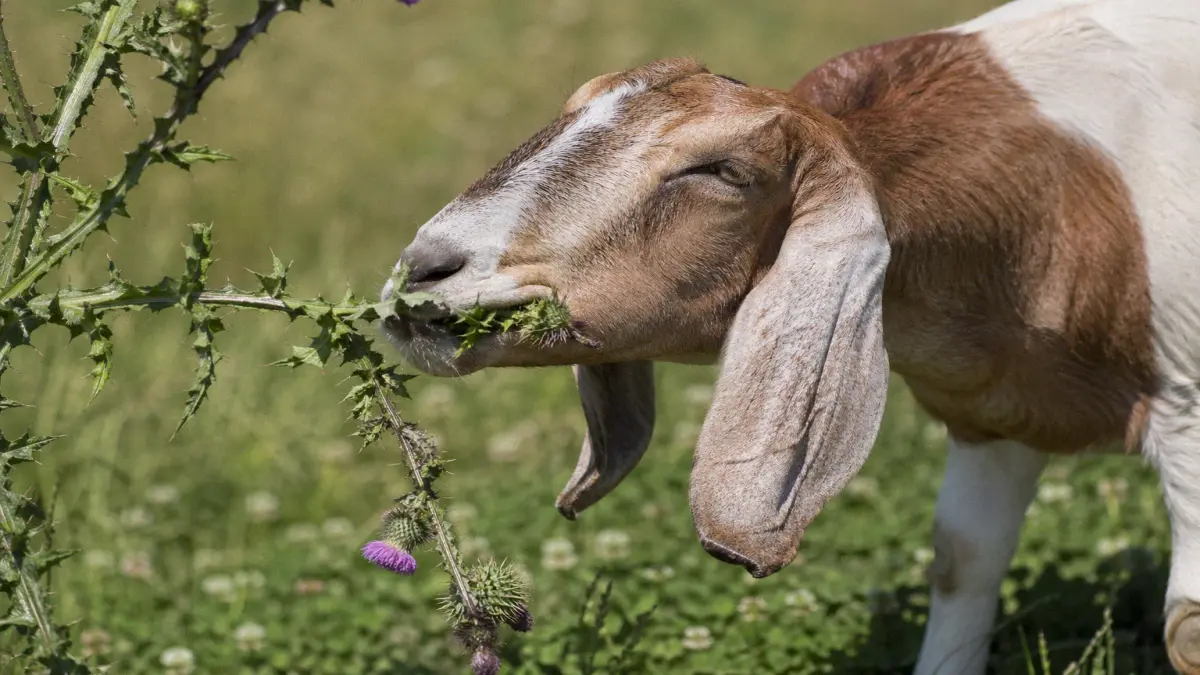
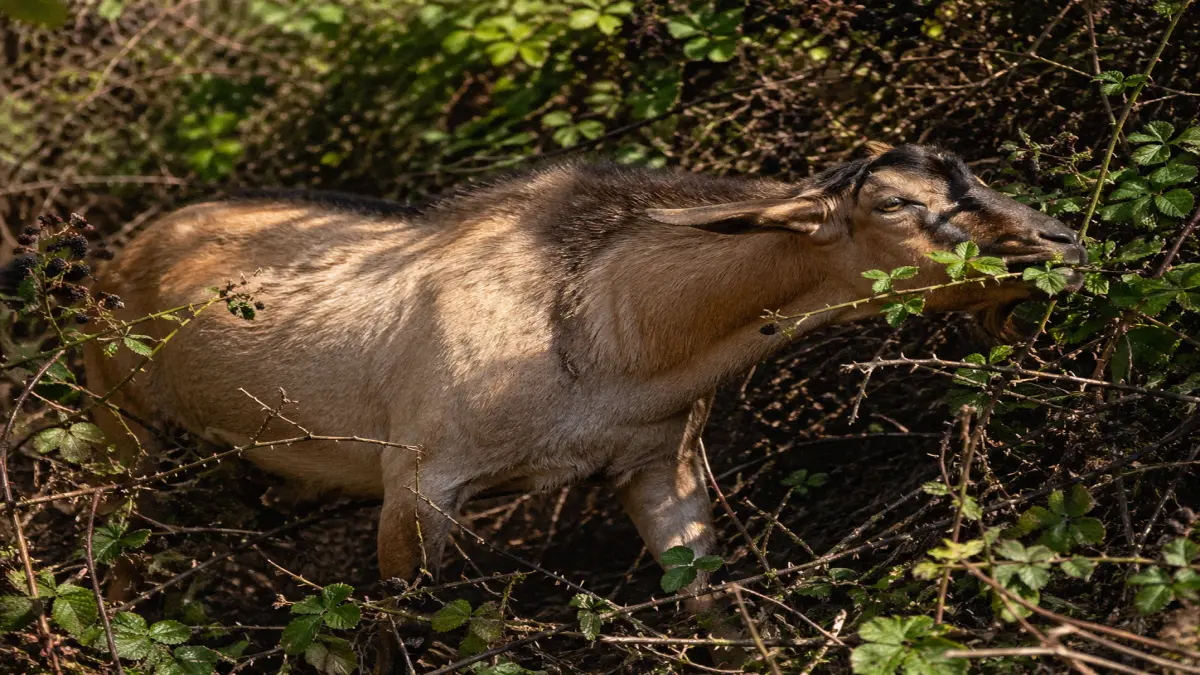
Blackberry (Rubus species) and multiflora rose (Rosa multiflora) are thorny, sprawling shrubs that goats go after with real enthusiasm. They’ll strip the leaves first, then work on the thorny canes until the plant is completely defoliated.
Repeated browsing over two to three seasons weakens the root crown enough to eliminate even well-established stands. These perennials need longer-term pressure than annual sticker weeds, but the results are permanent once the roots are exhausted.
Hedgerow species behave differently, since a hawthorn hedge feeds a herd year after year instead of dying back under pressure. Spines up to two inches long slow the goats down far less than the woody regrowth does.
Can Goats Also Handle Poison Ivy and Stinging Nettle?
Yes — goats eat poison ivy, poison oak, and stinging nettle without any reaction. Their digestive systems are unaffected by urushiol, the oil that causes rashes in humans, making them ideal for mixed brushy areas where stickers and irritants grow together.
How a Goat’s Mouth Handles Sharp Thorns
Put simply, goats have prehensile lips that navigate around thorns plus hardened mouth tissue that acts like built-in armor.
It’s anatomy shaped by thousands of years of natural selection, and three features in particular make it work.
Prehensile Lips That Navigate Around Spines
Goats have narrow, highly mobile upper lips that function almost like fingers. They can isolate a single leaf growing between two one-inch thorns and pluck it cleanly without making contact with the sharp points.
This prehensile lip movement is fundamentally different from how cattle feed. A cow wraps its wide tongue around a clump of vegetation and rips everything free at once.
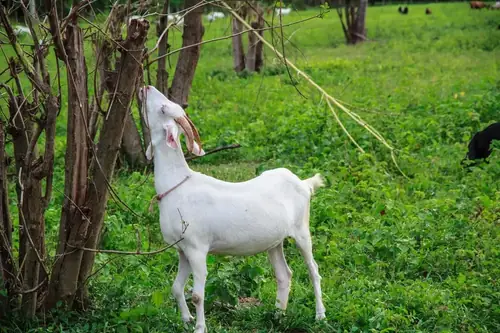
A goat pinches, selects, and nibbles with real precision. Watch one working on a multiflora rose cane — you’ll see the lips moving independently, pressing and turning the stem while the teeth strip leaves downward.
Hardened Oral Papillae and Thick Gum Tissue
The inside of a goat’s mouth is lined with keratinized papillae — small, hardened projections made of the same protein in fingernails and hooves. These create a tough, armor-like surface along the palate, inner cheeks, and tongue.
The gum tissue surrounding their teeth is also significantly thicker than that of cattle or horses. When a thorn does make direct contact, it pushes against dense, calloused tissue rather than soft mucous membrane.
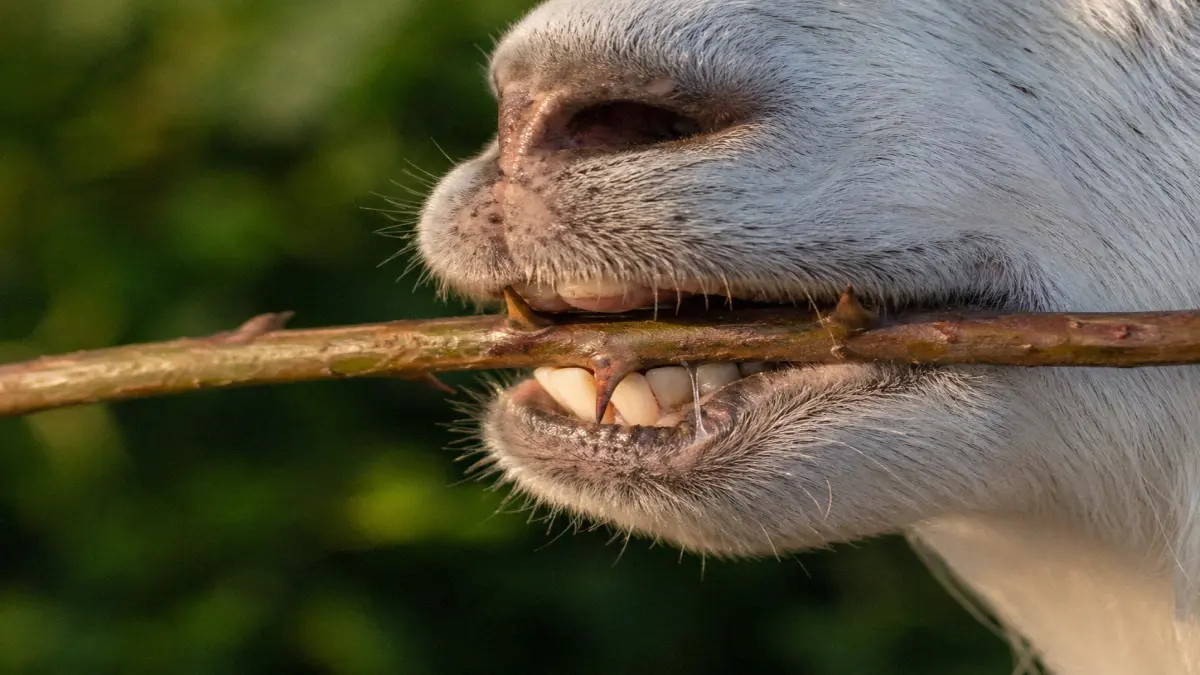
Minor pokes heal fast, often within just a few hours, and rarely lead to any infection. It makes sense when you think about it — their natural diet has always included thorny browse that other ruminants won’t touch, so their oral immune response evolved to match.
What Happens After a Goat Swallows Sticker Material
Eating thorns is only half the story — what happens inside the digestive tract is just as impressive.
The Four-Chambered Stomach Advantage
The rumen breaks thorns down through fermentation and repeated grinding, turning sharp spines into harmless pulp.
Goats are ruminants with a four-compartment stomach: rumen, reticulum, omasum, and abomasum. The rumen alone holds up to five gallons of fermenting plant material in an adult and hosts billions of bacteria, protozoa, and fungi.
Thorny plant material enters the rumen first, where microorganisms begin breaking down the tough cellulose and lignin that give thorns their rigid structure. The goat then regurgitates this material as cud, chews it thoroughly a second time with flat molars, and swallows it back down.
This repeated grinding cycle, called rumination, softens thorns, spines, and burrs until they become harmless fibrous pulp. By the time plant material passes through the omasum into the abomasum, where hydrochloric acid finishes the breakdown, no recognizable thorn structure remains.
Seed Destruction During Digestion
Here’s what matters: goat digestion destroys 70 to 90 percent of weed seeds before they pass through.
Most sticker plants spread through their spiny seed attachments. When goats consume these seeds, the combination of mechanical grinding during rumination and acid breakdown in the stomach destroys a large percentage of viable seeds before they pass through.
Research published in the Natural Areas Journal has found that goat digestion reduces seed viability in some weed species by 70 to 90 percent. That’s what makes goats far more effective for sticker control than mowing, which just scatters intact seeds across the ground.
Seeds that do survive digestion end up concentrated in goat manure rather than scattered across the landscape by wind, water, or animal fur. This concentration makes follow-up treatment of surviving seeds far simpler to manage.
Goat manure also deposits nitrogen and phosphorus into the soil where sticker bushes once grew. That nutrient boost helps desirable grasses and forbs establish faster, competing with any sticker seedlings that try to return.
Fresh Green Stickers vs Dried Brown Ones
Green, actively growing stickers are the prime target — goats devour them eagerly while mostly ignoring dried plants with hardened burrs.
When it comes to sticker control, timing matters more than most people think. The growth stage of a sticker plant has a big impact on how your goats interact with it.
Green, actively growing sticker bushes are far more palatable because the foliage is tender, moisture content is high, and nutritional value peaks during the vegetative stage. Goats go after these plants eagerly, often choosing them over nearby grass and clover.
Dried sticker plants present a different situation entirely. Once a plant like goat head weed has gone to seed and dried out, the burrs harden into their most rigid and painful form.
Goats may still eat dried stems and leaves, but they grow highly selective about avoiding the toughest seed pods. The nutritional reward no longer justifies the effort of navigating hardened spines.
Sand burrs are no different. A goat will strip a green sand burr plant down to nothing in minutes, but that same plant in a dead, brittle state with fully hardened burrs only gets partial attention at best.
Thistles in their rosette stage are among the most eagerly consumed sticker plants of all. Once they bolt and produce the tall, dried flower stalks, goats still eat them but at a noticeably slower rate and with more selectivity around the hardest spines.
Blackberry and multiflora rose are exceptions to this timing concern because they are perennial woody plants rather than annual weeds. Goats browse them across the entire growing season.
Fresh spring growth gets priority, but goats also strip bark from dormant canes during fall and winter when softer browse becomes scarce. This year-round pressure is what eventually kills the root system.
Bottom line: get your goats onto infested land while the plants are still growing. Spring through midsummer is the ideal window for most annual sticker species across temperate climates, and waiting until everything turns brown and brittle cuts effectiveness by roughly half.
Sticker Plants That Pose a Real Danger
Most sticker bushes are perfectly safe for goats to consume in normal browsing quantities. A few exceptions exist, though, and knowing them keeps your herd out of trouble.
Tribulus terrestris and Livestock Toxicity
Although goats eat goat head weed without any obvious immediate problems, Tribulus terrestris does contain steroidal saponins that can accumulate in the liver with prolonged and exclusive consumption. In sheep and cattle, heavy Tribulus feeding has been linked to hepatogenous photosensitization, a liver condition that causes severe skin blistering on light-colored animals exposed to sunlight.
Goats are a lot more resistant to this than sheep or cattle. Still, the risk goes up when goat head weed makes up the bulk of their diet for several weeks straight without any variety.
Rotating goats off dense Tribulus patches every five to seven days and providing alfalfa hay or mixed browse as supplemental feed prevents dangerous accumulation. This rotation also gives the grazed plants time to produce regrowth, which the goats hit again on the next pass through.
Other Thorny Plants to Remove From Pastures
Several toxic plants grow alongside sticker bushes in mixed vegetation, and goats may sample them out of simple curiosity:
| Plant | Toxic Part | Risk Level |
|---|---|---|
| Yew (Taxus) | All parts, especially needles | Fatal — a handful of leaves can kill |
| Rhododendron | Leaves and flowers | Severe — causes cardiac failure |
| Mountain laurel | All parts | Severe — similar to rhododendron |
| Oleander | All parts | Fatal — extremely toxic |
| Black locust | Bark, seeds, leaves | Moderate — causes GI distress |
| Nightshade species | Berries, foliage | Moderate to severe |
Walk your pasture and physically remove or fence off these species before turning goats loose on sticker areas. Goats are curious browsers that’ll investigate unfamiliar plants, and just a single mouthful of yew or oleander can kill a full-grown adult within hours.
Don’t mistake bright purple beautyberry for a toxic plant, though, since goats browse its leaves and berries safely.
Choosing the Right Breed for Sticker-Heavy Pastures
For natural weed management and brush control, Spanish goats and Boer goats are the top picks — aggressive browsers built for thorny rangeland.
Every goat breed eats sticker bushes to some degree, but certain breeds clearly outperform others when you’re dealing with heavy thorny brush.
Spanish goats are the top choice for land clearing across the southern United States. Generations of semi-feral living on rough, scrubby rangeland produced an aggressive browser that actively seeks out thorny vegetation and handles extreme heat better than most other breeds.
Boer goats bring size and weight that helps them push through dense stands of blackberry and multiflora rose, and their larger frame means higher daily intake that translates to faster clearing. However, Boer goats are primarily a meat breed and may need supplemental timothy hay during intensive browsing periods to maintain body condition.
Kiko goats combine hardiness with remarkably low maintenance requirements, having been originally developed in New Zealand from feral stock. Kikos resist internal parasites and process rough forage better than most dairy-influenced breeds, which is why their popularity among professional land management operations keeps growing.
Nigerian Dwarf goats and other miniature breeds eat sticker bushes without physical problems, but they cover less ground and consume far less volume per day. They suit small backyard sticker patches well, though multi-acre clearing projects need a larger breed.
For serious clearing work, a mixed Spanish and Boer herd delivers the best combination of aggression, appetite, and hardiness. Many goatscaping outfits run this exact pairing on commercial contracts.
Dairy breeds like Saanen and Alpine will browse sticker bushes when confined, but their higher nutritional demands make them less suited to dedicated clearing work. Stick with meat and brush-type breeds when sticker elimination is the primary objective.
Is Goatscaping Worth It for Small Properties?
Even three to five goats make a noticeable difference on residential lots and small acreages. They’re practical for fenced backyards and suburban properties where herbicide use isn’t desirable or heavy equipment can’t reach.
A Practical Grazing Plan for Sticker-Infested Land
Targeted grazing with portable electric fencing and three seasonal passes eliminates most sticker populations within two years.
Just turning goats loose on a sticker-covered property without any structure wastes a lot of their clearing potential. Managed grazing with defined rotations produces much faster and more permanent results.
Fencing and Rotation Setup
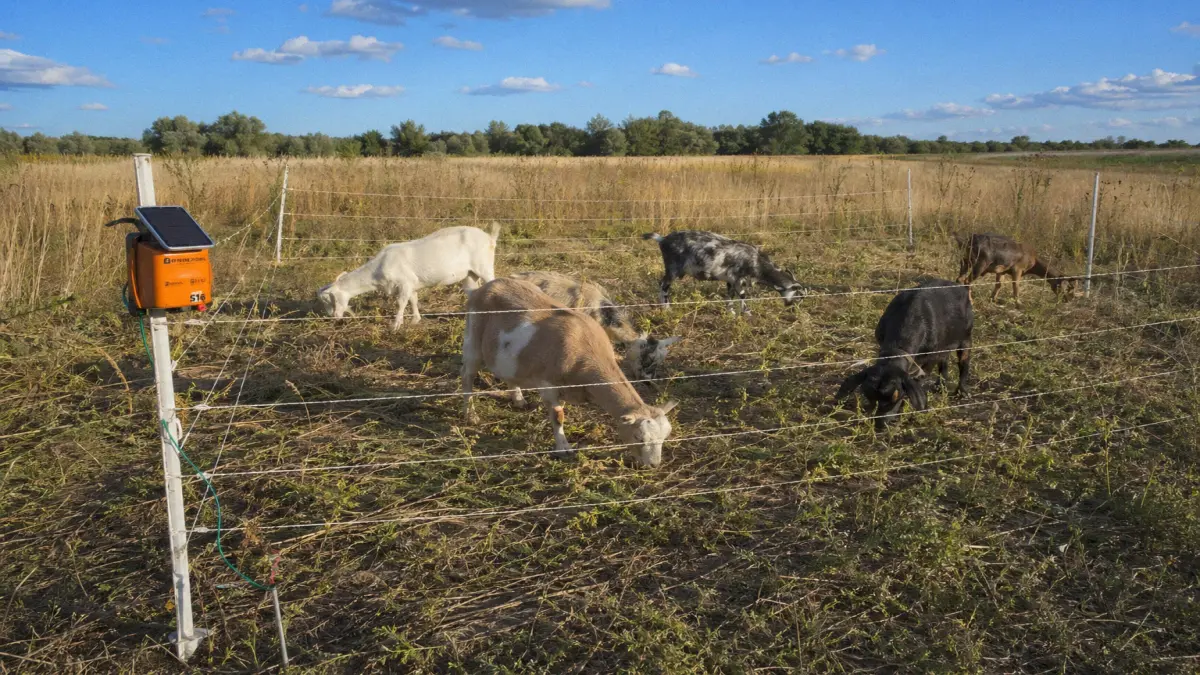
Portable electric fencing lets you concentrate goats on the worst sticker patches first. A single-strand solar-powered energizer paired with lightweight polywire creates temporary paddock boundaries that goats respect once they learn the fence.
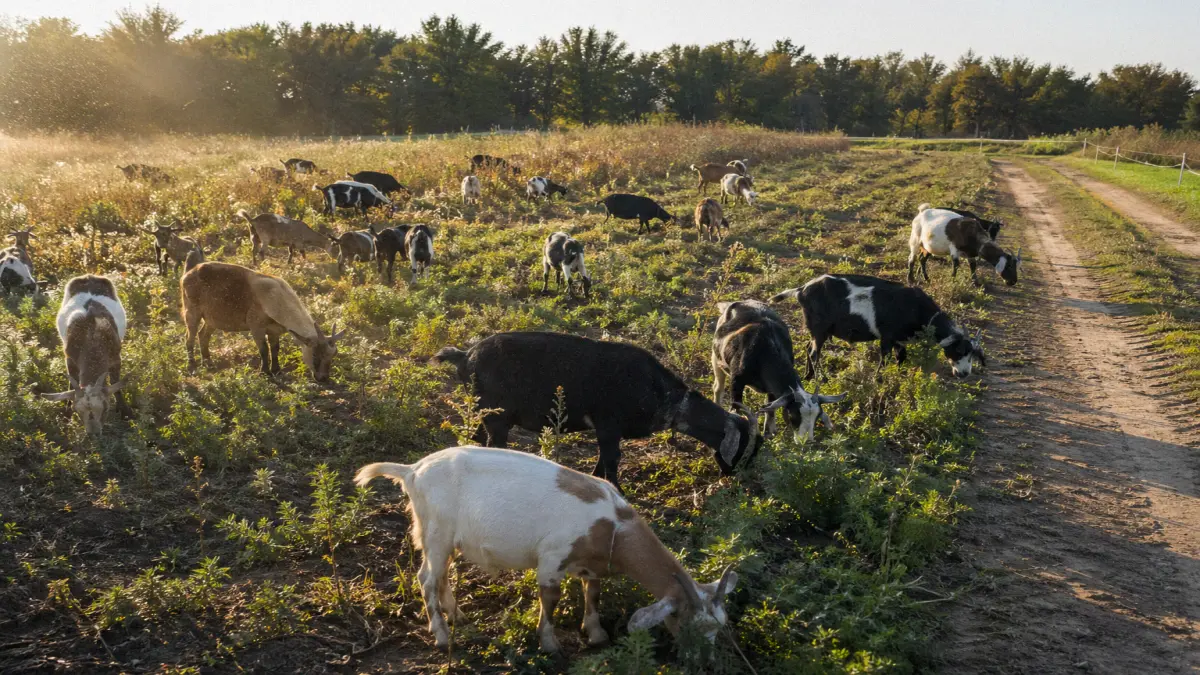
Divide sticker-heavy areas into sections small enough that the herd can clear each one in three to five days. Move the entire herd to the next section once roughly 80 percent of the sticker foliage in the current paddock has been consumed.
This concentrated pressure stops goats from wandering to preferred plants and ignoring the stickers. Give them a choice between thistles and tender clover, and the clover always disappears first.
Seasonal Timing for Sticker Control
| Season | Action | Purpose |
|---|---|---|
| Early spring | First rotation through sticker areas | Catch plants at the seedling and rosette stage |
| Late spring | Second rotation | Strip flowers before seed production begins |
| Midsummer | Third rotation if regrowth appears | Deplete root energy reserves completely |
| Fall | Rest period and assessment | Map areas needing a second-year pass |
Sticker bushes that suffer three complete defoliations in a single growing season rarely produce a strong stand the following year. Two full seasons of this managed approach eliminates most sticker populations from a property entirely.
Tracking Progress and Knowing When to Supplement
Monitor your goats closely during intensive sticker browsing. Fresh water must stay accessible at all times, and mineral blocks formulated specifically for goats should be placed in every paddock rotation.
If the browsing area lacks dietary variety beyond sticker plants, supplement with mixed grass hay or small portions of carrots so the herd maintains adequate nutrition alongside the thorny forage. Sticker bushes alone do not constitute a complete diet for any goat.
Watch for weight loss, dull coat, reduced activity, or loose stool. Any of these signs means the sticker-heavy diet is falling short of energy requirements, and supplemental feed should increase immediately.
Watch pregnant and lactating does most closely during intensive browsing rotations. Their energy demands are substantially higher, and sticker forage alone will not sustain milk production or fetal development.
How Quickly Goats Clear Sticker Patches
In most setups, 30 goats clear a full acre of dense sticker bushes in about 5 to 7 days.
Clearing speed depends on three primary factors: herd size, sticker density, and which plant species dominate the area.
| Herd Size | Area | Timeframe | Conditions |
|---|---|---|---|
| 3 goats | 1,600 sq ft | 2–3 days | Moderate sticker coverage |
| 10 goats | Quarter acre | 5–7 days | Mixed brush and stickers |
| 30 goats | 1 acre | 5–7 days | Dense sticker patches |
| 60 goats | 2 acres | 5–7 days | Heavy mixed thorny brush |
These numbers assume your goats are fenced within the target area. Goats with the run of a bigger property take much longer — they’ll cherry-pick across the whole space instead of clearing sections methodically.
Professional goatscaping services bring 20 to 200 animals for commercial clearing on municipal land, utility corridors, and large properties. Homesteaders with 5 to 10 goats can still make a visible dent, though full eradication takes two to three seasons with smaller herds.
The first grazing pass strips above-ground growth and opens the area to direct sunlight. The second pass targets weaker regrowth that emerges from depleted root systems with less stored energy.
By the third pass, most annual sticker species cannot regenerate at all. Even perennial thorny shrubs like blackberry and multiflora rose show sharp decline after three consecutive defoliations.
Every successive year of managed grazing produces less regrowth for the herd to handle. Most property owners who commit to a two-year program find the third year only needs light maintenance browsing to keep stickers from creeping back.
Combining goat grazing with overseeding competitive grasses after clearing speeds things up even more. Dense ground cover chokes out sticker seedlings before they gain a foothold.
Frequently Asked Questions
Goats prefer green, actively growing goat head plants over dried seed pods. They will sometimes eat dried stickers, but they are far more effective at clearing goat heads when the plants are still green and leafy before the burrs harden.
A group of 20 to 30 goats can clear an acre of moderately dense sticker bushes in roughly 5 to 7 days. Heavier infestations or mixed thorny brush may require a larger herd or a second rotation through the area.
Kids under three months old should not rely on sticker bushes as a food source because their mouths and digestive systems are still developing. Once kids begin browsing alongside the herd at around 8 to 12 weeks, they can safely eat most thorny plants in small amounts.
Most sticker plants provide moderate levels of protein, fiber, and minerals. Goat head weed contains calcium and phosphorus, while thistles are surprisingly nutrient-dense during the vegetative stage. However, sticker bushes alone will not meet a goat's full dietary needs.