
| # | Product | Our Rating | ||
|---|---|---|---|---|
| 1 |  | Best OverallLoose Goat Mineral Supplement | ★★★★★ | Check Price |
| 2 |  | ARS Professional Hoof Trimmer | ★★★★☆ | Check Price |
| 3 |  | Agri-Pro Veterinary Thermometer | ★★★★☆ | Check Price |
Choosing a goat breed is the single most consequential decision you will make as a goat owner. Everything that follows, from daily chores to what ends up in your milk pail or freezer, flows from this one choice.
There are dozens of recognized breeds in the United States, but a dozen of them cover almost every backyard, homestead, and small farm situation. This guide compares them honestly, including the ones we would not recommend for a first-timer.
Use the table to shortlist, then read the section that matches your goal.
Goat Breeds at a Glance
Every breed below is proven, available in most of the country, and supported by an active registry. Weights are typical adult ranges, with does at the lower end and bucks at the upper.
| Breed | Primary Purpose | Adult Weight | Standout Trait | Best For |
|---|---|---|---|---|
| Nigerian Dwarf | Dairy (mini) | 60-80 lbs | Richest milk, 6-10% butterfat | Beginners, backyards |
| Nubian | Dairy / dual | 130-175 lbs | High butterfat with volume | Homestead milk and cheese |
| Saanen | Dairy | 130-175 lbs | Highest milk volume, 1+ gal/day | Serious dairy production |
| Alpine | Dairy | 125-170 lbs | Long, steady lactations | Year-round milk supply |
| LaMancha | Dairy | 130-160 lbs | Calm temperament, tiny ears | Family milkers |
| Toggenburg | Dairy | 120-160 lbs | Oldest registered dairy breed | Cool climates, cheesemaking |
| Boer | Meat | 200-340 lbs | Fastest growth rate | Commercial meat |
| Kiko | Meat | 120-175 lbs | Parasite resistance, hardiness | Low-input meat herds |
| Spanish | Meat / brush | 100-200 lbs | Survives on rough forage | Brush clearing, tough land |
| Myotonic (Fainting) | Meat / pet | 60-175 lbs | Heavy muscling, famous stiffness | Small meat operations |
| Pygmy | Pet | 40-75 lbs | Compact and friendly | Pets and 4-H projects |
| Angora | Fiber | 70-110 lbs | Mohair fleece | Fiber artists, dry climates |
No single breed wins every column. The sections below explain the tradeoffs the table cannot show.
What Are the Best Dairy Goat Breeds?
For rich milk in a small package, the Nigerian Dwarf is the modern favorite. A good doe gives 1 to 2 quarts per day at 6 to 10 percent butterfat, the highest of any breed, which makes outstanding cheese and soap.
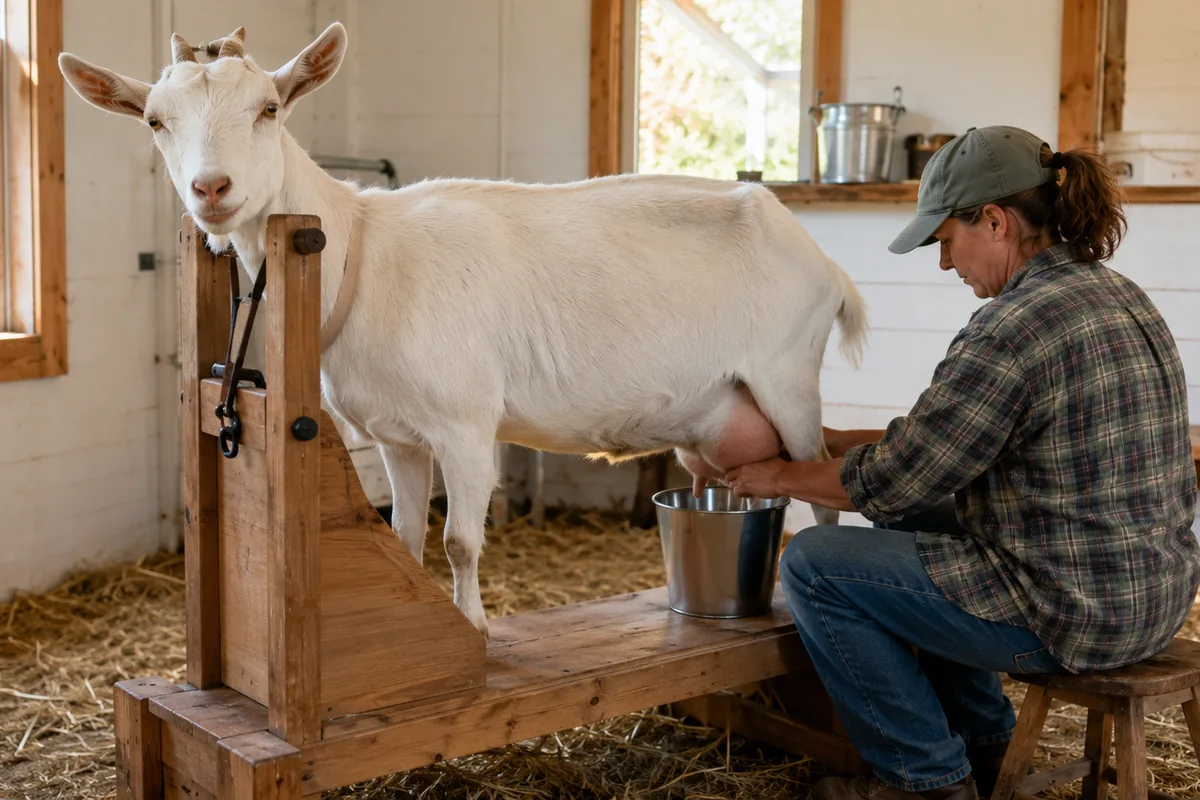
For sheer volume, nothing touches a Saanen. The big white Swiss does routinely give over a gallon a day, and under the right management some will milk and breed nearly year-round.
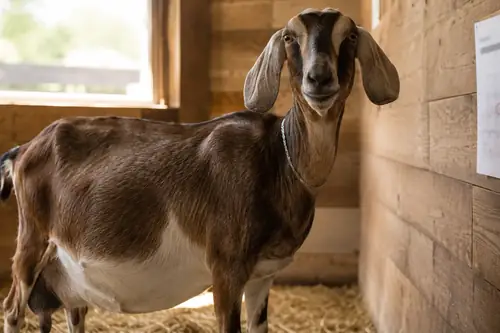
Nubians split the difference with good volume and high butterfat, plus those unmistakable long floppy ears. Be warned that they are the loudest breed by a wide margin, which matters if you have close neighbors.
LaManchas, the calm ones with almost no external ears, and Alpines, the steady long-lactation workhorses, round out the mainstream choices. Toggenburgs, the oldest registered dairy breed, produce consistent milk that certain cheesemakers specifically seek out.
Whichever dairy breed you pick, buy from milk-tested lines. A doe from documented DHIR records is worth far more than a pretty doe with no data behind her.
What Are the Best Meat Goat Breeds?
Boers are the gold standard for meat, full stop. The big red-headed South African breed grows faster than anything else, with kids hitting 60 to 80 pound market weights by 3 to 6 months.
Kikos are the thinking rancher’s alternative. Developed in New Zealand for survivability, they bring serious parasite resistance and thrive on rough forage with almost no pampering, which often makes them more profitable than Boers on poor ground.
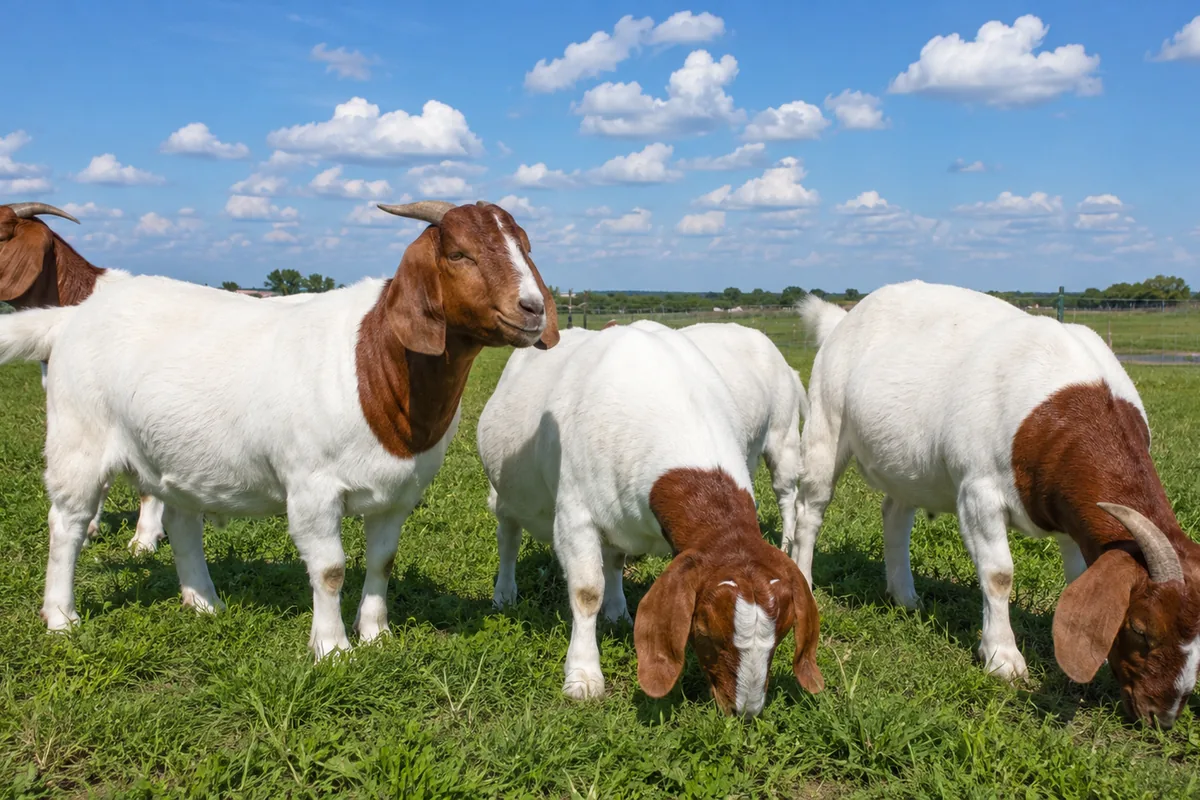
Spanish goats are the rugged heritage option, and Myotonic goats, the famous fainting goats, carry heavy muscling in a smaller, easy-fenced package. Both breeds suit small operations that value hardiness over maximum growth.
A note on the minis: people sometimes ask whether Nigerian Dwarfs work as meat goats. They are technically edible but far too small to be practical, so choose a true meat breed if the freezer is the goal.
Crossbreeding shines in the meat world. A Boer buck over Kiko or Spanish does gives you growth from the sire and hardiness from the dams, the classic commercial formula.
First crosses often show hybrid vigor, one of the real perks of planned goat breeding.
What Is the Best Goat Breed for Pets and Beginners?
For pure pet appeal, Pygmy goats and Nigerian Dwarfs own this category. Both stay small, stay friendly, and handle well enough for kids to manage in 4-H.
The practical difference is milk. Pygmies are stocky pets with token production, while Nigerian Dwarfs are genuine dairy goats in a pet-sized body, so pick a Nigerian if you ever want to milk.
For first-time owners overall, our standing advice is a pair of Nigerian Dwarf does or wethers. They are forgiving, cheap to feed, and small enough that hoof trimming and vet care never become a wrestling match.
Whatever pet breed you choose, plan on at least two goats, because a lone goat is a miserable, loud goat. And remember the minis are escape artists, so proper fencing matters more for them, not less.
The two mini breeds also cross readily, and small crosses like Mini Nubians are increasingly popular. Just buy from a breeder who can show health testing, the same as with any registered animal.
Fiber and Brush-Clearing Goat Breeds
Angoras are the dedicated fiber breed, growing silky mohair fleece that gets shorn twice a year. They are gentle but the most weather-sensitive breed on this list, so they do best in drier climates with good shelter.
Cashmere is not a breed but an undercoat, harvested from several breeds bred for it. Fiber goats are a rewarding niche, but they add shearing and fleece management to the chore list, so they are rarely a first goat.
For brush clearing, hardiness beats pedigree. Spanish goats, Kikos, and ordinary crossbred brush goats eat poison ivy, blackberry, and scrub all day and ask for nothing but water, minerals, and a strong fence.
How Do You Choose the Right Goat Breed?
Start with your honest goal: milk, meat, fiber, pets, or land clearing. The table above narrows each goal to two or three breeds, and from there your climate and land make the call.
Hot, humid, high-parasite regions favor Kikos, Spanish goats, and Nubians, while the Swiss breeds shine in cooler country. If you are new to goats and unsure of your long-term plans, a small dairy breed keeps every option open.
Then buy the individual animal, not the breed reputation. Insist on a breeder who tests the herd annually for CAE, CL, and Johne’s disease and will show you results, because no breed trait matters as much as starting disease-free.
Registered stock costs more up front but holds value, especially in dairy lines with milk records. A registered Nigerian Dwarf doe from proven lines often sells for 300 to 800 dollars, several times what an unpapered doe brings.
Finally, plan past the purchase. Every breed needs the same foundation of free-choice minerals, quality hay, secure fencing, and routine hoof care, and if you ever plan to breed, learn the heat cycle before the season sneaks up on you.
Sources and Further Reading
Compiled and cross-checked against breed registries and extension references:
- American Dairy Goat Association (ADGA) breed standards and production records
- American Boer Goat Association (ABGA) and American Kiko Goat Association resources
- Oklahoma State University, breeds of livestock goat database
- Langston University, Meat Goat Production Handbook, breed selection chapter
Breeds set the ceiling, but feeding, parasite control, and handling decide how close any goat gets to it. Pick the breed that fits your goal and your ground, start with tested stock, and you are most of the way to a herd you will enjoy for a decade.
Frequently Asked Questions
Nigerian Dwarfs and Pygmy goats are widely considered the friendliest breeds, especially when raised around people from a young age. Both are small, curious, and people-oriented, which is why they dominate the pet goat world. LaManchas deserve a mention too, since they are famously calm and affectionate, and bottle-raised kids of almost any breed bond strongly with their humans.
LaManchas have a reputation as the calmest of the common breeds, with a quiet, even temperament that stands out in the dairy barn. Toggenburgs and Saanens are also generally steady and easygoing, while Nubians run louder and more dramatic. Individual personality and handling matter as much as breed, so meet the actual animal before you buy.
Kiko and Spanish goats are the lowest maintenance breeds, bred to thrive on rough forage with minimal intervention and strong natural parasite resistance. Wethers, castrated males of any breed, are the lowest maintenance individual goats since they need no breeding or milking management, just quality forage, minerals, and routine hoof care. Miniature breeds are easier to physically handle but still need the same regular care.
Nigerian Dwarfs are the most recommended breed for first-time goat owners. They are small enough to handle easily, friendly, hardy, and they produce up to a quart or two of very rich milk per day, with butterfat in the 6 to 10 percent range. Pygmy goats are an equally manageable pet-only choice, and a pair of does or wethers from either breed makes an ideal starter herd.
Nubians are the classic dual-purpose pick, giving good milk volume with high butterfat plus enough body size to raise meaty kids. Kinder goats, a Pygmy and Nubian cross, are a purpose-built homestead dual breed, and fast-growing kids out of milking dams come from Boer crosses on dairy does. For most homesteads, a Nubian or a Boer-dairy cross covers both the milk pail and the freezer.