| # | Product | Our Rating | ||
|---|---|---|---|---|
| 1 |  | Best OverallREDMOND Goat Mineral Supplement (5 lb) | ★★★★★ | Check Price |
| 2 |  | Wholesome Harvest 16% Goat Feed (10 lb) | ★★★★☆ | Check Price |
| 3 |  | Manna Pro Goat Treats | ★★★★☆ | Check Price |
Goats are natural browsers, and a handful of fresh asparagus is one of the easier garden extras to share with them. Whether you have spears left from dinner or a raised bed producing more than your family can eat, this vegetable earns a spot on the safe list.
The catch is that not every form of asparagus belongs in a feed bucket. Preparation, portion size, and one dangerous look-alike plant all matter, and this guide walks through each of them.
Can Goats Eat Asparagus?
Asparagus is a safe and welcome treat for goats, offered raw or plainly cooked, as long as you keep the portions sensible. Nearly every goat will happily munch a spear, and the plant carries no compounds that harm them in normal amounts.
The important word is moderation. Like any vegetable outside their staple diet, too much asparagus at once can upset a goat’s stomach, so treat it as an extra rather than a meal.
One thing to hold onto from the start: garden asparagus and the ornamental “asparagus fern” houseplant are completely different plants. The food you grow and eat is fine, while the decorative version is not, and the difference is covered in detail below.
Asparagus Nutrition: What Goats Get From It
In short, asparagus is a nutrient-dense treat, richest in folate with vitamins A, C, and K plus key minerals.
Asparagus is more than a low-calorie filler, and its standout nutrient for a herd is folate. This B vitamin supports cell growth and healthy development, which makes it especially useful for pregnant does.
Folate isn’t the whole story, though. Asparagus brings a real spread of vitamins and minerals that fit nicely alongside a goat’s browse-based diet, and the table below breaks down the highlights and why each one earns its place.
| Nutrient | Why it matters for goats |
|---|---|
| Folate | Supports cell growth and healthy pregnancies in does |
| Vitamin A | Aids vision, skin, and coat condition |
| Vitamin C | Backs immune function and antioxidant defense |
| Vitamin K | Helps blood clot properly |
| Iron | Supports healthy red blood cells |
| Potassium | Assists muscle and nerve function |
| Phosphorus | Works with calcium for strong bones |
| Fiber | Keeps the rumen active and digestion steady |
That fiber is worth a second look, since a goat’s digestive system is built to ferment fibrous plant matter in the rumen. Asparagus fits that design well, giving the rumen microbes something to work on while adding vitamins on top.
Raw vs. Cooked Asparagus
The short answer: goats can eat asparagus raw or cooked, as long as it stays plain.
Raw asparagus is the simplest and most nutritious way to serve it, since nothing is lost to heat. Goats can chew through raw spears without trouble, and the crunch seems to be part of the appeal.
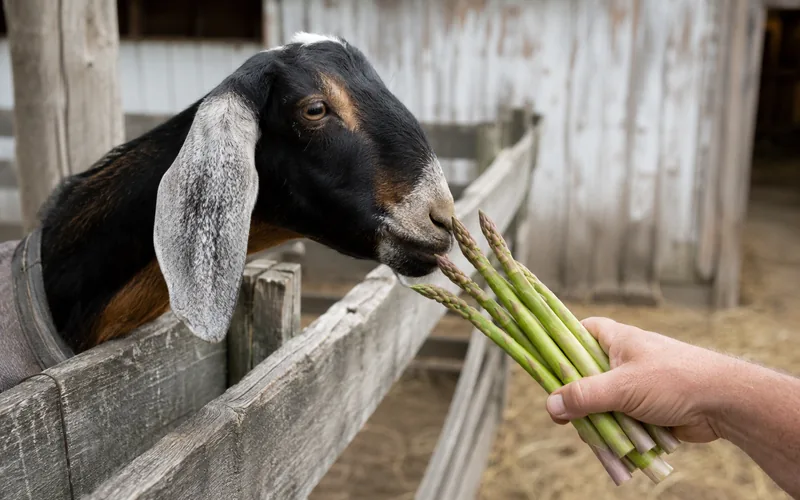
Cooked asparagus is fine too, as long as it’s plain. A light steam can soften woody spears for older goats, though you do lose some of the vitamin and mineral content in the process.
Here’s where cooked asparagus gets risky: it’s usually the extra ingredients people add to it. Salt, butter, oils, garlic, and seasoning show up on most of our plates, and none of them belong anywhere near a goat’s diet.
So skip any asparagus that came off a dinner plate with flavorings. If you want to feed the cooked kind, prepare a plain batch just for the herd.
How to Prepare Asparagus for Your Goats
Put simply, wash it, cut it into short pieces, and serve it plain.
Start by washing the spears, especially store-bought ones. Commercially grown asparagus often carries pesticide residue on the surface, and a rinse under clean water removes most of it.
Next, chop the spears into two to three inch pieces so goats can chew and swallow them safely. Whole spears fed in a hurry can pose a choking risk for eager eaters that gulp their food.
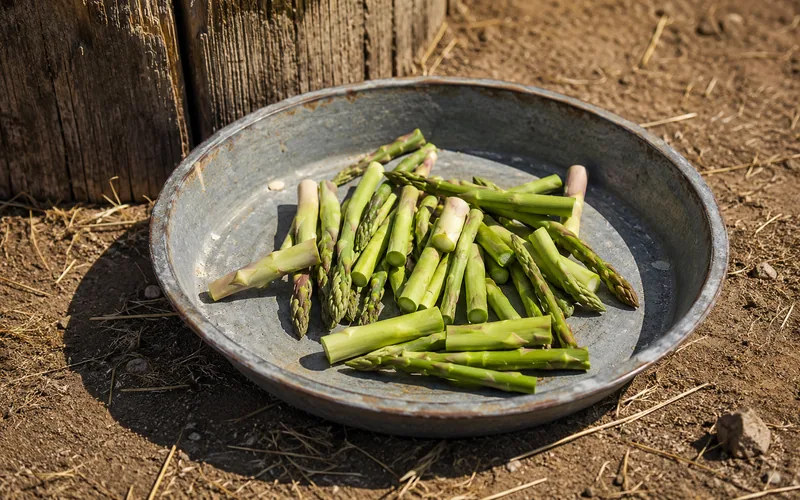
Don’t toss the tough, woody bottoms you’d normally snap off, either. Goats love gnawing those fibrous ends, and the chewing does their teeth a favor.
The first time out, offer just a piece or two and watch how each goat reacts. Some dive straight in, while others need a few tries before they warm up to something new.
How Much Asparagus, and How Often?
Asparagus should sit alongside other treats and snacks, never crowding out the core diet of hay, browse, and pasture that grazing livestock depend on. A common guideline keeps all treats combined under about ten percent of a goat’s daily intake.
In practice, a few spears per goat, two or three times a week, sits in a comfortable spot. People often ask whether goats can have asparagus every day, and honestly, daily feeding is more than they need.
Rotating asparagus with other safe fruits and vegetables keeps the diet varied and interesting. It pairs naturally with carrots and cucumbers, so a small mixed handful makes a nice change from a single treat.
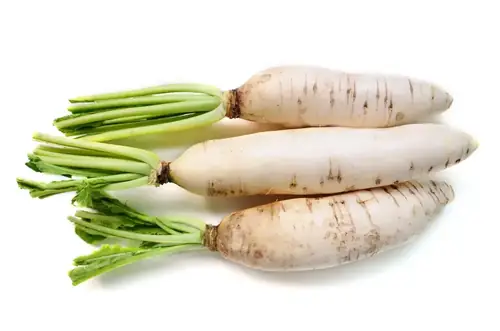
Peppery radishes work in that mix too, though some goats turn their noses up at the bite.
Which Parts Can Goats Eat? Stems, Leaves, and Seeds
Goats can eat the whole edible asparagus plant, though a few parts deserve their own note.
Stems
The stalk is the part you will feed most, and it is packed with fiber and vitamins. Thick, woody stems that people discard are actually ideal for goats, since their rumen handles coarse material with ease, much like it does with celery.
Leaves and Ferns
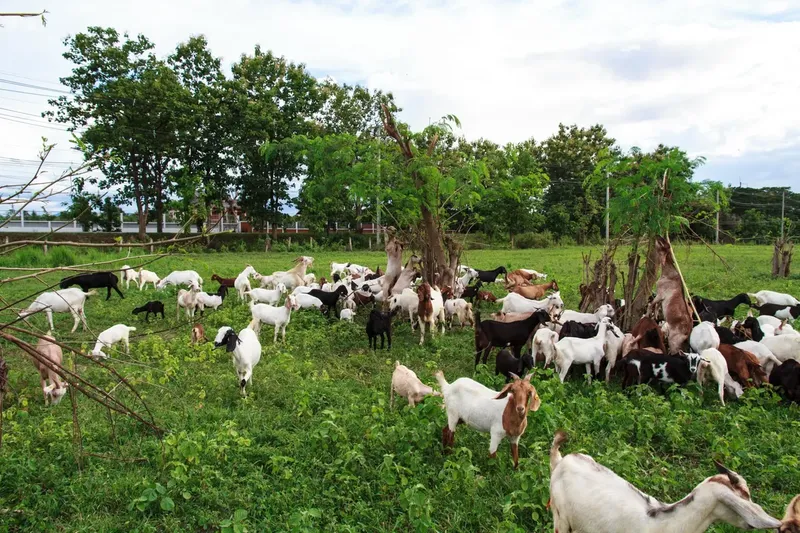
When a garden asparagus plant bolts and turns to feathery fern late in the season, that growth is safe to browse. Letting the herd into the patch after harvest is a tidy way to clear old plants, and the goats will strip them down happily.
Seeds and Berries
Mature female asparagus plants produce small red berries that hold the seeds, and these are best kept away from goats. The berries contain saponins that can irritate the digestive system, so pull ferns with berries before turning goats loose in the bed.
Ornamental Asparagus Fern: The One to Avoid
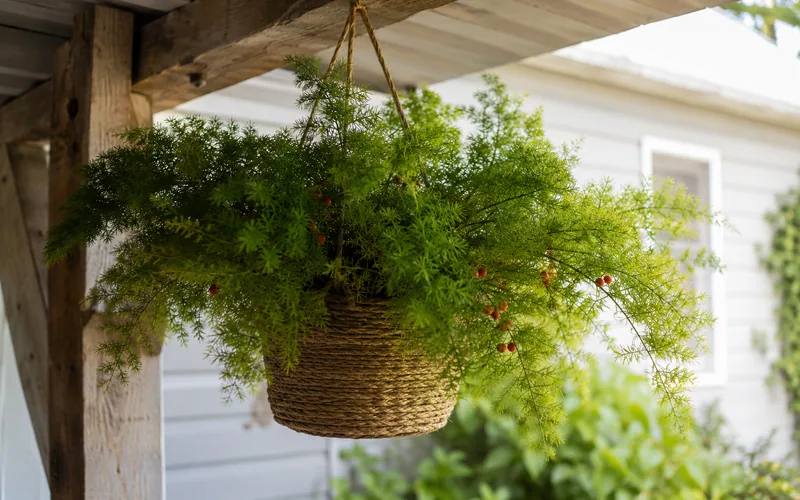
Here’s what matters: ornamental asparagus fern is toxic to goats, unlike the edible garden vegetable.
This is the single most important warning on the page. The ornamental asparagus fern, a common houseplant in hanging baskets and flower beds, is not the same species as the asparagus you grow to eat.
Ornamental asparagus fern contains sapogenins, toxic compounds that can trigger vomiting, digestive distress, and general illness in a goat. Keep these plants well out of reach, and check any decorative arrangements before you compost them where the herd can browse.
So the takeaway is simple. Garden asparagus is a healthy treat, the ornamental fern is a hazard, and knowing which plant you’re holding is all it takes to avoid a real problem.
Feeding Asparagus in Winter
Yes, goats can eat asparagus in winter via grocery or plain frozen spears.
Garden asparagus is a spring crop, so fresh spears from your own bed are a seasonal treat rather than a year-round one. Grocery asparagus is available in colder months, which is one way to keep offering it after your patch has gone dormant.
Frozen asparagus works well in winter too, as long as it is plain with no sauces or seasoning added. Thaw it first and treat it exactly like fresh, chopped into pieces and fed in the same modest amounts.
Signs Your Goat Had Too Much
Since asparagus itself is safe, the usual problem isn’t toxicity, it’s simply too much at once. A goat that got into a big pile might show loose stools, a dip in appetite, or a little bloating while its rumen catches up.
If that happens, pull the treats and put the goat back on plain hay and fresh water for a day or two. You might also catch a change in the smell of its urine, which comes from asparagusic acid in the plant and is completely harmless.
Baby Goats and Nigerian Dwarfs
Kids can start on asparagus once they’re weaned and eating solid food well, which usually happens around 8 to 12 weeks. Cut it into small pieces and introduce it slowly, since a young rumen is still developing and reacts poorly to sudden change.
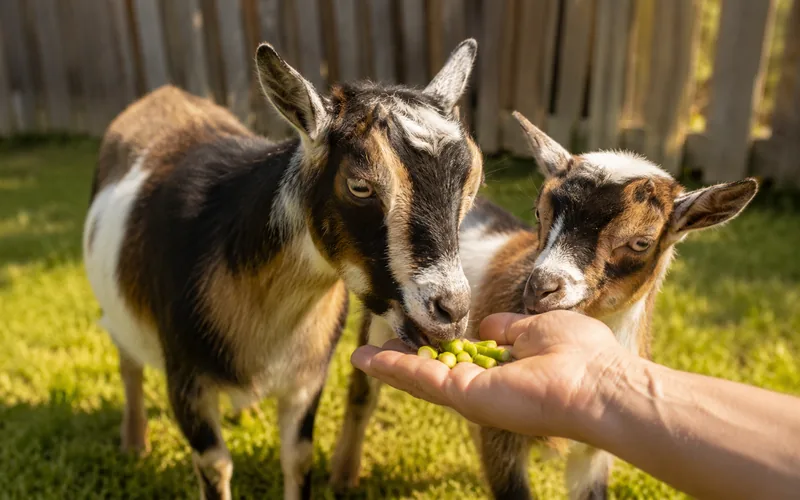
Miniature breeds like Nigerian Dwarfs can eat asparagus right alongside full-size goats, just in smaller portions to match their body size. A couple of little pieces is plenty for a dwarf, and the same moderation rule that applies across the whole herd still holds.
Introducing gentle vegetables early helps a young goat build variety, and asparagus is a fine addition once the basics are established. Pair it with other easy options such as broccoli, and you give kids a well-rounded start.
Frequently Asked Questions
Most goats take to raw asparagus readily, and the tender tips are usually the first part to disappear. Serve it in normal, moderate quantities rather than a large pile, and your goats will do well with it.
Yes. Avoid onions, garlic, and other alliums, along with raw potato, rhubarb leaves, and anything from the nightshade family. Ornamental plants like asparagus fern are also off the list, even though garden asparagus itself is safe.
It's better as an occasional treat than a daily one. A few spears two or three times a week keeps asparagus at a healthy share of the diet, while hay, browse, and pasture stay the foundation.
Both can eat plain asparagus in small amounts, much like goats. As with any livestock treat, introduce it gradually and keep it to a supporting role alongside their normal feed.