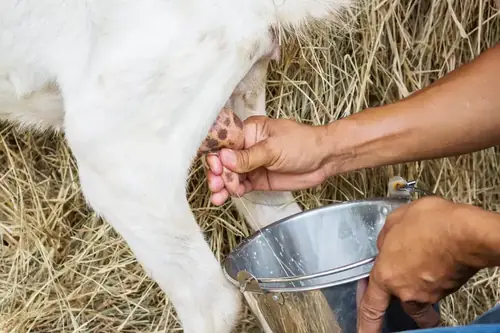

Goat milk has gone from a farm byproduct to one of the most talked about toppers in the dog bowl. Walk through any pet store and you’ll spot it fresh, frozen, and freeze-dried into powder.
The big question owners keep asking is whether it is safe as a daily habit rather than an occasional treat. This guide answers that with portion charts, real benefits, side effects, and the situations where you should hold off.
Can dogs drink goat milk everyday?
Yes, most healthy dogs can drink goat milk every day without any problem. The trick is treating it as a small daily supplement, not a bowl of milk poured to the brim.
Goat milk is gentler than cow milk because it has smaller fat globules and naturally lower lactose. That combination makes it easier on a dog’s gut over the long run.
Daily use only becomes a concern when the portion is too large or the dog has a specific health issue. Stick to a sensible amount and a daily routine is perfectly fine for the average dog.
What makes goat milk easy for dogs to digest?
Dogs aren’t built to handle much dairy, yet goat milk slips past most of those problems. The reason comes down to its structure and the live cultures tucked inside it.
Lower lactose and smaller fat globules
Goat milk contains roughly 10 percent less lactose than cow milk, so there is less milk sugar for a dog’s body to break down. Less lactose means fewer of the gas and loose stool issues that dairy usually triggers.
The fat globules in goat milk are also much smaller than those in cow milk. Smaller fat means the digestive system can emulsify and absorb it with far less effort.
Natural probiotics and enzymes
Raw and fermented goat milk carries live probiotics that help populate the gut with friendly bacteria. A balanced gut tends to mean firmer stool and steadier digestion.
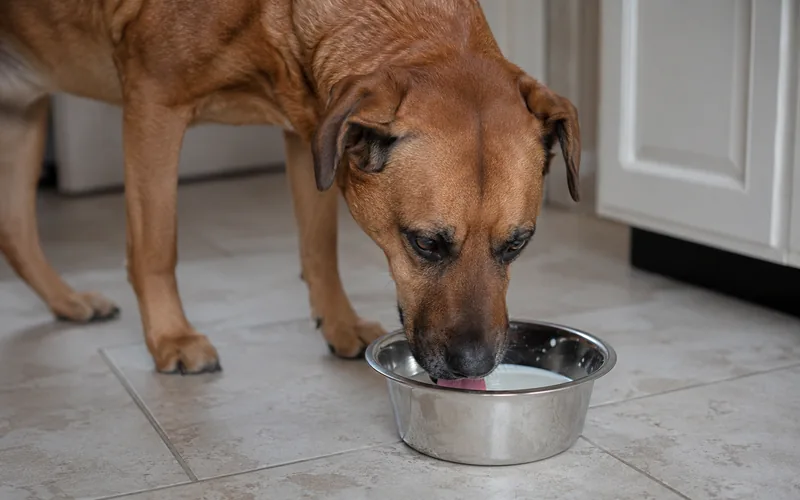
Goat milk also holds active enzymes that assist with breaking down nutrients. Those enzymes are part of why dogs with sensitive stomachs often tolerate it better than other dairy.
What nutrients does goat milk contain?
Put simply, goat milk is loaded with protein, calcium, potassium, healthy fatty acids, vitamins A, D, and B, and gut-friendly probiotics.
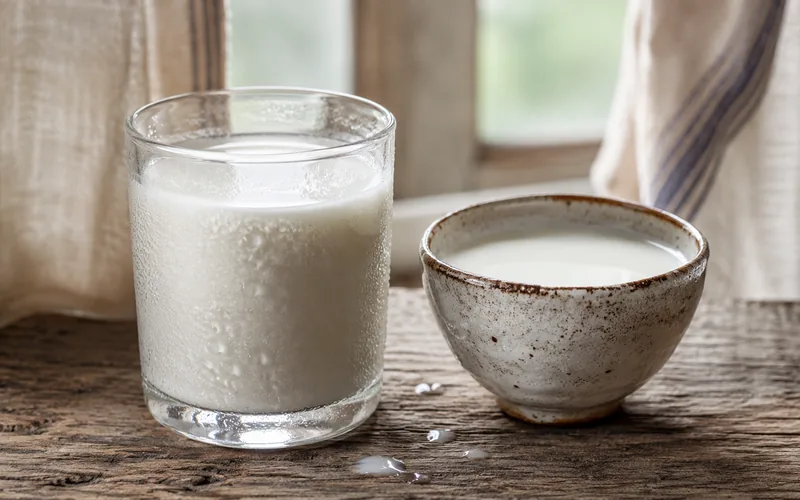
Goat milk earns its reputation honestly, since it’s genuinely nutrient dense and not just a tasty splash. A single serving brings a surprisingly wide spread of vitamins, minerals, and helpful compounds.
Here is what a daily serving brings to the bowl:
- Protein and amino acids that support muscle and tissue repair
- Calcium and phosphorus for healthy bones and teeth
- Potassium and magnesium that aid nerve and muscle function
- Vitamins A, D, and B complex for vision, immunity, and energy
- Selenium and zinc that protect cells and strengthen skin
- Medium-chain fatty acids that are quick and easy to turn into energy
- Probiotics and prebiotic oligosaccharides that feed a healthy gut
Better still, most of these nutrients come in a highly bioavailable form, so a dog’s body can actually absorb and use them. That efficiency is a big part of why goat milk punches above its weight as a topper.
Benefits of drinking goat milk daily
When the portion is right, daily goat milk can do more than just please a picky eater. Owners and breeders reach for it because the nutrient profile lines up well with canine needs.

These are the benefits dog owners notice most often:
- Better digestion: Probiotics and prebiotic oligosaccharides support a balanced gut and more regular stool.
- Extra hydration: Goat milk is mostly water, which helps dogs that do not drink enough on their own.
- Healthier skin and coat: Fatty acids, zinc, and vitamin A feed the skin barrier and add shine to the coat.
- Immune support: Vitamins A, D, and B complex along with selenium back a healthy immune response.
- Stronger bones and joints: Calcium, phosphorus, and potassium contribute to bone density and joint maintenance.
- A weight-gain aid: For underweight or recovering dogs, goat milk packs calories and nutrients into a form they actually want.
Many breeders also use goat milk to bridge gaps in a dog’s diet during recovery or stress. It is nutrient dense without being heavy, which is why it has become such a popular natural topper.
How much goat milk can a dog have a day?
Aim for about 2 ounces of goat milk per 20 pounds of body weight daily, capped at 10 percent of total calories.
This is the part that decides whether daily goat milk helps or backfires. The amount scales with your dog’s body weight, and a little goes a long way.
A reliable rule of thumb is about 2 ounces of goat milk per 20 pounds of body weight as a daily maximum. Use the chart below as your starting point and adjust based on how your dog responds.
| Dog size (body weight) | Starting amount (first week) | Daily maintenance amount |
|---|---|---|
| Small (under 20 lb) | 1 teaspoon | 1 to 2 tablespoons |
| Medium (20 to 50 lb) | 1 to 2 teaspoons | 2 to 4 tablespoons |
| Large (50 to 90 lb) | 1 tablespoon | up to 1/4 cup |
| Giant (90 lb and up) | 1 to 2 tablespoons | up to 1/2 cup |
Keep goat milk to no more than about 10 percent of your dog’s daily calories. Treats and toppers stacked on top of complete food can quietly tip a dog into weight gain.
If your dog is lean or very active, you’ve got a little more room at the top of the range. For the couch-loving or overweight crowd, stay near the bottom.
A measuring spoon beats eyeballing it, since a casual glug can easily double the dose. On days your dog already gets rich treats, trim the goat milk so the extra calories never sneak up on you.
How to add goat milk to your dog’s daily routine
Introducing goat milk slowly is the single best way to avoid an upset stomach. A rushed switch is the number one reason owners wrongly decide their dog can’t handle it.
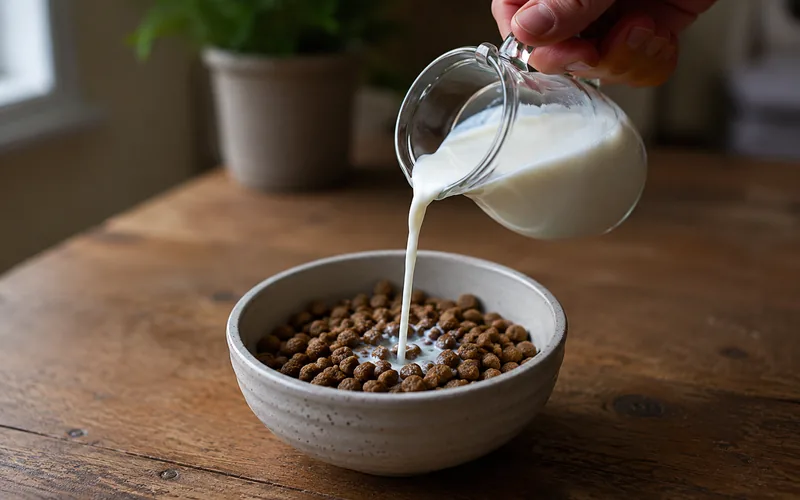
Follow these steps for a smooth, daily-friendly transition:
- Start tiny. Offer just a teaspoon over your dog’s regular food on day one.
- Go slow. Increase the amount every three to five days until you reach the maintenance level for your dog’s size.
- Watch the stool. Firm stool means you are on track, while loose stool means scale back to the last amount that worked.
- Pick a serving style. Pour it over kibble, mix it into a topper, or freeze it into cubes for a daily treat.
- Keep it cool. Store fresh goat milk in the fridge and use it within the window on the label.
Cold or frozen milk works just as well as room temperature for most dogs. Frozen cubes are a favorite on hot days and double as a slow, lick-friendly treat.
A simple daily goat milk treat recipe
If your dog loves goat milk, frozen treats turn the daily portion into something they look forward to. This three ingredient idea keeps the calories in check.
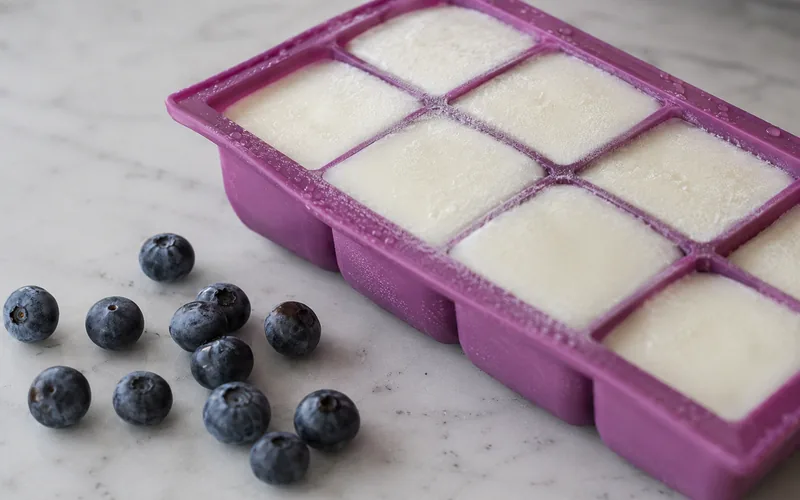
Here’s an easy frozen treat you can make at home:
- Measure the milk. Use your dog’s daily allowance from the chart above so the treat replaces the pour rather than adding to it.
- Add a mix-in. Stir in a spoonful of plain pumpkin puree or a few blueberries for extra fiber and antioxidants.
- Freeze. Pour the mix into a silicone mold or ice cube tray and freeze for at least four hours.
- Serve one piece. Offer a single cube as the day’s portion, not on top of a full bowl.
Keep every add-in dog safe and skip anything with xylitol, chocolate, raisins, or added sugar. These cubes shine on hot afternoons and give anxious dogs a slow, soothing lick.
Raw vs. pasteurized goat milk for daily use
The short answer is pasteurized for everyday safety, and raw for maximum probiotics with a little more risk.
Both raw and pasteurized goat milk can fit into a daily routine, but they suit different dogs. The right pick comes down to your dog’s health and your own comfort with risk.
Raw goat milk keeps the most live probiotics, active enzymes, and heat-sensitive vitamins intact. The trade off is a small risk of harmful bacteria like salmonella or listeria if the milk is not sourced and stored carefully.
Pasteurized goat milk loses some of those live cultures during heating, yet it is the safer pick for vulnerable dogs. Puppies, seniors, pregnant dogs, and any dog with a weak immune system are better off with pasteurized.
If you keep livestock, you may already know that other farm animals can handle raw goat milk too. For most pet dogs, a clean pasteurized product removes the guesswork.
Fresh, powdered, or fermented goat milk?
Goat milk comes in more than one form, and each suits a different lifestyle. All three are fine for daily use once your dog is used to them.
Fresh and frozen milk is the most natural option and the easiest to portion over food. It does need fridge or freezer space and has the shortest shelf life.
Powder is shelf stable, travel friendly, and budget friendly since you mix only what you need. Reconstitute it with water to the consistency your dog likes, and it pours just like fresh.
Fermented goat milk, often sold as kefir, takes the probiotic benefit a step further. For another cultured option, some owners rotate in plain goat yogurt for its added probiotics.
Shelf life is worth a quick thought too. Fresh goat milk keeps in the fridge for about three to five days, frozen milk holds for up to three months, and sealed powder stays good for months in the pantry.
How to choose a quality goat milk for dogs
Not every product on the shelf is made with dogs in mind. A few quick label checks make sure your daily pour does more good than harm.
Look for goat milk with a short, recognizable ingredient list and no added sugar or sweeteners. Plain always beats flavored when it comes to a daily habit.
If you pick a pet specific product, check that it is free of artificial preservatives and cheap fillers. Human grade plain goat milk works too, as long as nothing extra is mixed in.
For raw goat milk, buy only from a trusted, licensed source that handles and stores it safely. Clean sourcing and freshness matter far more than any claim printed on the front of the package.
Can goat milk help with itchy skin and allergies?
Yes, to a point. Its fatty acids and probiotics support skin health, but it eases symptoms rather than curing them.
Itchy skin is one of the top reasons owners reach for goat milk in the first place. The link is real, though it works as support rather than a cure.
Goat milk delivers fatty acids, zinc, and vitamin A that feed the skin barrier and reduce flaking. A stronger barrier means less of the dryness that drives constant scratching.
The probiotics matter here too, since a large share of the immune system lives in the gut. By steadying gut bacteria, goat milk may calm some of the inflammation tied to environmental and food sensitivities.

Still, persistent itching usually points to allergies or parasites that need a real diagnosis. Use goat milk as a daily helper and let your vet handle the underlying cause.
For suspected food allergies, a vet may suggest a novel protein like goat meat in an elimination diet.
Can dogs drink goat milk for diarrhea?
In small amounts, yes. The probiotics and enzymes in goat milk can help settle mild, short-lived loose stool.
Goat milk is a popular home remedy for mild, short-term digestive upset. Its probiotics and enzymes can help restore balance after a bout of loose stool.
For occasional diarrhea, a small amount of the plain milk may help firm things up within a day or two. The live cultures crowd out unfriendly bacteria and support the gut lining.
There’s a catch worth remembering, though. Adding too much too fast can actually make loose stool worse, so keep the portion small and stop if things don’t improve.
Diarrhea that lasts more than 48 hours, or that comes with vomiting, lethargy, or blood, is a vet visit. Goat milk is for minor hiccups, not serious illness.
Goat milk for puppies, seniors, and pregnant dogs
At every life stage this works, though pasteurized milk and modest portions matter even more for puppies, seniors, and pregnant dogs.
Life stage changes how you should use goat milk. The basic safety holds up, but the details shift with age and condition.
Puppies generally do well with goat milk once they are weaned, and it is gentler than cow milk for their developing guts. For orphaned litters, some breeders rely on goat-based formula as a milk replacer in a pinch.

Senior dogs benefit from the easy digestion and hydration, especially if their appetite has dropped. Stick to pasteurized for older dogs, since their immune systems are less resilient.
Pregnant and nursing dogs can take the extra calcium and calories, but the portion should still stay modest. Run any diet changes for a pregnant dog past your vet first.
Side effects of too much goat milk
Goat milk is forgiving, but it isn’t calorie free or risk free. Almost every problem traces back to one thing: giving too much, too soon.
Watch for these signs that you’ve overdone it:
- Loose stool or diarrhea from too much milk sugar at once
- Gas and bloating as the gut adjusts to dairy
- Vomiting if your dog is sensitive to dairy in general
- Weight gain when goat milk calories are not subtracted from meals
These reactions almost always fade when you cut the portion or pause for a few days. A truly dairy-allergic dog, which is rare, will react to even small amounts and should skip goat milk entirely.
The most common mistake is treating goat milk like water and filling a whole bowl. It is a topper measured in spoonfuls, so a flood of it is what turns a healthy habit into a mess on the floor.
When dogs should not drink goat milk daily
A daily routine isn’t right for every dog. A handful of conditions make goat milk a poor fit, even in small amounts.
Dogs with a history of pancreatitis should avoid the added fat, since fatty foods can trigger a painful flare. Overweight dogs on a strict calorie plan are usually better served by lower calorie additions.
Dogs with a confirmed dairy allergy, as opposed to simple lactose sensitivity, should skip goat milk completely. The same goes for any dog your vet has placed on a tightly controlled prescription diet.
When in doubt, a quick word with your vet clears it up fast. They can tell you whether daily goat milk fits your dog’s specific health picture.
Do vets recommend goat milk for dogs?
Many vets, especially those with an interest in nutrition, view goat milk as a safe and useful supplement. It is widely regarded as fine for daily feeding when portions stay reasonable.
The common caution is the same one this guide keeps repeating. Goat milk is a topper, not a meal, and it should never replace a complete and balanced diet.
Vets also point out that not every dog needs it. A healthy dog on quality food is already getting full nutrition, so goat milk is a bonus rather than a requirement.
The takeaway from the professional side is balanced. Goat milk is a helpful, low-risk extra for most dogs, used in moderation and skipped for dogs with the conditions noted above.
Can goat milk replace a dog’s meal?
It’s a common mix up, and the answer is a firm no. Goat milk is a supplement, not a complete and balanced diet.
It does not carry the full range of protein, fat, and nutrients a dog needs to thrive on its own. Leaning on it as a meal would create real nutritional gaps over time.
The one exception is short-term, vet-guided support for a sick dog that refuses solid food. Even then, it is a bridge back to regular meals, never a permanent replacement.
How long until you see benefits from daily goat milk?
Expect a week or two for digestive changes, and up to two months for a fuller, shinier coat.
Patience pays off here, since goat milk works gradually rather than overnight. Most changes show up over weeks of steady daily use.
Digestive wins like firmer, more regular stool often appear within the first one to two weeks. Skin and coat improvements take longer, usually four to eight weeks, because a healthier coat has to grow in on its own schedule.
Hydration and appetite benefits can feel almost immediate for picky or under-drinking dogs. If you notice no positive change after a couple of months, goat milk may simply not be the missing piece for your dog.
Goat milk vs. cow milk for dogs
In simple terms, goat milk is the lower-lactose, easier-to-digest option, while cow milk far more often upsets a dog’s stomach.
This comparison is the heart of why goat milk gets so much attention. Side by side, it is the friendlier dairy for the canine gut.
Goat milk has lower lactose, smaller fat globules, and a protein structure that many dogs digest more easily. Cow milk, by contrast, is a frequent cause of gas, bloating, and loose stool in dogs.
That digestibility gap is exactly why goat milk works as a daily topper while cow milk is better left out of the bowl.
| Factor | Goat milk | Cow milk |
|---|---|---|
| Lactose level | Lower | Higher |
| Fat globule size | Smaller, easier to absorb | Larger |
| Digestibility for dogs | Generally easier | Often harder |
| Natural probiotics (raw or fermented) | Yes | Limited |
Neither milk should ever become a primary food source for a dog. Interestingly, milk preferences run both ways across species, and goats themselves do not handle cow milk well either.
Final Thoughts
For most healthy dogs, goat milk is a safe and genuinely useful addition to the daily bowl. The whole strategy fits in one sentence: keep the portion small, introduce it slowly, and count it toward daily calories.
Match the amount to your dog’s weight, lean on pasteurized milk for vulnerable dogs, and watch the stool as your guide. Skip it for dogs with pancreatitis, dairy allergies, or strict calorie limits, and check with your vet when you are unsure.
Used this way, a daily splash of goat milk supports digestion, skin, hydration, and a dog that comes running at dinner time. That’s a small, low-risk upgrade that most dogs are more than happy to drink.
Frequently Asked Questions
Yes, most healthy dogs can drink goat milk every day when the amount is kept small and counted toward their daily calories. Start with a teaspoon, increase slowly over a week, and watch for loose stool or gas.
A common guideline is about 2 ounces of goat milk per 20 pounds of body weight as a daily maximum. Small dogs do well with 1 to 2 tablespoons, medium dogs with 2 to 4 tablespoons, and large dogs with up to a quarter cup.
Raw goat milk keeps more live probiotics and active enzymes, but it carries a small risk of harmful bacteria. Pasteurized goat milk is the safer everyday choice for puppies, seniors, and dogs with weak immune systems.
Too much goat milk can cause loose stool, gas, vomiting, or weight gain from the extra calories. These issues usually clear up when you reduce the portion or pause for a few days.
Goat milk supplies fatty acids and zinc that support skin and coat health, and its probiotics may calm gut-driven inflammation tied to allergies. It is a helpful supplement, not a cure, so see a vet for ongoing itching.