| # | Product | Our Rating | ||
|---|---|---|---|---|
| 1 |  | Best OverallREDMOND Goat Mineral Supplement (5 lb) | ★★★★★ | Check Price |
| 2 |  | Wholesome Harvest 16% Goat Feed (10 lb) | ★★★★☆ | Check Price |
| 3 |  | Manna Pro Goat Treats | ★★★★☆ | Check Price |
Finding a bag of calf starter in the barn with a hungry goat nosing at it is one of the most common scrapes on a mixed farm. The pull to hand over whatever grain is nearby feels reasonable, especially when the label promises fast growth and built-in coccidia protection.
That exact instinct is what lands goats in front of an emergency vet. Calf starter sits in a blind spot that trips up even seasoned keepers, because the real danger is invisible on the bag and the damage often shows up only once it is already done.
Below, I break down what is actually inside calf starter, which single ingredient can kill a goat outright, and how to tell a genuinely deadly bag from one that is merely wrong for goats.
Can goats eat calf starter pellets?
No, goats should not eat calf starter pellets. The feed is engineered around a young calf’s metabolism, and two of its core design choices, the medication and the mineral balance, work against a goat’s body rather than for it.
A tiny amount of confirmed ionophore-free product is unlikely to harm an adult goat in a genuine pinch. Safer grain options like plain oats or a little cracked corn are always the better emergency choice.
The trouble starts when these pellets become a routine feed, or when the bag turns out to be medicated. At that point you’re gambling with mineral overload at best and sudden death at worst.
What calf starter pellets actually are
In plain terms, calf starter is a grain-based complete feed built for young calves, not goats.
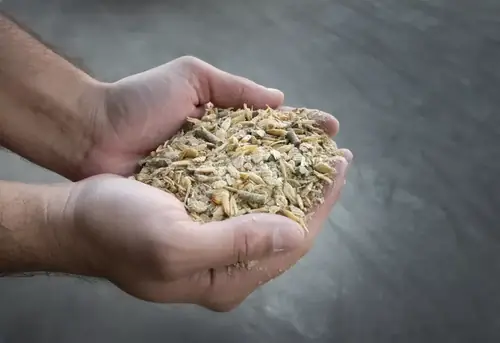
It moves a calf off milk and onto solid feed. Calf starter is usually made from grain like corn, soybean meal for protein, and a vitamin and mineral pack, and most brands run 18 to 22 percent protein to push rapid early growth in cattle.
According to Purina Animal Nutrition, calf starter is meant to be fed from about three days of age until roughly 12 weeks, at which point the calf transitions to a grower feed. That narrow window suits a bovine digestive system, not a caprine one.
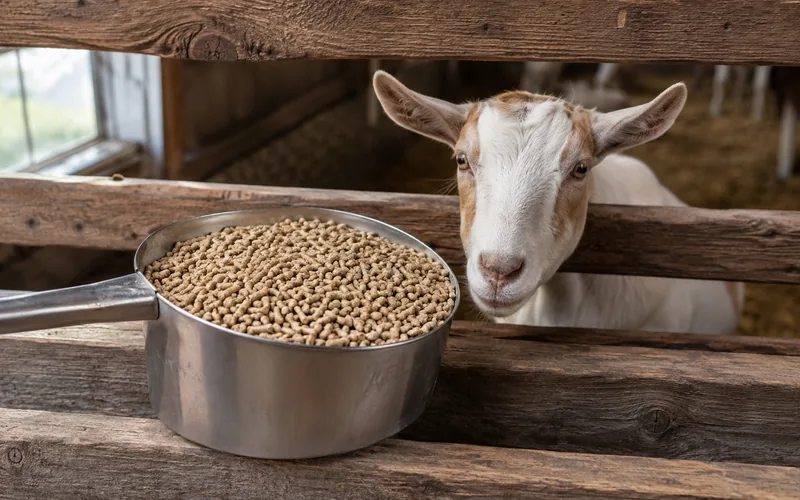
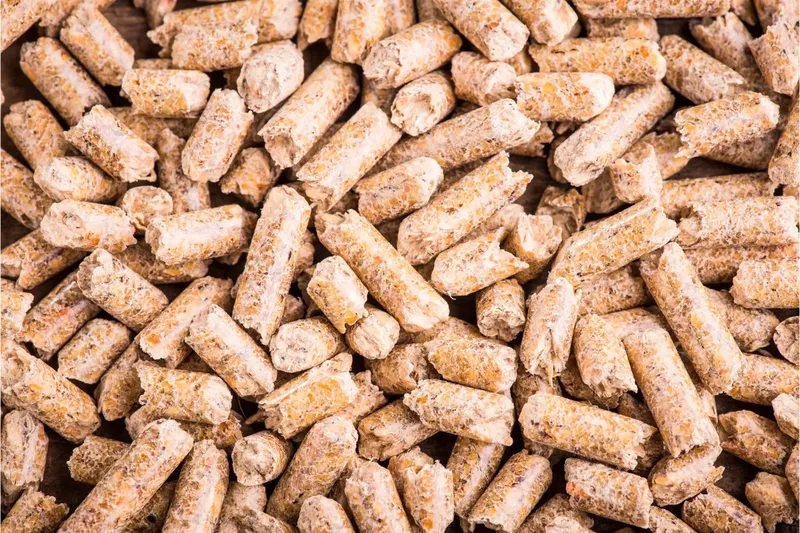
The pellet form matters more than you might expect. Penn State Extension notes that finely ground and pelleted starters trigger rapid ruminal acid production from fermenting carbohydrates, which lowers rumen pH and can impair rumen development, a mechanism that carries straight over to goats fed the wrong concentrate.
Because a calf and a goat are both ruminants, it’s easy to assume their feeds swap out one for one. They don’t, and the differences hide in parts of the bag you can’t see just by eyeing the pellets.
Why calf starter is dangerous for goats
The short answer is that medicated calf starter can kill a goat through monensin, while even an unmedicated bag carries copper and mineral levels that harm goats over time.
Monensin and other ionophores
The headline danger is monensin, sold most often under the brand name Rumensin. It is added to many calf starters to control coccidiosis and improve feed efficiency in cattle, and it is one of the deadliest feed additives a goat can encounter.
Monensin belongs to a class of compounds called ionophores, which disrupt the movement of sodium and potassium across cell membranes. In a target species like cattle that effect is mild, but in goats it damages heart and skeletal muscle, and a poisoned goat can develop heart failure and die with no practical antidote.
What makes this so dangerous is the dose gap. Cattle tolerate monensin at levels that are toxic to goats, so a feed that is perfectly safe for its intended animal can be lethal to a goat eating the same handful.
Sheep and horses sit in the same vulnerable camp, which is why ionophore warnings on feed bags single them out.
Copper and mineral imbalance
Even a monensin-free bag isn’t a green light. Calf feeds are balanced for a cow’s copper tolerance and a calf’s calcium-to-phosphorus needs, and those numbers just don’t line up with what a goat requires.
Copper is the trickier of the two. It accumulates quietly in the liver, and instead of causing obvious day-to-day symptoms it stores up until the liver dumps its load all at once, triggering a sudden hemolytic crisis with dark urine, jaundice, and often death.
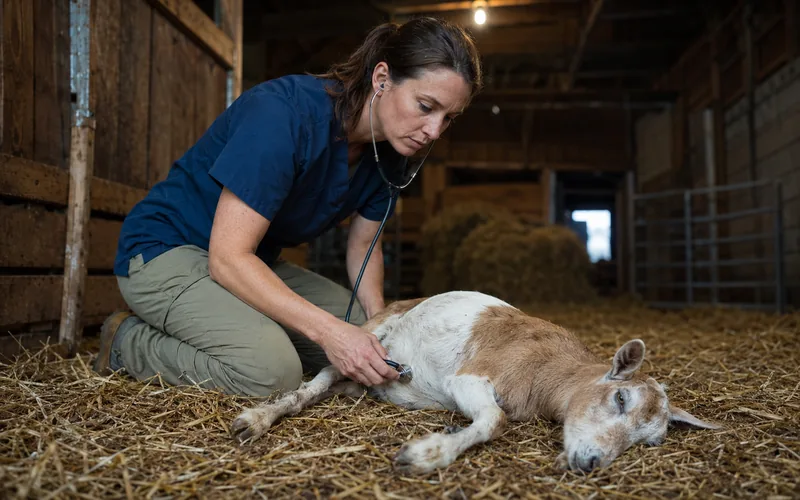
This same wrong-species mineral profile is why cattle feed and medicated poultry rations are also off the table for goats.
The missing ammonium chloride
Goat feeds usually include ammonium chloride to prevent struvite and other urinary stones in males, whose narrow urethra makes even a tiny stone potentially fatal. Calf starter has no reason to carry that protection, so a wether or buck eating it long term loses a safeguard he would have had on a proper goat ration.
Grain-heavy diets already tilt goats toward urinary calculi, and swapping in a cattle concentrate without ammonium chloride quietly raises that risk. It’s a slow-burn danger that won’t announce itself until a male goat is straining to urinate.
Calf starter is not the same as Calf-Manna
To be clear, these are two different products: calf starter is a complete calf ration, while Calf-Manna is a goat-safe protein supplement.
Here is where a huge amount of confusion lives. Search interest around this topic is dominated by “Calf-Manna,” which is a completely different product from calf starter pellets.
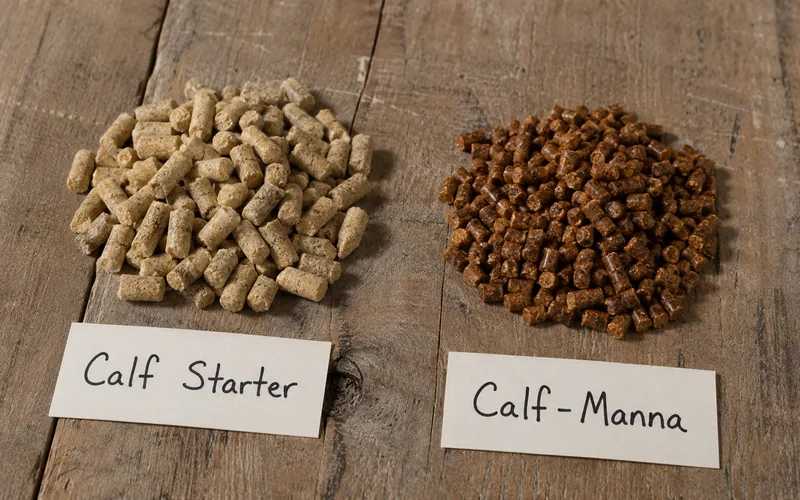
Calf-Manna is a concentrated protein and energy supplement made by Manna Pro, and the company openly markets it for goats among several species. You feed it in small top-dress amounts to boost condition, not as a complete daily ration.
Calf starter, by contrast, is a stand-alone complete feed for young calves that frequently contains monensin. So “can goats have Calf-Manna” and “can goats eat calf starter pellets” are two different questions with two different answers.
Calf-Manna as a small supplement is generally considered goat-safe, while medicated calf starter is not.
If someone tells you they feed “calf feed” to their goats with no problem, ask which product they actually mean. That one distinction separates a harmless supplement from a deadly ration.
Can you use Calf-Manna for goat weight gain?
Yes, Calf-Manna is a common weight-gain supplement for goats fed in small measured amounts. Follow the label rate and treat it as a top-dress on forage, not a replacement for a balanced goat ration.
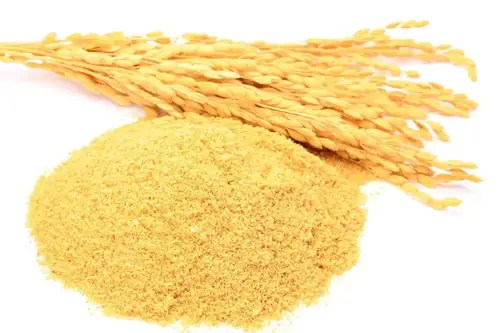
Rice bran is another common weight-gain supplement, as long as calcium balances its high phosphorus.
How to read the feed tag for ionophores
Here is what matters: read the ingredient panel, and reject any bag that lists an ionophore.
Before offering any cattle product to a goat, flip the bag over and read the tag.
Look specifically for these ionophore names and reject the bag if any appear:
- Monensin (Rumensin)
- Lasalocid (Bovatec)
- Salinomycin
- Narasin
The label often flags this itself with a line reading something like “Do not feed to horses or other equines,” which is a strong hint that an ionophore is present. Penn State Extension also points out that many calf starters carry heavy molasses as a binder, and while that boosts palatability it is not a safety indicator, since a sweet-smelling pellet can still be medicated.
One ingredient you may see that is not an ionophore is decoquinate, sold as Deccox. Decoquinate is a coccidiostat that is actually used in goats, so its presence is not the same red flag as monensin, though a calf-formulated product still carries the wrong minerals.
My goat got into calf starter, what now?
Check the tag first: an ionophore on the label means call your vet right away, while an ionophore-free nibble usually just needs monitoring.
That single label detail changes everything about how worried you should be.
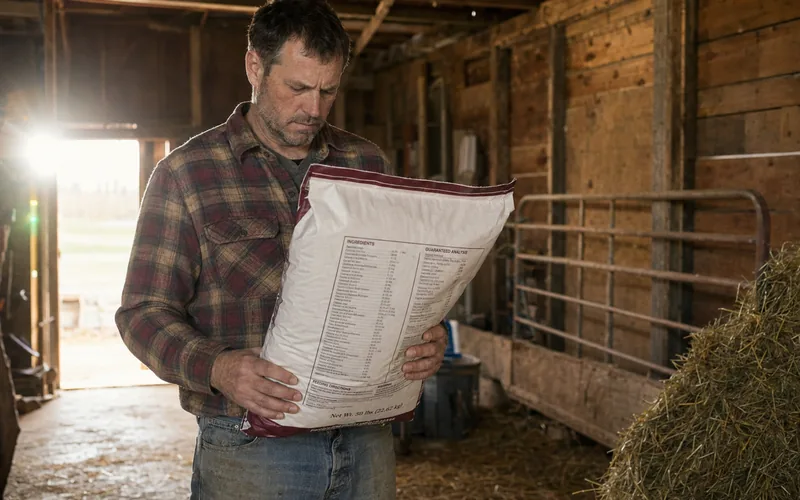
If the label lists monensin or another ionophore, call your veterinarian immediately, even if the goat looks fine. Ionophore poisoning can take a day or two to show, and early signs include going off feed, weakness, a stumbling gait, rapid breathing, and reluctance to move.
There’s no antidote, so supportive care started early is your only real lever.
If the bag is confirmed ionophore-free and your goat only stole a small amount, the situation is far less dire. Watch for signs of grain overload such as bloating, a hunched stance, or diarrhea, keep fresh water available, and offer good hay to help settle the rumen.
For a large accidental grain binge of any kind, treat it as a possible acidosis and bloat emergency and loop in your vet. Overloading the rumen with concentrate is dangerous whether or not an ionophore is involved.
Can baby goats eat calf starter?
No, baby goats should not eat calf starter, and kids are even more sensitive to monensin than adult goats.
This question comes up constantly, usually because a keeper wants a medicated starter to control coccidia in young kids and calf starter is what the local store happens to stock. The logic makes sense, but the answer is still no.
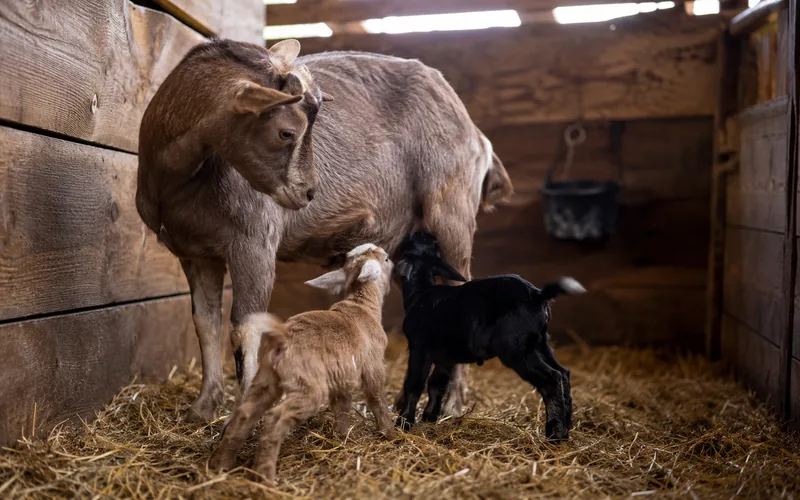
Kids are actually more vulnerable to monensin than adults because of their smaller body size, so a medicated calf starter is even riskier for them. The medication that seems so convenient is the exact reason to keep the bag away from your kids.
Beyond the ionophore issue, the protein and mineral profile is tuned for a growing calf that will top 600 pounds, not a goat kid. Feeding it as a creep feed sets up the same copper and urinary problems seen in adults, just earlier in life.
Preventing coccidia in kids the right way
The safe route is a goat-labeled coccidiostat such as decoquinate (Deccox), never a medicated cattle feed.
Coccidia prevention is the real motive behind most calf starter questions. Coccidiosis is a leading killer of goat kids, so the instinct to get ahead of it is exactly right, it just needs the right tool.
The clean solution is a medicated goat feed containing decoquinate (Deccox), which is a coccidiostat formulated and dosed for goats rather than cattle. It delivers the prevention you wanted from calf starter without the monensin gamble or the wrong minerals.
For active outbreaks, amprolium (Corid) is a common treatment, and some keepers use it preventively during high-risk windows around weaning. Your vet can help you build a coccidia plan matched to your herd’s history and confirm the correct dosing, which beats leaning on a cattle product that was never meant for goats.
What to feed goats instead
Put simply, forage comes first, backed by a goat-specific grain and free-choice loose minerals when the animal needs extra energy.
A proper goat diet doesn’t need calf starter at all. The foundation is forage, either quality hay or browse, which should make up the bulk of what your goats eat every day.
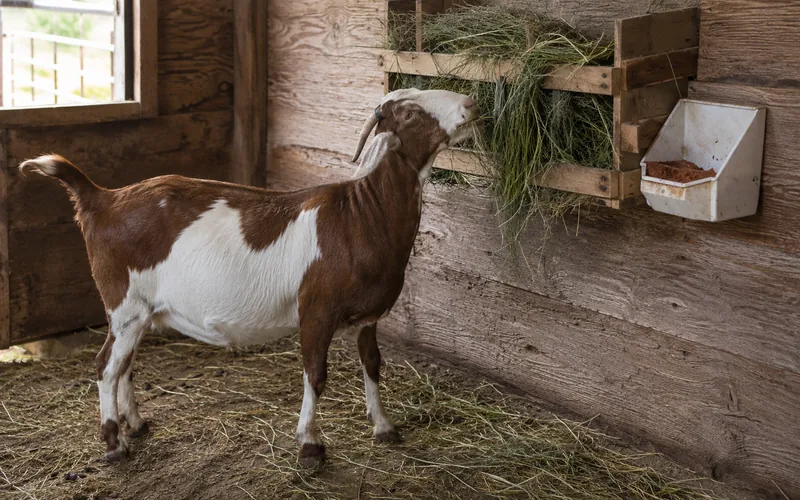
On top of that base, feed a grain mix formulated specifically for goats when the animal actually needs the extra energy, such as a milker or a growing kid. Goat feeds carry the correct copper level, the right calcium-to-phosphorus ratio, and ammonium chloride for males, none of which calf starter provides.
Choosing the right hay for your herd matters just as much as picking the concentrate.
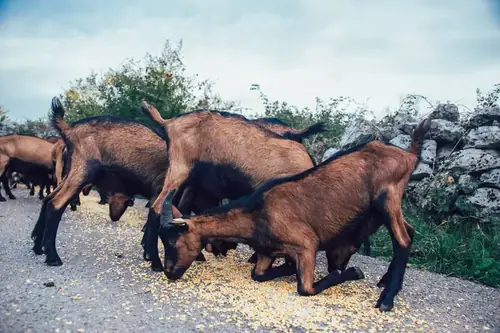
Round it out with free-choice loose goat minerals, since goats depend on supplemental minerals far more than cattle or sheep do. If you keep both species on one property, store the feeds separately and use locked feeders, because goats raiding cattle feed is one of the most common causes of accidental goat death on mixed farms.
For legume-based protein during pregnancy or lactation, feeding alfalfa is a far safer route than reaching for a cattle concentrate. It gives you the protein and calcium boost without any ionophore risk.
Cooked lentils are another legume option, and a handful in the grain ration adds a little protein.
Frequently Asked Questions
No. Many calf starters are medicated with monensin, an ionophore dosed for cattle that can poison goats. Ionophore-free calf starter still has the wrong copper and calcium-to-phosphorus balance for goats, so it isn't a safe regular feed either.
A goat-specific medicated kid feed containing decoquinate (Deccox) is the safe way to combine early nutrition with coccidia prevention. Pair it with quality hay, browse, and a loose goat mineral. Never substitute calf starter for a goat kid ration.
Avoid any feed medicated with an ionophore such as monensin, lasalocid, salinomycin, or narasin. That rules out most calf starter, cattle feed, and medicated chicken feed. Also skip moldy feed, large amounts of grain, and anything high in copper formulated for other species.
Pellets formulated specifically for goats are best, ideally a 16 percent protein goat feed with added ammonium chloride for males and a matched loose mineral. These carry the correct copper level and calcium-to-phosphorus ratio that cattle and poultry feeds lack.