| # | Product | Our Rating | ||
|---|---|---|---|---|
| 1 |  | Best OverallREDMOND Goat Mineral Supplement (5 lb) | ★★★★★ | Check Price |
| 2 |  | Wholesome Harvest 16% Goat Feed (10 lb) | ★★★★☆ | Check Price |
| 3 |  | Manna Pro Goat Treats | ★★★★☆ | Check Price |
A goat will strip a rose bush, chew on cardboard, and beg for whatever you are eating, so it is easy to assume nothing in the kitchen could ever hurt one. Avocado is the exception that catches even careful keepers off guard.
Because avocado is a staple in so many homes, the scraps end up in compost piles, on low counters, and near the fences where goats love to browse. Knowing exactly why it is dangerous, and how little it takes to cause harm, is what keeps a curious nibble from turning into a vet emergency.
Can Goats Eat Avocado?
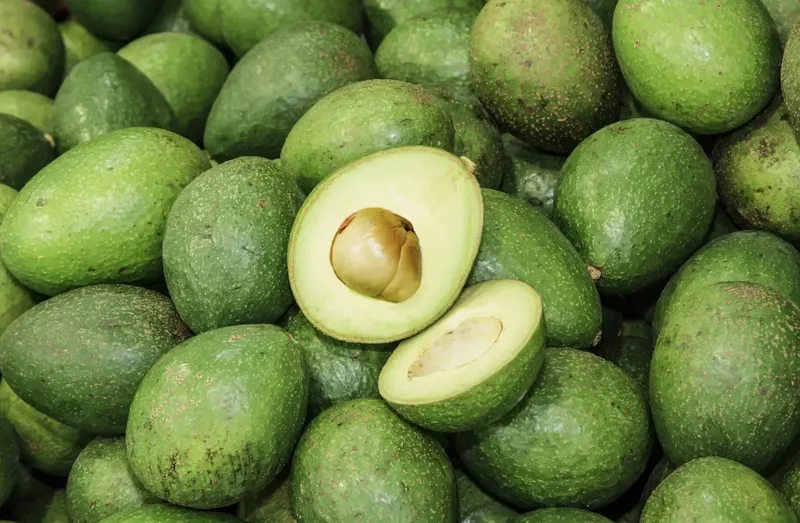
No, goats cannot eat avocado in any form or quantity. The fruit, skin, pit, leaves, and bark all belong on the never-feed list.
The confusion usually traces back to old forum threads that swear the flesh is harmless and only the pit is risky. That advice has steered plenty of well-meaning owners wrong.
Avocado sits in the same tier as the poisonous plants that cause organ damage, not the mild stomach upset of one too many apple slices. There is no safe serving size to aim for, so the only sound goal is keeping it away from the herd entirely.
Vets and poison-control centers file avocado alongside chocolate and nightshades when they warn goat owners, never with the harmless treats. That one detail tells you how seriously a stray scrap deserves to be treated.
Why Is Avocado Toxic to Goats?
The trouble comes down to a single compound called persin. The avocado plant produces this oil-soluble toxin to defend its fruit against fungus, and a goat’s body has no way to neutralize it.
Once swallowed, persin heads straight for two of the body’s most sensitive tissues. It attacks the muscle cells of the heart, and it inflames the mammary gland in does.
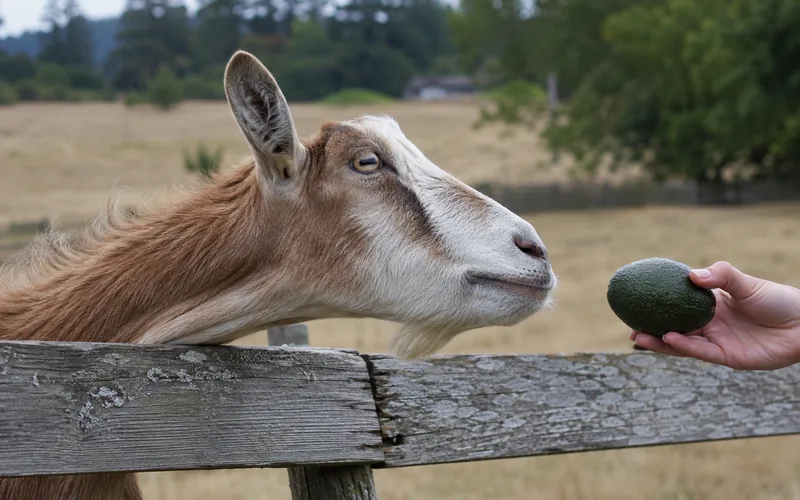
The ASPCA Animal Poison Control Center lists Persea americana as toxic, naming persin as the toxic principle and citing respiratory distress, heart failure, and edema as the clinical signs. Those three outcomes are why a poisoned goat can go downhill so fast.
Being fat-soluble is part of what makes persin so hard on the body. It slips into the fatty membranes of heart and gland cells, then wrecks them from the inside.
As persin damages the heart, fluid begins to pool in the chest and under the skin, a state known as edema. This is the swelling that leaves a struggling goat stretching its neck out and gasping for air.
Among farm animals, goats rank near the top of the sensitivity list, in the same at-risk bracket of livestock as horses, sheep, and cattle. Their browsing instinct only makes things worse, since a goat will sample leaves and bark that a grazing animal walks straight past.
How Much Avocado Does It Take to Harm a Goat?
There’s no established safe dose, but the veterinary research shows just how little it takes. According to the Merck Veterinary Manual, goats develop severe mastitis after eating roughly 20 grams of avocado leaves per kilogram of body weight.
Push that to about 30 grams of leaves per kilogram, and the same source reports the dose typically causes cardiac injury. For a mid-sized 60-kilogram doe, that is only a little over a kilogram of leaves, an amount she could reach in minutes beside an unfenced tree.
Purified persin is toxic at even smaller levels, causing mastitis in lab studies at 60 to 100 milligrams per kilogram and heart-muscle death above 100 milligrams. That steep dose-response curve is exactly why “just a taste” isn’t a real safety margin for an animal as small as a goat.
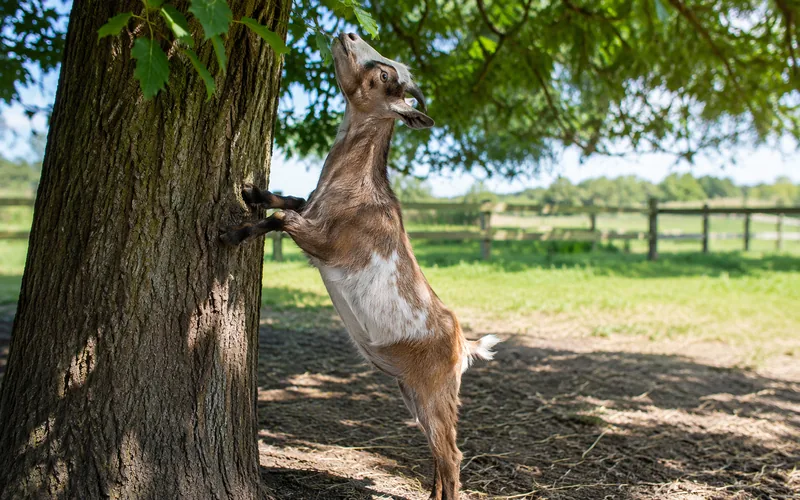
Because the toxic threshold is tied to body weight, the math is worst for the smallest members of the herd. A Nigerian Dwarf or a young kid reaches a dangerous dose from a fraction of what it would take to affect a full-grown Boer or Nubian.
There’s one grim wrinkle worth understanding here. The Merck manual notes that lactation can offer partial protection against heart damage at low doses, because the persin diverts into the mammary tissue instead, though that only trades a cardiac injury for a ruined udder.
Which Parts of the Avocado Are Most Dangerous?
Here’s the ranking: avocado leaves and bark are the most dangerous, then the pit and skin, with the flesh the least toxic but still unsafe.
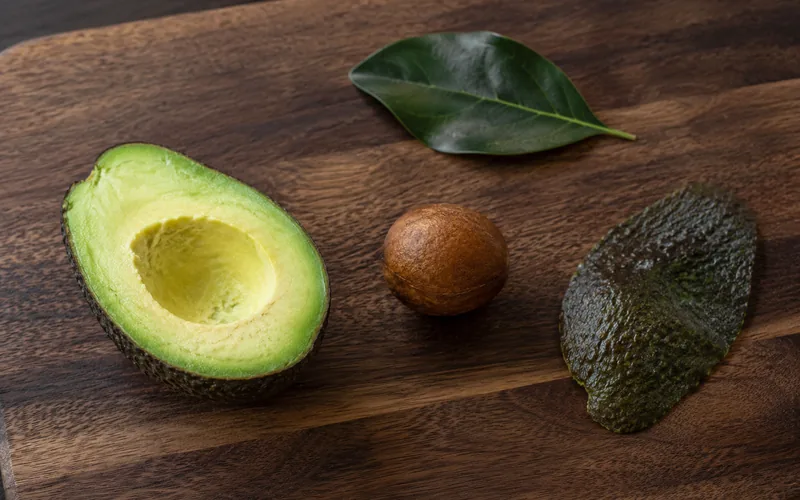
Every part of the avocado carries persin, but not in equal amounts. Knowing the ranking explains why good fencing matters as much as watching the compost bucket.
Leaves and bark
The Merck Veterinary Manual notes that avocado leaves are the most toxic part of the plant, and that Guatemalan varieties are the ones most often linked to poisoning. A goat nibbling a low branch or a pile of windfall can take in a dangerous dose without ever touching the fruit.
Bark falls into the same high-risk group, which is why a goat tethered near an avocado trunk is a genuine hazard. If a tree grows on your property, treat the whole plant as off-limits.
The pit and skin
The pit holds a heavy concentration of persin and doubles as a choking and blockage risk for a goat’s digestive tract. The leathery skin carries a strong dose too, and it slips down easily when a goat gulps scraps straight off the ground.
The flesh
The soft green flesh has the lowest persin level of any part, which is exactly where the “the fruit is fine” myth comes from. Lower isn’t the same as safe, and a goat’s small frame means even that reduced dose can do real damage.
This is also why guacamole, avocado toast crusts, and smoothie dregs are not gray areas. They are built almost entirely from the flesh, so the toxin rides along in every spoonful.
Can Goats Eat Avocado Seeds?
No, the avocado seed is one of the riskiest parts of the fruit for a goat. The seed, or pit, packs a concentrated load of persin alongside a very real physical danger.
A whole pit is close to the width of a goat’s windpipe, so it can lodge in the throat or gut and cause an obstruction. Even a cracked or chewed seed keeps its full toxic punch, so there’s no safe way to offer one.
If you pit avocados in a kitchen a goat can reach, treat the discarded seed like any other hazard and bin it right away. A pit left on a counter or dropped within range of an inquisitive nose is an accident waiting to happen.
Does Cooking or Ripening Make Avocado Safe?
None of the usual kitchen tricks change the answer. Persin is heat-stable, so roasting, grilling, or blending an avocado leaves the toxin fully intact.
A bowl of guacamole is no safer than a raw slice, and it usually piles on onions, garlic, and salt, each with its own risks for goats. Ripeness makes no difference either, whether the fruit is rock-hard or slumping into mush.
The same caution applies to the other rich human foods a goat will beg for, from chocolate to the salty kitchen scraps that pile up after dinner. If a food is iffy for people’s pets, it’s almost always worse for a ruminant.
Symptoms of Avocado Poisoning in Goats
Put simply, avocado poisoning tends to appear within 24 to 48 hours of exposure. The signs to watch for include:
- Lethargy and loss of appetite
- Labored or rapid breathing
- Swelling around the jaw, neck, and chest
- A sudden drop in a lactating doe’s milk
- An irregular or racing heartbeat
Signs can surface within hours, though the exact timing hinges on how much avocado a goat ate and which part. Catching it early is your best window to get veterinary help.
In lactating does, the first red flag is often the udder. The Merck Veterinary Manual reports that sterile mastitis sets in within 24 hours of ingestion and can cut milk production by about 75 percent, with the gland turning firm and producing watery, curdled milk.
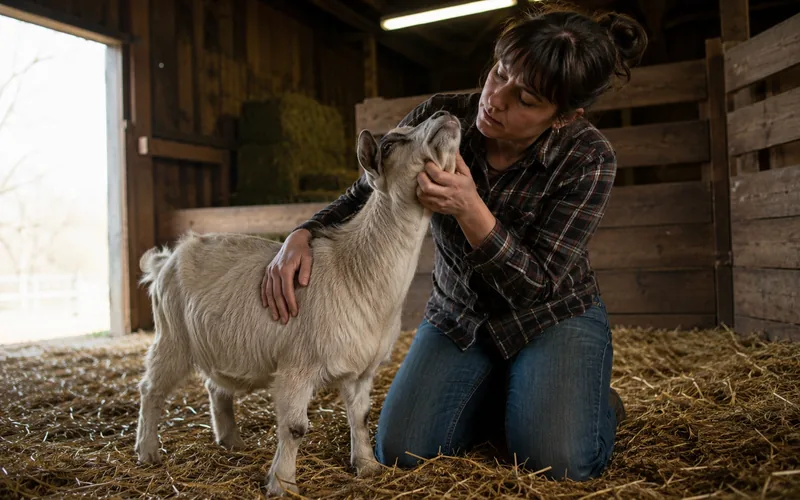
The earliest signs are quiet and easy to miss, which is precisely the danger. A goat going off its feed or drifting away from the herd deserves a closer look if avocado is anywhere on the property.
Non-lactating goats, or any goat that ate a large amount, can slide into heart trouble within 24 to 48 hours. The same source lists lethargy, respiratory distress, subcutaneous edema, coughing, a bluish tinge to the gums, and exercise intolerance as the hallmark signs.
Left untreated, that cardiac stress can end in collapse and death. Kids move through this timeline faster than adults because of their small size, so any suspected exposure in a young goat is an outright emergency.
What to Do If a Goat Eats Avocado
Treat it as an emergency, because with avocado there’s no reliable home remedy. Remove any leftover fruit, leaves, or pits so the rest of the herd cannot eat more.
Call your veterinarian or a poison line right away, and be ready to say how much was eaten, which part, and when. There is no antidote for persin, so treatment focuses on supporting the heart and easing symptoms, and early care gives the best odds.
Don’t try to make the goat vomit, since goats can’t bring food back up safely the way a dog can. Keep the animal calm and limit movement, because exertion only adds strain to an already stressed heart.
If the exposure was recent, a vet may give activated charcoal to bind any persin still in the gut before more is absorbed. Care can also include IV fluids and anti-inflammatory medication to ease the load on the heart.
Keep your vet’s after-hours number and the nearest livestock-savvy clinic saved before you ever need them. With a toxin that moves this fast, the minutes saved on phone calls can matter as much as the treatment itself.
Keeping Goats Away From Avocado Trees
The biggest real-world risk isn’t the kitchen at all, but the yard. If you have an avocado tree, fallen and wind-scattered leaves are the threat that catches keepers by surprise.
A single gust can carry toxic leaves and twigs straight into a pen, so a tree anywhere upwind is effectively inside the enclosure. The safest setup keeps goats fully fenced away from any avocado tree, with a buffer that accounts for how far debris can blow.
Seasonal timing matters here too. Avocado trees drop their heaviest leaf litter during their natural shed, so it pays to step up the clearing routine when the ground under the canopy starts filling in.
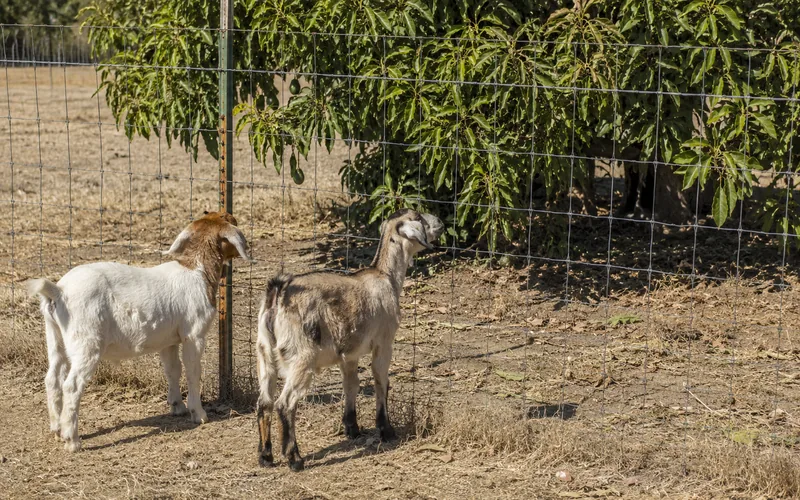
Rake and clear windfall promptly, and never toss avocado prunings onto a pile a goat can reach. It takes only one afternoon of unsupervised browsing to reach a harmful dose.
Which Animals Cannot Eat Avocado?
In short, avocado is unsafe for goats, sheep, cattle, horses, and birds, with birds and grazing livestock among the most at risk.
Goats are far from the only animal sensitive to persin. The toxin hits a wide range of species, which is worth knowing if you keep a mixed farm.
Horses, sheep, and cattle are all vulnerable, and like goats they can suffer heart and udder damage. Deer that browse near orchards face the same danger from stray leaves and skin.
Horses often show the toxin’s effects as facial and tongue swelling alongside colic-like distress, a pattern documented in veterinary case reports. In birds the margin is razor-thin, and even a nibble of flesh can trigger fatal heart failure within a day or two.
Small pets are not spared either, and rabbits and guinea pigs should never be offered any part of the fruit. Dogs shrug off the persin better than most, but a swallowed pit can still lodge in the gut and require surgery.
Safe Fruit Alternatives for Goats
The short answer: safe fruit treats for goats include apples, bananas, melon, berries, oranges, and ripe tomatoes, all fed in small amounts.
Plenty of fruits make genuinely good goat treats when fed in moderation. A useful rule of thumb is to keep all treats under about 10 percent of the daily diet.
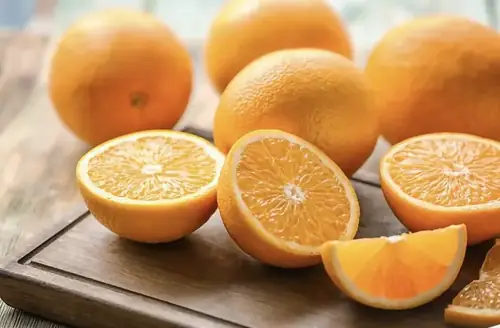
Sliced apple, banana, melon, and berries are all safe, popular options that goats tend to mob. Citrus like oranges is fine in small amounts, and ripe tomatoes are safe as long as the goat sticks to the fruit and skips the leaves and stems.
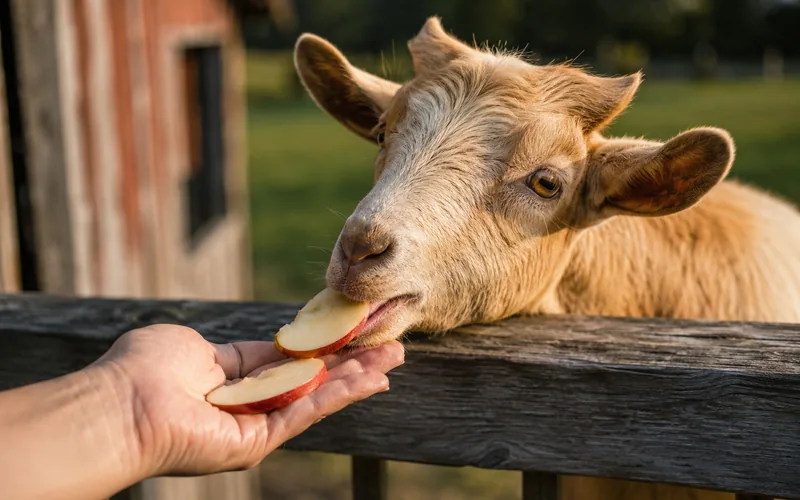
Variety keeps treat time interesting without leaning on any single fruit. Rotating a few safe options week to week spreads out the natural sugars and helps keep rumen digestion steady.
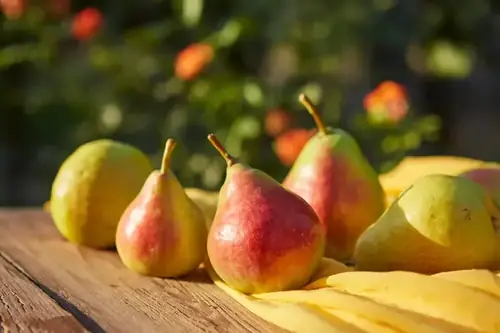
Cored pears are an easy fruit to add to that rotation, skin and all.
Whatever you offer, introduce it slowly and in small pieces to head off digestive upset. When a new food is not already on your safe list, take a moment to look it up before it goes over the fence.
Final Thoughts
Avocado earns its spot on the never-feed list because persin does real, sometimes fatal, damage to a goat’s heart and udder. No part of the plant is safe, and no cooking or ripening trick changes that.
Fence goats away from any avocado tree, keep scraps and peels well out of reach, and treat any suspected exposure as the emergency it is. A little caution around one common fruit removes a serious and entirely preventable risk from your herd’s life.
Frequently Asked Questions
Avocado is one of the most dangerous fruits for goats because of its persin content. Wild cherry and other stone-fruit leaves are also toxic, the pits of peaches, apricots, and plums can release cyanide compounds, and rhubarb leaves are off-limits too. When a fruit is not clearly on your safe list, look it up before offering it.
No, goats should never eat avocado peels. The skin carries a strong dose of persin, and because it is thin and easy to swallow off the ground, goats often gulp it down before you notice. Keep peels in a sealed bin rather than an open compost pile anywhere near the pen.
Goats, sheep, cattle, horses, and birds are all highly sensitive to persin, and birds are among the most vulnerable of all. Deer, rabbits, and guinea pigs should avoid it too. Dogs and cats tolerate persin better but can still get an upset stomach, and the pit remains a choking risk for them.