| # | Product | Our Rating | ||
|---|---|---|---|---|
| 1 |  | Best OverallREDMOND Goat Mineral Supplement (5 lb) | ★★★★★ | Check Price |
| 2 |  | Wholesome Harvest 16% Goat Feed (10 lb) | ★★★★☆ | Check Price |
| 3 |  | Manna Pro Goat Treats | ★★★★☆ | Check Price |
Centipede grass is a low-growing warm-season lawn turf that spreads by surface runners. Across the South it appears in goat pastures on its own, seeded years earlier as lawn turf or spreading in from a neighbor’s yard.
Safe to graze is not the same as worth grazing. The rest of the question is whether the plant can feed a herd, and what to do when it crowds out better pasture plants.
Is centipede grass safe for goats?
Centipede grass carries no toxin that harms goats. Nobody has reported poisoning from grazing it, and it lacks the prussic acid and nitrate compounds found in the pasture plants that do poison goats.
But there’s a catch.
The plant itself is clean. What gets sprayed on it isn’t, so a pasture treated with herbicide needs a waiting period, and the product label tells you how long.
What is centipede grass?
In simple terms, centipede grass is a warm-season turfgrass grown as a low-maintenance lawn across the South.
Its botanical name is Eremochloa ophiuroides, and southern lawn owners call it lazy man’s grass. NC State Extension describes it as a coarse-textured, warm-season turf that spreads by stolons.
You might be wondering:
Clemson Cooperative Extension traces the plant to seed brought from China in 1916. It’s adapted to infertile, acidic soils across the coastal plains and lower Piedmont of the southeastern United States.
Poor ground suits it, but heavy feeding doesn’t. Too much fertilizer cuts its cold tolerance and builds a thick thatch layer.
Why goats will not graze much of it
Goats are intermediate browsers, which means they pick leaves, twigs, and forbs before they touch grass. Sheep are far more willing grazers than goats.
Here’s why:
The Merck Veterinary Manual notes goats can eat up to 6.5% of their body weight in dry matter daily. That fast passage through the rumen limits how well they digest low-quality forage.
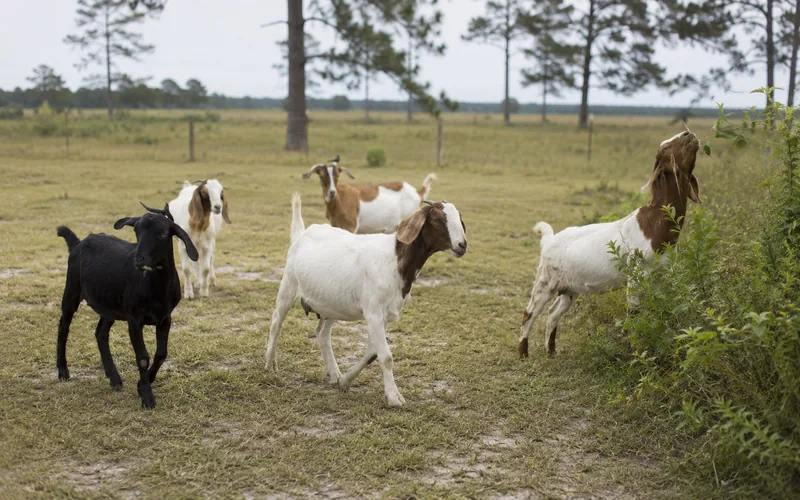
As forage, this turf sits at the low-quality end of that scale. So a goat can fill up on it and still not get enough protein.
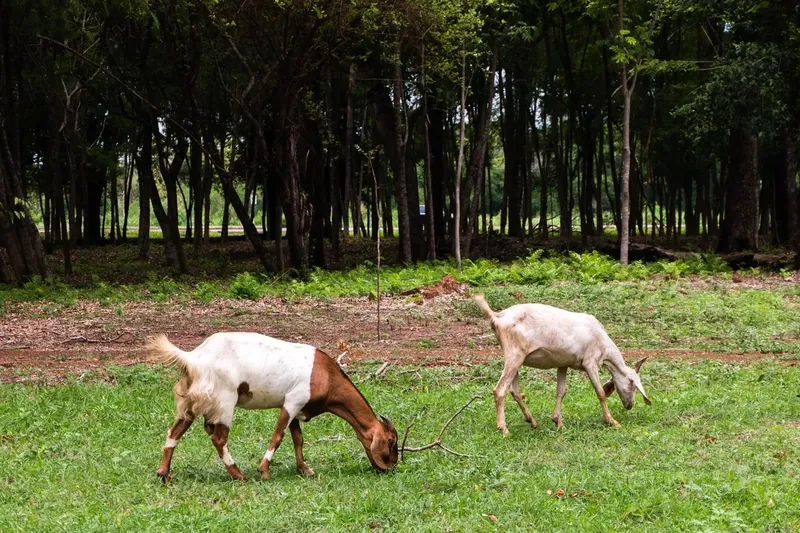
Feeding goats on a centipede grass pasture
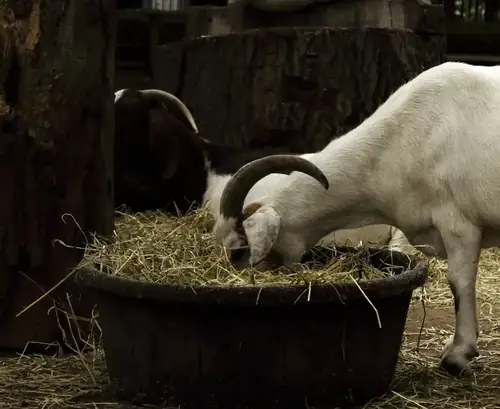
Treat it as filler rather than the main forage. Free-choice grass hay covers the shortfall.
That shortfall widens in winter, when the plant goes dormant and loses most of its feed value. Plan on feeding the herd more hay from the first frost until spring.
What this means for you:
Protein has to come from somewhere else. Alfalfa hay or clover seed broadcast into thin spots will both raise the protein on offer.
Minerals matter too. It grows on poor soils and carries little copper, so put out a free-choice loose mineral.
How to get rid of centipede grass in pasture
Mowing alone won’t clear centipede grass, because the stolons root wherever they touch soil.
The short version:
- Spray a selective herbicide with quinclorac. Product labels call for night temperatures above 65 degrees.
- Add a surfactant and plan on more than one pass. One application rarely finishes it.
- Reseed once it dies back. Broadcast bermudagrass, bahiagrass, or clover seed so bare ground doesn’t fill with weeds.
Glyphosate kills the plant completely, but it also kills every other grass in the pasture.
The bottom line
Centipede grass won’t hurt your goats, and spraying it out of a working pasture is rarely worth the cost. It just can’t feed a herd on its own.
Keep hay available, keep a loose mineral out, and add clover or alfalfa for protein. Then it becomes one part of a mixed pasture, not the whole diet.
Frequently Asked Questions
Sorghum, sudangrass, and johnsongrass can build up prussic acid after frost or drought stress. Endophyte-infected tall fescue causes lameness and poor growth. Centipede grass is not on that list and holds no known toxin for goats.
A selective herbicide containing quinclorac is the standard treatment, applied with a surfactant. Product labels call for night temperatures above 65 degrees, and more than one pass is usually needed. Glyphosate kills centipede grass completely but also kills every other grass it touches.
Internal parasites, especially the barber pole worm, kill more goats than anything else. Heavy worm loads cause anemia and death. Rotational grazing and FAMACHA eyelid scoring cut the risk more than any single dewormer.
Free-choice baking soda buffers rumen acid when a goat eats too much grain or rich forage. It helps prevent acidosis and bloat. Goats take it only when their rumen needs it, so offer it in a separate feeder.