| # | Product | Our Rating | ||
|---|---|---|---|---|
| 1 |  | Best OverallProzap Insectrin Livestock Dust | ★★★★★ | Check Price |
| 2 |  | Ultra Boss Permethrin Pour-On | ★★★★☆ | Check Price |
| 3 | 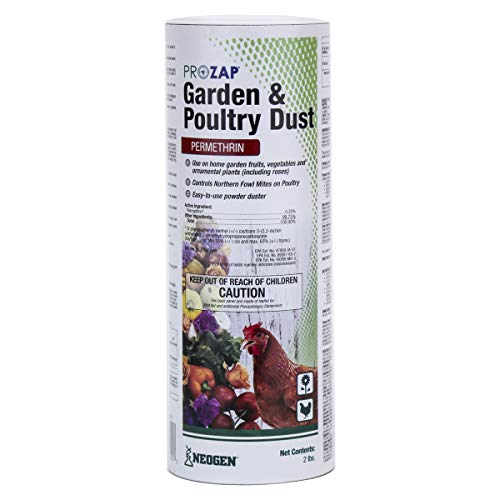 | Prozap Garden & Poultry Dust (2 lb) | ★★★★☆ | Check Price |
Few things make a goat more miserable than lice. An infested goat rubs, scratches, and bites at itself constantly, loses hair in patches, and goes into winter with a thin, ragged coat.
The good news is that lice are very treatable once you know what you are dealing with. The trick is matching the treatment to the type of louse, and knowing that one treatment is never enough.
In my own herd, lice almost always show up in late winter, when the goats are woolly and bunched together for warmth. Catching it early keeps a mild itch from becoming a bald, anemic goat.
How to Tell If Your Goat Has Lice
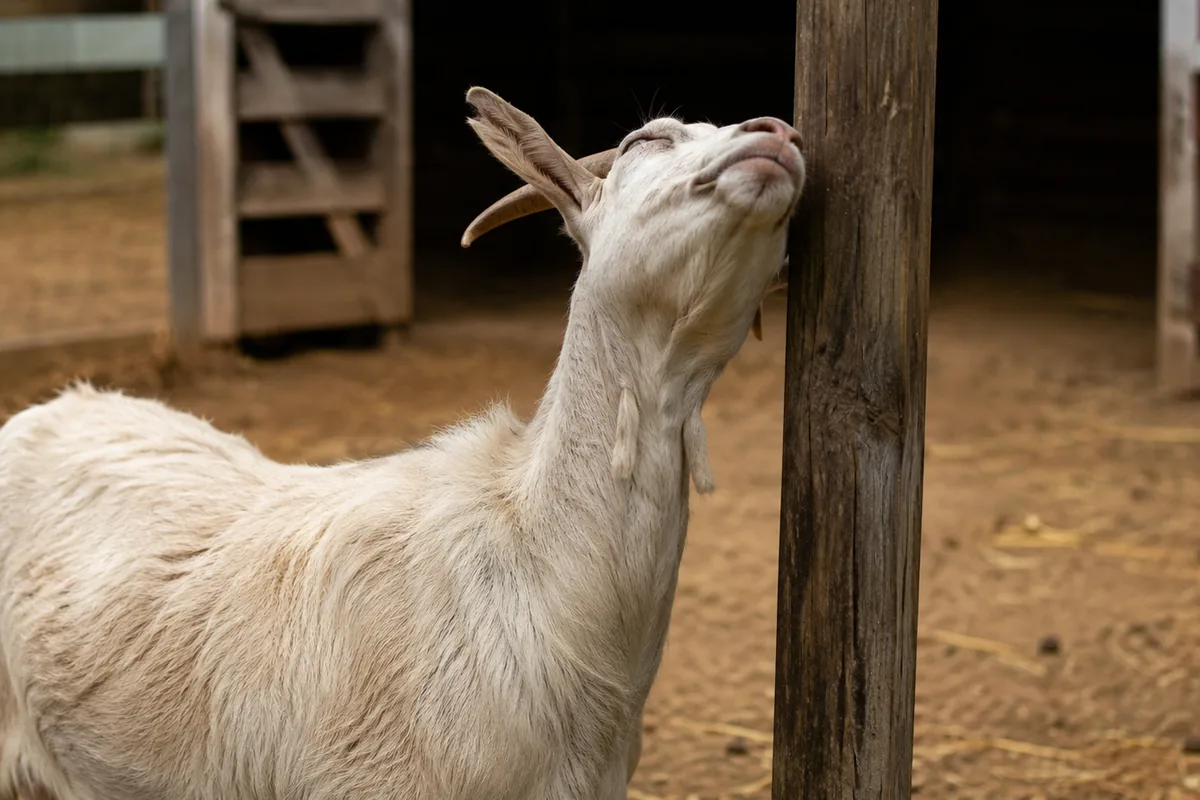
The first sign is usually behavior. An infested goat scratches, rubs against fences and feeders, and nibbles at its own sides far more than normal.
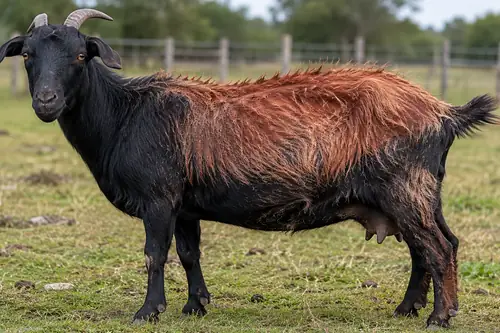
Look at the coat next. You will see a dull, rough appearance, patchy hair loss, and flaky or scabby skin where the goat has been rubbing.
To confirm it, part the hair down to the skin, especially behind the front legs and along the topline. Lice look like tiny specks of moving dirt, and you may see pale eggs, called nits, glued to individual hairs.
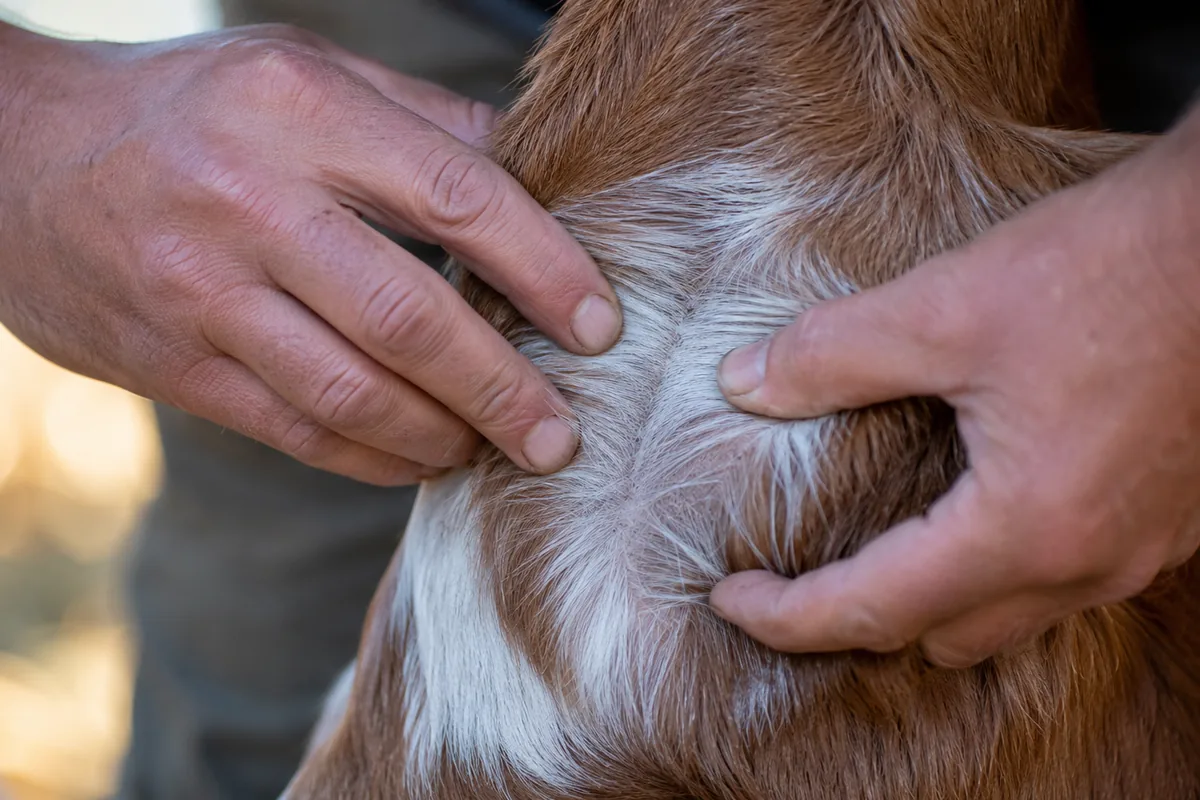
A bright light and reading glasses help, because the lice are small. If you watch a suspicious speck for a few seconds and it moves, you have your answer.
Do not confuse lice with plain dandruff. Flakes sit still and brush away easily, while lice are specks that move and nits cling stubbornly to the hair shaft.
Check most carefully in late fall and winter. Lice numbers peak in cold months, when coats are thick and goats crowd together for warmth.
A heavy infestation does more than itch. Watch for weight loss, a sharp drop in milk, and the pale eyelids of anemia, which signal a serious problem that needs prompt treatment.
Biting Lice vs Sucking Lice
This is the most important distinction, because it decides how you treat. Goats get two completely different kinds of lice, and a treatment that kills one may barely touch the other.
Biting lice (chewing lice) feed on skin, hair, and surface debris. Sucking lice pierce the skin and feed on blood, which makes them far more dangerous because a heavy infestation can cause life-threatening anemia.
| Feature | Biting (chewing) lice | Sucking lice |
|---|---|---|
| Feeds on | Skin, hair, and debris | Blood |
| Head shape | Wider, rounded | Narrow and pointed |
| Color | Grey to tan | Darker, often red-tinged with blood |
| Main danger | Itching and hair loss | Anemia, which can be fatal |
| Treatment | Topical (dust, spray, pour-on) | Systemic dewormer plus topical |
If a goat with lice also has pale eyelids or gums, suspect sucking lice and treat it as urgent. Check eyelid color the same way you would when watching for worm-related anemia.
Goat Lice vs Mites
Lice are not the only external parasite that makes a goat itch. Mites cause similar scratching, so it helps to tell them apart before you treat.
Lice are visible insects that crawl on the skin surface and glue their eggs to the hair. You can find them by parting the coat and watching for movement.
Mites are microscopic and usually burrow into the skin. They cause crusty, scaly, or thickened patches, often around the ears, face, legs, and udder.
Diagnosing mites usually takes a skin scraping from your vet, since you cannot see them with the naked eye. Lice, by contrast, you can spot yourself with a careful look.
The treatments overlap but are not identical. Mites almost always need a systemic product like ivermectin, often repeated, so if a topical lice treatment does not help, have your vet check your goat for mites.
How to Treat Goat Lice
Once you know the type, treatment is straightforward. Almost every goat lice product is used extra-label, so confirm the product and dose with your vet first.
For biting lice, use a topical treatment. A permethrin or pyrethrin dust, spray, or pour-on labeled for goats or sheep kills lice on contact.
Work the dust or spray down to the skin along the back, neck, and behind the legs. Topical products sit on the skin and coat, which is exactly where biting lice live.
For sucking lice, add a systemic treatment. A dewormer in the macrocyclic-lactone family, such as ivermectin or eprinomectin, kills sucking lice because they ingest it when they feed on blood.
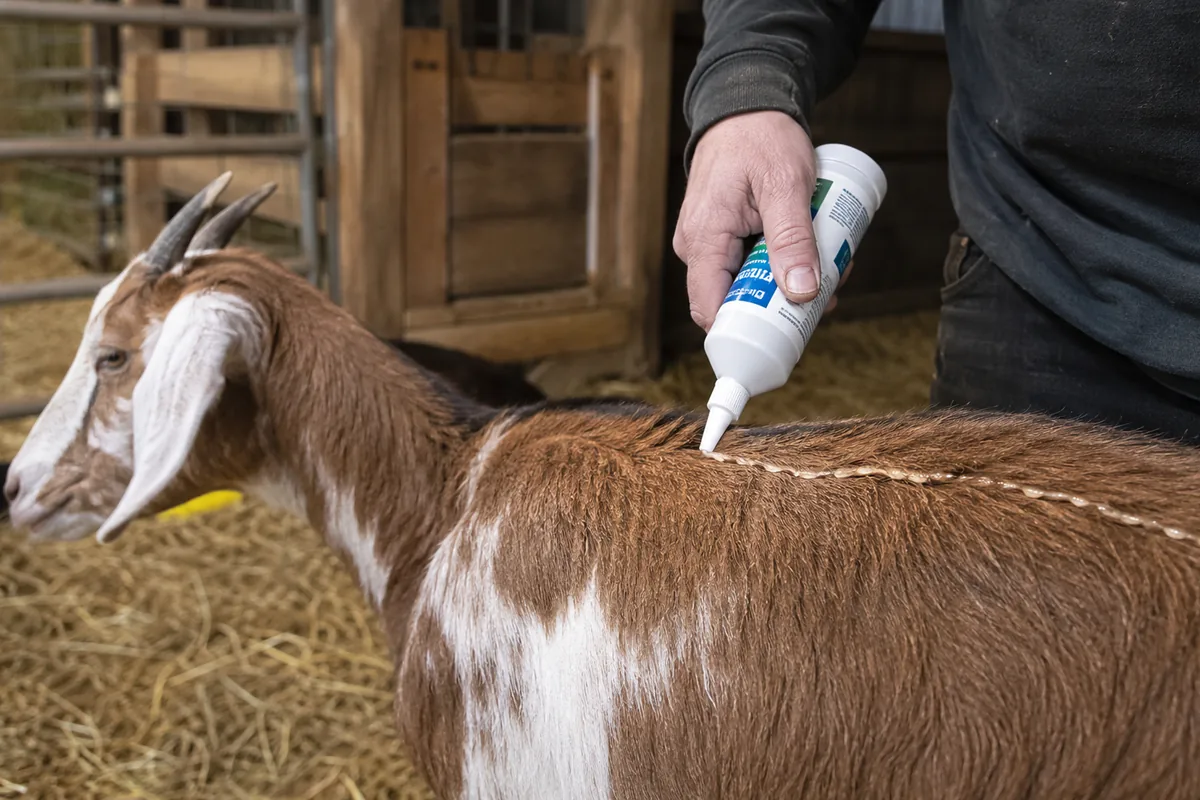
Get the ivermectin dose by weight from your vet or a dosing chart, since underdosing breeds resistance. A pour-on product can cover both louse types at once, which is why many owners reach for one.
Match the product form to the job. Dusts work into the coat easily, sprays cover a lot of skin fast, and pour-ons are the simplest to apply down the spine.
Take extra care with pregnant does and very young kids. Some products are not cleared for pregnancy or for young animals, so read the label and ask your vet before using a systemic dewormer on a bred doe.
Mind the withdrawal times if you milk your goats. Many lice products carry a milk withholding period, so confirm it with your vet before the milk goes back in the bucket.
Whatever you choose, treat every goat in the herd on the same day. Lice spread by direct contact, so treating one goat while its pen-mates stay infested just guarantees reinfection.
Why You Have to Treat Twice
This is the step most people skip, and it is why lice come back. Almost no lice treatment kills the eggs.
The adult lice die from the first treatment, but the nits glued to the hair survive. Those eggs hatch over the next 9 to 12 days into a fresh generation of lice.
The whole cycle from egg to egg-laying adult runs about three to four weeks. Treat only once and that second generation matures, so the infestation simply rebuilds.
So you must treat a second time, about 2 weeks after the first round. The second treatment kills the newly hatched lice before they are old enough to lay eggs of their own, which finally breaks the cycle.
Some lice can also go dormant and survive longer than you would expect, which is another reason the follow-up matters. A few survivors can hide in the coat for months, so check again before you assume an infestation is gone.
A nit comb and a good brushing between treatments help knock down the numbers. They will not clear an infestation alone, but they make the chemical treatment more effective.
Do Natural Lice Treatments Work?
Plenty of owners want a natural option, and the honest answer is mixed. Some methods help a little, but none reliably clear an infestation on their own.
Food-grade diatomaceous earth (DE) is the most popular. Dusted into the coat it can lower lice numbers, but it works slowly and only while it stays bone dry.
Vegetable or mineral oil smothers some surface lice, and a thorough brushing removes adults and loosens nits. Both are useful supporting steps between treatments.
Essential oils like neem get a lot of attention, but the evidence behind them is thin. Treat them as a maybe, not a plan.
For a real infestation, and especially for sucking lice that cause anemia, a proven topical or systemic product is the dependable choice. Use natural methods to support treatment, not to replace it.
When to Call a Vet
Most lice cases you can handle yourself. A few situations call for professional help.
Call your vet if a goat is weak, has very pale eyelids, or seems to be going downhill. Heavy sucking-lice anemia can be fatal and may need more than a topical product.
Call also if the itching and hair loss persist after two correct treatments. That usually points to mites or another skin problem rather than lice.
Your vet can confirm the parasite with a skin scraping and set the right product and dose. That matters because most goat lice treatments are extra-label and easy to get wrong.
Can Humans Catch Goat Lice?
No, and this is a common worry worth settling. Goat lice are host-specific, meaning they are adapted to live and breed only on goats.
A louse may crawl onto your hand or sleeve while you treat a goat, but it cannot survive or reproduce on a human. For the full explanation, see whether goat lice can live on humans.
The same host-specificity works in reverse. Your goats cannot catch lice from you, your dog, or your chickens, only from other goats.
How to Prevent Goat Lice
Prevention is mostly about keeping lice out and keeping goats strong. A healthy, well-fed goat resists lice far better than a stressed or malnourished one.
Quarantine every new goat for at least 30 days and treat it for lice before it joins the herd. New animals are the most common way lice arrive on a farm.
Avoid overcrowding, especially in winter housing where goats huddle and coats are thick. Lice spread fastest when animals are packed together.
If your herd has a winter lice history, apply a preventive treatment in late fall. Treating before the goats grow heavy coats stops a small problem from exploding under all that hair.
Do not share grooming tools, blankets, or clippers between herds without cleaning them first. Equipment can ferry lice from an infested goat to a clean one.
Keep nutrition strong year-round with good forage and free-choice minerals. A goat in good condition rarely carries the heavy lice loads that a thin, run-down goat does.
Sources and Further Reading
Identification and treatment cross-checked against established veterinary and extension references:
- The Merck Veterinary Manual, lice in sheep and goats
- Pacific Northwest Pest Management Handbooks, sheep and goat lice
- Countryside / Goat Journal, goat lice identification and treatment
Most lice products are extra-label in goats, so confirm the product, dose, and withdrawal time with your veterinarian before treating.
Frequently Asked Questions
Identify the type first. Biting lice are killed with a topical permethrin or pyrethrin dust, spray, or pour-on, while sucking lice also need a systemic dewormer like ivermectin because they feed on blood. Treat the whole herd on the same day, then re-treat 2 weeks later to kill lice that hatch from eggs. Most goat lice products are used extra-label, so confirm the choice and dose with your vet.
Lice are visible insects that move on the skin surface and lay eggs (nits) glued to the hair, while mites are microscopic and usually burrow into the skin, causing crusty, scaly patches diagnosed by a skin scraping. Both cause itching, but mites often need a systemic treatment like ivermectin and a vet diagnosis. If topical lice treatment does not help, ask your vet to check for mites.
No. Goat lice are host-specific, meaning they are adapted to live only on goats and cannot establish on humans or other species. A goat louse might crawl onto you while you handle an infested goat, but it cannot survive or breed there.
Treat at the first sign of an infestation, then again 2 weeks later to catch newly hatched lice, since most treatments do not kill the eggs. In herds with a winter lice history, many owners also apply a preventive treatment in late fall before the goats grow heavy coats.
For biting lice, a permethrin or pyrethrin dust or pour-on labeled for goats or sheep works well. For sucking lice, a systemic ivermectin or eprinomectin product is more reliable because the lice ingest it with blood. A pour-on in the macrocyclic-lactone family can cover both, but because most are extra-label in goats, confirm the product and dose with your vet.