| # | Product | Our Rating | ||
|---|---|---|---|---|
| 1 |  | Best OverallREDMOND Goat Mineral Supplement (5 lb) | ★★★★★ | Check Price |
| 2 |  | Wholesome Harvest 16% Goat Feed (10 lb) | ★★★★☆ | Check Price |
| 3 |  | Manna Pro Goat Treats | ★★★★☆ | Check Price |
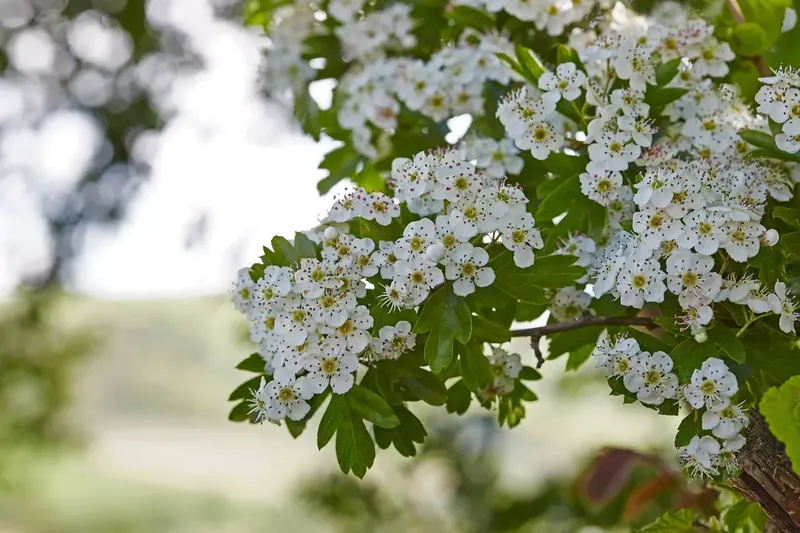
Hawthorn is a thorny tree or shrub in the rose family that grows along pasture edges and old hedgerows. A mature hedge feeds a small herd across most of the grazing year.
Can goats eat hawthorn?
Yes. Goats eat hawthorn safely, and most seek it out.
Nothing in the leaves, fruit, bark, or wood carries toxicity for ruminants. Cornell University maintains the standard database of plants poisonous to livestock, and hawthorn never appears on the goat list.
The ASPCA classes hawthorn as non-toxic to dogs and horses.
Are hawthorn berries safe for goats?
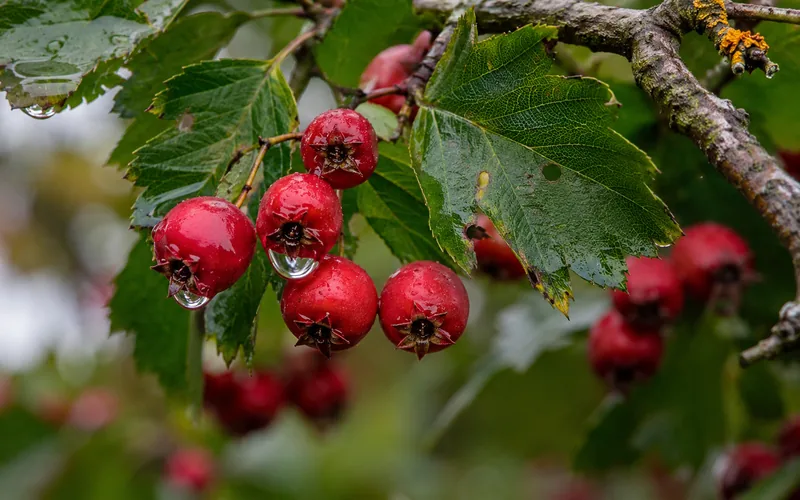
Hawthorn berries are safe, and goats strip them first. Inside each small red haw sit hard seeds holding amygdalin, a cyanogenic glycoside.
Here’s what that means: the seed has to be crushed to release cyanide. Goats swallow haws whole.
That hard coat passes through the digestive system unbroken.
A therapeutic review of Crataegus monogyna from the National Institutes of Health records amygdalin in the seed.
What about the thorns?
Spines run half an inch to two inches. They matter less than they look.
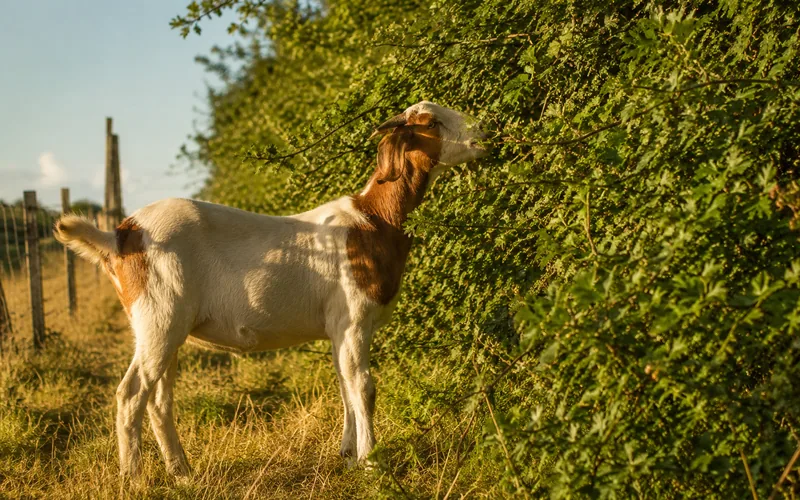
Here’s why: the epithelium lining a goat’s mouth is far thicker than a human’s. Its upper lip is prehensile and tongue rough, so leaves pull in while thorns deflect out.
Injuries come from heaped cut branches, so spread cuttings thin like thorny blackberry canes.
Tannins, the rumen, and why goats cope well
Leaves and bark both contain tannins, which bind protein and cut absorption. A goat is a ruminant, and rumen microbes in its digestive system break those compounds down.
The MSD Veterinary Manual notes that goats tolerate plant secondary compounds better than sheep or cattle. Moderate tannin may suppress internal nematodes.
But there’s a catch: tolerance is built, so move a goat onto heavy browse across one to two weeks.
What hawthorn adds to a goat’s diet
Hawthorn leaves give fiber, protein, and polyphenols, with spring leaves lowest in tannin. White flowers in May are safe too.
Research through the National Institutes of Health identifies over 300 compounds in Crataegus, mostly flavonoids and procyanidins. The most abundant are hyperoside and chlorogenic acid.
Haws run high in vitamin C, which is why hawthorn features in herbal medicine. It also runs high in phosphorus and low in calcium.
That balance raises urinary calculi risk in bucks and wethers, so pair it with alfalfa or grass hay.
Which hawthorn species are you looking at?
The genus Crataegus holds 200 to 300 species in the Rosaceae family. All are safe.
| Species | Common name |
|---|---|
| Crataegus monogyna | Common hawthorn |
| Crataegus crus-galli | Cockspur hawthorn |
| Crataegus phaenopyrum | Washington hawthorn |
How hawthorn compares to other goat browse
Hawthorn sits mid-range for tannin among common goat browse.
| Browse plant | Tannin | Notes for goat owners |
|---|---|---|
| Hawthorn | Moderate | Renewable, every part safe |
| Willow | Low | Most palatable, contains salicin |
| Blackberry | Moderate | Thorny, much like hawthorn |
| Oak | Very high | Heavy acorn intake harms kidneys |
| Apple, crabapple | Low | Same family, whole fruit is a choke risk |
| Pine | Moderate | Evergreen winter standby |
How much hawthorn can goats eat?
No gram-per-day figure exists, so keep browse under a quarter of daily dry matter intake. An adult goat eats three to four percent of its body weight daily.
The short version: a standing hedge needs no measuring, but cut piles do.
Warning signs to watch for
Here’s what to watch for: loose stools or mild diarrhea come first, pointing to tannin load not poisoning.
Drooling or reluctance to chew suggests a thorn injury. Check the mouth in good light, and call a veterinarian if it lasts past 48 hours.
Rhododendron, yew, and cherry laurel harm goats in small amounts, while hawthorn has no toxic principle. Fence off those truly toxic shrubs, and let the hawthorn hedge keep feeding the herd.
Frequently Asked Questions
No. The flesh is safe and goats strip it readily. The seeds hold amygdalin, which can release cyanide, but goats swallow haws whole and the hard seed coat passes through the digestive system intact.
Yes. Hawthorn leaves give fiber, protein, and polyphenols. Young spring leaves carry the most protein and the least tannin, while mature summer leaves turn more bitter.
Goats handle thorns better than most livestock. The epithelium lining their mouth is far thicker than a human's, and their upper lip is mobile enough to sort leaves from spines.
Hawthorn seeds contain amygdalin, a cyanogenic glycoside. The seed must be crushed to release it, and the amount needed to harm a goat is far more than one would ever eat.
There is no fixed serving size. Goats self-regulate when hay is available, so free access to a hedge is fine. Keep browse under about a quarter of daily intake.
Kids can eat hawthorn once their rumen works on solid feed, usually around six to eight weeks. Start with leaves and soft shoots, then build up over a week or two.
Yes. The berries carry vitamin C and antioxidant flavonoids, the leaves add fiber and protein, and moderate tannin may help suppress internal parasites.
Yes. The ASPCA lists hawthorn as non-toxic to horses, and cattle browse it without trouble. Neither has a goat's mobile upper lip, so they take less of the plant.