| # | Product | Our Rating | ||
|---|---|---|---|---|
| 1 |  | Best OverallREDMOND Goat Mineral Supplement (5 lb) | ★★★★★ | Check Price |
| 2 |  | Wholesome Harvest 16% Goat Feed (10 lb) | ★★★★☆ | Check Price |
| 3 |  | Manna Pro Goat Treats | ★★★★☆ | Check Price |
A garden bolts, a fridge drawer fills with stems nobody trimmed for dinner, and the pen full of ever-hungry mouths starts to look like the obvious solution. Broccoli seems like the perfect thing to hand over, and for the most part it is.
The catch is that broccoli sits in the same plant family as some feed crops known to cause thyroid trouble in livestock. That doesn’t make it dangerous, but it does mean the amount matters far more than it does with a carrot or an apple.
Can goats eat broccoli?
Goats can eat broccoli, and most will crunch through a few florets or a leafy trimming without any fuss. It carries no acute toxin, so a modest treat-sized serving lands in the safe zone rather than the emergency zone.
That easy answer fits how a goat is built to eat. A goat is a ruminant with a four-chambered stomach, and its rumen microbes ferment fibrous plant material long before it reaches the true stomach.
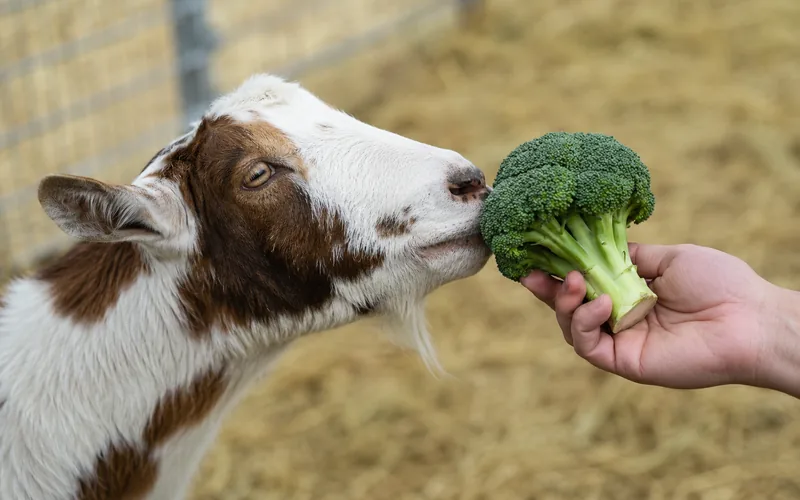
Broccoli is easy fuel for that system in small doses. The complication only shows up in volume, because this particular vegetable brings chemistry that a goat’s thyroid and rumen would rather not deal with in bulk.
What broccoli brings to a goat’s diet
Broccoli is a genuinely nutrient-dense vegetable, which is why it earns a spot in the treat rotation at all. A single serving delivers a concentrated hit of vitamins, minerals, and fiber for very few calories.
Vitamin C is the real standout. Per 100 grams of raw florets, broccoli supplies about 99 percent of the human daily value for vitamin C and 85 percent for vitamin K, according to USDA nutrient data compiled on Wikipedia, along with moderate amounts of several B vitamins and potassium.
Those nutrients pull real weight in a goat’s body. Vitamin C supports the immune system, vitamin K helps blood clot properly, and vitamin A precursors back vision and healthy skin.
Goats do synthesize their own vitamin C internally, unlike people, so broccoli is not a make-or-break source of it. What the vegetable really adds is variety and a bundle of micronutrients that complement forage, which is the honest reason to offer it rather than any single deficiency it fixes.
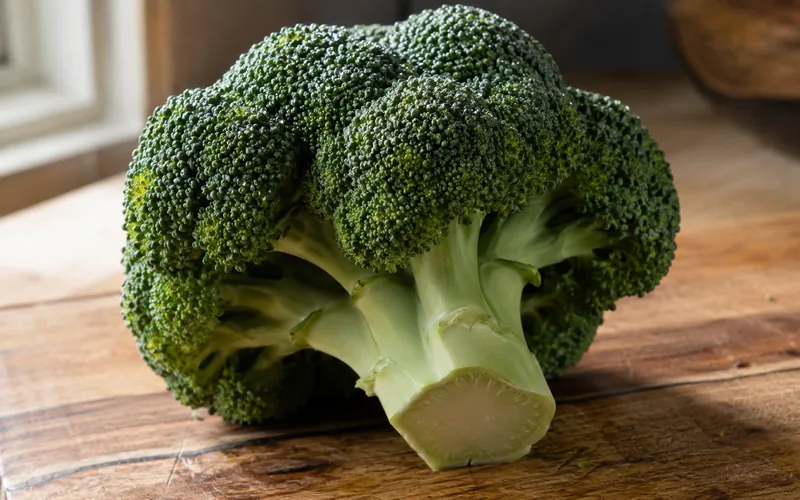
The fiber is worth a mention too. Broccoli adds gentle bulk that suits a rumen already built around forage, so as an occasional addition to a hay-based diet it complements rather than disrupts.
Here is how the key components line up.
| Component | What it does for a goat |
|---|---|
| Vitamin C | Backs immune defense and tissue repair |
| Vitamin K | Supports normal blood clotting |
| Vitamin A precursors | Aid vision, skin, and coat health |
| Potassium | Helps nerve signaling and muscle function |
| Dietary fiber | Adds bulk that suits the rumen |
| Glucosinolates | The compounds that cap the safe portion |
The real risks: glucosinolates, sulfur, and bloat
In short, broccoli’s risks are threefold: goitrogenic glucosinolates, excess sulfur, and rumen gas, and each only shows up when portions get large.
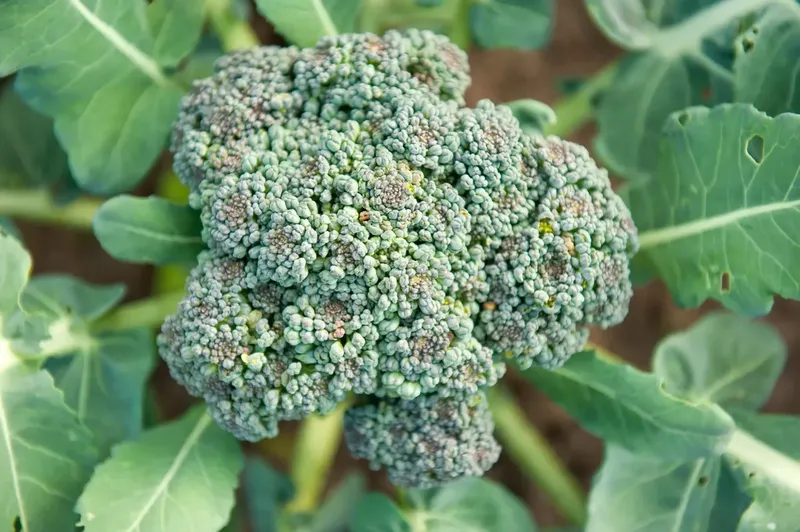
Broccoli belongs to the Brassica genus, the crucifer family that also includes cabbage, cauliflower, kale, and Brussels sprouts. Every plant in that group shares a defining trait that makes portion control non-negotiable.
That trait is a class of sulfur-containing compounds called glucosinolates. They give brassicas their sharp, slightly bitter bite, and in large amounts they interfere with how a goat’s thyroid uses iodine.
How that plays out is well studied. Glucosinolates get metabolized into thiocyanate and goitrin compounds that suppress the thyroid’s iodine uptake, and research on naturally occurring food toxins published in the NCBI PMC archive identifies broccoli, cabbage, and cauliflower among the goitrogenic brassicas.
Fed in excess, that thyroid interference can lead to goitre, an enlargement of the thyroid gland. The Merck Veterinary Manual notes that goiter in goats most often traces to iodine deficiency, and that goitrogenic substances work by decreasing iodine uptake or blocking its incorporation into thyroid hormones.
The second concern is sulfur. Broccoli is naturally sulfur-rich, and the same Merck Veterinary Manual guidance warns that diets high in sulfur can trigger sulfur toxicosis, a cause of the neurological disease polioencephalomalacia in goats.
Neither problem comes from a handful of florets. Both come from treating broccoli as a staple, which is exactly why the rest of the diet should still be forage.
The more immediate, everyday risk is simpler: gas. Brassicas ferment quickly in the rumen and can produce enough gas to cause bloat, a painful and occasionally serious swelling of the left flank.
Can goats eat broccoli stems?
Yes, broccoli stems are safe for goats; just slice the tough stalk into small pieces so it is easy to chew.
Goats can eat broccoli stems, and many actually prefer the crunch of the stalk to the softer florets. The thick stem is perfectly safe and carries the same fiber and nutrients as the rest of the plant.
The only adjustment is size. A whole stalk is tough and can be awkward for a smaller goat or a kid to manage, so slicing it into coin-sized rounds or short sticks makes it easier to chew and lowers any choking risk.
Rinse the stems first to clear off any pesticide residue, since that coating sits heaviest on the plant’s outer surfaces. A quick wash under the tap is all it takes.
Can goats eat broccoli leaves?
The short answer is yes: broccoli leaves are safe and nutritious, and many goats treat them as the tastiest part of the plant.
Broccoli leaves are not only safe but arguably the best part of the plant to offer. Those large outer leaves are a true leaf vegetable, and they closely resemble the kind of leafy greens goats naturally browse.
If you grow your own broccoli, the trimmed leaves that never make it to the kitchen are ideal goat food. Handing them over turns garden waste into a useful snack and spares the crowns you actually want to eat.
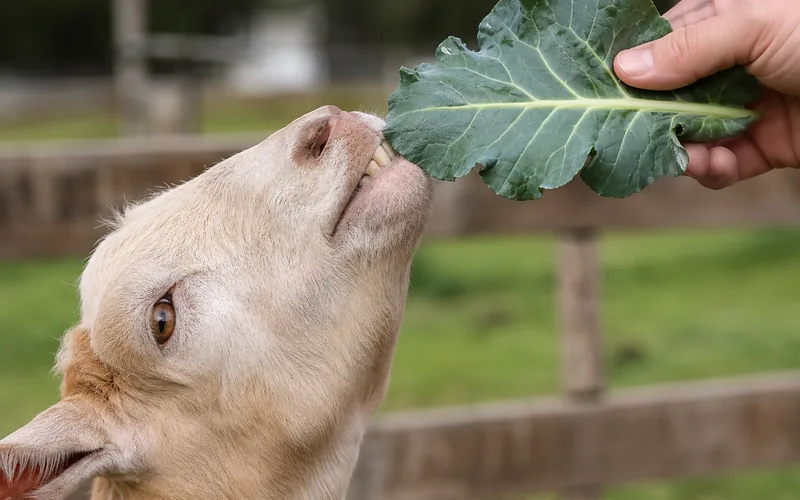
There’s one catch, though. Leaves and other green plant tissue tend to carry a higher glucosinolate load than the florets, so the moderation rule still applies even though leaves feel like the most “natural” pick.
Can goats eat raw or cooked broccoli?
Both work: raw broccoli keeps more vitamins, while plain cooked broccoli is easier to digest and lower in goitrogens.
Goats can eat broccoli either raw or cooked, and raw is usually the simpler and more practical option. Raw florets, stems, and leaves keep their full nutrient content and need no preparation beyond a rinse and a rough chop.
Cooked broccoli is fine too, with one firm condition: nothing added. Butter, salt, cheese, garlic, and oil are all off the table, because those extras upset a rumen that has no business processing them.
Here’s a wrinkle most feeding guides skip. High heat breaks down goitrogenic glucosinolates, and Wikipedia’s broccoli entry notes that cooking reduces glucosinolate levels while methods like steaming preserve more of them, so plain boiled broccoli is actually gentler on the thyroid than raw.
That said, most owners feed raw simply because it is faster and keeps the vitamin content intact. Both are acceptable as long as the portion stays small.
Can goats eat broccoli seeds and sprouts?
Here is what matters: skip the seeds and sprouts, since they pack far more glucosinolates than mature florets and carry the highest thyroid risk.
If there’s one form of broccoli worth holding back on, it’s the seeds and sprouts, even though they rarely come up in feeding guides. The issue is concentration, not toxicity.
Sprouted broccoli and the seeds carry a dramatically higher glucosinolate density than the mature vegetable, which flips the same goitrogenic compounds from a minor caution into a real one. Ounce for ounce, sprouts deliver a far bigger thyroid load than florets.
If a goat nibbles a few sprouts from the garden, there is no cause for panic. Just avoid offering seed trays or handfuls of sprouts as a deliberate treat, and keep any packaged broccoli seed well out of reach.
How to feed broccoli to goats safely
Serving broccoli well takes almost no effort, but a few habits keep it firmly on the safe side. Treat these as a quick routine every time broccoli goes in the pen.
- Rinse the florets, stems, and leaves under running water to clear pesticide residue from the outer surfaces.
- Chop thick stems into coin-sized rounds and break large florets apart so smaller goats and kids can chew without choking.
- Weigh the portion by eye against the herd: a loose handful per adult goat, a few small pieces for a miniature breed or a kid.
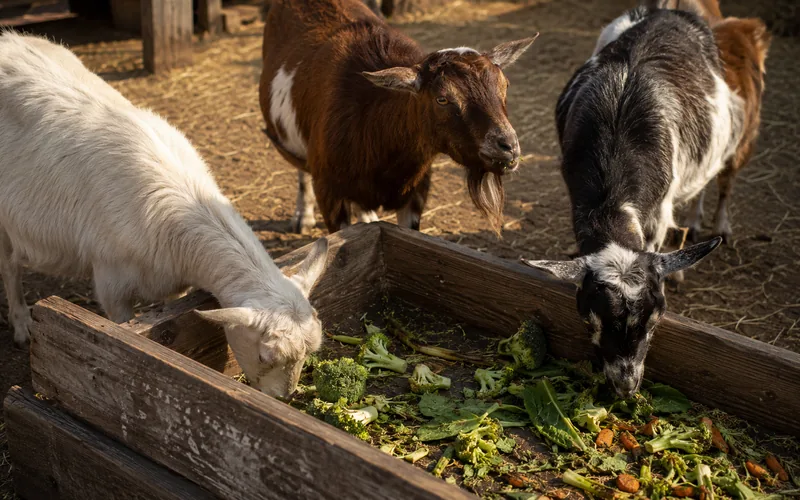
- Feed broccoli into a clean trough or by hand rather than dumping it on bedding, so you can see exactly how much each goat gets.
- Skip any broccoli that is moldy, slimy, or cooked with salt, butter, oil, or seasoning of any kind.
- Watch the herd for the next few hours the first few times, and note how their bellies and manure respond before making it a habit.
That short routine turns random scraps into a controlled treat. It also helps you catch the one goat that overindulges before gas becomes a real problem.
How much broccoli can goats eat?
Put simply, offer about a loose handful per adult goat and keep all treats under 10 percent of the daily diet.
Broccoli, like every treat, should stay under about 10 percent of a goat’s daily diet. The other 90 percent needs to come from hay, pasture, browse, and any mineral or grain the herd requires.
In practical terms, that means a loose handful of florets, leaves, or chopped stem per adult goat at a sitting. A miniature breed such as a Nigerian Dwarf should get noticeably less, closer to a few small pieces.
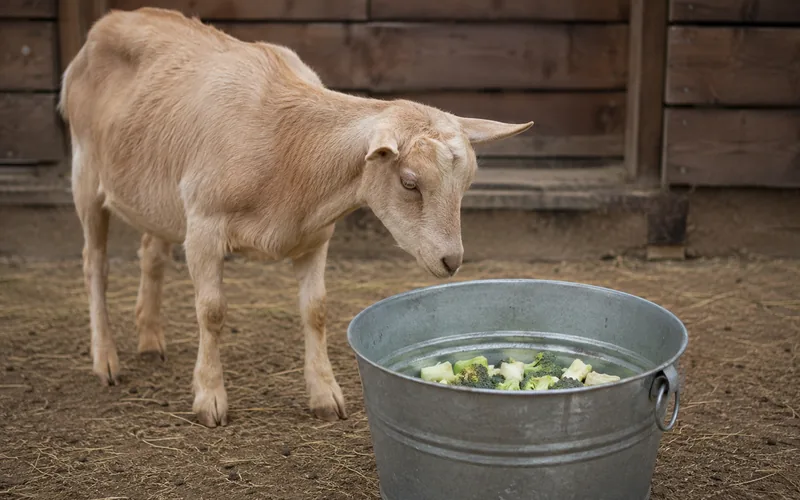
Where owners get into trouble is scale. Emptying a whole head of broccoli into one goat, or dumping a garden’s worth of bolted plants into the pen at once, is what turns a healthy snack into gas, thyroid strain, or a bloat scare.
Introduce broccoli gradually the first time, especially if the goat has never had brassicas. Offer a small amount, wait a day, and watch the manure and belly before making it a regular part of the rotation.
Can goats eat broccoli every day?
Not ideally: two or three servings a week is safer than daily broccoli, which never lets the thyroid clear its glucosinolate load.
Daily broccoli isn’t the best idea, even in small servings. A little each day makes it easy to blow past the 10 percent treat ceiling and pile on glucosinolate exposure the thyroid never gets a break from.
Spacing broccoli to two or three feedings a week keeps it firmly in treat territory. That rhythm gives the rumen and thyroid room to reset between servings while still letting the goat enjoy the variety.
If you want to offer something green more often, rotate. Pair broccoli days with other safe vegetables so no single food, and no single plant family, dominates the extras.
Feeding broccoli in winter
Come winter, broccoli often becomes a staple in the treat bucket, since it stores well and stays available when fresh browse is scarce. Goats generally welcome the green change of pace during the cold months.
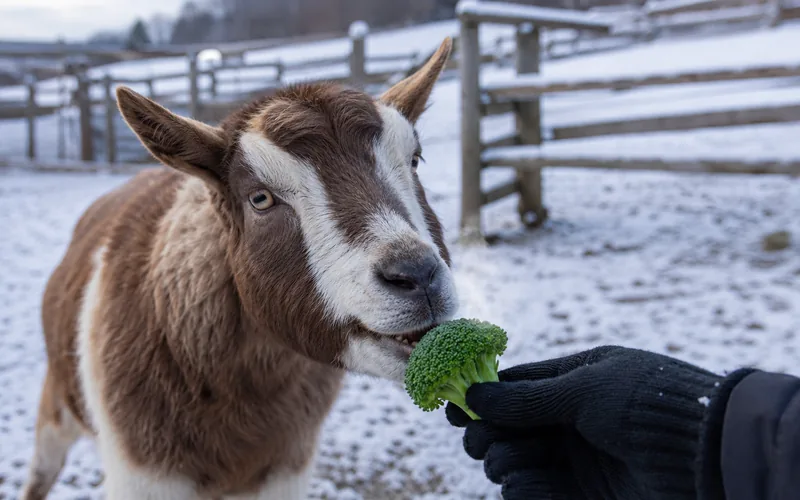
The moderation rule does not loosen in winter, though. If anything, a herd eating mostly dry hay benefits from having its rumen’s forage balance protected, so broccoli stays a supplement rather than a bulk feed.
Serve winter broccoli at a reasonable temperature and skip anything frozen solid or freezer-burned. Thaw frozen florets first so they are easy to chew.
Extra caution for pregnant and nursing does
Pregnant and lactating does deserve a lighter hand with broccoli than the rest of the herd. Their iodine and mineral needs run higher, and that’s what nudges the goitrogenic side of brassicas from a footnote into a genuine consideration.
A few florets now and then will not derail a healthy pregnancy. The point is to avoid making broccoli or any brassica a frequent, large part of a breeding doe’s diet, since sustained goitrogen exposure stresses a thyroid already working overtime.
When in doubt, lean on hay, browse, and a quality loose mineral with adequate iodine, and treat broccoli as an occasional extra rather than a daily green.
Signs your goat has had too much
Most broccoli mishaps show up as digestive upset within a few hours of a big serving. A swollen or tight left flank, restlessness, pawing at the belly, or a goat that keeps looking at its side are the classic early signs of gas or bloat.
Loose manure, reduced appetite, or unusual lethargy point the same direction. If bloat looks to be building, get the goat moving, offer free-choice baking soda, and call a vet if the swelling does not ease.
Thyroid problems from goitrogens play out over a much longer timeline, not in an afternoon. Persistent brassica overfeeding is what raises that risk, which is one more reason the portion limit is the whole ballgame.
How broccoli compares to other brassicas
Broccoli is far from the only crucifer that ends up in a goat pen, and the safe-in-moderation logic carries across the whole family. The same glucosinolate math that governs broccoli also governs its relatives.
Cabbage is heavier and denser, so it ferments hard and tends to cause more gas per bite than broccoli does. Cauliflower sits closest to broccoli in both structure and risk, right down to the edible stalk and leaves.
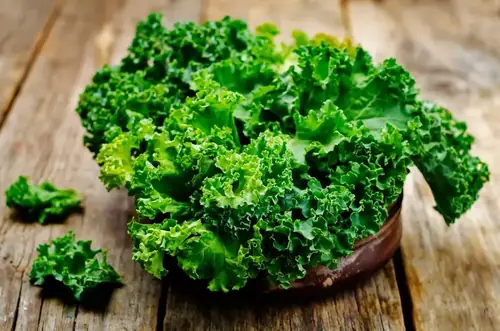
Leafy brassicas behave a little differently. Feeding kale to a goat delivers concentrated vitamins much like broccoli leaves, while Brussels sprouts pack the strongest glucosinolate punch of the bunch and warrant the smallest servings.
Even crunchy radishes belong to this family, and goats can eat the roots and leafy tops alike.
Whichever brassica you reach for, the 10 percent rule keeps every one of them a treat instead of a problem.
Final thoughts
Broccoli is a safe and genuinely nutritious treat for goats, provided it stays a treat. The florets, stems, and leaves are all edible, the leaves and florets carry real vitamin value, and most goats enjoy the crunch.
The whole game is restraint. Keep servings to a loose handful a few times a week, hold back on seeds and sprouts, wash off pesticides, and go easy with breeding does, and broccoli slots neatly into the rotation without ever putting a thyroid or a rumen under strain.
Frequently Asked Questions
Goats should never eat onions, garlic, or leeks, which damage red blood cells, and they must avoid potato and tomato leaves, rhubarb leaves, and anything in the nightshade family because of toxic solanine. Avocado is off the table entirely thanks to persin. Broccoli is not on that banned list, but as a brassica it belongs to the feed-in-moderation group rather than the eat-freely group.
Most goats gravitate toward sweet, crunchy vegetables like carrots, squash, celery, pumpkin, and lettuce, with bell peppers often topping the list. Broccoli tends to be a middle-of-the-road treat, so some goats eat it eagerly while pickier animals leave the florets and go for the leaves instead.
Internal parasites, especially the barber pole worm, are widely regarded as the leading cause of death in goats, followed by digestive emergencies such as bloat and enterotoxemia. Broccoli does not cause parasites, but overfeeding any gassy brassica can trigger the kind of rumen upset that leads to bloat, which is why portion control matters.
Goats can safely eat many kitchen and garden scraps, including carrot tops, squash rinds, pea pods, cucumber ends, and the trimmed outer leaves of broccoli and cabbage. Keep any single scrap to no more than about 10 percent of the daily diet, wash off pesticide residue, and skip anything moldy, salted, or cooked with seasoning.