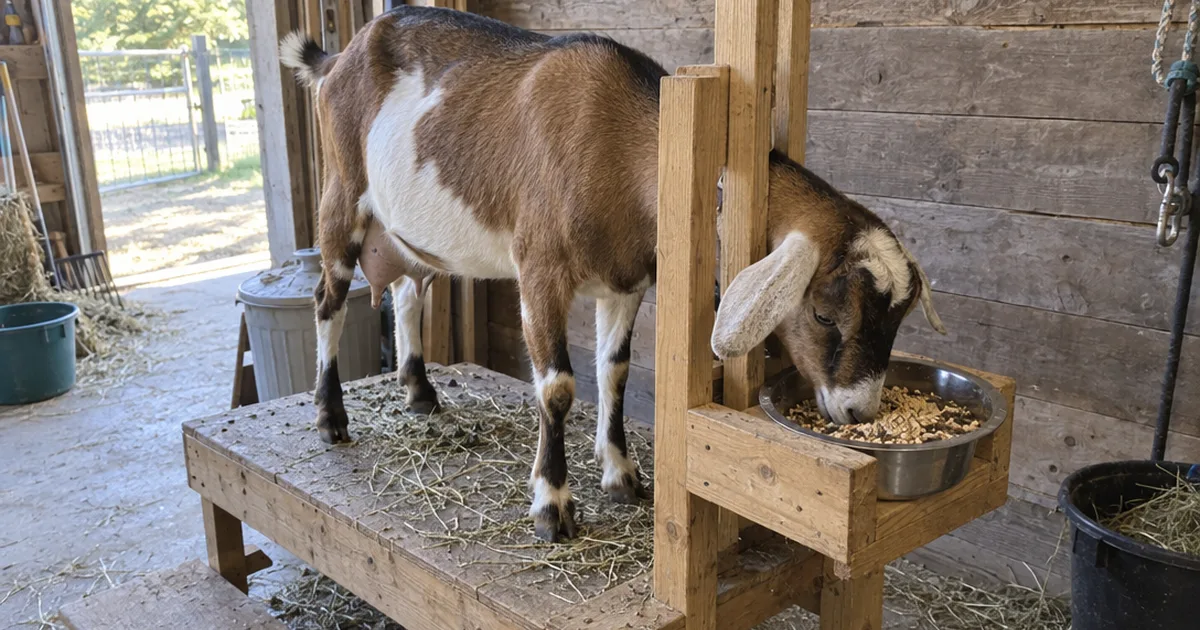

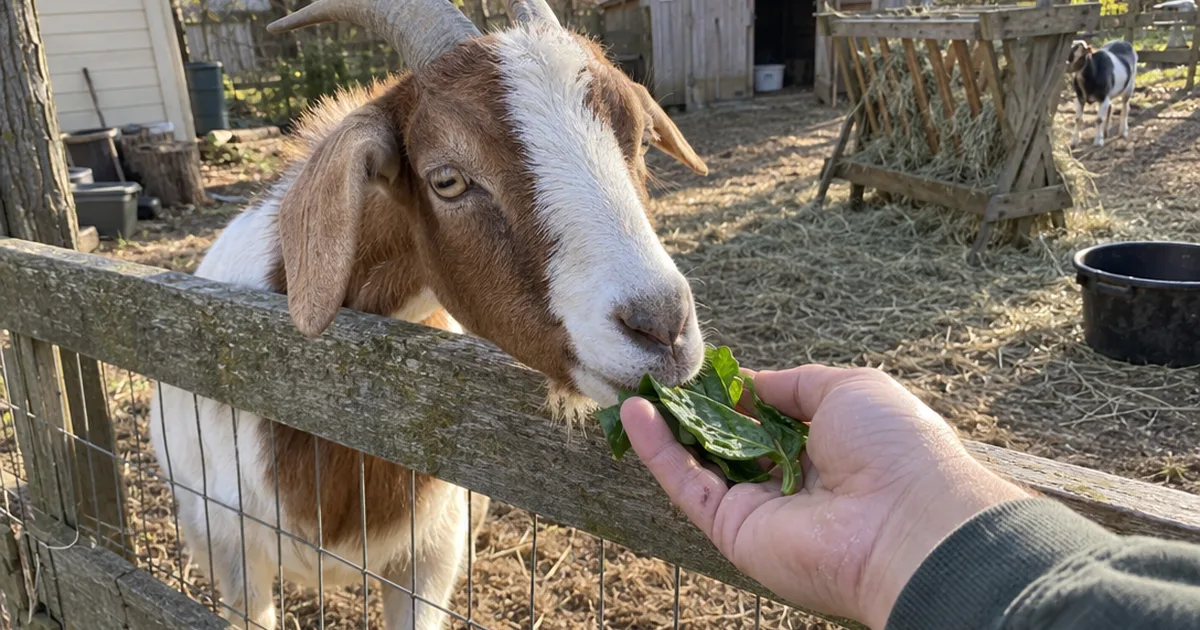
Spinach can be more than 1% oxalic acid by weight. USDA tests of 310 spinach varieties found 0.65% to 1.3% by fresh weight, as the Wikipedia entry on oxalic acid summarizes.
Oxalic acid binds calcium in a salt the body can’t use, so feeding spinach to goats is about how much. A few leaves won’t hurt a healthy adult, but a big dose or daily habit can.
Here’s the safe portion, the goats that should skip it and the greens that beat it. One swap makes a big difference, since spinach has about 48 times the oxalic acid of kale.
Is Spinach Safe for Goats?
Spinach is safe for goats as an occasional treat, and the SPCA Kids Education goat guide lists it among kitchen vegetables to give only occasionally and in small quantities.
It isn’t on that guide’s list of poisonous plants, either. So a few leaves tossed over the fence won’t hurt a healthy adult goat.
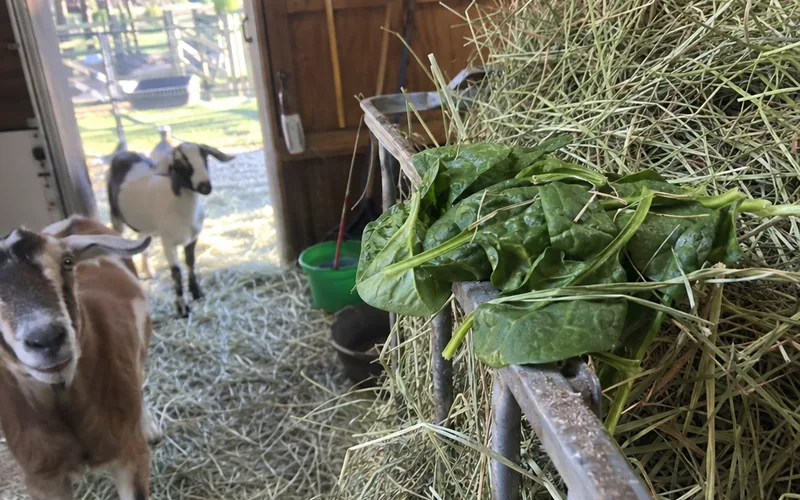
Spinach is just one of many vegetables for goats, and it sits in the “small amounts” group for one reason: what its leaves carry in bulk.
That reason is oxalic acid. Think of spinach as a garnish on the hay, never a meal.
Why Too Much Spinach Is a Problem
Too much spinach is a problem because its oxalic acid binds calcium into calcium oxalate, a solid salt the body can’t use.
The Wikipedia oxalic acid entry traces the acid’s toxicity to kidney failure caused by that solid calcium oxalate.
A few leaves won’t get close. But two feeding habits push a goat the wrong way.
The first is one big dose, like a goat loose in a bolting spinach bed. The second is a little spinach every single day, so the oxalic acid never gets a break.
Both habits also crowd out what a goat’s stomach is built for.
The SPCA guide describes goats as ruminants with four stomachs that need lots of bulky, high-fiber food, starting with the rumen, the first chamber.
Wet, leafy spinach is the opposite of that bulk. In other words, the safest spinach is the spinach that never replaces hay.
How Much Spinach Can a Goat Eat?
A full-size adult goat can have a small handful of spinach leaves as an occasional treat, not a daily one, and a miniature breed even less.
No study sets a goat-specific spinach limit, so treat that handful as a cautious ceiling.
Why so cautious? Because the rest of the diet is already spoken for.
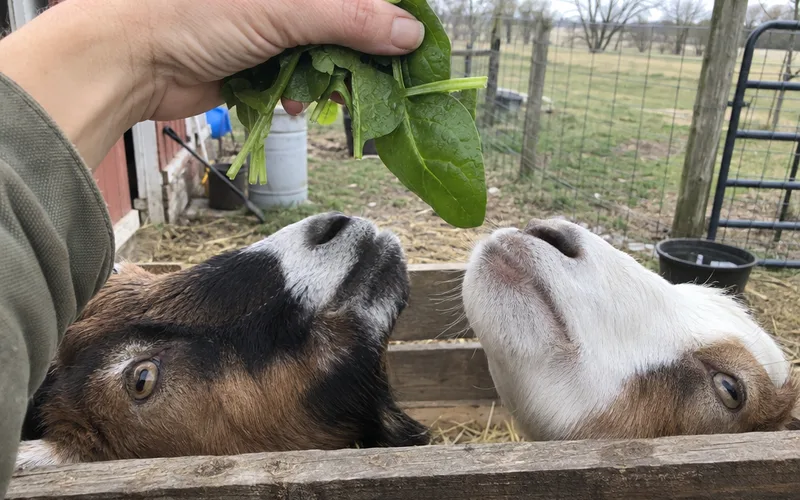
The SPCA guide says hay should make up about 50% of a goat’s diet.
It puts long grass, roots, branches and other greenery at about 25-50%, depending on the goat’s age, size and gender.
That leaves kitchen vegetables, spinach included, only the small gap on top. And spinach shares that gap with every other goat treat you hand out.
- Keep it simple: offer spinach on a day you’re not giving other treats. Then skip it for the next couple of days.
- Key Takeaway: A handful now and then is a treat; a handful every morning is a habit you don’t want.
Raw or Cooked Spinach: Which Is Better for Goats?
Goats can eat spinach raw or cooked, and raw, washed leaves are the simpler choice, while cooked spinach has lower oxalate levels, according to the Wikipedia entry on spinach.
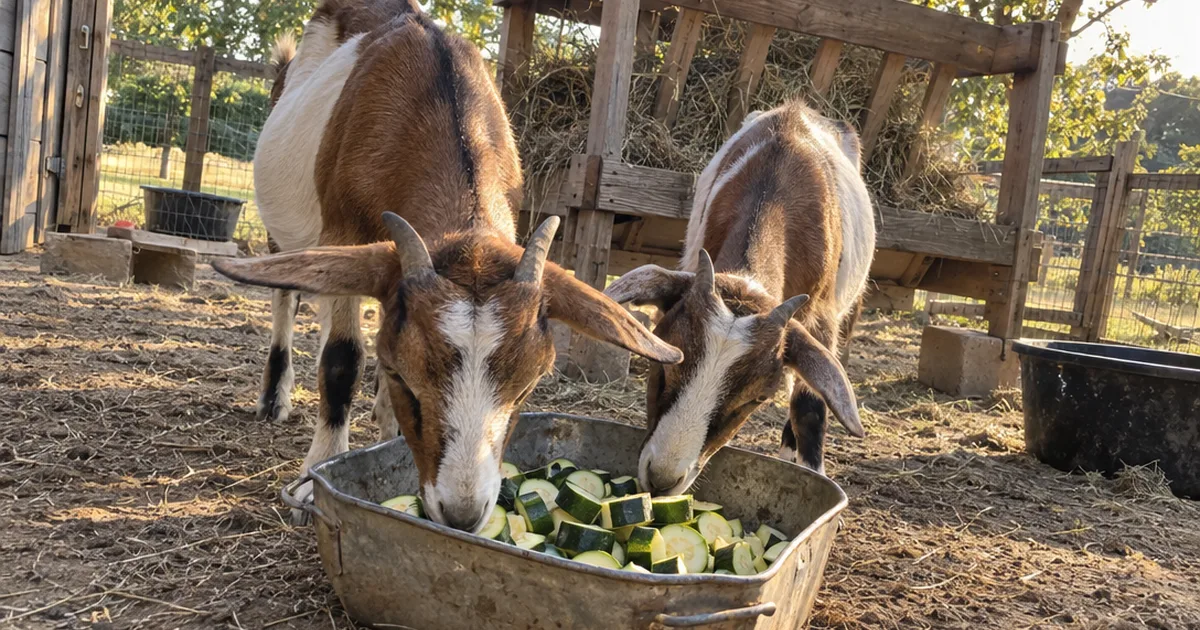
Cooking makes sense when you’re working through a garden surplus a little at a time, much like a zucchini glut in late summer.
Blanch it plain, let it cool, and drain it well before serving.
Plain is the rule that matters most. Butter, salt, oil, garlic and onions, sauces and seasonings all stay out of the goat bowl.
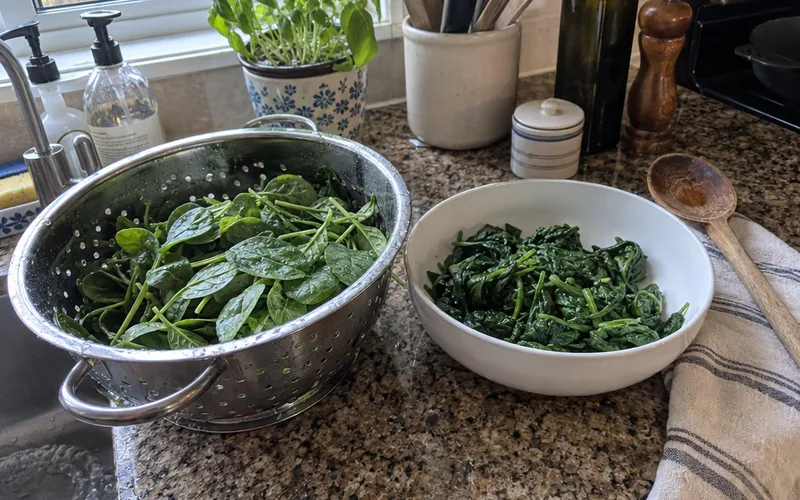
Raw spinach needs a good rinse, especially from the grocery store. Bagged leaves that have gone slimy or moldy go in the compost, not the feeder.
Washed and plain, raw or cooked, and always in a small portion.
Which Goats Should Skip Spinach?
Young kids, does in late pregnancy or heavy milk, and goats with past urinary stones should skip spinach, since oxalic acid ties up calcium and they have the least room for error.
Everyone else can have the occasional handful.
Baby Goats
Baby goats should wait for spinach until they’re weaned and eating hay and grass well. Even then, start with a leaf or two.
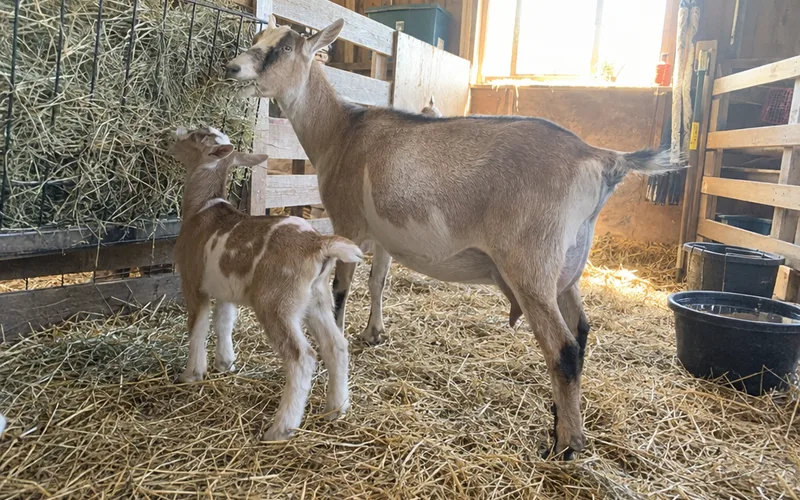
Before weaning, milk, hay and their normal ration do the real work. Spinach can wait, since its oxalic acid binds calcium into a salt the body can’t use.
When a weaned kid is ready, give that first leaf or two on a day without any other treats. Wait a couple of days before it gets another taste.
Pregnant and Milking Does
Pregnant and milking does are better off without spinach in late pregnancy and heavy lactation.
Offer a lower-oxalate green instead, and ask your vet before changing a doe’s ration.
Bucks and Wethers
Bucks and wethers with any history of urinary stones should get no spinach at all.
Note: Straining to pee, dribbling or crying out while urinating is an emergency, so call your vet right away.
What to Do If Your Goat Ate Too Much Spinach
If your goat ate a lot of spinach, take the rest away, offer hay and fresh water, and watch closely for bloat, scours or trouble peeing.
Spinach isn’t on the SPCA list of poisonous plants, so the bigger risk is the sudden load of wet greens.
Here’s what to watch for:
- A swollen belly and a goat that seems uncomfortable, which can be goat bloat.
- Loose, watery droppings, covered in more detail in the guide to goat diarrhea.
- Straining or crying out while urinating, especially in bucks and wethers.
Call your vet if you see any of these, or if the goat stops eating.
What About Malabar Spinach?
Malabar spinach isn’t true spinach at all: it’s Basella alba, a vine from a different plant family.
An owner on the Keeping A Family Cow forum reports that Basella alba and Basella rubra are not listed as poisonous plants for ruminants.
The same owner says they fed the vines, leaves and seeds to their cows and goats without any problems.
That’s one owner’s report from 2010, not a study, so start with a few leaves.
Better Greens to Feed Instead of Spinach
Kale, turnip greens, cabbage and lettuce all carry far less oxalic acid than spinach.
USDA figures in the Wikipedia oxalic acid entry put kale at 0.02%, turnip greens at 0.05%, cabbage at 0.10% and lettuce at 0.33%, against 0.97% for spinach.
That’s a huge gap. Spinach carries about 48 times as much oxalic acid as kale.
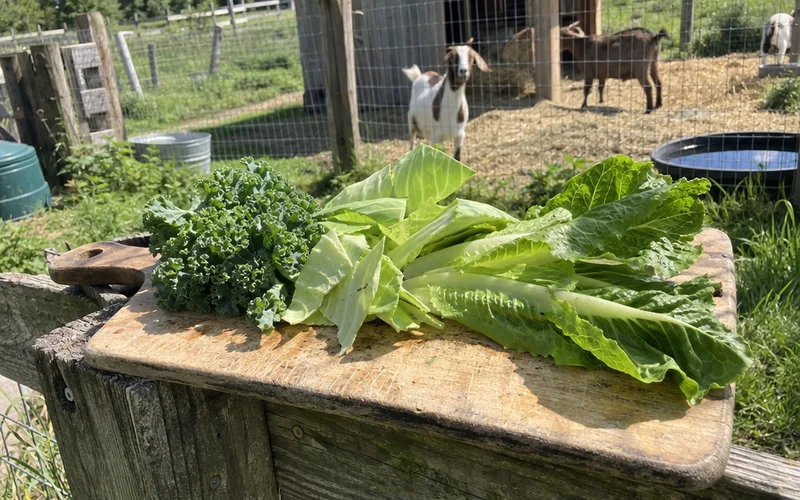
So if your goats love leafy treats, kale for goats, cabbage leaves and lettuce leaves are smarter rotations.
Just don’t swap spinach for Swiss chard at 0.96% or parsley at 1.70%, which are as high or higher.
Lower oxalate doesn’t mean unlimited, though. The SPCA guide puts kale on its small-quantities list right beside spinach.
The best greens of all aren’t from the kitchen. Goats are browsers, so shrubs, leaves and weeds like dandelions suit them better than any salad.
Note: Go easy on alfalfa and clover too. That guide also warns that too much of either can cause bloat.
Those swaps are only the start of the safe vegetable list. Pick one low-oxalate green and offer it the next time spinach comes out of the fridge.
Frequently Asked Questions
Can goats eat spinach every day?
No, goats shouldn’t eat spinach every day, because the SPCA Kids Education guide lists it as a kitchen vegetable for occasional, small servings and its oxalic acid adds up with daily feeding.
Rotate in kale, cabbage or lettuce instead.
Can goats eat spinach stems and seeds?
Goats can eat spinach stems like the leaves, so count them toward the same small serving.
A bolted plant with seed heads is fine now and then, but never feed packaged planting seed.
What greens can goats not eat?
Goats should not eat laurel, privet, ivy, hemlock, buttercup or ragwort, which the SPCA Kids Education guide lists among plants poisonous to goats.
The guide also lists alder, honeysuckle, walnut and evergreen shrubs, and it notes the list isn’t complete.
What vegetable scraps can goats eat?
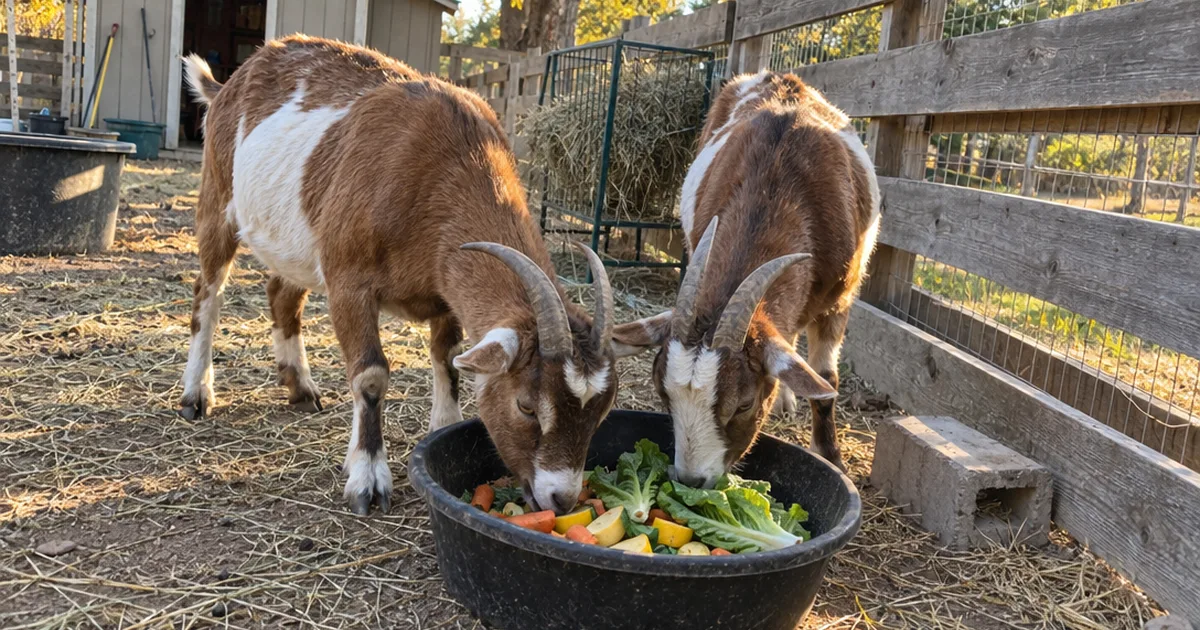
Goats can eat carrots, cabbage, beans, broccoli, corn, spinach and kale as kitchen scraps, all in small quantities, according to the SPCA Kids Education guide.
Skip anything seasoned, slimy or moldy.