
The radish is rarely the problem when a goat ends up with a sore belly after a garden treat.
The serving size is. A bucket of radishes tipped over the fence hits a goat’s rumen far harder than a few chopped pieces with its hay.
So can goats eat radishes? The useful answer is about how: which parts, how much, how often and when to hold back.
Here’s that answer, one question at a time.
Are Radishes Safe for Goats?
Radishes are safe for goats when you feed them as a small, occasional treat, roots and leafy tops included. The only real risk is quantity, because radishes are brassicas and a large or sudden helping can upset a goat’s digestion.
Why does the amount matter so much?
Goats are ruminants, animals that ferment their food in a large first stomach called the rumen before they digest it. The microbes doing that work are used to hay, pasture and browse, so any new food changes their job overnight.
Radishes belong to the same mustard family as cabbage, kale, broccoli and turnips. That plant family has a reputation among goat keepers for making gas in the rumen when goats eat a lot of it at once.
So a radish is never the main meal: it’s a snack on top of a full hay rack.
That one rule shapes every other answer here, from portion size to the goats that should get less.
Can Goats Eat Radish Greens and Leaves?
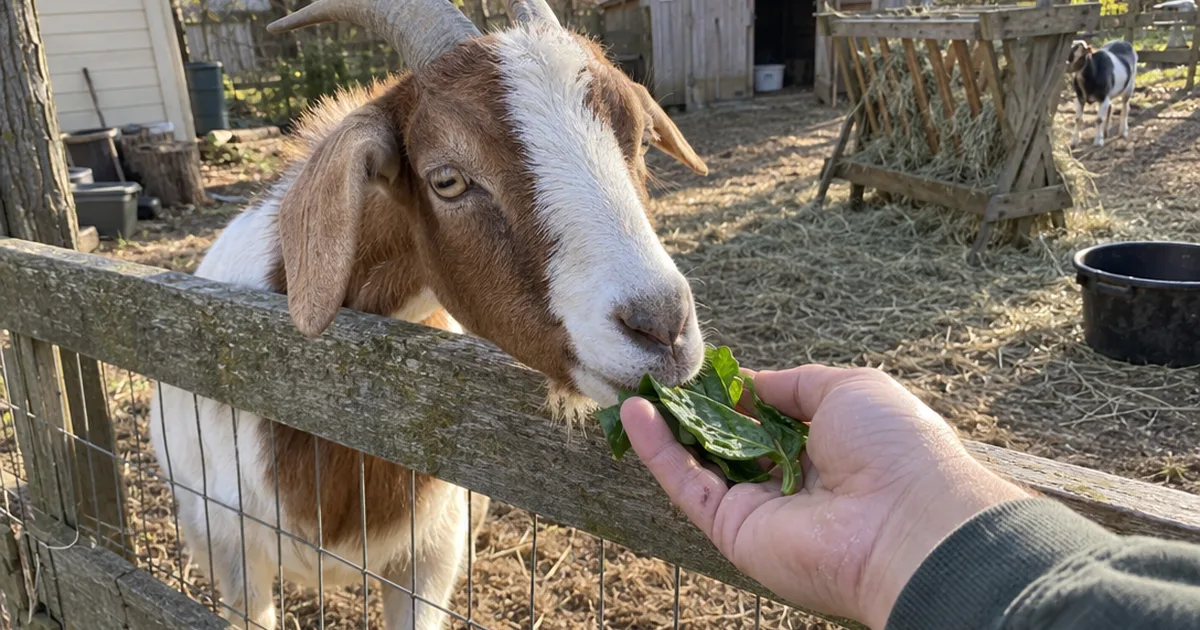
Goats can eat radish greens and leaves just as safely as the roots, so there’s no need to cut the tops off first. The leaves are soft forage, much closer to the browse goats pick through on their own than the crunchy root is.
That makes the greens an easy way to use the part of a radish most people throw away. Pulled garden radishes with their tops still on are a ready-made treat for the herd.
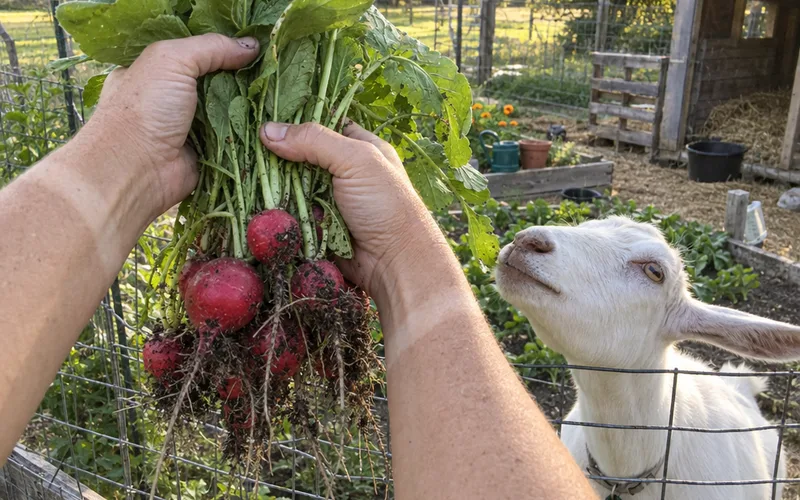
Check the leaves before they go in the feeder:
- Yellow, slimy or moldy leaves go in the compost.
- Leaves from a bed sprayed with pesticides need a thorough rinse, and a bed sprayed in the last few days stays off the menu.
- Wilted greens that sat in a hot bucket all day get tossed.
If your radishes went to flower before you pulled them, the stems and leaves are still fine. The seed pods are the part that needs a closer look.
Which Parts of a Radish Goats Can Eat
Goats can eat every part of a garden radish plant except dry, mature seeds, though each part needs slightly different handling. Here’s how to feed each one:
| Part | OK for goats? | How to feed |
|---|---|---|
| Root | Yes, as a treat | Wash, cut into bite-size pieces |
| Greens and stems | Yes | Fresh only, rinsed if sprayed |
| Flowers | Yes, a few | Mixed in with the leaves |
| Green seed pods | Small amounts | Mixed in with other greens |
| Dry, mature seeds | No | Keep saved seed out of reach |
The pattern is simple: the fresher and greener the part, the less you need to worry. The more concentrated and dry it gets, the smaller the helping should be.
Can Goats Eat Radish Seeds or Seed Pods?
Goats can nibble young, green radish seed pods mixed in with the leaves, but dry, mature radish seeds shouldn’t be fed as a treat. Dry seed is the most concentrated part of any mustard-family plant, so it’s the part to skip.
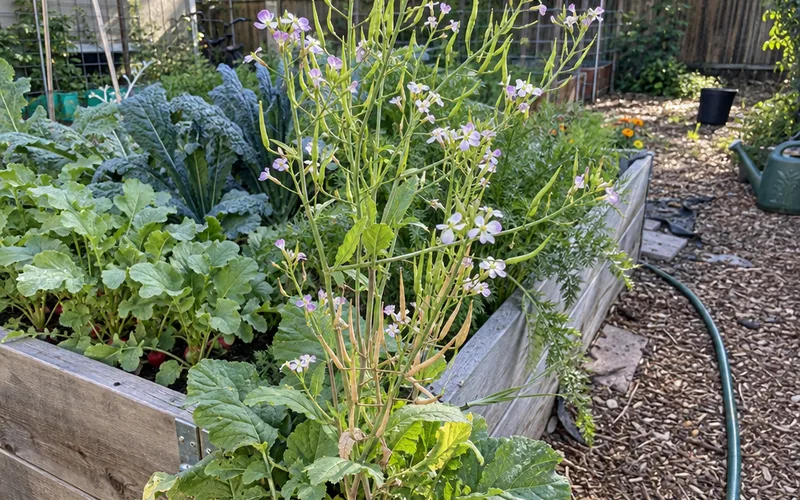
In practice, a bolted plant with a few green pods is fine to toss in. A bag of saved seed or a pile of dried pods stays locked up with the rest of your garden supplies.
How Many Radishes Can a Goat Eat?
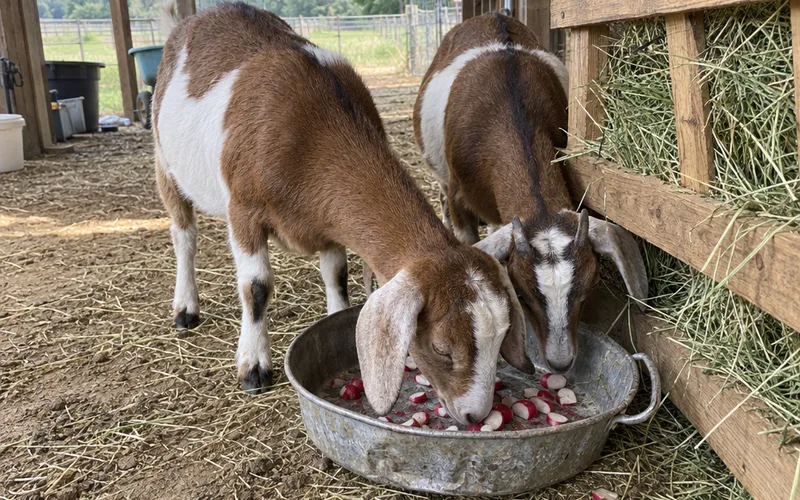
A treat serving of radishes for a full-size adult goat is a palm-size handful of chopped pieces, and less for pygmy or Nigerian Dwarf goats. Greens can be a loose handful on their own, or mixed with the root pieces in the same serving.
The easiest way to keep that in proportion is to treat radishes like any other snack. They go on top of a full day of hay, which supplies the fiber, vitamins and nutrients a goat actually runs on.
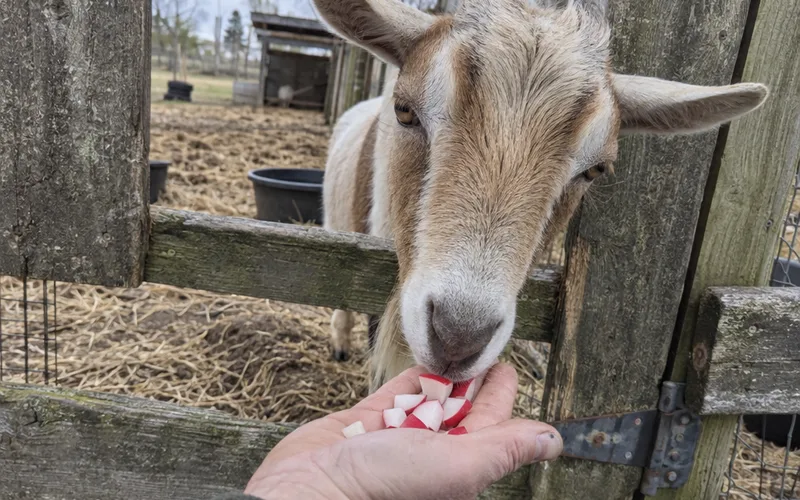
Here’s a simple way to start:
- Offer a few small pieces the first time, and nothing else new that day.
- Watch the rest of the day and the next morning for loose droppings, a tight left side or a goat that skips its hay.
- If everything looks normal, build up to the palm-size serving over the next few feedings.
A goat sharing a pile with the herd needs the same care, since the boss goat usually eats the most. Spread the pieces out or hand-feed them so one goat doesn’t take everyone’s share.
Can Goats Eat Radishes Every Day?
Goats shouldn’t eat radishes every day, and a few times a week as a treat is plenty for most herds. Daily radishes, even in small servings, slowly turn a snack into a steady part of the diet.
That’s the one role radishes shouldn’t have. Because they’re brassicas, the safer habit is to spread that plant family out across the week instead of feeding it daily.
The fix? Rotate your treats.
Swap radishes with non-brassica options like carrots, pumpkin or squash, so no single plant family carries the load.
In other words, plan the week, not just the bucket.
How to Prepare Radishes for Goats
Preparing radishes for goats means washing them, trimming anything soft or moldy, and cutting the roots into bite-size pieces. Washing matters most for grocery radishes and sprayed garden beds, where soil and spray residue sit on the skin and leaves.
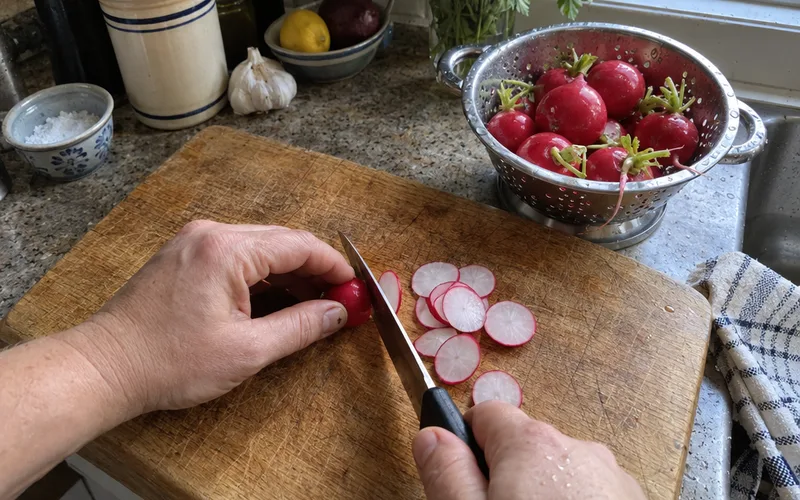
Cutting matters most for small goats. A whole round radish is the right size to lodge in a goat’s throat, so slice it into coins or quarters first.
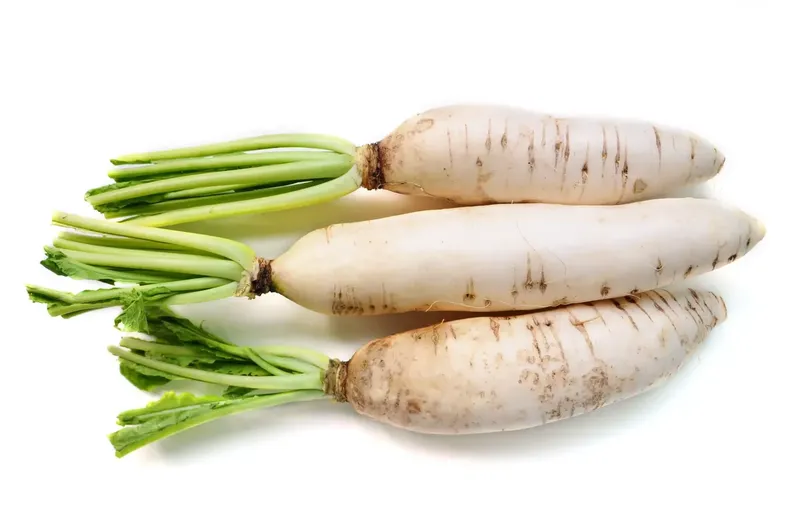
Big daikon radishes need the same treatment. Chop them into chunks no wider than your thumb rather than handing one over whole.
Should Radishes Be Raw or Cooked?
Radishes should be fed to goats raw, because cooking adds nothing a goat needs. Radishes cooked for people usually come with butter, salt or oil, which don’t belong in a goat’s feeder.
So leftover roasted radishes from your plate go to the compost, and fresh ones go to the goats.
Can Radishes Cause Bloat or Goiter in Goats?
Radishes can contribute to bloat or goiter in goats only when they’re fed in large amounts, suddenly or for a long stretch. A few chopped pieces a couple of times a week carries little of either risk.
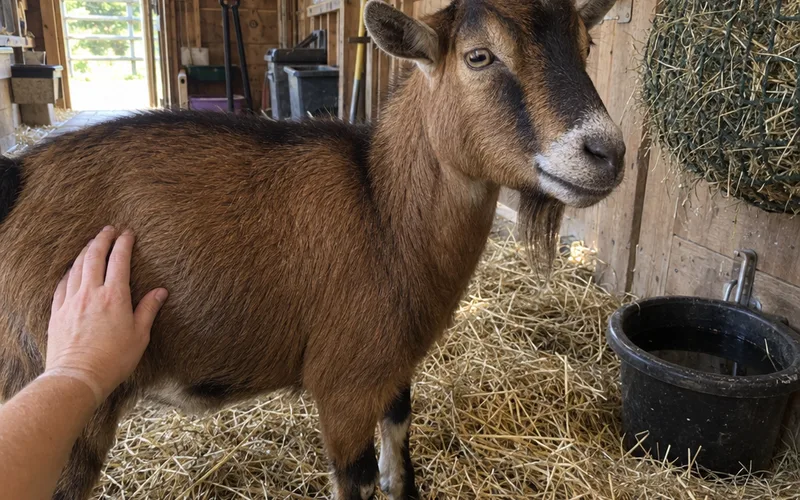
Bloat is the more urgent of the two. Gas builds up in the rumen faster than the goat can belch it out, and the left side swells tight like a drum.
Watch for these signs after any big feed of radishes:
- A swollen, hard left side
- Restlessness, kicking at the belly or grinding teeth
- Drooling, or refusing hay and water
If you see them, treat it as an emergency and follow the goat bloat steps or call your vet right away.
Goiter is the slow risk. Mustard-family plants contain goitrogens, compounds that can keep the thyroid from using iodine when they fill the diet for weeks.
That’s why variety and a loose mineral with iodine matter more than whether a goat ever sees a radish. A good goat mineral covers the iodine side every day of the year.
Wild Radish Is a Different Plant
Wild radish, a weedy relative that grows in fields and field edges, isn’t the same plant as the garden radish you buy or grow. Don’t assume a weed with radish-like leaves is safe.
Check it against a list of plants poisonous to goats before you let the herd graze a patch of it.
Skip Moldy or Spoiled Radishes
Moldy, slimy or rotten radishes never go to goats, not even as a small treat. Compost anything soft or fuzzy, and feed only radishes you’d still be happy to eat yourself.
Can Baby Goats Eat Radishes?
Baby goats can try radishes only after they’re eating hay and solid feed well, while kids still living on milk shouldn’t get radishes at all. A young kid’s rumen is still developing, and milk followed by hay is what builds it.
Until then, the bottle feeding schedule comes before any treat.
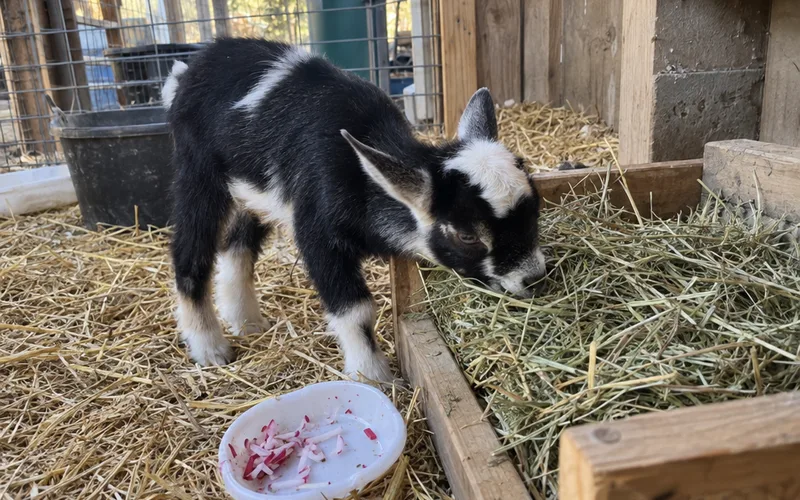
For a weaned kid, grate or finely chop one small piece of radish and watch the droppings the next day.
Introduce one new food at a time, so you know the cause of any loose droppings. If they don’t clear up, use the goat diarrhea steps.
Can Pregnant Goats Eat Radishes?
Pregnant goats can eat radishes as an occasional small treat, but a pregnant doe shouldn’t get heavy helpings of radishes or other brassicas. The iodine concern with brassicas matters most while she’s carrying kids.
A doe also needs her full ration of grass or alfalfa hay, minerals and her pregnancy feed, and radishes shouldn’t crowd any of that out.
Keep brassica treats small and occasional, especially in the last weeks before kidding. And make sure her mineral includes iodine, so a few radish pieces never tip the balance.
Can Goats Graze Daikon or Tillage Radish Cover Crops?
Goats can graze daikon and tillage radish cover crops, leaves and roots, if you move them on gradually and keep hay available. A planted field of livestock forage is a very different dose from a garden treat.
Why? A hungry goat turned onto a lush stand of radishes can eat far more brassica in one afternoon than any treat serving holds.
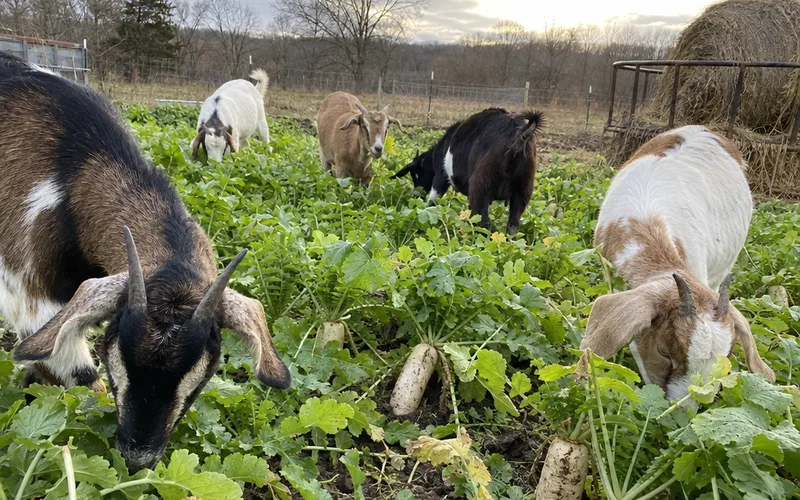
Here’s how to make the switch safer:
- Feed hay first, so the goats go onto the field with full rumens.
- Start with short grazing sessions and lengthen them over several days.
- Leave grass or hay available the whole time, so radishes never become the entire meal.
If the field got heavy manure or nitrogen fertilizer, ask your county extension office about testing the forage for nitrates before you graze it.
Can Goats Eat Radishes in the Winter?
Goats can eat radishes in winter the same way as in summer, as a chopped treat on top of plenty of hay. Goats lean on hay even more in cold weather, so winter is the wrong time to let treats replace any of it.
Frozen radishes should be thawed and chopped first. A rock-hard frozen radish is tough to chew and easy to choke on.
Can Goats Eat Turnips, Beets and Other Roots?
Goats can eat turnips on the same terms as radishes, because both are mustard-family roots with edible greens. Treat them as one group: a day with turnip tops isn’t also a day for radishes, cabbage or kale.
Beets, carrots and fruits like apples aren’t brassicas, so they make good swaps when you want a crunchy treat without adding to the brassica total. That keeps the treat bucket varied without piling more of one plant family into the rumen.
For portions on every common garden crop, the chart of vegetables goats can eat lists each one side by side. Each crop also has its own page in the goat vegetables section.
The Bottom Line
Radishes are a fine goat treat when they stay small, chopped and occasional, inside a healthy goat diet built on hay and browse.
This week, give each goat a few raw, chopped pieces with its hay, watch how it handles them, and build up from there.
Frequently Asked Questions
Can sheep eat radishes?
Yes, sheep can eat radishes, roots and greens, on the same terms as goats: chopped, introduced slowly and kept small next to hay or pasture. Sheep grazing a radish cover crop need the same gradual start, with grass or hay always on offer.
What are the best vegetables for goats to eat?
The best everyday vegetable treats for goats are low-risk ones like carrots, pumpkin, squash and lettuce, while radishes and other brassicas work best as an occasional part of the rotation. Chop anything firm into bite-size pieces before you offer it.
What plants can't goats eat?
Goats shouldn’t eat toxic garden and wild plants such as azaleas and wilted wild cherry leaves, or human foods like chocolate and avocado. Check any unfamiliar plant against a poisonous-plant list before your goats can reach it.
Which leaves are best to feed goats?
Goats do best on the leaves they browse naturally, such as brush, shrubs and pasture weeds, with garden leaves like radish tops as an extra. Feed garden greens fresh, in small amounts and rinsed if the bed was sprayed.
Can goats eat radishes and apples together?
Yes, goats can eat radishes and apples in the same serving, as long as the combined pile stays treat-sized. Cut both into small pieces and core the apple first.