| # | Product | Our Rating | ||
|---|---|---|---|---|
| 1 |  | Best OverallManna Pro Bounce Back Electrolytes | ★★★★★ | Check Price |
| 2 |  | Corid 9.6% Amprolium Solution (Gallon) | ★★★★☆ | Check Price |
| 3 |  | Probios Oral Gel for Goats (30g) | ★★★★☆ | Check Price |
A goat with diarrhea, or scours, is one of the most common calls for help new owners have, and one of the most misunderstood. The instinct is to stop the diarrhea.
That instinct is wrong, and acting on it can kill the goat.
Diarrhea is a symptom, not a disease. It is the body flushing out something it does not want, whether that is parasites, bad bacteria, or a rumen thrown off by too much grain.
What actually kills a scouring goat is almost never the diarrhea itself. It is the dehydration that comes with it.
In over a decade of raising dairy and meat goats, the animals I have lost to scours were lost to dehydration, not to the bug, and that is the lens that should guide everything you do.
This guide covers what causes goat diarrhea, how to treat it the right way, and the red flags that mean you need a vet now.
What Causes Diarrhea in Goats?
First, confirm it is actually diarrhea. Healthy adult goats pass firm, separate pellets, and milk-fed kids pass softer, pasty stool.
True diarrhea is anything looser than that, from clumped and pudding-like to fully watery. One soft clump after a rich treat is not an emergency, but persistent loose or watery stool, especially in a goat that is dull, off feed, or losing weight, needs attention.
Diarrhea has many causes, and the right treatment depends entirely on which one you are dealing with. The table below covers the common causes, who they hit, and your first move for each.
| Cause | Typical age | Other clues | First action |
|---|---|---|---|
| Coccidiosis | 3 weeks to 5 months | Dark or bloody scours, straining, weight loss | Rehydrate, then a coccidiostat (see below) |
| Stomach worms (barber pole and others) | Weanlings and adults | Pale eyelids, bottle jaw, rough coat | Fecal test or FAMACHA, then deworm |
| E. coli | Kids 1 to 4 days old | Yellow or white watery scours, weak, chilled | Vet, fluids, ensure colostrum |
| Rotavirus or cryptosporidium | Kids 5 to 14 days old | Watery scours, often a barn outbreak | Vet, aggressive fluids |
| Overeating disease (enterotoxemia) | Any age, usually unvaccinated | Sudden, goat down or dying, sometimes bloody | CD antitoxin and vet, this is an emergency |
| Grain overload or acidosis | Any age | Follows a grain binge, off feed, may bloat | Pull grain, baking soda, call a vet |
| Sudden diet change or lush pasture | Any age | Green, loose stool after a feed or pasture change | Slow the change, feed hay first |
| Johne’s disease | Adults, chronic | Steady weight loss despite a good appetite | Vet testing, there is no cure |
The two you will meet most often are coccidiosis and worms. Both are easy to confirm with a simple fecal test, which is the fastest way to stop guessing and start treating the right problem.
Goat Diarrhea by Age
Age narrows the cause faster than almost anything else, because the common culprits change as a goat grows.
Newborn kids (birth to about 1 month). Diarrhea here is a genuine emergency because newborns have very little fluid reserve and an immune system that is still catching up.
The usual causes are bacterial or viral: E. coli in the first few days, then rotavirus and cryptosporidium in the first two weeks. Salmonella can strike at any age and is especially dangerous in the very young.
Nutritional scours from over-rich or badly mixed milk replacer is also common in bottle babies. A scouring newborn needs fluids and a vet quickly.
Cryptosporidium and salmonella can also make people sick, so wash your hands after handling a scouring kid.
Weanling kids (about 3 weeks to 5 months). This is coccidiosis territory.
Coccidia are protozoa that explode in number around the stress of weaning, damaging the gut and causing dark, sometimes bloody, scours along with weight loss and a rough coat. Stomach worms also ramp up in this window.
Overeating disease from a sudden jump in grain is another classic cause in this age group.
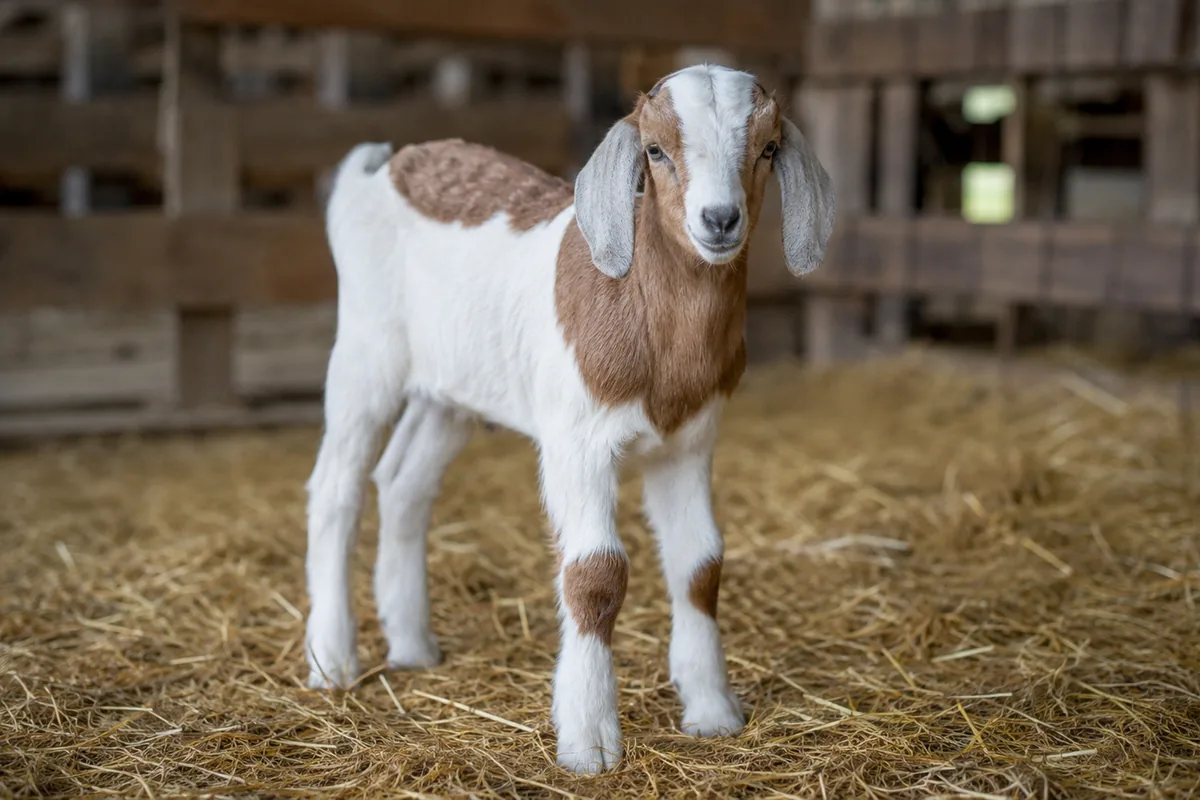
Adults. Healthy adults scour less often, and when they do it is usually diet related: a sudden feed change, grain overload, or rich wet pasture.
Parasites and coccidiosis still show up under stress. The one to watch for is Johne’s disease, a slow, incurable wasting disease that causes chronic diarrhea in a thin goat that is still eating well.
Why Goat Diarrhea Is So Dangerous
Here is the part that matters most. A scouring goat loses large amounts of water and electrolytes, especially sodium and chloride, very fast.
The cause of death is almost always dehydration and acidosis, a dangerous rise in body acidity, rather than the infection itself. In one study of lambs, diarrhea accounted for nearly half of all deaths, and kids are just as vulnerable.
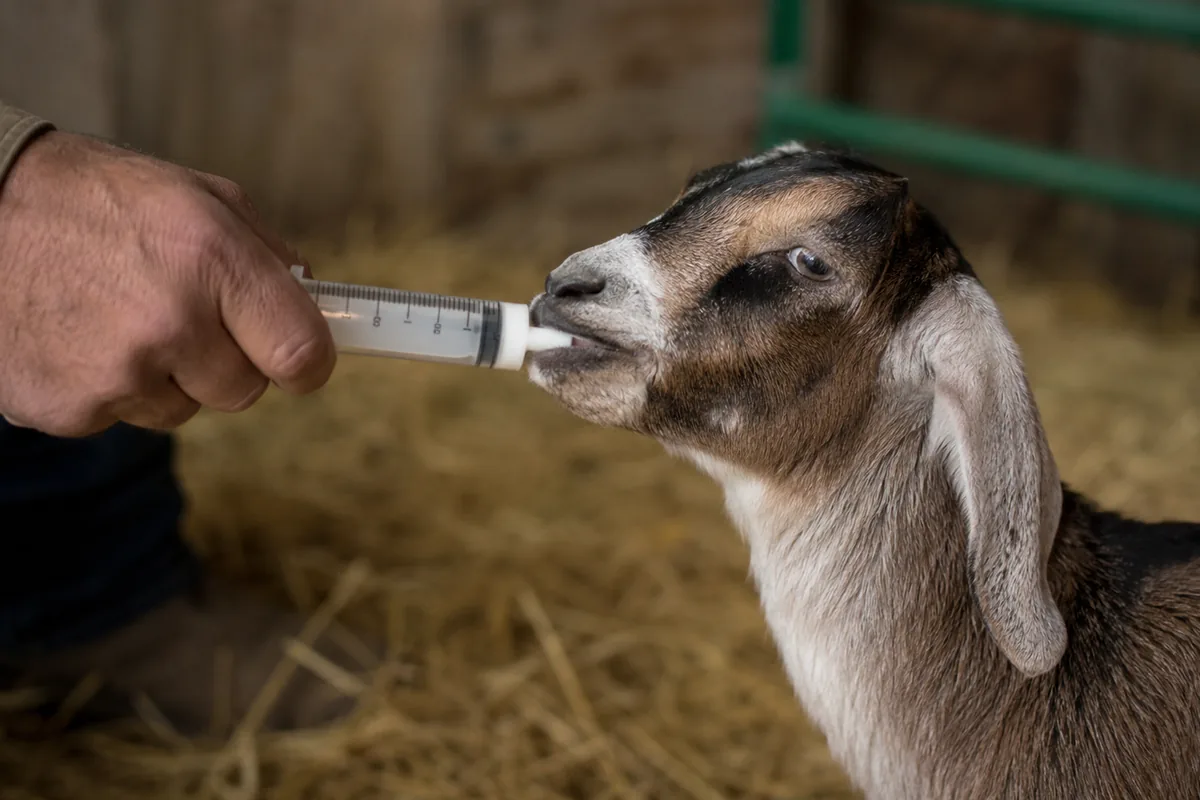
A young kid can go from bright and bouncy to dead in under a day. That is why the rule with scours is simple: replace fluids first, ask questions second.
You can sort out the exact cause while the electrolytes are already going in.
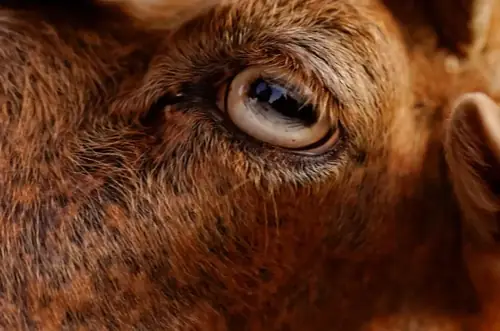
Learn to gauge how dehydrated she is, because it tells you how fast to act. Pinch the skin over the shoulder or eyelid: in a well-hydrated goat it snaps back instantly, while skin that stays tented signals serious dehydration.
Press on the gums, which should be moist and pink, with color returning within about two seconds. Sunken eyes, cold ears and legs, and a goat too weak to stand are late, dangerous signs that need IV fluids from a vet right away.
How to Treat a Goat With Diarrhea
Work through these steps in order. Rehydration comes first because it is what keeps the goat alive while you treat the cause.
- Take her temperature. Normal is 101.5 to 103.5 degrees Fahrenheit. A fever points to infection. A temperature below 100 degrees means she is crashing, and you must warm her before giving anything by mouth, because a cold rumen cannot process fluids.
- Rehydrate aggressively. This is the single most important step. Give oral electrolytes (a goat or livestock electrolyte product) free choice and by drench if she will not drink. A severely dehydrated goat, with sunken eyes or skin that stays tented when pinched, needs subcutaneous or IV fluids from a vet.
- Identify the cause. Use her age, the look of the stool, and ideally a fecal test. Stool color gives clues: black or bloody suggests coccidiosis or gut bleeding, white or grey in a newborn suggests E. coli or salmonella, and green suggests too much fresh forage.
- Treat the underlying cause. Coccidiosis calls for a coccidiostat such as a sulfa drug or Corid (amprolium) with vitamin B1. Worms call for a dewormer. Bacterial infections call for an antibiotic, but only under a vet, since antibiotics do nothing for viral or protozoal causes. Exact amounts depend on body weight, so check the goat medication dosage chart first.
- Restore the gut. Give a ruminant probiotic to rebuild the good bacteria that diarrhea strips out. Pepto-Bismol can soothe the gut lining as supportive care for non-infectious cases.
- Rest the rumen. Pull grain and sweet feed, which only feed the problem, and offer good grass hay and clean water.
Two things you must never do. Never give Imodium or other anti-motility drugs to a goat.
Stopping the gut traps toxins and bacteria inside and can be fatal. And never force fluids into a goat whose temperature is below 100 degrees until you have warmed her up.
As she recovers, bring her back slowly. Keep offering free-choice grass hay and clean water, continue probiotics for several days to rebuild gut bacteria, and reintroduce grain only gradually once the stool firms up.
A goat that has scoured is depleted and chilled easily, so warmth, quiet, and a steady supply of electrolytes matter as much as any medicine in the days after.
When Goat Diarrhea Is an Emergency
Most adult goats with mild, diet-related scours recover with rest and electrolytes. But some cases need a vet immediately.
Call right away if you see:
- Blood in the stool, or black, tarry diarrhea
- A fever above about 104 degrees, or a temperature below 100 degrees
- Weakness, staggering, or a goat that cannot stand
- Dehydration: sunken eyes, tacky gums, or skin that stays tented when pinched
- A kid under one month old, which can decline within hours
- No improvement within 24 hours, or a goat that will not drink
When in doubt with a young kid, do not wait it out. The margin for error is measured in hours, not days.
How to Prevent Goat Diarrhea
Most scours trace back to either pathogens in the environment or a feeding mistake, so prevention comes down to colostrum, sanitation, and steady feeding.
- Get colostrum into newborns within the first few hours. Early colostrum is what gives a kid the antibodies to fight off the bacteria and viruses that cause neonatal scours.
- Vaccinate. Keep your does on a CDT vaccine schedule to prevent enterotoxemia, and ask your vet about pre-kidding E. coli and rotavirus vaccines for the dam.
- Keep pens clean and dry. Coccidia and bacteria thrive in wet, manure-packed bedding. Use raised feeders and waterers so feed and water do not get fouled.
- Prevent coccidiosis around weaning with a coccidiostat in the feed and low-stress weaning, since this is when most outbreaks hit.
- Change feed slowly. Introduce any new grain or pasture gradually over one to two weeks, and always feed hay before grain or before turnout onto lush pasture.
- Deworm strategically based on fecal counts and FAMACHA scores rather than on a calendar, to keep parasite loads down without breeding resistance.
- Isolate scouring goats. Many causes (coccidia, cryptosporidium, salmonella, and E. coli) spread through manure, so move a sick goat away from the herd, especially from young kids, and disinfect the pen and waterers.
A clean barn, a vaccinated herd, and a feed routine you do not break will prevent the large majority of diarrhea cases before they start. The same habits are the backbone of good goat health overall.
Sources and Further Reading
Causes and treatment cross-checked against established veterinary and small-ruminant references:
- University of Maryland Extension, Maryland Small Ruminant Page, scours in sheep and goats
- The Merck Veterinary Manual, intestinal diseases in sheep and goats
- Onion Creek Ranch / Tennessee Meat Goats, diarrhea in goats
Diarrhea can turn serious fast, especially in kids. Use this as a guide, but confirm the cause and any medication with your veterinarian.
Frequently Asked Questions
In kids and young goats, coccidiosis is the single most common cause, especially between 3 weeks and 5 months of age. Stomach worms are the other leading cause. In adults, diet changes, grain overload, and parasites are the usual culprits. Because the cause differs by age, identifying it is the key to treating it.
Rehydrate first with oral electrolytes, since dehydration is what kills, then identify and treat the underlying cause (a coccidiostat for coccidiosis, a dewormer for worms, antibiotics only for bacterial causes under a vet). Give probiotics to restore gut bacteria, pull grain and sweet feed, and offer grass hay and clean water. Never give Imodium to a goat, as stopping the gut can be fatal.
Color offers clues. Black or bloody scours often point to coccidiosis or other gut bleeding. White, grey, or yellow watery scours in a newborn suggest E. coli or another bacterial infection. Green, loose stool usually means too much fresh forage or a sudden diet change. Color is a hint, not a diagnosis, so confirm with a fecal test and your vet.
Treat it as an emergency if you see blood in the stool, a fever above about 104 degrees or a temperature below 100 degrees, weakness or inability to stand, signs of dehydration like sunken eyes or skin that stays tented, a kid under one month old, or no improvement within 24 hours. Diarrhea in young kids can kill within a day, so do not wait.
Pepto-Bismol can soothe the gut lining for non-infectious diarrhea and is sometimes used as supportive care, but it does not treat the cause and should never replace rehydration. Find and fix the underlying problem first. Avoid anti-motility drugs like Imodium entirely, since they can trap toxins and bacteria in the gut.