| # | Product | Our Rating | ||
|---|---|---|---|---|
| 1 |  | Best OverallREDMOND Goat Mineral Supplement (5 lb) | ★★★★★ | Check Price |
| 2 |  | Wholesome Harvest 16% Goat Feed (10 lb) | ★★★★☆ | Check Price |
| 3 |  | Manna Pro Goat Treats | ★★★★☆ | Check Price |
A cucumber is a mild, high-water vegetable from the gourd family, grown on a trailing vine. Goats can eat all of it, foliage included.
They are browsers by nature, so they go after leaves as readily as anything else. That is why this one raises more questions than most.
The answers change by part and by preparation. Raw flesh, skin, and seeds all behave one way, while pickles and the wild plant are a separate matter.
You’ll find safe portions by body size below, plus washing steps, the right age for kids, and the signs of overfeeding.
Are Cucumbers Safe for Goats?
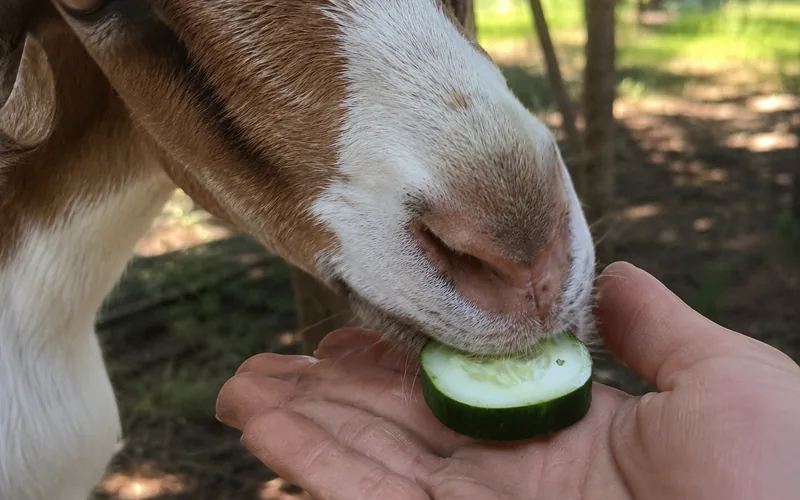
Yes. Goats can eat cucumbers, and most of them love the taste.
The flesh, skin, and seeds are all edible, so you don’t need to peel one.
Cucumbers belong to the Cucurbitaceae family, the same group as zucchini and other summer squash, and nothing in the garden variety is toxic.
The ASPCA lists the garden cucumber, Cucumis sativus, in its toxic and non-toxic plants database. Vets and experienced owners treat it as low risk.
Trouble comes from quantity, not toxicity. An animal that fills up on them instead of good grass hay ends up with loose manure and too little fiber.
What Cucumbers Give Your Goats
They are light on nutrition next to most vegetables. The one clear standout is vitamin K.
The MSD Veterinary Manual notes that goats need vitamin K for normal blood clotting. Animals grazing fresh green forage usually get enough of it from plants alone.
They also carry B vitamins in modest amounts. Those support metabolism and cell repair, though a healthy rumen already makes most of what a goat needs.
Here’s the deal: the minerals inside are thin. Manganese is the most notable one, and manganese helps drive energy metabolism.
Magnesium and potassium turn up in small amounts too. Neither replaces a loose mineral mix, which is where most of them come from.
Can Goats Eat Cucumber Skin and Seeds?
Cucumber skin and seeds are both safe, and both are worth leaving on. The peel holds most of the fiber along with a share of the minerals.
The seeds are soft and small, so they pose no choking risk. Ruminants chew and re-chew their food, and they break down without any trouble.
You might be wondering: what about that waxy shine on store-bought ones? That coating is food-grade wax, and it comes off with a good scrub.
Peeling only makes sense when you can’t wash one well. It throws away the fiber and minerals you were feeding it for.
Can Goats Eat Cucumbers Raw or Cooked?
Raw beats cooked for goats. They evolved to eat raw plant matter, and a raw slice keeps the water that makes it worth feeding.
Cooking softens the flesh and drives off some of that moisture, so there’s not much point in feeding it.
The bigger risk is how people usually handle cooking. Butter, salt, oil, onion, and garlic show up in most kitchens, and none of them belong in a goat.
Wild Cucumbers Are a Different Plant
Wild cucumber isn’t a garden variety that grew on its own. It’s a separate plant, and it’s the one real danger here.
It is green and covered in soft spines, and the vine climbs fast along fence lines and woodland edges.
Those plants carry bitter compounds called cucurbitacins. Research indexed by the National Library of Medicine describes cucurbitacins as toxic compounds found across the Cucurbitaceae family.
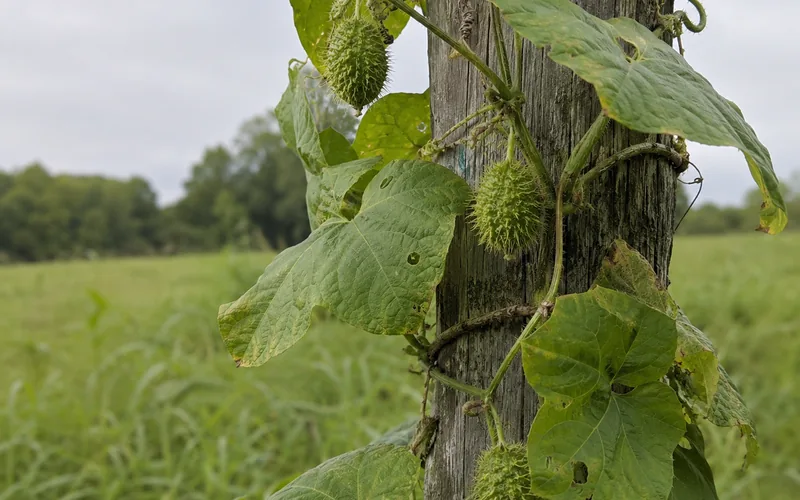
But there’s a catch. Bitterness usually stops a goat from eating much of it, and a hungry animal on thin pasture gets less picky.
Garden varieties were bred until almost no cucurbitacins were left. That breeding is the difference between the vegetable in your fridge and the vine on your fence.
Never Feed Pickles to Goats
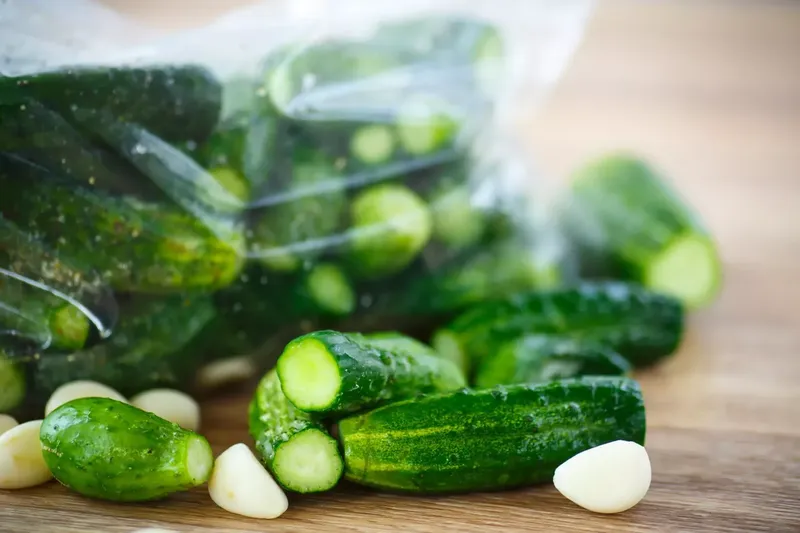
Pickles are cucumbers, but the pickling is what causes the problem. Brine is heavy in sodium, and vinegar is acidic enough to upset a rumen.
Its rumen runs within a narrow pH range, and salt and acid swings can push that balance off and bring on diarrhea.
Dill and sweet varieties, relish, and the juice from the jar should never go in a feed bucket.
Can Goats Eat Cucumber Vines, Leaves, and Flowers?
Goats can eat cucumber vines, leaves, and flowers, and many prefer the greenery to the fruit. They are browsers, so foliage suits them better than most people expect.
All of it is safe, and spent vines at season’s end clear a garden bed while feeding the herd.
One caution applies. Never feed anything sprayed with pesticides or fungicides, since foliage holds residue longer than a fruit you can wash.
How Much Cucumber Can a Goat Eat, and How Often?
Treats should stay under about 10% of what a goat eats in a day. The rest needs to be hay, pasture, browse, and a balanced ration.
For a full-size animal, that works out to roughly half a cucumber a day. A Nigerian Dwarf, Pygmy, or other miniature breed should get a quarter at most.
Watch the manure, since firm pellets mean the portion is fine and loose or clumped droppings mean you fed too much.
Can goats eat cucumbers every day?
One a day is fine through summer if the portion stays small. The extra moisture helps in heat, since they often drink less than they should on hot days.
Can goats eat cucumbers in the winter?
Winter is different. They cost more, do nothing for warmth, and a cold animal needs hay and calories instead of chilled water.
How to Wash and Prepare Cucumbers
Start with a wash under running water and a produce brush. Store-bought cucumbers can carry pesticides on the skin, and that residue is the main reason to scrub.
Here’s the thing: a quick rinse isn’t a wash. Pesticides settle into the waxy layer, so the skin needs real friction to come clean.
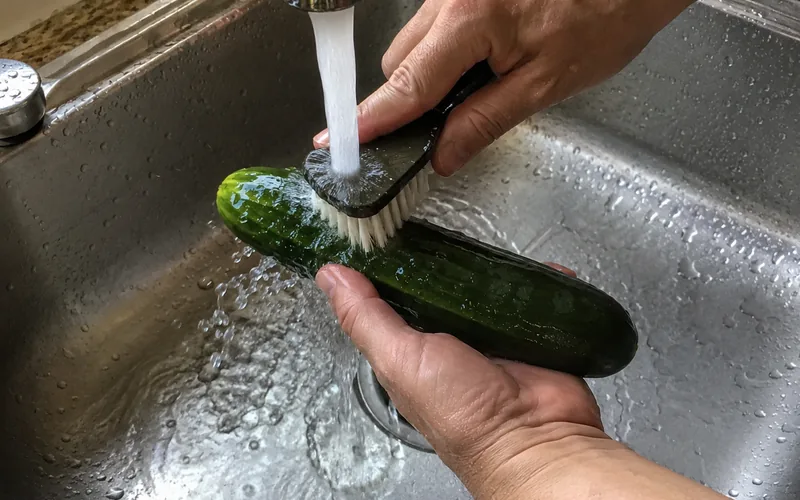
Homegrown ones you never sprayed just need a rinse. Organic produce still gets washed, though, since that label allows some approved sprays.
Cut them into rounds or spears first. A whole one is a choking risk for a smaller goat.
Can Baby Goats Eat Cucumbers?
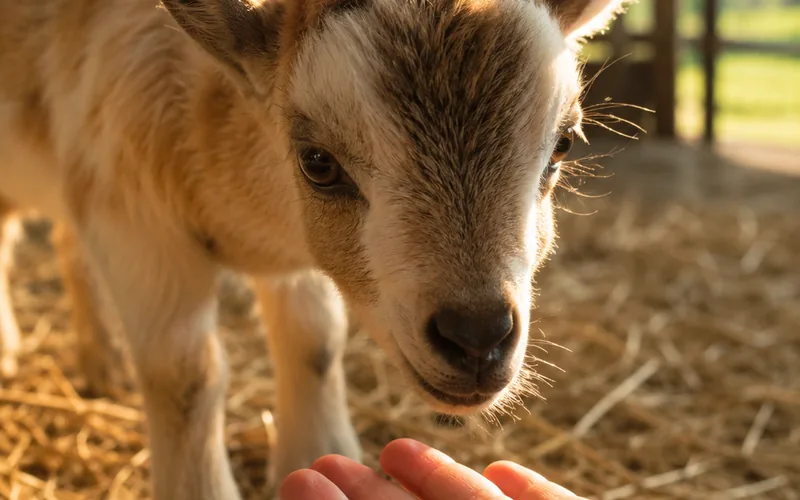
Weaned kids can have cucumbers once they eat solid food well. Their rumen is still developing, so it handles milk far better than vegetables.
Around 8 to 12 weeks is a reasonable starting point. Offer a thin slice or two, cut to the size of a coin, and stop there for the first week.
Pregnant does and nursing dams can have them too, with no special concern. Keep the portion modest, since those animals need calories and protein more than moisture.
Signs Your Goat Had Too Much Cucumber
Overfeeding shows up in the manure first, with pellets turning soft and then clumping together.
Pull the treat for two or three days when that happens, and offer dry grass hay while the rumen settles. Call a vet if loose stools run past three days.
How Cucumbers Compare to Other Garden Vegetables
Cucumbers rank near the top for safety and near the bottom for nutrition, which decides where they fit in a treat rotation.
| Vegetable | Safe for goats? | Main benefit | Watch for |
|---|---|---|---|
| Cucumbers | All parts | Water, vitamin K, B vitamins | Loose manure |
| Zucchini | All parts | Water, vitamin C | Same limits |
| Carrots | Yes | Beta-carotene | Sugar, choking |
| Tomatoes | Ripe fruit only | Lycopene, potassium | Leaves, green fruit |
| Cabbage | Small amounts | Fiber, vitamin C | Gas and bloat |
| Apples | Ripe fruit, cored | Fiber, vitamin C | Sugar, choking on whole fruit |
The short version: they are the safest of that group and the least nourishing. That’s why they work best alongside more nutritious garden vegetables in a treat rotation.
Ripe tomatoes need the most care on the list, since the leaves and green fruit are toxic. Cabbage can cause bloat in larger servings, and chopped carrots bring more sugar than people expect. Sliced apples carry even more sugar, so keep those portions small too.
The Bottom Line
Cucumbers are one of the safest treats you can hand a goat, and every part of the plant is fine to feed.
Keep it under half of one a day, wash store-bought ones, skip pickles, and pull the wild vines from your pasture. Beyond that, hay, browse, clean water, and a good mineral program still do the real work.
Frequently Asked Questions
Avoid onions, garlic, potatoes, rhubarb leaves, and nightshade plants other than ripe tomatoes. Skip pickles and vegetables cooked with salt, butter, or oil. Wild cucumbers are unsafe too, since they carry cucurbitacins.
Most garden and kitchen scraps are fine, including cucumber peels, carrot tops, squash rinds, lettuce trimmings, and pea pods. Keep scraps fresh and free of mold, and rinse store-bought produce, since pesticides sit on the skin.
It varies by goat, but carrots, pumpkin, and cucumbers rank high with most herds. Goats are browsers, so many prefer leaves and vines over the fruit. Offer a few options and watch which one disappears first.
Yes, goats can eat both zucchini and cucumbers, including the skin and seeds. Both are mostly water and low in calories, so they work as hydrating summer treats. Keep the combined portion under about 10% of the daily diet.