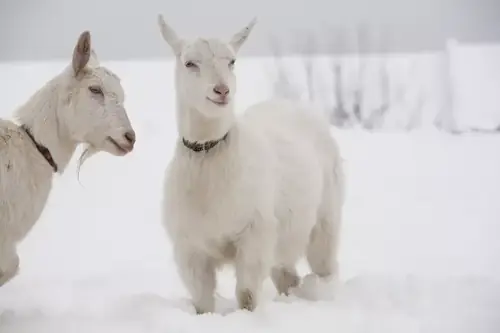
 guide
guide Can Goats Die in Cold Weather? What's Too Cold and How to Stay Safe
Can goats die in cold weather? Yes, but rarely from cold alone. See the exact temperatures that turn dangerous and how to keep your herd safe all winter.

Goats hide pain and illness by instinct, so by the time you notice symptoms the problem may already be serious. Below you'll find everything from vaccinations and parasites to hoof care, kidding, and common diseases.
We may earn a small commission through links on this page, at no extra cost to you. As an Amazon Associate, we earn from qualifying purchases. Ratings reflect our own editorial evaluation.
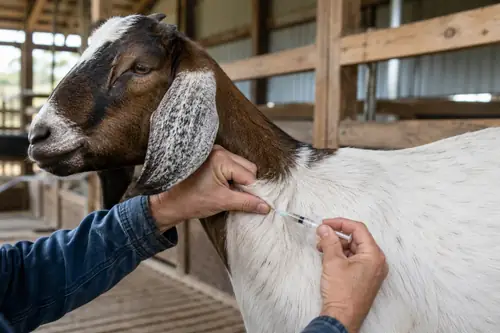
Every goat needs the CDT vaccine at minimum, which protects against enterotoxemia and tetanus. Beyond that, prevention through biosecurity, clean housing, and proper nutrition is always cheaper than treatment.
The CDT vaccine protects against Clostridium Perfringens Types C and D (enterotoxemia) and Tetanus. Enterotoxemia can kill a healthy-looking goat within hours, and tetanus is almost always fatal.
Kids get their first CDT dose between 4 and 8 weeks of age, with a booster 3 to 4 weeks later, then annual boosters. Vaccinate pregnant does about 4 weeks before kidding so they pass antibodies through colostrum.
Beyond CDT, your vet may recommend CL, rabies (off-label), or pneumonia vaccines depending on your region and herd history.
Preventive care goes beyond vaccines. Keep your barn clean and dry, provide loose goat minerals, maintain clean water, and quarantine new goats for at least 30 days before mixing them with your herd.
A healthy goat is bright-eyed, alert, and interested in its surroundings. If a goat stands off alone, refuses food, or has dull eyes, something is wrong.
| Vaccine | When to Give | Frequency |
|---|---|---|
| CDT (kids) | 4-8 weeks old | Booster 3-4 weeks later, then annual |
| CDT (adults) | Annually | Once per year |
| CDT (pregnant does) | 4 weeks before kidding | Each pregnancy |
| Rabies (optional) | Per vet recommendation | Annual (off-label) |
| CL (optional) | Per vet recommendation | Annual if used |
The best approach to deworming goats is targeted selective treatment using FAMACHA scoring, not routine scheduled deworming. Internal parasites kill more goats than any other single cause.
| # | Product | Our Rating | ||
|---|---|---|---|---|
| 1 |  | Best OverallMerck Safe-Guard Goat Dewormer (125 ml) | ★★★★★ | Check Price |
| 2 |  | Advanllent Fenbendazole Goat Dewormer (150 ml) | ★★★★☆ | Check Price |
| 3 | 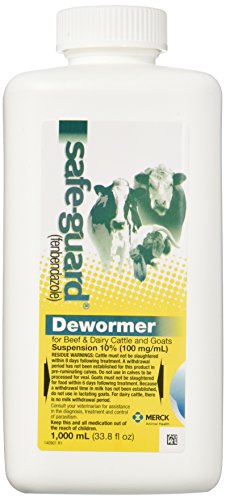 | Safe-Guard Dewormer Suspension (1000 ml) | ★★★★☆ | Check Price |
The barber pole worm (Haemonchus contortus) is the worst offender. It feeds on blood inside the abomasum and can cause fatal anemia in a matter of days.
You'll also deal with brown stomach worm, bankrupt worm, coccidia (especially deadly in kids), and liver flukes if you're in a wet region. The old approach of deworming on a set schedule has backfired badly, creating widespread resistance.
Many farms now find fenbendazole (SafeGuard) barely touches their worm loads.
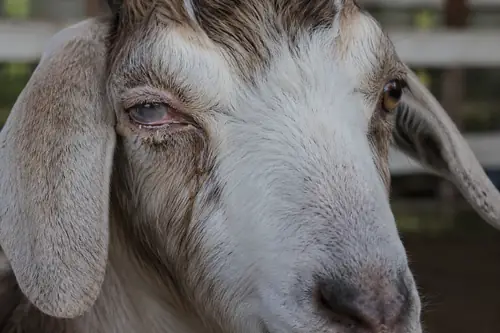
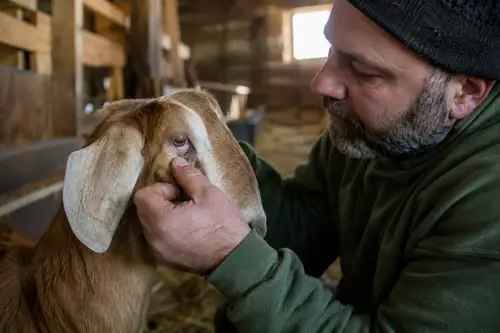
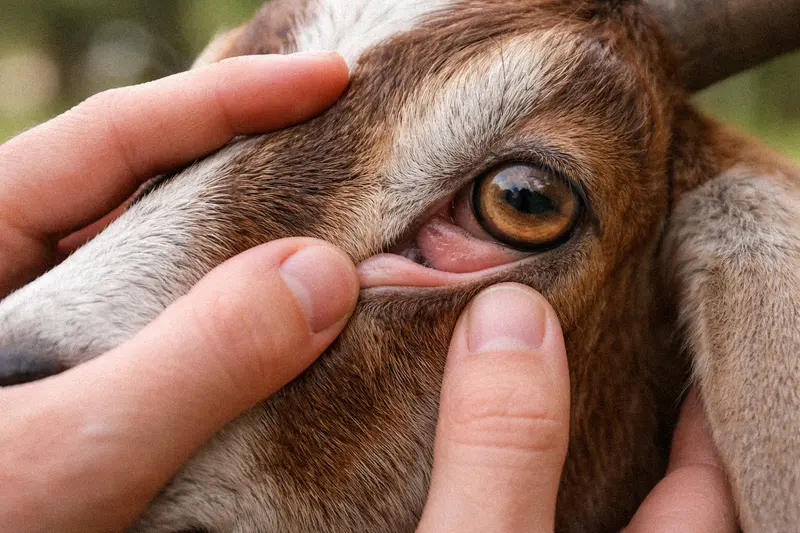
What works instead is targeted selective treatment: only deworm the goats that actually need it. Use the FAMACHA scoring system to check eyelid color.
A score of 1 (dark red) means healthy; 4 or 5 (white or pale pink) means severe anemia and that goat needs treatment now.
You've got three main dewormer classes to work with: benzimidazoles (fenbendazole, albendazole), macrocyclic lactones (ivermectin, moxidectin), and nicotinic agonists (levamisole). Moxidectin (sold as Cydectin) is currently the most effective against barber pole worm on most farms, but save it for heavy infections so it keeps working.
Always dose by weight using a livestock scale. Underdosing is how you breed superparasites.
Coccidia is a different battle. It primarily hits kids between 3 weeks and 5 months, causing severe or bloody diarrhea that can permanently scar the intestinal lining.
Preventing coccidia with a coccidiostat in feed or water during high-risk periods beats treating a full-blown infection. Amprolium (Corid) and sulfa drugs are your go-to treatments.
Check FAMACHA scores every 2 weeks during warm, wet months. A score of 4 or 5 means that goat needs immediate deworming.
| Dewormer | Active Ingredient | Dosage (oral) | Resistance Level |
|---|---|---|---|
| SafeGuard | Fenbendazole | 10 mg/kg for 3 days | High (often ineffective) |
| Ivermectin | Ivermectin | 0.4 mg/kg | Moderate |
| Cydectin | Moxidectin | 0.4 mg/kg | Low (reserve for heavy loads) |
| Prohibit | Levamisole | 8 mg/kg | Low |
| Corid (for coccidia) | Amprolium | 50 mg/kg for 5 days | Low |
Lice, mites, and ticks are the three main external parasites in goats, with lice being the most common during winter months. They're easier to spot than internal parasites, but don't underestimate them.
Goat lice are incredibly common, especially during winter when your herd is packed together indoors.
You'll see affected goats scratching constantly, rubbing against fences, and losing patches of hair. There are two types: biting lice that feed on skin debris, and sucking lice that feed on blood and can actually cause anemia in bad infestations.
Lice tend to disappear in warm weather but come roaring back once winter stress and close quarters kick in. Treat with permethrin-based dusts or pour-ons, and hit them twice (10 to 14 days apart) to get the ones that were still eggs during round one.
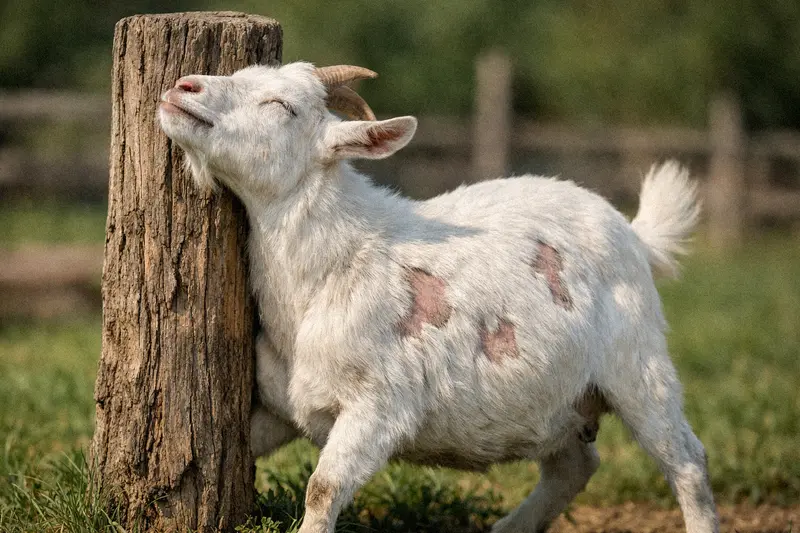
Mites are a different animal. They cause mange and they're harder to get rid of than lice.
Sarcoptic mange triggers intense itching and crusty skin lesions, while chorioptic mange usually shows up on the lower legs and feet.
Ivermectin (injectable or oral) is the treatment of choice, and stubborn cases may need several rounds. If you spot crusty, thickened skin on ears, legs, or underbelly, get your vet to do a skin scraping to confirm mites before you start treating.
One thing people always ask: goat lice are species-specific, so they can't set up shop on you, your dogs, or your cats. They can crawl on you temporarily and cause some itching though, so toss your clothes in the wash after handling infested goats.
The most common goat diseases include enterotoxemia, pneumonia, listeriosis, goat polio, CAE, and CL. Early recognition is critical because goats decline fast once symptoms appear.
Enterotoxemia (overeating disease) is one of the most sudden and deadly, occurring when Clostridium bacteria multiply rapidly after a goat gets into the grain bin or a sudden feed change.
Symptoms include bloating, severe abdominal pain, staggering, convulsions, and death within hours. The CDT vaccine is your best protection.
Pneumonia is another leading killer, particularly in kids. It can be caused by bacteria (Pasteurella or Mannheimia), viruses, or mycoplasma.
Symptoms include coughing, nasal discharge, labored breathing, fever above 104 degrees Fahrenheit, and loss of appetite. Cold, damp, poorly ventilated housing is a major risk factor, and treatment requires antibiotics like oxytetracycline or nuflor prescribed by your vet.
Listeriosis (circling disease) is caused by Listeria monocytogenes, picked up from spoiled hay, bad silage, or contaminated feed. Symptoms include circling, head tilt, facial paralysis on one side, drooling, and depression.
It requires aggressive treatment with high-dose penicillin every 6 hours for up to 2 weeks, and without treatment it's almost always fatal. Polioencephalomalacia (goat polio) isn't viral but rather a thiamine (vitamin B1) deficiency triggered by excess grain, sudden diet changes, or certain plants.
Symptoms look similar to listeriosis: star-gazing, blindness, circling, and seizures. Thiamine injections are the treatment, and recovery can be dramatic if caught early.
Johne's disease, CAE (Caprine Arthritis Encephalitis), and CL (Caseous Lymphadenitis) are chronic diseases with no cure that require management through testing and culling positive animals.
Listeriosis and goat polio look almost identical (circling, head tilt, depression). If you are unsure which it's, treat for both simultaneously with penicillin and thiamine injections.
| Disease | Key Symptoms | Treatment | Preventable? |
|---|---|---|---|
| Enterotoxemia | Sudden bloat, convulsions, death | Usually too late; antitoxin if caught early | Yes (CDT vaccine) |
| Pneumonia | Coughing, nasal discharge, fever >104F | Antibiotics (oxytetracycline, nuflor) | Partly (ventilation, reduce stress) |
| Listeriosis | Circling, head tilt, drooling | High-dose penicillin every 6 hrs, 2 weeks | Yes (avoid moldy feed) |
| Goat Polio | Star-gazing, blindness, seizures | Thiamine (B1) injections | Yes (avoid sudden diet changes) |
| CAE | Joint swelling, hard udder | No cure, manage and cull | Yes (test and separate at birth) |
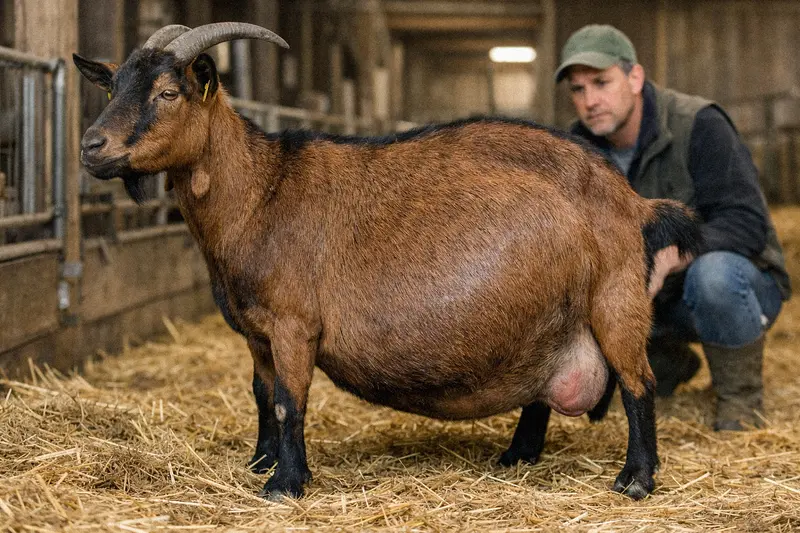
Bloat, scours, and rumen acidosis are the most common digestive emergencies in goats. You'll deal with gut problems more than almost anything else in goat keeping, and bloat is the scariest.
It happens when gas builds up in the rumen and the goat can't belch it out.
The left side swells up and feels tight like a drum. Frothy bloat (from rich legume pastures or too much grain) is worse than free gas bloat because the gas gets trapped in foam.
With free gas bloat, passing a stomach tube usually does the trick. Frothy bloat needs an anti-foaming agent like vegetable oil (60 to 120 ml orally for an adult goat).
Baking soda gets recommended a lot as a home fix, but giving too much can actually backfire. Some owners keep Therabloat or poloxalene stocked for emergencies.
Scours (diarrhea) can be anything from a minor annoyance to a genuine emergency depending on the cause and the goat's age. In kids, coccidiosis and E. coli are the usual suspects; in adults, sudden feed changes, parasites, and bacterial infections tend to be behind it.
Heavy diarrhea leads to dehydration fast, so getting fluids in is the priority. Give electrolytes between milk feedings for nursing kids, but don't replace the milk with them.
For mild stomach upset in adults, Pepto-Bismol (about 1 ml per 5 pounds) helps settle things down. Probiotics and a hay-only diet for a day or two often sort out mild cases.
If scours last more than 24 hours, turn bloody, or the goat goes lethargic, get your vet on the phone.
Keep a bottle of vegetable oil in your barn at all times. For frothy bloat, drench 60-120 ml orally to break up the foam and it can save your goat's life in minutes.
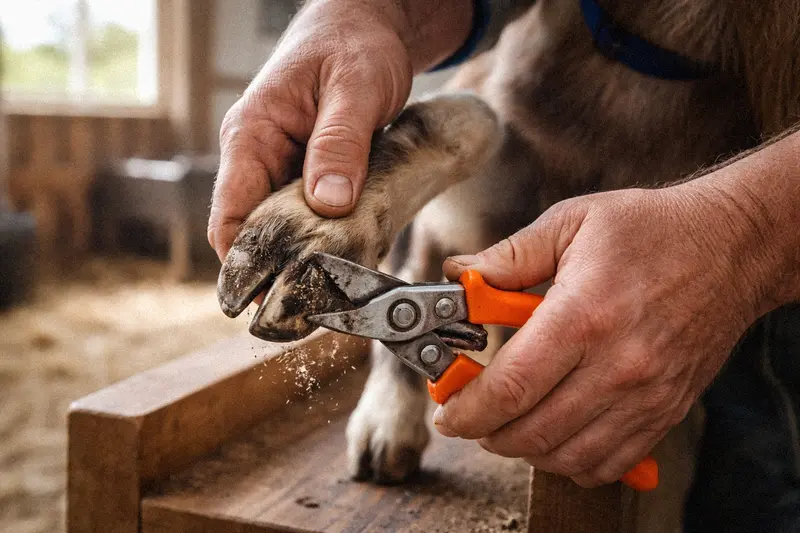
Goat hooves need trimming every 6 to 8 weeks to prevent foot rot and lameness. Most new goat owners don't think about hooves until there's a problem, but regular trimming is one of the most important maintenance tasks you can do.
Goats have cloven hooves (split into two toes) that wear down naturally on rocky or rough terrain.
On farms with soft pasture or bedded barns, hooves overgrow and need trimming every 6 to 8 weeks. Once they curl under, moisture and bacteria get trapped underneath, and that's how foot rot starts.
Foot rot is a nasty infection caused by Fusobacterium necrophorum, often paired with Dichelobacter nodosus. You'll notice severe lameness, a terrible smell, and the hoof wall pulling away from the sole.
Treating it means aggressive trimming to cut out all the infected tissue, foot soaks in zinc sulfate or copper sulfate (10% concentration, 15 to 30 minutes), and sometimes systemic antibiotics. Foot scald is the milder cousin.
It's caused by wet, muddy conditions that redden and irritate the skin between the toes.
Keeping goats dry and spraying zinc sulfate usually clears it up. The bottom line with hooves: maintain dry bedding, trim on schedule, and give your goats some hard ground or gravel to walk on for natural wear.
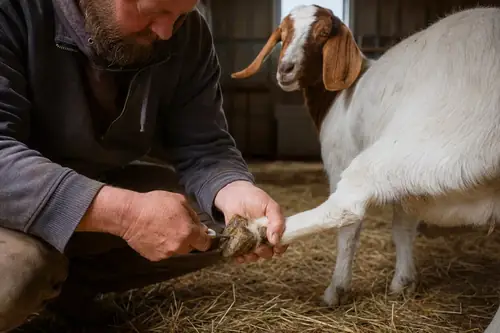
When you trim, restrain the goat on a milk stand and use hoof shears or a hoof knife. Take thin slices off the excess wall until the sole looks flat and pinkish-white.
If you hit pink or draw blood, you went too deep. Dab on some blood stop powder and it'll heal fast.
Set a recurring reminder to trim hooves every 6 weeks. Overgrown hooves are the number one cause of foot rot, and prevention is far easier than treatment.
The essential goat medications to keep on hand are penicillin, Benadryl, Nutri-Drench, ivermectin, and Pepto-Bismol. Build your medicine cabinet before you need it, not during a 2 AM emergency.
Goats metabolize drugs differently than cattle and sheep, so the dosages aren't always what you'd expect even when using the same products.
Here's the thing most people don't realize: very few medications are actually FDA-approved for goats. Most are used off-label.
Find a vet with goat experience and nail down dosage guidelines for your herd before something goes wrong.
Penicillin G Procaine is the workhorse goat antibiotic. It handles pneumonia, foot rot, and wound infections.
Standard dose is 1 ml per 25 pounds given intramuscularly (IM) every 12 hours for at least 5 days.
Don't stop antibiotics early just because a goat perks up. That's how you breed resistant bacteria.
Benadryl (diphenhydramine) covers allergic reactions including vaccine site swelling and insect stings.
Nutri-Drench is a lifesaver for weak or off-feed goats, especially newborn kids and does that just kidded. Baby aspirin handles pain and fever, and Neosporin is fine for minor cuts and scrapes.
Ivermectin pulls double duty as both a dewormer and a treatment for external parasites like mites. You can give it orally, by injection, or as a pour-on, though oral dosing (1 ml per 50 pounds) works best for internal parasites.
Don't combine oral and injectable ivermectin for heavy loads without vet guidance. Overdose risk is real.
Safeguard (fenbendazole) is another common dewormer, but resistance is so widespread now that you should always run fecal egg counts to confirm it's actually working on your farm.
| Medication | Use | Dosage | Route |
|---|---|---|---|
| Penicillin G Procaine | Bacterial infections | 1 ml per 25 lbs | IM, every 12 hrs, 5+ days |
| Benadryl | Allergic reactions | 1 mg per lb | Oral |
| Nutri-Drench | Energy/vitamin boost | Per label | Oral (absorbed through membranes) |
| Ivermectin | Internal/external parasites | 1 ml per 50 lbs | Oral (most effective) |
| Pepto-Bismol | Mild digestive upset | 1 ml per 5 lbs | Oral |
Goats handle cold well as long as they have dry shelter and wind protection, but wet cold and poor ventilation cause pneumonia and hypothermia. Winter goat health requires extra attention, though they're more cold-hardy than most people think.
A healthy adult with a full winter coat tolerates temperatures well below freezing as long as it has dry shelter out of the wind.
The key word is dry. A wet goat loses body heat rapidly and can develop hypothermia even at moderate temperatures.
Pneumonia risk jumps during winter, especially in barns sealed too tightly. Many well-meaning owners close up barns to keep goats warm, which traps ammonia and moisture, creating the perfect environment for respiratory infections.
Keep your barn draft-free at goat level but with ventilation openings near the roofline. Frostbite can affect ears (especially long-eared breeds like Nubians) and buck scrotums.
Applying petroleum jelly to ear tips and vulnerable areas before extreme cold helps. Kids born during cold snaps face the highest risk and should be dried off immediately.
Keep a heat lamp or warming box ready during kidding season, though heat lamps carry fire risk and should be securely mounted. Water intake drops in winter because goats dislike ice-cold water, and dehydration raises the risk of urinary calculi in bucks and wethers.
Heated water buckets or tank heaters encourage drinking. Increase caloric intake by offering extra hay, as rumen fermentation generates internal body heat more effectively than grain.
Never seal your barn completely in winter. Goats need fresh airflow above their heads to prevent ammonia buildup and pneumonia, even if it feels cold to you.
| Temperature Range | Risk Level | Action Needed |
|---|---|---|
| Above 32F (0C) | Low | Normal care, dry shelter available |
| 10F to 32F (-12C to 0C) | Moderate | Extra hay, check water for ice, shelter required |
| -10F to 10F (-23C to -12C) | High | Increase hay 25-50%, heated water, watch ears for frostbite |
| Below -10F (-23C) | Very High | Deep bedding, petroleum jelly on ears, monitor newborns constantly |
The biggest reproductive health risks in goats are pregnancy toxemia (ketosis), kidding complications, retained placenta, and postpartum mastitis. These are some of the most stressful situations owners face because both the doe and her kids may be at risk.
Does need increased protein and energy during the last 6 weeks of pregnancy when kids are growing rapidly.
Pregnancy toxemia (ketosis) is one of the deadliest late-pregnancy conditions. It happens when does carrying multiples can't eat enough to meet their energy demands, and their body starts breaking down fat for fuel, producing toxic ketones.
Symptoms include lethargy, loss of appetite, sweet-smelling breath, and inability to stand. This is a veterinary emergency.
Selenium and vitamin E supplementation is important in selenium-deficient areas to prevent white muscle disease in kids. Injectable B12 can help does showing poor appetite or weight loss during pregnancy.
Kidding usually goes smoothly, but if a doe has been pushing for more than 30 to 45 minutes without delivering, she may need assistance. Common malpresentations include kids coming backwards, head turned back, or legs folded under.
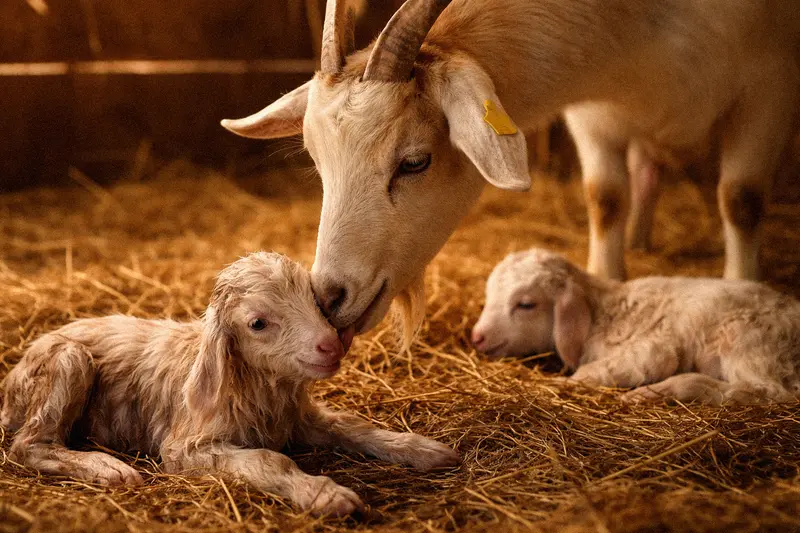
Use OB gloves and plenty of lubricant if you need to reposition a kid. If you can't resolve it within a few minutes, call your vet.
After kidding, watch for retained placenta. The afterbirth should pass within 12 hours of the last kid, and does can pass afterbirth between kids during multiple births.
Never pull on a retained placenta, as this can cause hemorrhage or uterine prolapse. Treatment usually requires antibiotics and sometimes oxytocin to stimulate expulsion.
Mastitis is common postpartum, especially in heavy-milking dairy does. The udder becomes hot, hard, swollen, and painful, with clumpy, stringy, or discolored milk.
Treatment involves frequent stripping of the affected side, intramammary antibiotics, and systemic antibiotics in severe cases. Untreated mastitis can destroy the udder permanently or become life-threatening.
Colostrum within the first 1-2 hours, warmth, and dry bedding are the three non-negotiables for newborn goat kids. The first 24 hours are the most critical period, and newborns must receive colostrum early for the essential antibodies that protect against disease until their own immune system develops.
Kids without adequate colostrum are far more likely to develop pneumonia, scours, and other infections. Keep frozen colostrum or a commercial replacer on hand in case the doe can't nurse.
For bottle-raised kids, whole goat milk from your herd is best. Powdered goat milk replacer is the next best option.
Store-bought cow milk works in a pinch but isn't ideal long-term because the fat and protein ratios differ from goat milk. Never use human baby formula, as it doesn't meet goat nutritional needs.
Coccidiosis is the biggest health threat to kids between 3 weeks and 5 months of age. Stress from weaning, weather changes, or overcrowding triggers outbreaks.
Prevention with a coccidiostat like Deccox in feed or Corid in water beats treating sick kids. Watch for watery or bloody diarrhea, poor growth, rough coat, hunched posture, and loss of appetite.
Dehydration is the immediate killer in kids with diarrhea. Use commercial goat or calf electrolytes (horse electrolytes work in emergencies), given between milk feedings rather than replacing milk entirely.
A weak kid that can't nurse can receive fluids through a syringe or, in severe cases, a feeding tube.
Floppy kid syndrome is another serious condition in kids under 2 weeks old. Affected kids suddenly go limp and can't stand, often after seeming perfectly healthy hours earlier.
The cause is still debated, but it's believed to involve metabolic acidosis from overeating. Treatment involves oral baking soda solution and supportive care, and most kids recover within 24 to 48 hours if caught early.
Keep frozen colostrum from your best does in the freezer at all times. If a kid is born and the dam can't nurse, those first 2 hours are critical and you won't have time to go buy a replacement.
Yes, some goat diseases are zoonotic and can spread to humans. Q fever, cryptosporidiosis, E. coli, orf, and rabies are the main ones to watch for.
This matters most if you've got young children, pregnant women, or immunocompromised people in the household.
Q fever (Coxiella burnetii) is the biggest zoonotic risk. It's shed heavily during kidding in birth fluids and placenta, and you get infected by breathing contaminated dust.
Symptoms range from flu-like illness to serious pneumonia. Wear a mask and gloves during kidding.
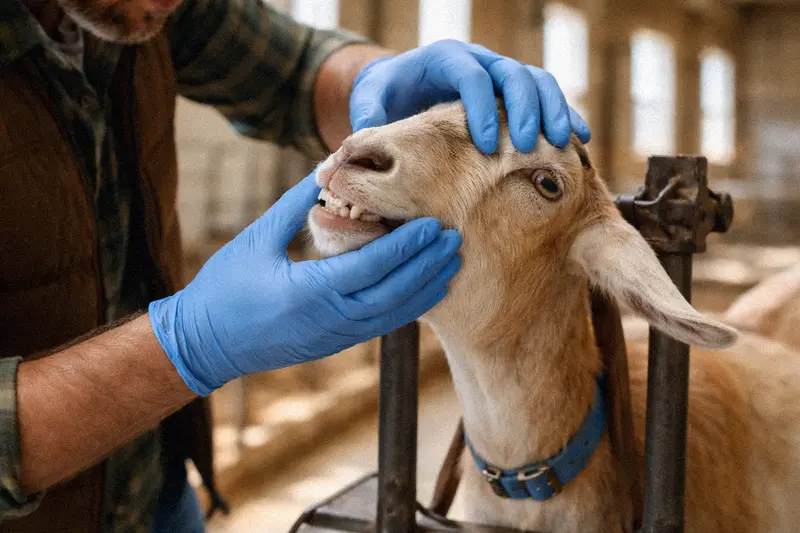
Rabies is uncommon but always fatal once symptoms appear. If wildlife rabies exists in your area, talk to your vet about vaccination.
Cryptosporidiosis and E. coli cause diarrhea in people who handle goat feces without washing up. Kids at petting zoos are especially vulnerable.
Sore mouth (orf) produces painful blisters that transfer to humans through direct contact. Gloves are a must.
The good news: most zoonotic risks come down to basic hygiene. Wash hands after handling goats, wear gloves during kidding and wound care, and skip unpasteurized milk if you have health concerns.
Goats can share parasites and diseases with cattle, sheep, horses, swine, and dogs. If you run goats with other livestock, you need to know what can pass between species.
Goats and sheep share a lot of the same parasites and diseases, but there are some critical differences.
Goats get hit harder by internal parasites than sheep do, and the copper situation can get you in real trouble. Sheep minerals will slowly starve your goats of copper, while goat minerals can poison sheep with too much of it.
Pink eye (infectious keratoconjunctivitis) bounces between goats and cattle sharing pasture, especially when flies are bad. Moraxella bovis is usually behind it, with flies carrying it from animal to animal.
Pull affected animals off the pasture and get your fly control dialed in. Johne's disease (paratuberculosis) also crosses between cattle and goats, so test for it if you keep both species.
Strangles (Streptococcus equi) is mostly a horse problem, but it doesn't hurt to take precautions on mixed farms. Horses and goats generally do fine sharing pasture, but don't let goats drink from water troughs fouled with horse manure.
Keep swine and goats separated since they can swap certain parasites. Dogs are a tricky one: livestock guardian dogs are your goats' best friends, but pet and stray dogs are statistically their number one predator.
Dogs also carry tapeworms that use goats as intermediate hosts. Any dog eating raw goat meat or afterbirth picks up parasites that then contaminate your pastures through their feces.
Goats are ruminants with a four-chambered stomach, cloven hooves, no upper front teeth, and nearly 340-degree vision. Understanding this basic anatomy helps you assess goat health problems, give medications, and communicate with your vet.
Goats are ruminants with a four-chambered stomach: the rumen (the largest chamber, holding up to 5 gallons in adults), the reticulum, the omasum, and the abomasum (the true stomach).
The rumen is a fermentation vat filled with billions of microbes that break down plant fiber. Disruptions to the rumen environment cause many of the digestive problems discussed earlier.
Goats have no upper front teeth. Instead they have a hard dental pad on top and eight incisors on the bottom jaw, which is why they tear and strip vegetation rather than cutting it cleanly like horses.
Molars on both upper and lower jaws handle grinding. Their rectangular, horizontal pupils give them a nearly 340-degree field of vision, an adaptation for detecting predators.
Checking eye color using the FAMACHA system (pulling down the lower eyelid to assess membrane color) is one of the most important health monitoring tools for goat owners. Most goats have two teats, one per udder half.
Supernumerary (extra) teats occur and are considered a fault in dairy breeds because they complicate milking. Each udder half operates independently, so mastitis can affect one side while the other stays healthy.
Learn to take a rectal temperature as your first step for any sick goat. Normal is 101.5-103.5F. Anything above 104F means infection; below 100F means shock or hypothermia.
Internal parasites, especially the barber pole worm (Haemonchus contortus), are the most common and deadly health issue in goats worldwide. Pneumonia, enterotoxemia (overeating disease), and coccidiosis in kids are also extremely common. Regular FAMACHA scoring and fecal egg counts are the best ways to monitor parasite loads.
Goats shouldn't be dewormed on a fixed schedule. The modern approach is targeted selective treatment, where you only deworm individual goats showing signs of parasite overload based on FAMACHA scores and fecal egg counts. Blanket deworming on a schedule promotes drug resistance and makes parasites harder to control over time.
At minimum, every goat needs the CDT vaccine, which protects against Clostridium Perfringens Types C and D (enterotoxemia) and Tetanus. Kids receive their first dose at 4 to 8 weeks with a booster 3 to 4 weeks later, then annual boosters. Pregnant does should be vaccinated 4 weeks before kidding. Your vet may recommend additional vaccines like rabies or pneumonia vaccines based on your region and herd history.
A healthy adult goat's normal rectal temperature ranges from 101.5 to 103.5 degrees Fahrenheit (38.6 to 39.7 degrees Celsius). Kids tend to run slightly higher. A temperature above 104 degrees Fahrenheit indicates fever and possible infection, while a temperature below 100 degrees may indicate hypothermia or shock. Always take a rectal temperature as one of the first steps when evaluating a sick goat.
Yes, several diseases can cross between goats and other species. Pink eye can transfer between goats and cattle, tapeworms can cycle between goats and dogs, and goats can potentially contract Lyme disease from ticks. However, many diseases are species-specific. Goat lice can't permanently infest humans, and horse strangles doesn't typically affect goats. Good biosecurity practices and separating sick animals help prevent cross-species transmission.
A well-stocked goat first aid kit should include a digital rectal thermometer, Pepto-Bismol for digestive upset, Benadryl for allergic reactions, Nutri-Drench for energy support, a broad-spectrum antibiotic like penicillin (with vet approval), electrolyte powder, Neosporin for wounds, hoof trimmers, blood stop powder, syringes and needles in various sizes, a stomach tube, and your veterinarian's emergency contact number.
Yes. Several goat diseases are zoonotic, meaning they can spread to humans. Q fever, cryptosporidiosis, E. coli, orf (sore mouth), and rabies are the most significant. Practicing good hygiene including hand washing after handling goats, wearing gloves during kidding and wound care, and not drinking unpasteurized milk from untested does will significantly reduce your risk.
Early signs of illness in goats include separating from the herd, loss of appetite, dull or sunken eyes, drooping ears, hunched posture, grinding teeth (a sign of pain), abnormal feces (too loose or too dry), coughing, nasal discharge, limping, and a rough or dull coat. Because goats hide illness, any behavior change warrants a closer look including taking a rectal temperature and checking FAMACHA score.
Trim goat hooves every 6 to 8 weeks. On soft ground or bedded barns, hooves overgrow and curl under, trapping moisture and bacteria that cause foot rot. Goats on rocky terrain may need less frequent trimming because the rough surface wears hooves down naturally.
FAMACHA is a scoring system that checks the color of a goat's lower eyelid to estimate anemia levels caused by barber pole worm. A score of 1 (dark red) means healthy, while 4 or 5 (white or pale pink) means severe anemia requiring immediate deworming. It's the most practical way to decide which individual goats need treatment.
Yes, pneumonia is one of the leading causes of death in goats, especially kids. It's typically caused by Pasteurella or Mannheimia bacteria, often triggered by stress, cold damp weather, or poor barn ventilation. Symptoms include coughing, nasal discharge, fever above 104 degrees Fahrenheit, and loss of appetite. Treatment requires vet-prescribed antibiotics.
guide Can goats die in cold weather? Yes, but rarely from cold alone. See the exact temperatures that turn dangerous and how to keep your herd safe all winter.
 guide
guide Worried vinegar could harm your goats? Here's what's actually safe, how much to give, and when to skip it.
 guide
guide Can goats die from Lyme disease? The honest answer, why goats are so resistant, the real tick danger that does kill them, plus symptoms, treatment, and prevention.
 guide
guide Can a goat really die from a horn growing into its head? Here is what actually kills them, the warning signs to watch, and how to stop it before it starts.
 guide
guide Wondering whether your goats can handle being outside once the cold sets in? Here is what actually keeps them safe through winter.
 guide
guide Coccidiosis is a leading killer of goat kids. Learn the symptoms, what causes it, how to treat it with amprolium and other drugs, and how to prevent outbreaks.
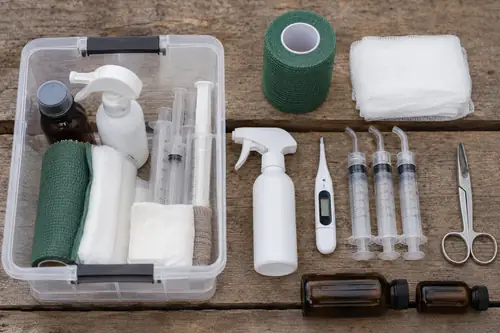 guide
guide Build a goat first aid kit that handles real emergencies. The complete checklist of wound care, scours and bloat supplies, tools, and meds, plus when to call the vet.
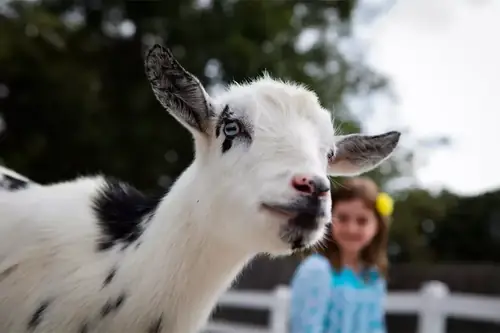 guide
guide Found lice on your goats and worried they'll jump to you or your kids? Here's exactly what happens when a goat louse meets a human, backed by parasitology.
 guide
guide Baking soda alkalizes goat urine and promotes urinary calculi formation in males. Learn the biological mechanism, risk factors, emergency protocols, and safer digestive alternatives.
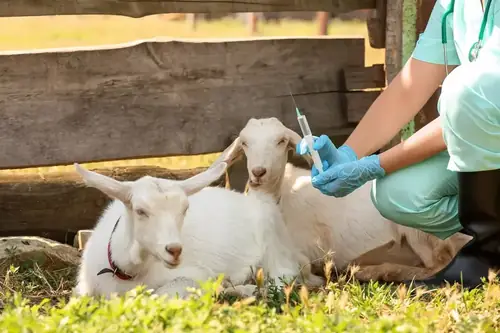 guide
guide Can Benadryl hurt a goat? It can if you misjudge the form or dose. Get the weight-based dose, overdose red flags, and exactly when to call a vet.
 guide
guide Yes, contact with goats can cause diarrhea in humans. Learn the germs they carry, how they spread, who is most at risk, and how to stay safe.
 guide
guide Wondering if goat lice go dormant in summer? Learn why populations crash and rebound, how the louse life cycle works, and how to break the seasonal cycle.