| # | Product | Our Rating | ||
|---|---|---|---|---|
| 1 |  | Best OverallREDMOND Goat Mineral Supplement (5 lb) | ★★★★★ | Check Price |
| 2 |  | Wholesome Harvest 16% Goat Feed (10 lb) | ★★★★☆ | Check Price |
| 3 |  | Manna Pro Goat Treats | ★★★★☆ | Check Price |
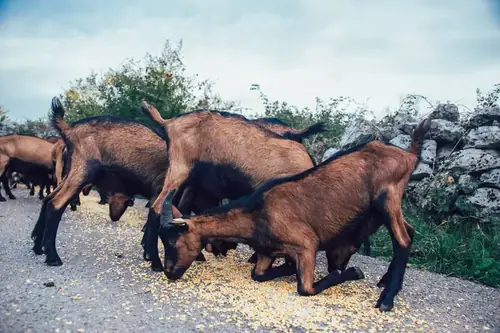
Chicken feed is a grain-based ration mixed for birds, and goats will eat it the second they can reach it. A feed balanced for a chicken is badly wrong for a goat, and some bags are fatal.
Most goat owners learn this after a tipped bucket or a coop door left open.
Can Goats Eat Chicken Feed?
No. Goats can physically eat chicken feed, but they should never have access to it.
Goats are herbivores with a four-chambered stomach, built to ferment leaves, brush, and pasture plants. Concentrated poultry grain moves through that system far too fast.
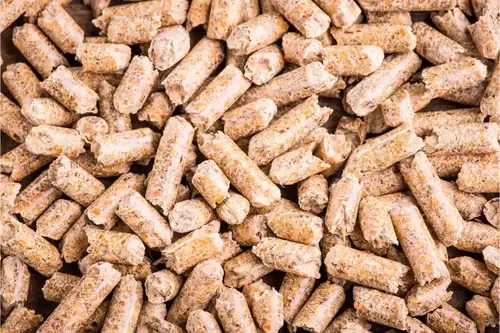
Wikipedia’s poultry feed reference describes chicken feed as mostly grain and protein supplements such as soybean oil meal, plus added minerals and vitamins. Nothing in that mix was chosen with a goat rumen in mind.
Monensin Is the Reason a Single Meal Can Kill
The worst ingredient in medicated chicken feed is the ionophore monensin, sold to farmers as Rumensin. It’s a polyether antibiotic used to control coccidiosis in birds and cattle.
The drug is widely used in ruminant feeds, but horses show the danger. Their median lethal dose is roughly one-hundredth that of ruminants, according to Wikipedia’s monensin entry.
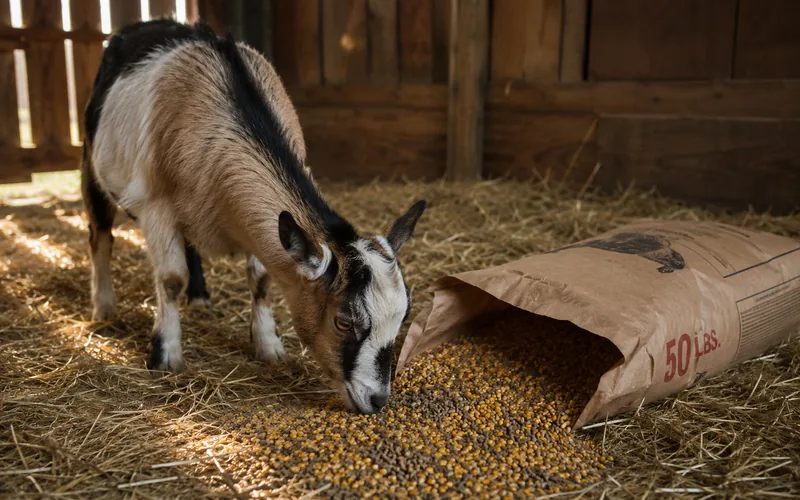
Goat and sheep rations never list monensin for that reason.
But there’s a catch.
No antidote exists, so treatment is supportive only, and heart muscle damage can kill a goat days after the meal.
Too Much Calcium, Too Much Grain
Strip the medication out and chicken feed is still wrong for goats.
Poultry feed references put a laying hen’s need at about 4 grams of calcium a day, with 2 grams going into each egg.
So what does that mean for your herd?
That calcium load pushes the calcium-to-phosphorus ratio the wrong direction. In wethers and bucks it drives urinary calculi, a stone blockage that turns fatal fast.
Copper is the other mismatch, since chicken feed sets copper for birds and leaves goats short of what a herd needs.
Then there’s the grain itself. Veterinary references on ruminal tympany describe bloat setting in when a ruminant eats a high proportion of cereal grain.
In feedlot cattle, death can arrive 3 to 4 hours after the first signs. A goat rumen is much smaller than a cow’s, so the same scoop does more damage.
Which Chicken Feeds Are Most Dangerous
Not all chicken feed carries the same risk, and the tag matters more than the bird.
| Chicken feed type | Main danger | Risk level |
|---|---|---|
| Medicated chick starter | Monensin or another coccidiostat | Highest, can be lethal |
| Layer pellets or crumbles | Very high calcium | High for wethers and bucks |
| Grower and finisher rations | Grain load, sometimes medicated | High |
| Chicken scratch | Pure grain, no medication | Moderate, acidosis and bloat |
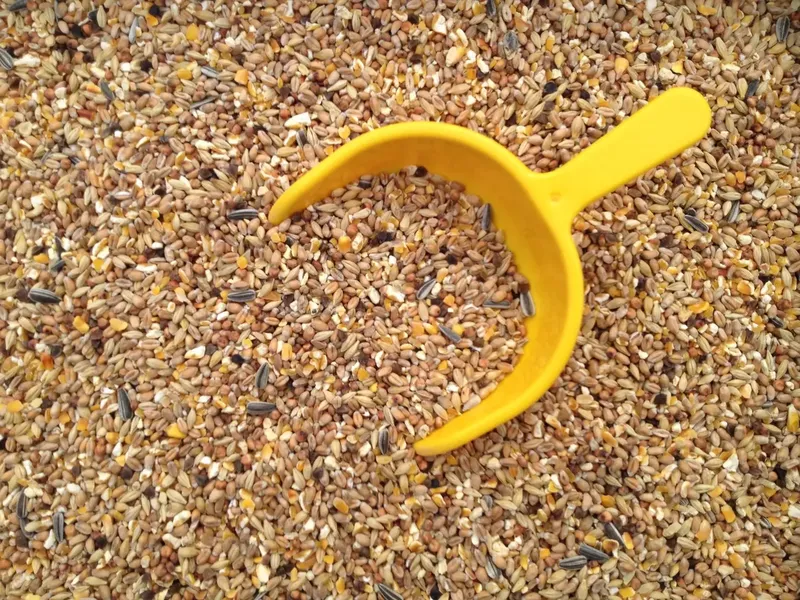
Chicken scratch fools a lot of owners, since it’s only cracked corn, wheat, and other whole grains with no drug risk.
That doesn’t make it safe, since a goat that eats half a bucket of scratch is still facing grain overload and acidosis.
My Goat Got Into the Chicken Feed. What Now?
Work through these in order:
- Get the goats off the feed and shut the container.
- Read the bag tag. If it lists monensin, lasalocid, salinomycin, or any coccidiostat, call your veterinarian and name the drug.
- Estimate how much disappeared. A cup of scratch in a 120-pound doe is very different from an emptied bucket.
- Buffer the rumen with baking soda, plenty of water, and sugar-free electrolytes.
- Call the vet anyway. Electrolytes and baking soda won’t touch a monensin case, which needs care from the first hour.
Here’s what most owners get wrong:
They wait for symptoms. Grain overload is far easier to prevent than to reverse, so the first two hours matter more than the next twelve.
Warning Signs in the First Day
Watch the left side of the abdomen, where a visible bulge is the earliest sign of trouble.
Here’s why:
That bulge is frothy bloat, which happens when fermentation gas gets trapped in foam inside the rumen. The foam can’t escape through normal burping, so pressure keeps climbing.
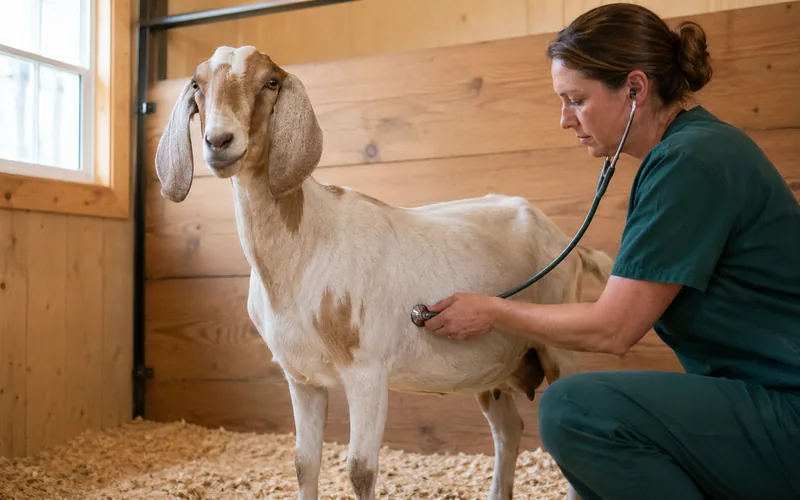
Other signs arrive together: off feed, teeth grinding, a hunched stance, and a goat that won’t stand up. Labored breathing or a staggering walk points to heart damage, which is what monensin poisoning looks like.
Keeping Goats Out of the Chicken Feed
Feed the chickens inside a run the goats can’t enter, and store every bag in a latched metal can.
Never scatter scratch across shared pasture, since grain on the ground is the most common way goats get a full dose unnoticed.
The dog’s bowl needs the same handling, because dog food carries copper levels set for a species that clears it easily.
There’s one more group to protect.
Sheep and horses on the same farm need the same care. Monensin kills horses at even lower doses, and they share the goat’s grain sensitivity.
What to Feed Goats Instead
Goats are browsing herbivores, so hay and browse should make up most of the daily intake. Grass hay works for most adults, and alfalfa adds protein for milkers and growing kids.
Grain is a supplement, not a meal. A measured scoop of oats is fine, but free-fed grain causes the same acidosis as a stolen bag of chicken feed.
Stirring a handful of cooked lentils into that scoop adds a little protein, too.
Loose minerals formulated for goats supply the copper, selenium, and zinc a herd needs. Minerals mixed for other species won’t do, since many leave copper out on purpose.
Cattle feed and calf starter pellets carry their own monensin risk, so check every bag before it goes near the goat pen.
Can goats eat rabbit feed or duck food?
No, and for the same reasons. Rabbit pellets are often medicated with a coccidiostat, and duck feed is another grain-heavy ration built for birds.
Any ration mixed for another species can carry drugs a herbivore can’t handle.
Frequently Asked Questions
No. A ration built for laying hens carries far more calcium than a goat can handle, and medicated versions may contain monensin. Chickens also need no copper in their feed, while goats do. Feed each species its own ration in a space the other cannot reach.
Keep goats away from medicated poultry and cattle feeds containing monensin or lasalocid, layer rations, dog and cat food, and large amounts of any grain. Avoid azaleas, rhododendron, wilted cherry leaves, and moldy hay. Sheep minerals are also a poor choice, since they leave out copper on purpose.
Internal parasites, mainly the barber pole worm, kill more goats than anything else. Enterotoxemia from grain overload runs a close second, which is why a goat that eats a large amount of chicken feed needs watching. Both conditions move fast and both are largely preventable.
Grass hay or browse should make up most of the daily ration, with alfalfa added for milkers and growing kids. Offer goat grain only in measured amounts, plus loose goat minerals with copper, selenium, and zinc. Clean water should be available at all times.