| # | Product | Our Rating | ||
|---|---|---|---|---|
| 1 |  | Best OverallManna Pro Goat Electrolyte Supplement | ★★★★☆ | Check Price |
| 2 |  | Sav-A-Caf Electrolyte Powder for Livestock | ★★★★☆ | Check Price |
| 3 |  | Little Giant Heated Water Bucket (5 gal) | ★★★★☆ | Check Price |
Toss a goat a handful of fruit and it vanishes in seconds, so it feels natural to assume the juiced version would be an even bigger hit. That instinct is where a lot of well-meaning owners go wrong.
A goat’s stomach is built for slow-fermenting plants, not sugary liquids that hit the gut all at once. Understanding that one difference explains why juice belongs in your glass and never in the water trough.
Can Goats Drink Juice?
Goats should not drink juice, whether it is fresh-squeezed, store-bought, or watered down. The concentrated sugar and acid in juice work against the very system a goat relies on to digest food.
Goats are ruminants, meaning they break down what they eat through billions of microbes living in a four-chambered stomach. Those microbes thrive on fibrous browse and hay, and they have no use for a fast hit of fruit sugar.
Pour juice into that system and you tip the balance. A treat that looks harmless can set off digestive trouble ranging from mild scours to a genuine emergency.
Why Juice Upsets a Goat’s Rumen
Put simply, juice ferments into acid faster than a goat’s rumen can buffer it, and that sudden spike does the harm.
The heart of the problem is the rumen, the largest of a goat’s stomach chambers. It runs on a stable community of bacteria that ferment plant fiber into usable energy.
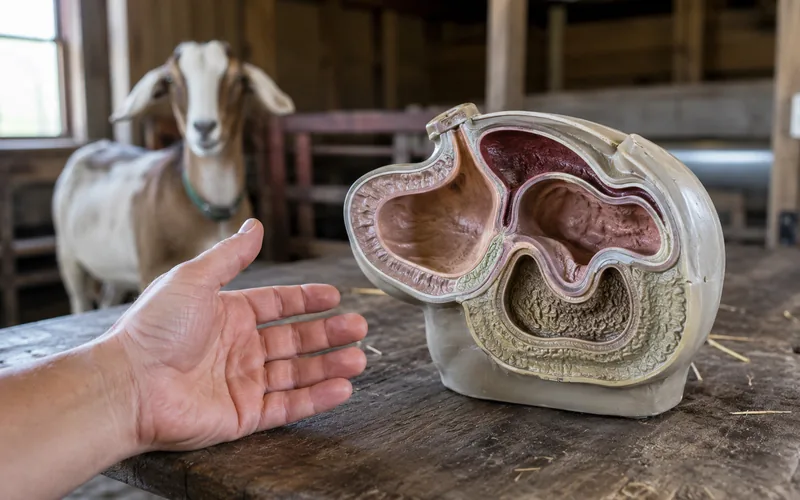
Juice is essentially liquid sugar, and sugar ferments fast. When a slug of it arrives, sugar-loving bacteria multiply in a rush and flood the rumen with acid.
That acid drop is called ruminal acidosis, and it’s the same danger a goat courts when it raids the grain bin. The fiber-digesting microbes start to die off, the rumen slows or stops, and gas builds up fast.
Then there’s the acidity itself. Citrus and other fruit juices are sharply acidic on their own, so they push rumen pH down from two directions at once.
The result can be bloat, painful cramping, and diarrhea within hours. In a small goat or a repeated offense, acidosis can turn life-threatening, which is why juice is never worth the risk.
Fruit Juice vs Whole Fruit
The short answer: whole fruit is a fine treat, but juice concentrates that same sugar and strips out the fiber that keeps digestion in check.
Here’s where people get tripped up. Goats can safely enjoy many of the same fruits that juice is made from, just in their whole, unpressed form.
The difference is fiber and portion. A whole fruit comes wrapped in pulp and skin that slow digestion, and a goat can only chew so many bites before moving on.
Juicing strips all of that away and concentrates the sugar from several pieces of fruit into a few gulps. A goat that would never eat ten oranges at once can swallow the juice of ten in seconds.
So a couple of fresh apple slices make a fine occasional treat, while a bowl of apple juice does not. The same holds for a wedge of orange or a small handful of whole grapes offered now and then.
A cooked puree such as plain applesauce lands somewhere in the middle, gentler than juice but still concentrated enough to keep to a spoonful.
| Form | Sugar Delivery | Fiber | Verdict for Goats |
|---|---|---|---|
| Whole fruit, small portion | Slow, self-limiting | Intact | Safe treat |
| Fruit juice | Fast, concentrated | Stripped out | Avoid |
| Diluted juice | Lower per sip, still sugary | Stripped out | Avoid |
| Plain water | None | None | Ideal |
Treat fruit as a garnish, not a food group. The bulk of any goat’s diet should still be hay, pasture, and browse, with fruit capped at a small daily handful.
The same rule holds for starchy kitchen treats like cooked rice, which should stay a small, occasional extra.
Store-Bought and Diluted Juice
Packaged juice piles on problems that even fresh-squeezed doesn’t have. Most bottled juices carry added sugar, preservatives, and citric acid that push the rumen further out of balance.
The bigger hazard is artificial sweetener. Some sugar-free or diet drinks contain xylitol, and this sweetener is toxic to many animals, so any product that might contain it should stay far from your herd.
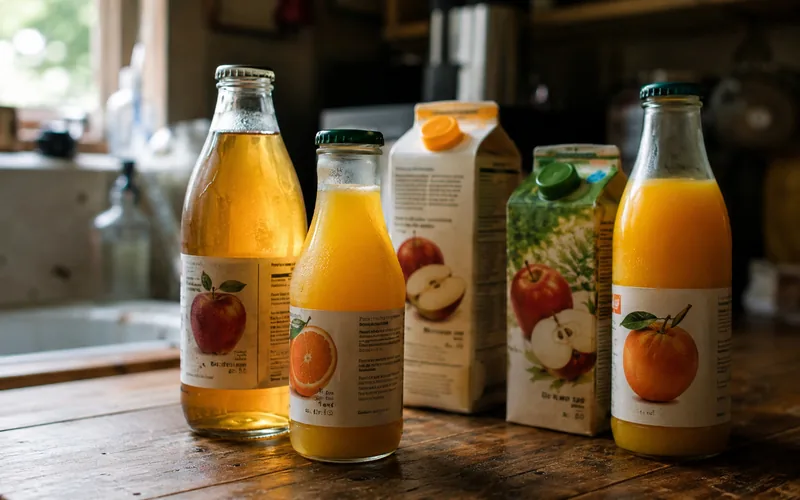
Watering it down doesn’t fix the core issue either. You lower the sugar in each sip, but you also teach a goat to expect sweet water and snub the plain trough it actually needs.
No version of juice earns a spot in a goat’s diet, and clean water does everything juice can’t with none of the downsides.
Can Baby Goats Drink Juice?
Baby goats should never be given juice under any circumstances. A kid’s rumen is still developing and is even less equipped to handle a sugar and acid load than an adult’s.
For the first weeks of life, a kid runs almost entirely on milk. If you’re hand-raising one, the right drink is warm goat milk or a proper substitute, and the safe options for bottle-raising a kid on cow milk are worth knowing before an emergency hits.
Introducing juice to a young goat risks scours that can dehydrate a small animal quickly. When a kid starts nibbling solids, the goal is hay and forage to build the rumen, not sweet liquids that undermine it.
Symptoms to Watch For
Here is what matters: scours, bloat, a lost appetite, or lethargy are the first clues a goat’s rumen is in trouble.
If a goat does get into juice, keep a close eye on it for the next 24 hours. Catching trouble early gives you time to act before a mild upset turns serious.
The most common warning signs after a sugar load include:
- Scours, or watery diarrhea, often the first sign of a rumen thrown off balance
- Bloat, shown as a tight, swollen left side and obvious discomfort
- Loss of appetite or a goat that stops chewing its cud
- Lethargy, standing hunched, teeth grinding, or isolating from the herd
Mild loose stool from a small taste usually passes on its own with plenty of fresh water available. Bloat, refusal to eat, or a goat that seems to be in real pain calls for a vet without delay.
When in doubt, err toward caution. Rumen problems escalate fast in goats, so it’s always better to make the call early.
Safe Drinks and Hydration Alternatives
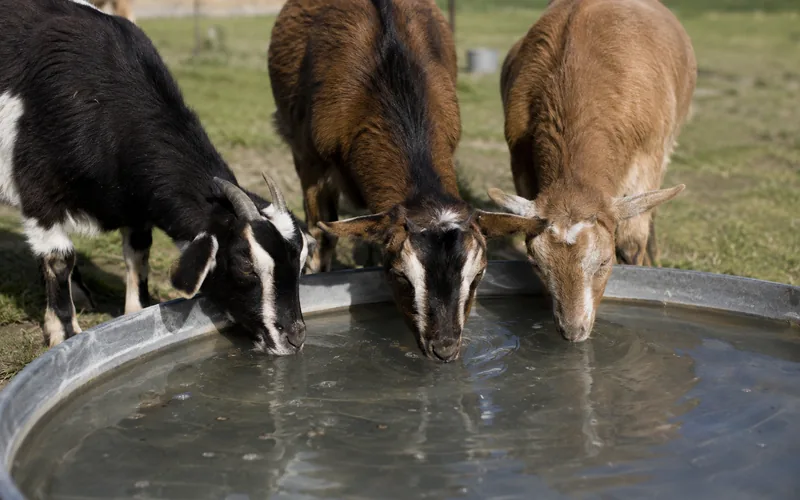
Keeping a goat hydrated turns out to be refreshingly simple. Clean, fresh water is the only drink a healthy goat needs, and it should be available at all times.
An adult goat drinks roughly 4 to 5 litres a day, climbing higher in heat or during lactation. Goats are famously picky about cleanliness and will turn up their noses at a dirty or stagnant trough, so refresh it often.
When a goat actually needs more than water, reach for the right tool. A livestock electrolyte mix restores the salts lost to diarrhea, heat stress, or illness, and it does the job juice pretends to without the sugar.
For a sick goat that has gone off its feed, a spoonful of molasses stirred into warm water can tempt it to drink and add a little energy. If you want a hydrating snack instead, a slice of juicy watermelon delivers water in whole-food form that the rumen handles well.
Keep water clean, offer electrolytes when they’re warranted, and leave the juice on the kitchen counter. That routine covers everything a goat’s hydration needs.
Frequently Asked Questions
A single accidental sip is unlikely to cause lasting harm to a healthy adult goat. The real danger is repeated servings or a large amount at once, which floods the rumen with sugar and acid. If a goat drinks juice, offer plenty of fresh water and watch for bloat or loose stool over the next day.
No, apple juice and orange juice are not safe drinks for goats. Both are concentrated sources of sugar, and orange juice adds a heavy dose of acid on top. A few pieces of the whole fruit are a far better treat than the juice pressed from it.
Watering juice down lowers the sugar per sip but does not make it a good idea. Goats have no need for sweetened drinks, and even diluted juice can teach a goat to snub plain water. Stick to clean water and save juice for yourself.
Reach for a livestock electrolyte solution made for goats or sheep, not fruit juice. Electrolytes replace the salts lost to diarrhea or heat stress without the sugar overload. In a pinch, a spoonful of molasses stirred into warm water is a safer sweet draw than juice.