| # | Product | Our Rating | ||
|---|---|---|---|---|
| 1 |  | Best OverallREDMOND Goat Mineral Supplement (5 lb) | ★★★★★ | Check Price |
| 2 |  | Wholesome Harvest 16% Goat Feed (10 lb) | ★★★★☆ | Check Price |
| 3 |  | Manna Pro Goat Treats | ★★★★☆ | Check Price |
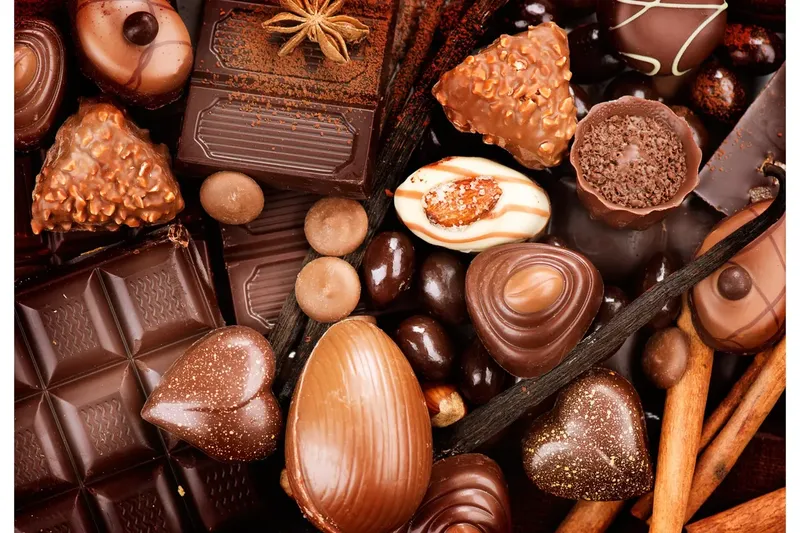
Chocolate is a food made from roasted cocoa beans, and those beans carry a natural stimulant called theobromine. The stimulant clears a person’s body in a few hours, but it lingers far longer inside a goat.
Goats are browsers, and they taste almost anything within reach. That habit is how most chocolate poisoning starts, not from an owner deliberately handing over a candy bar.
This article covers what theobromine does inside the body and which forms carry the most of it. It also walks through the symptoms, the emergency steps, and the mulch and bean shells that catch owners by surprise.
Can Goats Eat Chocolate?
Goats cannot safely eat chocolate. The trouble comes from theobromine, a toxin found in every product made from cocoa beans.
Theobromine belongs to a group of stimulants called methylxanthines. Caffeine sits in the same group, and chocolate carries both compounds together.
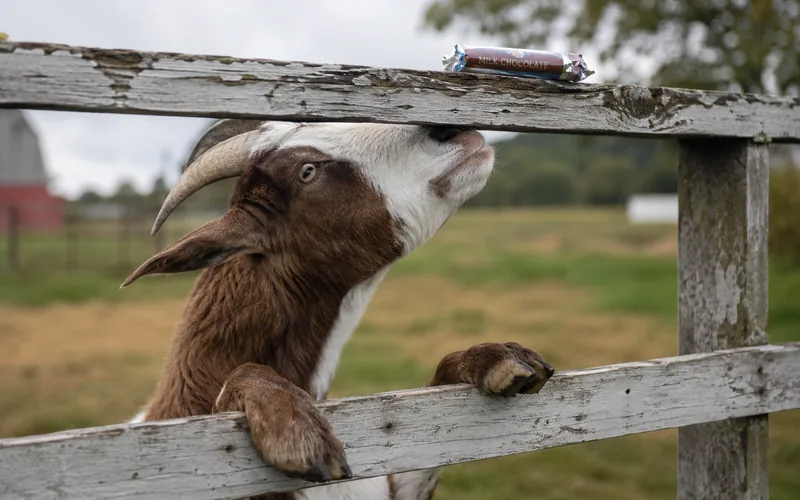
Both compounds together are why portion size matters so much. A single milk chocolate chip will not put a 120-pound doe in danger.
A handful of baking squares fed to that same animal is a real emergency. Owners rarely realize how far apart those two amounts are.
Here’s the deal:
Chocolate stays off the treat list and out of reach. No portion is worth the risk, and safe treats cost nothing extra.
Why Theobromine Is Toxic to Goats
Theobromine acts on the heart and the nervous system at the same time. It speeds the heart rate, raises blood pressure, and makes the nervous system fire too fast.
Hitting both systems at once turns a sweet food into a poison. The heart can beat too quickly to pump well, and seizures may follow.
How a Goat’s Rumen Slows Clearance
A goat is a ruminant, which means it digests food in a four-chamber stomach. The first chamber, the rumen, holds feed for many hours while microbes ferment it.
That long holding time suits hay and browse perfectly. It works against the animal when the feed contains a toxin.
Chocolate sits in the rumen and releases theobromine slowly. It gets absorbed over many hours instead of clearing in one pass, so the level in the blood keeps climbing.
Caffeine Adds to the Load
Caffeine arrives alongside the theobromine in every cocoa product. The Merck Veterinary Manual reports that theobromine sits at 3 to 10 times the concentration of caffeine in chocolate.
Both compounds drive the poisoning, so the smaller number still counts. A large dose means two stimulants working together, not one.
Can Sheep, Cows, or Horses Eat Chocolate?
No. Theobromine harms sheep, cows, pigs, and horses for the same reason it harms goats, and every ruminant clears it slowly.
Cows are the best-documented case among livestock.
Which Types of Chocolate Are Most Dangerous
Cocoa solids decide the toxicity. The darker and more bitter a product tastes, the more methylxanthines it holds per gram.
The Merck Veterinary Manual publishes measured methylxanthine levels for the chocolate products people keep at home:
| Chocolate product | Methylxanthines per gram |
|---|---|
| Cocoa powder | 28.5 mg |
| Unsweetened (baking) chocolate | 15.5 mg |
| Cocoa bean hulls | 9 mg |
| Semisweet and dark chocolate | 5.3–5.6 mg |
| Milk chocolate | 2.3 mg |
| White chocolate | 0.04 mg |
Cocoa Powder and Baking Chocolate
Cocoa powder is the most dangerous product on a farm. At 28.5 mg per gram it holds more than twelve times the methylxanthines of milk chocolate.
Baking chocolate follows close behind at 15.5 mg per gram. Both live in kitchens and pantries, where they spill easily within reach.
Milk and White Chocolate
Milk chocolate is the form most often within reach. Cookies, cake, and candy bars all sit here, and the dose per bite is far lower.
White chocolate barely registers on the theobromine scale at all.
But there’s a catch.
That low reading covers only the toxin. It still delivers sugar and fat the rumen handles poorly, so it can trigger bloating and scours on its own.
Can Goats Eat Chocolate Cake or Cookies?
No. Baked goods carry less theobromine than a solid bar, but the sugar, fat, and flour upset the rumen on their own.
Cake and cookies are what most of them actually get into. Watch for bloating and scours alongside the poisoning signs.
How Much Chocolate Is Harmful for Goats?
No safe dose has ever been set for goats. The published thresholds come from dogs, and veterinarians use them as the closest available guide.
The Merck Veterinary Manual reports mild signs such as vomiting and diarrhea at roughly 20 mg of methylxanthines per kilogram of body weight. Heart effects show up at 40 to 50 mg/kg, and seizures at 60 mg/kg or more.
So what does that mean?
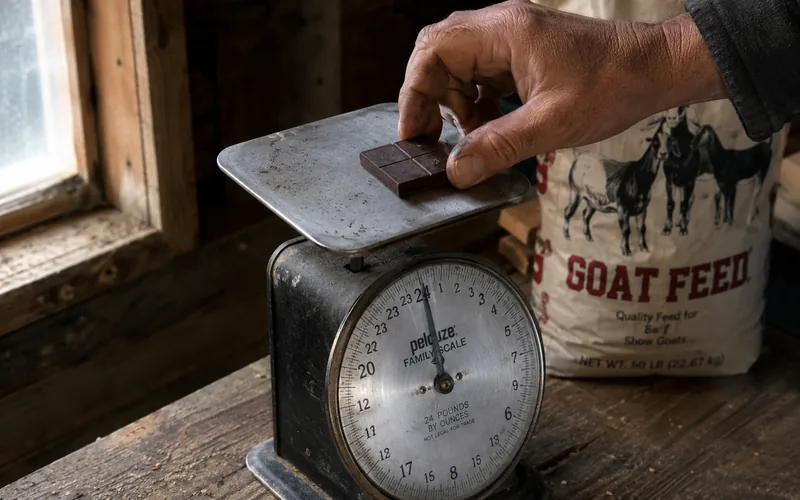
A 45-kilogram goat, about 100 pounds, would need close to 900 mg of methylxanthines to reach the mild-sign threshold.
In practice that means roughly 390 grams of milk chocolate, or just 32 grams of cocoa powder. Body weight drives the whole calculation.
Why Kids Face the Highest Risk
Body weight is exactly why the young are so much more fragile. A 7-kilogram kid needs only about 140 mg of methylxanthines to reach the same mild-sign threshold.
Roughly 60 grams of milk chocolate would do it, or two small cookies. One chocolate bar could push a newborn kid past the seizure threshold entirely.
Nursing kids carry a second disadvantage. Their rumen is not fully developed yet, so the microbes and the gut wall that handle toxins in an adult are still forming.
Dwarf and pygmy breeds face that same risk as full adults. A full-grown Nigerian Dwarf may weigh 30 kilograms, which is a quarter of a large dairy doe.
Symptoms of Theobromine Poisoning in Goats
Signs usually appear within two to four hours of eating. They can start later in a ruminant, since the rumen releases the toxin gradually.
Early Warning Signs
The first change is behavioral. A poisoned goat turns restless, paces the pen, and refuses to settle or lie down.

Vomiting, diarrhea, and heavy thirst follow that restlessness. Some show abdominal pain and bloating, which owners easily mistake for ordinary digestive upset.
Severe Signs That Need a Vet Now
Rapid breathing, shortness of breath, and a racing pulse mean the toxin has reached the heart. Muscle weakness and visible tremors come next.
Seizures, a spike in body temperature, and collapse mark the late stage. Deaths from methylxanthine poisoning usually trace back to heart rhythm failure or pulmonary edema, which is fluid building up in the lungs.
What to Do if Your Goat Eats Chocolate
Call your veterinarian before you do anything else. Have three details ready: the type of chocolate, the rough weight eaten, and your goat’s body weight.
There is no antidote for theobromine. Treatment is supportive, meaning the vet manages the symptoms while the body clears it on its own.
Steps to Take Right Away
Move the goat to a quiet pen away from the herd. Noise and crowding push the heart rate up, and the toxin is already doing that job.
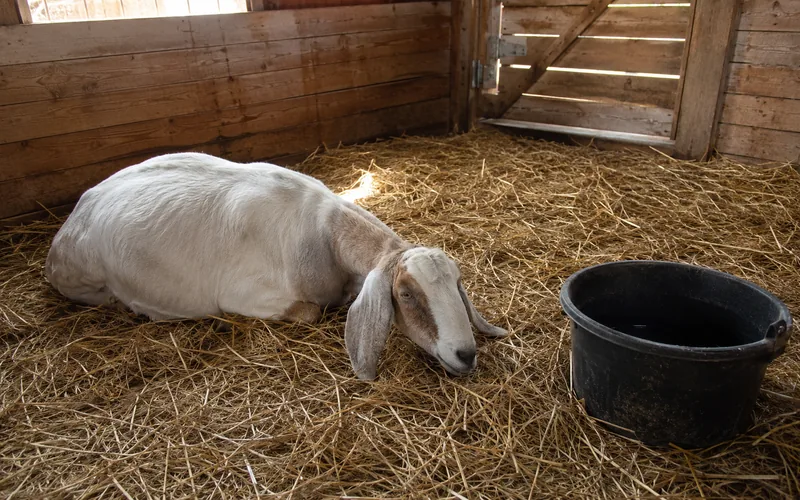
Offer fresh water but hold back the grain. Never try to force vomiting, because ruminants cannot vomit safely.
What this means for you:
Your vet may give activated charcoal to bind theobromine still sitting in the gut. Repeat doses are common, since it cycles through the liver and returns to the intestine again.
IV fluids, heart-rhythm drugs, and sedatives make up the rest of the treatment. Early calls produce the best outcomes, so do not wait for symptoms before dialing.
Cocoa Mulch and Cocoa Bean Byproducts
Candy isn’t the only source of theobromine on a property. Cocoa bean hulls are sold as garden mulch, and they measure 9 mg of methylxanthines per gram.
The hulls hold nearly four times the level in milk chocolate, spread across a garden bed in a form the herd will happily browse.
Here’s the thing:
Some mulches have the methylxanthines stripped out during manufacturing. The bag rarely says either way, so treat all of it as unsafe near a pen.
Cocoa byproducts turn up in livestock feed too. The Merck Veterinary Manual notes that deaths have been reported in livestock fed cocoa byproducts and in animals eating cocoa hull mulch.
The Open Sanctuary Project reports that chocolate causes problems in other ruminants, particularly cows. The risk there depends on the product type, the share of the diet it makes up, and the age of the animal.
Species-specific research remains thin on this toxin. Treat that gap as a reason for caution, not comfort.
Keeping Chocolate Away From Your Herd
Compost piles are the most common entry point on a small farm. Cake, cookies, and cocoa-dusted scraps go into the bin, and a loose goat heads straight for it.
Fence the compost, or keep food scraps out of the pile entirely. The same caution applies to kitchen leftovers of any kind, since mixed scraps often hide ingredients that are unsafe for ruminants.

Holidays create the other big problem.
Halloween candy, Easter baskets, and Christmas baking all leave chocolate within reach of animals and of children who like to share.
Store cocoa powder and baking chocolate in sealed containers on high shelves. Ask visitors not to hand-feed the herd, because most poisonings begin with someone trying to be kind.
If you share horse treats with your goats, check the label and skip any with chocolate or cocoa.
Safe Treats to Offer Instead
Goats don’t need sweets, though they clearly enjoy them. Fresh produce gives them something sweet without the toxicity.
Sliced apples are the simplest option, and most will take them straight from your hand. Fresh carrots and ripe bananas work well too, and both are safe in modest portions.
Keep all treats under 10 percent of daily intake. The rest of that balanced diet belongs to hay, browse, clean water, a loose mineral supplement, and enough protein for the animal’s stage of life.
Treats that crowd out those basics create their own problems. Goat nutrition depends on steady forage plus minerals, and a rumen that digests fiber does poorly on sugar.
That’s also why sweet drinks like fruit juice have no place in the water trough.
Pumpkin and watermelon suit warm months. Leafy greens work year-round, though beet tops and kale are best kept small because the oxalates bind minerals in the gut.
A goat on a balanced diet of forage, minerals, and protein stays healthier than one filled up on snacks. Good nutrition also makes an accidental chocolate dose easier to survive, because a healthy liver clears the toxin faster.
The Bottom Line
Chocolate is toxic to goats, and no amount is worth offering as a treat. Theobromine and caffeine strain the heart and nervous system, and the rumen releases both slowly over many hours.
Cocoa powder and baking chocolate carry the heaviest dose. Young kids and dwarf breeds are in the most danger, so call your vet the same day if one eats any.
Frequently Asked Questions
Neither one can, because theobromine and caffeine cause heart arrhythmias and seizures in both species. Chickens weigh far less, so the same piece does more damage to a hen than to an adult goat.
Chocolate, cocoa byproducts, avocado, onions, garlic, and any moldy or fermented feed are unsafe. Among plants, rhododendron, azalea, yew, oleander, and nightshade poison goats most often.
Apples, carrots, bananas, pumpkin, watermelon, and leafy greens are safe in small portions. Keep all treats under 10 percent of daily intake so hay, browse, and minerals still carry the diet.
Internal parasites kill more goats than anything else, and the barber pole worm leads that list. Poisoning from toxic plants and foods ranks lower, though it is far easier to prevent.