| # | Product | Our Rating | ||
|---|---|---|---|---|
| 1 |  | Best OverallREDMOND Goat Mineral Supplement (5 lb) | ★★★★★ | Check Price |
| 2 |  | Wholesome Harvest 16% Goat Feed (10 lb) | ★★★★☆ | Check Price |
| 3 |  | Manna Pro Goat Treats | ★★★★☆ | Check Price |
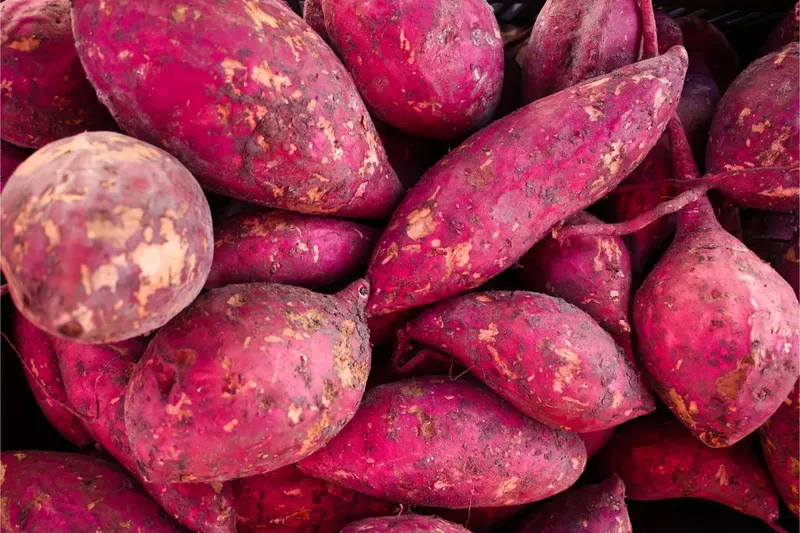
Yes, sweet potatoes are safe and nutritious for goats. Despite the name, they aren’t related to regular potatoes at all and carry none of the solanine concerns that come with white potatoes.
Can goats eat sweet potatoes?
Sweet potatoes are in the morning glory family, not the nightshade family. This is an important distinction because regular white potatoes contain solanine, which is toxic to goats, while sweet potatoes don’t.
You can feed sweet potatoes raw or cooked. Chop them into pieces about 1 to 2 inches across so your goats can chew them easily and you reduce any choking risk.
Can goats eat sweet potato leaves?
The vines and leaves are completely safe and most goats go crazy for them. If you grow sweet potatoes in your garden, the vines make fantastic supplemental forage throughout the growing season.
Sweet potato leaves are rich in vitamins and minerals, including vitamin A and copper. Unlike nightshade plants like tomatoes where the leaves are toxic, sweet potato vines are one of the few garden plants you can freely share with your herd without worrying about toxicity.
Other vegetable plants deserve a quick check before their leaves and vines go over the fence.
Can goats eat sweet potato roots?
Yes, both the flesh and the skin of the sweet potato root are safe. The skin contains extra fiber, so there’s no need to peel them before feeding.
Chop the roots into smaller chunks rather than handing a whole sweet potato to a goat. A full-sized sweet potato is dense enough that a goat could choke on a large piece, especially if they’re excited and eating fast.
Are sweet potatoes good for goats?
Sweet potatoes are rich in beta-carotene, which the body converts to vitamin A. Vitamin A supports immune function, vision, and reproductive health in goats.
They also provide vitamin C, fiber, and potassium. The natural sugars give goats a quick energy boost, which makes sweet potatoes a great treat during cold weather alongside other favorites like pumpkin, or for does in late pregnancy that need extra calories. Winter is when beta-carotene matters most, since dry hay loses its carotene content over months of storage, and chopped carrots at one or two a day cover the same gap for a fraction of the sugar.
Are there any risks associated with feeding sweet potatoes to goats?
The real risk is overfeeding. Sweet potatoes are high in sugar compared to hay, and too much sugar at once can upset the rumen and cause loose stools.
Avoid feeding sweet potatoes that have started to sprout or show signs of mold. The same caution applies to moldy hay and any other spoiled feed.
Sprouted sweet potatoes can contain compounds that are harder on a goat’s stomach, and moldy food of any kind is a no-go for ruminants.
What’s the recommended serving size for sweet potatoes?
A few chopped pieces per goat is plenty as a treat. Think of it as a supplement to their regular hay and feed, not a replacement.
For a standard-sized goat, half a medium sweet potato per day is a reasonable upper limit. Pygmy and Nigerian Dwarf goats, popular choices for those keeping goats in urban environments, should get proportionally less since their smaller rumens fill up faster.
Final Thoughts
Sweet potatoes are one of the safest and most nutritious treats you can give your goats. The roots, vines, and leaves are all edible with no toxicity concerns.
Chop the roots into small pieces, feed in moderation, and skip anything moldy or sprouted. If you’ve garden space, growing a patch of sweet potatoes gives you both tubers for winter treats and vines for summer forage.
Frequently Asked Questions
Goats can eat sweet potatoes. Sweet potatoes are rich in vitamins A and C, and fiber, for goats. It also contains a substance called carotene, which helps to protect goats from disease.
Yes, sweet potato vines and leaves are completely safe for goats. They're rich in vitamin A and copper, and most goats love them. The vines make fantastic supplemental forage throughout the growing season.
Yes, both the flesh and skin of sweet potato roots are safe for goats. Chop the roots into 1 to 2 inch pieces rather than feeding whole, since a full-sized sweet potato is dense enough that a goat could choke on a large piece.
Sweet potatoes are rich in beta-carotene, which converts to vitamin A for immune function, vision, and reproductive health. They also provide vitamin C, fiber, and potassium. Unlike regular potatoes, they contain no solanine.