
| # | Product | Our Rating | ||
|---|---|---|---|---|
| 1 |  | Best OverallGoat Nutri-Drench (1 Pint) | ★★★★★ | Check Price |
| 2 |  | Probios Oral Gel for Goats (30g) | ★★★★☆ | Check Price |
| 3 |  | Adjustable Drench Syringe Set (20ml) | ★★★★☆ | Check Price |
A goat that walks away from its feed is telling you something is wrong. Goats are grazers built to eat almost constantly, so a goat that loses its appetite is rarely just being fussy.
This is one symptom you should never ignore. A goat off feed can go downhill fast, and the cause is sometimes an emergency that needs a vet the same day.
The good news is that you can do a lot in the first hour to figure out what is wrong. After more than a decade of raising goats, my routine never changes: take the temperature, feel for rumen movement, and get fluids in while I work out the cause.
This guide walks through why it matters, the common causes, what to check, and exactly when to call for help.
Why a Goat Not Eating Is So Serious
The reason comes down to the rumen. A goat’s rumen is a giant fermentation vat that has to keep moving and keep being fed to stay alive.
When a goat stops eating, that fermentation slows down. The rumen can stall, gas can build, and the whole system starts to shut down within a day or two.
That is why off feed is never a minor problem in a goat. Rumen troubles like bloat, acidosis, and ketosis can turn fatal quickly if they are not caught and treated.
There is also a simple rule that comes from this. Given a choice between getting fluids in or getting food in, always choose fluids first, because dehydration kills faster than an empty stomach.
Time matters more than you might think. A goat caught on the first day off feed is far easier to pull back than one that has been down for several days.
How Long Can a Goat Go Without Eating?
Not nearly as long as many people assume. Unlike a dog or a cat, a goat cannot safely skip meals for a day or two.
The rumen depends on a steady stream of food and fluid to keep its microbes alive. Once that stops, the balance tips within hours, not days.
As a rule, treat 12 to 24 hours off feed as a problem worth acting on. By the time a goat has gone a full day without eating, it has usually burned through most of its reserve.
Kids and pregnant or lactating does are working with even less margin. A bottle kid that refuses two feedings, or a heavily pregnant doe that quits eating, needs attention right away.
The clock runs faster if the goat is also not drinking. Dehydration on top of a stalled rumen is what turns a bad day into an emergency.
Common Causes of a Goat Not Eating
Appetite loss is a symptom, not a diagnosis. The table below covers the usual causes, the signs that point to each, and your first move.
| Cause | Other signs | First move |
|---|---|---|
| Bloat | Swollen, drum-tight left side, distress | Treat as urgent, see the bloat guide |
| Grain overload (acidosis) | Follows a grain binge, dull, loose manure | Pull grain, offer baking soda, call a vet |
| Illness with fever (pneumonia, infection) | Fever, fast breathing, cough, dull eyes | Take temperature, vet for antibiotics |
| Pain (injury, sore feet or mouth) | Limping, guarding, teeth grinding | Find the source, treat the pain |
| Dental problems | Dropping food (quidding), weight loss, older goat | Have a vet check the mouth |
| Parasites | Pale eyelids, diarrhea, weight loss | FAMACHA check, fecal test, deworm |
| Ketosis or pregnancy toxemia | Late pregnancy, sweet breath, wobbly | Propylene glycol, vet, this is urgent |
| Plant or toxin poisoning | Sudden, drooling, staggering | Call a vet, identify the plant |
| Stress or new home | Recently moved or weaned, otherwise bright | Give time, offer familiar feed |
| Dehydration | Frozen, empty, or dirty water | Restore clean water and electrolytes |
The two you most want to rule out fast are bloat and grain overload, because both involve the rumen and both can kill quickly. If the left side is swollen and tight, treat it as an emergency.
Illness is the next big category. A fever points to an infection like pneumonia, and a goat with parasites or diarrhea often goes off feed as it gets run down.
Pain is an underrated cause. A goat with a hurt foot, a sore mouth, or a bellyache will stand hunched and refuse to eat, so check for limping, wounds, and teeth grinding.
Older goats deserve a mouth check. Worn or broken teeth make chewing painful, and you may see the goat drop wads of half-chewed feed, a habit called quidding.
Late-pregnant does are their own category. A doe in her last few weeks that goes off feed may be developing pregnancy toxemia, a fast-moving emergency covered below.
First Things to Check
Before you reach for any treatment, spend five minutes gathering information. These checks tell you how serious it is and point you toward the cause.
Take the temperature. Normal for a goat is 101.5 to 103.5 degrees Fahrenheit.
A fever above that range suggests infection, while a temperature below 100 means the goat is crashing and needs a vet, not food. Never feed or drench a chilled goat until it is warmed up.
Feel for rumen movement. Press your fist into the left flank, in the hollow in front of the hip.
A healthy rumen contracts and gurgles roughly one to two times a minute. A silent, still rumen is a red flag that fermentation has stalled.

Check the gums and eyelids. They should be pink and moist.
Pale gums or eyelids point to anemia, often from parasites, while tacky, dry gums mean the goat is dehydrated.
Look at the manure and the water. Note whether the goat has diarrhea, hard pellets, or no fresh droppings at all.
Then check the water source, because a frozen, empty, or fouled bucket is a surprisingly common reason a goat quietly stops eating and drinking.
Watch for cud chewing. A healthy goat at rest chews its cud, bringing food back up to re-chew it.
A goat that has stopped chewing its cud has a rumen that is no longer working normally. Note it down, because it is a clear sign to pass on to your vet.
Is Your Goat Sick or Just Picky?
Not every refused meal is an emergency. Goats are famously choosy, and a goat that turns up its nose at grain but happily eats hay and browse is usually fine.
The key is the whole picture. A bright, alert goat that chews its cud, drinks normally, and passes normal manure is probably just being picky or reacting to a feed change.
A goat that is dull, standing apart from the herd, grinding its teeth, or not chewing its cud is sick. A goat standing off by itself is either a doe about to kid or a goat that needs your attention.
Sudden grain refusal can also follow a diet change or a new bag of feed. Introduce any feed change slowly, and check that stored feed has not gone musty or moldy.
When in doubt, run the basic checks anyway. Taking a temperature and feeling for rumen movement takes two minutes and quickly tells a picky goat apart from a sick one.
Goat Not Eating After Kidding
A doe that goes off feed soon after kidding is a special case, and not one to wait on. The common causes here are all serious and move fast.
Milk fever, or low blood calcium, can leave a fresh doe weak, wobbly, and off feed within a day or two of kidding. It is a true emergency that responds to calcium given under veterinary guidance.
Ketosis is the other big one, caused by the huge energy demand of producing milk. A ketotic doe goes off feed, may have sweet, fruity breath, and needs energy support like propylene glycol.
A uterine infection (metritis) can also cause appetite loss, usually with a fever and a foul discharge. Any doe that is off feed after kidding should be seen by a vet promptly.
How to Get a Goat to Eat Again
Your job is to support the goat while you treat the real cause. The cause is what matters most, but these steps keep the goat going.
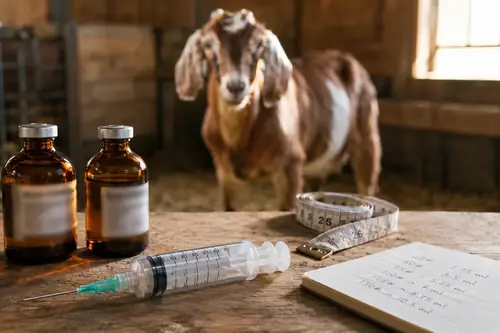
Get fluids in first. Offer fresh water and an electrolyte solution, and drench it gently if the goat will not drink on its own.
A 100-pound goat needs roughly a gallon of fluid a day to stay hydrated. If you need to give water by syringe, aim at the side of the mouth and go slowly.
Tempt the appetite with easy feeds. Fresh-cut leafy branches and good grass hay are the most digestible and the most tempting to a sick goat.
Skip grain until the goat is eating on its own again, because grain only adds to rumen trouble. A handful of fresh green leaves often gets a reluctant goat chewing.

Support the rumen. A ruminant probiotic or a dose of live cud from a healthy goat helps restart fermentation.
B vitamins, especially thiamine, also support a goat that has been off feed. Keep the goat warm, since a cold goat cannot digest properly.
Try several tempting feeds to find what the goat will take. Fresh browse, tree leaves, a few raisins, soaked beet pulp, or a little molasses in warm water can all spark a reluctant appetite.
For a goat that has been off feed for several days, a vet may pass a stomach tube to deliver fluids and nutrients directly. Never force feed or tube a goat that cannot hold its head up, because it can inhale the liquid into its lungs.
Treat the underlying cause. A goat will not eat normally until the real problem is fixed, whether that is bloat, a fever, pain, or ketosis.
Match the treatment to the cause, and get exact medication amounts from your vet or a goat dosage chart. Supportive care buys time, but it is not a substitute for treating the actual problem.
When to Call a Vet
Some cases you can manage at home, but many cannot wait. Call your vet right away if you see any of these:
- The goat is also not drinking for more than 12 to 24 hours
- The goat is down, weak, or cannot hold its head up
- A swollen, tight left side that suggests bloat
- A fever over about 104 degrees, or a temperature below 100
- No rumen sounds or movement when you press the left flank
- The goat is off feed after kidding, or shows sweet breath and wobbliness
- A kid or young goat that is off feed, since they fade fast
When in doubt, call. A goat that has not eaten for a full day has already used up most of its margin, and an early vet visit is far cheaper than a lost goat.
How to Prevent Appetite Loss
Most appetite problems trace back to the rumen or a missed health issue, so prevention is mostly steady management.
Make all feed changes slowly, over a week or two. A sudden switch in hay or a jump in grain is one of the fastest ways to upset the rumen.
Never let goats break into the grain bin. Grain overload is a common and preventable cause of a goat going off feed and bloating.
Keep clean, unfrozen water available at all times. Goats drink less when water is dirty or icy, and less water means less eating.
Stay on top of parasites with fecal checks and FAMACHA scoring. A heavy worm load quietly drags down appetite and body condition.
Feed late-pregnant does well to head off pregnancy toxemia, and keep free-choice minerals out year-round. A goat in good condition with a healthy rumen rarely goes off feed without a clear reason.
Watching how eagerly each goat eats is one of the simplest daily checks in goat health.
Sources and Further Reading
Causes and care cross-checked against established veterinary and small-ruminant references:
- The Merck Veterinary Manual, digestive and metabolic disorders of goats
- Onion Creek Ranch / Tennessee Meat Goats, feeding and hydrating a sick goat
- University extension publications on goat health and the rumen
A goat off feed can turn serious quickly. Use this as a guide, but confirm the cause and any treatment with your veterinarian.
Frequently Asked Questions
The most common reasons are rumen problems like bloat or grain overload, an illness with fever such as pneumonia, pain, dental issues, a heavy parasite load, or pregnancy toxemia in a late-pregnant doe. Because the cause varies, the first steps are to take the goat's temperature, feel for rumen movement, and check hydration. A goat off feed for more than a day, or one that is also down or refusing water, needs a vet.
Not long before it becomes dangerous. A goat's rumen needs constant food and fluid to keep working, and going off feed for even 12 to 24 hours can start a downward spiral, especially in kids and pregnant does. Treat a full day without eating as urgent, and do not wait if the goat is also not drinking.
Get fluids in first with water and electrolytes, since hydration matters more than solid food in the short term. Then offer the most tempting, digestible feed you have, such as fresh green leafy branches or good grass hay, and skip grain until the goat is eating on its own. Give a ruminant probiotic, keep the goat warm, and most importantly treat the underlying cause, because a goat will not eat normally until the real problem is fixed.
A doe that goes off feed after kidding needs prompt attention, because the usual causes are serious: milk fever (low calcium), ketosis from the demands of milk production, or a uterine infection (metritis). Check her temperature and look for weakness, wobbliness, or a foul discharge. This is a situation to call your vet quickly rather than wait it out.
Yes. A goat that is off feed and down, lethargic, or unable to hold its head up is an emergency and needs a vet now. A goat that cannot hold its head up also cannot safely swallow, so do not force food or fluids by mouth, and get professional help immediately.