| # | Product | Our Rating | ||
|---|---|---|---|---|
| 1 |  | Best OverallREDMOND Goat Mineral Supplement (5 lb) | ★★★★★ | Check Price |
| 2 |  | Wholesome Harvest 16% Goat Feed (10 lb) | ★★★★☆ | Check Price |
| 3 |  | Manna Pro Goat Treats | ★★★★☆ | Check Price |
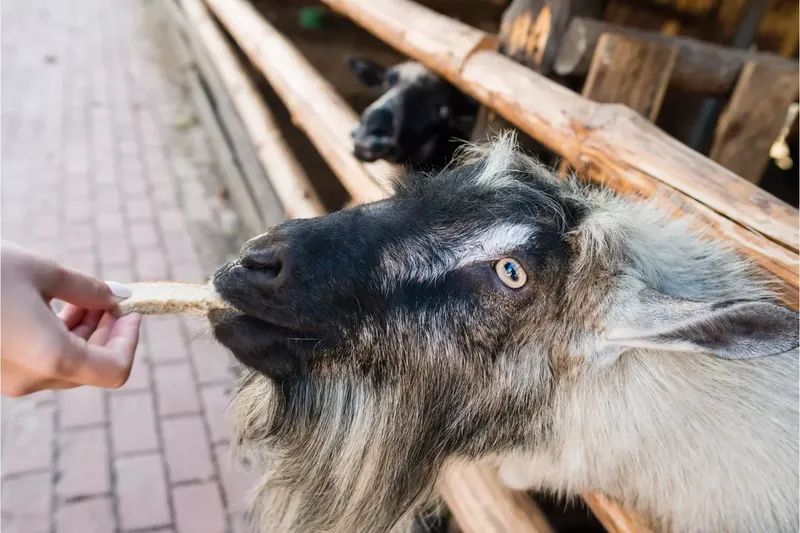
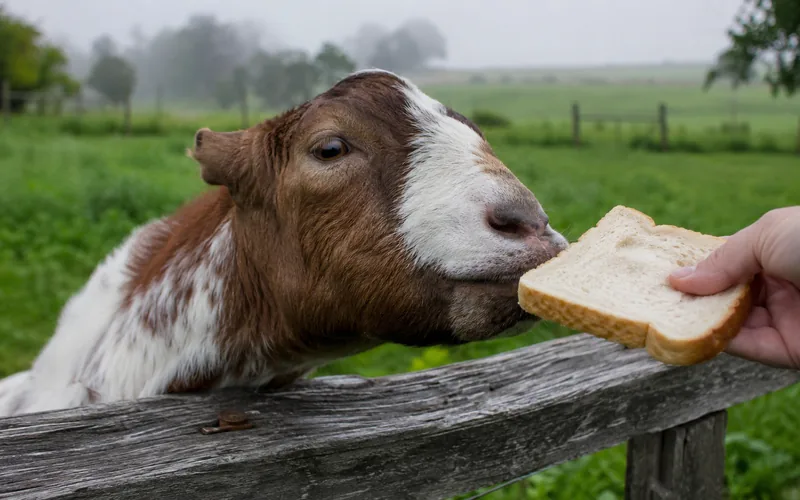
A goat will happily mug you for a slice of bread, tail wagging, but eager does not mean healthy. Bread sits in the same bucket as candy for a toddler: harmless in a bite or two, a real problem by the fistful.
The catch is that a goat’s stomach is nothing like ours, and starch behaves very differently once it hits that big fermenting vat up front. Below is exactly how much bread is safe, which loaves are worse than others, and the two forms of bread that can kill a goat outright.
Can Goats Eat Bread?
Yes, goats can eat plain baked bread in small amounts without harm. A few torn pieces as an occasional treat will not hurt a healthy adult goat.
The problem is never one bite, it is volume and frequency. Bread is packed with carbohydrates and almost none of the long fiber a goat actually needs, so it should never edge out hay or browse.
It’s also a genuinely handy tool to have around. Bread is cheap, soft, and irresistible, which makes it perfect for luring a stubborn doe into a pen or rewarding a kid during halter training.
Why Bread Is Hard on a Goat’s Rumen
In simple terms, bread is tough on the goat rumen because that organ is built to ferment fiber, not the fast-digesting starch that bread is made of.
A goat is a ruminant, meaning it digests food in a four-chambered stomach where microbes, not enzymes, do most of the heavy lifting. That front chamber, the rumen, is a fermentation tank tuned to break down cellulose from grass, weeds, and hay.
The whole system runs on fiber. According to NCAT’s ATTRA program, goats are browsers whose digestive tracts are built to process roughage through microbial fermentation, and high-concentrate, low-fiber feeds disrupt that process and invite metabolic trouble.
Bread flips that balance on its head. It is fast-fermenting starch with barely any fiber, so a big serving feeds the wrong microbes and starves the fiber-digesting ones.
Every refined-wheat food behaves the same way, and cooked pasta delivers a nearly identical starch load per bite. Leftover cooked rice is just as starchy, so keep it to a small handful.
When those starch-loving bacteria bloom, they flood the rumen with acid and drop its pH. That single shift drives nearly every bread problem below, from a mild off-feed day to fatal acidosis.
Compared to hay, bread is almost pure empty calories. Hay delivers the long-stem fiber that keeps the rumen churning and the cud coming, while bread offers only a sugar rush.
How Much Bread Can a Goat Eat?
Keep bread to one or two small pieces per goat, no more than a couple of times a week.
The safest ceiling is the standard treat rule: all treats combined should stay under 10 percent of daily intake. ATTRA’s guidance on goat nutrition is blunt on the foundation, noting that the bulk of a goat’s diet should come from pasture, browse, and hay, with grain and treats kept to a small fraction.
Serving Sizes by Goat Weight
Portion has to scale with the animal, because a slice that barely registers for a big buck is a meaningful starch load for a miniature breed. A 30-pound Pygmy or Nigerian Dwarf should get no more than half a small slice, while a 150-pound dairy doe can handle a full slice.
A 200-pound Boer or other large meat breed tops out around one to two small pieces. When in doubt, feed less.
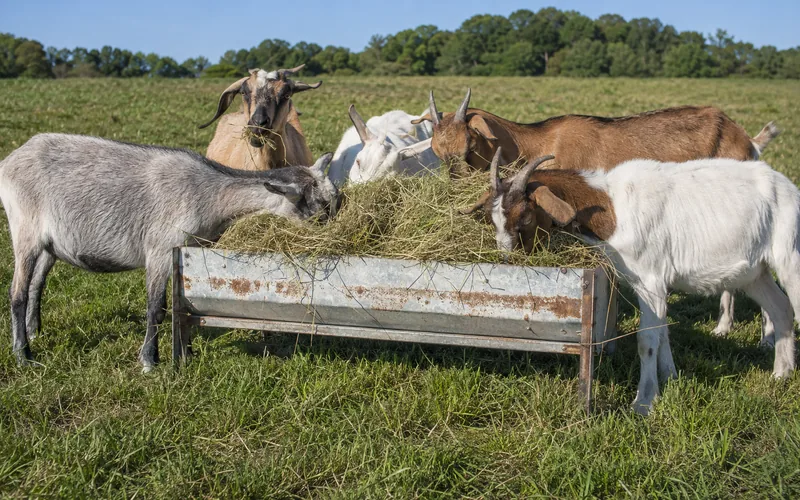
The real trouble is that bread is easy to over-give without noticing. Crusts add up fast when several people each toss one, so agree on a daily limit for the herd.
Can Goats Eat Bread Every Day?
Daily bread is a bad habit, even in small amounts. The rumen can usually shrug off an occasional starch hit, but a steady drip of carbohydrates keeps its pH low and its microbial balance tilted the wrong way.
Over weeks, that low-grade acid load shows up as picky eating, loose droppings, and goats that fill up on treats instead of hay. If you want to give something every day, hand out a few leaves of browse or a sprig of a safe herb instead.
What Kind of Bread Can Goats Eat?
The short answer: plain whole wheat or whole grain bread is the safest choice, while white, sweet, seeded, and flavored loaves are best avoided.
Not all loaves are equal. Plainer and less processed is always safer, and anything sweet, salty, or flavored moves quickly from bad idea to real risk.
| Bread type | Verdict for goats |
|---|---|
| Whole wheat / whole grain | Best option: more fiber, fewer refined carbs |
| White bread | Occasional only: refined starch, empty calories |
| Sourdough | Fine plain; slightly acidic, so keep portions tiny |
| Rye / multigrain | Acceptable plain, in small amounts |
| Seeded, sweet, or flavored | Avoid: raisins, garlic, onion, and heavy sugar or salt |
| Moldy or raw dough | Never: genuinely dangerous, covered below |
White Bread
White bread is the least useful thing you can hand a goat. The refining process strips out the bran and germ, leaving fast-digesting starch with almost no fiber or nutrients.
Whole Wheat and Whole Grain
Whole wheat is the better pick if you’re going to feed bread at all. It holds more fiber and more of the original grain, so it sits a little easier in the rumen, though it’s still nowhere close to hay.
Sourdough and Rye
Plain sourdough and rye are fine in tiny amounts. Sourdough carries more natural acidity, so keep the serving small to avoid nudging rumen pH further down.
Seeded, Sweet, and Flavored Breads
This is where bread turns hazardous. Garlic and onion breads can damage a goat’s red blood cells, raisin breads add concentrated sugar, and salted or sweetened loaves pile on the wrong things, so skip anything beyond plain bread entirely.
Chocolate babka and cocoa-swirled loaves sit in a category of their own, since cocoa carries theobromine, a toxin goats clear slowly.
Can Goats Eat Moldy Bread?
Never feed moldy bread to a goat, full stop. Mold is not a cosmetic problem you can trim around, and the danger is invisible long before you see fuzz.
The threat is mycotoxins, the toxic compounds molds produce. The MSD Veterinary Manual notes that mycotoxins from moldy feed can cause digestive disorders, neurological damage, immune suppression, and reproductive failure in livestock, with severity depending on the toxin and the dose.
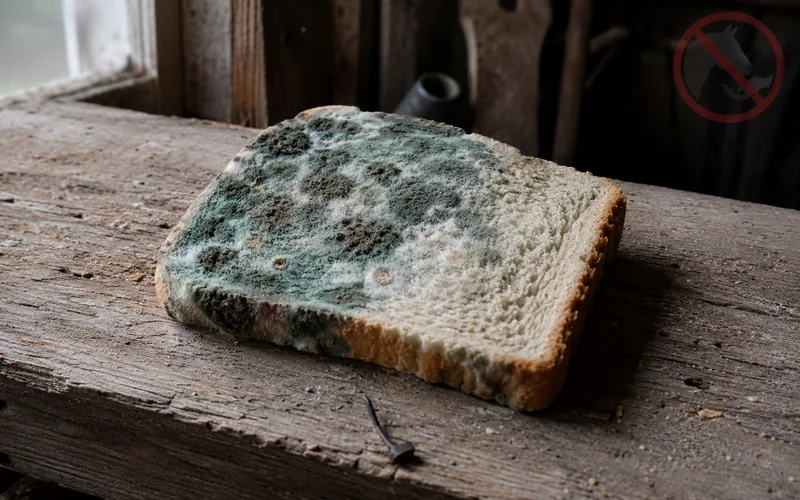
In goats, moldy feed is also a classic trigger for listeriosis, a brain infection that can kill within days of the first stumble or head tilt. Stale bread with no visible mold is fine, but the moment you spot a single spot, throw the whole loaf out rather than cutting around it.
Why Raw Bread Dough Is So Dangerous
Honestly, raw dough might be even worse than mold. Baked bread is inert, but uncooked dough is alive with active yeast that keeps working inside the goat.
The rumen is warm, wet, and full of sugars, which is a perfect proofing environment. The yeast keeps fermenting, producing carbon dioxide that swells the stomach into bloat and alcohol that can lead to toxicity.
Keep rising dough, pizza dough, and any uncooked batter well out of reach. A rapidly swelling left side after a dough raid is an emergency, so call your vet right away.
Can Baby Goats Eat Bread?
Skip bread entirely for kids under three months old. Their rumens are still developing, and they need mother’s milk or a quality milk replacer, plus starter hay, to build the microbial population that adult digestion depends on.
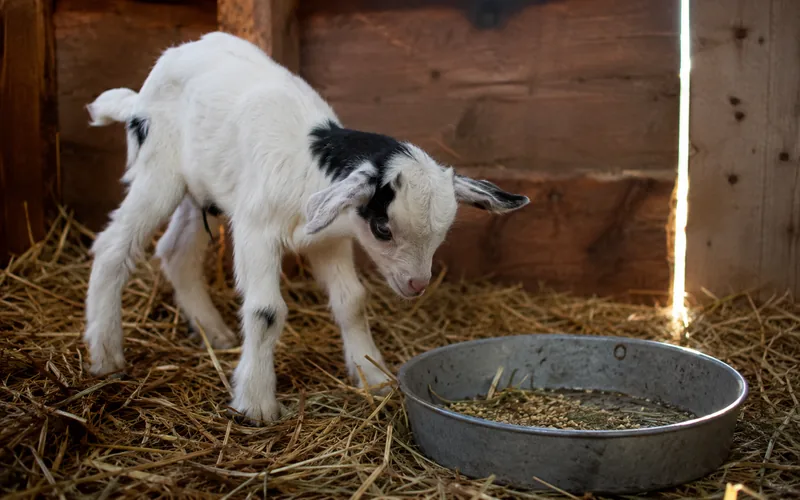
Older kids can technically handle a crumb or two, but there’s almost no reason to bother. A growing goat needs calcium, protein, and dense nutrition, and bread offers none of it while filling a small stomach.
For a kid, a thin sliver of fruit or vegetable is a far better choice.
Can Goats Eat Bread in the Winter?
Cold weather does not make bread any safer, despite the tempting logic that goats need extra calories in winter. They do need more energy when it is freezing, but that energy should come from more hay, not from starch.
Extra forage actually warms a goat from the inside, because fermenting fiber in the rumen generates heat in a way that a quick starch hit never will. Bread gives a brief calorie spike and no lasting warmth.
The mold risk does not take the winter off either. A crust left in a damp, cold shelter still grows mold, so the same never-feed-moldy rule applies year round.
What Happens If a Goat Eats Too Much Bread?
A single overload of bread can escalate fast, and the two big emergencies are acidosis and bloat.
Rumen Acidosis
When a goat eats too much starch at once, rumen bacteria ferment it into lactic acid faster than the stomach can buffer. The MSD Veterinary Manual describes this grain overload as a drop in rumen pH that can range from mild indigestion to a fatal metabolic crash.
Early signs include a goat that goes off feed, stands hunched, grinds its teeth, or scours. Caught early it is treatable, but a severe case can kill within a day.
Bloat
Fast-fermenting bread also produces a rush of gas. If that gas cannot escape, the rumen balloons, presses on the lungs, and a goat can suffocate if it is not relieved quickly.
Long-Term Effects
Short of an emergency, a bread habit quietly erodes health. Chronic starch feeding leads to obesity, ongoing digestive upset, and a herd that is less interested in the forage that actually keeps it well.
Better Treats to Feed Instead of Bread
Here’s what matters: carrots, apples, pumpkin, and oats all make better goat treats than bread because they add real fiber, water, or vitamins.
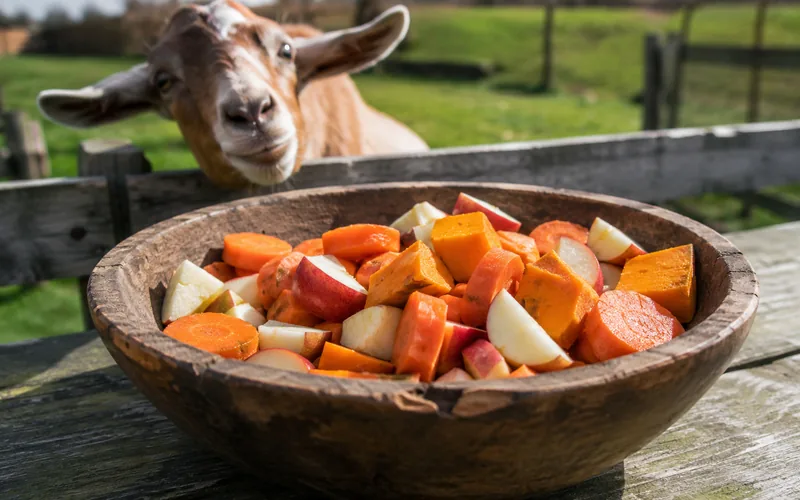
Bread’s only real virtue is that goats like it, and plenty of healthier goat treats clear that bar easily. Each one brings water, fiber, or vitamins alongside the flavor.
Other kitchen foods look just as tempting and land worse, because cheese brings fat and salt into a stomach built to ferment plant fiber.
Vegetables
Crunchy vegetables make excellent low-sugar rewards. A few pieces of chopped carrots deliver beta-carotene and fiber, and most goats find them every bit as exciting as a crust of bread.
Fruit
Fruit is the crowd favorite for a reason. A couple of apple slices or a chunk of pumpkin offers real vitamins and moisture, though the natural sugar means you still keep portions small.
Grains
If it is the grain-like quality of bread your goats enjoy, feed the real thing. A small handful of rolled oats is far gentler on the rumen than refined bread, since whole oats bring fiber along with their starch.
Can Other Animals Eat Bread?
The short answer is that bread stays a treat, not a staple, for nearly every animal on a small farm.
Can Sheep Eat Bread?
Sheep are ruminants like goats, so a bite or two of plain bread is fine while too much invites acidosis. Never feed sheep goat minerals alongside it, since the added copper is toxic to them.
Can Pigs or Cows Eat Bread?
Pigs handle bread far better than ruminants do and can eat it in moderation as part of a varied diet. Cows can have a little, though the same starch-overload and moldy-bread cautions still apply.
How to Feed Bread Safely
If you’re going to share bread, a few simple rules keep it a treat rather than a trip to the vet.
Only offer bread you’d eat yourself, tear it into small pieces to prevent choking, and never feed more than one or two bits per goat. Skip it on any day the herd has already had grain or another rich snack.
Signs to Stop Feeding Bread
Watch the herd for about 30 minutes the first few times you offer it. A goat that goes quiet, stands hunched, stops chewing its cud, or shows a swelling left side needs bread pulled from the menu and, in the case of bloat, a call to the vet.
Above all, let hay, browse, and a proper mineral supplement carry the diet. Bread is a garnish at best, and your goats will be perfectly happy if it never appears at all.
Frequently Asked Questions
Keep goats away from moldy feed, raw bread dough, chocolate, and anything sugary or salty like chips and cookies. Onions, garlic, rhubarb, and nightshades such as potato and tomato plants are toxic, and large amounts of grain or bread can trigger rumen acidosis. When in doubt, leave it out and stick to hay and browse.
Enterotoxemia, often called overeating disease, is one of the most common sudden killers, and it is closely tied to diet. A goat that gorges on grain, bread, or another starchy treat can set off a bacterial bloom in the rumen that turns fatal within hours. Internal parasites like the barber pole worm are the other leading cause of death.
Most goats go wild for sweet fruits and vegetables such as apple slices, carrots, watermelon, and pumpkin. These are far better rewards than bread because they carry water, fiber, and vitamins along with the flavor. Offer them in small pieces so treats never crowd out hay and browse.