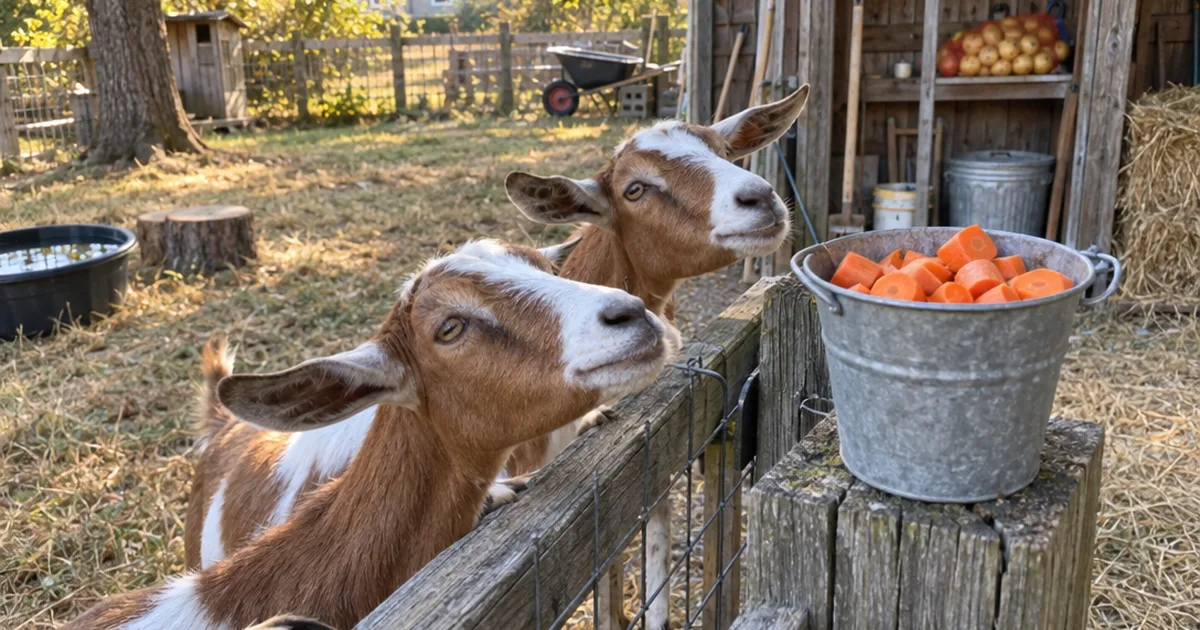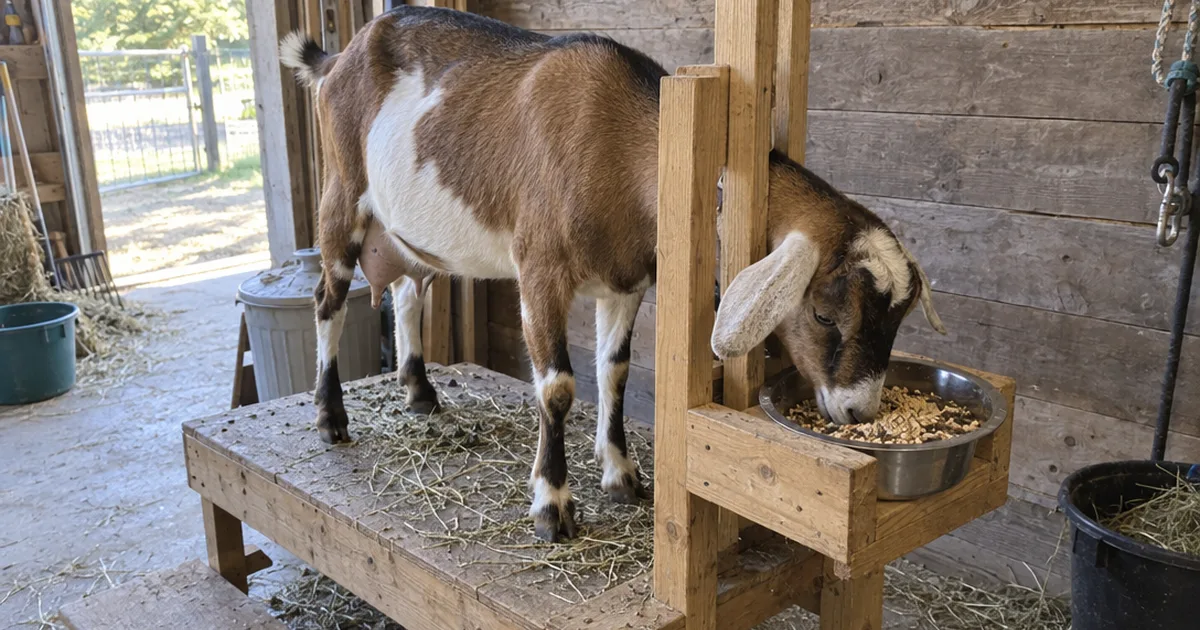

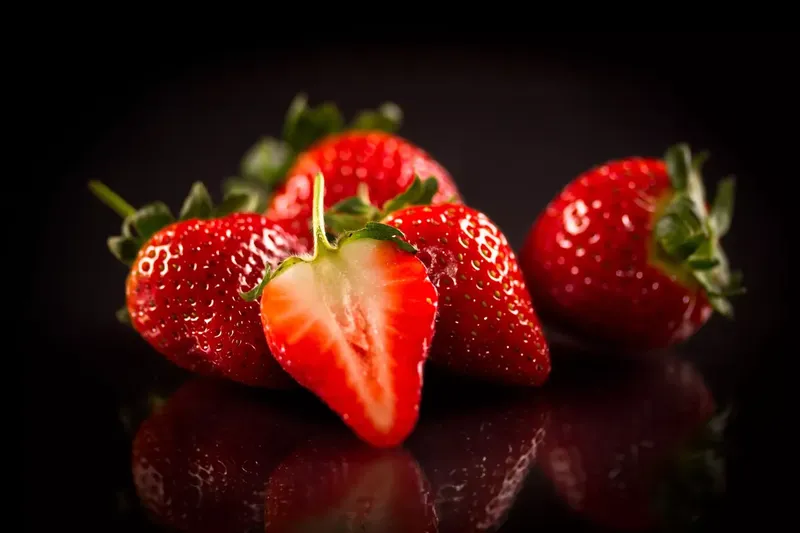
One ranch on YouTube rolled out a giant wheelbarrow of strawberries for its goats. That’s a whole herd’s share, and a backyard goat needs far less.
A goat needs less since its rumen runs on fiber, and fruit sugar upsets its microbes. A bucket or daily habit piles on sugar, and goats usually strip an open strawberry patch bare.
Here’s my start-small portion, the safe plant parts and 3 kinds of strawberries to never feed. Adults top out at about 3 to 5 berries at a time, starting with one washed berry.
Are Strawberries Good for Goats?
Strawberries are good for goats as an occasional treat.
Feed maker Nature’s Best Organic Feeds lists them among the best fruits for goats, with phytonutrients, manganese, folic acid, and vitamins C and K.
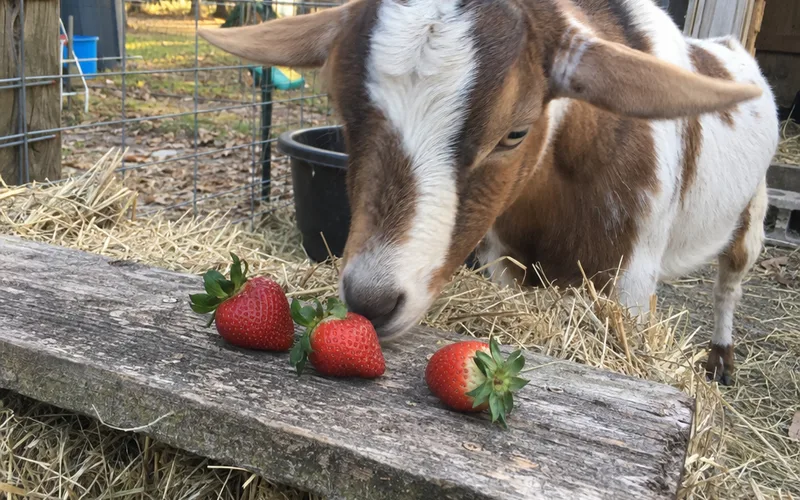
Those vitamins and minerals are dietary micronutrients, the nutrients a body needs only in tiny amounts. So a handful is a nutritious bonus, not a supplement your herd depends on.
The catch?
Strawberries are sweet, and a goat’s rumen runs on fiber.
The rumen is the big first stomach where microbes ferment hay and grass, and a load of sugar throws those microbes off balance.
That’s why the same feed maker names pasture grass as the ideal main source of nourishment. Strawberries are a treat on top of hay and pasture, never a replacement for them.
How Many Strawberries Can a Goat Eat?
A full-size adult goat can eat about 3 to 5 strawberries at a time once it’s used to them, while pygmy goats and weaned kids should stop at 1 or 2.
Strawberry portions are rules of thumb, not a veterinary limit, so start with 1 berry and let your goat’s droppings set the ceiling.
Here’s how I’d find the right amount:
- Offer 1 washed strawberry and nothing else new that day.
- Check droppings and appetite over the next 24 hours.
- If the pellets stay firm and appetite stays normal, offer 2 or 3 next time.
- Stop at that small handful, even when the begging starts.
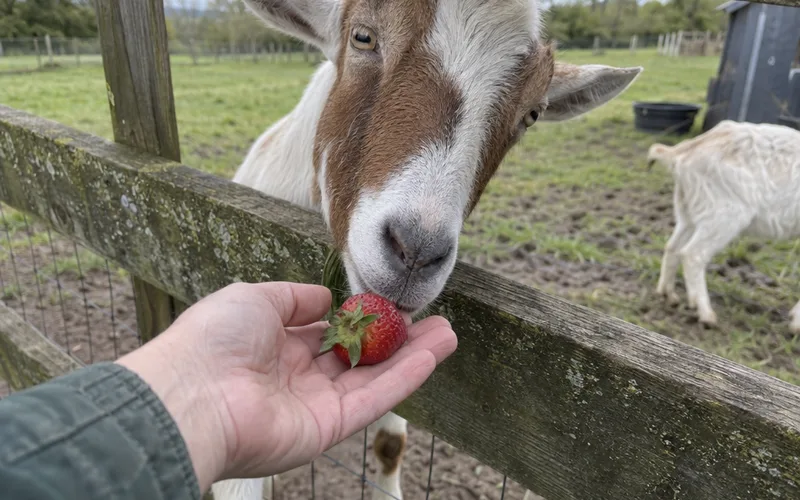
Count them against every other treat that day, too. The treat cap by goat weight shows how little room a pygmy really has once grain, crackers and other snacks add up.
In other words, the smaller the goat, the smaller the strawberry share.
How Often Can Goats Have Strawberries?
Goats can have strawberries a few times a week, not daily, because daily fruit keeps sugar flowing into the rumen and teaches goats to hold out for treats instead of eating hay.
Rotate strawberries with other safe goat treats so no single treat becomes a daily habit.
For example, say the herd got apple slices on Monday. Make strawberries the Wednesday treat, not a second helping on Monday.
That simple rotation keeps the treats special and the rumen steady.
Can Goats Eat Strawberry Tops and Leaves?
Goats can eat strawberry tops and leaves, the green caps you slice off when you hull berries, so there’s no need to pull them off before feeding.
You’ll see some advice to strip the greens anyway. But the leaves aren’t the problem: what’s sprayed on them can be.
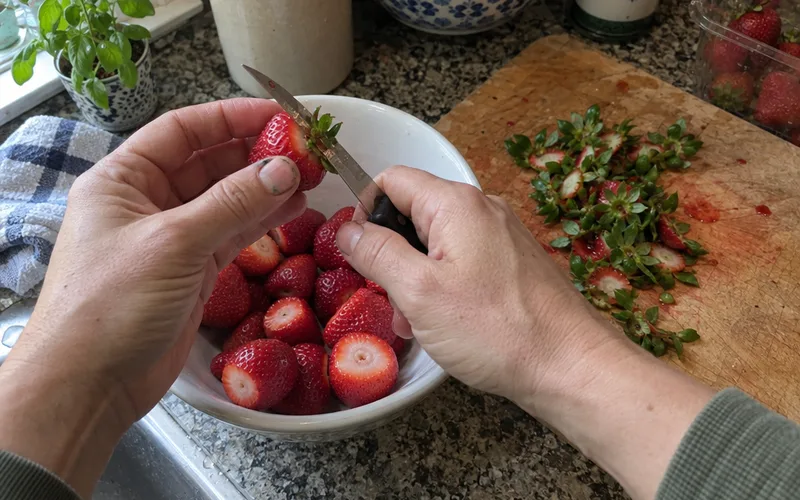
Store-bought strawberries can carry pesticides on the caps as well as the flesh. So rinse the tops along with everything else, the same way you would for your own salad.
Then hull your strawberries for the family and toss the washed tops to the herd.
Should You Let Goats Into a Strawberry Patch?
Goats can eat the whole strawberry plant, leaves, runners and roots included, but letting them into a strawberry patch usually means losing the patch.
Goats are browsers, so they strip the leaves first and keep going until the bed is bare.
If you want a harvest for yourself, put the bed behind sturdy garden fencing before the plants flower.
Check the patch’s history too. A bed treated with weed killer or pesticides isn’t safe browse, so keep the herd out until you know what was used.
Here’s a cleaner option:
After your last harvest, trim the old leaves and runners and hand them over as a treat. The herd gets the greens and you keep the plants.
Can Goats Eat Wild or Mock Strawberries?
Goats can browse wild strawberries safely, and mock strawberries are generally considered non-toxic too.
Confirm which plant you’re looking at before you turn goats loose on a patch.
Wild Strawberries
Wild strawberries are the small native plants with white flowers that spread along fence lines and woodland edges.
Goats can eat every part, leaves and runners included, just like garden plants.
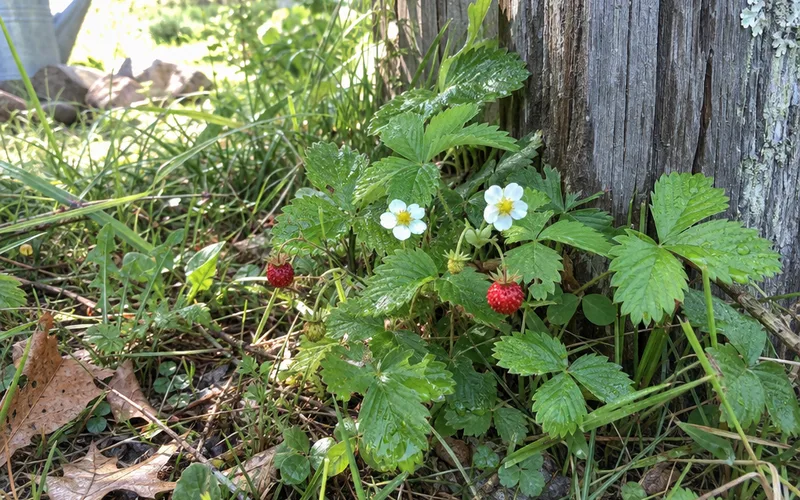
Those berries are tiny, so browsing a wild patch adds very little sweetness. That makes wild strawberry leaves an easy, low-risk nibble.
Before the herd moves in, find out whether anyone sprayed that stretch of fence line. Weed killer makes a wild patch unsafe browse, the same as it would a garden bed.
Mock Strawberries
Mock strawberries, also called Indian strawberries, have yellow flowers and bland, seedy red fruit.
They’re generally described as non-toxic, though there’s little research on livestock eating them in quantity.
So a few nibbles while browsing are fine, but don’t let a mock strawberry carpet become the main forage.
The bigger risk is a plant you’ve misidentified. If you’re unsure, check the poisonous plants list before you open that gate.
How to Feed Strawberries to Goats
Feed strawberries to goats washed, cut to a safe size and by hand, so every goat gets its share and nothing is left behind to rot.
Nature’s Best Organic Feeds advises cutting fruits and vegetables into small pieces goats can swallow easily.
Here’s the routine:
- Rinse under cool running water to wash off dirt and pesticides.
- Cut large strawberries in half and leave small ones whole.
- Hand-feed them so the boss of the herd can’t grab every share.
- Pick up any dropped pieces before the end of the day.
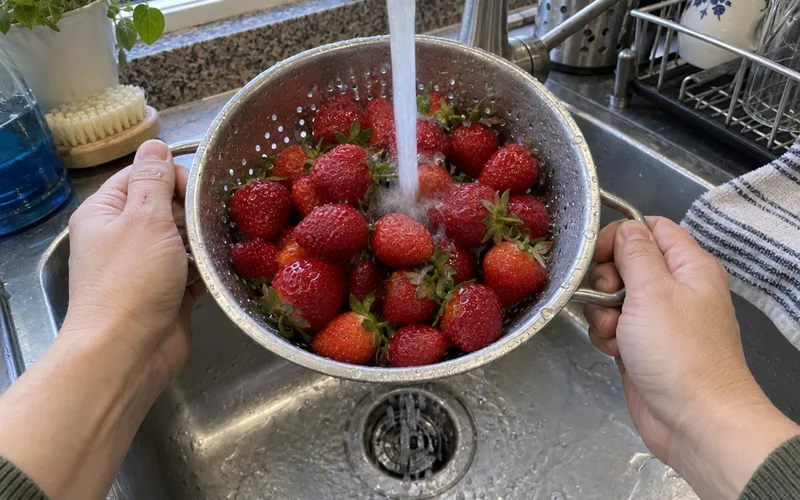
Note: Plain water is all the washing strawberries need. Skip soap and produce washes, which leave their own residue.
That short routine covers the main safety risks before the first bite.
Can Baby Goats Eat Strawberries?
Baby goats can eat a small piece of strawberry once they’re eating hay and solid feed well, but a kid still living on milk alone should skip fruit.
A kid’s rumen is still developing, so one bite-sized piece is plenty at first.
Mash or chop that piece so it’s easy to chew.
If the kid’s droppings turn soft, stop the treats and wait a few weeks before trying again.
Frozen, Cooked and Sweetened Strawberries
Plain frozen strawberries are safe for goats once they’ve thawed until soft, and plain cooked strawberries are fine too.
Jams, pie filling, cakes, syrup-packed berries and other desserts made with strawberries are not.
A bag from the freezer keeps a strawberry treat going through winter. Thaw them first, because a rock-hard one is harder to chew and easier to choke on.
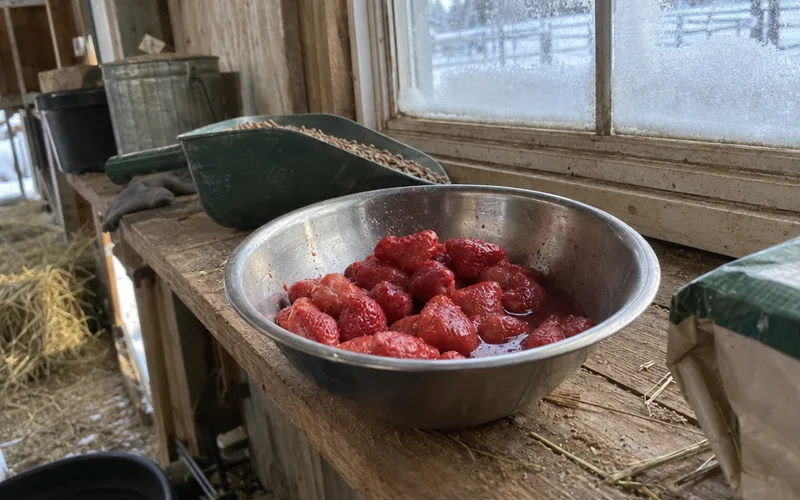
Cooking doesn’t make strawberries unsafe, but it adds nothing worthwhile. And home cooking usually adds sweeteners, which brings us to the real problem.
Sweetened strawberry products pile added sugar on top of the natural kind. The added sugar rules explain why that trade is never worth it.
Never Feed Moldy Strawberries
Moldy strawberries should never go to goats, since mold on soft fruit can carry fungal toxins that make them sick, and you can’t tell harmless mold from dangerous by looking.
Nature’s Best Organic Feeds stresses feeding quality, mold-free hay, and the same rule fits fruit.
Strawberries go soft fast once they’re bruised. Sort the box before feeding and compost anything fuzzy, leaking or mushy.
Don’t cut off the moldy spot and feed the rest. Mold can spread past what you see, which is why moldy hay is risky even when only part of a bale looks bad.
Which Strawberries Are Safe for Goats?
Fresh strawberries, their tops, plain frozen berries and wild strawberries are all safe for goats, while jam, pie filling, syrup-packed berries and moldy fruit are not.
Here’s how each strawberry form compares:
| Strawberry form | Safe for goats? | How to serve |
|---|---|---|
| Fresh, ripe berries | Yes | Washed, big ones halved |
| Tops and leaves | Yes | Washed with the rest |
| Plain frozen berries | Yes | Thawed until soft |
| Wild strawberries | Yes | Let them browse |
| Mock strawberries | Small amounts | Confirm the plant first |
| Jam, pie or syrup | No | Skip them |
| Moldy or rotten | No | Compost them |
Add one more to the skip list: anything from a patch you know was sprayed. Those are the 3 kinds of strawberries that never go in the feeder.
Signs Your Goat Ate Too Many Strawberries
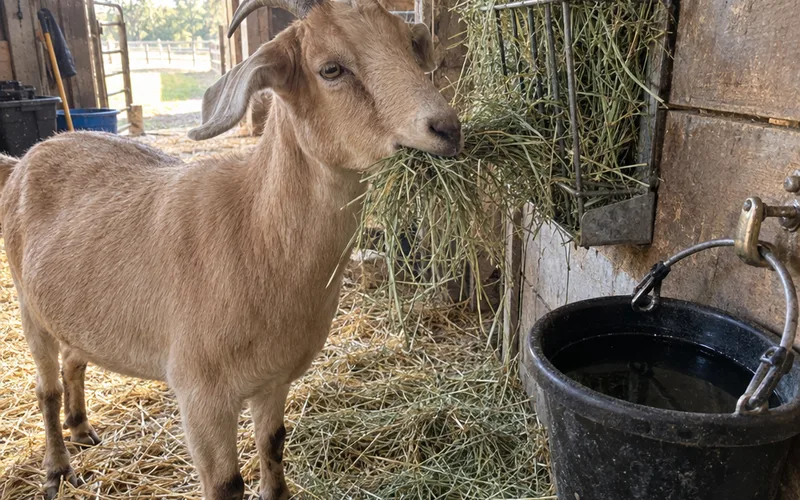
A goat that ate too many strawberries usually shows loose droppings first, then may go off its hay, look bloated on the left side or seem dull and uncomfortable.
Those signs come from the fruit sugar upsetting the rumen, not from any poison in the berries.
At the first soft droppings, pull all treats and offer hay and water.
Nature’s Best Organic Feeds says goats need fresh, clean water at all times, and that matters even more while the gut settles.
Droppings that stay loose for more than a day call for these scours treatment steps.
A tight, swollen left side is an emergency. Call your vet and follow the bloat emergency steps while you wait.
Fruits Goats Should Not Eat
The fruits goats should not eat include avocado and wild cherries.
Feed maker Nature’s Best Organic Feeds says avocados contain persin, a fungicidal toxin, in the fruit, leaves and seeds alike.
The same company warns that wild cherries, including their leaves, seeds and fruit, are poisonous to goats and can cause cyanide poisoning.
Check this avocado safety guide before you share one, and fence off any wild cherry tree.
Strawberries sit at the safe end of that list. Other soft berries work much the same way, from blueberry serving tips to blackberries, thorns and all.
For the full list with serving sizes, see which fruits goats can eat.
The Bottom Line
Strawberries are a safe, simple goat treat, tops included, as long as they stay a few-berry snack.
This week, offer 1 washed berry per goat and check droppings the next morning.
Then lean on the goat diet basics so hay and pasture keep doing the real work.
Frequently Asked Questions
Can goats eat strawberry seeds?
Yes, goats can eat strawberry seeds, because the tiny seeds on the outside are part of the fruit and come with every berry. There’s nothing to pick off before feeding.
Can goats eat strawberries in the winter?
Yes, goats can eat strawberries in winter, and plain frozen berries thawed until soft work well when fresh ones are out of season.
Keep the same small portion you’d use in summer.
Can goats eat strawberries and apples together?
Yes, goats can eat strawberries and apples in the same treat, as long as the two together stay a small portion.
Core the apple slices first and count both fruits against that day’s treats.
What can goats absolutely not eat?
Goats should not eat chocolate, garlic, onion, meat scraps or anything containing caffeine, according to feed maker Nature’s Best Organic Feeds.
Keep avocado, wild cherries and moldy food out of reach too.