| # | Product | Our Rating | ||
|---|---|---|---|---|
| 1 |  | Best OverallPurina All-Stock Sweet Feed | ★★★★★ | Check Price |
| 2 |  | Purina Goat Grower Feed | ★★★★☆ | Check Price |
| 3 |  | Standlee Alfalfa Pellets | ★★★★☆ | Check Price |
Grain is one of the most misunderstood parts of feeding goats. New owners often assume goats need a daily scoop of grain like a horse, when the truth is that most goats are better off with little or none.
Goats are browsers built to thrive on fibrous forage, and their digestive system runs best on hay and browse. Grain is a supplement for specific situations, not a daily requirement for every goat.
This guide explains when goats actually need grain, how much to feed, the best types, and why overdoing it is one of the more dangerous feeding mistakes you can make.
Do Goats Actually Need Grain?
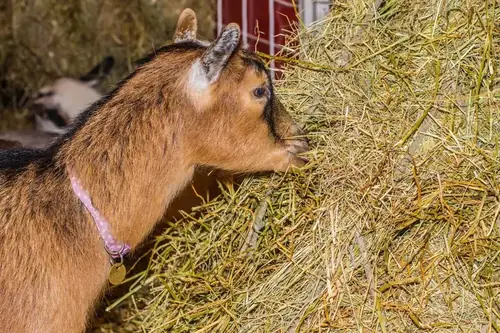
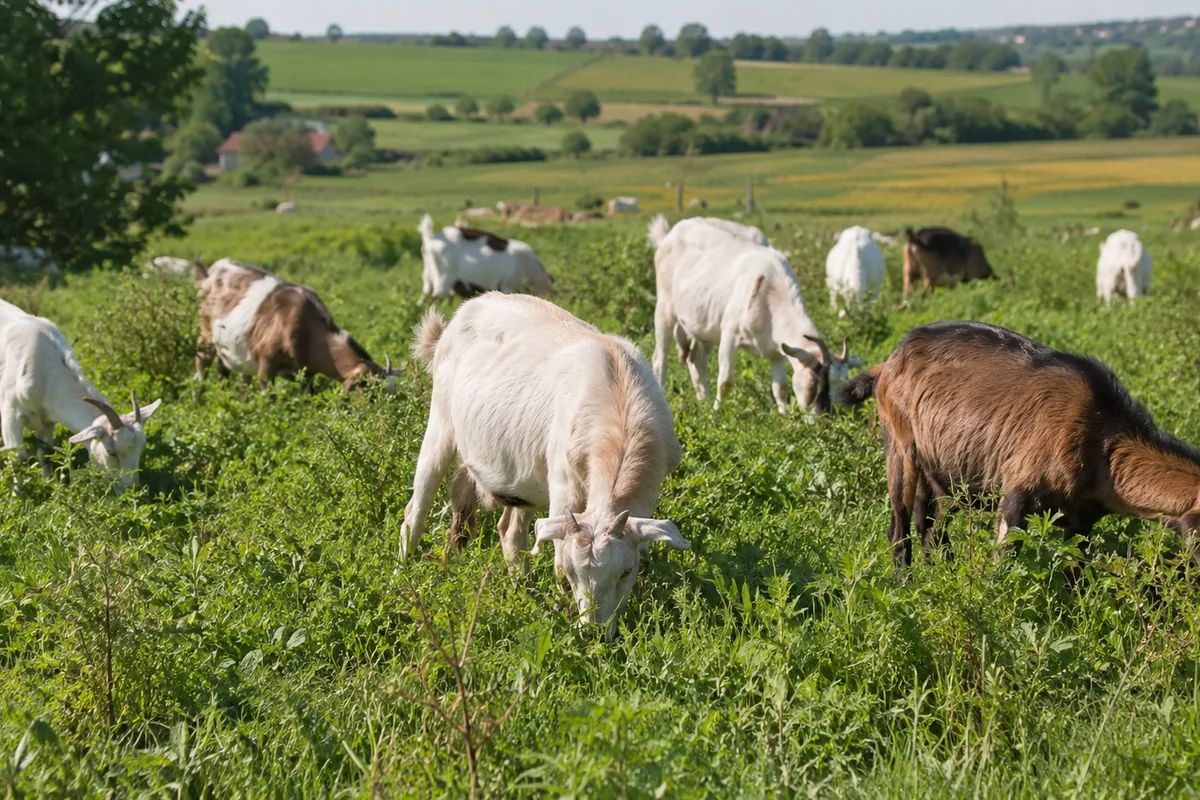
For most goats, the honest answer is no. A healthy maintenance goat does beautifully on good hay, pasture or browse, and free-choice loose minerals, with no grain at all.
Goats evolved to extract energy from rough, fibrous plants, and their four-part stomach is remarkably efficient at it. Pile on grain and you are working against that system rather than with it.
Grain is best understood as a concentrated energy and protein boost for goats whose bodies are under real strain. The classic examples are does in milk, growing kids, and does in the last weeks of pregnancy, all covered below.
The foundation of every goat’s diet remains forage, which is why getting your hay right and offering free-choice minerals matters far more than any grain decision. Grain sits on top of that foundation, never in place of it.
When Goats Do Need Grain
There are real situations where grain earns its place. In each case, a goat’s energy demands outrun what forage alone can supply.
Lactating does are the clearest example. Producing milk burns enormous energy, and a doe in heavy milk often needs grain to hold her condition and keep production up.
Growing kids benefit from a measured grain ration to support fast, healthy growth, and does in late pregnancy need extra energy as the kids take up rumen space and reduce how much hay she can eat. Beyond those, thin or hard-keeping goats and animals working through cold winters may need grain to maintain body condition.
Notice who is missing from this list: pet wethers, maintenance does, and the average backyard goat. For them, grain is usually unnecessary and often harmful.
How Much Grain to Feed
When grain is warranted, the amounts are smaller than most people expect. More is not better, and overfeeding is where goats get into trouble.
As a rough guide, a lactating doe might get up to 1 to 1.5 pounds of grain per day, a late-pregnancy doe somewhat less, and growing kids a smaller measured ration. Maintenance pets and most wethers get none.
The most important rule is to match the grain to the individual, not the herd. Feeding every goat the same scoop because it is easy is how does get fat and wethers get sick.
Treat any numbers as starting points and adjust based on body condition. A goat carrying too much fat needs less, while a thin milker may need a bit more, and your vet can help you read the signs.
Best Grain and Feed for Goats
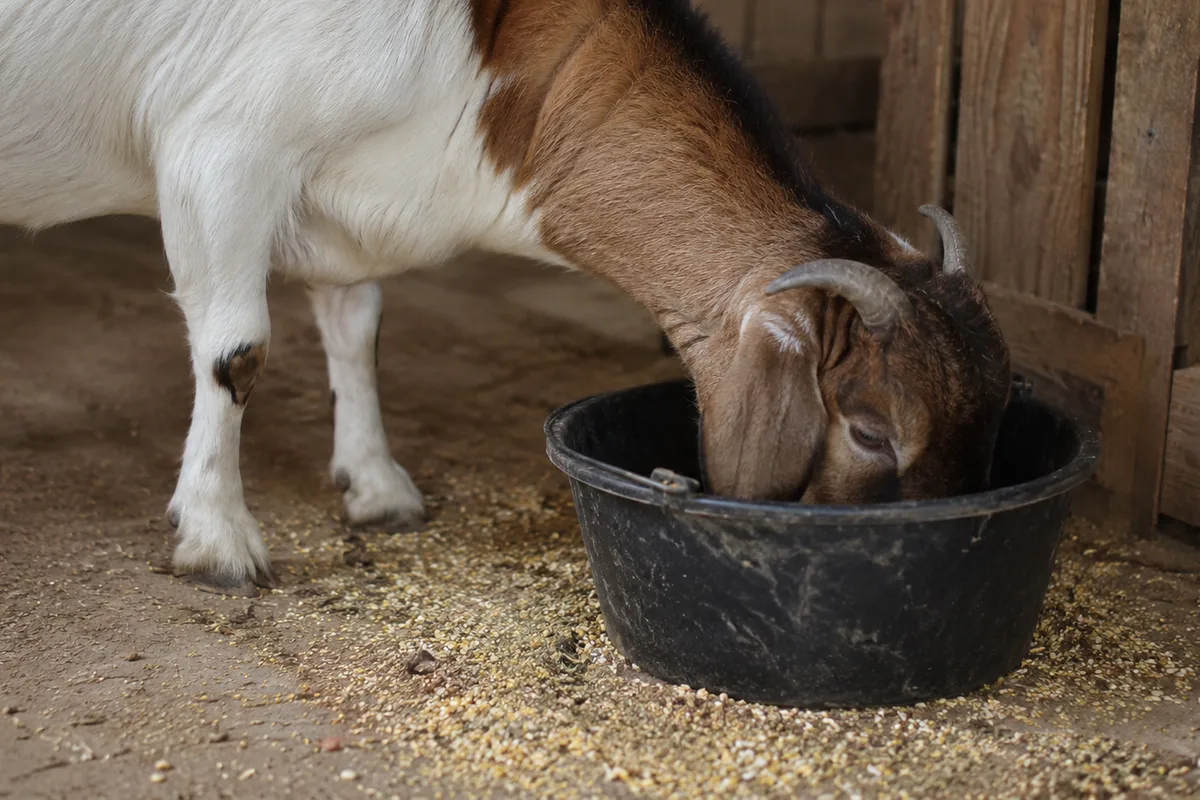
If you do feed grain, a feed formulated specifically for goats is the safest pick. Goat feeds balance protein and energy with the correct copper levels, which all-purpose feeds may not.
A quality goat feed or a well-regarded all-stock sweet feed both work for general use, and alfalfa pellets make an excellent lower-risk concentrate for does and kids that need extra protein without the starch load of heavy grain. Straight cracked corn is the cheapest energy option and also the riskiest, since it runs about 70 percent starch and carries far more phosphorus than calcium. Whatever you choose, keep it fresh and never feed moldy or dusty feed.
For a small protein top-up, a handful of cooked lentils mixes easily into the grain.
One firm rule: never feed a sheep feed to goats long term, because it is deliberately low in copper and goats will become deficient. Cattle products carry the opposite trap, since medicated calf starter can contain monensin that is lethal to goats. Read the tag and choose goat-appropriate feed.
Poultry rations are the same story. Medicated chicken feed can carry monensin too, and even the unmedicated bags hold far more calcium than a goat needs.
For wethers and bucks especially, the type and amount of grain matters for more than weight. Grain shifts the calcium-to-phosphorus balance and is a leading trigger of urinary calculi, a deadly blockage in male goats, so males should get minimal grain at most.
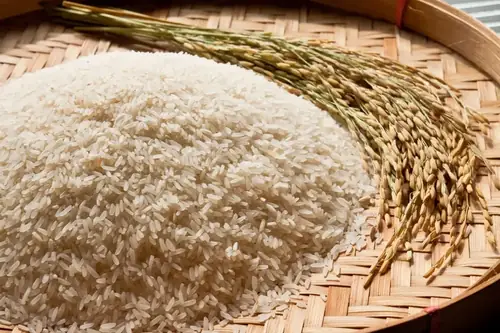
Rice bran is a handy fat source, but it needs the same caution because it’s loaded with phosphorus.
How to Feed Grain Safely
How you feed grain matters as much as how much. Goats have sensitive rumens, and sudden grain changes are a recipe for trouble.
Always introduce or increase grain gradually over a week or two. A goat that breaks into the feed bin and gorges on grain can develop life-threatening bloat or grain overload within hours, so store feed where goats absolutely cannot reach it.
Offering free-choice baking soda gives goats a way to buffer their own rumen and is cheap insurance for grain-fed animals. Many owners keep a small dish of it available alongside minerals.
Feed grain in a trough or feeder rather than on the ground, split larger rations into two smaller meals, and always make sure plenty of fresh water and good hay are available. Done carefully, grain is a useful tool, but it demands respect.
Sources and Further Reading
Compiled and cross-checked against established livestock and extension references:
- University extension publications (Penn State, Oklahoma State, Maryland) on goat nutrition and concentrates
- Langston University, Meat Goat Production Handbook, nutrition chapter
- American Dairy Goat Association (ADGA) management resources
- Merck Veterinary Manual, ruminant nutrition and grain overload
Feeding amounts vary by goat, so use this as a framework and adjust with your vet. The guiding principle is simple: forage first, grain only when a goat truly needs it, and always in modest, carefully introduced amounts.
Frequently Asked Questions
Hay and forage are the foundation of a goat's diet, and most goats thrive on quality hay, browse, and free-choice minerals with no grain at all. Grain is a concentrated supplement that adds energy and protein for goats with higher demands, such as milkers and growing kids. For the average pet or maintenance goat, hay plus minerals is genuinely all they need, and grain is optional rather than required.
Yes, most goats can live perfectly healthy lives without ever eating grain. Their rumen is built to extract energy from fibrous forage, so good hay, pasture, browse, and a free-choice loose mineral cover the needs of maintenance goats. The goats that genuinely benefit from grain are those under extra strain, like does in milk or late pregnancy and fast-growing kids, not the herd as a whole.
A feed formulated for goats is the safest choice, since it balances protein, energy, and minerals with the right copper levels for goats. Many owners use a quality goat feed or an all-stock sweet feed, and alfalfa pellets are a good lower-risk concentrate for does and kids that need more protein. Avoid moldy or dusty grain, and never feed a sheep feed long term, because it lacks the copper goats need.
Only the goats that actually need it should get grain daily, and even then in measured amounts. A milking doe or growing kid may earn a daily ration, while a pet wether or a maintenance doe usually should not get grain at all. Feeding grain to every goat every day leads to obesity and serious problems like urinary stones in males, so match the grain to the individual goat rather than the whole herd.
Amounts are small and depend on the goat. A general guide is up to about 1 to 1.5 pounds of grain per day for a lactating doe, less for late pregnancy, a smaller measured amount for growing kids, and none for maintenance pets and most wethers. Always introduce grain gradually over a week or two, and treat these as starting points to adjust with your vet based on body condition.