Goat is the most widely eaten red meat on the planet, yet it rarely shows up in the average dog’s bowl. So if you raise goats, shop at a halal or international market, or just want a leaner protein than beef, it’s only natural to wonder whether your dog can share in it.
The good news is that goat meat is one of the most dog-friendly proteins around. What matters is how you serve it, how much you give, and whether your dog has any health reasons to skip it.
This guide covers the benefits, the raw versus cooked debate, safe portions by size, goat bones, and when to skip goat meat entirely.
Is Goat Meat Safe for Dogs?
Yes, goat meat is safe for the vast majority of dogs when it is prepared properly. It is a clean, single-ingredient animal protein with no compounds that are toxic to dogs, unlike onions, garlic, or grapes.
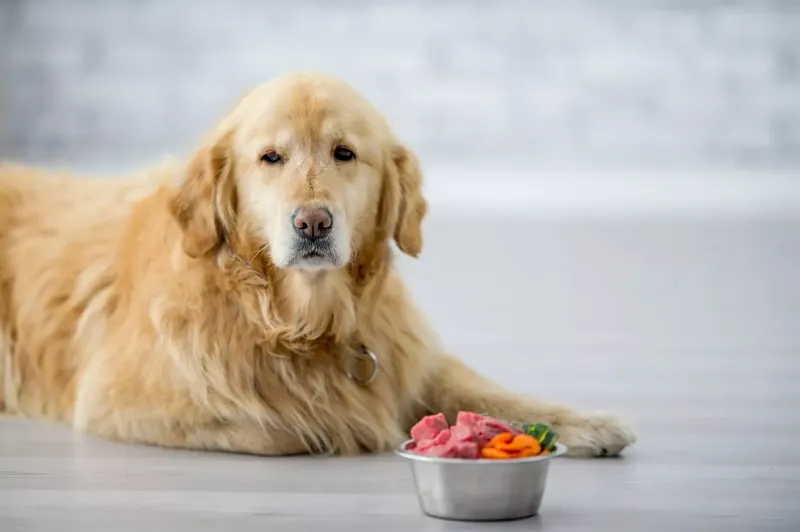
The safety question is really about preparation, not the meat itself. Plain, fully cooked, boneless goat meat is the lowest-risk way to serve it.
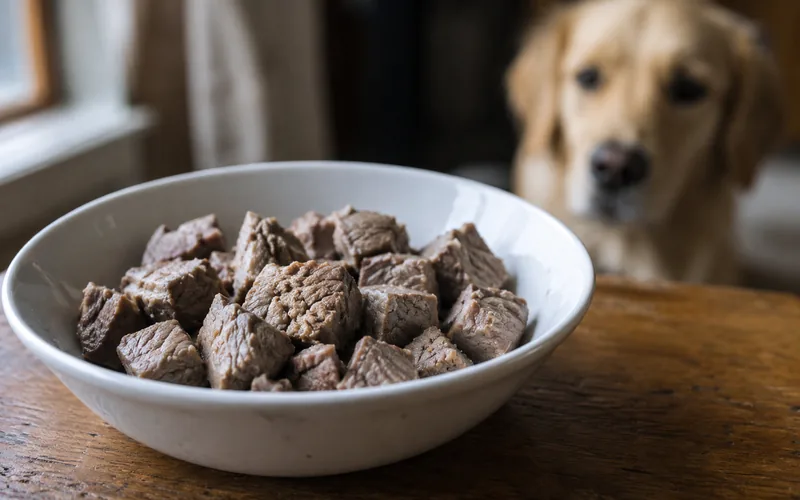
The trouble usually comes from what gets added. Seasoned, salted, fried, or sauce-covered goat dishes can upset a dog’s stomach or sneak in ingredients that are toxic to dogs like garlic and onion.
Raw goat meat is also safe to digest for most healthy dogs, though it shifts the risk toward foodborne bacteria and parasites. We’ll cover how to handle that safely in the raw versus cooked section below.
Health Benefits of Goat Meat for Dogs
In short, goat meat is a lean, nutrient-dense protein rich in iron, zinc, and B vitamins.
Goat meat, often sold as chevon (adult goat) or cabrito (young goat), punches well above its reputation. Here’s what it brings to a dog’s diet.
Lean, High-Quality Protein
Goat meat is rich in complete protein, which supplies all the amino acids a dog needs to build and repair muscle. Protein also supports a healthy coat, strong tissue, and a working immune system.
What really sets goat apart is how lean it is. It carries less fat than comparable cuts of beef, lamb, or pork, so it’s a smart pick for dogs that gain weight easily.
Iron, Zinc, and B Vitamins
It’s also a strong source of heme iron, the highly absorbable form that supports healthy red blood cells and oxygen transport. That makes it a useful protein for active dogs, and for some recovering from illness.
It also delivers zinc and selenium for skin and immune health, plus B vitamins including B12, B3, and B9. Vitamin B12 in particular supports nerve function and red blood cell formation.
Naturally Lower in Histamine
Fresh and properly frozen goat meat tends to be low in histamine compared with some other proteins. For dogs that flush, itch, or react to histamine-heavy foods, a low-histamine protein can be easier to tolerate.
That’s one reason goat shows up in so many specialty and limited-ingredient dog foods. It delivers protein without the trigger load of more common meats.
Gentle on Sensitive Stomachs
Many owners find goat meat sits well with dogs that struggle with richer proteins. Its lean profile means less fat to overwhelm the digestive system, which can mean firmer stools and less gas.
Goat tripe, the muscular stomach lining, is another option some raw feeders use. Green or unbleached tripe carries natural digestive enzymes and probiotics, though it is harder to source than plain muscle meat.
Goat Meat Nutrition vs Chicken and Beef
The quick comparison: goat rivals chicken on protein but carries far less fat than beef.
Numbers make the leanness easy to see. The figures below are approximate values per 3 ounce (85 gram) cooked serving and will vary by cut.
| Nutrient | Goat (chevon) | Chicken (breast) | Beef (lean) |
|---|---|---|---|
| Calories | ~122 | ~140 | ~180 |
| Protein | ~23 g | ~26 g | ~22 g |
| Total fat | ~2.6 g | ~3 g | ~9 g |
| Saturated fat | ~0.8 g | ~0.9 g | ~3.5 g |
| Iron | High | Low | Moderate |
The takeaway is that goat offers protein levels close to chicken with significantly less fat than beef. For a dog on a weight plan or needing a low-fat protein, that combination is hard to beat.
Raw vs Cooked Goat Meat for Dogs
Both can work, but cooked goat meat is the safer choice for most dogs.
This is the question most owners really want answered. The honest answer is that both can work, as long as you take the right precautions.
Cooked goat meat is the safer default. Heat destroys Salmonella, E. coli, and parasites such as Toxoplasma, which removes most of the foodborne risk for your dog and your household.
To cook it, boil, bake, or pan-cook the meat until no pink remains. Skip all salt, oil, onion, garlic, and seasoning, drain the fat, and remove every bone before serving.
Raw goat meat, fed as part of a raw or BARF diet, keeps more of the natural enzymes some raw feeders value. The trade-off is bacterial and parasitic risk for the dog and for anyone handling the bowl, a concern the FDA has flagged with raw pet food.
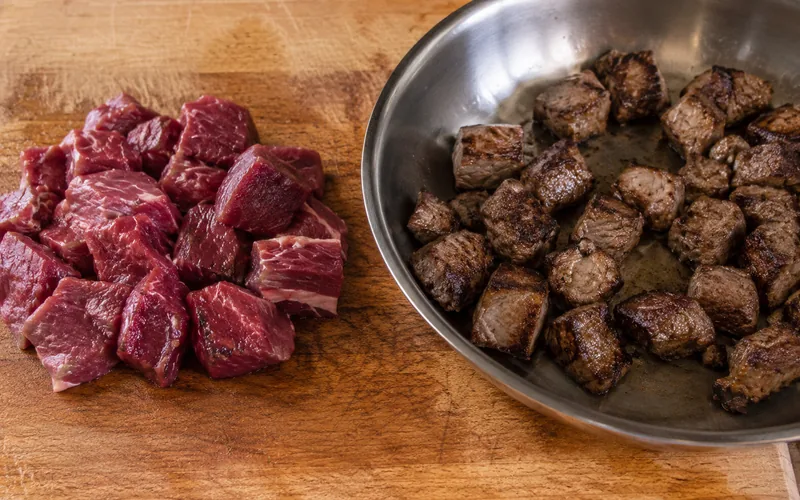
If you choose raw, buy from a reputable supplier, keep the meat frozen, and thaw it in the fridge, not on the counter. Sanitize bowls, utensils, and surfaces after every meal.
Certain dogs should stick to cooked goat meat regardless. Puppies, senior dogs, pregnant dogs, and any dog with a weakened immune system handle raw bacteria poorly and are safest with cooked food.
How to Cook Goat Meat for Dogs
Keep it plain. Boil, bake, or pan-cook goat with no seasoning, added fat, or bones.
Cooking goat for a dog is far simpler than cooking it for yourself, because the goal here is plain, not flavorful. The rule is no salt, no oil, and absolutely no onion, garlic, or seasoning blends.
Boiling is the easiest method and keeps the meat moist. Simmer cubed goat in plain water until it is fully cooked through with no pink remaining, usually 20 to 30 minutes depending on piece size.
Baking and pan-cooking work too, as long as you use no added fat. Cook until the internal temperature is safe and the juices run clear, then drain any rendered fat off the meat.
Once it is done, remove every bit of bone and let the meat cool to room temperature. Cut it into bite-size pieces matched to your dog so it is easy to chew and swallow.
Batch cooking is a real time-saver. Refrigerate cooked goat for up to three days, or freeze portions and thaw them in the fridge as you need them.
Can Dogs Eat Goat Bones?
The short answer is no for cooked goat bones, and only a cautious yes for large raw ones.
Bones are where caution matters most, and the answer hinges on one thing: cooked or raw.
Never give your dog cooked goat bones. Cooking dries them out and makes them brittle, so they splinter into sharp shards that can cause choking, broken teeth, or punctures in the mouth, throat, or gut.
Raw goat bones are softer and more flexible, and some raw feeders offer large, size-appropriate ones for chewing. If you go this route, always supervise, choose a bone too big to swallow whole, and take it away once it splinters or shrinks.
Even raw bones carry risk. Dense, weight-bearing leg bones can crack teeth, and any bone can cause a blockage.
For that reason, plenty of owners skip bones altogether and stick with boneless goat meat. When in doubt, leave bones out.
How Much Goat Meat Can a Dog Eat?
As a rule of thumb, keep goat meat within 10 percent of your dog’s daily calories.
Goat meat should be treated as part of the diet, not the whole thing. As a topper or treat, follow the 10 percent rule: treats and extras should stay under a tenth of daily calories.
Use your dog’s size as a rough guide for a treat-sized serving:
- Small dogs (under 20 lb): about 1 to 2 tablespoons of cooked goat meat
- Medium dogs (20 to 50 lb): about 2 to 4 tablespoons
- Large dogs (50 to 90 lb): about a quarter to a half cup
- Giant breeds (over 90 lb): up to roughly three quarters of a cup
If goat meat is the main protein in a home-prepared diet, the amount is much larger and must be balanced with calcium, fat, and other nutrients. That kind of recipe should be built with a veterinarian or a canine nutritionist, not estimated.
Can Dogs Eat Goat Meat Every Day?
Dogs can eat goat meat every day, but plain muscle meat on its own is not a complete and balanced diet. Fed alone over time, it lacks the calcium, fatty acids, and certain vitamins a dog needs to stay healthy.
As a daily protein, goat works best inside a properly formulated recipe or a complete commercial food that lists goat as an ingredient. That way the everyday serving supports the rest of the diet instead of crowding it out.
As a daily topper, keep it inside that 10 percent calorie allowance so it doesn’t unbalance your dog’s regular food. Variety helps too, so rotating goat with other vetted proteins keeps meals interesting and nutritionally broad.
How to Introduce Goat Meat to Your Dog
Go slow. Introduce goat meat gradually over about a week to avoid stomach upset.
A slow introduction protects your dog’s stomach and makes any reaction easy to spot. Rushing a new protein is the fastest way to cause loose stools.
- Start with a taste. Offer a small, plain, cooked piece and wait 24 to 48 hours to watch for vomiting, diarrhea, or itching.
- Increase gradually. If all is well, work up to a normal treat-size portion over five to seven days.
- Keep it plain at first. Serve goat on its own, with no new additions, so you can tell exactly what your dog is reacting to.
- Mix into the regular food. Once it is clearly well tolerated, stir cooked goat into your dog’s usual meals as a topper.
Stop and reassess if you see any digestive upset or skin reaction. A single bad batch or too large a first serving is usually the culprit, not the meat itself.
Is Goat Meat Good for Dogs With Allergies?
Goat meat is often an excellent choice for dogs with food allergies, and the reason is that it is a novel protein. Most dogs have eaten chicken and beef their whole lives but have never encountered goat, so their immune system has had no chance to develop a reaction to it.
That makes goat a popular base for elimination diets. When a dog reacts to common proteins with itching, ear infections, or chronic stomach trouble, a vet may suggest a single novel protein like goat to calm the system and pinpoint the trigger.
For an elimination trial to work, the goat meat has to be fed clean and alone, with no mystery ingredients or shared bowls. Run any true elimination diet under veterinary supervision so results stay reliable and your dog stays nourished.
When Goat Meat Is Not a Good Idea
Most dogs do fine, but skip goat meat for certain health conditions or heavily seasoned dishes.
For most dogs goat meat is a healthy option, but a few situations call for a pass or a vet conversation first.
- Diagnosed goat allergy. Rare, but possible. If your dog reacts to goat, discontinue it.
- Pancreatitis history. Goat is lean, yet fatty cuts or greasy preparation can still trigger a flare in sensitive dogs.
- Kidney or liver disease. High-protein foods may need to be limited, so follow your vet’s prescribed diet.
- Seasoned or restaurant goat dishes. Curries, stews, and grilled goat are usually loaded with salt, onion, garlic, and spices that are unsafe for dogs.
- Goat feed and pellets. This is livestock grain, not meat, and it is formulated for ruminant stomachs rather than dogs. Dogs are monogastric, so a bag of goat feed is not a safe snack for them and can cause digestive upset or, in volume, bloat.
When any health condition is in play, check with your veterinarian before adding a new protein.
What About Goat Milk, Yogurt, and Cheese?
In moderation, goat milk and plain yogurt suit most dogs, while goat cheese is best limited.
Goat doesn’t stop at meat, and several goat products can fit into a dog’s diet in moderation. They’re popular because goat tends to be easier on many dogs than cow dairy.
Goat milk is the most dog-friendly of the bunch and is lower in lactose than cow milk. Small daily servings are fine for most dogs, up to about 2 ounces per 20 pounds of body weight.
Plain goat yogurt offers probiotics that can support gut health when fed in small amounts. Skip flavored tubs, though, since sweetened goat yogurt can hide xylitol, which is toxic to dogs.
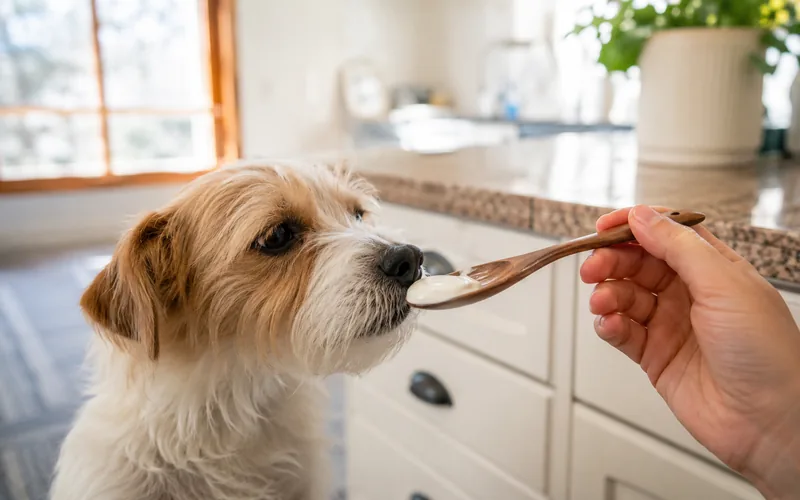
Goat-milk-based formulas are sometimes used for orphaned or nursing situations, and the details matter. Human goat baby formula is the one to avoid, so stick to a pet goat formula instead.
Goat cheese is the one to limit most. It is rich and high in fat, so tiny occasional amounts are fine for most dogs, but it is not an everyday treat.
Signs of a Problem and When to Call Your Vet
Watch the first few servings, and call your vet if symptoms are severe or persistent.
Even a safe food can disagree with an individual dog, so it pays to watch the first few servings closely. Most reactions are mild and pass on their own.
Mild signs to monitor include soft stools, a single bout of vomiting, gas, or some scratching. These usually settle within a day, especially if the portion was a little large.
Call your veterinarian if you see repeated vomiting, ongoing diarrhea, lethargy, or any swelling of the face. A hard, distended belly, restlessness, or unproductive retching can signal bloat, which is an emergency that needs care right away.
Trust your instincts with a new food. If something seems off after introducing goat meat, pause it and check in with your vet rather than waiting it out.
Frequently Asked Questions
Dogs can eat goat meat regularly, but plain meat alone is not a complete diet. Used as a daily protein, it should sit inside a balanced recipe that supplies calcium, essential fatty acids, and the vitamins muscle meat lacks. As a topper or treat, keep it to roughly 10 percent of daily calories. Talk to your vet before making goat the everyday base of your dog's bowl.
Dogs can digest raw goat meat, but it carries a real risk of Salmonella, E. coli, and parasites for both the dog and the people in the home. If you feed raw, buy from a trusted source, keep it frozen until use, thaw in the fridge, and sanitize bowls and surfaces. Puppies, senior dogs, and immunocompromised dogs are safest on cooked goat meat.
Never feed cooked goat bones, because cooking makes them brittle and prone to splintering, which can cause choking or internal punctures. Raw goat bones are softer and some raw feeders offer large, size-appropriate ones under supervision. Even then, weight-bearing bones can crack teeth, so many owners skip bones entirely and stick to boneless goat meat.
Goat meat is a novel protein for most dogs, meaning their immune system has rarely encountered it. That makes it a useful option in elimination diets for dogs allergic to chicken, beef, or other common meats. Introduce it on its own so any reaction is easy to trace, and coordinate elimination trials with your veterinarian.
Cook goat meat plainly by boiling, baking, or pan-cooking it until no pink remains, with no salt, onion, garlic, oil, or seasoning. Drain excess fat, remove all bones, and let it cool before serving. Cut it into bite-size pieces sized to your dog so it is easy to chew and swallow.