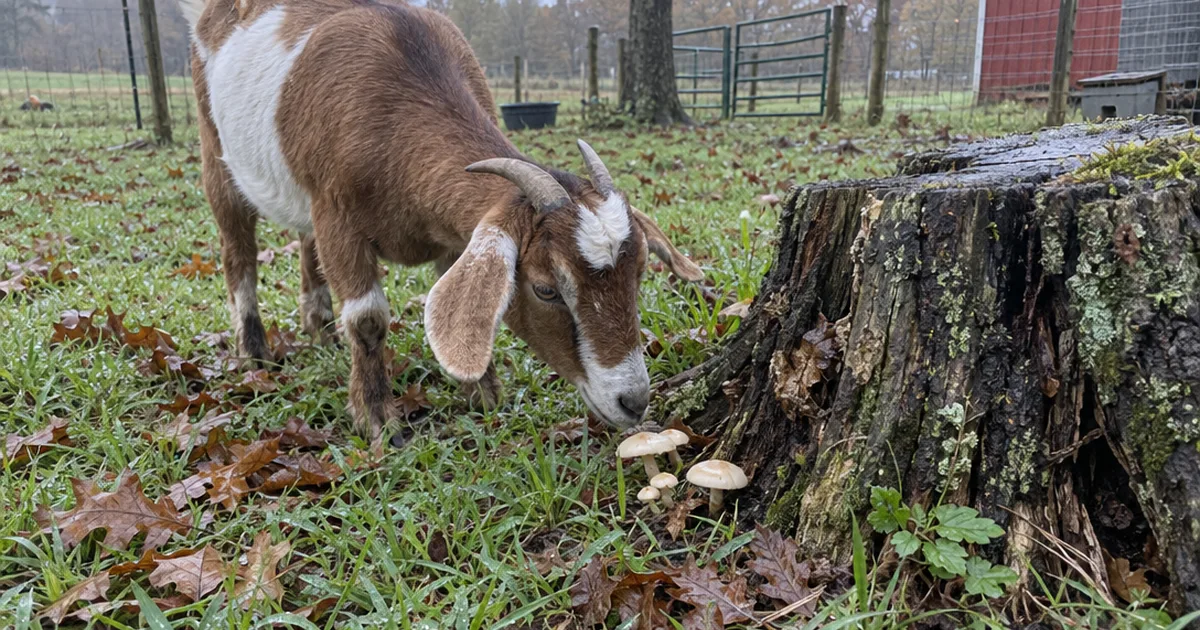

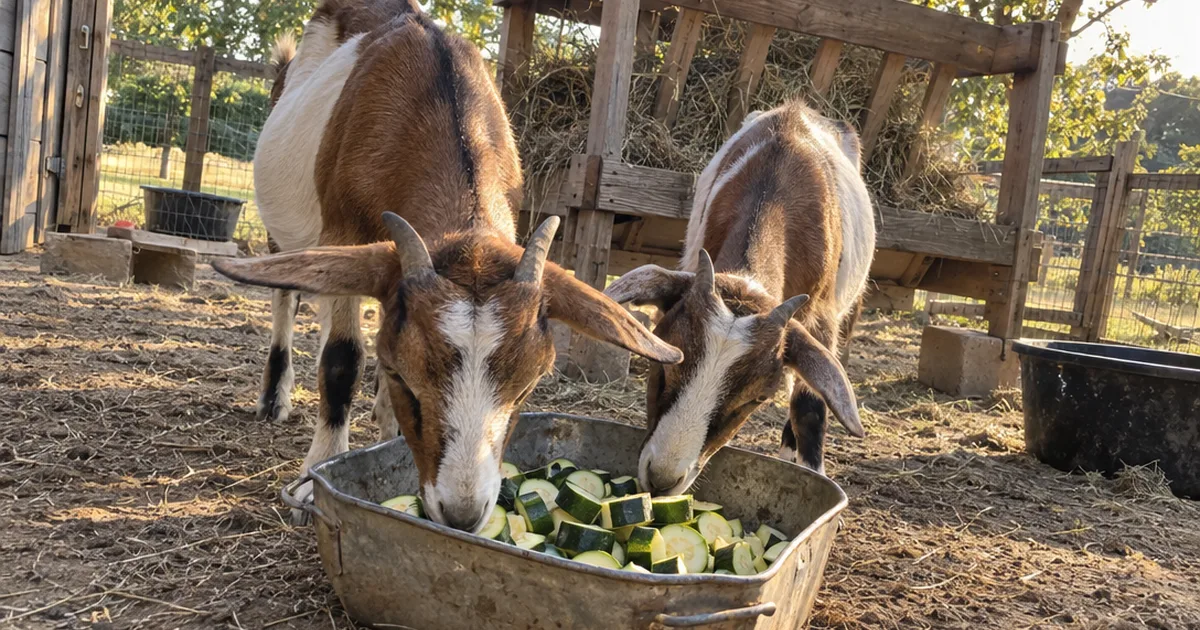
Plenty of goats will sniff a slice of zucchini and walk away. That catches owners off guard, since goats are famous for eating anything.
With extra squash, “can goats eat zucchini” is about serving more than the vegetable. Goats run on fiber, so a sudden pile of watery squash brings loose droppings and bellyaches.
Get the serving right, and a pile of extra squash turns into weeks of easy goat treats. A 5-step prep routine gets you there, and its taste test catches a rare bitter squash first.
Is Zucchini Safe for Goats?
Zucchini is safe for goats as long as it’s fresh, plain and fed as a treat next to their usual hay, pasture or browse.
Zucchini is a summer squash picked while it’s young and soft, so goats can chew it without much effort.
Why does the word “treat” matter so much?
Because goats run on fiber. Everything they eat passes through a goat’s rumen, a large fermentation chamber where microbes break down hay, leaves and stems.
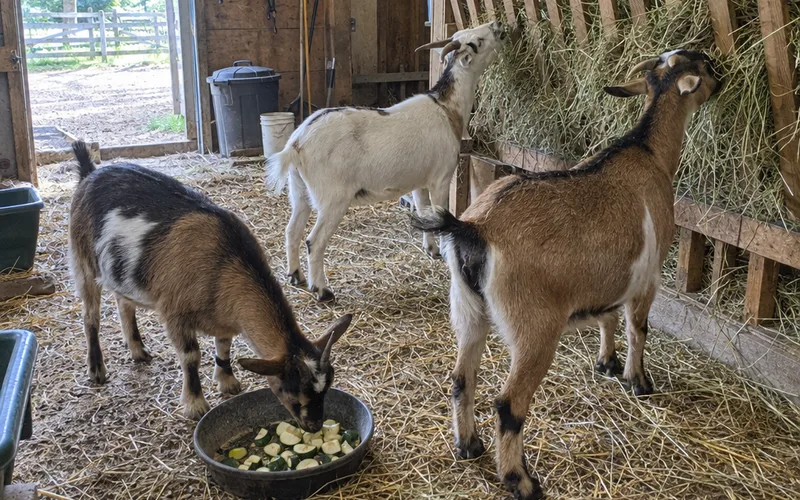
Those microbes like a steady routine. A sudden pile of soft, watery vegetables is a change they didn’t plan for, and that’s where loose droppings and bellyaches come from.
Think of zucchini as dessert on top of a full hay rack, never as a replacement for it.
That’s also why the rest of the diet matters more than any single vegetable. The goat diet basics cover the hay, minerals and water that do the real work every day.
Key Takeaway: Fresh, plain zucchini is a safe snack. Trouble starts only with too much at once, spoiled squash or bitter squash.
Which Parts of Zucchini Can Goats Eat?
Goats can eat every part of a healthy zucchini plant: the flesh, skin, seeds, leaves, vines and flowers. What changes from part to part is how you serve it, not whether it’s safe.
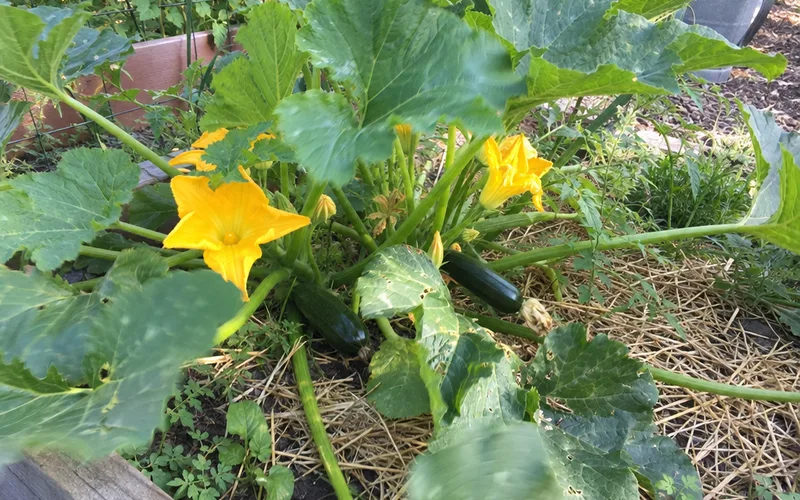
That’s good news if you garden. Almost nothing from the zucchini patch has to go to waste.
The exceptions are spoiled squash and any that tastes bitter, so taste-test a raw slice of each homegrown zucchini first.
Flesh and Skin
Zucchini flesh and skin are both fine for goats, so you don’t need to peel anything. On a young zucchini the skin is thin, and it softens as goats chew.
Peeling just adds work and throws away the part with the most bite. Give it a good rinse instead, since the skin is where soil and spray residue sit.
Zucchini Seeds
Zucchini seeds are safe for goats because a zucchini is picked before its seeds harden. In a normal, young squash they’re small, pale and soft enough to eat with the flesh.
You don’t need to scoop them out. Just chop straight through them like the rest of the squash.
Leaves, Vines and Flowers
Zucchini leaves, vines and flowers are safe for goats too, which makes end-of-season cleanup a lot easier.
Instead of hauling spent plants to the compost, you can hand them over the fence.
Do two quick checks first:
- Skip any plants you sprayed with a pesticide or fungicide, unless the product label says livestock can eat them.
- Skip leaves covered in white powdery mold, black spots or rot.
The leaves are a little prickly, so some goats ignore them while others strip a vine bare. Both reactions are normal.
The flowers are usually the first thing to disappear. If you grow zucchini mostly for your goats, the blossoms are an easy bonus.
Overgrown Zucchini
Overgrown zucchini, the club-sized ones that hide under the leaves, are still safe for goats, but they need more prep.
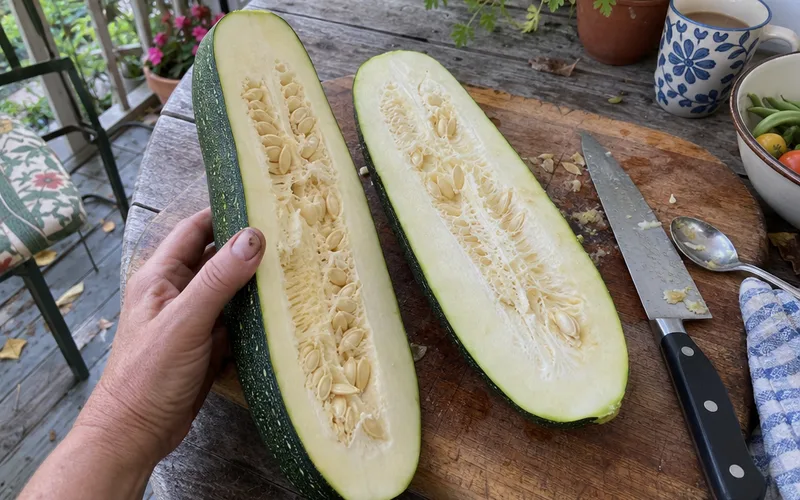
Their skin turns tough and their seeds grow bigger and harder.
Here’s how to handle one:
- Split it in half the long way.
- Scoop out the largest, hardest seeds if your goats keep leaving them behind.
- Chop the rest into small pieces so nobody tries to swallow a slab.
That way, the zucchini that got too woody for your kitchen still has a job.
Raw or Cooked: How Should Goats Eat Zucchini?
Goats can eat raw zucchini, and raw is the simplest way to serve it, though plain cooked zucchini is fine too. The rule for cooked squash is short: nothing added.
That means no butter, oil, salt, cheese or seasoning. A sautéed side dish from your dinner plate is a different food from the squash that went into the pan.
If you do cook some for the goats, steam or boil it plain.
Roasted and grilled zucchini almost always come with oil and salt, so pull a few slices aside before the seasoning goes on.
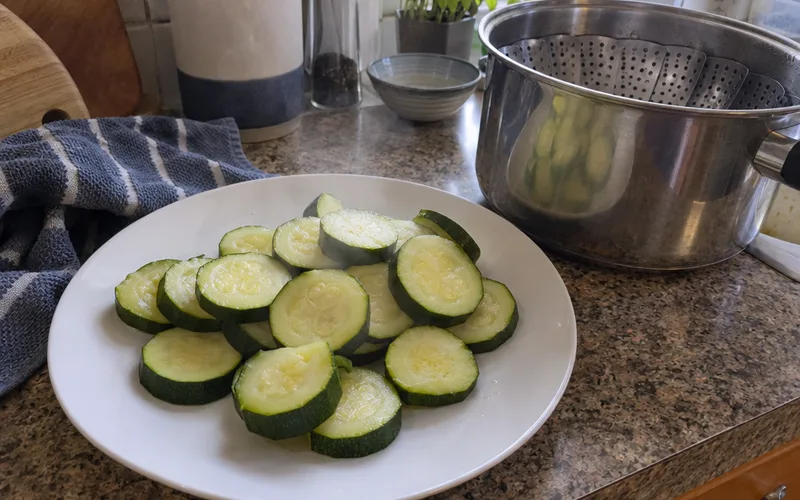
Let cooked zucchini cool completely before it goes in the pan. Soft, mushy pieces also spoil faster in a feeder, so pick up what’s left before evening.
So if you have a choice, go raw.
It’s less work, it keeps its crunch, and goats tend to treat crisp pieces more like the browse they love.
How to Prepare Zucchini for Goats
Preparing zucchini for goats takes a few minutes, and doing the same 5 steps in the same order every time keeps a bad squash out of the pan. Here’s the routine:
- Wash it. Rinse off soil and any spray residue, especially on store-bought squash.
- Check it. Cut off soft spots, and toss anything moldy, slimy or rotten.
- Taste homegrown squash. Touch a tiny raw bite to your tongue, then spit it out. If it’s bitter, the whole zucchini goes in the trash.
- Chop it. Cut it into bite-size chunks or thin rounds instead of serving it whole.
- Serve it clean. Hand-feed it or use a clean pan, not the dirt or the bedding.
Why bother chopping?
Goats grab big pieces and try to gulp them, and a hard chunk can get stuck on the way down. Small pieces slow everyone down.
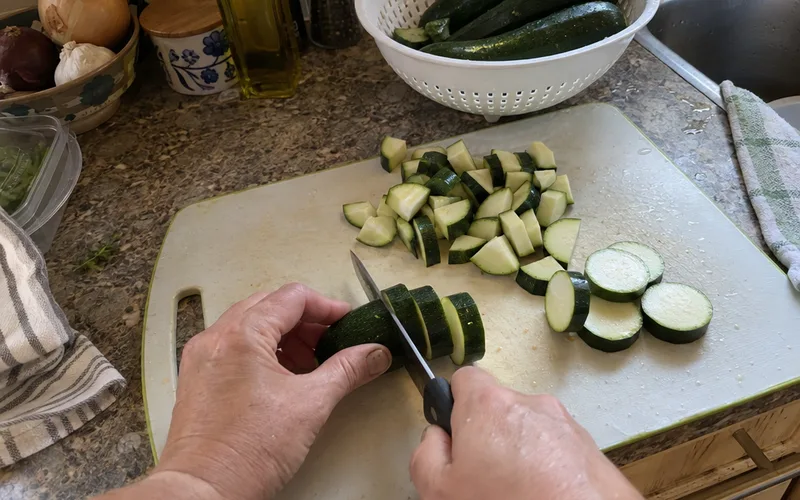
Chopping also helps you split it fairly. A whole zucchini tossed into a pen usually ends up with the bossiest goat.
Pro Tip: Hand-feed the first few pieces. You’ll see who loves zucchini and who’s only pretending, and the timid goats actually get a share.
Store-Bought vs Homegrown Zucchini for Goats
Store-bought and homegrown zucchini are both fine for goats, but they need slightly different checks.
Store-bought squash mainly needs a good wash, while homegrown squash also needs the bitterness taste test.
Here’s how the checks split:
- Store-bought: Wash it, trim bruised ends, and skip any that feel soft or smell sour.
- Homegrown: Wash it, taste-test a raw slice, and feed only leaves and vines you didn’t spray.
- From a neighbor or farm stand: Treat it like homegrown, since you don’t know how it was grown.
That last group is where a lot of free zucchini comes from in late summer. A gardener drowning in squash is often glad to hand some over.
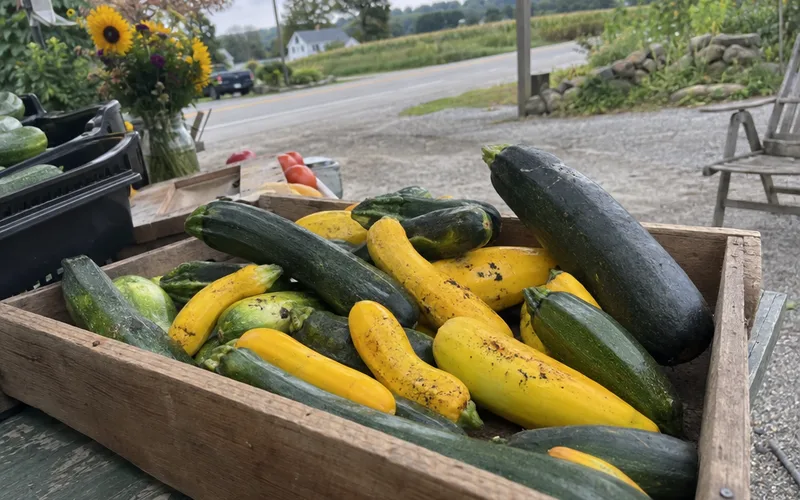
Here’s what to say: “My goats would love any extra zucchini you can’t use. Did you spray the plants with anything this year?”
The answer decides what’s on the menu. If they sprayed, wash the squash well and leave the leaves and vines out.
How Much Zucchini Can a Goat Eat?
A goat can start with a few chopped pieces of zucchini, then get a little more over the following days if its droppings stay firm and it keeps eating hay.
No single number fits every goat, because body size, age and the rest of the diet all change the answer.
That’s why answers online disagree so much. One says a set weight, another says a cup, another says whole zucchini a day.
Here’s a method that works for any goat instead:
- Give each goat a few small pieces on day 1.
- Check droppings and appetite the next morning.
- If both look normal, offer a little more next time.
- Stop increasing once zucchini starts crowding out hay.
That last step is the one most people skip. If the hay rack isn’t emptying the way it used to, the treat has become a meal.
Watch the Droppings
Goat droppings tell you fast whether you’ve overdone it. Normal pellets are firm and separate.
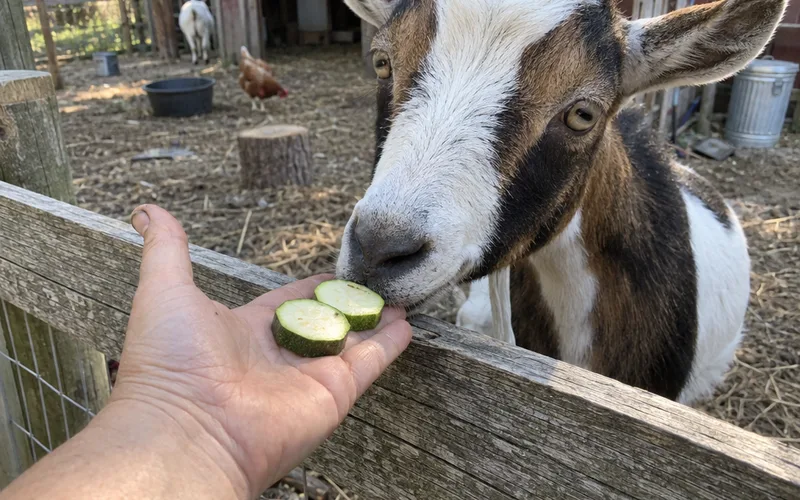
Clumped or soft droppings after a zucchini day mean the serving was too big.
Go back to the last amount that kept them firm, and if the loose stool hangs on, work through the causes of goat diarrhea instead of blaming the squash and moving on.
Give each new amount a full day before you judge it. Soft or clumped droppings tend to show up within that time, so the next morning’s pellets are the ones to check.
Size Changes the Serving
Miniature breeds like Nigerian Dwarf goats need smaller servings than a full-size dairy or meat goat. A handful that suits a big doe is a lot of zucchini for a small wether.
Here’s an example:
Say you keep a Nigerian Dwarf and a Nubian (a hypothetical pair). They share one treat bucket, but not one stomach size, so portion by the goat, never by the bucket.
How Often to Feed It
Zucchini works best a few times a week rather than every day. Rotating it with other snacks keeps one vegetable from taking over, and it keeps your goats curious.
Need more options to rotate? The goat treats list has plenty that fit the same small-and-occasional pattern.
Key Takeaway: Feed by watching your goats, not by copying a number. The droppings and the hay rack tell you when to stop.
Signs a Goat Ate Too Much Zucchini
A goat that ate too much zucchini usually shows it in its droppings first, then in its appetite. Soft, clumped or runny droppings within a day are the most common sign.
Other things to watch for:
- A tight, swollen belly or a goat that looks uncomfortable.
- A goat that skips its hay or grain the next morning.
- Grinding teeth, standing hunched, or lying down and getting up again and again.
A swollen, tight belly is the one to take seriously right away. Learn the warning signs of goat bloat before you need them, because it can move fast.
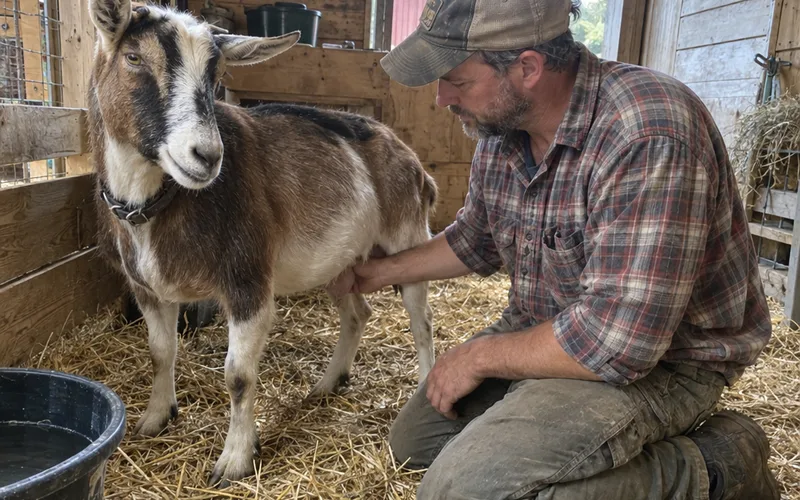
For mild loose droppings, the fix is simple. Stop the zucchini, offer plenty of hay and fresh water, and watch for the next day.
It also helps to jot down what you fed and how much. A simple note on the barn calendar turns a guess into a serving size you can trust next time.
If your goat seems in pain, stops eating or the belly keeps swelling, call your vet. Don’t wait it out.
Bitter Zucchini Is the One Real Danger
Bitter zucchini is the one kind you should never feed goats, because a bitter taste signals bitter compounds called cucurbitacins.
Normal zucchini tastes mild and watery, while a bad one tastes sharply, unpleasantly bitter.
Here’s the tricky part:
A bitter zucchini looks exactly like a good one. You can’t spot it by color, size or smell.
The only reliable check is a tiny taste of the raw squash before your goats get it.
Zucchini plants make cucurbitacins naturally, and most squash keep them too low to taste. Every so often, one doesn’t.
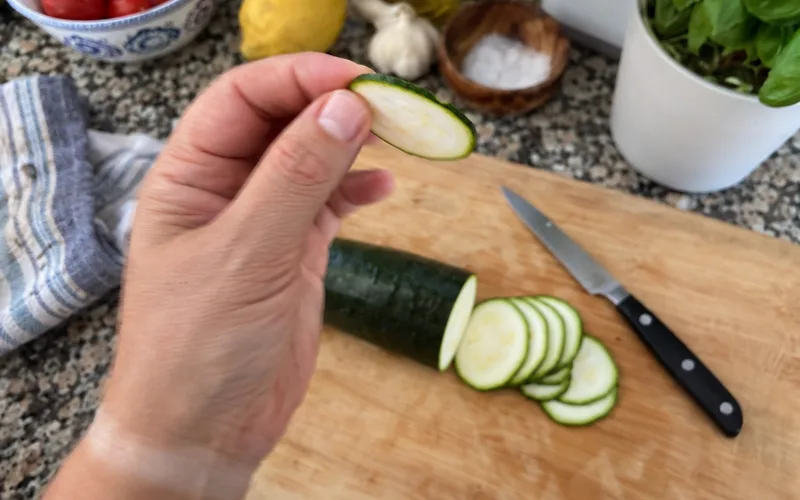
That’s why the taste test belongs in your routine for every homegrown zucchini, including squash from volunteer plants that sprouted on their own in the compost or garden.
Here’s the taste-test routine:
- Cut a thin slice from the raw zucchini.
- Touch it to your tongue, then spit it out.
- If it’s bitter, throw away the whole zucchini, not just the bitter end.
Don’t try to rescue a bitter squash by cooking it or mixing it with other vegetables. Treat bitter as bad, whether it’s raw or cooked.
Note: Never swallow a bitter test bite yourself. A taste is enough to tell.
What to Do If a Goat Ate Bitter Zucchini
If a goat ate bitter zucchini, take away whatever is left, give it hay and fresh water, and call your vet. Don’t wait to see whether it passes.
Tell the vet what the goat ate, roughly how much and when. Watch for diarrhea, a goat that seems to hurt, or one that stops eating.
Going off feed is serious on its own. Write down when the goat stopped eating hay, since that timing helps your vet decide how fast to act.
Can Goats Eat Zucchini Bread?
Goats shouldn’t eat zucchini bread as a treat, even though the zucchini inside it is safe.
The bread brings sugar, flour, oil and often add-ins like chocolate chips, raisins or nuts that plain zucchini doesn’t.
Sugar and starch ferment fast in the rumen. A big dose is exactly the kind of sudden change that upsets digestion.
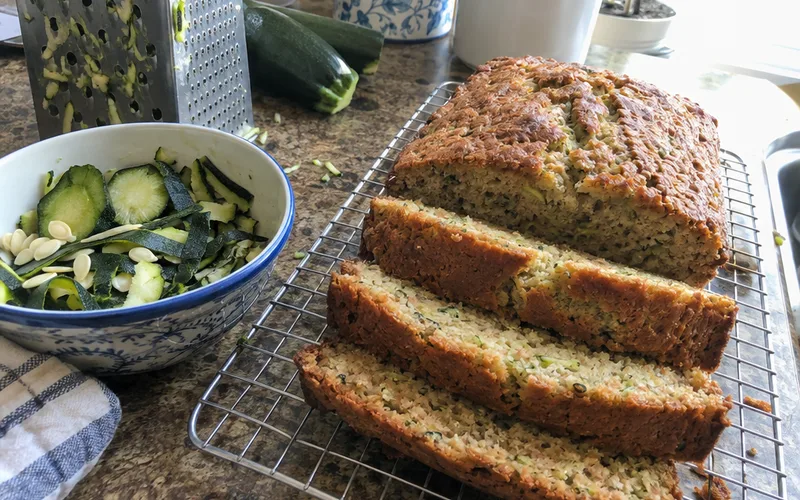
And chocolate makes it worse. Keep any bread with chocolate well away from the herd.
What if your goat already grabbed a bite?
One stolen bite of plain bread is a very different situation from a whole loaf. Watch for bloating, diarrhea or a goat that skips its hay, and call your vet if any of them show up.
The good news?
Baking leaves the perfect goat treat behind. The ends, peels and seeds you trimmed off before grating are plain, raw zucchini, so they’re fine in the treat pan.
The same goes for other zucchini dishes. Fritters, casseroles, stir-fries and pickled zucchini carry fat, salt, cheese, onion or vinegar, so they stay people food.
The same sugar and starch problem applies to bread for goats in general, not just the zucchini kind.
Can Baby Goats Eat Zucchini?
Baby goats can try zucchini once they’re eating hay and solid feed well, but only in tiny pieces and tiny amounts.
A young kid’s rumen is still developing, so milk, hay and kid feed come first.
Start with 1 or 2 small, thin pieces. Then check the droppings the next day, the same way you would with an adult.
Introduce one new food at a time with kids.
If a kid gets loose droppings after its first zucchini, stop the squash and wait until the droppings are firm again before trying anything new.
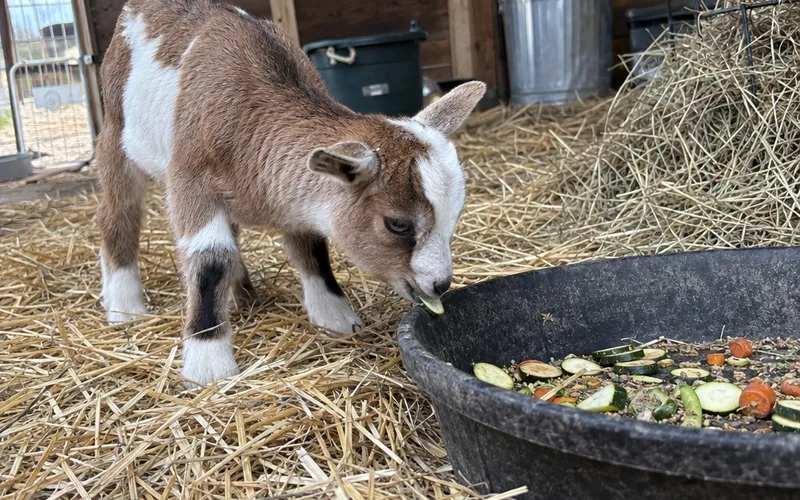
And keep kids’ pieces smaller than an adult’s. Their mouths are smaller, and they gulp just as eagerly.
Kids still on the bottle should wait. At that age, a steady bottle-feeding routine matters far more than any treat.
In other words, zucchini is a someday snack for kids. It’s never something they need.
Feeding Zucchini to Goats in Winter
Goats can eat zucchini in winter as long as it’s fresh, stored well or fully thawed, never frozen solid. Winter is also when hay matters most, because pasture and browse run short.
Stored zucchini needs a check before every serving. Squash kept for weeks can go soft or moldy from the inside, so cut one open before you trust it.
Frozen zucchini needs to thaw first. A frozen block is hard to chew and easy to choke on.
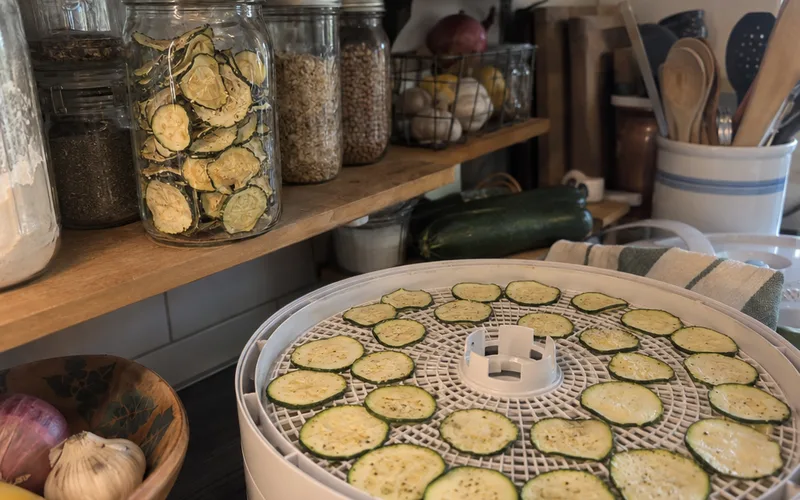
Dried zucchini chips are the easiest winter option of all. They keep in a dry jar without a freezer, and a few chips make a quick treat on a cold morning chore run.
So in winter, zucchini is a small bonus. Choosing the right hay for goats does the real work of keeping them fed and warm.
How to Use Up a Zucchini Glut
A zucchini glut can last your goats for weeks if you store it in goat-size portions instead of letting it pile up on the counter.
That way, one overloaded week of harvest turns into a steady trickle of treats.
Here’s how each option works:
- Fridge: Keep whole, unwashed zucchini cold and dry, then wash and chop on the day you feed it.
- Freezer: Chop it first, freeze it on a tray, and bag the pieces. Thaw what you need before serving.
- Dried: Thin slices dried in a dehydrator make chewy chips, with no oil or salt added.
The catch is spoilage. Stored zucchini still needs the same check for soft spots, mold and bitterness as fresh squash.
And don’t feed a whole glut at once. Spreading it out keeps every serving treat-sized.
Fun Ways to Serve Zucchini to Goats
Zucchini can do more than sit in a pan, and changing how you serve it keeps goats busy and stops one goat from hogging the treat.
Each method still uses the same small, chopped serving.
A few ideas that work:
- Hand-feeding: Great for taming shy goats and for training.
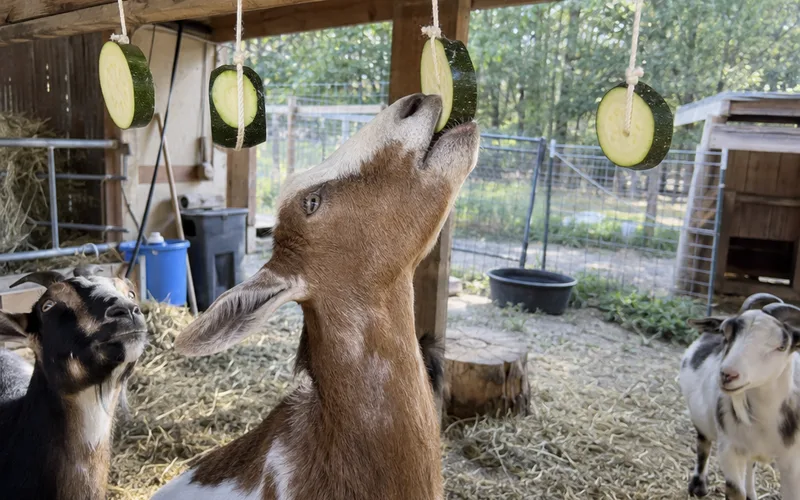
- A hanging string: Thread thick rounds on a clean cord and hang it, so goats have to work for each bite.
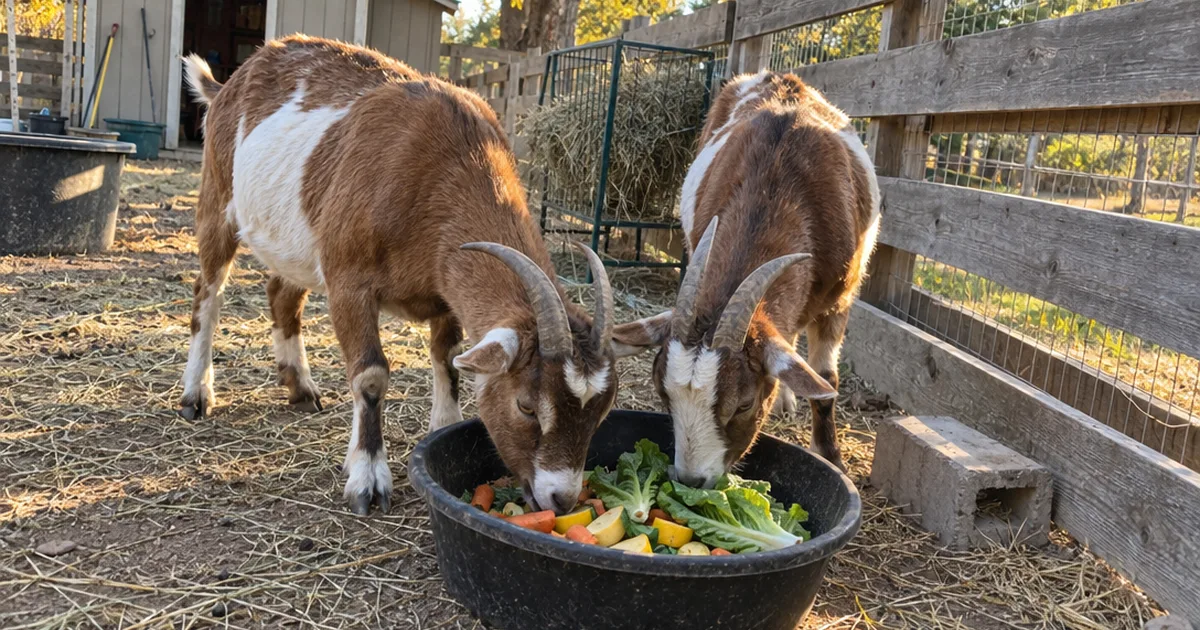
- Scatter feeding: Toss small pieces across clean ground or a mat, so every goat gets a turn.
- A veggie mix: Combine zucchini with a few pieces of another treat your goats already like.
Scatter feeding is the simplest fix for a bossy herd. When the pieces are spread out, one goat can’t guard them all.
Whatever you choose, clear away the leftovers before dark. Wet zucchini pieces left in bedding can mold.
Why Won’t My Goats Eat Zucchini?
Goats often refuse zucchini because it’s new to them, too big, too wet or simply not to their taste.
Owners on goat forums ask why their goats won’t touch fruits and vegetables all the time, so you’re not alone.
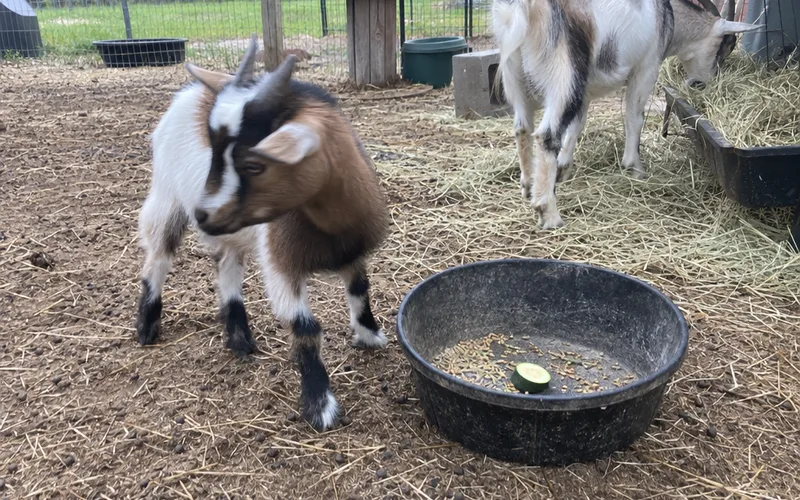
Goats are choosy browsers, not garbage disposals. Many of them treat a new food with suspicion before they’ll try it.
Try these fixes:
- Make it small. Thin rounds or small cubes are easier to try than a whole squash.
- Pair it. Offer a piece next to a treat they already love.
- Hand it over. A goat that won’t touch zucchini in a pan may take it from your palm.
- Try the plant. Some goats skip the squash but happily eat the leaves and flowers.
Still no luck? Let it go.
A goat that refuses zucchini isn’t missing anything it can’t get from hay, browse and its regular feed.
Note: Refusing one treat is normal. A goat that also refuses its hay and grain has a different problem that needs a closer look.
Growing Zucchini for Your Goats
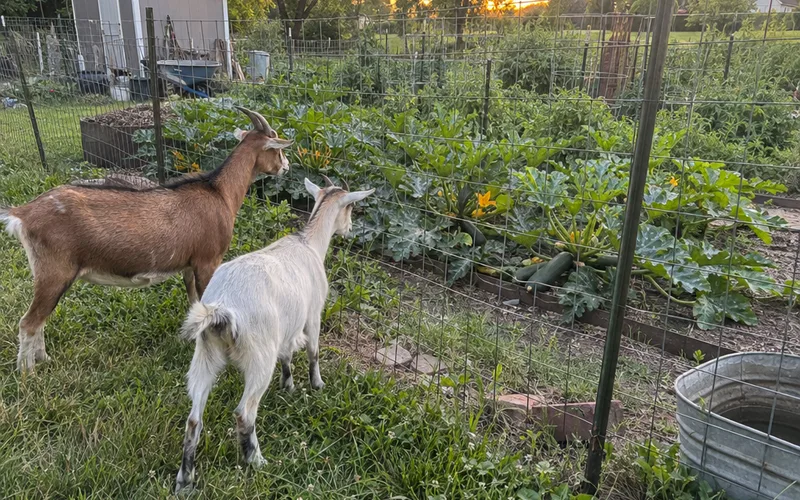
Growing zucchini for goats is easy as long as the goats can’t reach the plants until you’re ready to share.
Given the chance, a goat will eat a zucchini plant down to the stem, flowers and baby squash included.
Here’s a simple plan:
- Fence the garden. A goat in the patch eats next week’s harvest along with this week’s.
- Pick small and often. Young zucchini are tender for you and easy to chop for them.
- Skip sprays on plants you’ll feed, or check the product label for livestock use first.
- Clean up with goats. After the last harvest, pull the healthy plants and hand them over in batches.
Batches matter here. A wheelbarrow of vines dumped all at once is the same mistake as a whole bucket of squash.
So spread the cleanup over several days alongside hay, and compost any leaves with mildew or rot.
How Zucchini Compares With Other Vegetables
Zucchini is one of the easiest vegetables for goats to get right, and it shares its safe, low-risk profile with other squash, pumpkin and cucumber.
A few garden vegetables, though, need much more care.
Zucchini vs Other Squash
Goats can eat other garden squash, like yellow squash, butternut, acorn and pumpkin, by the same rules as zucchini: fresh, plain, chopped and fed as a treat.
The main difference is that hard winter squash takes more chopping, because its rind is tough.
So if you already feed one squash, the rest work the same way. Variety by variety, feeding squash to goats only changes in how hard you’ll have to chop.
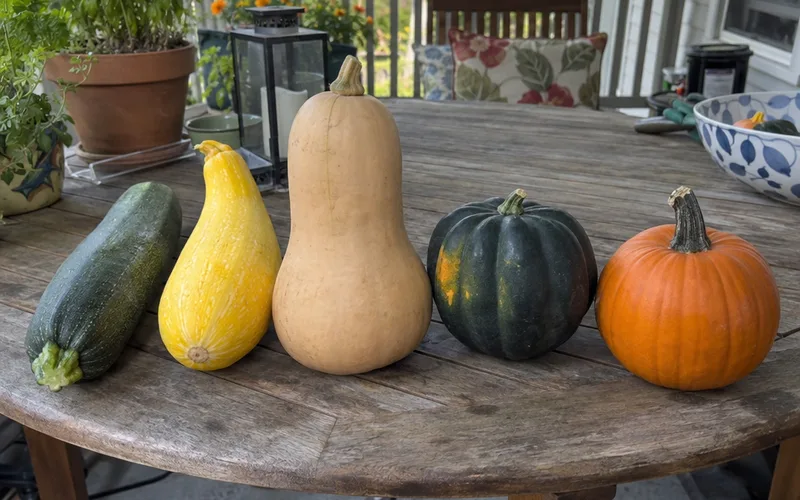
Fall pumpkins follow the same pattern, and pumpkin for goats is a popular use for leftover jack-o’-lanterns.
Cucumbers are another watery cousin. Goats can eat cucumbers and their vines as long as you skip pickles.
Decorative gourds are the exception in this family. They’re grown for looks, not food, so keep them out of the treat bucket.
Vegetables Goats Should Not Eat
The garden vegetables goats should not eat freely include raw potatoes, the green parts of tomato plants and onions, and each comes with warnings that zucchini doesn’t.
Most of the trouble sits outside the squash family.
Before anything new goes in the treat bucket, check it first. Start with raw potatoes and goats, tomato plants and goats and onions and goats.
For everything else in the garden, the safe vegetable list shows what to feed and what to skip at a glance.
Your First Zucchini Step This Week
Zucchini is a safe, easy goat treat as long as it’s plain, chopped and taste-tested for bitterness first.
This week, give each goat a few small pieces, then check the droppings the next morning before you offer more.
Frequently Asked Questions
Can goats eat raw zucchini?
Yes, goats can eat raw zucchini, and raw is the easiest way to serve it, with the skin and seeds left on. Wash it and chop it into bite-size pieces before it goes in the pan.
What vegetable scraps can goats eat?
Goats can eat plain, fresh scraps from mild garden vegetables, such as zucchini ends, squash peels and cucumber peels.
Skip anything moldy, slimy or cooked with salt, butter, onion or garlic.
Can goats eat zucchini every day?
Goats can have a little zucchini on many days, but a few times a week is a better habit for a treat. Rotating it with other treats keeps hay as the main meal.
Can goats eat zucchini and carrots together?
Yes, goats can eat zucchini and carrots in the same serving, as long as the whole serving stays treat-sized.
Add one new vegetable at a time, so you know which one caused any upset.
Can goats eat zucchini and tomatoes?
Goats can eat zucchini next to a little ripe tomato fruit, but keep the green tomato leaves, stems and vines away from them.
Feed the two as a small side to hay, not a salad meal.
Can goats eat yellow squash like zucchini?
Yes, yellow squash is a summer squash like zucchini, and goats can eat it the same way: fresh, plain, chopped and as a treat.
Taste-test homegrown yellow squash for bitterness too.
Do goats like zucchini?
Many goats like zucchini, especially the flowers and young squash, but plenty refuse it the first few times.
Offer small pieces by hand next to a favorite treat before you decide your goat doesn’t like it.
Is zucchini good for goats?
Zucchini is a good occasional treat for goats because it’s mild, soft and easy to chew.
It works as a small extra on top of hay and browse, not as a source of nutrition goats depend on.