| # | Product | Our Rating | ||
|---|---|---|---|---|
| 1 |  | Best OverallREDMOND Goat Mineral Supplement (5 lb) | ★★★★★ | Check Price |
| 2 |  | Wholesome Harvest 16% Goat Feed (10 lb) | ★★★★☆ | Check Price |
| 3 |  | Manna Pro Goat Treats | ★★★★☆ | Check Price |
A goat that spots a stand of bamboo does not see decorative landscaping. It sees a wall of reachable green leaves at exactly the height it likes to browse.
That instinct is usually sound, though not foolproof. One common shrub wears the bamboo name while sharing none of its safety, and telling the two apart is the line between a free feed source and a poisoning.
Can Goats Eat Bamboo?
Goats can eat true bamboo, and most take to it with obvious enthusiasm the moment a cut cane lands in the pen. The plant sits in the same botanical family as the pasture grasses they graze every day, so their digestion reads it as familiar food rather than novelty.
The confidence behind that yes comes from real feeding work, not folklore. Controlled trials in West Africa and browse studies in the Appalachian United States both landed on the same verdict, that bamboo leaves are a legitimate forage for goats.
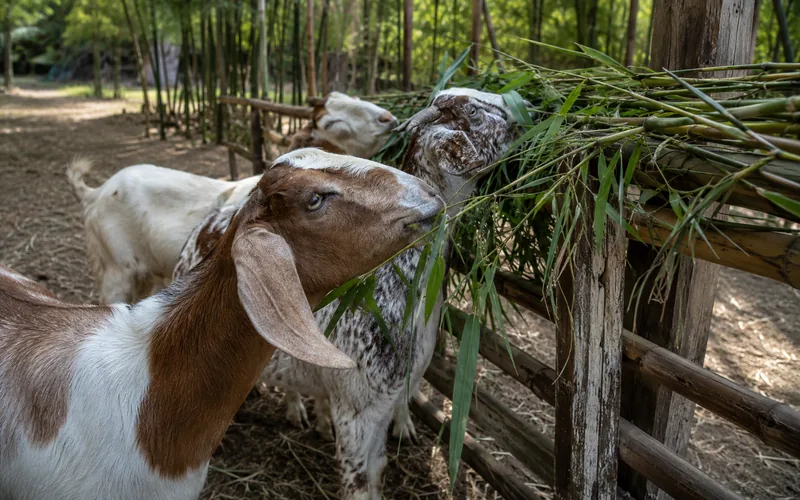
There’s exactly one plant that turns this simple answer into a trap. It isn’t a bamboo at all, and it’s dangerous enough to earn the very next section rather than a footnote at the end.
Heavenly Bamboo Is the Deadly Exception
One plant sold as bamboo can genuinely kill a goat: heavenly bamboo, or Nandina domestica, which isn’t a true bamboo at all.
Before a single leaf goes into the pen, learn to recognize the one plant that can kill a goat. Nurseries sell it as heavenly or sacred bamboo, and the resemblance ends at the name.
Nandina domestica belongs to the barberry family, not the grasses, so it is no more a bamboo than a tomato is a potato. Every part of it carries cyanogenic glycosides, compounds that convert to hydrogen cyanide once they are chewed and digested.
North Carolina State University Extension rates the plant as a high-severity poison and notes that all parts contain cyanide, citing a documented Georgia case that tied cedar waxwing deaths to its berries. Cyanide blocks cells from using oxygen, so even a small feed of Nandina can prove fatal to a browsing goat.
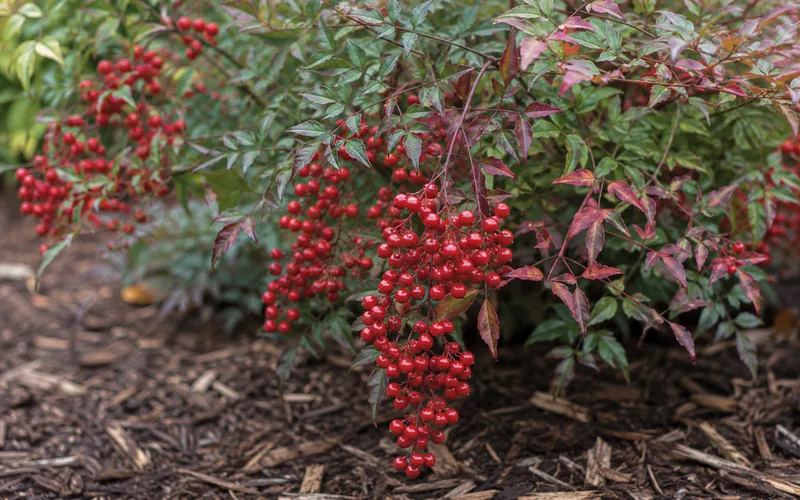
The berries are the cruelest part of the trap. They cling through winter and stay glossy red exactly when other green feed has vanished and a hungry goat is most tempted.
Nandina’s barberry cousin, Oregon grape, is far milder, though its berberine can upset the rumen in quantity.
Telling Real Bamboo From Nandina at a Glance
The two plants separate quickly once you know the tells. True bamboo grows hollow, jointed canes topped with long, narrow single leaves that taper to a fine point.
Nandina has no hollow canes at all. It forms a bushy, multi-stemmed shrub three to seven feet tall, with lacy compound leaves split into many small leaflets.
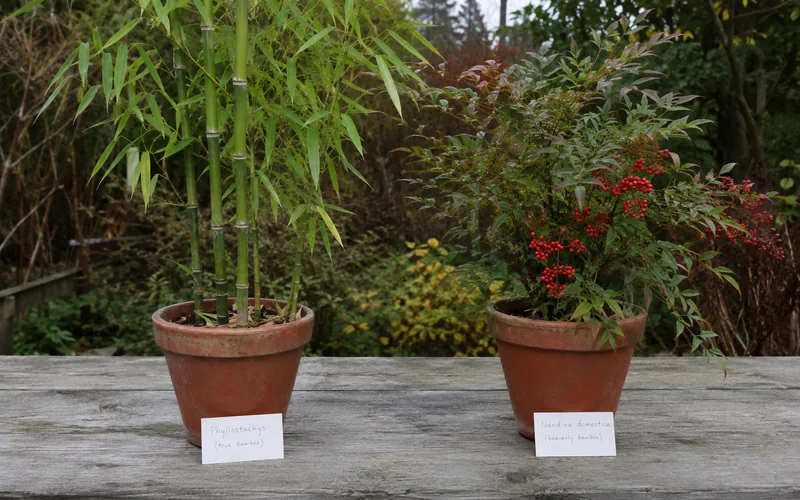
Color settles any remaining doubt. Through fall and winter Nandina flushes crimson and hangs dense clusters of red berries, while genuine bamboo stays green, grassy, and almost never fruits.
There is a quick field test when you are still unsure. Snap a cane, and a true bamboo shows the hollow, segmented interior every grass cousin shares, whereas Nandina’s woody stems are solid straight through.
When you cannot positively name a plant, treat it as poisonous until proven otherwise. That single habit prevents the vast majority of accidental cases, and any shrub you clear belongs on your wider list of plants that poison goats.
What Cyanide Poisoning Looks Like
If a goat does swallow heavenly bamboo, cyanide acts within minutes, so recognition has to be fast. The ASPCA lists the signs of Nandina ingestion as weakness, incoordination, seizures, coma, and respiratory failure.
On a goat you will often see gasping or rapid breath, heavy drooling, muscle tremors, and a staggering, uncoordinated walk. Move the animal away from the plant and phone your veterinarian immediately, because this poisoning responds only to prompt treatment.
Prevention beats any antidote here, and it isn’t close. Pull every Nandina shrub off your property and you never have to gamble on your reaction time.
Why a Grass Like Bamboo Fits the Goat Gut
Put simply, bamboo works because it’s a giant grass, and a goat’s rumen is built to ferment fibrous plants like it.
Bamboo is a member of Poaceae, the true grass family, despite a woody look that hints at a tree or shrub. Botanically it is a giant grass, which is exactly why it slots so naturally into a goat’s diet.
Goats are browsers more than grazers, built to reach up and strip foliage rather than crop grass at ground level. Pulling leaves off a standing cane is the precise feeding motion they evolved for.
The deeper reason sits in the stomach. A goat is a ruminant, carrying a four-chambered stomach whose largest chamber, the rumen, works as a warm fermentation vat.
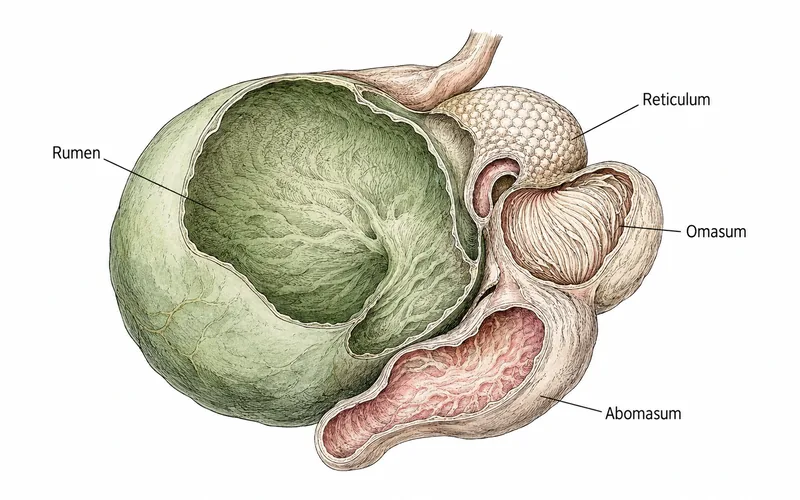
Inside that rumen, a dense community of microbes breaks down plant material no single-stomached animal could touch. Those microbes ferment the cellulose and hemicellulose that stiffen every grass, releasing energy the goat then absorbs.
That’s the whole mechanism in miniature, and it explains the plant’s limits too. Mature canes load up on lignin, the compound that stiffens tender growth into rigid wood, and lignin mostly shrugs off fermentation.
So the woodier a cane grows, the less a goat can pull from it. Soft leaves and young shoots are rich in fermentable fiber, while old culms are mostly locked-up structure the microbes leave behind.
What the Feeding Research Actually Found
The short version is that feeding trials agree bamboo leaves carry enough crude protein to support goat maintenance and steady growth.
Once you’ve confirmed the plant is genuine bamboo, the nutrition story gets encouraging. The leaves carry enough crude protein to support maintenance and modest growth, which is the consistent thread across every feeding study.
The clearest evidence comes from Ghana. A controlled trial from the University of Energy and Natural Resources found that goats supplemented with Oxytenanthera abyssinica leaves posted the highest daily weight gain and the lowest feed-to-gain ratio of any group, with blood values staying inside healthy ranges throughout.
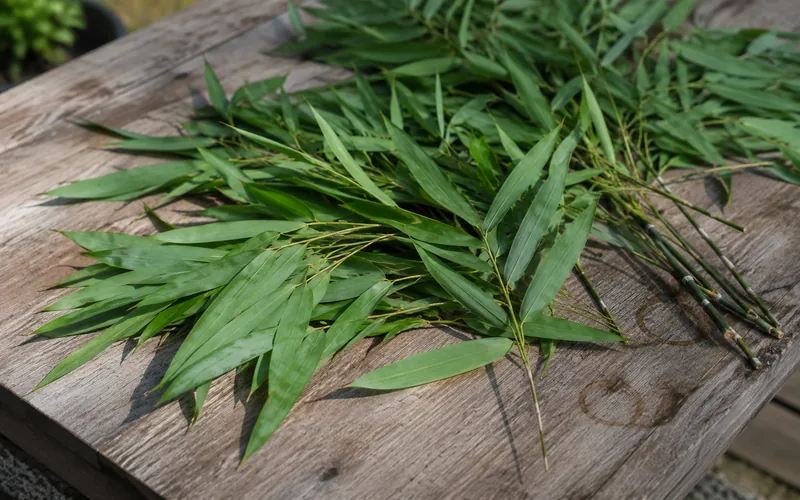
A separate 30-day study from Kwame Nkrumah University of Science and Technology put numbers on the effect, reporting that supplemented goats gained between 27 and 72 grams per day and lifted daily feed intake to as much as 469 grams, with feed conversion efficiency climbing alongside.
Species matters as much as the supplement itself. Oxytenanthera abyssinica delivered the richest protein in the Ghana work, while Bambusa balcooa drove higher dry-matter intake, so both earn a place on a fodder list.
North American research points the same direction. USDA browse studies in central Appalachia noted that bamboo stays green and holds much of its quality straight through winter, which is exactly the season most pasture-based feed plans fall short.
Protein is only half the value. The dense dietary fiber keeps the rumen turning steadily, and the leaves add minerals, measured as ash in the trials, that support bone strength and enzyme function.
One caveat keeps the numbers honest. These trials measured leaf browse specifically, not whole canes, so the encouraging protein and growth figures apply only when goats are stripping foliage rather than gnawing woody stems.
The Everyday Payoffs of Bamboo Browse
Beyond the raw protein and fiber figures, bamboo brings practical perks few other plants match. Chief among them is that many species stay evergreen, producing usable leaf almost year round.
That off-season supply is the real standout. When pastures go dormant in deep winter, cutting a few canes hands the herd fresh green browse right when everything else has run dry.
The plant also grows fast and regrows hard after cutting, so a single grove can feed animals season after season. Boiled down, the day-to-day upsides look like this:
- Year-round greens from an evergreen crop when pasture is dormant.
- Rapid regrowth that lets one grove supply forage again and again.
- Gut-friendly fiber that keeps the rumen fermenting steadily.
- Free brush control as the herd trims back an aggressive plant.
- Low-cost feed once the grove is established on your land.
Which Parts of the Plant Goats Will Eat
Goats favor bamboo leaves and tender shoots, nibble thin young canes, and mostly ignore woody culms and the rare seeds.
To a goat, one bamboo plant is really several foods stacked on a single stem. Knowing which parts they chase and which they snub saves real effort at harvest time.
Bamboo Leaves
Leaves are the prize and the reason bamboo pays its way as fodder. They hold most of the plant’s protein, strip off in seconds, and are the first thing a goat targets on any fresh cane.
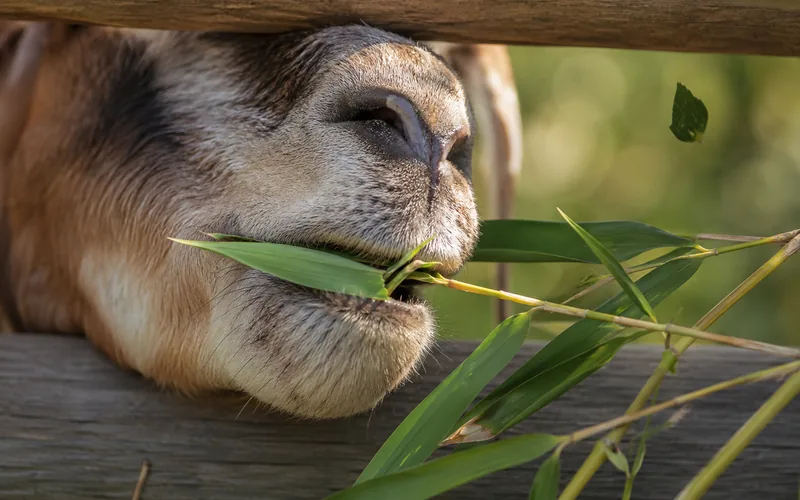
Toss a leafy branch over the fence and the foliage vanishes while the bare stalk sits there ignored. That lopsided browsing is completely normal, so don’t read anything into it.
Bamboo Shoots
Young shoots are the softest, most palatable growth and arrive in a concentrated spring flush. Goats love them, but they carry the one real caution covered in the next section.
That spring timing creates a tug-of-war for anyone growing bamboo on purpose. The shoots you might feed are the exact growth the grove needs to expand, so most keepers let goats take shoots outside the grove line and protect the ones inside.
Bamboo Canes and Culms
Goats will gnaw thin, young canes but abandon thick, mature culms. The woodier the cane, the more lignin it packs and the less appealing it becomes, which is why varieties with canes under two inches suit fodder best.
Bamboo Seeds
Bamboo flowers so rarely that many groves go decades without ever setting seed. On the uncommon occasion kernels appear, they are not known to be toxic to goats, but they are far too unpredictable to plan a feed around.
Are Raw Bamboo Shoots Risky?
Raw shoots are low-risk in small amounts, since a healthy rumen neutralizes the trace cyanogenic compounds they hold.
This is where a small but real risk hides. The tender spring shoots of some true bamboo species contain low levels of the same cyanogenic compounds found in raw lima beans.
People neutralize those compounds by boiling shoots before eating, a step goats obviously skip. That is why the amount and pace of shoot feeding matter far more than they ever do with leaves.
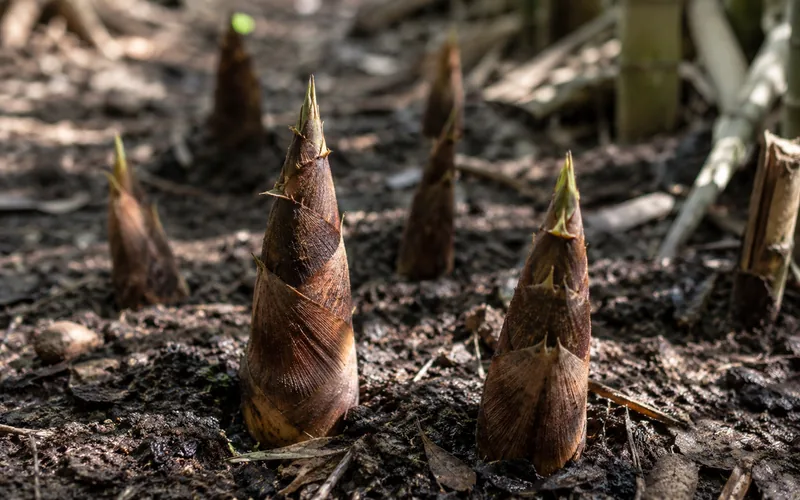
In practice the danger to goats stays small, because the levels are low and a browsing goat rarely gorges on shoots alone. A healthy rumen detoxifies modest amounts as part of normal fermentation.
Trouble only appears when a large volume hits the gut faster than the microbes can process it. Mature leaves carry far less of these compounds than fast-growing shoots, so leaf browse stays the safe everyday choice while shoots remain an occasional treat.
Picking the Right Bamboo Species to Grow
The best bamboo for goats pairs plentiful leaves with thin canes, and golden bamboo is the classic starting choice.
Not every bamboo pulls equal weight as feed, so species choice makes the whole job easier. The best picks combine plentiful leaves, thin canes, and enough cold hardiness for your zone.
Golden bamboo, Phyllostachys aurea, is the traditional starting point. The USDA once distributed this small-caned running variety specifically as a livestock feed, and its slim canes cut cleanly with hand loppers.
Here is how a handful of commonly recommended species compare for goat feeding:
| Species | Growth Type | Why It Works for Goats |
|---|---|---|
| Phyllostachys aurea (golden bamboo) | Running | USDA-distributed fodder type, thin canes cut with loppers |
| Pseudosasa japonica (arrow bamboo) | Running | Large clean leaves, short branches, stacks easily |
| Arundinaria gigantea (river cane) | Running | Native North American species with a forage history |
| Semiarundinaria fastuosa (temple bamboo) | Clumping | Cold hardy, upright, generous leaf production |
| Oxytenanthera abyssinica | Clumping | Highest protein and weight gain in feeding trials |
| Bambusa balcooa | Clumping | Large-leaved, productive, non-invasive clumper |
Among the runners, the Phyllostachys genus spreads by underground rhizomes and throws the thin, leafy canes goats handle best. Arrow bamboo, a useful Pseudosasa species, earns praise for large clean leaves and short branches that stack neatly after browsing.
Native river cane, Arundinaria gigantea, is the North American option with a long history as livestock forage. On the clumping side, Semiarundinaria fastuosa stays cold hardy and upright while Bambusa balcooa produces heavy, non-invasive leaf.
Practitioners who feed livestock daily often single out the Pseudosasa group for one practical reason. Its large, dark green leaves sit on very short branches, so the stripped poles lie flat and stack cleanly instead of springing into a tangled pile.
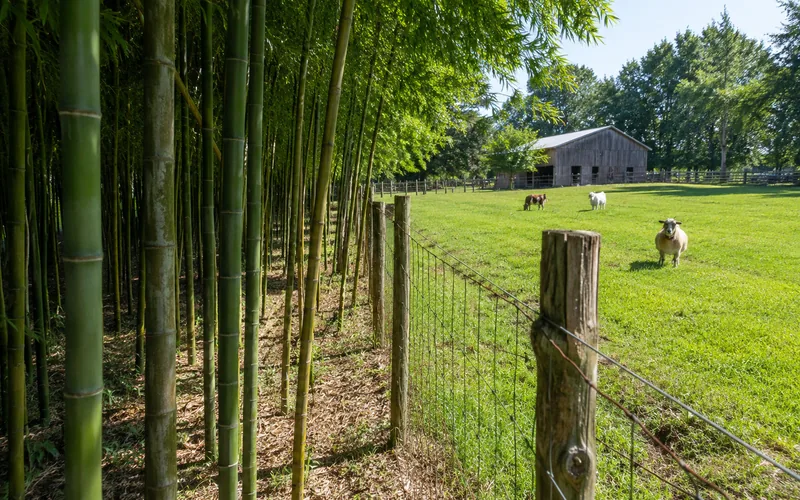
Running types like the Phyllostachys group are the notorious hard-to-contain bamboos. Clumpers hold to a defined footprint, which makes them the lower-risk choice for most small farms.
Where Bamboo Fits Beside Hay and Pasture
On protein and fiber, bamboo leaves sit close to grass hay, so use them as a supplement rather than a full ration.
Bamboo is easiest to judge against the feeds you already trust. On protein and fiber, its leaves land closer to a decent grass hay than to a rich legume.
That placement tells you how to use it. Bamboo shines as browse and as a winter green, but it will not carry a full ration the way quality hay or a protein source does.
Here is a rough comparison to anchor bamboo among common goat feeds:
| Feed | Protein | Fiber | Best Role |
|---|---|---|---|
| Bamboo leaves | Moderate | High | Supplemental browse and winter greens |
| Grass hay | Low to moderate | High | Everyday forage base |
| Alfalfa | High | Moderate | Protein boost for growth and milk |
| Fresh pasture | Moderate | Moderate | Primary spring and summer forage |
| Mature bamboo canes | Very low | Very high | Little feed value, mostly ignored |
Pairing covers bamboo’s single weakness. Offering it alongside a protein-dense legume like alfalfa lets the bamboo supply fiber and bulk while the legume fills the protein and energy gap for a balanced ration.
Introducing Bamboo Without Triggering Bloat
Bring bamboo in slowly over one to two weeks so the rumen microbes can adapt and bloat never gets a foothold.
This is the step most keepers skip, and that shortcut is behind nearly every bad bamboo experience. A goat’s rumen depends on a specific community of microbes, and those microbes need time to adjust to any new forage.
Bamboo ferments in the rumen, so that population needs roughly one to two weeks to adapt before goats eat it in quantity. Rush the window and you invite serious digestive trouble.
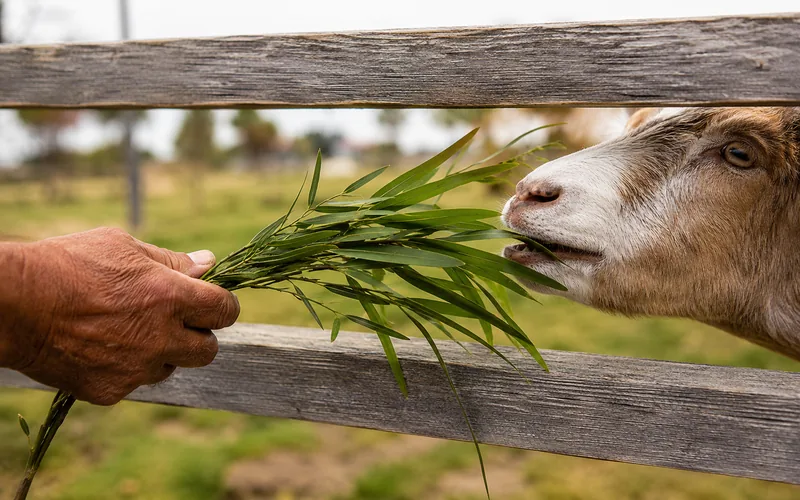
The specific hazard is enterotoxemia, an often fatal overload that strikes when goats gorge on a rich new feed before the gut adapts. A gradual transition is the entire defense.
A schedule that holds up in the field looks like this:
- Days 1 to 4: Keep the normal diet and offer only about ten minutes of bamboo browsing twice a day.
- Days 5 to 9: Lengthen the sessions and let the goats sample more leaves and a few tender shoots.
- Days 10 to 14: Keep widening access as the rumen settles, with familiar hay always in front of them.
- After day 14: Bamboo can join the regular browse rotation.
Leave good hay and clean water available the whole way through. Familiar feed steadies the rumen while the new microbes multiply, and any bloating, dullness, or loose droppings is your cue to slow the pace back down.
How Much Bamboo a Goat Can Handle
Cap bamboo at roughly a fifth of daily intake, which is about a couple of leafy canes for an adult goat.
Bamboo works as a supplement, not a sole diet. Even in the trials where goats ate it freely, the animals always had a basal ration of grasses underneath the supplement.
A safe rule keeps browse and treats in a supporting role while hay and pasture carry the bulk. Aim for a diet that is roughly 80 percent forage or hay, with bamboo filling part of the remainder.
Winter shifts the math. When little else is green, bamboo can safely take a larger share, though it still belongs beside hay and a protein source so the ration stays balanced.
It helps to think in browsing time rather than exact pounds. Once goats are fully adjusted, a couple of leafy canes each per session is a sensible daily helping, scaled up in winter and down when green pasture does the heavy lifting.
If you prefer a number, a rough ceiling is to let bamboo supply no more than about a fifth of a goat’s daily dry-matter intake once the herd is fully adjusted. For a mid-sized adult that lands around a pound of leaf and tender stem, which a couple of leafy canes comfortably provides.
Consistency beats volume. Offering modest amounts most days is far safer than long gaps broken by a sudden feast, and the risk from a rich feed dropped in too fast is the same mechanism behind pellet-driven bloat.
Warning Signs You Are Feeding Too Much
The first red flag is bloat, joined by dullness, a lost appetite, or loose droppings after a diet change.
Almost every bamboo problem traces back to too much, too fast, and not to the plant itself. Catch the early signs and you can step in before things turn serious.
The first flag is bloat, where the left side of the abdomen swells as gas builds inside the rumen. A bloated goat often stands hunched, stops eating, and grinds its teeth in discomfort.

Other red flags include lethargy, a sudden loss of appetite, loose droppings, or a goat drifting away from the herd. Any of these after a diet change is your cue to pull the new feed at once.
For mild cases, remove the bamboo, offer plenty of fresh water and familiar hay, and let the rumen settle while gentle walking helps the goat pass gas. Severe bloat or signs of enterotoxemia are emergencies with no room to wait, so call your veterinarian rather than riding it out.
Bamboo for Kids, Pregnant Does, and Milkers
Kids, pregnant does, and milkers can all browse bamboo, but only as a supplement to richer protein and their core feed.
Bamboo fits every life stage, but the youngest and hardest-working animals need extra care. Their requirements differ enough to warrant a closer look.
Kids can nibble bamboo leaves once they are on solid food and their rumen is developing, usually within a few weeks of birth. Move even slower than you would with adults, and keep their dam’s milk and a starter feed as the true foundation.
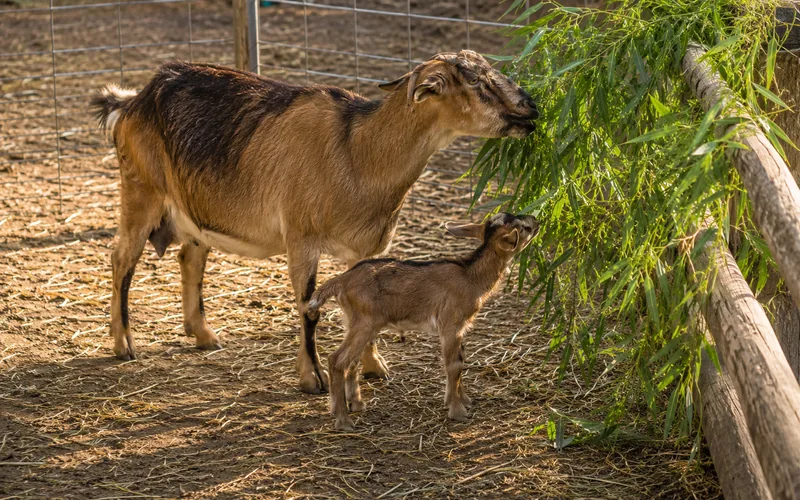
Pregnant and nursing does can browse bamboo happily, but their nutritional demands run high. Bamboo alone will not carry a doe through late pregnancy or heavy milking, so a legume like alfalfa matters more than ever for the protein and energy her kids require.
Some keepers offer a little motherwort as a kidding-time tonic, and this mint-family herb is safe in normal amounts.
Dairy keepers can relax about flavor. Bamboo is a mild grass without the pungent volatile oils that taint milk, so does browsing it generally give clean, normal-tasting milk.
One caution outranks the rest for the young. A curious kid exploring a landscape shrub is exactly how accidental Nandina poisonings begin, so fence off heavenly bamboo before kids ever hit the ground.
Cutting, Drying, and Serving the Harvest
Feeding bamboo is refreshingly low-tech, since most of the job is cutting canes and handing them over. The goats handle the rest.
Thin canes yield to a good pair of loppers, while thick culms need a pruning or reciprocating saw. There is no need to chop anything, because goats are built to strip leaves from a whole branch.
Once cut, you have a few easy serving options:
- Throw whole leafy canes over the fence and let goats strip them at their own pace.
- Lean cut canes against a rack or fence so the herd pulls leaves standing up.
- Spread branches across the pen floor for younger or smaller goats to work on.
You can also bank the harvest as bamboo hay for lean months. Cut the leafy tops, dry them in the sun for a day or two, then finish them on covered racks out of the rain, and within about a week you have shelf-stable green feed.
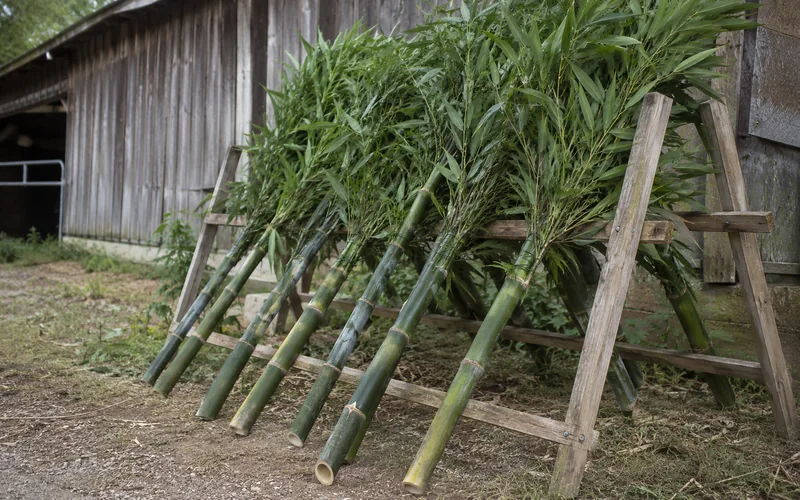
Both fresh and dried bamboo are safe, so the choice comes down to season. Fresh leaves are most palatable during the growing months, while dried bamboo hay earns its keep once nothing green is standing.
Some larger operations go a step further and pelletize bamboo leaves, branches, and chipped poles into a bagged feed. That’s overkill for a small herd, but it shows how fully the plant gets used, since even spent poles chip into bedding or mulch.
Turning Goats Loose on an Invasive Grove
Goats are among the cheapest ways to contain running bamboo, stripping the leaves and shoots that drive its spread.
Here’s the clever twist that turns a problem plant into a resource. Running bamboo spreads aggressively by rhizome, and some towns even restrict or ban it, yet a browsing herd flips the containment math.
Penned in or beside a running stand, goats strip the leaves and eat emerging shoots, steadily weakening the grove’s push outward. It is the same brush-clearing instinct that makes them useful against invasive honeysuckle and other overgrowth.
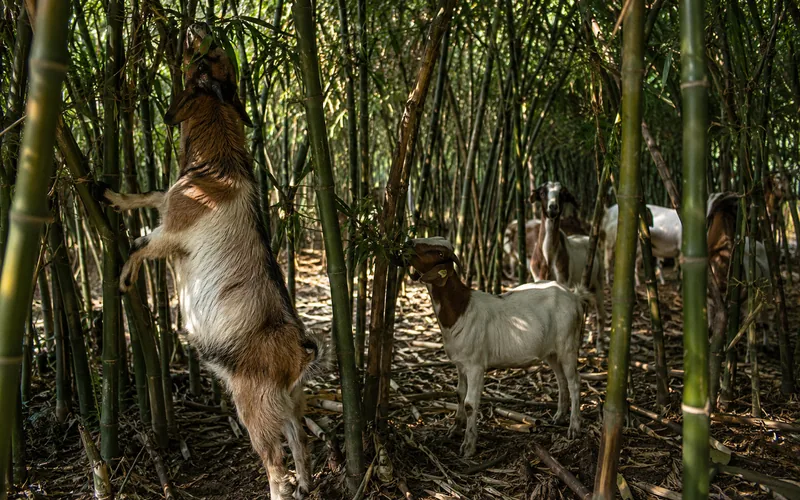
Goats rarely kill an established grove outright, but they contain it far more cheaply than machinery ever could. A single hot wire keeps them from wrecking the fence as they reach for leaves, and the perimeter patrol becomes a daily feeding routine.
If you are planting on purpose, patience is the price. A new grove usually needs three to five years to establish, and new spring shoots must be protected for roughly 60 days each year so the stand can replenish itself.
Neighbors are worth a thought before the first rhizome goes in. An escaped running grove can cross a property line and sour a relationship fast, so check local ordinances and lean toward a contained clumping species if you would rather not police the edges for years.
A Season-by-Season Feeding Rhythm
Bamboo’s value shifts with the calendar, and planning around that rhythm gets the most from it. Each season brings a different opportunity.
Spring delivers tender new shoots, the softest growth of all, though they call for the gradual, moderate approach covered earlier. Summer brings the highest leaf protein, making warm-weather foliage the most nutritious bamboo of the year.
Fall is the season to plan ahead by cutting leafy tops to dry into hay. A small autumn stockpile means you are not scrambling for green feed come January.
Late winter is where bamboo truly earns its place. Once stockpiled pasture is gone, cutting older canes hands the herd fresh green leaves through the leanest weeks, exactly when an evergreen crop is worth the most.
Across a full year the cycle stays simple: protect shoots in spring, browse leaves in summer, dry tops in fall, and feed stockpiled canes in winter.
Do Sheep, Horses, Cattle, and Pigs Eat Bamboo Too?
Sheep, cattle, horses, and pigs all eat bamboo, though ruminants like sheep and cattle get the most from it.
Goats are far from the only animals that appreciate bamboo, so a mixed farm can build around a single grove. The ruminants just get the most out of it.
Cattle are the least fussy of the bunch and will eat almost any variety you already grow. Sheep browse it readily as well, and some shepherds have fed it as a winter forage for more than twenty years.
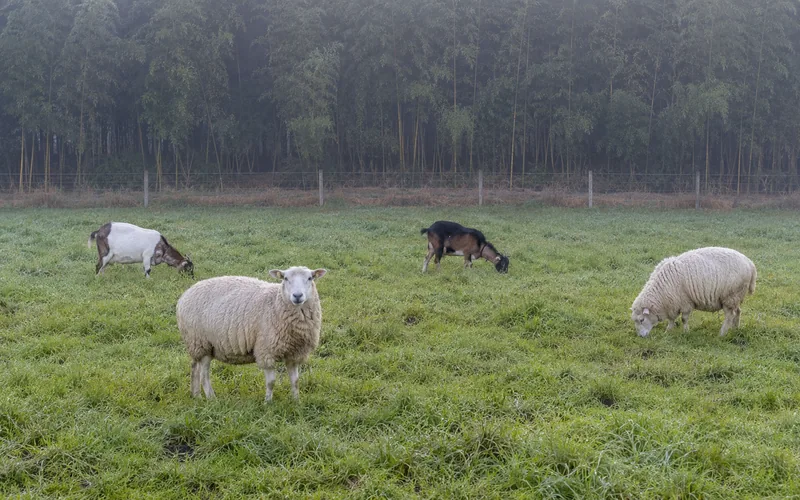
Horses will nibble bamboo leaves in moderation, and it is generally regarded as safe browse, though it must never replace their forage base. On a shared pasture the usual cautions around mixing horses and goats still apply.
Pigs root around a stand and eat tender shoots but ignore the tough leaves that ruminants strip so efficiently. Across every species the heavenly bamboo warning holds without exception, since its cyanogenic compounds threaten all livestock.
Common Bamboo Feeding Mistakes to Avoid
Even a safe forage causes trouble when it’s handled carelessly. A short list of predictable slip-ups accounts for nearly every bad bamboo outcome.
The biggest is skipping the slow introduction and dumping a pile in front of hungry goats. That shortcut is the fastest route to bloat and enterotoxemia.
The next is failing to identify the plant first. Assuming any cane-like shrub is safe is exactly how heavenly bamboo ends up within a goat’s reach.
Keep an eye out for these avoidable problems:
- Feeding bamboo treated with herbicide or pesticide, which can poison the whole herd.
- Letting bamboo become the entire diet instead of a supplement to hay and pasture.
- Leaving woody canes underfoot where goats trip or get tangled.
- Grazing spring shoots so hard that the grove never recovers.
Treated plants deserve special caution, and the herbicide risk extends to any sprayed landscape growth, so never feed clippings from an area you cannot vouch for.
A Quick Bamboo Feeding Checklist
Before you turn the herd loose on a stand of bamboo, run through a fast set of checks. This short routine heads off nearly every common problem.
- Identify it. Confirm the plant is true bamboo, not toxic heavenly bamboo, before anything else.
- Check for chemicals. Make sure the canes were never sprayed with herbicide or pesticide.
- Introduce slowly. Start with about ten minutes of browsing twice daily and build up over two weeks.
- Keep hay available. Never pull familiar forage during the transition.
- Balance the diet. Pair bamboo with hay and a protein source rather than feeding it alone.
- Watch the herd. Look for bloat, dullness, or off feed, and remove the bamboo if anything seems wrong.
Tick every box and bamboo becomes one of the easiest supplemental feeds you can offer. Skip them, and even a harmless plant can cause avoidable grief.
The Bottom Line
True bamboo is a safe, protein-contributing, and genuinely practical forage for goats, provided you’ve identified the plant correctly. The one rule that never bends is keeping heavenly bamboo, the toxic Nandina lookalike, entirely out of reach.
Bring real bamboo in gradually over two weeks, lean on the leaves and young shoots for nutrition, and pair it with hay and a protein source. Do that, and a plant most people fight to remove becomes one of the cheapest, most renewable feeds on the property.
Frequently Asked Questions
Enterotoxemia, often called overeating disease, ranks among the most common sudden killers of goats. It strikes when a goat gorges on a rich new feed before its rumen microbes adapt, which is precisely why bamboo must be introduced slowly over about two weeks.
Never feed heavenly bamboo (Nandina), azalea, rhododendron, oleander, poison hemlock, or any plant carrying cyanogenic glycosides. Also skip moldy hay, large amounts of grain, lawn clippings, and any ornamental shrub you cannot positively identify as safe browse.
Beyond Nandina, common poisoners include azalea, rhododendron, oleander, yew, and wilted stone-fruit leaves, many of which release cyanide or cardiac toxins. Treat any unidentified ornamental as dangerous until you can confirm it is safe.
Yes, and the leaves are the part goats want most. They hold the bulk of the plant's protein and strip off the branch easily, making them the single most nutritious portion of true bamboo.
Yes. Sheep browse bamboo much as goats do, and it works well as a winter forage supplement, though it should sit alongside hay and pasture rather than replacing them.
People eat bamboo shoots, but only after boiling, which drives off the natural cyanogenic compounds raw shoots can contain. The leaves are not a typical human food, though they are sometimes brewed into tea.