
| # | Product | Our Rating | ||
|---|---|---|---|---|
| 1 |  | Best OverallLiqui-Char Activated Charcoal Gel (300ml) | ★★★★★ | Check Price |
| 2 |  | Durvet Activated Charcoal Gel (80ml) | ★★★★☆ | Check Price |
| 3 |  | Manna Pro Bounce Back Electrolytes | ★★★★☆ | Check Price |
The cartoon goat eats everything, including the tin can. The real goat is a picky browser with a remarkable nose for good forage, and that single misunderstanding causes most plant poisonings.
Because here is the uncomfortable truth: the average backyard is more dangerous to a goat than the average pasture. The deadliest plants on this list are ornamentals planted around houses, not weeds growing in fields.
This guide gives you the full list ranked by danger, the symptoms that signal trouble, and the response plan for the day a goat gets into something it should not have.
Which Plants Are Most Poisonous to Goats?
A handful of plants account for most goat deaths, and they deserve to be memorized. These are the ones where a few mouthfuls can be fatal, sometimes within hours.
Yew sits alone at the top. This common evergreen foundation shrub is so toxic that a goat-sized animal can die from a mouthful or two, often with no symptoms at all before collapse, and trimmed yew clippings tossed over a fence are a notorious livestock killer.
Oleander is its warm-climate equivalent, with every part of the plant attacking the heart. Poison hemlock and water hemlock kill fast along ditches and creek bottoms, and water hemlock is often called the most violently toxic plant in North America.
Azalea, rhododendron, and mountain laurel share the same grayanotoxin, and they are the most common real-world poisoning because they are planted everywhere. A poisoned goat drools, frothes, groans, and famously becomes one of the few situations where a goat truly vomits.
Wilted stone-fruit leaves round out the killers. Cherry, peach, and plum leaves are fairly safe fresh but release cyanide as they wilt, which makes a storm-dropped cherry branch in the pasture a genuine emergency.
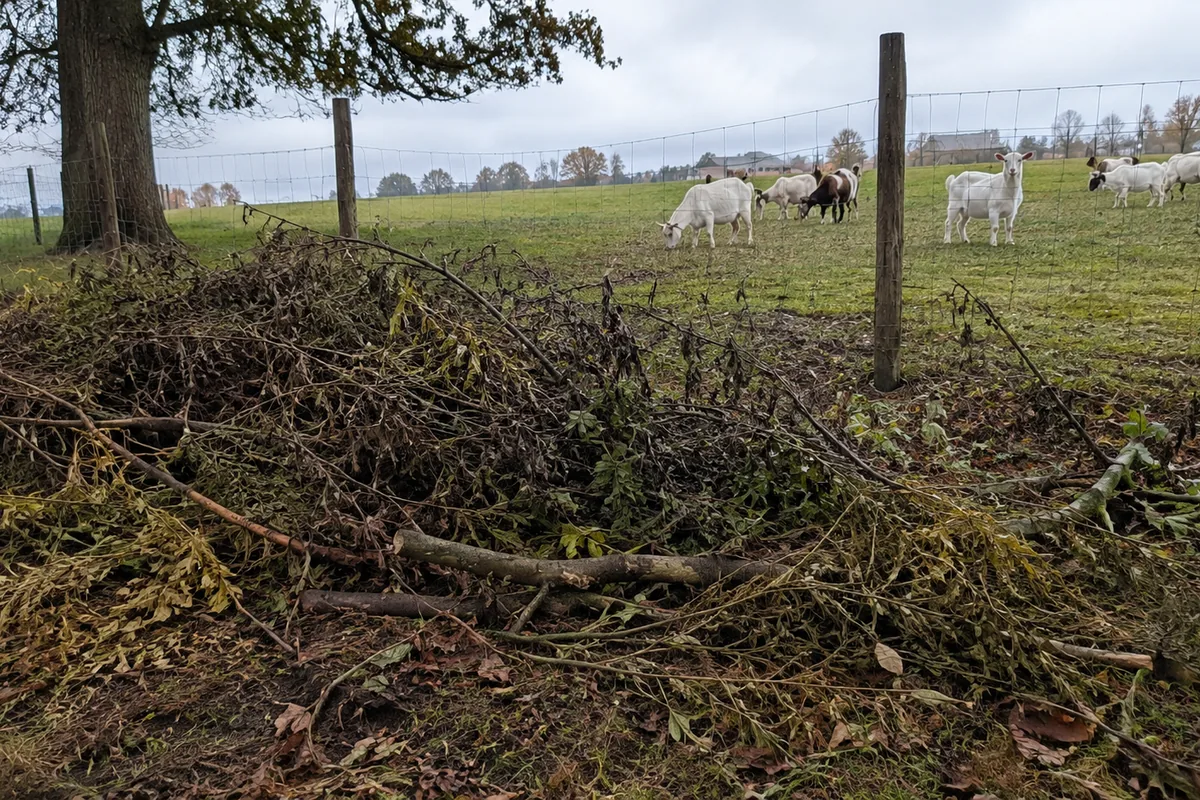
Notice the pattern: hedge trimmings, ornamentals, and fallen branches. The single most dangerous thing a well-meaning neighbor can do is dump yard clippings into your goat pen.
The Full List of Plants Poisonous to Goats
Use this table as your property-walk checklist. Severity assumes a typical adult goat eating a meaningful amount, and young kids are more vulnerable across the board.
| Plant | Danger Level | Toxin / Effect |
|---|---|---|
| Yew | Deadly, often within hours | Taxine alkaloids stop the heart |
| Oleander | Deadly | Cardiac glycosides |
| Water hemlock / poison hemlock | Deadly | Violent seizures, respiratory failure |
| Azalea / rhododendron / mountain laurel | Severe, can be fatal | Grayanotoxin; drooling, vomiting, collapse |
| Wilted cherry, peach, plum leaves | Severe, can be fatal | Cyanide (prussic acid) as leaves wilt |
| Lily of the valley / foxglove | Severe | Cardiac glycosides |
| Milkweed | Severe | Cardiotoxins and neurotoxins |
| Nightshades (incl. green potato) | Moderate to severe | Solanine; digestive and nervous signs |
| Pokeweed | Moderate | Digestive upset, scours |
| Bracken fern | Moderate, cumulative | Thiamine destruction over weeks |
| Rhubarb leaves | Moderate | Oxalates damage kidneys |
| Black walnut | Moderate | Laminitis-type and digestive issues |
| Buttercup | Mild to moderate | Mouth blistering, drooling, scours |
| Lupine | Moderate (seed pods worst) | Alkaloids; birth defects in pregnant does |
| St. John’s wort | Mild | Photosensitization, skin peeling |
Regional weeds matter too, so ask your county extension office what poisons livestock in your specific area. Chinaberry is the Southern one to know, since every part of the tree carries meliatoxins and its ripe berries poison goats within a few hours. Cornell’s poisonous plants database is the reference vets use, and it is worth bookmarking.
A few surprises run the other direction. Goats handle several plants that worry new owners, like fresh cedar in moderation.
Mimosa trees are safe browse, and most gum tree leaves look scarier than they are. Black walnut lands in the same bucket, alarming owners far more than it harms a browsing goat.
Bright purple berries make plenty of owners nervous too, yet goats browse beautyberry’s leaves and berries safely despite the alarming color. The red berries on a thorny hawthorn hedge are just as safe.
Toxic Foods and Non-Plant Hazards
The kitchen and feed room hold their own dangers. Chocolate carries theobromine just as it does for dogs, avocado is toxic to most livestock, and moldy anything can carry deadly mycotoxins.
Wild mushrooms are a gamble not worth taking, and rhubarb leaves and green potato skins belong in the compost, not the pen. Despite the myth, goats cannot eat everything, so check any new food before it goes over the fence.
Brassicas cause confusion on lists like this one. They belong in a different category, because cauliflower is a portion problem rather than a poison.
Two feed-room mistakes belong on this list because they kill like poisonings. Chicken feed and dog food are dangerous to goats long term, and a goat that breaks into the grain bin can die of grain overload, which is one more reason grain stays locked up.
Hay and browse should make up most of a goat’s diet, with grain and treats kept small.
What Are the Symptoms of Plant Poisoning in Goats?
Plant poisoning announces itself in a recognizable cluster of signs. The specific mix depends on the toxin, but the early picture is consistent enough to act on.
Watch for sudden drooling or frothing at the mouth, grinding teeth, and obvious gut pain like hunching and kicking at the belly. Staggering, trembling, a goat going down and struggling to rise, or unexplained bloat all point the same direction.
The grayanotoxin plants add their signature: groaning, projectile vomiting, and green froth around the muzzle. Cyanide cases show gasping, bright red gums, and panic, while the cardiac toxins may show nothing before a goat is simply found down.
Any of these signs in a goat that was fine an hour ago is a poisoning until proven otherwise. A goat that has gone off feed more gradually usually has a different problem, but the fast, dramatic onset is your tell.
What Should You Do If Your Goat Eats a Poisonous Plant?
Move fast and in this order. Minutes genuinely matter with the worst plants.
First, get the goat away from the source and grab a sample of the plant for identification. Second, call your vet immediately and describe the plant, the amount, and the time frame, because the treatment differs by toxin.
Third, give activated charcoal orally if you have it, since it binds a wide range of plant toxins in the gut before they absorb. This is exactly why a tube of livestock charcoal gel belongs in the medicine cabinet next to the dosing supplies, bought before the day you need it.
Keep the goat quiet, offer fresh water and good hay, and use electrolytes to support a goat that is scouring. Do not drench oil, milk, or home remedies on top of a struggling rumen unless your vet says to.
One honest note about outcomes: with yew, oleander, and hemlock, prevention is the only reliable medicine. That is why the next section is the most important one in this guide.
How Do You Prevent Plant Poisoning?
Prevention is a property walk plus three habits. Goats protect themselves remarkably well when you remove the situations that defeat their judgment.
Walk every inch the goats can reach, spring and fall, and identify what is growing there, especially along fence lines where ornamentals lean in from neighboring yards. Heavenly bamboo, a red-berried foundation shrub, is one toxic lookalike that belongs on that shortlist. Rip out or fence off the killer shortlist, and assume any unidentified evergreen shrub near a house is guilty until proven innocent.
Not every flowering ornamental has to go. Cottage-garden plants like hollyhocks stay safe at the fence line, which is worth knowing before you clear a bed you did not need to.
Some pasture weeds can stay too, and motherwort is safe in normal browsing amounts.
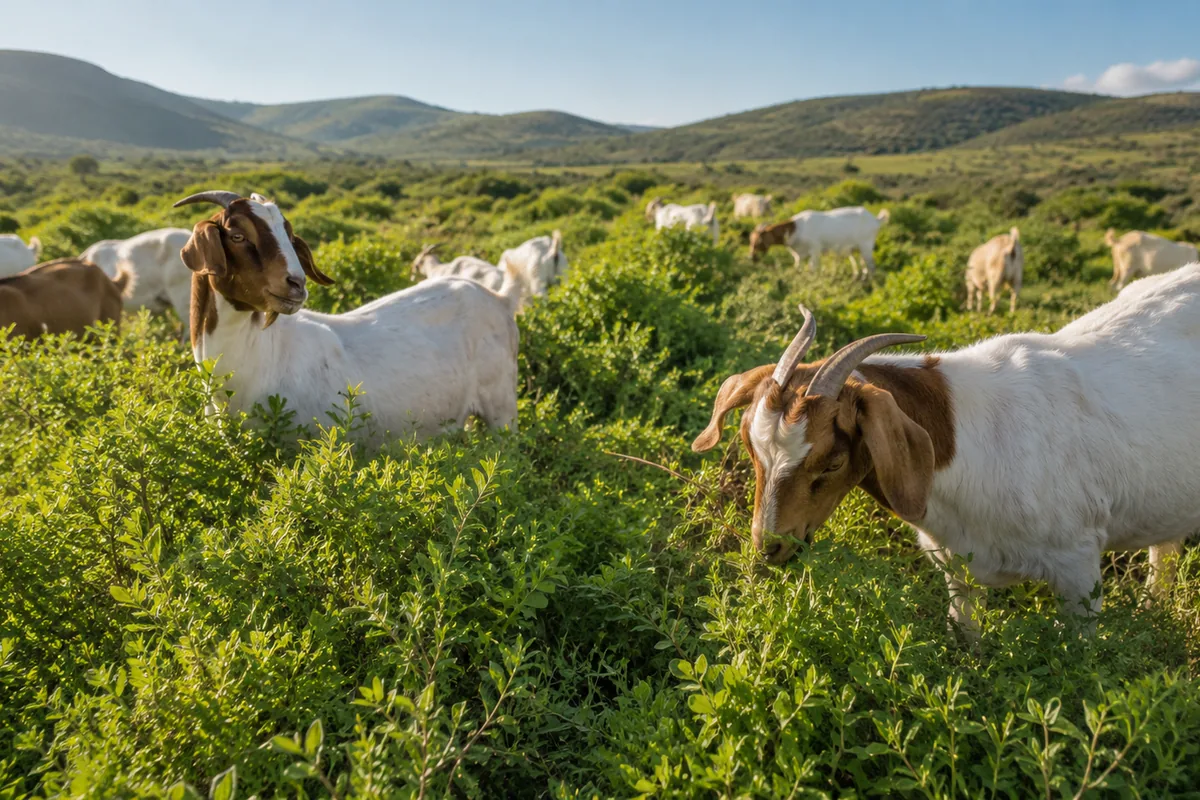
The three habits: never let anyone dump yard clippings into the pen, never turn hungry goats onto new ground, and keep enough quality hay and browse in front of them that the bad choices stay unappealing. A full goat is a picky goat, and picky is what keeps them alive.
After storms, do a branch patrol for downed cherry and other stone-fruit limbs before the goats find them. And keep free-choice minerals available, since well-mineralized goats are less driven to experimental chewing.
Sources and Further Reading
Compiled and cross-checked against veterinary and extension references:
- Cornell University, Department of Animal Science, poisonous plants affecting goats and livestock
- Merck Veterinary Manual, toxicology of livestock plant poisonings
- Oklahoma State University Extension, Poisonous Plants goat handbook chapter
- Regional county extension poisonous plant guides
No list replaces knowing your own ground. Walk it, learn its plants, keep charcoal in the cabinet and your vet’s number on the wall, and the odds swing heavily back toward your goats.
Frequently Asked Questions
The plants most likely to kill a goat are yew, oleander, poison hemlock, water hemlock, azalea, rhododendron, mountain laurel, and wilted cherry or other stone-fruit leaves. Yew and oleander are the worst of all, where even a few mouthfuls can stop the heart within hours. Treat every ornamental evergreen shrub around houses as suspect until identified, because that category holds most of the true killers.
Yew is the classic overnight killer, often found as trimmed hedge clippings tossed over a fence, and oleander and hemlock act nearly as fast. Wilted cherry leaves from a fallen branch release cyanide and can kill within hours, and a heavy azalea or laurel meal can do the same. Outside of plants, grain overload from a broken-into feed bin and severe bloat are the other common overnight deaths.
Usually not, as long as they have plenty of good browse and hay, because goats are surprisingly selective eaters. The danger shows up when that selectivity breaks down: a hungry or newly moved goat sampling unfamiliar ground, an overstocked pasture eaten down to the bad choices, or tempting wilted clippings dumped into the pen. Most real-world poisonings trace back to one of those situations rather than a goat freely choosing a toxic plant.
Remove the goat from the plant immediately, try to identify what and how much was eaten, and call your veterinarian right away, since treatment is far more effective early. Activated charcoal given orally helps bind many toxins while you wait for the vet, and fresh water plus good hay support the rumen. Do not wait to see if symptoms develop with the fast killers like yew, oleander, hemlock, or wilted cherry.
Beyond toxic plants, never feed goats chocolate, avocado, raw potatoes or green potato skins, rhubarb leaves, or anything moldy. Dog and cat food, chicken feed, and large amounts of any grain are also dangerous for different reasons, from copper imbalance to grain overload. The safe treat list is plenty long, so when in doubt about a new food, look it up before it goes over the fence.