| # | Product | Our Rating | ||
|---|---|---|---|---|
| 1 |  | Best OverallREDMOND Goat Mineral Supplement (5 lb) | ★★★★★ | Check Price |
| 2 |  | Wholesome Harvest 16% Goat Feed (10 lb) | ★★★★☆ | Check Price |
| 3 |  | Manna Pro Goat Treats | ★★★★☆ | Check Price |
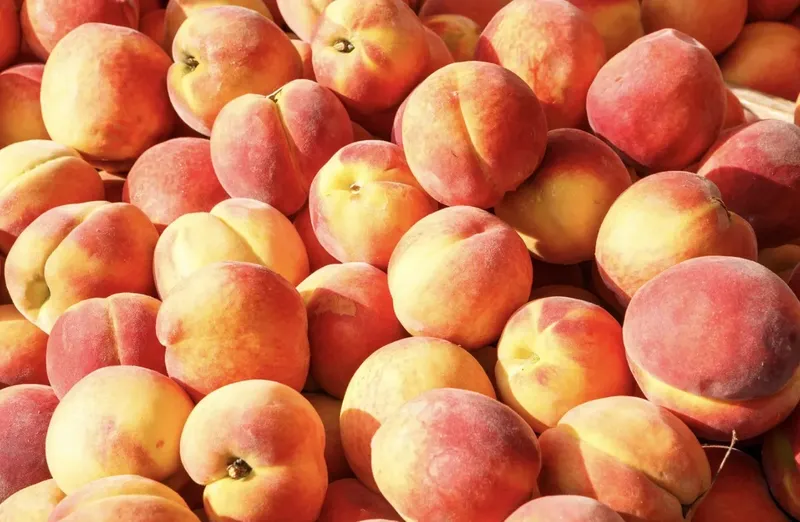
Peaches are one of those fruits that goats go absolutely nuts for. The sweet, juicy flesh is perfectly safe for them, and most goats will practically knock you over to get one.
But there are a couple of important things you need to know before tossing peaches into the pasture.
Can Goats Eat Peaches?
Yes, goats can eat peaches without a problem. The flesh and skin are both safe and packed with vitamins A and C, plus a decent amount of fiber.
Peaches are high in sugar compared to regular forage. Treat them like candy for your herd, not a meal replacement.
A couple of peaches per goat once or twice a week is plenty. Always wash store-bought peaches first, since they often carry pesticide residue that you don’t want your goats ingesting.
Watch Out for the Pit
The peach pit is the one part you absolutely must remove, since its amygdalin breaks down into cyanide during digestion. Avocado pits are dangerous too, though their toxin is persin, not cyanide.
One pit probably won’t kill a goat, but it’s still a choking hazard and the cyanide risk is real. The pits are rock-hard and can damage teeth or cause a blockage in the digestive tract.
Cut your peaches in half or quarters and pop the pit out before offering them. It takes five seconds and removes all the danger.
The same rule applies to other stone fruits like plums, cherries, and apricots.
The Peach Leaf Problem
Here’s where a lot of folks get confused. Fresh peach leaves still growing on the tree are generally fine if a goat grabs a few while browsing.
The real danger comes from wilted peach leaves. When the leaves wilt, whether from a storm breaking branches, frost damage, or pruning, they release prussic acid, which is hydrogen cyanide. A storm-dropped branch is exactly the kind of hazard that catches owners who assume goats will avoid every dangerous plant on their own.
This can be lethal.
If you have peach trees in or near your goat pasture, clean up any fallen branches right away. Never toss pruning clippings where your goats can reach them.
Preparing Peaches for Your Herd
Serving peaches to goats is straightforward. Wash the fruit, cut it in half, remove the pit, and hand it over.
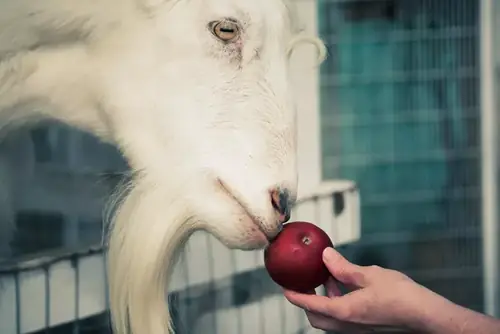
You can cut them into smaller chunks for kids or smaller breeds, similar to preparing apples or oranges. Some goat owners toss peach pieces into the feed trough mixed with grain, and that works great too.
There’s no need to peel them. The skin is safe, full of fiber, and goats don’t mind the fuzzy texture one bit.
Nutritional Benefits
Peaches bring some real nutritional value to the table as a treat. They’re a solid source of vitamin A for immune support and vitamin C for tissue repair.
The fiber content helps with digestion, and the natural sugars give a quick energy boost. They also contain potassium, which supports healthy muscle function.
None of this makes peaches a substitute for hay, browse, and proper minerals. But as far as treats go, they rank right alongside watermelon, blueberries, and bananas as one of the better options you can offer your herd.
If you buy peaches from the grocery store, give them a good wash before feeding, the same way you’d wash strawberries or grapes before feeding. Commercially grown peaches are on the “dirty dozen” list for pesticide residue, and you don’t want your goats eating that.
Keep Peach Trees Fenced Off
If you grow peach trees on your property, it’s smart to fence them away from your goats. Goats will strip the bark, eat the leaves, and gorge on fallen fruit if given free access.
Too many fallen peaches at once means too much sugar hitting the rumen, which can lead to bloat. Offer hay cubes alongside fruit treats to keep fiber intake up.
And as I mentioned, wilted leaves from broken branches are genuinely dangerous.
A simple fence around your orchard protects both your trees and your goats. Let them enjoy peaches on your terms, a couple at a time, pits removed, as a well-earned treat.
Frequently Asked Questions
Goats can indeed eat peaches. They find the sweet, juicy fruit very tasty. But remember to remove the pit first. The peach pit is a choking hazard for goats. It's also toxic because it contains small amounts of cyanide.
Peaches are indeed safe for goats to eat. They enjoy the sweet taste and it's a healthy treat. However, stick to small amounts here. Goats shouldn't be fed too many peaches at once.
Fresh peach leaves on the tree are generally fine if a goat grabs a few. The danger comes from wilted peach leaves, which release prussic acid (hydrogen cyanide) and can be lethal.
Yes, goats can eat peach peels. Peach peels aren't harmful to them at all. In fact, they contain a good amount of fiber which is beneficial for their digestive system.