| # | Product | Our Rating | ||
|---|---|---|---|---|
| 1 |  | Best OverallREDMOND Goat Mineral Supplement (5 lb) | ★★★★★ | Check Price |
| 2 |  | Wholesome Harvest 16% Goat Feed (10 lb) | ★★★★☆ | Check Price |
| 3 |  | Manna Pro Goat Treats | ★★★★☆ | Check Price |
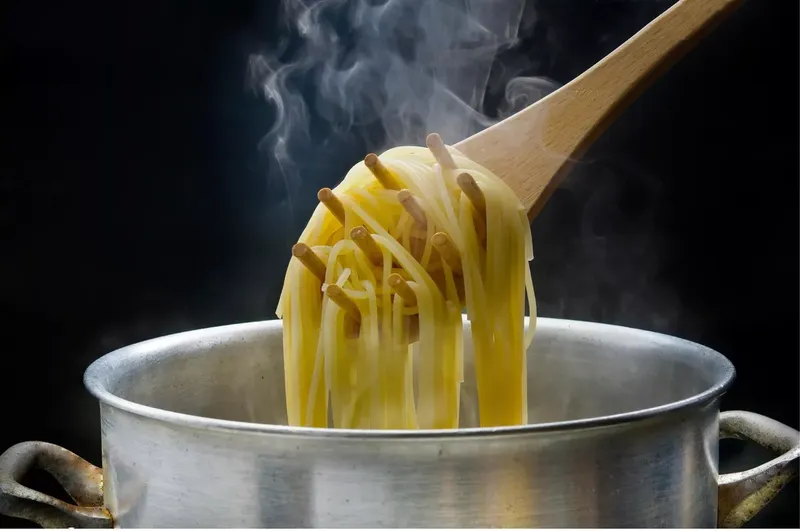
Cooked pasta is boiled wheat noodles, usually just semolina flour and water. It reaches most goats as a dinner leftover rather than any part of a feeding plan.
Owners tend to ask with a bowl in one hand and a curious goat watching from the fence. The full answer covers portion size, why sauce changes everything, and what plain noodles do once they reach the rumen.
This guide stays on pasta specifically. Cooked and dry, plain and sauced, plus the digestive limits that decide how much is too much.
Can Goats Eat Cooked Pasta?
Plain cooked pasta is not toxic to goats. Nothing in boiled semolina noodles will poison one, and most goats take a strand straight from your hand.
But harmless isn’t the same as useful. Pasta is close to pure carbohydrate, with barely any protein and no mineral content a goat can use.
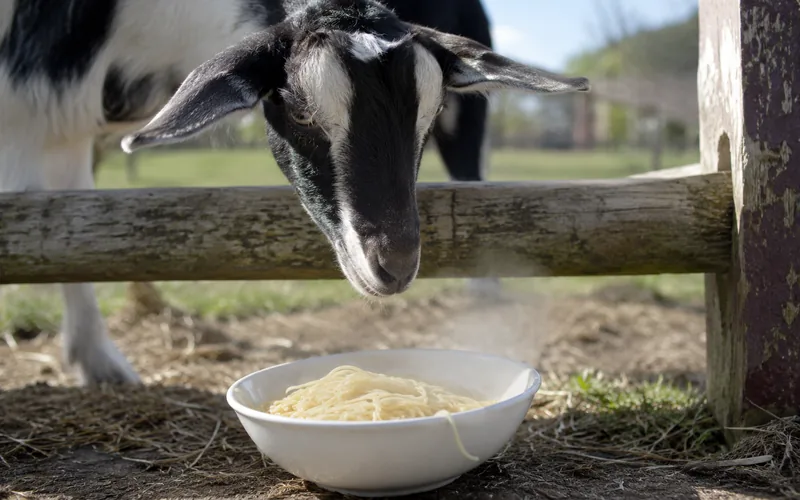
A ruminant such as a goat is built to pull nutrition out of stems, leaves, and bark. Refined wheat flour sits at the far opposite end of that range.
So the real question isn’t whether pasta is safe. It’s how much a goat can eat before the starch starts causing trouble.
Why Starch Is Hard on a Goat’s Rumen
The short answer is that a rumen ferments fiber slowly, while refined starch ferments far too fast.
A goat digests food through a four-compartment stomach. The first and largest compartment is the rumen, and it holds billions of microbes that ferment plant fiber into usable energy.
Those microbes are tuned for slow, fibrous material. Hay and browse break down over many hours, and that steady digestion keeps the rumen at a stable acidity.
Goats are browsers rather than grazers. The University of Tennessee veterinary guide notes they favor shrubs, leaves, and bark, so the rumen microbiome adapts to fibrous, low-starch plant material.
Starch doesn’t behave that way, so refined carbohydrate ferments fast, acid builds up, and the pH inside the rumen drops. Sugary drinks like fruit juice ferment even faster and push the pH down just as hard.
When that drop goes far enough, the result is lactic acidosis. University of Missouri Extension describes grain overload as a serious and sometimes fatal condition in ruminants, caused by exactly this kind of rapid fermentation.
Here’s the part people miss: a goat does not need a huge serving to feel it. A full bowl of noodles in a small animal is enough to unsettle the microbial balance for a day or two.
What Cooked Pasta Actually Contains
Put simply, cooked pasta is mostly water and starch, with very little protein, fiber, or minerals.
The nutrition label explains why. Per 100 grams, cooked spaghetti holds about 31 grams of carbohydrate and under 6 grams of protein, according to USDA FoodData Central.
Fiber comes in under 2 grams on that same entry. That’s the number that matters most, since a goat’s whole diet is built on fiber.
Grass hay delivers the long fiber a rumen is designed to process. Pasta gives calories and almost nothing else.
The short version: a bagged goat feed beats it on every count. A ration labeled 16 percent protein also carries added calcium, phosphorus, and copper, while pasta supplies none of it.
There’s no hidden vitamin package either. Enriched pasta carries iron and B vitamins aimed at human diets, not the nutrients a goat rumen actually depends on.
Sauce Is Where Pasta Turns Dangerous
The danger sits in the sauce rather than the noodles.
Plain noodles are one thing. Pasta with sauce is a different food entirely, and this is the version that sends goats to the vet.
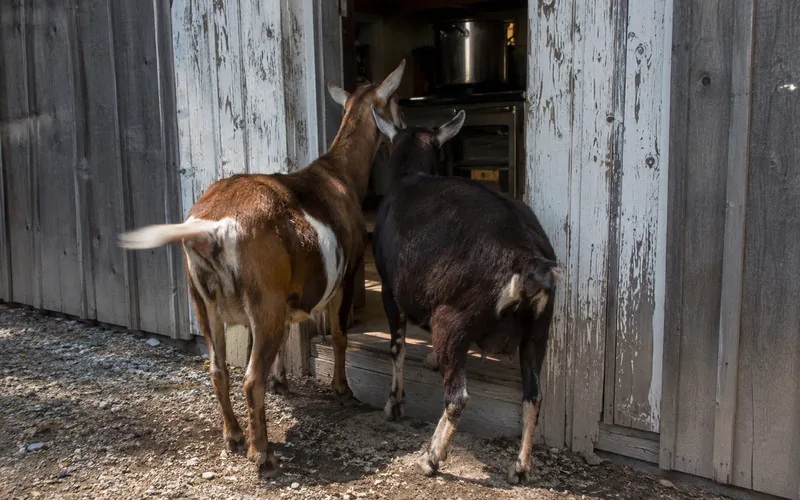
Onion and garlic both belong to the allium family. Their sulfur compounds damage red blood cells in ruminants, and enough of either can lead to anemia.
Salt and fat bring their own trouble. Heavy oil, cheese, and cream upset the rumen environment and can trigger diarrhea within a few hours.
So pull a few plain noodles out before the sauce goes on. Rinsing sauced pasta won’t remove enough seasoning to make it safe.
How Much Cooked Pasta Is Safe
In simple terms, hold it to about a quarter cup per adult goat, once or twice a week.
Portion size is where most owners guess wrong. The University of Tennessee College of Veterinary Medicine puts daily dry matter intake at 1 to 3 percent of body weight.
Hay or pasture forage should supply the bulk of that intake. Everything else a goat eats in a day has to fit around it.
Treats sit on top of that foundation, never inside it. ATTRA, the national sustainable agriculture service, recommends that grain and treats stay under 10 percent of the total diet.
What this means in practice: run the numbers on a real animal. A 60-pound pygmy goat eats a little over a pound of dry matter a day.
Treats of every kind combined should total a couple of ounces at most. That budget covers the pasta plus any grain, carrots, or other fruit and vegetable scraps that day.
That is where the quarter-cup figure comes from. Spread it across the week rather than giving one large serving.
Some animals need less than that. Cut the portion for pregnant does, since late gestation calls for the protein and calcium that alfalfa provides and noodles do not.
Kids should skip pasta altogether. A young rumen is still developing its microbe population, and starch can disrupt that balance before the fiber-digesting bacteria are established.
Can Goats Eat Uncooked Pasta?
Goats will happily crunch dry pasta, and plenty of owners report their herd loves it, since uncooked pasta isn’t poisonous either.
But there’s a catch. Raw starch has a tight crystalline structure that resists fermentation, so more of it travels through the gut undigested.
Dry pasta also snaps into sharp shards. Those edges can scratch the mouth or throat, and larger shapes like penne carry a real choking risk for kids and smaller breeds.
Boiling solves both problems, since cooking swells the starch granules and makes the noodles softer to chew and easier to ferment.
No need to panic if a goat steals dry spaghetti off the barn floor. Just don’t offer uncooked noodles on purpose.
Which Pasta Types Cause Problems
Shape barely matters, since penne, macaroni, rotini, and spaghetti all break down the same way once they are cooked.
Ingredients matter a great deal. Fresh egg pasta adds animal protein a ruminant has no use for, and flavored varieties often carry concentrated tomato, spinach, or squid ink.
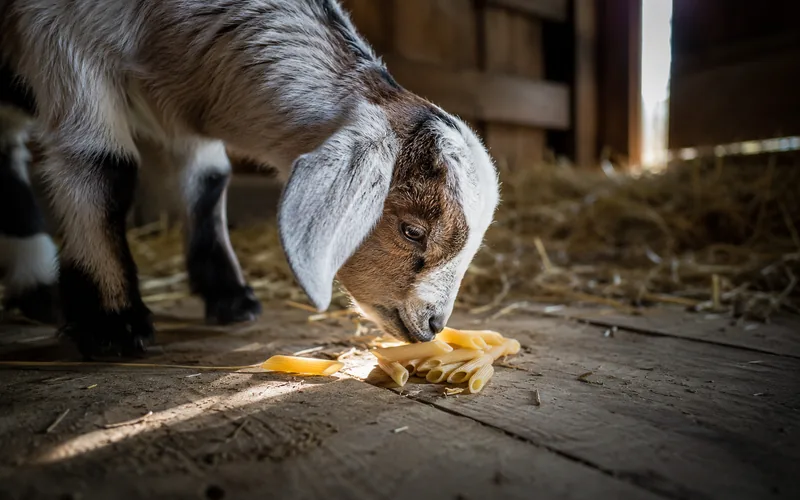
Whole wheat pasta is a mild improvement. It carries a little more fiber than white pasta, though not nearly enough to change how the rumen handles the starch load.
Instant noodles are the worst option on the shelf. The seasoning packet is loaded with salt, onion powder, and garlic powder, and the noodle block itself is usually fried in palm oil.
Warning Signs After a Goat Eats Pasta
Watch for bloating, loose droppings, and any change in normal behavior.
Most goats handle a small serving with no reaction at all. Watch them anyway for the rest of the day, since starch trouble shows up quickly.
Bloating is the sign that matters most. A distended left flank, tight to the touch, means gas is building faster than the goat can release it.
Other signals show up in behavior. Teeth grinding, standing hunched, refusing to move, or walking away from feed all point to a rumen under stress.
Droppings tell the rest, and firm pellets turning clumpy or watery within a day means the portion was too large.
So there’s a simple rule. Scale back at the first loose stool rather than waiting to see if it clears on its own.
Pull treats entirely at that point. Offer plenty of fresh water and grass hay, then give the rumen two or three days to settle.
A goat that stays down or bloats badly needs a veterinarian the same day. Lactic acidosis moves quickly, and waiting overnight is how a treatable problem turns serious.
Treats That Beat Pasta
Fruit and vegetable scraps do far more for a goat. Carrot pieces, apple slices with the seeds removed, and pumpkin chunks all bring real vitamins along with the crunch.
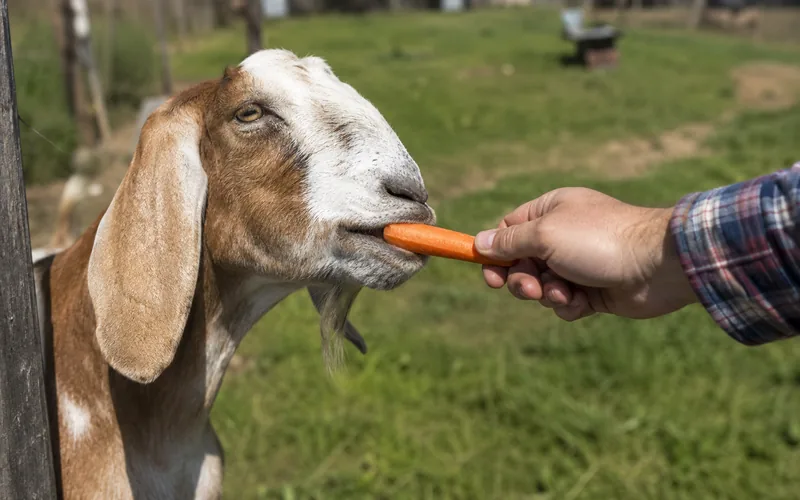
Whole grains are a better choice than refined pasta too. Rolled oats and barley release energy more slowly, and they carry nutrients like protein and phosphorus that noodles lack entirely.
For anything beyond a treat, go back to forage. Alfalfa hay supplies the protein and calcium that pregnant and milking animals need, which is exactly what a plate of pasta can’t do.
Fresh water and a loose goat mineral matter more than any treat. Livestock with clean water, good hay, and free-choice minerals don’t need pasta for anything.
One rule covers every starchy human food. Whether it is pasta, bread as an occasional snack, or crackers, the limit is a small handful and nothing beyond that.
Final Thoughts
Plain cooked pasta is safe for goats, and a small handful now and then causes no harm. It’s a treat you enjoy giving more than one your herd gains much from.
Keep the sauce off, hold the portion near a quarter cup, and let hay, browse, and minerals carry the real nutrition. Everything else is just a snack.
Frequently Asked Questions
Uncooked pasta is not poisonous, and most goats enjoy crunching it. Raw starch resists fermentation, so more of it passes through undigested. Dry pasta also breaks into sharp shards that can scratch the mouth or throat, so boiling it first is the safer choice.
Onion, garlic, chocolate, caffeine, citrus, meat, and anything salty or sugary should stay away from goats. Moldy feed is dangerous at any amount. Large servings of grain or starchy human food can also trigger lactic acidosis in the rumen.
Carrot pieces, apple slices with the seeds removed, pumpkin, squash, and leafy greens are all safe in small amounts. Plain oats work as an occasional treat. Every one of these should stay under roughly 10 percent of the total diet.
Internal parasites, especially the barber pole worm, cause more goat deaths than anything else. Digestive emergencies rank close behind, and grain or starch overload is a common trigger. Both risks drop sharply when forage stays the foundation of the diet.