 guide
guide How Much Does a Goat Cost? Prices and Yearly Budget
A goat costs 50 to 800 dollars to buy and 200 to 500 dollars a year to keep. The full breakdown of purchase prices by type, startup costs, ongoing costs, and hidden costs.

Breeding goats is one of the most rewarding parts of keeping them, but it also demands the most homework. This guide walks you through every stage, from picking a breed and reading heat signs to the 150-day pregnancy, kidding day prep, and raising healthy kids.
We may earn a small commission through links on this page, at no extra cost to you. As an Amazon Associate, we earn from qualifying purchases. Ratings reflect our own editorial evaluation.
The best goat breed depends on your goal: Nigerian Dwarf or Saanen for dairy, Boer for meat, Angora for fiber, and Pygmy for pets. The single most important breeding decision you'll make is choosing the right breed, because everything else flows from that choice.
If you want rich, creamy milk for drinking, cheese, and soap, dairy breeds like Nigerian Dwarf, Nubian, and Saanen goats are where you'll want to look. Nigerian Dwarfs produce milk with the highest butterfat content (6-10%), while Saanens are the volume champions at up to a gallon or more per day.
For meat, Boer goats are the gold standard. They grow fast, hitting market weight of 60-80 pounds by 3-6 months.
A well-managed Boer doe can throw kids that gain 0.3-0.5 pounds per day on pasture alone.
Kiko goats are another strong meat breed out of New Zealand, prized for their parasite resistance and ability to thrive on rough forage with almost no intervention. If fiber is more your thing, Angora goats produce luxurious mohair, while cashmere can come from several breeds.
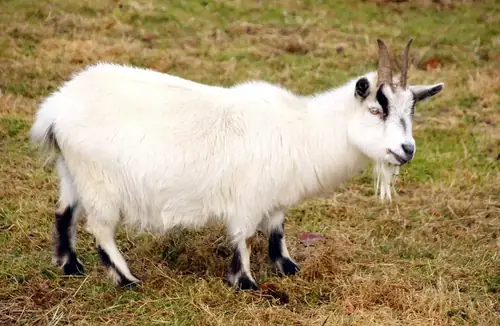
Pygmy goats are the classic pet and small-homestead goat. Compact, friendly, and easy to handle, they make a solid starter breed.
LaMancha goats are worth a look too. They're the ones with the tiny ears and the calm personalities, and their high-protein milk is excellent for cheese.
Toggenburgs, one of the oldest dairy breeds out of Switzerland, put out consistent milk with a distinctive flavor that certain cheesemakers swear by. And don't overlook crossbreeding as a strategy.
Crossing a Nigerian Dwarf buck with a standard dairy doe gives you a "mini" version with higher butterfat and a more manageable size. Knowing what each breed brings to the table lets you plan intentional crosses that improve your herd over time.
When buying foundation stock, always ask about health testing. CAE (caprine arthritis encephalitis), CL (caseous lymphadenitis), and Johne's disease are the three big ones.
Any reputable breeder tests their herd annually and can show you the results. Starting with clean, tested animals saves you from heartbreak and expensive herd problems down the road.
If you are a first-time goat owner, start with Nigerian Dwarf goats. They are small, friendly, produce rich milk, and their compact size makes them easier to handle during breeding and kidding.
| Breed | Primary Purpose | Avg Adult Weight | Key Advantage |
|---|---|---|---|
| Nigerian Dwarf | Dairy | 60-80 lbs | Highest butterfat (6-10%) |
| Nubian | Dairy | 130-175 lbs | High volume + butterfat |
| Saanen | Dairy | 130-175 lbs | Highest milk volume |
| Boer | Meat | 200-340 lbs | Fastest growth rate |
| Kiko | Meat | 120-175 lbs | Parasite resistance |
| Angora | Fiber | 70-110 lbs | Mohair production |
| Pygmy | Pet/Hobby | 40-75 lbs | Compact and friendly |
Goats go into heat every 18-21 days during breeding season (August through January), and signs include tail flagging, vocalization, and a swollen vulva. Does come into heat (estrus) every 18-21 days during the breeding season, which typically runs from August through January in most parts of North America.
However, some breeds like Nigerian Dwarfs and Pygmy goats can cycle year-round, giving you more flexibility in planning your breeding schedule.
Saanen goats, under the right conditions, may also breed outside the typical fall season. Recognizing the signs of heat is critical for timing your breeding.
A doe in heat will wag her tail rapidly (called flagging), become more vocal than usual, show a swollen and reddened vulva, and may have a clear mucous discharge. She will often stand at the fence line closest to the buck and may mount other does.
Some does show very obvious signs, while others are "silent" heat cyclers who show almost no outward signs. One practical method for detecting heat is to use a "teaser" buck or buck rag.
A buck rag is a cloth rubbed on a buck's scent glands and stored in a sealed jar. Presenting the rag to your does will cause those in heat to react with intense interest, tail flagging, and vocalization.
You can also monitor body temperature for subtle changes. A doe's rectal temperature may rise 0.5-1 degree Fahrenheit during standing heat compared to her baseline, though this varies by individual.
Does shouldn't be bred until they are physically mature enough to carry and deliver kids safely. For standard breeds, this typically means waiting until a doe is at least 80 pounds or 7-8 months old.
For miniature breeds like Nigerian Dwarfs, many breeders wait until the doe is at least 40 pounds.
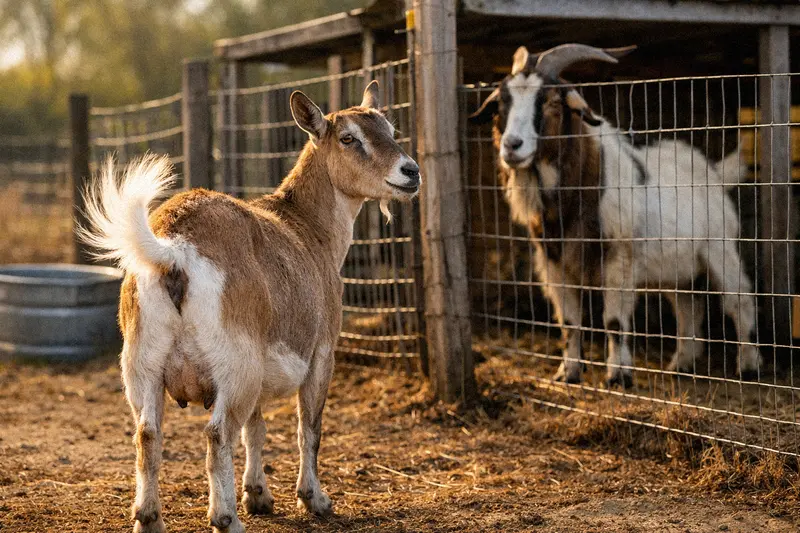
Breeding too young can lead to difficult deliveries and stunted growth in the doe. On the buck side, understanding rut behavior helps you manage your breeding program more effectively.
Bucks go into rut starting around August, and the signs are hard to miss. They'll urinate on their own faces, front legs, and beards.
The smell is overpowering, and it travels farther than you'd think.
During rut, bucks often go off feed and can lose 15-20% of their body weight over a breeding season. You'll notice increased aggression, constant vocalization, lip curling (called the flehmen response), and a bluish tint to the sheath area.
When you put the buck with a doe in standing heat, one to three breedings is usually sufficient. Most breeders leave the buck with the doe for 30-60 minutes during hand breeding and watch for at least two successful mounts.
If you're pasture breeding, leave the buck with the does for at least two full heat cycles (42 days) to make sure every doe gets covered. Pull him out after 63 days so your kidding window stays manageable.
Out-of-season breeding is possible with light manipulation. By exposing does to artificial light (16 hours light, 8 hours dark) for 60 days and then reducing to natural light, you can trigger heat cycles in spring or summer.
Some breeders also use CIDR (Controlled Internal Drug Release) devices, which are progesterone-soaked inserts placed in the vagina for 12-14 days. When removed, the hormone withdrawal triggers estrus within 24-48 hours.
These techniques are especially useful for commercial dairies that want year-round milk production. However, out-of-season breeding typically results in slightly lower conception rates and smaller litter sizes compared to natural fall breeding.
Keep a buck rag in a sealed mason jar and present it to your does every morning. The doe that reacts with tail flagging and intense interest is in standing heat and ready to breed that day.
The four main goat breeding methods are hand breeding, pasture breeding, driveway breeding, and artificial insemination (AI). Most small-scale farmers who breed goats use natural goat mating, which simply means putting a buck and doe together when the doe is in heat.
A healthy buck can breed 20-30 does per season, though younger bucks (under 18 months) should be limited to 10-15 does.
Many breeders use "hand breeding," where the buck is brought to the doe for a controlled mating, then separated. This lets you know the exact breeding date so you can calculate the due date accurately.
"Pasture breeding" is the alternative approach, where the buck runs with the does for 2-3 heat cycles (about 42-63 days). This is less labor-intensive but means you won't know exact due dates.
You can put a marking harness on the buck to track which does have been bred. The crayon color changes every 17 days, so if a doe shows marks from two different colors, she likely didn't settle on the first breeding.
"Driveway breeding" is another popular option for small herds. You bring your doe to someone else's buck for a one-time breeding, pay a stud fee (typically $50-$150 for registered bucks), and take her home.
The biggest risk with driveway breeding is disease transfer, so always ask about the buck's CL, CAE, and Johne's testing status before you commit.
Leasing a buck for the season is another solid option if you don't want to keep one year-round. A buck lease typically runs $100-$300 for 45-60 days, and you avoid the year-round cost of feeding and housing a buck that's only working for two months.
Artificial insemination (AI) is becoming more popular among serious breeders. AI lets you access genetics from top bucks across the country without the expense and logistics of transporting animals.
Frozen semen can be shipped and stored in a liquid nitrogen tank.
However, AI requires training and proper technique, and conception rates are typically lower (40-60%) compared to natural breeding (85-95%). Some breeders have their vet perform the insemination, especially for transcervical AI.
An interesting biological fact about goats is that a single doe can actually carry kids from multiple fathers if she is bred by more than one buck during a single heat cycle. This is called superfecundation and it happens because does can release multiple eggs over the course of their standing heat.
Bucks also have the ability to store and use sperm efficiently throughout the breeding season.
One common mistake new breeders make is keeping the buck with the does year-round. This leads to surprise pregnancies, unplanned winter kiddings, and no way to predict due dates.
Keep bucks and does separated by secure fencing (at least 5 feet tall with no gaps) except during intentional breeding.
Buck fertility can be affected by heat stress, poor nutrition, and age. Young bucks under 7 months may not be reliably fertile, and bucks over 8 years old may have reduced sperm quality.
If you're getting low conception rates, have your vet check the buck's semen quality before assuming the does are the problem.
| Method | Conception Rate | Cost | Best For |
|---|---|---|---|
| Hand Breeding | 85-95% | Low (own buck) | Small herds, exact due dates |
| Pasture Breeding | 85-95% | Low (own buck) | Large herds, low labor |
| Artificial Insemination | 40-60% | Medium (semen + equipment) | Access to top genetics |
| Transcervical AI (vet) | 50-70% | High (vet fees + semen) | Premium genetics, no buck needed |
Crossbreeding combines traits from different goat breeds to produce healthier, more productive offspring through hybrid vigor. Done right, it can produce kids that are healthier and more productive than either parent breed.
A classic example is crossing a Boer buck with a dairy doe for fast-growing kids that have decent milk genetics from their dam.
Crossing Nigerian Dwarfs with Nubians creates Mini-Nubians, which combine manageable size with good milk production and those signature floppy ears. Mini-Nubians typically produce 1-2 quarts of milk per day with butterfat in the 5-7% range, making them ideal for small homesteads with limited space.
However, not all crosses work well. You need to consider size differences carefully.
A large buck bred to a small doe can result in kids that are too big for the doe to deliver safely.
A Nigerian Dwarf buck on a standard Boer doe is a much safer cross than the reverse. Always breed the smaller buck to the larger doe when crossing breeds of different sizes.
First-generation crosses (F1) tend to show the strongest hybrid vigor. By the second and third generation, results become less predictable, so plan your crosses with a clear goal in mind.
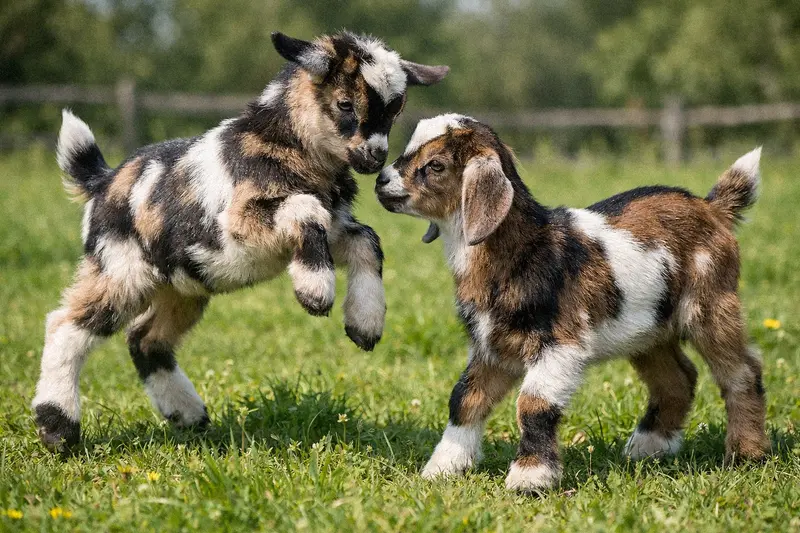
Inbreeding creeps up fast in small herds. Breeding a father to daughter, or half-siblings to each other, concentrates both the good genes and the bad ones.
While some experienced breeders use "linebreeding" (a controlled form of inbreeding) to fix desirable traits, it takes extensive knowledge of the bloodlines involved. Common signs of inbreeding depression include smaller birth weights, lower milk production, poor fertility, and weakened immune systems.
For most goat owners, the safest approach is to bring in an unrelated buck every 2-3 years or use AI to introduce fresh genetics. Keeping pedigree records going back at least three generations helps you spot potential problems before they show up in your kids.
If you are interested in creating unusual crosses, you should know the biological limits. Goats and sheep are different species with different chromosome counts (60 for goats, 54 for sheep).
While rare hybrid offspring have been documented, they are almost always infertile. True interspecies reproduction between goats and other animals is essentially impossible.
Color genetics add another layer of fun to crossbreeding. Goat coat color is controlled by multiple genes, and some colors are dominant while others are recessive.
Breeding two goats with hidden recessive genes can produce surprising kid colors that neither parent displays. Many Nigerian Dwarf breeders enjoy the color variety, since the breed comes in virtually every color and pattern.
When crossing breeds of different sizes, always breed the smaller buck to the larger doe. This keeps kid size manageable for safe delivery and avoids life-threatening birthing complications.
Goat pregnancy lasts about 150 days (roughly 5 months), with a normal range of 145-155 days from breeding to kidding. Once your doe is bred, knowing the exact breeding date lets you calculate the due date and plan accordingly.
Confirming pregnancy early saves you from wasting months of feed on an open doe.
The most reliable method is a blood test through BioTracking, which detects pregnancy as early as 30 days post-breeding for about $6-$8. Ultrasound at 30-45 days also reveals kid count.
A sharp drop in milk production 18-21 days after breeding, with no return to heat, suggests she settled.
Physical signs become obvious as pregnancy progresses. By day 90-100, you can feel kids moving on the right side of the doe's abdomen.
Does carrying multiples show earlier and grow larger.
During the first three months, the doe's nutritional needs don't change much. She can continue on her regular diet of hay, browse, and minerals.
During the last 6-8 weeks of pregnancy, the growing kids take up more abdominal space and the doe's nutritional demands increase significantly. This is when you should gradually increase grain rations and make sure she has access to high-quality alfalfa hay.
Calcium, phosphorus, and selenium are critical during late pregnancy. A selenium/vitamin E supplement or BoSe injection (given by a vet) 4-6 weeks before kidding helps prevent white muscle disease in newborn kids.
Watch for signs of pregnancy toxemia (ketosis) in late pregnancy, especially in does carrying multiples. Symptoms include lethargy, loss of appetite, sweet-smelling breath, and staggering.
Pregnancy toxemia can be fatal if not caught early. Offering frequent small meals of grain and energy supplements like molasses or propylene glycol can help prevent it.
Some breeders keep a bottle of propylene glycol on hand and dose 2-3 ounces twice daily at the first sign of lethargy in a heavily pregnant doe.
Some does experience complications during pregnancy. A doe can miscarry one kid while still carrying others to term, which is distressing but not uncommon.
Keep an eye on body condition scoring throughout pregnancy. A doe should be at a body condition score of 3-3.5 (on a 1-5 scale) heading into her last month.
Too thin and she won't have the energy reserves for labor and lactation. Too fat and she's at higher risk for pregnancy toxemia and difficult deliveries.
Vaccinate with CD&T (Clostridium perfringens types C&D plus tetanus) about 4 weeks before kidding. This boosts the antibodies in the doe's colostrum, giving her kids passive immunity during their most vulnerable first weeks.
If a doe goes overdue past day 155, consult your vet about whether inducing labor is appropriate. Having a good relationship with a goat-savvy veterinarian is essential, especially for first-time breeders.
Mark your calendar at day 100 of gestation to start increasing grain gradually, and at day 145 to begin checking ligaments twice daily. Does carrying multiples are at higher risk for pregnancy toxemia, so offer small, frequent meals in the final month.
| Gestation Stage | Days | Nutrition | Key Actions |
|---|---|---|---|
| Early Pregnancy | 1-100 | Regular hay + minerals | Confirm pregnancy, maintain body condition |
| Mid Pregnancy | 100-120 | Increase hay quality | Begin gradual grain introduction |
| Late Pregnancy | 120-140 | Alfalfa hay + 0.5-1 lb grain/day | BoSe/selenium injection, watch for ketosis |
| Pre-Kidding | 140-150 | 1 lb grain/day + free-choice hay | Set up kidding stall, check ligaments daily |
| Overdue | 155+ | Continue feeding, contact vet | Monitor closely, consider induction |
Set up a clean, draft-free kidding stall with fresh straw and a kidding kit at least two weeks before the due date. Kidding prep is one of those things where being early pays off.
Get your kidding stall set up at least 2 weeks before the due date.
The stall should be at least 5x5 feet, deeply bedded with clean straw, draft-free but well-ventilated, and equipped with a heat lamp (secured safely out of reach) for cold-weather kidding. Your kidding kit should include: clean towels, bulb syringe for clearing airways, dental floss or umbilical clamps for tying cords, 7% iodine for dipping navels, molasses or Nutri-Drench for the doe, a bottle and Pritchard nipple in case you need to bottle feed, and your vet's phone number posted where you can see it.
| # | Product | Our Rating | ||
|---|---|---|---|---|
| 1 |  | Best OverallLamb & Goat Bottle with Pritchard Teat | ★★★★★ | Check Price |
| 2 |  | Manna Pro Goat Kid Milk Replacer (4 lb) | ★★★★☆ | Check Price |
| 3 |  | Pritchard Teat Nipples (12 Pack) | ★★★★☆ | Check Price |
Signs that kidding is imminent include: ligaments around the tail head softening and disappearing (you can feel this by pinching on either side of the tail), a full and tight udder, mucous discharge, restlessness, pawing at bedding, talking to her sides, and isolating herself from the herd. Some does show all these signs for days, while others show hardly any signs until labor begins.
During active labor, the doe will push and you should see a fluid-filled bubble (the amniotic sac) at the vulva within 30 minutes of hard pushing. The normal presentation is front feet first with the nose resting on the legs (like a diver).
You'll see two hooves with the soles facing down, then a nose between them.
Abnormal presentations require quick action. A single leg means the other is folded back and needs to be repositioned.
A nose with no feet means both legs are tucked. A tail-first breech is the most dangerous position because the kid's head can get trapped.
If you don't see progress within 30-45 minutes of hard pushing, or if you see a tail or single leg presenting, the kid may be malpositioned and you may need to assist or call your vet. With clean, lubricated hands, gently push the kid back enough to reposition the legs.
Work between contractions, not against them.
After delivery, let the doe clean her kids and eat the placenta if she wants to. The placenta should pass within 2-4 hours.
Don't pull on it, but call your vet if it hasn't passed within 12 hours.
Offer the doe warm water with molasses or electrolytes immediately after delivery. She'll be exhausted and dehydrated.
Watch for excessive bleeding, and check that her udder is producing milk within the first hour.
Having lubricant like vaseline or obstetric lubricant on hand can make assisted deliveries much smoother.
For first-time does, the entire labor process can take 2-6 hours from the first visible contractions to the last kid delivered. Experienced does often kid faster, sometimes delivering twins within 15-20 minutes.
If there are multiples, the second kid usually follows within 30 minutes of the first.
One mistake new goat owners make is intervening too quickly. As long as the doe is making steady progress, let her work.
Unnecessary intervention can cause more harm than good.
After all kids are delivered and nursing, check the doe for additional kids by feeling her abdomen firmly. An undelivered kid can cause a life-threatening infection.
Within the first 24 hours, watch for signs of metritis (uterine infection), including foul-smelling discharge, fever above 104 degrees Fahrenheit, or the doe refusing to eat.
Night kidding is extremely common because goats feel safer delivering in the dark when predators are harder to spot. If you have a doe close to her due date, set up a baby monitor or barn camera so you can check on her without making repeated trips to the barn.
| Kidding Sign | Timing | What to Watch For |
|---|---|---|
| Udder fills and tightens | 2-4 weeks before | Udder becomes firm and shiny |
| Tail ligaments soften | 12-48 hours before | Pinch beside tail; ligaments feel mushy or gone |
| Mucous discharge | 12-24 hours before | Long, clear or amber string from vulva |
| Restlessness and pawing | 6-12 hours before | Doe paws at bedding, gets up and lies down repeatedly |
| Pushing and contractions | Active labor | Call vet if no progress after 30-45 minutes of hard pushing |
Newborn goat kids need colostrum within the first 1-2 hours, warmth, and a dry navel dipped in iodine. The first 24 hours are the most critical window.
Every kid must receive colostrum, the thick, yellow first milk that's packed with antibodies.
Kids that don't get adequate colostrum have significantly higher mortality rates. A kid should consume about 10% of its body weight in colostrum within the first 24 hours.
For a 7-pound kid, that's about 11 ounces split across several feedings. Dip the umbilical cord in 7% iodine immediately after birth to prevent navel ill (a bacterial infection that enters through the cord).
Make sure each kid is dry, warm, and nursing within the first hour. If a doe has quadruplets, she may struggle to produce enough milk for all four kids, and you may need to supplement with a bottle.
You will need to decide between dam-raising and bottle-raising your kids. Dam-raising is less work for you and allows the kids to learn natural goat behavior from their mother.
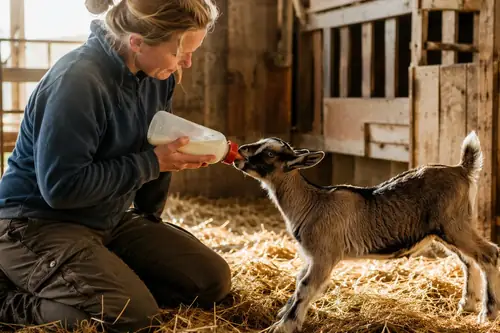
Bottle-raising produces friendlier, more human-bonded kids but is very time-consuming. Here's a typical bottle-feeding schedule that works well for most breeds: days 1-3, feed 2-4 ounces every 2-4 hours (including at least one overnight feeding).
Days 4-14, increase to 6-8 ounces four times daily. Weeks 3-4, bump up to 10-12 ounces three times daily.
Weeks 5-8, feed 12-16 ounces twice daily while encouraging hay and grain intake.
Always warm the milk to about 101-103 degrees Fahrenheit, which is close to body temperature. Cold milk causes digestive upset and refusal to eat.
Some breeders use a hybrid approach, letting kids nurse during the day and separating them at night so they can milk the doe in the morning. This gives you fresh milk while keeping the kids growing well.
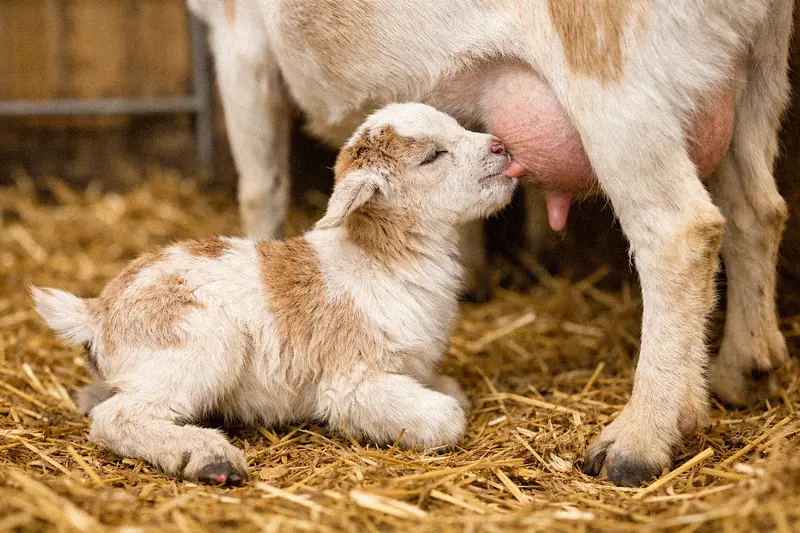
Weaning age depends on breed and growth rate. Most standard breed kids can wean at 8-12 weeks if they're eating hay, grain, and drinking water on their own.
Nigerian Dwarf kids should weigh at least 15-20 pounds before weaning. Standard breed kids should hit 30-40 pounds.
Boer kids grow fastest and may reach 40-50 pounds by weaning age.
A common mistake is weaning too early based on age alone. Always check weight and rumen development first.
If a kid isn't consistently eating solid food and ruminating (chewing cud), it's not ready to wean regardless of age.
If you need to switch a kid from bottle feeding back to nursing off another doe, it's possible but requires patience. The foster doe needs to accept the kid, which sometimes means rubbing the orphan with the foster doe's afterbirth or milk.
Mixing newborn kids with older kids should be done carefully. Young kids can be injured by older, larger kids during rough play.
Start offering free-choice hay and a small dish of kid grain (16-18% protein) by 1-2 weeks of age. Kids will just nibble at first, but early exposure kickstarts rumen development.
By 4-6 weeks, most kids are eating enough solid food that their rumen is becoming functional.
Floppy kid syndrome is a condition that hits fast-growing kids between 3-10 days old. The kid suddenly goes limp and can't stand.
It's caused by metabolic acidosis, and treatment involves oral baking soda solution (1 teaspoon in 2 ounces of warm water). Catch it early and most kids bounce back within hours.
Weigh each kid at birth and again at 24 hours to make sure they are nursing. A kid that loses more than 10% of its birth weight in the first day isn't getting enough colostrum and needs supplemental bottle feeding immediately.
Disbud goat kids at 3-7 days old (does) or 3-5 days old (bucks) using a heated disbudding iron, and band (castrate) buck kids at 8-12 weeks. Disbudding is one of the most debated topics in goat keeping.
If you choose to disbud, it should be done when kids are 3-7 days old for does and 3-5 days old for bucks, before the horn buds attach to the skull.
The procedure is done with a disbudding iron heated to cherry red and applied to each horn bud for 8-10 seconds. You'll know it's done right when you see a clean copper ring around the bud.
Many goat owners have their vet do the first few disbuddings until they are comfortable with the technique.
Buck kids need extra attention because their horn buds are larger and grow faster than doe kids. Some breeders do a second burn on bucks 2-3 weeks later to prevent scurs (partial horn regrowth).
Scurs are ugly, fragile horns that can break and bleed but aren't as dangerous as full horns.
If you miss the disbudding window and the horns grow in, removing full-grown horns from an adult goat is a much more serious procedure. It's essentially surgery that involves cutting through bone and blood vessels.
This should only be done by a veterinarian and carries risks of bleeding, infection, and sinus exposure. Prevention through early disbudding is always preferred.
Banding (castration using an elastrator band) is the most common method of castrating buck kids that won't be kept for breeding. Most breeders band between 8-12 weeks of age.
The band cuts off blood supply to the testicles, which shrink and fall off within 2-4 weeks. While some goat owners band older bucks, banding a 2 or 3-year-old buck is riskier and more painful.
For older bucks, surgical castration by a veterinarian is generally recommended. Always give a tetanus antitoxin at the time of banding if the kid hasn't been vaccinated.
CD&T vaccination at 4 weeks and again at 8 weeks covers both tetanus and enterotoxemia.
These procedures aren't fun, but they are important management practices. Horned goats can injure other goats, get stuck in fences, and are dangerous to handlers.
Intact bucks that aren't part of your breeding program will fight, smell terrible, and can breed does before you want them to.
Polled (naturally hornless) goats are an alternative that eliminates the need for disbudding entirely. The polled gene is dominant, so breeding a polled buck to horned does will produce a mix of polled and horned kids.
However, breeding two polled goats together can produce intersex offspring (hermaphrodites), so most breeders use at least one horned parent in each cross.
Schedule disbudding within the first week of life and mark it on your calendar the day kids are born. Missing the window by even a few days makes the procedure harder and riskier.
| Procedure | Best Age | Method | Recovery Time |
|---|---|---|---|
| Disbudding (does) | 3-7 days old | Disbudding iron (8-10 sec per bud) | 1-2 weeks |
| Disbudding (bucks) | 3-5 days old | Disbudding iron (8-10 sec per bud) | 1-2 weeks |
| Banding (castration) | 8-12 weeks old | Elastrator band | 2-4 weeks (testicles fall off) |
| Horn removal (adult) | Any age (avoid if possible) | Surgical by veterinarian | 4-6 weeks, risk of complications |
Register goats through ADGA, AGS, or ABGA to increase their sale value and document pedigree records for informed breeding decisions. If you're serious about this, registration adds real value and credibility.
The American Dairy Goat Association (ADGA), American Goat Society (AGS), American Boer Goat Association (ABGA), and other breed-specific registries maintain herd books and pedigree records.
Registered animals command higher prices and provide documented lineage for making informed breeding decisions. A registered Nigerian Dwarf doe from proven milking lines can sell for $300-$800, while an unregistered doe of the same quality might bring $100-$200.
But what if you have a goat without papers? Some registries offer programs for unregistered goats.
For example, ADGA has a "Native on Appearance" (NOA) program where goats that meet breed standards can be inspected and entered into the registry.
Over several generations of breeding to registered bucks, the offspring can achieve full registration status. AGS offers a similar "Grade" program that lets you work toward purebred status over generations.
ADGA's milk testing program (DHIR, or Dairy Herd Improvement Registry) is one of the best tools for improving your breeding program. A DHIR tester visits your farm monthly to record each doe's production.
The data goes into a national database so you can compare your herd against breed averages.
Does that meet specific production standards earn star milker designations (*M), and bucks whose daughters perform well earn star buck status (*B). These designations drive up the value of your breeding stock significantly.
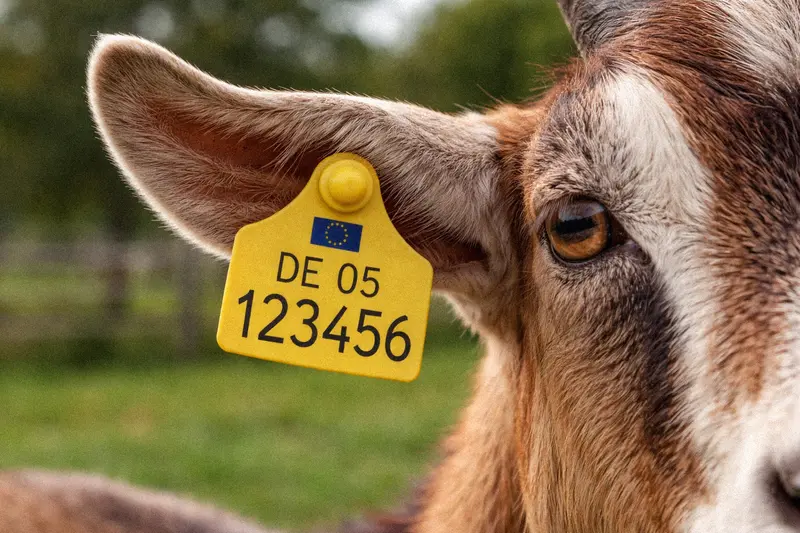
Showing your goats through ADGA or AGS sanctioned shows is another way to build your herd's reputation. Judges evaluate conformation, mammary systems, and general appearance against breed standards.
Grand Champion and Best in Show wins add real value to your breeding stock and marketing.
Good record keeping is the backbone of any breeding program. Track breeding dates, buck used, kidding dates, number and sex of kids, birth weights, and any complications.
Over time, these records reveal which does are your best producers and which crosses give you the healthiest, fastest-growing kids.
Use a notebook, spreadsheet, or goat management software to keep everything organized. An often-overlooked aspect of breeding is profitability.
Goats can absolutely make money if you approach breeding as a business. Registered breeding stock, bottle babies, market kids, and dairy products all generate income.
However, the costs of feed, veterinary care, fencing, and shelter add up. Having a clear plan and keeping detailed financial records helps you determine whether your breeding program is sustainable.
For meat goat breeders, ABGA shows and performance testing programs serve a similar function to dairy milk testing. Bucks and does are evaluated on conformation, muscling, and structural correctness.
Winning show animals carry premium price tags, often $500-$2,000 or more for registered Boer breeding stock with champion bloodlines.
Check your local zoning laws before buying goats. Many suburban areas restrict livestock, and some ban bucks entirely due to noise and odor.
Before you spend a dime, find out whether you can legally keep them where you live. Zoning laws vary wildly from one jurisdiction to the next.
Some rural areas have no restrictions at all, while many suburban and urban areas restrict or prohibit livestock entirely. Even within a single county, regulations can differ between city limits and unincorporated areas.
Some areas allow goats on lots of a certain minimum size, often 1 acre or more. Others require a special permit or conditional use permit.
Many places that allow goats prohibit intact males (bucks) due to noise and odor complaints. Homeowner's associations (HOAs) often have their own restrictions beyond what local zoning allows.
The best approach is to contact your local zoning office or code enforcement department directly. Ask specifically about livestock, not just "pets," because goats are classified differently depending on your jurisdiction.
Get any approvals in writing. It's also smart to talk to your neighbors before bringing goats home.
A friendly conversation goes a long way toward preventing complaints. Bringing over a jar of goat milk soap or fresh chevre doesn't hurt either.
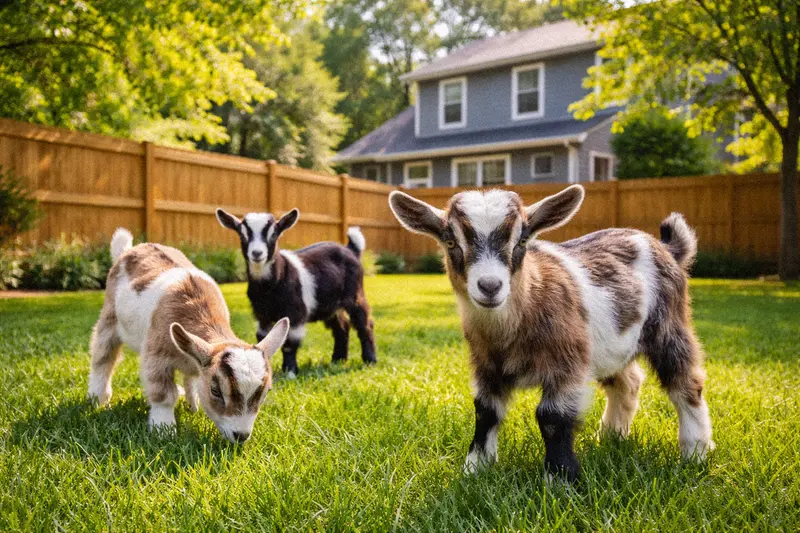
Noise is the number one complaint that gets goat owners in trouble. Bucks in rut are the loudest offenders, but does in heat and separated kids scream for hours too.
Keep shelters away from the closest property line, and use solid-wall housing to dampen sound.
Odor management matters just as much. Clean bedding regularly, compost manure away from fence lines, and keep bucks downwind of neighbors.
Some jurisdictions require minimum setbacks (50-100 feet from neighboring homes) for livestock shelters. Even without setbacks, building goat housing far from property lines reduces complaint risk.
If you're on the edge of legality, consider starting with wethers or does only. Many jurisdictions that ban bucks still allow female goats.
You can use driveway breeding or AI when it's time to breed, keeping the smelly part off your property entirely.
We have covered goat-keeping regulations for several specific locations across the country. Whether you are in a rural area, a small town, or near a city, it's worth checking the rules before you invest in animals and infrastructure.
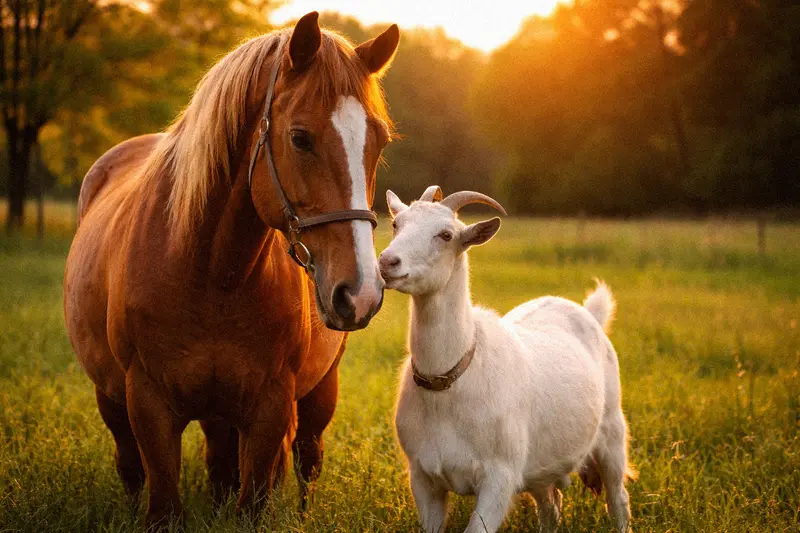
Goats pair well with horses, mini horses, donkeys, llamas, and even chickens as companion animals. They're herd animals that genuinely need companionship, but it doesn't always have to come from other goats.
Many horse owners keep goats as companions for their horses, and the two species often form surprisingly strong bonds.
Horses can become deeply attached to their goat companions, sometimes refusing to load in a trailer or eat if their goat buddy isn't nearby. Racetracks and breeding farms have used companion goats for decades to keep high-strung horses calm.
Mini horses and goats are an especially popular pairing because they are similar in size and have compatible temperaments. They can share pasture, shelter, and even feed to some extent, though goats and horses have different nutritional needs (goats need copper, which is toxic to horses in large amounts, so mineral supplements must be managed carefully).
Donkeys and llamas are two other common companion species that serve double duty as guardian animals. A single donkey or llama bonded to your goat herd can deter coyotes and stray dogs effectively.
Pack goats are another interesting use for goats that intersects with the breeding world. Large, sturdy wether (castrated male) goats from breeds like Oberhasli, Alpine, or Saanen crosses make excellent pack animals for hiking and camping.
They can carry 20-25% of their body weight and navigate terrain that horses and mules can't.
Breeding specifically for pack goat traits, including strong legs, calm temperament, and large frame, is a niche but growing part of the goat world. When mixing goats with other species, always introduce animals slowly and supervise their interactions.
A goat's playful headbutting can injure smaller animals, and larger animals can accidentally step on kids. Providing separate feeding areas and making sure every animal can retreat to its own space reduces conflict.
Chickens and goats are another common pairing on homesteads. They can share pasture space, and chickens will pick through goat droppings for undigested grain, reducing fly populations.
Just keep chicken feed out of reach of goats, as the high protein and added medications in poultry feed aren't safe for goats long-term.
Breeding age, climate, altitude, and local regulations all affect how you manage your goat breeding program. Real-world goat breeding doesn't always follow the textbook, and you'll run into situations nobody warned you about.
Can you breed an older doe that has never been bred before? Yes, but a 6-year-old first-freshener carries more risk.
Her pelvic ligaments have never stretched for delivery, and she is more likely to need assistance during kidding. Most breeders prefer to start does young and keep breeding them regularly rather than starting late.
Older does also have declining fertility. Conception rates drop noticeably after age 7-8, and does over 10 years old rarely conceive reliably.
If you do breed an older first-timer, have your vet on standby for the delivery.
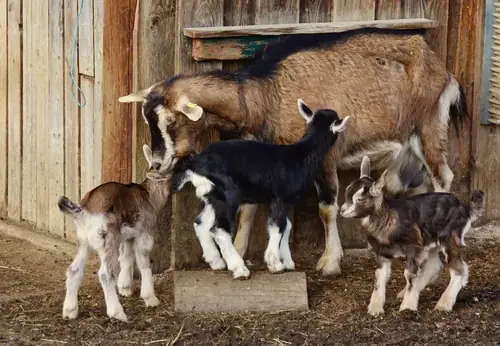
On the other end of the spectrum, some owners wonder about breeding very young doelings. A Nigerian Dwarf doeling can technically become pregnant as young as 2-3 months old if exposed to a buck, which is why you must separate bucklings from doelings early.
Many breeders separate by 8 weeks to be safe.
Breeding a doeling before she is physically mature enough can stunt her growth and lead to dangerous kidding complications. Some goat owners in specific locations face unique challenges.
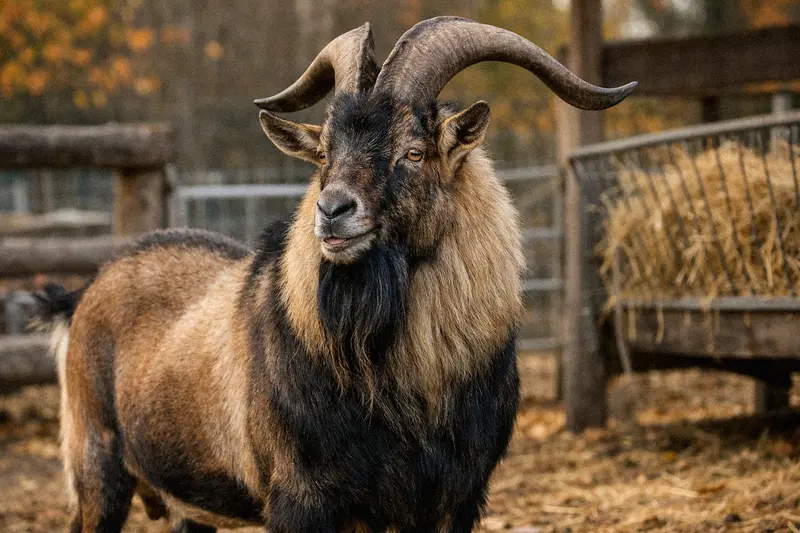
If you are raising goats in a city or suburb, you may have noise ordinances that make keeping a buck impractical. Bucks in rut are loud and smelly.
Solutions include using a friend's buck, renting buck service, or using AI. Walking your goats to a nearby breeding farm is even an option in some communities.
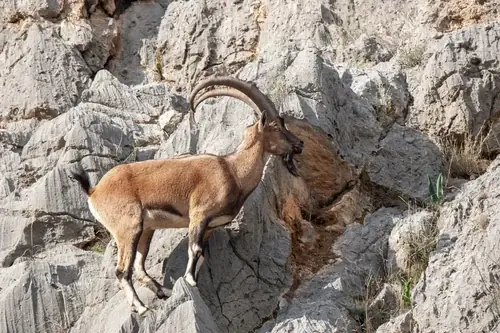
Location also affects breed choice. Mountain goats and their domestic cousins in steep terrain areas need sure-footed breeds.
Hot, humid climates favor heat-tolerant breeds like Kiko or Nubian. Cold-climate breeders should consider hardy breeds like Oberhasli or Toggenburg that handle harsh winters well.
In areas with high parasite pressure (warm and humid regions), breeds like Kiko and Spanish goats have a natural advantage thanks to their stronger resistance to internal parasites like barber pole worm.
Altitude matters more than most people realize. Goats at high elevations (above 5,000 feet) may have lower conception rates and smaller kids due to reduced oxygen availability.
If you're breeding at elevation, plan for slightly longer kidding intervals and smaller litter sizes.
For dairy goat breeding, select does with documented milk test records (DHIR) and breed to bucks from proven milking lines. If dairy is what you're after, your whole breeding program should revolve around does with strong milk genetics.
Look for dams and granddams with official milk test records showing high volume, good butterfat percentages, and long lactation curves.
The ADGA and AGS maintain performance records that let you compare genetics before buying or breeding. Joining a DHIR (Dairy Herd Improvement Registry) milk testing program gives you hard data on each doe's production.
Monthly tests track pounds of milk, butterfat percentage, and protein content across the entire lactation.
Milking ability is highly heritable, but management matters too. A doe bred for the first time will produce less milk than the same doe on her third or fourth freshening.
Does typically hit peak production around their third or fourth lactation.
Plan your freshening schedule to match your milk needs. Some breeders stagger breedings so they always have at least one doe in milk year-round.
Others breed all their does at the same time for a concentrated kidding season and accept a dry period.
A typical dairy doe freshens (starts producing milk after kidding) and reaches peak production at 4-8 weeks. From there, production gradually declines over 10 months.
A good Nigerian Dwarf doe produces 1-2 quarts per day at peak, while a Saanen in her prime can give over a gallon daily.
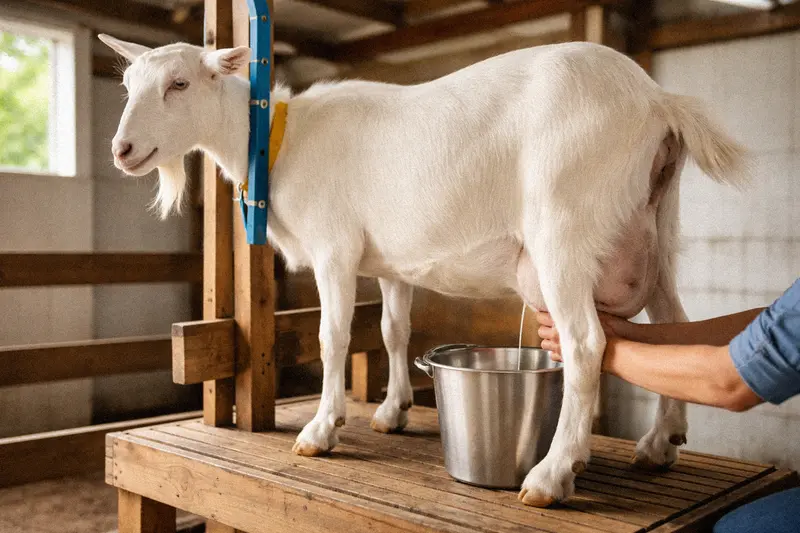
Plan to keep your best milkers in the herd for 8-10 years, breeding them annually to maintain milk production. Does can be milked while pregnant for most of their gestation, but most breeders "dry off" the doe 6-8 weeks before her due date to let her body focus on growing healthy kids.
Drying off involves gradually reducing milking frequency from twice daily to once daily to every other day, then stopping completely. During this transition, watch the udder carefully for signs of mastitis like heat, swelling, or lumpy milk.
Some breeders use a commercial dry cow treatment (intramammary infusion) at dry-off to prevent infection during the dry period.
Some does will dry themselves off naturally as their pregnancy progresses. Others are persistent milkers that keep producing no matter what.
With these does, you may need to go cold turkey and just stop milking, monitoring the udder daily for the first week.
For homesteaders who want both milk and pack goat utility from their herd, breeding larger dairy wethers can serve double duty. A large Alpine or Saanen wether can pack supplies on the trail, while the does stay home producing milk for the family.
This kind of multi-purpose breeding program makes the most of a small herd.
One thing dairy breeders often overlook is the importance of good milking hygiene from day one. Mastitis (udder infection) can permanently reduce a doe's production capacity.
Always clean teats before and after milking, use a teat dip, and milk into a clean container. Strip the first few squirts from each teat onto a dark surface to check for clumps or stringiness, which are early signs of mastitis.
Keep your best milking does for at least 4-5 freshenings before deciding their genetic value. First-freshener production is typically 20-30% lower than peak production, which most does reach on their third or fourth lactation.
Most goats have 1-3 kids per pregnancy, with twins being the most common outcome. Nigerian Dwarf goats frequently have triplets or even quadruplets. First-time does (first fresheners) are more likely to have singles, while experienced does often have multiples. The breed, nutrition, and genetics all play a role in litter size.
Goat gestation lasts approximately 145-155 days, with 150 days (about 5 months) being the average. You can calculate the expected due date by counting 150 days from the breeding date. First-time does sometimes go a few days past their due date, which is usually normal.
While extremely rare, goat-sheep hybrids (called geeps or shoats) have been documented. However, goats have 60 chromosomes and sheep have 54, making successful crosses very unlikely. The vast majority of mating attempts between the two species don't produce viable offspring, and the rare hybrids that are born are almost always infertile.
Standard breed does should be at least 7-8 months old and weigh 80 pounds or more before breeding. Nigerian Dwarfs and other miniature breeds should be at least 7-8 months old and 40 pounds. Breeding too young can cause difficult births and stunt the doe's own growth. Some breeders prefer to wait until does are a full year old.
Common signs of heat include rapid tail wagging (flagging), increased vocalization, swollen and reddened vulva, clear mucous discharge, mounting other goats, and standing near the buck pen. You can also use a buck rag (cloth rubbed on a buck's scent glands) to detect interest, or monitor rectal temperature for subtle rises. Some does are "silent" heat cyclers who show very few outward signs.
Breeding closely related goats (father-daughter, full siblings) is generally not recommended because it concentrates both desirable and undesirable genes, increasing the risk of genetic defects, reduced fertility, and weaker immune systems. Some experienced breeders use controlled linebreeding, but it requires deep knowledge of the bloodlines. Most goat owners should bring in unrelated bucks every 2-3 years.
Most breeders band buck kids between 8-12 weeks of age. Banding too early (before 4 weeks) increases the risk of urinary calculi because the urethra hasn't fully developed. Always give a tetanus antitoxin at the time of banding. For older bucks over 6 months, surgical castration by a veterinarian is generally safer than banding.
Yes, but profitability depends on your market, breed, and management. Registered breeding stock commands the highest prices, especially from proven bloodlines with milk test records or show wins. Market kids, bottle babies, and dairy products also generate income. However, feed, veterinary care, and infrastructure costs are significant. Keeping detailed financial records and having a clear business plan are essential.
Hand breeding is the best method for small herds because it gives you exact breeding dates for calculating due dates, requires only one buck, and lets you control which does get bred to which buck. You bring the buck to the doe when she's in standing heat, watch for successful mating, then separate them. Driveway breeding (paying a stud fee) is a good alternative if you don't want to keep a buck year-round.
The most reliable method is a blood test through BioTracking, which detects pregnancy as early as 30 days post-breeding for about $6-$8 per test. Ultrasound by a vet works at 30-45 days and also reveals how many kids. Physical signs like belly expansion and feeling kids move become obvious after day 90-100. A doe that doesn't return to heat 18-21 days after breeding has likely settled.
The natural goat breeding season runs from August through January in most of North America. Does come into heat every 18-21 days during this window. Some breeds like Nigerian Dwarfs and Pygmy goats can breed year-round. Out-of-season breeding is possible using light manipulation or CIDR hormonal devices, though conception rates tend to be slightly lower.
guide A goat costs 50 to 800 dollars to buy and 200 to 500 dollars a year to keep. The full breakdown of purchase prices by type, startup costs, ongoing costs, and hidden costs.
 guide
guide A practical breeder's guide to pairing a Pygmy nanny with a Nigerian Dwarf billy, covering the safest cross direction, kid traits, milk, and birthing care.
 guide
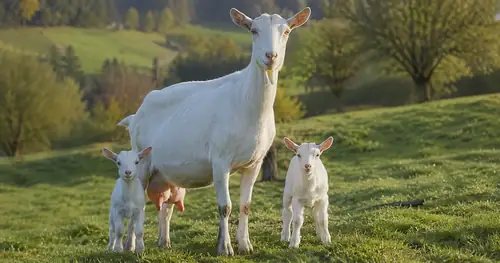
guide Saanens are short-day seasonal breeders, so they will not naturally kid year round. Here is the breeding calendar, the science of daylight, and how to get kids and milk in any month.
 guide
guide Find out if an overdue goat can be induced, how to confirm she is truly past due, which drugs vets use to start kidding, how long they take, and the risks.
 guide
guide A complete goat bottle feeding chart by age, what milk to use, how often to feed, overnight gaps, and the overfeeding mistakes that cause scours and bloat.
 guide
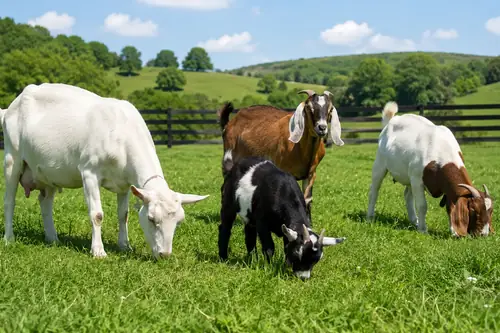
guide Compare the 12 best goat breeds for milk, meat, fiber, pets, and beginners. Size, temperament, and production for Nigerian Dwarf, Boer, Nubian, and more.
 guide
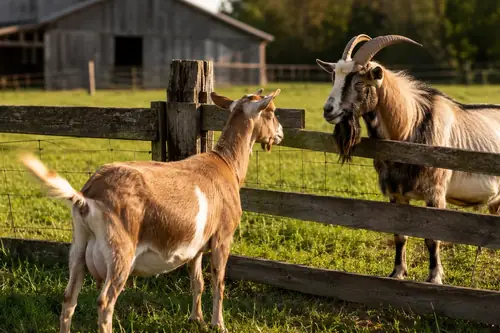
guide Goats go into heat every 18-21 days during breeding season. Learn the signs of a doe in heat, how long heat lasts, and exactly when to breed her.
 guide
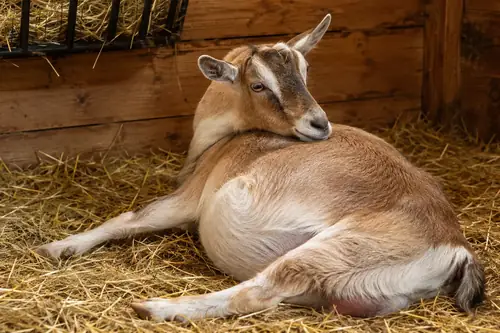
guide Learn the signs of goat labor in the order they appear, from udder filling weeks out to lost ligaments and discharge in the final 24 hours before kidding.
 guide
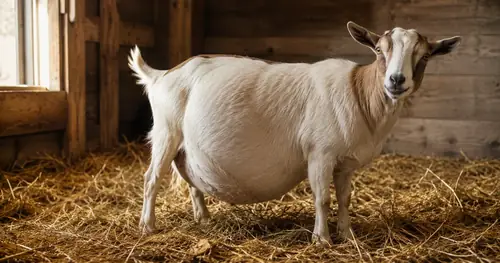
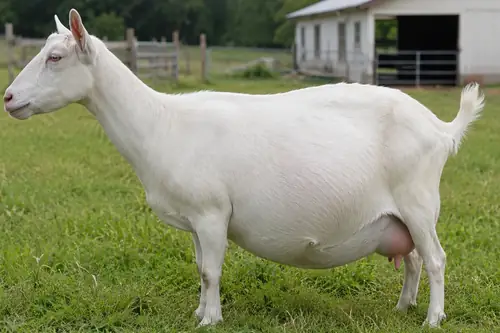
guide Not sure if your doe is pregnant or just fat? Learn the early signs a goat is pregnant, what changes week by week, and how to confirm it at home or with your vet.
 guide
guide Free goat gestation calculator and breed-by-breed chart. Enter the breeding date to get your doe's due date, plus the stages of pregnancy and the signs that kidding is near.
 guide
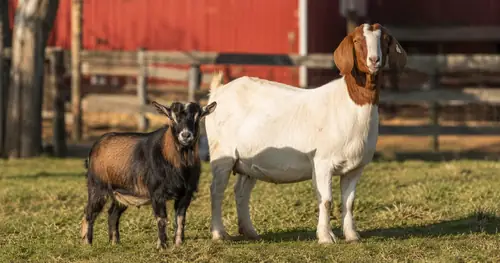
guide A Nigerian Dwarf buck can safely breed a Boer doe since the larger doe carries the kids. Covers offspring traits, height solutions, and the one direction that puts does at risk.
 guide
guide A 4-month-old Nigerian Dwarf doeling can physically get pregnant, but breeding this young threatens her health and her kids. This guide covers the real risks, the safe breeding age and weight thresholds, and exactly what to do if your doeling has already been exposed.