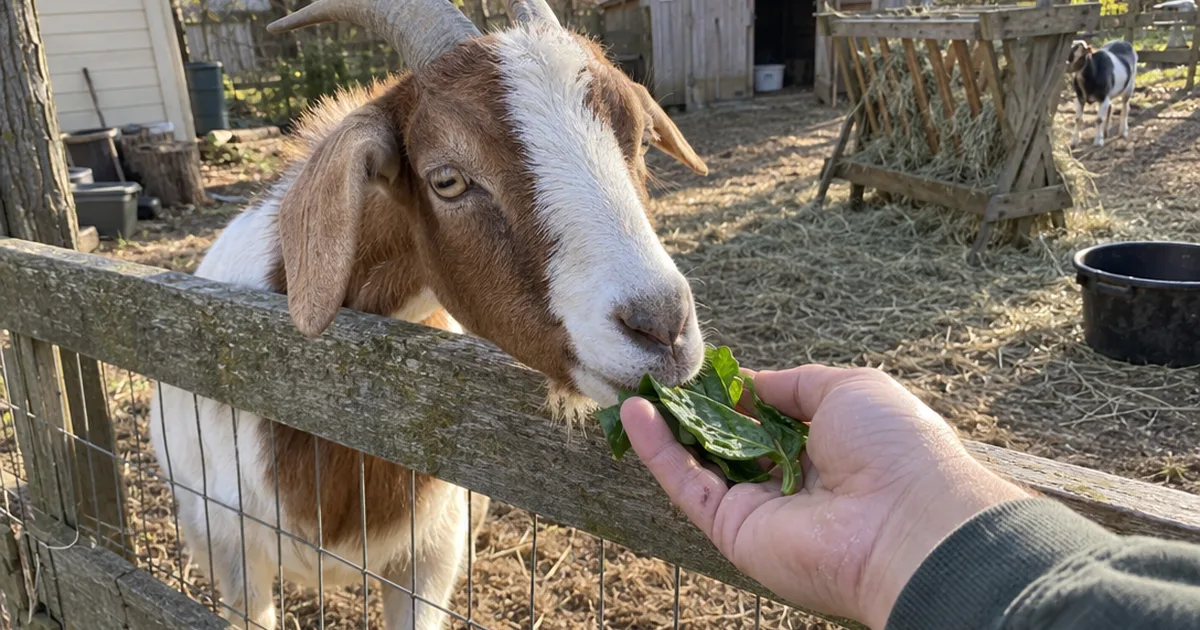

The goat poison list that names motherwort also names alfalfa and oats.
That list is the GoatWorld Poisonous Plant Guide. It sorts plants into 3 toxicity levels, and the lowest covers plants goats can eat for years with no apparent effects.
So a spot on a poison list can’t settle the real question: can goats eat motherwort safely?
The real answer depends on how much they eat, which parts they reach and whether a doe is pregnant. You’ll get a straight answer on each, plus how to spot motherwort and clear it.
Is Motherwort Poisonous to Goats?
Motherwort (Leonurus cardiaca) appears on some goat poison lists, but the only harm from eating it in the Ohio State University weed guide is photosensitivity. None of those lists gives a toxic dose for goats.
So why is it on poison lists at all?
The GoatWorld guide collects plants considered poisonous “in one way or another.” Motherwort sits in its index between mother-in-law plant and mountain laurel.
The index itself doesn’t say which of its 3 toxicity levels motherwort falls into.
Why does that matter? The same guide lists alfalfa and oats too, and explains both can cause nitrate poisoning depending on the growing season and how the crop was harvested.
So a listing means “can cause trouble under some conditions,” not “deadly on contact.”
An owner list from 2006, posted on the Phoenix Friends large-animal forum, names motherwort as well. That list tags plants by the kind of toxin they carry, and motherwort gets no tag at all.
Treat motherwort as low-risk browse your goats may sample, not as feed you hand them. The full list of plants poisonous to goats covers the ones that truly can’t stay in a pasture.
What Happens If a Goat Eats Too Much Motherwort?
Photosensitivity is the main risk for a goat that eats a lot of motherwort, because the Ohio State weed guide says the plant’s lemon-scented oil causes it if ingested. No source reviewed here lists other poisoning signs in goats.
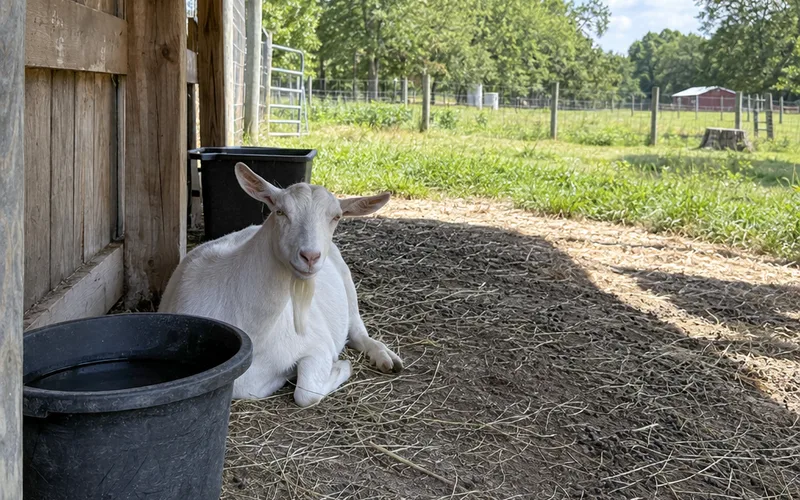
What does that look like?
Photosensitivity in animals means sunlight damages skin that would normally handle it fine. The Phoenix Friends list puts it plainly: an animal that eats a photosensitizing plant “is susceptible to sunburn, heat related illnesses, etc.”
Here’s what to do if you catch your goats working through a thick patch:
- Move them off that patch and fence it off for now.
- Give them shade and fresh water, especially on bright, hot days.
- Check light-colored, thinly haired skin over the next few days for sunburn-like redness.
- Call a large-animal vet if the skin blisters or a goat stops eating.
Then make sure the herd has good hay to fill up on, so a weed patch is never the easiest meal around.
Does Motherwort Cause Photosensitivity in Goats?
Motherwort can cause photosensitivity, according to the Ohio State weed guide, which says its lemon-scented oil causes the reaction if ingested. The guide doesn’t single out goats, so read it as a risk for any animal that eats a lot of the plant.
For comparison, the 2006 owner list tags St. John’s wort and buckwheat as photosensitizing plants. Motherwort appears on that same list without the tag.
In other words, that list didn’t rank motherwort with the plants it flagged for sun sensitivity.
Key Takeaway: The goat to watch is a light-skinned one that grazed a thick stand during a sunny week.
Can Goats Eat Motherwort Leaves, Stems and Seeds?
Goats can nibble motherwort leaves, stems and seed heads, but none of these parts is a feed. The Ohio State weed guide says the plant carries a lemon-scented oil that causes photosensitivity, and its seed heads sit inside prickly sepals.
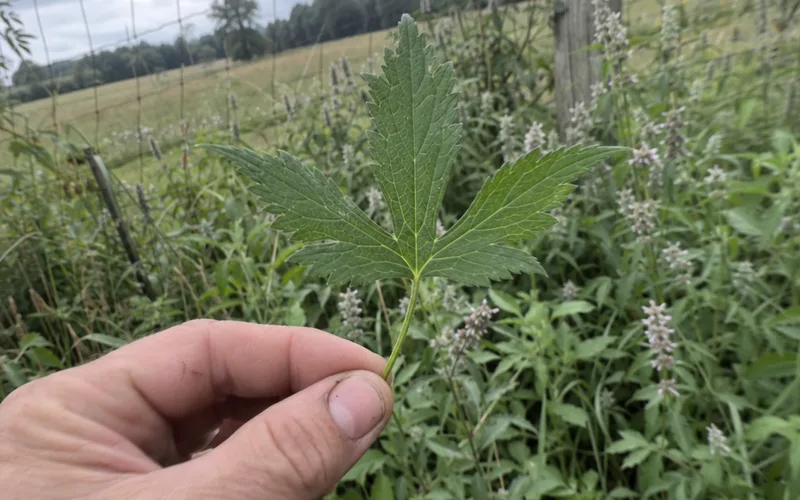
Here’s how each part stacks up:
- Leaves: the foliage gives off a pungent smell when crushed, and the leaves can cause contact dermatitis in some people who handle them.
- Stems: stiff and square, on a plant that can reach 5 feet tall.
- Flowers and seeds: each flower makes 4 triangular brown nutlets with hairs at one end, wrapped in prickly sepals.
No source here tested any single part on goats.
That’s why the safest rule is the same for all of them: a stray bite is fine, a steady diet isn’t. If you want an herb to hand-feed, basil in small amounts is a better pick.
Is Motherwort Safe for Pregnant Goats?
Motherwort has no tested safety record in pregnant goats, so keep pregnant does off thick patches and never dose them with it. Its history is human herbal use: the Ohio State weed guide notes it was used to remedy “nervousness, dizziness and other disorders of women.”
That history is about people, not goats.
Without a goat study, there’s no safe amount to go by for a bred doe.
If you’re not sure which does are bred, the signs a goat is pregnant help you decide who to move first. Then put those does where motherwort doesn’t grow until they kid.
How to Identify Motherwort in a Goat Pasture
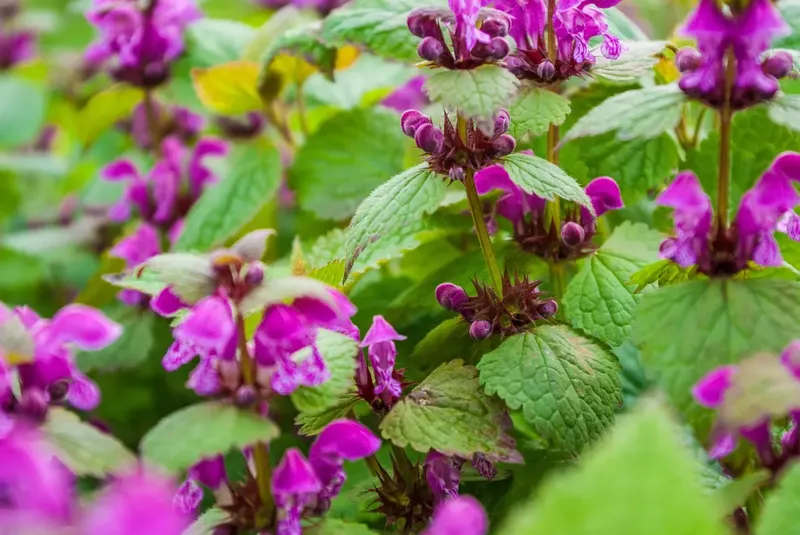
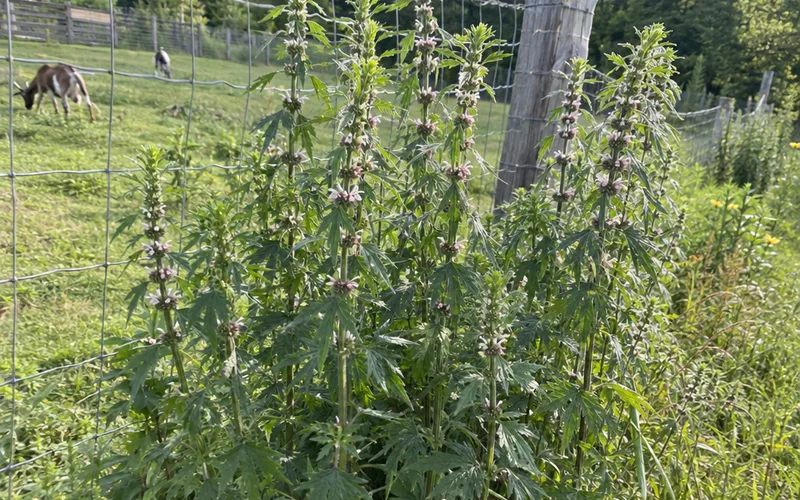
Motherwort is easiest to spot by 3 traits the Ohio State weed guide describes: a square stem, lower leaves split into 3 finger-like lobes, and pink to pale purple flowers in clusters of 6 to 15. The plant blooms July through September and can grow up to 5 feet tall.
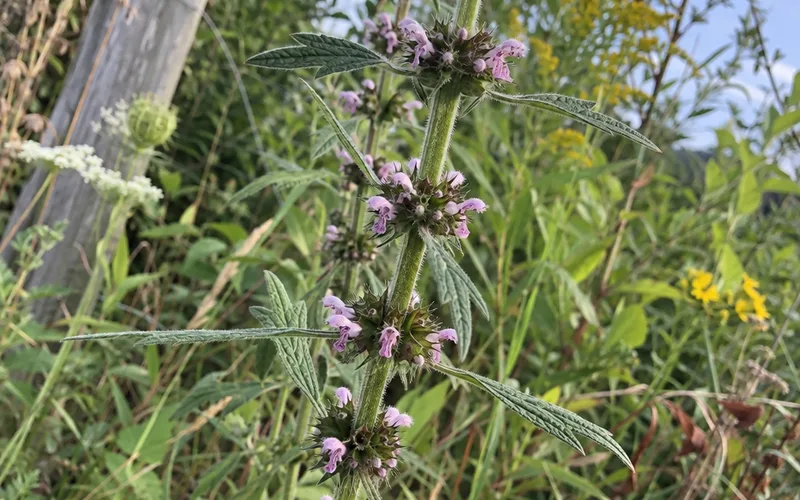
Motherwort belongs to the mint family (Lamiaceae), the same family as the peppermint some owners treat with. That’s why both have a square stem.
Use these traits on your next pasture walk:
| Trait | What to look for |
|---|---|
| Height | Up to 5 feet, stiff and upright |
| Stem | Square, like other mints |
| Lower leaves | 3 (rarely 5) lobes, like fingers on a hand |
| Flowers | Pink to pale purple, 6 to 15 per cluster |
| Under each flower | Prickly sepals |
| Smell | Pungent when you crush a leaf |
Check field edges, yard corners and neglected spots first. Motherwort came from Eurasia, and the Ohio State guide lists meadows, fields, yards, neglected gardens, riverbanks, waste places and roadsides as its haunts.
Motherwort prefers moist, rich soils, so the damp, fertile corner by the barn is a likely place to find it.
How to Get Rid of Motherwort in a Goat Pasture
Motherwort is controlled by mowing it close to the ground every time shoots emerge and by improving drainage, according to the Ohio State weed guide. The guide warns its roots are tenacious, but the plant generally doesn’t survive cultivation.
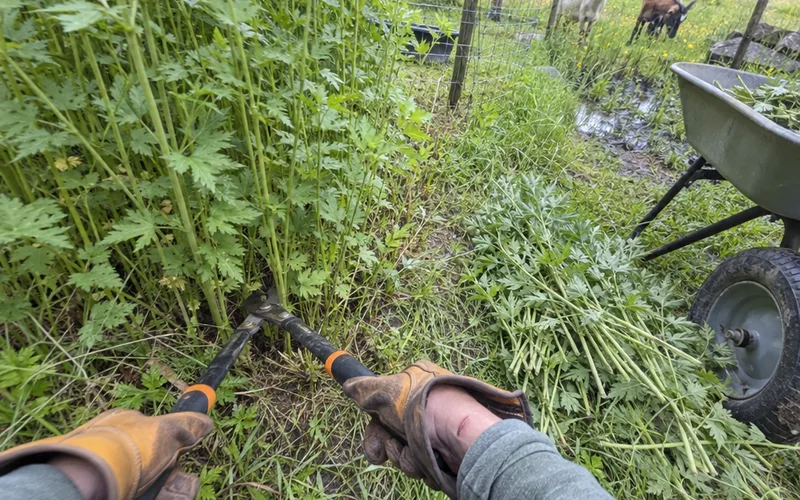
Here’s the order to follow:
- Wear gloves and long sleeves, since the leaves can irritate some people’s skin and the sepals are prickly.
- Mow or cut before the July bloom, because motherwort reproduces by seeds.
- Mow again, close to the ground, every time new shoots come up.
- Fix wet spots where water sits, since the plant likes moist, rich soil.
- Till and reseed bare patches you want back in forage.
When you reseed, pick plants your herd will actually use. A list of plants goats can eat helps you choose.
Pro Tip: Mark the patch on a sketch of your pasture, so you can check it again in spring when new shoots show up.
Should You Leave Motherwort in Your Goat Pasture?
A few motherwort plants along a goat pasture edge can stay, but mow out thick stands, especially where pregnant does or light-skinned goats graze.
Motherwort is just one of the weeds and herbs goats eat, and hay and browse still carry a healthy goat diet.
This week, walk your fence lines, look for square stems with 3-lobed leaves, and mow any thick patch close to the ground.
Frequently Asked Questions
Will goats eat motherwort if they have other forage?
Goats may still nibble motherwort when better forage is around, but no source reviewed here measured how much of it they choose to eat. Keep good hay and browse in front of them so motherwort stays a small bite and never becomes a meal.
Can you give goats motherwort tea or tincture?
Motherwort tea and tincture have no tested dose for goats, so don’t give either without your vet’s go-ahead. A tea or tincture concentrates the plant, which is the opposite of the small nibbles a goat gets while browsing.
What herbs are toxic to goats?
St. John’s wort is one herb that goat owner lists flag, tagged as a photosensitizing plant alongside buckwheat on a 2006 list of plants toxic to sheep and goats. For the full rundown, keep a complete list of plants poisonous to goats handy when you walk your pasture.
Can goats eat motherwort seeds?
Motherwort seeds have no recorded goat-safety data, so treat them like the rest of the plant: fine as a stray nibble, not as feed. Each flower makes 4 small triangular brown nutlets, and cutting the plant before it blooms in July keeps them out of reach.