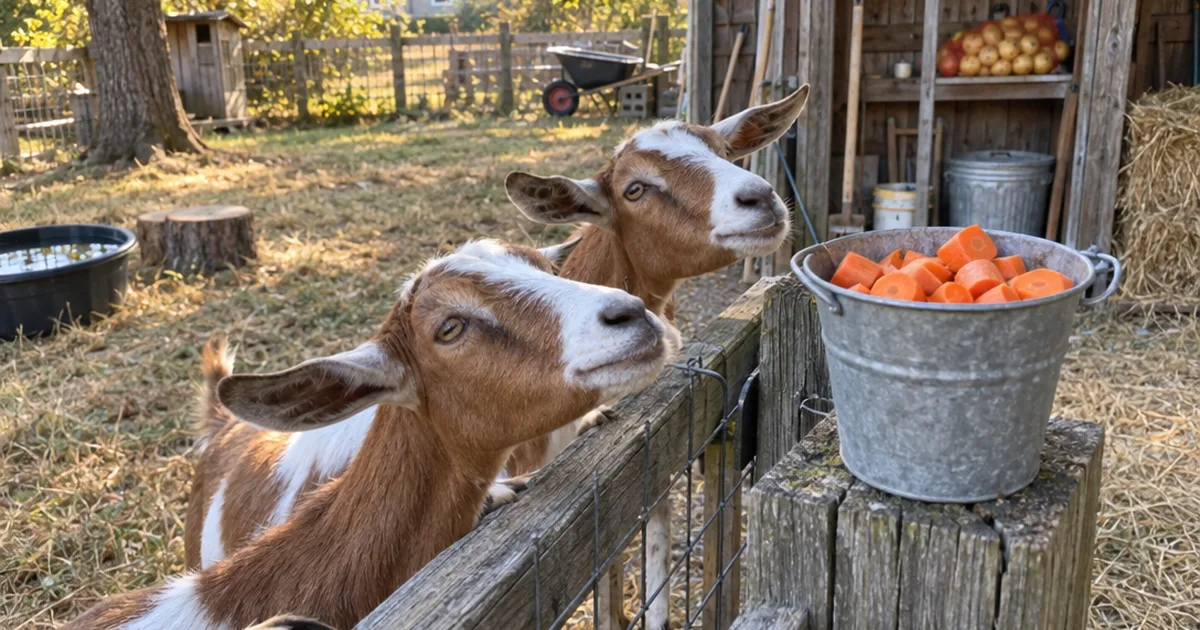

A 30-pound pygmy goat has room for less than 1 ounce of treats a day. Feed maker Kalmbach Feeds says it eats about 8 ounces of feed daily, and treats stay under 10% of the diet.
Squash is among the safest garden treats, so how much matters more than which kind. Too many treats can cause bloating, diarrhea or rumen acidosis, even when each one is safe.
You’ll find which squash and parts to feed, how much by goat weight and the one squash to throw out. A tiny taste of raw flesh spots it, since sharp bitterness is the warning sign.
Which Squash Can Goats Eat?
Goats can eat every common squash grown or sold for eating, summer and winter kinds alike, and Kalmbach Feeds lists squash among its excellent vegetable treats for goats.
The safe list is long:
- Summer squash: zucchini, yellow crookneck and pattypan
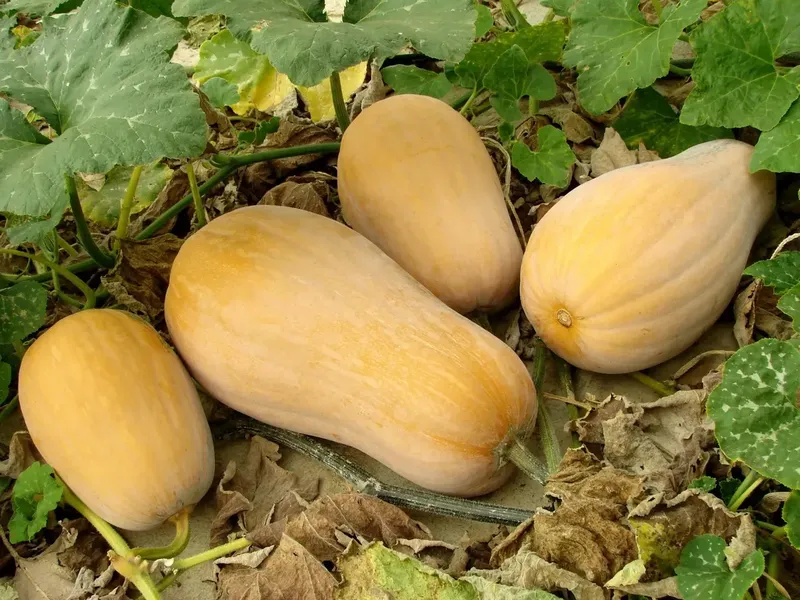
- Winter squash: butternut, acorn, spaghetti, delicata and hubbard
- Pumpkin, the best-known winter squash
All of them belong to Cucurbita, the squash genus that also includes many decorative gourds. That family tie is why you judge a squash by its taste, not just its name.
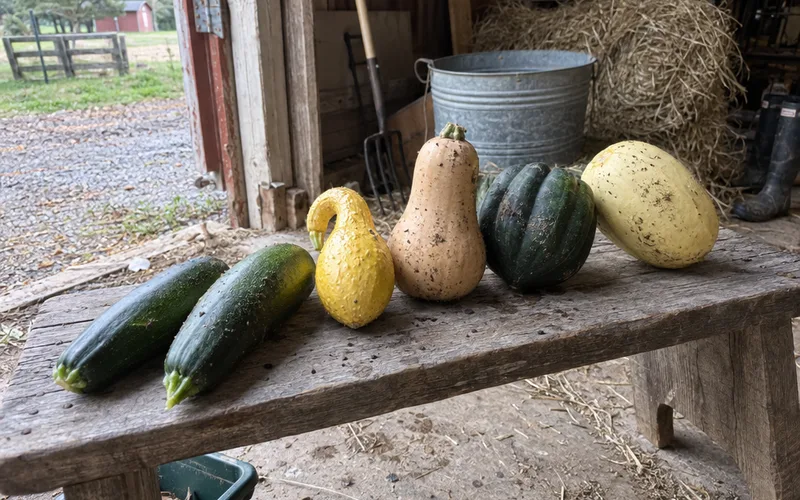
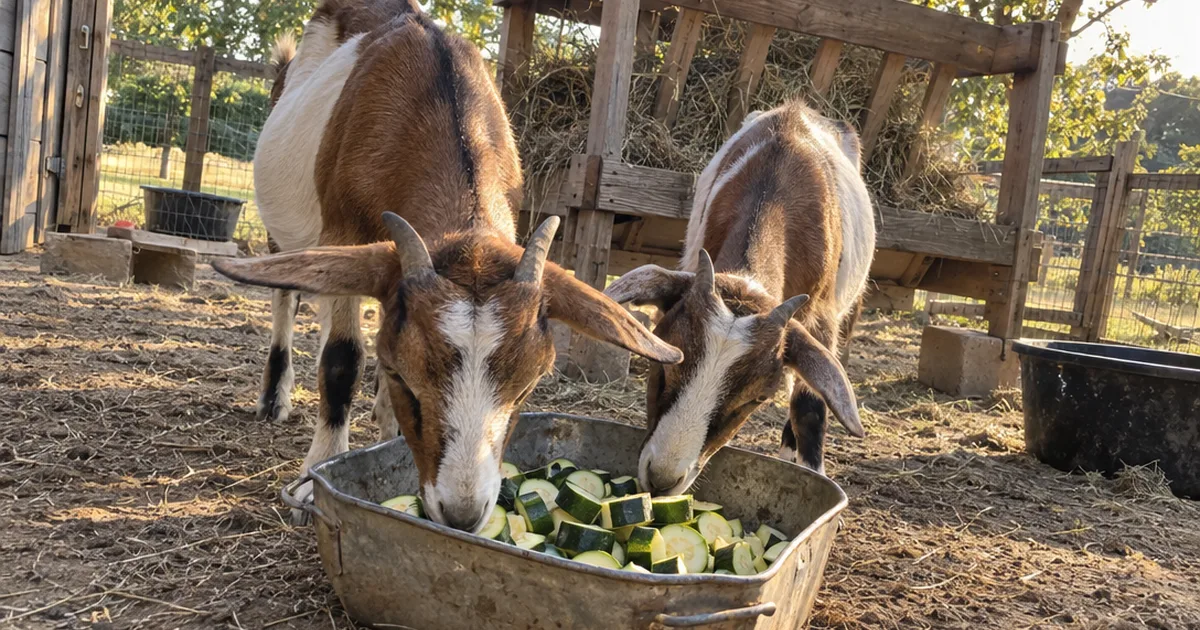
The real difference between the two groups is texture. Summer squash is soft enough to feed in big chunks, while winter squash has a hard rind that needs a knife first.
If most of your surplus is garden zucchini, the same rules apply, and so do they for leftover fall pumpkins. If a squash was grown to be eaten, your goats can eat it too.
Raw or Cooked Squash for Goats
Raw squash is safe for goats and needs no cooking, and plain cooked squash is fine too as long as nothing was added in the kitchen.
Raw is the easier choice, because you skip a step and goats get something firm to chew.
Cooked leftovers are where people slip up. Butter, salt, oil, sugar and spices don’t belong in a goat’s diet, and onion and garlic sit firmly on the do-not-feed list.
So if your roasted squash came out of the oven seasoned, it goes in the compost, not the pen.
Plain raw squash is the safest and simplest way to feed it.
Can Goats Eat Squash Seeds and Skin?
Goats can eat squash seeds, skin and the stringy pulp, so you never need to peel or scoop a squash before feeding it.
The seeds go down with the flesh, and the pulp is soft enough for any adult goat.
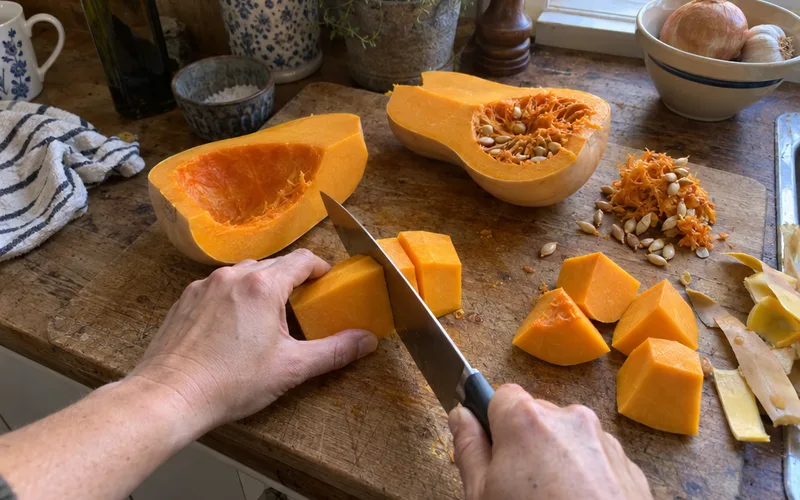
The skin is the only part that takes work. A butternut or acorn rind is too hard for many goats to bite into, so cut it into chunks that expose the flesh.
Kalmbach Feeds says the same about any hard vegetable: chop it into smaller pieces to prevent choking.
Thin-skinned summer squash needs no extra cutting, but every hard winter squash does.
Do Squash Seeds Deworm Goats?
Squash seeds are not a deworming plan for goats, so feed them as part of the treat and handle worms with a fecal egg count and a proper dewormer.
You’ll see the seed claim on homestead blogs and forums, but it’s folklore you shouldn’t bet a goat on.
Untreated worms can make a goat seriously sick. Build a real deworming plan around fecal tests, and let the seeds stay a snack.
Can Goats Eat Squash Leaves and Vines?
Goats can eat squash leaves, vines and blossoms from your garden in small amounts, as long as nothing was sprayed on the plants.
Pull them while they’re fresh, since wilted or moldy plant matter doesn’t belong in the pen.
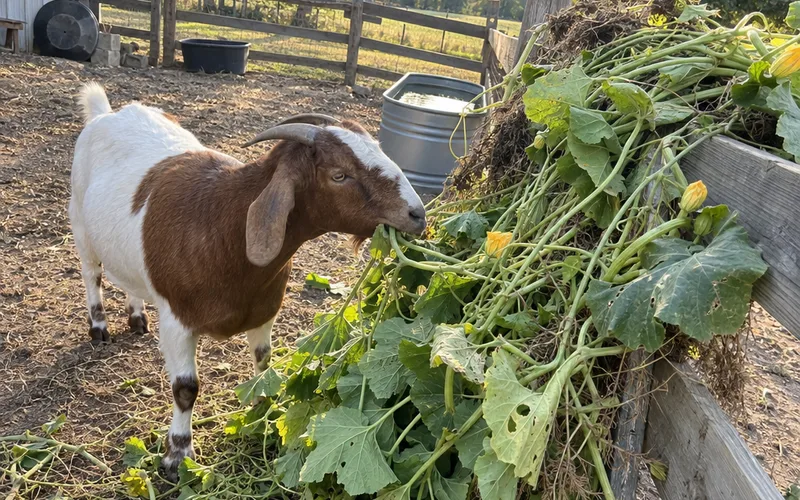
The bigger risk is what grows next to the squash. If your garden cleanup pile also holds tomato vines, sort them out first, because tomato plants follow different rules.
Start with a small armful the first time. That way, you’ll see how your goats handle the greens before they get a full load.
Bitter, Ornamental and Wild Squash to Avoid
Bitter squash, ornamental gourds and wild squash are the ones to keep away from goats, because their bitterness comes from cucurbitacin, a compound that can upset digestion.
Squash grown for eating normally carries very little of it, while decorative gourds and wild squash can carry far more.
You can’t see cucurbitacin, but you can taste it. Here’s the test:
- Cut the squash open.
- Touch a tiny piece of raw flesh to your tongue.
- If it tastes sharply bitter, spit it out and throw the whole squash away.
Run the same test on volunteer squash, the plants that sprout on their own from last year’s seeds.
Wild cucumber vines climbing a fence line belong in the same no-feed group, and so do wild mushrooms in the pasture.
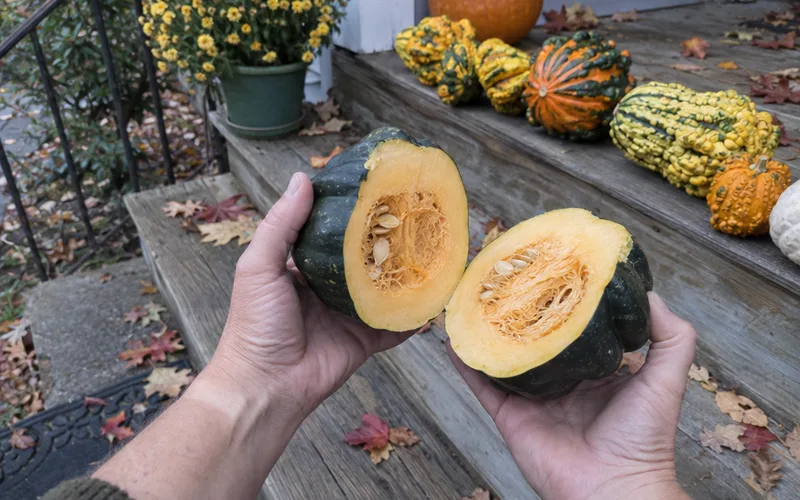
Note: A fall display of painted or varnished gourds is never goat food, even if it looks like a pumpkin.
If a squash tastes bitter, it doesn’t go to the goats.
How Much Squash Can a Goat Eat?
A goat can eat only as much squash as fits inside its treat budget, which Kalmbach Feeds caps at 10% of the diet, with the goat eating about 2% of its body weight a day.
For a 100-pound goat, that works out to about 3 ounces of treats.
Here’s that math for common goat sizes, using those two figures:
| Goat weight | Daily feed (2%) | Treat room (10%) |
|---|---|---|
| 30 lb | About 10 oz | About 1 oz |
| 60 lb | About 1.2 lb | About 2 oz |
| 100 lb | 2 lb | About 3 oz |
| 150 lb | 3 lb | About 5 oz |
Kalmbach runs the numbers on a 30-pound pygmy: about 8 ounces of feed a day, where even a couple of cups of carrots could leave little room for the balanced nutrition it needs.
So small breeds get a few small chunks, not a bowl.
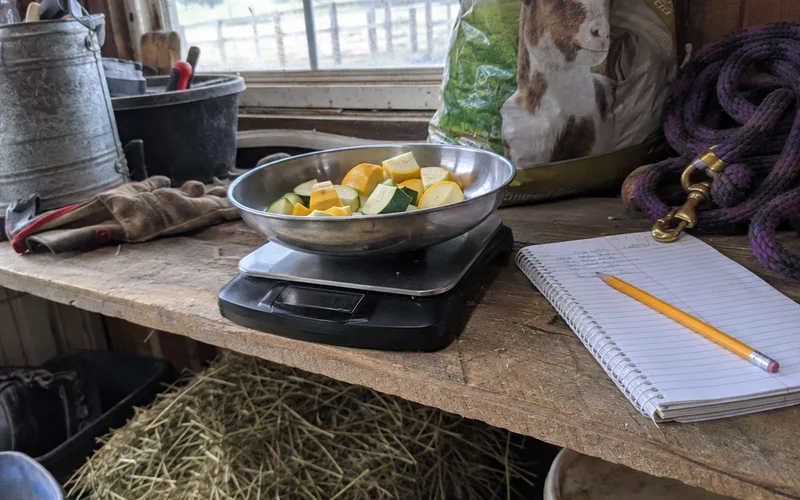
That treat room covers every treat that day, not just squash. If your goats also got carrot coins or a few store-bought goat treats, cut the squash back to match.
Pro Tip: Weigh one handful of chopped squash on a kitchen scale once. After that, you’ll know how many handfuls each goat gets without guessing.
Can Goats Eat Squash Every Day?
Goats can have a little squash every day only if it stays inside the 10% treat budget with every other treat.
Kalmbach Feeds warns that too many treats can cause bloating, diarrhea or rumen acidosis.
Most herds do better with squash a few times a week.
The rumen is the big fermenting stomach that breaks down hay. Rumen acidosis happens when too much quick-fermenting food turns it too acidic.
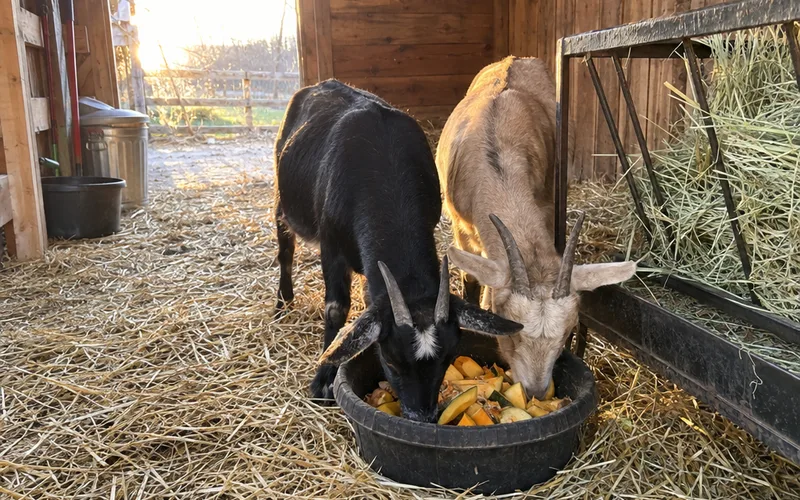
So watch the manure after a squash day. Soft droppings mean you overdid it, and a tight, swollen left side is a sign of goat bloat, which needs fast action.
Daily squash is fine only when the portion stays small and the hay stays first.
How to Prepare Squash for Goats
Preparing squash for goats takes a rinse, one quick taste and a knife, then a small first serving beside their hay. Here’s the routine:
- Wash it. Rinse store-bought squash well to remove dirt and spray residue.
- Taste-test it. A tiny bite of raw flesh tells you whether it’s bitter.
- Cut it to size. Soft summer squash can go in big chunks, while hard winter squash gets split and cut into pieces a goat can grab.
- Start small. Kalmbach Feeds advises adding new treats slowly and watching your goats for changes in behavior, appetite or digestion.
- Serve it with hay. Put it out beside good goat hay, never in place of it.
- Clean up. Pick up leftover pieces the same day so they don’t rot or draw flies.
Squash is one of many garden vegetables for goats, and this same routine works for most of them.
Can Baby Goats Eat Squash?
Baby goats can eat squash once they’re eating hay and solid feed on their own, starting with a few tiny pieces of soft zucchini or plain cooked squash.
Before that, a kid’s diet is milk.
If you’re raising a kid by hand, get bottle feeding right first, and let treats wait. Kids are small, so their treat room is tiny.
Say a kid weighs 15 pounds. At 2% of body weight it eats about 5 ounces of feed, so its treat room is about half an ounce.
For kids, a few soft bites is the whole serving.
The Bottom Line
Squash is one of the safest garden treats you can give a goat, as long as it isn’t bitter and the portion fits the treat budget.
This week, weigh one handful of chopped squash and match it to your goat’s treat room.
Then serve it beside the hay that makes up the rest of a balanced goat diet.
Frequently Asked Questions
Is spaghetti squash good for goats?
Yes, spaghetti squash is a good occasional treat for goats, raw or plain cooked, with the flesh, skin and seeds all edible.
Split the hard shell open and cut it into chunks so they can reach the stringy flesh.
Can goats eat butternut squash?
Yes, goats can eat butternut squash, peel and seeds included.
Cut the hard neck and bulb into chunks, and count it against the 10% treat cap that feed maker Kalmbach Feeds recommends.
Do goats like raw zucchini?
Raw zucchini is safe for goats and the easiest squash to feed, because it’s soft and needs no peeling or cooking.
Cut it into chunks, start with a few pieces and skip any zucchini that tastes bitter.
Can goats eat squash and carrots together?
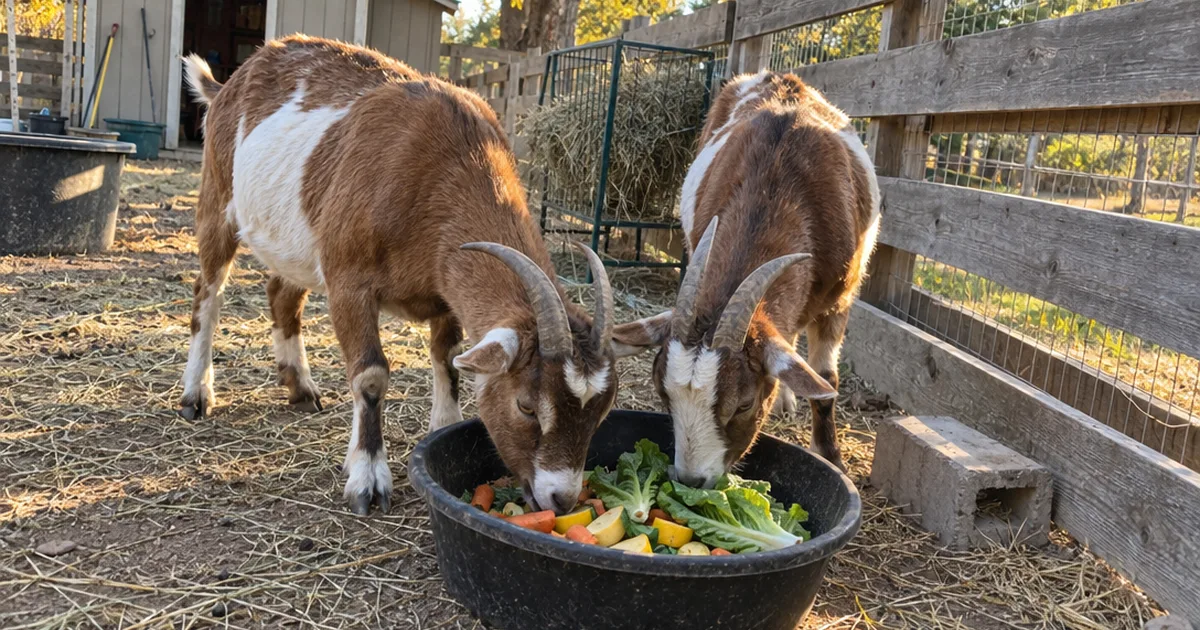
Yes, goats can eat squash and carrots on the same day, but both come out of one treat budget of under 10% of the diet, per Kalmbach Feeds.
Cut each portion down when you feed them together.