| # | Product | Our Rating | ||
|---|---|---|---|---|
| 1 |  | Best OverallUltraCruz Goat & Sheep Ammonium Chloride | ★★★★★ | Check Price |
| 2 |  | AniMed Ammonium Chloride Powder (2.5 lb) | ★★★★☆ | Check Price |
| 3 |  | Adjustable Drench Syringe Set (20ml) | ★★★★☆ | Check Price |
Few emergencies catch goat owners off guard like a wether that suddenly can’t pee. It often looks like simple constipation at first, a goat straining and uncomfortable, but the clock is ticking much faster than that.
Urinary calculi blocks the urinary tract, and a fully blocked goat can die within a day or two.
This guide covers what urinary calculi is, why it targets male goats, the emergency signs to act on, what your vet can do, and the diet that prevents it in the first place.
Important: A male goat that cannot urinate is a true emergency. This article is educational, not a substitute for a veterinarian. Call your vet the moment you suspect a blockage, minutes and hours matter here.
What Is Urinary Calculi in Goats?
Urinary calculi are mineral stones, usually phosphate-based, that form in the urinary tract and lodge in the urethra, the tube that carries urine out of the body. When a stone blocks the urethra, urine backs up and the goat cannot empty its bladder.
The condition is sometimes called water belly, because in late stages the bladder or urethra can rupture and leak urine into the abdomen.
Stones form when the diet is out of balance, typically too high in phosphorus relative to calcium, often from too much grain. Low water intake concentrates the urine and lets crystals build, which is why the problem spikes in winter when goats drink less.
Because it traces straight back to feed and water, urinary calculi sits alongside bloat as one of the two classic diet-driven emergencies in male goats.
Why It Almost Always Hits Male Goats
This is the part that surprises new owners: urinary calculi is overwhelmingly a male goat problem. Does rarely block, because their urethra is short and wide enough to pass small stones.
Males have a long, narrow, S-shaped urethra that ends in a thin twist called the urethral process (the “pizzle”), and that narrow path is exactly where stones get stuck.
Wethers (castrated males) are the highest risk of all. Testosterone drives the urethra to grow wider as a young male matures, so a goat castrated very early never develops that extra width and keeps a narrower tube for life.
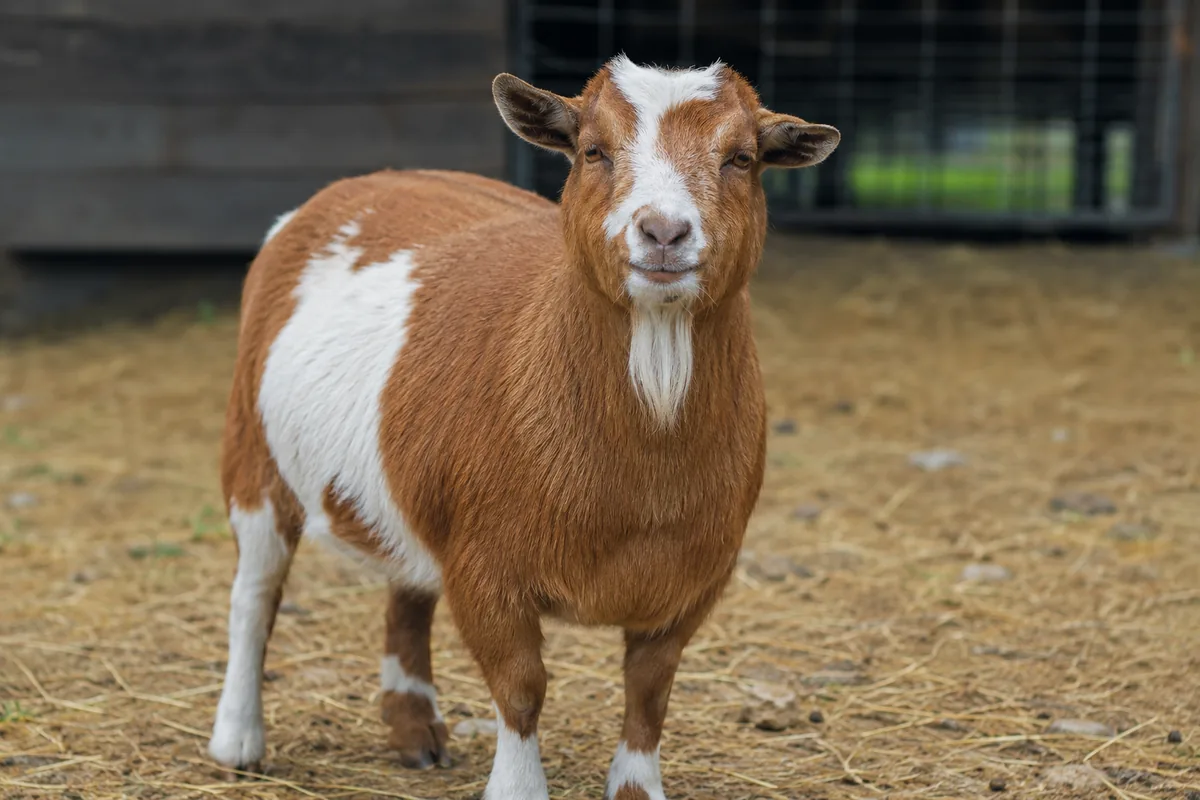
That is why castration timing matters so much. Banding a buckling at a few days old, instead of waiting until at least 8 to 12 weeks, meaningfully raises his lifetime risk, a real tradeoff to weigh when deciding when to band a buck.
Pet wethers are also the goats most likely to be overfed grain and treats, which stacks the dietary risk on top of the anatomical one.
Symptoms of Urinary Calculi
The signs look a lot like constipation or even early labor, which is exactly why goats die from this. The key is that it is a male goat straining and producing little or no urine.
Watch for:
- Straining and posturing to urinate, often with an arched or hunched back
- Restlessness: getting up and down, shifting, stamping, tail twitching or flagging
- Crying or bleating in pain, teeth grinding
- A thin dribble of urine, sometimes pink or bloody, or nothing at all
- Looking at, biting, or kicking toward the belly and flank
- Going off feed and standing apart, much like any goat that is off its feed
- Crystals crusted on the hairs around the prepuce
As it worsens, the belly may swell, the goat becomes dull and toxic, and the bladder or urethra can rupture. A goat that was straining and then suddenly seems “relieved” but very sick has often ruptured, not recovered.
Do not assume a straining goat is constipated. With a male goat, treat straining as a urinary emergency until proven otherwise.
What to Do If Your Goat Can’t Pee
Call your vet immediately. This is not a wait-and-see situation, and most cases need professional treatment or surgery.
While you arrange help:
1. Confirm it is a urinary blockage. Watch whether the goat passes any urine at all. Separate him so you can see the ground under him clearly, and check for a wet patch or a dribble versus a normal stream.
2. Keep him calm and offer water. Stress and dehydration both make it worse. Do not force-drench large volumes.
3. Don’t waste time on home cures. Folk remedies and a wait until morning are how blocked goats die. The useful tools, pain relief, muscle relaxants, and physically clearing the blockage, are veterinary jobs.
For pain and to relax the urethra on the way to the vet, owners often ask about banamine for goats; use it only at a correct, vet-confirmed dose from your goat medicine cabinet, never as a substitute for treating the blockage itself.
The single most important action is speed. The bladder can rupture within 24 to 48 hours of a complete blockage.
How Vets Treat Urinary Calculi
Treatment depends on how blocked the goat is and how early you caught it. Your vet has several options, often used in combination.
Snipping the urethral process. The thin twist at the tip of the penis is the most common spot for a stone to lodge. A vet can extend it and snip off that tip, which sometimes releases a stone and a rush of urine.
Ammonium chloride and antispasmodics. Ammonium chloride acidifies the urine and can dissolve the common phosphate (struvite) stones over time, while antispasmodic and anti-inflammatory drugs relax the urethra. This works best for early, partial blockages.
Surgery. When the goat is fully blocked, vets may place a tube into the bladder (tube cystostomy), perform a urethrostomy, or do other surgical procedures to restore urine flow. These are major interventions, which is exactly why prevention matters so much.
Unlike ammonium chloride, free-choice baking soda makes urine more alkaline, which can help stones form in males. None of it replaces a vet for a blocked goat.
How to Prevent Urinary Calculi
Almost every case is preventable with diet and water management. If you keep wethers or bucks, build these habits in from the start:
- Balance calcium and phosphorus to about 2 to 1. This ratio is the single biggest dietary lever against stones.
- Add ammonium chloride to the ration for males, either top-dressed or built into a quality loose mineral. It keeps urine acidic so crystals don’t form.
- Keep grain low. Most wethers and bucks need little or no grain; grain is high in phosphorus and is the usual culprit.
- Go easy on alfalfa for males. It is high in calcium and phosphorus, better suited to pregnant or milking does than to wethers, a point worth keeping in mind whenever you decide whether goats should eat alfalfa.
- Provide unlimited fresh, clean water, and warm it in winter so goats keep drinking. Adding a little loose salt to the diet encourages water intake.
- Don’t band buck kids too early. Waiting until at least 8 to 12 weeks lets the urethra develop more fully.
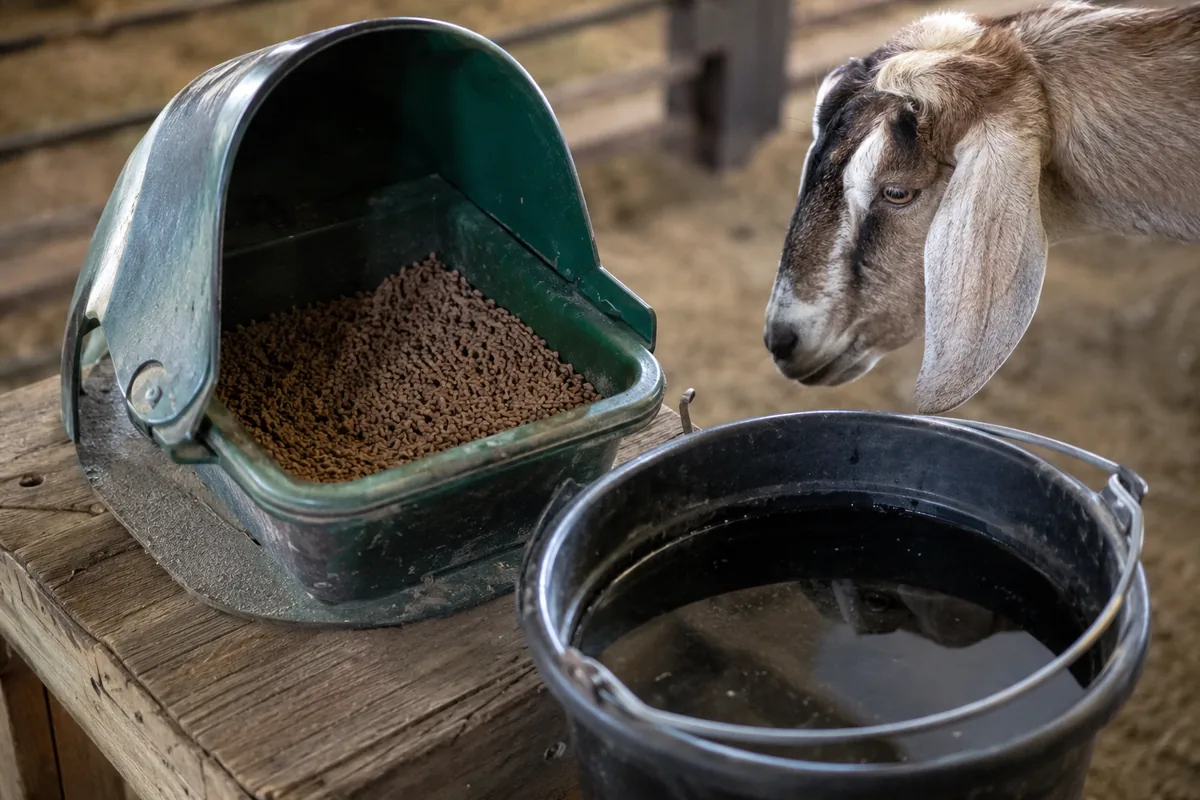
Free-choice loose goat minerals, plenty of long-stem hay and browse, and steady water do most of the work. The goats that block are almost always the ones on heavy grain, short on water, or wethered too young.
A little diet planning now is far easier than a midnight emergency and a surgery bill later. That same planning, with good minerals and plenty of clean water, supports every other part of goat health too.
Sources and Further Reading
Compiled and cross-checked against established veterinary and small-ruminant references:
- The Merck Veterinary Manual, Obstructive Urolithiasis in Ruminants
- University of Maryland Extension, Urinary Calculi in Small Ruminants
- Tennessee / Langston University small-ruminant resources on urinary calculi prevention
- American Dairy Goat Association (ADGA) management guidance
Urinary calculi is a veterinary emergency; confirm treatment and prevention specifics with your own vet, and recheck current recommendations periodically.
Frequently Asked Questions
The earliest signs are a male goat straining or posturing to urinate (often mistaken for constipation), restlessness, tail twitching or flagging, getting up and lying down repeatedly, and crying out. You may see only a thin dribble of urine, sometimes pink-tinged with blood, or no urine at all. Many owners also notice the goat looking at or kicking toward its belly, going off feed, and grinding its teeth in pain. Any male goat that cannot pass a normal stream of urine is an emergency.
Yes, if it is caught early and treated fast. The longer the urethra stays blocked, the higher the risk of the bladder or urethra rupturing, which is often fatal. Mild, early cases sometimes respond to ammonium chloride and antispasmodics, but many blocked goats need surgery. Survival depends almost entirely on how quickly you get veterinary help, so never wait overnight to see if it clears.
Castration removes the testosterone that drives the urethra to grow wider, so a goat wethered very young keeps a narrower urethra for life, which clogs more easily. Wethers are also often kept as pets on grain-heavy or alfalfa-heavy diets that worsen the mineral imbalance behind stones. Waiting until at least 8 to 12 weeks to band, and feeding a proper diet, both lower the risk.
Feed a diet with a calcium-to-phosphorus ratio of about 2 to 1, keep grain low, and add ammonium chloride (often built into goat loose minerals or top-dressed on feed). Provide unlimited fresh, clean water, free-choice loose goat minerals, and plenty of long-stem hay or browse. For bucks and wethers, avoid heavy grain and large amounts of alfalfa, which is high in calcium and phosphorus.
No. Bloat is gas trapped in the rumen that swells the left side, while urinary calculi is a blockage of the urinary tract that stops a male goat from urinating. Both are fast-moving emergencies tied to diet, and both can kill within a day, but they are different problems with different treatments. A straining goat that cannot pee needs the urinary blockage addressed, not bloat treatment.