If you’ve ever held a bag of goat milk powder, wondering whether it belongs in your dog’s bowl, you’re not alone. “Goat formula” gets slapped on several different products, and that’s exactly where most owners get tripped up.
Here’s the short version: the right goat formula can be a gentle, nutritious extra for plenty of dogs. The trick is knowing which product you’re holding, and how much to pour.
Can dogs have goat formula?
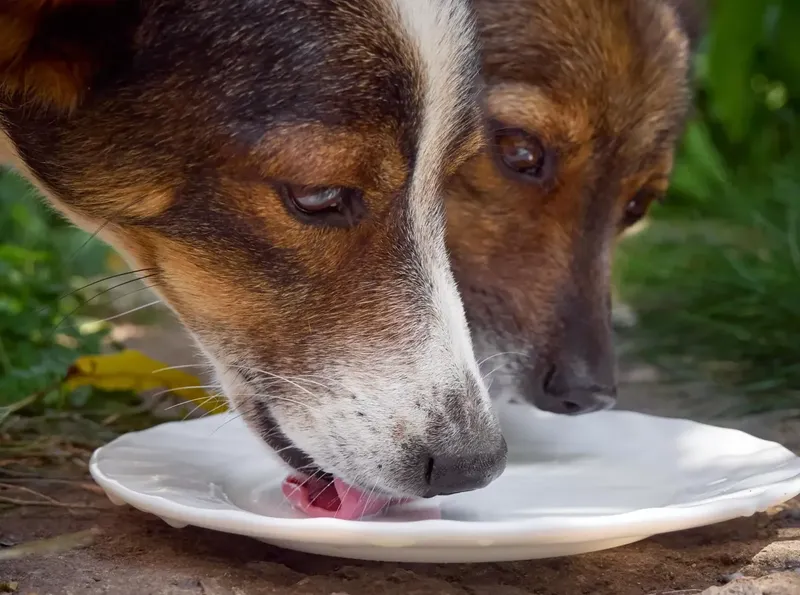
Yes, most healthy dogs can have goat formula, as long as it’s made for pets and served in moderation. Goat milk is naturally lower in lactose than cow milk, so it tends to sit easier in a dog’s stomach.
The catch hides in that one word: formula. A pet goat milk topper and a tub of human goat baby formula aren’t the same product, and shouldn’t be treated alike.
Either way, treat goat formula as a supplement, not a meal replacement. As for frequency, most healthy dogs can have a little goat milk every day.
What counts as goat formula?
In simple terms, goat formula is any goat-milk product fed to dogs, and it comes in three types.
This is the part that trips people up. The phrase “goat formula” usually points to three very different things.
Raw or fresh goat milk comes straight from the goat, unpasteurized, sold frozen or chilled for pets. Pet goat milk formula is a powder or liquid made for animals, usually with added probiotics or vitamins, that you mix with water.
Human goat baby formula, like Kabrita or Holle, is built for human infants, and it’s the one to be careful with. When most dog owners say goat formula, they mean one of the first two, and those are the safe, everyday picks.
Benefits of goat formula for dogs
Goat milk earns its reputation honestly, and dogs share most of the same perks. The benefits are nutritional, not medicinal, so think support over cure.
Easy digestion is the headliner, thanks to smaller fat globules and less lactose than cow milk. Those natural probiotics feed a healthy gut too, which often shows up as firmer stools and better nutrient absorption.
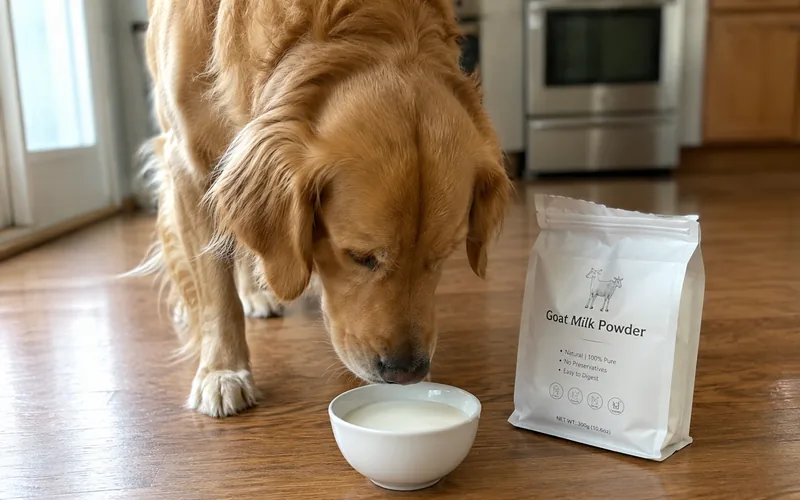
Hydration and skin support round things out, since goat milk brings water, fatty acids, and vitamin A. Owners often reach for it during recovery, picky eating, or to make a dry meal more tempting.
What is in goat milk formula?
Put simply, it delivers probiotics, medium-chain fatty acids, vitamins A and D, calcium, and protein that dogs absorb easily.
Here’s a quick snapshot of what a serving of goat milk typically brings to a dog’s bowl.
| Nutrient | Role for dogs |
|---|---|
| Probiotics and oligosaccharides | Support gut bacteria and digestion |
| Medium-chain fatty acids | Energy and skin or coat health |
| Vitamin A and D | Vision, immune function, bone health |
| Calcium and potassium | Muscle, nerve, and bone support |
| Protein and amino acids | Tissue repair and maintenance |
Numbers shift between fresh milk and reconstituted powder, so always check the label on a commercial goat formula. Pet blends sometimes add extra probiotics or vitamins that plain milk lacks.
Can puppies have goat formula?
Yes, puppies can have pet goat formula as a supplement, though it can’t replace a complete puppy milk replacer.
Puppies are why a lot of owners ask about goat formula at all. Breeders often lean on it to supplement large litters or orphaned pups.
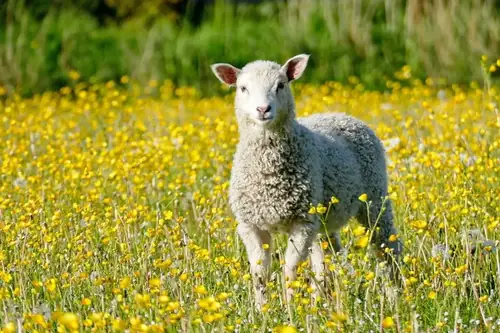
Goat milk formula is gentle on young digestive systems, mirroring the easy digestibility that makes it useful for orphan lambs raised on raw goat milk. That said, newborn puppies still need a complete puppy milk replacer for full nutrition.
So use plain goat formula as a supplement or topper, not the only food a nursing pup gets. The same logic holds for human babies, who shouldn’t drink plain goat milk before their first birthday.
Can dogs have human goat milk formula?
Not ideally. It isn’t toxic, but it’s made for human infants, so a pet formula or plain goat milk is the safer choice.
Human goat baby formula such as Kabrita is the exception. It isn’t toxic to dogs, but it’s formulated for human infants, not canines.
These usually carry added iron, sugars, and vitamins tuned to a human baby’s needs. A few licks won’t harm a healthy dog, but it’s not for regular servings.
If human goat formula is all you have and a hungry pup is staring you down, a pet-specific goat milk formula or plain goat milk is the better pick. When unsure, call your vet before substituting.
Risks and side effects to watch for
Here’s what matters: the main risks are digestive upset, lactose sensitivity, and bacteria in raw milk.
Goat formula is gentle, but no food is risk-free for every dog. The most common issue is simple digestive upset from too much, too soon.
Keep an eye out for loose stools, gas, vomiting, or a bloated belly after serving. Dogs with a true dairy sensitivity, pancreatitis history, or weight concerns may need to skip it entirely.
Raw goat milk adds a bacterial risk on top, and that matters most for puppies, seniors, and immune-compromised dogs. As with any dairy, moderation keeps the calories and lactose in check.
Raw vs pasteurized goat formula
The short answer: raw retains more live probiotics, while pasteurized is safer for vulnerable dogs.
Owners love to debate whether raw goat formula beats the pasteurized kind. Both can work, and the right choice comes down to your comfort with risk.
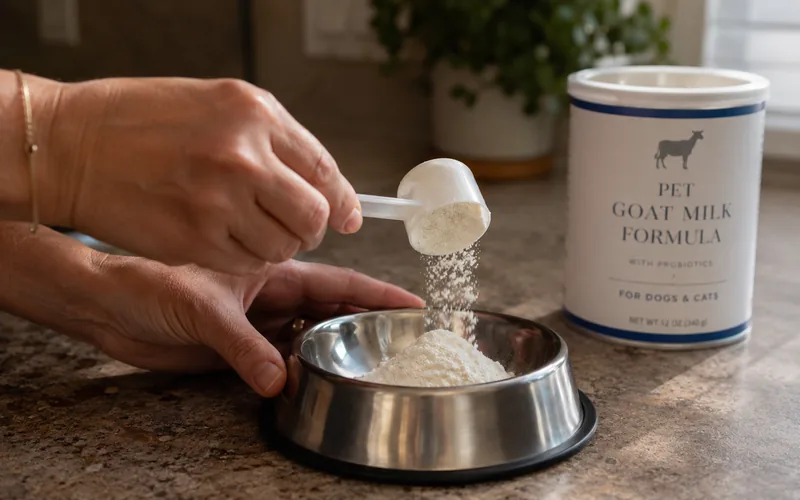
Raw goat milk holds onto more of its natural enzymes and live probiotics, which is why raw-feeding owners swear by it. The trade-off is a higher chance of harmful bacteria like Salmonella or Listeria.
Pasteurized and powdered formulas are shelf-stable and safer for vulnerable dogs, even if heat knocks out some live cultures. If you go raw, buy from a reputable supplier and keep it frozen.
How much goat formula can a dog have?
As a rule of thumb, keep it under 10 percent of daily calories, about 1 to 8 ounces depending on weight.
Portion size is where good intentions go sideways, so measure it out rather than free-pouring.
Use the chart below as a rough daily guideline for reconstituted goat milk formula, then adjust to your dog’s response.
| Dog weight | Suggested daily amount |
|---|---|
| Under 20 lbs | 1 to 2 ounces |
| 20 to 50 lbs | 2 to 4 ounces |
| 50 to 90 lbs | 4 to 6 ounces |
| Over 90 lbs | 6 to 8 ounces |
For powdered formula, stick to the package ratio, usually about one part powder to a few parts warm water. Start at the low end of the range, and only build up if digestion stays steady.
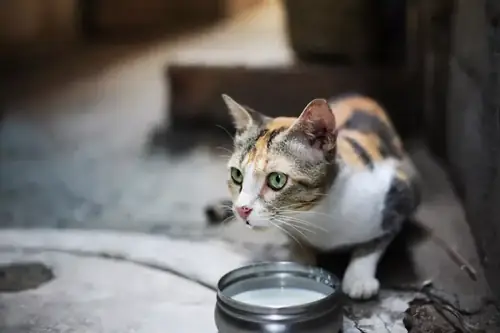
Cats drinking goat milk need far less, usually one or two tablespoons a few times a week.
How to introduce goat formula safely
A slow start heads off almost every common problem. Sudden diet changes are the fastest route to an upset stomach, however healthy the food is.
Offer a small test amount first, maybe a teaspoon for small dogs or a tablespoon for large ones. Wait a full day and check the stool before bumping up the portion.
If everything looks normal, ease up to the daily guideline over several days. You can serve it on its own, spoon it on as a meal topper, or freeze it into treats, much like owners do with goat yogurt for dogs.
Final thoughts
So, can dogs have goat formula? For most healthy dogs it’s a comfortable yes, as long as you pick a pet-friendly product and keep amounts sensible.
Stick with plain goat milk or a pet goat formula, keep portions modest, and introduce it slowly. Leave human goat baby formula for human babies, and loop in your vet if your dog has chronic health issues.
Used this way, goat formula is a simple way to add variety, hydration, and gut support to your dog’s routine. And for more goat in the bowl, plain cooked goat meat is a lean protein most dogs digest easily.
Frequently Asked Questions
Yes, most healthy dogs can have a small amount of pet goat milk formula daily, as long as it stays under roughly 10 percent of their daily calories. Start with a teaspoon to a few tablespoons depending on size and watch the stool for any loosening.
Puppies can drink goat milk formula made for pets, and many breeders use it to supplement orphaned or weaning litters. Newborn puppies still need a complete puppy milk replacer for full nutrition, so use plain goat formula as a topper or supplement rather than a sole food source.
Human goat baby formula such as Kabrita is not toxic, but it is balanced for human infants and often contains added iron, sugars, and vitamins your dog does not need. Plain goat milk or a pet-specific goat formula is the safer choice.
Often, yes. Goat milk has smaller fat globules and less lactose than cow milk, plus natural probiotics that support gut health, which many sensitive dogs tolerate better. Introduce it slowly and stop if you see diarrhea or vomiting.
Goat milk supplies fatty acids, vitamin A, and zinc that support skin and coat health, and some owners notice less itching over time. It is a supplement, not a cure, so see your vet if itching is severe or persistent.