| # | Product | Our Rating | ||
|---|---|---|---|---|
| 1 |  | Best OverallREDMOND Goat Mineral Supplement (5 lb) | ★★★★★ | Check Price |
| 2 |  | Wholesome Harvest 16% Goat Feed (10 lb) | ★★★★☆ | Check Price |
| 3 |  | Manna Pro Goat Treats | ★★★★☆ | Check Price |
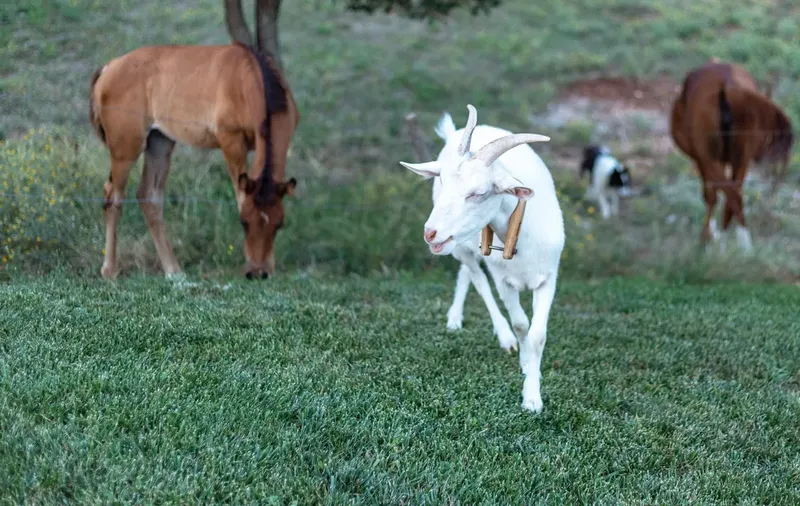
On racetracks and small farms alike, a stray goat trotting alongside a thousand-pound horse is a surprisingly common sight. The pairing has been used for more than a century to settle high-strung racehorses, and the old phrase “getting your goat” traces back to rivals stealing a horse’s goat companion to rattle it before a race.
That history hints at something real. These two species genuinely enjoy each other’s company, and a well-matched pair can share grass for years without trouble.
Still, pasturing goats and horses together takes a little planning around feed, fencing, and temperament. Here’s what experienced owners actually do to make the setup work.
Can goats and horses pasture together?
Goats and horses can absolutely pasture together, and it’s one of the most popular mixed-species setups on small farms. They’re both herd animals, so they usually accept each other within days and often strike up a genuine bond.
The arrangement works because their needs barely overlap. A horse wants open grass and space, while a goat wants brush, weeds, and something to climb on.
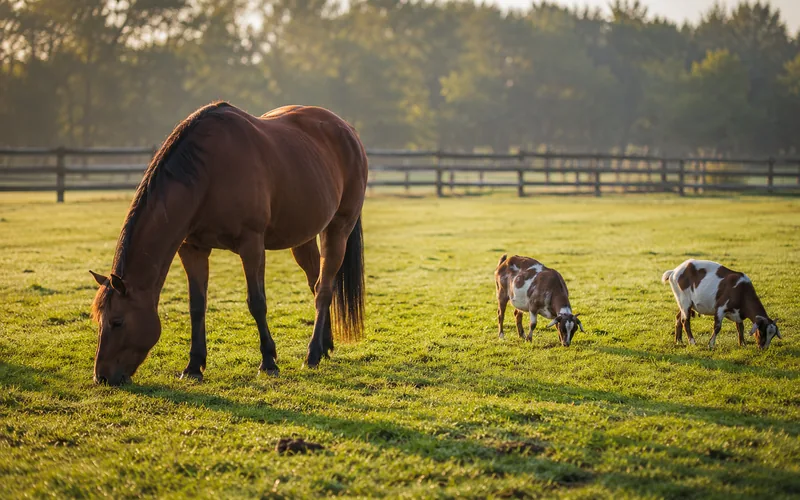
The catch is that “compatible” isn’t the same as “hands off.” A few feed and fencing rules stand between a calm paddock and a vet bill, and we’ll cover each below.
Why do goats and horses get along?
Yes, they usually get along well, since both are social herd animals that read each other as companions rather than threats.
Both animals are wired to live in a group, and neither one cares much that the other is a different species. As long as personalities match, they read each other as herd mates rather than threats.
Both are herd animals
A horse kept completely alone tends to get anxious, and a lone goat is every bit as miserable. Put the two together and you satisfy that hardwired need for company without paying for a second horse.
Goats are also curious and confident, which helps them stand their ground around a much larger animal. That confidence is part of why goats, rather than sheep or other livestock, became the classic equine companion.
Goats help calm nervous horses
Trainers have long used a single goat to steady a horse that weaves, cribs, or paces in its stall. The goat gives the horse something to focus on, and that steady presence lowers stress in the herd.
The effect shows up most with young or high-energy horses. Plenty of owners say a spooky horse settles noticeably within a week of getting a goat companion.
It works in the other direction too, since a confident horse gives a goat a sense of safety in open ground. The pair often end up grazing, resting, and seeking shade close to one another by choice.
Browsers vs. grazers: how their diets fit together
Put simply, horses graze grass while goats browse weeds and brush, so the two rarely compete for the same food.
The single biggest reason this pairing works is that goats and horses eat differently. Horses are grazers built to crop grass close to the ground, while goats are browsers that prefer leaves, shrubs, and weeds at eye level.
That split shows up most clearly on southern turf grasses, where a horse will graze happily but goats mostly walk past centipede grass. Because they target different plants, they rarely compete for the same bite of food. The table below shows how their feeding habits complement each other.
| Trait | Horses | Goats |
|---|---|---|
| Feeding style | Grazer (grass) | Browser (weeds, brush, leaves) |
| Preferred plants | Grass, legumes | Brambles, saplings, broadleaf weeds |
| Grazing height | Close to ground | Waist height and up |
| Effect on pasture | Keeps grass trimmed | Clears brush and weeds |
This division is why goats happily strip the thorny sticker bushes and weedy patches a horse walks straight past. The two species end up maintaining different layers of the same field.
What are the benefits of pasturing them together?
Beyond simple companionship, running goats and horses on one pasture pays off in practical ways. You get better land management and lower upkeep from the same fenced acreage.
Natural weed and brush control
Goats are living brush hogs. They eat the broadleaf weeds, saplings, and bramble that take over a horse pasture, which cuts down on mowing and spraying.
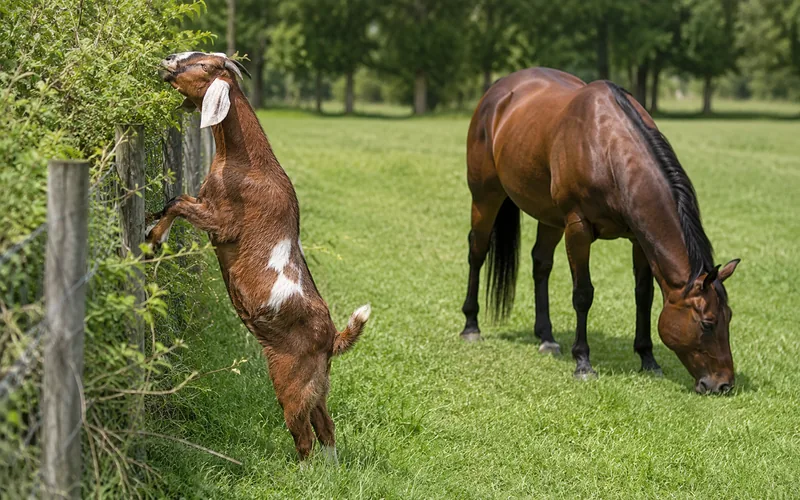
Clearing that growth also removes hiding spots for parasites and exposes more grass for the horse. Just be sure to fence off anything toxic, since goats will sample black walnut leaves and other plants that are dangerous to both species.
Low cost and easy care
A goat is far cheaper to feed and house than a second horse, yet it fills the same companionship role. For the price of a little extra hay and a mineral feeder, a lonely horse gets a full-time buddy.
Goats are also hardy and low maintenance once their basic needs are met. That makes them an easy add-on for owners who already manage a horse every day.
There’s a small predator trade-off, though. A goat is more vulnerable to coyotes and loose dogs than a horse, but the horse’s size and alertness often keep predators from testing the pasture.
What are the biggest safety risks?
The four risks that matter most are toxic horse feed, accidental kicks, goat horns, and a shared water trough.
Most problems between goats and horses are preventable once you know where to look. Four risks deserve your attention before and after you turn them out together.
Horse feed can be deadly to goats
This is the one rule that matters most. Many commercial horse feeds and supplements contain monensin (Rumensin), an ionophore that’s fatal to goats even in tiny amounts.
Veterinary toxicology references confirm there’s no antidote for ionophore poisoning, which destroys heart and skeletal muscle once a goat eats it. Prevention through strict separation is the only safeguard that actually works.
Store all horse grain in sealed containers a goat cannot open, and feed each species in its own area. The same caution applies to medicated feeds made for other animals, so never let goats raid a bag of chicken feed, cattle rations, or horse grain left within reach.
Kicks, trampling, and tail chewing
A horse rarely sets out to hurt a goat, but a fly-swatting kick or a startled spin can break a goat’s bones. The risk is highest during introductions and at feeding time when animals crowd together.
Bored goats sometimes nibble a horse’s tail, which annoys the horse and can provoke a kick. Plenty of space and separate feeding stations keep both behaviors in check.
Horns and headbutting
A goat with horns can injure a horse’s legs or belly when it headbutts or squeezes underneath for shade. Disbudded or naturally polled goats are the safer choice for a shared pasture.
If your goats already have horns, watch how they interact and step in early if the goat gets pushy. A confident horse usually sets its own boundaries, but you shouldn’t lean on that alone.
Shared water and parasites
Goats and horses do not swap most internal parasites, but a dirty trough can still spread bacteria between them. Scrub and empty the trough often rather than topping it off.
Keep each species on its own deworming and hoof-care schedule, since their health needs differ. Goats in particular are prone to bloat and need their own routine rather than the horse’s.
Goats are also far more vulnerable to the barber pole worm than horses, so a quick FAMACHA check of their lower eyelid color helps you spot a heavy parasite load early. Resting and rotating the pasture between grazings keeps that worm burden down for both species.
What fencing keeps goats and horses in?
Fencing built for horses almost never holds a goat. Goats slip through board gaps, crawl under electric tape, and lean on anything loose until it gives.
The reliable solution is woven or “non-climb” wire mesh with openings too small for a goat to push through or climb. Many owners run woven wire on the inside and existing horse rail or tape on the outside for double duty.
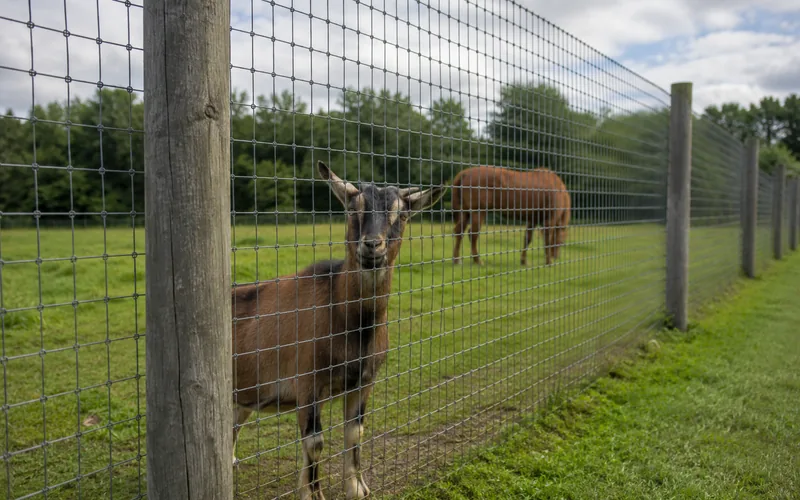
Walk the line before you turn goats out and close every gap at ground level. A goat that learns it can escape will do it again, and a loose goat near a road is a real danger.
How much space do goats and horses need together?
Give the pair a bit more room than a single horse would use, since the horse needs open grass while the goats need browse and a few things to clamber on. A practical floor is one to two acres for a horse, plus enough brushy ground to keep two or three goats occupied.
Crowding is what turns minor squabbles into injuries, so lean toward more space rather than less. If your pasture is tight, rotate the animals through it or stagger feeding times to ease the pressure points.
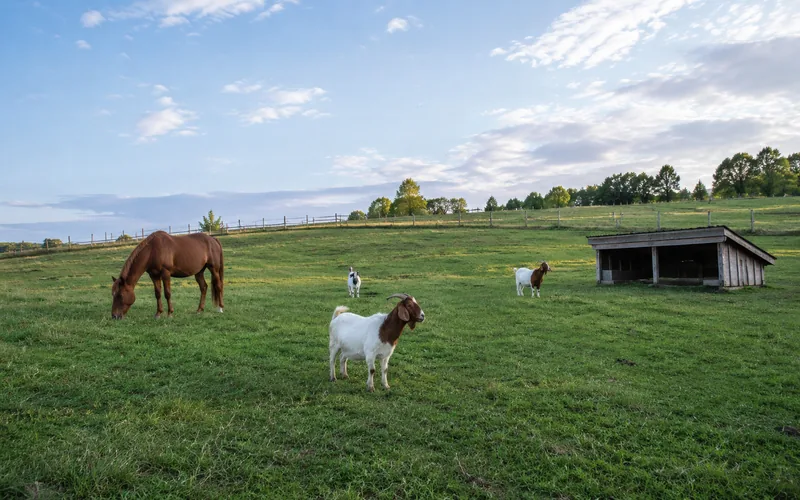
Remember that goats climb on anything they can reach, including round bales, parked equipment, and low shelter roofs. Keep machinery out of the paddock and confirm nothing gives a goat a launch point over the fence or onto the horse.
Do goats and horses need different minerals?
Mostly the same, with one catch: goats need supplemental copper, which horse or all-stock minerals provide safely.
Minerals are an underrated detail in mixed pastures. Goats need dietary copper for healthy coats and parasite resistance, and a copper deficiency shows up as a rough coat and faded color.
Here’s the good news for this particular pairing: minerals formulated for horses contain copper at levels that are safe and adequate for goats, according to extension guidance on mixed-species grazing. That’s a world away from keeping goats with sheep, where copper has to be restricted.
Even so, offer a free-choice goat or all-stock mineral in a feeder the horse can’t empty. A simple covered mineral station sized for goats keeps each animal getting what it needs.
If a goat still shows a faded, rusty coat or fish-tail hair loss, a copper bolus sized for goats fixes the deficiency without touching the horse’s intake. Check coats and tails seasonally, since copper demand climbs during heavy parasite months.
How do you introduce goats and horses safely?
A slow, deliberate introduction prevents almost every early injury. Rushing two strange animals into the same paddock is where things go wrong.
Quarantine new goats first
Keep any new goat separate for two to three weeks before it meets the horse. This protects your existing animals from imported illness and lets the goat settle before facing a much larger neighbor.
Use that window to check the goat’s hooves, deworm it, and confirm it’s healthy. A calm, settled goat makes a far better introduction than a stressed one.
Use a slow fence-line introduction
Set the goat in a pen beside the horse’s paddock for several days so they can see and smell each other through the fence. This low-stakes contact lets curiosity replace alarm before they ever share space.
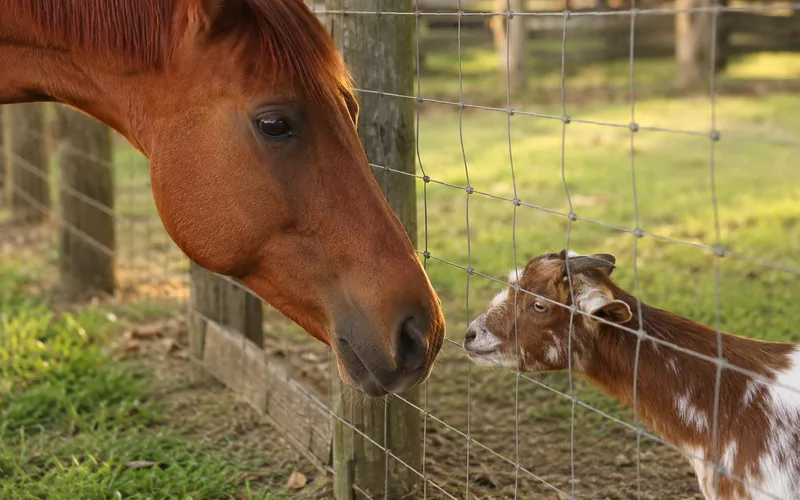
When you do combine them, supervise the first few hours closely. Most horses sniff, nudge, and then lose interest, but you want to be there if either animal overreacts.
Give goats an escape zone
Build in a spot the goat can duck into that the horse cannot reach. A creep area or a low shelter with a narrow opening lets a goat dodge a cranky horse or a stray kick.
That safe zone doubles as a goat-only feeding and mineral station. Honestly, it’s the single best piece of infrastructure for a peaceful shared pasture.
Which goats pair best with horses?
The best matches are calm does and wethers from hardy breeds, not aggressive bucks or fragile fainting goats.
Temperament matters more than breed, but a few patterns hold. Female goats (does) and wethers stay calmer and less aggressive than intact bucks, which also carry a strong odor you won’t want anywhere near the barn.
Sturdy, easygoing breeds tend to do best beside a horse. Nubians, Boers, Kikos, and Saanens all have the size and steady nature to hold their own.
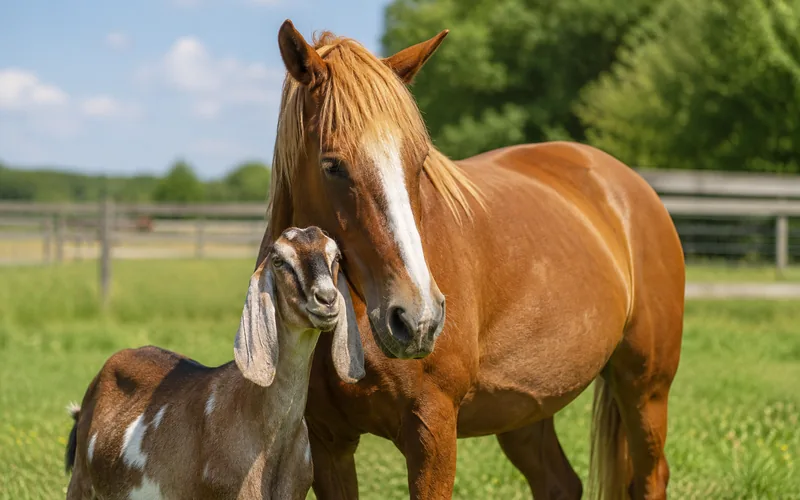
Smaller breeds like Nigerian Dwarfs and Pygmy goats can work well too, though their size makes a secure fence and an escape zone even more important. Skip flighty or fragile choices such as fainting goats, whose freezing response is risky around a large animal.
What to watch once they share a pasture
Once they settle in, a quick daily check of feed security, fencing, and body condition is all it takes.
The work isn’t over once they’re getting along. A quick daily scan keeps small issues from turning into injuries.
- Confirm horse grain and any monensin feed are still locked away
- Watch feeding time for crowding, shoving, or tail chewing
- Walk the fence line for new gaps a goat could exploit
- Check that goats can always reach their escape zone and mineral feeder
- Note any limping, rough coat, or sudden weight change in either animal
Stay consistent with these checks and most pairs need little more than fresh water and hay. The setup tends to run itself once the routine is in place.
Final Thoughts
Goats and horses make excellent pasture mates, and the payoff is a calmer horse, a cleaner field, and a low-cost companion that earns its keep. The arrangement only asks for a few guardrails in return.
Lock away monensin feed, run goat-tight fencing, give the goats an escape zone, and introduce everyone slowly. Nail those basics and you’ll have one of the easiest, most rewarding mixed herds on the farm.
Frequently Asked Questions
Some pushing and head-tossing is normal in the first few days as they sort out a pecking order. Real aggression, like a horse pinning its ears and charging or a goat repeatedly ramming, means you should separate them and slow the introduction down. Most pairs settle within a week or two.
One goat is enough to give a lonely horse a companion, but two goats are happier because goats are herd animals themselves. For larger pastures, two or three does work well and won't crowd the horse at feeding time.
They can, but a shared trough should be scrubbed often and emptied rather than just topped off, since standing water spreads bacteria between species. A lower secondary trough also helps smaller goats and kids reach water comfortably.
Plain grass or alfalfa hay is fine for both species. The danger is grain and pelleted horse feed, which often contains monensin (Rumensin), an additive that is fatal to goats even in tiny amounts, so feed and store it well out of their reach.